Longest Digital Nomad Visas: Countries Offering 2 to 5 Year Stays

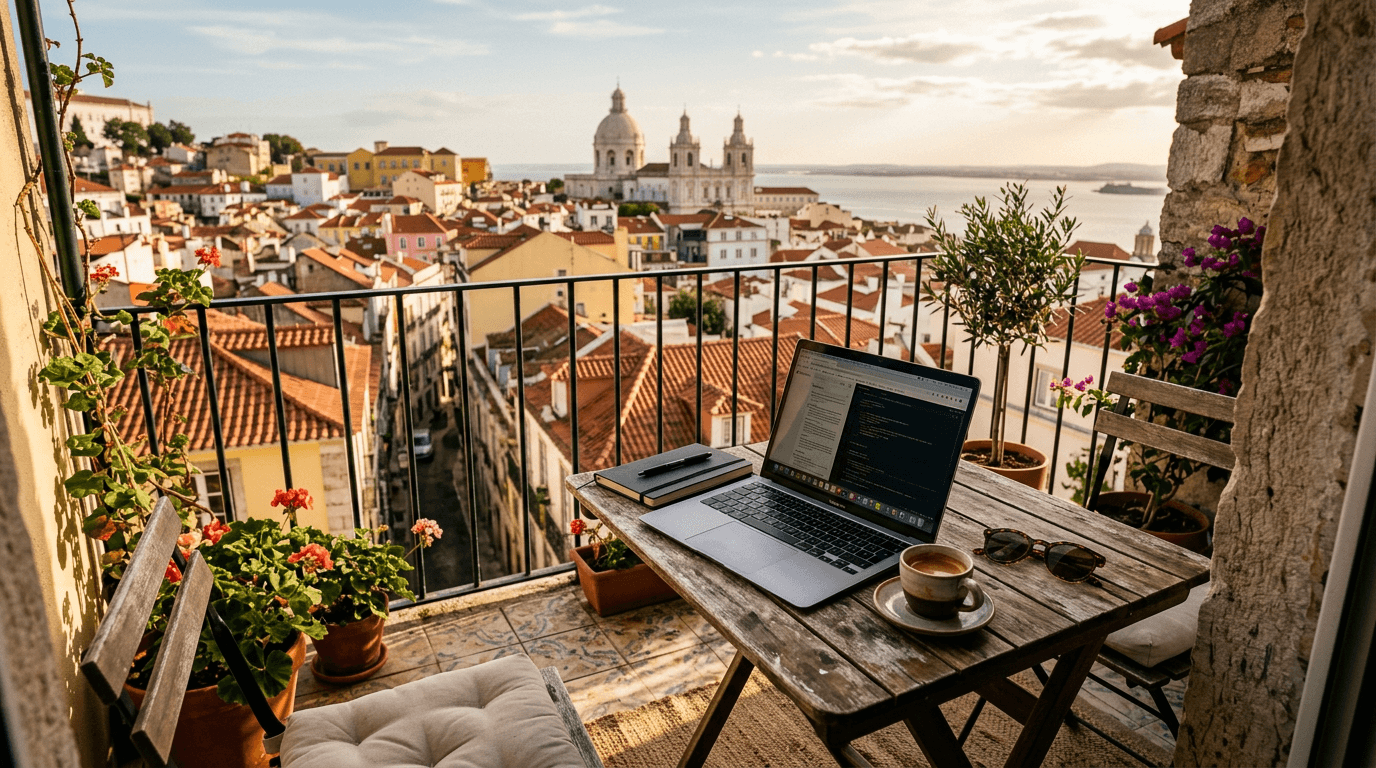
I don't know about y'all, but after traveling for a while (a month here, few weeks there, etc.), it makes sense to want to slow down a bit and pick a place to transition into the slowmad life... at least for a while. What are your thoughts about this list? Did we miss anything?
The longest digital nomad visas are rarely simple one-stamp solutions. The real winners are usually residence permits with renewals, plus a few special visas that let remote workers keep returning for years.
Portugal Digital Nomad Visa
Portugal's D8 is the strongest all-around pick for this topic because it can lead to a 2-year residence permit and then renew for 3 more years, creating a 5-year path. That makes it one of the clearest examples of a renewable digital nomad visa that can support a long stay and a longer-term base.
The income bar is higher than many older articles still say. In 2026, Portugal requires income equal to 4x the national minimum wage, which puts the threshold at about "3,680 EUR" ($3,970) per month, plus extra for family members. For the official framework, the Portuguese government explains the residence route through its immigration portal and the legal residence path is laid out by the Portuguese Agency for Integration, Migration and Asylum.
A practical move here is to apply with clean proof of remote income, a rental contract and a Portuguese tax number. Applicants who want the longest runway in one EU country should treat the residence route as the target, not the short-stay version.
Spain Digital Nomad Visa
Spain's International Teleworking authorization is one of the most flexible long-stay routes in Europe. Depending on where the application happens, it can start with 1 year from a consulate or 3 years from within Spain, then extend to reach 5 years in total.
That makes Spain a genuine contender for the longest remote work visa conversation, especially for non-EU remote workers who want a major city base. The current income test sits at 200% of Spain's minimum wage, which immigration guidance in 2026 puts at roughly "2,760 EUR" ($2,980) a month, with higher amounts for partners and children.
Spain's official digital nomad framework is tied to the Ministry of Inclusion, Social Security and Migration. In practice, Barcelona, Valencia, Málaga and Madrid draw the biggest share of remote workers because of coworking density, airport access and year-round services.
| Program | Income requirement | Application fee | Max stay | Renewable | Leads to residency | Remote work |
|---|---|---|---|---|---|---|
| Portugal Digital Nomad Visa | $3,975 / mo | $270 – $304 | 60 mo | Yes | Yes | Yes |
| Spain Digital Nomad Visa | $2,600 – $3,000 / mo | $106 – $3,020 | 60 mo | Yes | Yes | Yes |
| Thailand DTV (Destination Thailand Visa) | $14,000 in savings | $380 – $400 | 60 mo | No | No | Yes |
| Mexico Temporary Resident Visa | $4,000 – $4,700 / mo | $53 – $54 | 48 mo | Yes | Yes | Yes |
| Colombia Digital Nomad Visa | $1,300 – $1,450 / mo | $222 – $282 | 24 mo | No | No | Yes |
| Malaysia DE Rantau Nomad Pass | $24,000 – $60,000 / yr | $215 | 24 mo | Yes | No | Yes |
The key decision in Spain is the application route. Consulate filings are faster for some nationalities, while in-country filings can give a longer initial stay. Either way, the paperwork has to show remote work for an employer or clients outside Spain.
Thailand DTV (Destination Thailand Visa)
Thailand's Destination Thailand Visa or DTV, is one of the most unusual entries on this list. It is valid for 5 years, which is rare, but each stay is capped at 180 days and can usually be extended once per entry.
That means the DTV isn't a residence permit in the usual sense. Still, it matters for anyone looking for a multi year digital nomad visa because it lets remote workers keep cycling back to Thailand for a long window, especially if their work pattern already includes travel breaks.
The DTV sits under Thailand's official immigration system and applicants should expect tighter document checks in 2026, especially around bank statements and proof of income. Bangkok, Chiang Mai, Phuket and Ko Samui remain the most practical bases because they combine strong internet, coworking and easy flights.
Mexico Temporary Resident Visa
Mexico doesn't brand its route as a digital nomad visa, but the Temporary Resident Visa is one of the strongest de facto options for long remote stays. It can be issued for 1 year and renewed up to 4 years, making it a real-world long-stay solution for remote workers who can meet the financial test.
For 2026, the economic solvency requirement is high, often around $4,300 to $4,400 in monthly income or roughly $74,000+ in savings, depending on the consulate. That is a sharp jump from older numbers, so applicants need to check the local consulate's current formula before booking flights.
Mexico's main upside is flexibility. Mexico City, Mérida, Guadalajara and Playa del Carmen are common bases because the permit works well with a slower, semi-stationary life. For official visa categories, the Mexican government's consular information is the place to verify local filing rules.
Colombia Digital Nomad Visa
Colombia's Visitor (Type V) Digital Nomad Visa is one of the easiest long-stay options to understand. It allows stays of up to 2 years, which puts it squarely in the middle of this comparison even if it doesn't reach the longer five-year runway seen in Portugal or Spain.
The income threshold is also relatively approachable. In 2026, the requirement is usually around 1,100 to 1,400 USD per month, depending on how the rule is read and documented by the consulate or immigration authority. That makes Colombia attractive for freelancers and remote employees who want a lower entry bar than most European routes.
Bogotá, Medellín, Cali and Cartagena are the usual starting points. Medellín in particular keeps drawing remote workers because it combines stable internet, a large expat scene and year-round spring-like weather.
Malaysia DE Rantau Nomad Pass
Malaysia's DE Rantau Nomad Pass doesn't get as much hype as Europe, but it belongs on any list of the longest digital nomad visas worth considering. The pass can be issued for up to 12 months and renewed for a second year, creating a 2-year stay path for qualifying remote workers.
The income threshold is clearer than in many places, which is helpful. In most cases, applicants need around $24,000 in annual income, though sector and family rules can change the exact paperwork. The pass is aimed at digital professionals and its real-world advantage is simple: relatively low living costs, strong flight connections and good regional mobility.
Kuala Lumpur, Penang and Johor Bahru are the obvious bases. The official DE Rantau portal is the best place to confirm current eligibility rules, especially for freelancers, dependent family members and renewal timing.
How to choose the right long-stay route
The best option depends on what "longest" means in practice. Portugal and Spain are strongest for a future-focused EU base, Thailand is best for a long-validity visa with repeated entries, Mexico is a powerful residence workaround, Colombia is one of the easiest 2-year remote-work visas to access and Malaysia gives a clean 2-year path in Southeast Asia.
A few rules matter across every program. Family applications often raise the income requirement, some routes need proof of housing before approval and nationality can change whether the application happens inside the country or at a consulate. In 2026, the safest move is to check the current filing route, income formula and renewal rules before committing to flights, deposits or school plans.
For remote workers who want the longest digital nomad visas without constant border runs, the real question isn't just length. It's whether the permit can be renewed, whether the income test is realistic and whether the country fits day-to-day life for more than a single year.