Portugal
Complete Digital Nomad Guide
Policy Stability
Stamped Nomad ExclusiveHow likely visa and immigration policies are to remain unchanged
Quick Facts
Nomad Visa Cost
$90
Income Requirement
$3,758/mo
Max Stay
60 months
Renewable
Yes
Cost of Living
$2,200/mo
Avg Internet
220 Mbps
Safety Score
7/10
Healthcare
High
Coworking
High
English Friendly
High
Time Zones
WET, WEST
Entry Methods Available
Best For
Understanding Portugal’s Visa System
Portugal has become a top-tier destination for remote workers, but the paperwork can feel overwhelming if you don't know where to start. The system is divided into three main categories: short-stay visas for quick trips, temporary-stay visas for stays under a year, and residency visas for those planning to make Portugal a long-term home.
Most travelers from the 90 visa-exempt countries, including the US, UK, Canada, and Australia, can enter for tourism or light business for up to 90 days within a 180-day period without any prior paperwork. If you aren't from a visa-exempt country, you’ll need a standard Schengen Visa. Keep in mind that by late 2026, visa-exempt travelers will need to register for ETIAS, an electronic authorization, before boarding their flight.
The Digital Nomad Visa (D8)
The D8 is the gold standard for remote workers. It is specifically designed for freelancers or remote employees working for companies outside of Portugal. This visa comes in two flavors: a temporary stay version valid for up to one year, or a residency version that leads to a renewable permit. To qualify in 2026, you must prove a monthly income of at least €3,680.
Passive Income and Entrepreneurs (D7 and D2)
- D7 Visa: Originally for retirees, this is now popular with anyone having "passive" income like rental properties, dividends, or a pension. The minimum income requirement is €920 per month, plus significant savings.
- D2 Visa: If you want to open a local branch of your business or start a new company in Portugal, this is your path. You’ll need a solid business plan and proof of capitalization.
- Tech Visa: For highly qualified specialists, the D3 visa offers a streamlined path if you have a contract with a certified Portuguese company, requiring a minimum salary of €2,050 per month.
The Residency Roadmap
If you apply for a residency visa (D1 through D9), you’ll receive an initial 4-month visa with two entries. During this window, you must enter Portugal and attend an appointment with AIMA (the agency that replaced SEF) to exchange your visa for a residence permit. These permits are usually valid for two years and can be renewed. After five years of legal residency, you are eligible to apply for permanent residency or Portuguese citizenship.
For those looking for a shorter commitment, the Job Seeker Visa allows you to stay for up to 120 days (extendable by another 60) while you look for local employment. If you find a job, you can transition directly into a residence permit without leaving the country.
Key Logistics and Fees
Portugal does not offer a general "e-visa" or visa on arrival. All applications must be initiated through the official immigration portal or handled via VFS Global centers in your home country. Fees vary depending on your nationality and the specific visa type, so it is best to check the latest rates during your application process.
Extensions for tourist stays are extremely rare. Unless you have a documented medical emergency or a serious humanitarian reason, you must leave the Schengen Area once your 90 days are up. Overstaying can lead to fines and future entry bans, so it is better to apply for the correct long-stay visa from the start.
Summary of Requirements
- Short-Stay (Schengen): Max 90 days; for tourism, business meetings, or short events.
- Temporary-Stay: Valid for less than 1 year; allows multiple entries for study, internships, or remote work.
- Residency Visas: Leads to a residence permit; requires proof of income, health insurance, and a clean criminal record.
- Golden Visa: Requires a minimum investment of €250,000; rules are updated periodically, with new guidelines expected in February 2026.
The D8 Visa: Your Gateway to Portugal
Portugal remains one of the most attractive hubs for remote workers, and the Digital Nomad Visa (officially the D8 Visa) is the primary reason why. This visa is specifically tailored for non-EU and non-EEA citizens who want to trade their home office for a view of the Atlantic or the rolling hills of the Alentejo.
You have two distinct paths depending on how long you plan to stay. If you are looking for a short-term adventure, the temporary stay visa allows you to live in Portugal for up to 12 months. If you are thinking long-term, the residency visa provides a 2-year residency card, which you can renew for another 3 years. After hitting that 5-year mark, you become eligible to apply for permanent residency or even a Portuguese passport.
The Financial Requirements
To qualify, you need to show that your remote income is stable and sufficient by Portuguese standards. The government sets the bar at four times the national minimum wage. For 2026, this means you need a minimum monthly income of €3,680. This income must come from employers or clients based outside of Portugal.
If you are bringing family along, the financial requirements scale up. You will need to add the following to your monthly proof of income:
- €1,840 per month for an additional adult (spouse or parent)
- €1,104 per month for each dependent child
Beyond your monthly paycheck, you need to show a "financial cushion" in a bank account. You should have at least €11,040 in savings, though having a full year's worth of requirements (€44,160) is often recommended to ensure a smooth approval process.
The Application Journey
Getting your paperwork in order is the most time-consuming part of the process. You will need to gather your employment contracts, bank statements, a clean criminal record check from your home country, and proof of private health insurance. One of the first things you should do is secure a NIF (Portuguese Taxpayer Number), as you cannot open a bank account or sign a rental lease without it.
Once you have your documents, you will submit your application to the Portuguese consulate in your current country of residence. Expect a processing time of 30 to 90 days. The application fee is relatively low, typically ranging between €75 and €90.
After your visa is approved and you arrive in Portugal, you will have an appointment with AIMA (the Portuguese immigration authority) to provide your biometric data. There is a residency fee of €170 at this stage, and your physical residency card usually arrives in the mail within two weeks.
Living and Taxing in Portugal
Holding a D8 visa grants you more than just a place to live; it opens the door to NHR 2.0 tax benefits. While the original Non-Habitual Resident program has changed, this new iteration still offers significant tax advantages for "high added value" professionals and digital nomads moving their tax residency to Portuguese soil.
Keep in mind that there are some ground rules to maintain your status. If you opt for the 12-month temporary stay visa, you are expected to spend at least 183 days per year in the country. You must also have proof of accommodation, such as a long-term rental agreement, before you apply. As long as you are at least 18 years old and meet the income thresholds, the path to a Mediterranean lifestyle is remarkably straightforward.
The 90-Day Rule and Visa-Free Access
Portugal follows the standard Schengen Area rules, which is great news for many travelers but requires some math. If you hold a passport from the United States, Canada, the UK, Australia, or New Zealand, you can enter Portugal for tourism or business for up to 90 days within any 180-day period without applying for a visa. Just make sure your passport is valid for at least 3 months beyond your planned departure date.
The 90-day clock doesn't just apply to Portugal; it covers the entire Schengen Zone. If you spend 30 days in France and then fly to Lisbon, you only have 60 days left. You can move freely between these countries, but the total time adds up. Once you hit that 90-day limit, you must leave the Schengen Area for at least 90 consecutive days before you can return.
For citizens of countries like India, Turkey, or South Africa, a Schengen Visa is required before arrival. You’ll need to book an appointment through VFS Global or a local Portuguese consulate. Portugal does not offer a "visa on arrival" for any nationality, so always sort your paperwork before you board your flight.
The Upcoming ETIAS Requirement
Change is coming for visa-free travelers. Starting in late 2026, visitors who currently enter with just a passport will need to apply for an ETIAS (European Travel Information and Authorisation System) before they travel. This is an online security screening, not a full visa. It will involve a quick digital form covering personal details and travel plans, plus a small processing fee.
The ETIAS will be tied to your passport and valid for multiple entries over several years. While it adds an extra step to your trip planning, it doesn't change the 90-day stay limit. Keep an eye on the official ETIAS portal for the exact launch date and fee details as 2026 approaches.
Why Border Runs Don't Work
If you were hoping to hop over the border to Spain or take a quick flight to Morocco to "reset" your tourist stay, think again. Because the 90-day limit is calculated on a rolling 180-day basis, a border run won't help. The days you spent in Portugal stay on your record until they "age out" of that 180-day window.
Overstaying is a bad idea. Border agents are strict, and getting caught can lead to heavy fines, immediate deportation, or even a multi-year ban from entering Europe. If you realize you need more time, you should look into residency options rather than trying to game the tourist system.
Staying Longer: Tourist Alternatives
If three months isn't enough to soak up the Algarve sun or explore Porto's wine cellars, you have a few other paths. These require more paperwork but offer a legal way to stay for the long haul.
- Temporary Stay Visa: This is perfect for stays under one year. It allows for multiple entries and is often used by digital nomads or students. You will need proof of health insurance and a clean criminal record.
- D7 Visa: Originally for retirees, this is now popular with anyone having a passive income of at least €870 per month. It grants an initial four-month entry period, during which you apply for a formal residence permit.
- Golden Visa: This is an investment-based route requiring €250,000 to €500,000 depending on the project. It only requires you to stay in Portugal for 7 days per year while granting full residency rights.
For any of these long-term options, start your application at least three to four months before you plan to move. The Portuguese immigration agency, AIMA, often has a backlog of appointments, so early birds definitely get the worm here.
Settling In: Your Long-Term Residency Options
Portugal remains one of the most welcoming corners of Europe for those looking to trade a temporary visit for a permanent home. While the initial paperwork can feel like a hurdle, the reward is a clear path to European citizenship. Most of these residency tracks follow a similar timeline: you maintain your status for 5 years, pass a basic A2-level Portuguese language test, and you can then apply for permanent residency or a passport.
The transition from a visitor to a resident usually starts with a specific visa from your home country, followed by a meeting with AIMA (the Agency for Integration, Migration and Asylum) once you land in Portugal. Keep in mind that processing times can be slow, so patience is a requirement in its own right.
The D8: Digital Nomad and Freelancer Visa
This is the go-to choice for remote workers and freelancers who earn their living from clients or employers outside of Portugal. It is designed specifically for the modern professional who wants to enjoy the Portuguese lifestyle while maintaining a global career.
- Income Requirement: You need to prove a monthly income of at least €870 to €1,070, though aiming higher is always safer to ensure approval.
- Initial Validity: Your first permit is typically valid for 2 years, which you can then renew for another 3 years.
- The Catch: You are expected to make Portugal your primary base, meaning you should spend a significant portion of the year in the country to maintain your status.
The D7: Passive Income and Retirement Visa
If you have money coming in that doesn't require you to clock in every day, the D7 is likely your best bet. It was originally designed for retirees, but it is now popular with anyone who has reliable passive income from rentals, dividends, or a pension.
- Financial Proof: You must show a steady stream of passive income, generally starting around €870 per month for a single applicant, with additional amounts required for spouses or children.
- Stay Requirements: This is a "boots on the ground" visa. You need to be in Portugal for at least 183 days per year.
- Benefits: It is one of the most affordable ways to gain residency and offers a direct route to permanent status after 5 years.
The Golden Visa: Residence by Investment
The Golden Visa has changed recently. While you can no longer simply buy a house to get residency, the program is still very much alive for those willing to invest in the country’s economy or culture. This is the "low-stay" option for people who aren't ready to move full-time yet.
- Investment Levels: Options start at €250,000 for cultural heritage projects, though most investors look toward private equity or venture capital funds.
- Stay Requirements: This is the lightest requirement available. You only need to spend an average of 7 days per year in Portugal to keep the visa active.
- Timeline: Expect a 12 to 18 month wait for initial processing due to high demand and administrative backlogs.
The D2: Entrepreneur and Startup Visa
For those who want to build something new on Portuguese soil, the D2 visa is the path for entrepreneurs. This isn't just about having a remote job; it's about starting a local business or moving an existing one to Portugal.
- Requirements: You need a solid business plan and proof of sufficient funds to support the venture. While there is no hard minimum, showing potential assets or revenue of €325,000 over five years is a common benchmark for startups.
- Flexibility: Like the D8, this offers a 2-year initial permit and puts you on the 5-year track for a permanent permit.
Key Requirements for All Paths
Regardless of which door you choose, there are a few "must-haves" for any successful application. You will need a clean criminal record from your home country, valid health insurance that covers you in Portugal, and proof of a place to live, such as a long-term rental contract.
Most importantly, remember that after 5 years of legal residence, you can apply for a permanent permit. This status is usually valid for 5 to 10 years and is easily renewable, giving you nearly all the same rights as a Portuguese citizen, including the ability to work and study anywhere in the Schengen Area. Check the latest updates on the official AIMA portal before you start your paperwork.
The Geography of Your Budget
Portugal remains one of Western Europe’s most accessible corners, but the "digital nomad effect" has created a tiered pricing system. Your biggest variable is always going to be housing. While you can still find pockets of affordability, sticking to the cobblestone centers of Lisbon or Porto requires a €1,400 to €2,500 monthly commitment. If you head toward the silver coast or inland villages, those numbers drop significantly.
Lisbon sits at the top of the price bracket, driven by high demand for short-term rentals in districts like Alfama and Bairro Alto. Porto offers a slightly more relaxed pace for about 20% less than the capital. For those who prioritize the ocean over city lights, Ericeira and the Algarve offer a mix of surf-shack affordability and high-end resort living, depending on how close you want to be to the sand.
Housing and Rent by Lifestyle
Rental prices are the primary driver of your monthly burn rate. For the 2025-2026 period, expect the following ranges for a one-bedroom apartment or a high-quality nomadic setup:
- Budget (€400–€800): This usually means a private room in a high-end shared coliving space or a small studio on the outskirts of major cities. In rural Algarve or inland villages, this can still secure a modest private home.
- Comfortable (€800–€1,200): This is the sweet spot for most nomads. It covers a private 1BR in central Porto or a well-located apartment in a surf hub like Ericeira.
- Premium (€1,200–€1,800+): This tier is for those eyeing luxury new builds in Lisbon’s Parque das Nações or oceanfront villas with high-speed fiber already installed.
Dining and Groceries
The cost of food in Portugal is a pleasant surprise for most expats. If you shop at local markets or staples like Pingo Doce, you can keep your grocery bill between €200 and €300 per month. Local produce, wine, and seafood are remarkably cheap compared to North American or Northern European prices.
Eating out is where the lifestyle flexibility shines. A "prato do dia" (plate of the day) at a local tasca typically costs between €8 and €12, including coffee. If you prefer trendy brunch spots or upscale dining in Lisbon, expect to pay €25 to €40 per person. Most comfortable nomads find that €300 to €450 a month allows for a healthy mix of home cooking and several nights out per week.
Coworking and Connectivity
Reliable internet is standard across the country, but many nomads prefer the community of a dedicated desk. A hot desk in a professional coworking space generally runs between €120 and €250 per month. If you are looking for a private office, budget closer to €300.
For those on a tighter budget, Portugal’s "nomad villages," such as Ponta do Sol in Madeira, often provide free or heavily subsidized community workspaces. In the cities, many cafes are nomad-friendly, though the etiquette is shifting toward paid spaces as the community grows.
Transportation and Health
Public transit is efficient and affordable. A monthly pass for the metro, buses, and trams in the major cities costs roughly €40 to €50. If you prefer the convenience of rideshares, Ubers are plentiful in the cities, though frequent use can easily add €100 or more to your monthly tally.
Private health insurance is a non-negotiable requirement for the D8 Digital Nomad Visa. Comprehensive plans that meet visa standards generally cost between €50 and €100 per month. These plans provide access to private hospitals, which most nomads prefer for the shorter wait times and English-speaking staff. You can browse compliant options through the Serviço Nacional de Saúde portal once you have your residency, but private coverage remains the standard for the initial move.
Estimated Monthly Totals
To give you a clearer picture of the total monthly spend including utilities, insurance, and lifestyle expenses, here is how the popular hubs compare:
- Lisbon: Budget: €1,500 | Comfortable: €2,100 | Premium: €2,800+
- Porto: Budget: €1,300 | Comfortable: €1,800 | Premium: €2,400
- Algarve/Ericeira: Budget: €1,200 | Comfortable: €1,700 | Premium: €2,300
While inflation is hovering around 3% to 4%, Portugal remains a high-value destination. Those earning in USD or GBP will find their purchasing power goes much further here than in their home countries, often saving 30% to 50% on daily living costs while maintaining a high quality of life.
Portugal isn't just a single destination for remote workers; it is a collection of distinct vibes that cater to different professional lifestyles. Whether you want to close deals in a high-tech hub or code from a surfboard-lined cafe, the country has a pocket for you. Most major hubs now offer speeds between 100-300 Mbps, making the technical side of the job the easiest part to manage.
Lisbon: The Networking Powerhouse
If you thrive on energy and want to be where the deals happen, Lisbon is the obvious choice. It is the heart of Portugal’s tech scene, hosting massive events like Web Summit and housing some of the most impressive coworking spaces in Europe, such as Second Home and LACS. You will never run out of people to meet or cafes to work from, but that popularity comes with a price tag.
- Monthly Cost: Expect to spend between €1,700 and €2,200. Rents here are the highest in the country.
- The Draw: Unrivaled networking, a massive international community, and a world-class food scene.
- The Trade-off: It is crowded, hilly, and increasingly expensive for those on a tighter budget.
Porto: The Atmospheric Alternative
Porto feels more grounded and authentic than the capital. It offers a professional atmosphere with a growing number of sleek coworking offices, but at a cost that is often 30% cheaper than Lisbon. The community is smaller and more tight-knit, making it easier to build deep connections quickly. It is a city of granite, port wine, and river views that feels like a hidden gem even though the secret is well and truly out.
- Monthly Cost: Roughly €1,300 to €1,600 for a comfortable lifestyle.
- The Draw: Incredible architecture, lower cost of living, and a more manageable pace of life.
- The Trade-off: It rains more often here than in the south, and the nomad scene is less "flashy" than Lisbon's.
Lagos: The Coastal Office
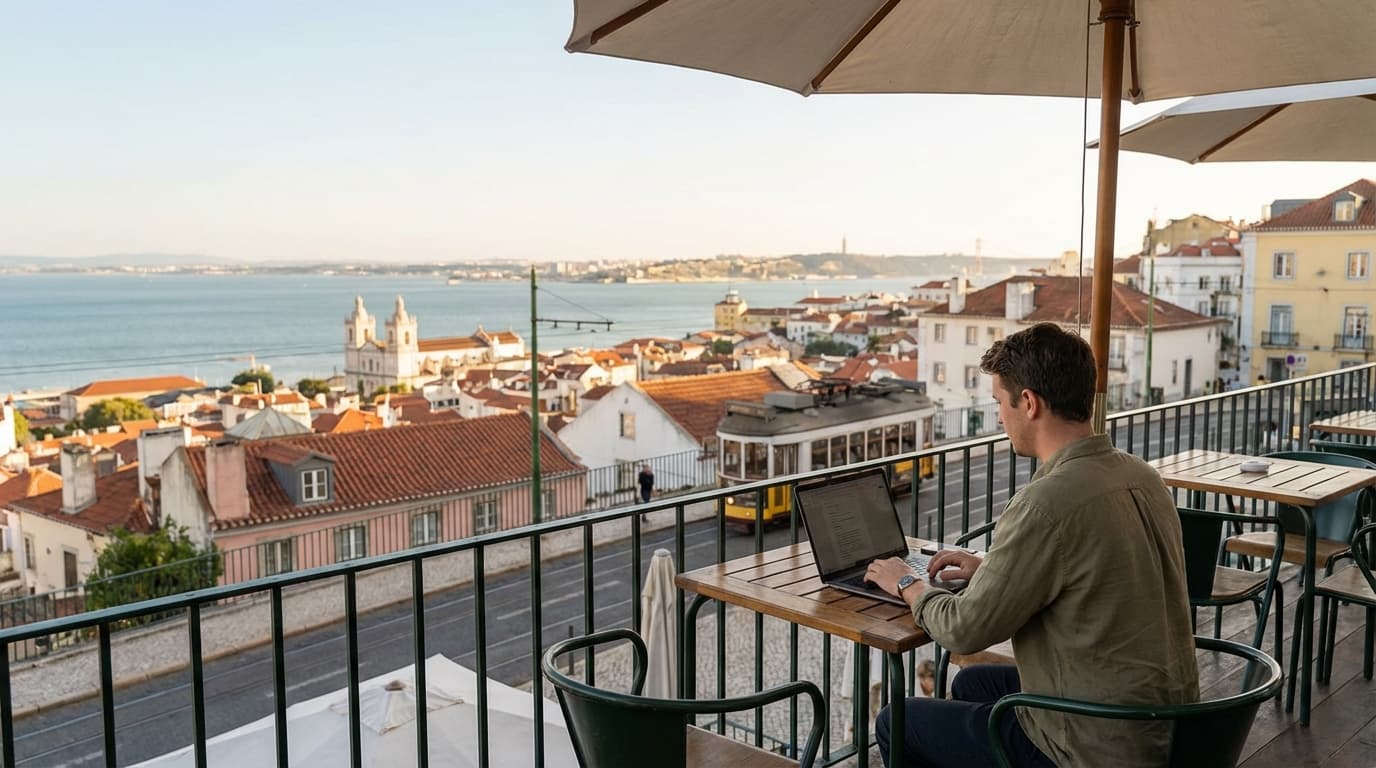
Located in the stunning Algarve region, Lagos is the go-to for nomads who prioritize the outdoors. It has transitioned from a seasonal tourist town into a year-round hub for remote workers who want to surf in the morning and log on by noon. The historic center is packed with cafes that don't mind a laptop, and the cliffside views are a significant upgrade from a home office wall.
- Monthly Cost: Moderate, usually ranging from €1,200 to €1,500 depending on the season.
- The Draw: Some of the best beaches in the world, a relaxed social scene, and great weather.
- The Trade-off: It can feel a bit quiet in the deep winter, and it lacks the "big city" infrastructure of the north.
Cascais: The Polished Retreat
Just a short train ride from Lisbon, Cascais offers an upscale coastal lifestyle. It is perfect for those who want the amenities of the capital without the constant noise. It feels like a high-end resort town but maintains a solid infrastructure for professionals. You get the Atlantic breeze, very high safety ratings, and easy access to the Lisbon airport for quick business trips.
- Monthly Cost: €1,600 to €2,000. It is a premium location with prices to match.
- The Draw: High quality of life, beautiful parks, and a sophisticated expat community.
- The Trade-off: It can feel more like a commuter suburb than a standalone nomad hub.
Making the Move Official
Whichever city you choose, the D8 Digital Nomad Visa is your gateway to staying long-term. This permit allows you to live and work in Portugal for 1 to 5 years, provided you meet the income requirements. You can start the process by checking the requirements on the official government portal. If you are looking for something more niche, consider Ericeira for world-class surfing or Madeira for a dramatic island landscape and a dedicated nomad village.
Portugal has rapidly transformed into a premier tech hub, meaning you won't have to hunt for a signal. Whether you are settling into a sun-drenched terrace in Lisbon or a stone-walled studio in Porto, the infrastructure is built to support heavy remote workloads. Fiber-optic connections are the standard in professional spaces, providing the stability you need for back-to-back Zoom calls or large file uploads.
Internet Speeds and Infrastructure
While the citywide average for fixed broadband in Lisbon sits around 20.8 Mbps, don't let that number mislead you. This average includes older residential copper lines. In the coworking world, premium fiber-optic Wi-Fi is the norm. Major hubs like Avila Spaces and Regus centers prioritize high-speed symmetry, ensuring that your upload speeds match your downloads. Urban areas across the mainland and even the islands of Madeira are well-mapped with fiber, making "dead zones" a rarity in the nomad circuit.
Top Coworking Hubs in Lisbon
Lisbon is the heart of the Portuguese startup scene, and its coworking spaces reflect that energy. You will find a mix of corporate efficiency and creative warehouses.
- Avila Spaces: Often cited as one of the best in the city, it offers fiber-optic Wi-Fi and 24/7 access. It is located near major transport hubs, making it a convenient base for those living outside the immediate center.
- Resvés Cowork: A community-focused spot with high-speed internet and frequent networking events. A shared desk here runs about €249 per month.
- Heden: Known for its eco-friendly design and dedicated quiet zones, it is perfect if you need a distraction-free environment.
- Village Underground: Housed in repurposed shipping containers and buses, this is the go-to for creatives and innovators looking for a unique vibe.
Porto and Regional Alternatives
Porto offers a slightly more relaxed pace but keeps the tech standards just as high. The northern city is famous for its "work hard, play hard" culture.
- Vertical: A massive operation with over 200 workstations and ultra-fast internet. It is built for scale and professional networking.
- Synergy: Located in the Bonfim neighborhood, this space blends fast Wi-Fi with a focus on wellness and community.
- Porto i/o: With multiple locations across the city, they offer flexible plans and a very active Slack community for members.
- Digital Nomad Village (Madeira): If you prefer island life, Ponta do Sol provides high-speed internet in a stunning cliffside setting, specifically designed for remote workers.
Monthly Membership Costs
Expect to pay a premium for 24/7 access and dedicated spots, though daily flexibility is common. Here is what you can expect to budget for a workspace in the capital:
- Avila Spaces: €250 for a shared desk; €360 for a dedicated desk.
- Resvés Cowork: €249 for a shared desk; €20 for a day pass.
- Workhub: Pricing varies based on flexibility, focusing on reliable basics in a historic setting.
In Porto and the Algarve, prices are often slightly lower, generally ranging between €200 and €400 per month depending on the amenities included.
Cafe Culture and Connectivity
If you prefer the hum of a coffee shop, Portugal's cafe scene is very accommodating. Most modern "third-wave" coffee shops expect nomads and provide reliable Wi-Fi as a courtesy. In Lisbon, Copenhagen Coffee Lab and The Mill are favorites for their strong signals and laptop-friendly policies. Porto's 7g Roaster offers a spacious environment with a signal strong enough for most tasks. Just remember that these spaces are better for light admin work than confidential meetings.
Mobile Data and eSIMs
For those days when you want to work from a park or a beach in Lagos, a local data solution is a must. Holafly eSIMs are a popular choice for nomads because they offer unlimited 5G data. This eliminates the need to swap physical SIM cards and ensures you have a backup if a cafe's Wi-Fi fails. These plans are contract-free, allowing you to scale your data usage based on how long you plan to stay in the country.
The Dual Healthcare Reality
Portugal operates a high-quality dual healthcare system that consistently ranks among the best in Europe. You have the Serviço Nacional de Saúde (SNS), which is the tax-funded public system, and a robust network of private providers. While the public system is excellent for emergencies and long-term chronic care, most digital nomads find a hybrid approach works best.
The SNS provides nearly free coverage for primary care, maternity, and hospital services. However, it is notorious for long wait times regarding non-urgent specialist appointments. Private healthcare, which accounts for about half of the country's 250 hospitals, offers a faster alternative. In private facilities, you will find modern equipment and staff who almost certainly speak English, especially in hubs like Lisbon, Porto, and the Algarve.
Public vs. Private: Which Wins?
- Public (SNS): Best for emergencies and major surgeries. Most visits involve only a small co-payment, often under €20, or are completely free for residents.
- Private: Best for speed and convenience. You can book specialists directly without a referral from a family doctor. It is also the primary way to access dentistry and mental health services, which are limited in the public sector.
- The Verdict: Most expats register for the SNS to have a safety net for major issues but maintain a private insurance policy to skip the lines for routine check-ups and minor ailments.
Getting Your Foot in the Door
You cannot simply walk into a public clinic and sign up on day one. To access the SNS, you first need to be a legal resident. This involves a few bureaucratic steps that usually take several weeks to complete.
First, you need your NIF (tax number) and a social security number. Once you have your residency permit (like the Digital Nomad Visa or D7), take your proof of address to your local Centro de Saúde (health center). Ask for your Número de Utente. This is your personal healthcare user number, and it is the golden ticket to public medical services. Until this number is issued, you are responsible for the full cost of your care, which is why having private insurance during your first few months is a requirement for your visa application.
Insurance Options for Nomads
Since you need proof of health coverage to secure your visa, you should look into private plans before you fly. Several companies cater specifically to the remote work crowd. Feather offers digital-first, visa-compliant plans with month-to-month flexibility. AXA is another popular choice for those wanting more traditional, high-limit international coverage.
Expect to pay anywhere from €30 to €100 per month for a solid private policy, depending on your age and the level of coverage. Many of these plans allow you to access private hospitals with just a small deductible, making it much more affordable than similar care in the US or UK.
Daily Logistics: Pharmacies and Emergencies
Pharmacies (Farmácias) are easy to spot by their glowing green crosses. They are highly regulated and the pharmacists are often qualified to give medical advice for minor issues. If you have a prescription through the SNS, the government subsidizes a large portion of the cost, making medication very cheap. For late-night needs, every neighborhood has at least one 24/7 pharmacy on a rotating schedule.
For urgent but non-life-threatening issues, call the SNS24 helpline (808 24 24 24). They have English-speaking operators who can tell you whether you should stay home, visit a pharmacy, or head to the emergency room. If you do have a genuine emergency, dial 112. Public emergency rooms are efficient and, for registered residents, the cost is negligible. To keep track of your records and appointments, download the MySNS app, which serves as your digital health portal while living in Portugal.
Managing Your Money in Portugal
Sorting out your finances is one of the first hurdles you'll face when landing in Portugal. While the country is increasingly digital, you'll still encounter plenty of "Cash Only" signs at traditional tascas or local markets. Setting up a local financial base helps you avoid unnecessary fees and makes paying for big-ticket items like rent much smoother.
Most digital nomads start with a hybrid approach. They keep their primary funds in a borderless account like Wise or Revolut and open a local Portuguese account only when they need to sign a long-term lease or set up utilities. It keeps things flexible while you're still scouting the best neighborhood to call home.
The Local Bank Account Essentials
If you decide to go the traditional route, be prepared for a bit of paperwork. Opening an account at a brick-and-mortar bank usually requires a physical visit. You'll need to bring a few key documents to get the ball around:
- A valid passport or national ID card.
- Your NIF (Número de Identificação Fiscal). This is your Portuguese tax number and you cannot open a bank account without it.
- Proof of address, such as a rental contract or a utility bill from your home country.
- Proof of employment or income, like a recent payslip or your work contract.
Local banks often charge monthly maintenance fees, so check the fine print. Many nomads prefer digital-first options for the first few months because they don't require a permanent Portuguese address right away.
Wise vs. Revolut: The Nomad Favorites
For daily spending and receiving payments from clients abroad, these two platforms are the gold standard. They both offer Euro IBANs that work perfectly for SEPA transfers within Portugal.
Wise is generally the winner for moving large sums of money. They use the mid-market exchange rate and are incredibly transparent about their fees, which usually saves you between 0.4% and 2.6% compared to traditional banks. It's the best tool for paying your rent or receiving your salary in a different currency. You can hold over 40 different currencies in one account, which is a lifesaver if you're hopping between borders.
Revolut shines as a daily spending card. Their app is sleek and offers great budgeting tools, analytics, and even the ability to trade crypto. While they have limits on free currency exchange for basic users, their premium tiers offer unlimited transfers and better ATM withdrawal limits. Many nomads use Wise for the "heavy lifting" of transfers and Revolut for their morning coffee and grocery runs.
ATMs and Currency Tips
Portugal uses the Euro (EUR). You'll find Multibanco ATMs everywhere, from airport terminals to tiny village squares. These machines are great because they allow you to do everything from withdrawing cash to paying your phone bill or buying train tickets.
- ATM Fees: While the Multibanco network itself often doesn't charge for domestic cards, your home bank might. Wise offers 2 free withdrawals per month up to a certain limit, while Revolut's limits depend on your specific plan.
- The DCC Trap: When an ATM asks if you want to be charged in your "home currency," always select EUR. Letting the ATM do the conversion is a guaranteed way to lose 5% to 10% in hidden exchange rate markups.
- Contactless: Most shops in cities like Lisbon and Porto accept "Contactless" payments, but smaller towns still rely heavily on physical cash.
Crypto in the Sun
Portugal has earned a reputation as a crypto-friendly hub. For a long time, crypto gains were largely tax-free for individuals. Recent updates have changed things slightly, but the general rule is that if you hold your crypto for more than 365 days, your capital gains remain tax-exempt. This makes it an attractive base for those who get paid in Bitcoin or Ethereum.
Platforms like Revolut allow you to buy and sell crypto directly in the app, and you can even use your Revolut card to spend your balance. Just keep in mind that for tax purposes, you should keep meticulous records of your transactions if you plan on becoming a long-term tax resident.
If you're ready to get started, you can set up a Wise account or a Revolut account before you even board your flight. Having these active before you land saves you the headache of dealing with high-street banks during your first week in the country.
Bringing the Family Along
Portugal is widely regarded as one of the most welcoming places in Europe for families. Between the year-round sunshine and a culture that genuinely prioritizes children, it is a natural choice for digital nomads who do not want to leave their kids behind. However, moving your household requires more than just a plane ticket; you will need to meet specific income thresholds and handle some paperwork to get everyone settled.
The D6 Family Reunification Visa
The primary path for your loved ones is the D6 Family Reunification Visa. This allows your spouse, minor children, and even dependent adult children who are unmarried and studying full-time to join you. If you are the legal guardian of a younger sibling, they may also be eligible if you can prove they depend on you financially.
The process usually starts with the primary resident getting settled first. Once you have your own residency status, you apply through AIMA (the successor to SEF) to sponsor your family. If you are applying under the D8 Digital Nomad Visa, be prepared for higher income requirements than the standard national minimum. You will need to show a base monthly income of €3,480, plus an additional 50% for your spouse and 30% for each child.
- Required Documents: Valid passports, birth certificates, and marriage certificates.
- Financial Proof: Evidence of sufficient funds to support all dependents without relying on the state.
- Accommodation: Proof that your rental or owned home has enough space for the whole family.
- Education: Proof of enrollment for any dependent children over 18.
Education and Schooling
Once your children have their residence permits, they have full access to the Portuguese public school system. While public schools are a great way to integrate into the local community, many digital nomads opt for international schools to keep their children in English or French curricula. These schools are mostly clustered around major hubs like Lisbon, Porto, and the Algarve.
Annual tuition for top-tier international schools generally ranges from €10,000 to €25,000 per child. For younger children, Portugal offers creches (nurseries) for ages 0 to 3 and jardins de infância (kindergartens) for ages 3 to 6. Private childcare costs often fall between €300 and €800 per month, though public options are subsidized for residents.
Healthcare for the Little Ones
Portugal’s public healthcare system, the SNS, is high quality and provides free or very low-cost pediatric care to residents. To access this, you must register your children at your local Centro de Saúde once your residency is approved. Until that paperwork is finalized, you are required to maintain private health insurance that covers the entire family in Portugal. Many expats choose to keep a private policy even after joining the public system to get faster access to specialists and private clinics.
Where to Settle
While the whole country is safe, certain areas are better suited for families who need a mix of infrastructure and community.
Lisbon
- Vibe: Fast-paced but filled with parks and world-class international schools.
- Pros: Best career networking and most diverse expat community.
- Cons: Highest cost of living and competitive housing market.
Porto
- Vibe: Cultural and historic with a slightly more relaxed pace than the capital.
- Pros: More affordable than Lisbon with excellent public transport.
- Cons: Rainier winters compared to the south.
Cascais and Estoril
- Vibe: High-end coastal living just a short train ride from Lisbon.
- Pros: Incredible beaches, safe suburbs, and a massive international community.
- Cons: Premium price tags on real estate.
Portugal consistently ranks as one of the safest countries in the world. You will often see families out at restaurants late into the evening, and the general attitude toward children is incredibly inclusive. For detailed forms and the latest appointment updates, you can check the official AIMA portal.
A Global Leader in Safety
Portugal consistently secures its spot as one of the safest destinations on the planet. It ranked 6th in the 2022 Global Peace Index and often fluctuates between the 3rd and 4th most peaceful countries worldwide. For digital nomads, this translates to a high level of daily comfort. Whether you are working late in a Porto cafe or walking home in Coimbra, the risk of violent crime is remarkably low.
Women travelers and solo nomads find the environment particularly welcoming. In Aveiro, for instance, 91% of women report feeling safe. While the atmosphere is relaxed, standard urban awareness is still your best friend. Most issues facing foreigners are non-violent, primarily involving opportunistic petty theft in crowded tourist zones.
Staying Smart in the City
Pickpocketing and bag-snatching are the most frequent headaches for expats. These usually happen on popular public transport routes, like Lisbon’s famous Tram 28, or in busy plazas. Keep your tech gear zipped away and don't hang your bag on the back of your chair while dining outdoors.
While the vast majority of neighborhoods are perfectly safe, local advice suggests being more observant in specific areas of Lisbon, such as Cova da Moura, Casal Ventoso, and Bairro da Jamaica. Parts of Amadora, Martim Moniz, Mouraria, and Intendente also warrant a bit more vigilance after dark. Serious crime is rare, but staying informed on local news helps you spot any shifts in the local economic climate that might impact safety.
The Social Fabric and LGBTQ+ Life
Portuguese culture is famously laid-back, centered around community, coffee, and a slower pace of life. You'll find that locals are generally welcoming to remote workers, especially as the digital nomad visa has streamlined the process for long-term stays. University cities like Coimbra offer a youthful, academic vibe that is particularly open-minded and progressive.
The country is widely regarded as one of the most LGBTQ+ friendly spots in Europe. There is a strong sense of "live and let live" here. In major hubs like Lisbon and Porto, the scene is vibrant and inclusive, with very few reports of discrimination among the nomad community. Respecting local etiquette usually just means being polite, greeting shopkeepers, and embracing the "despachado" (efficient but relaxed) way of doing things.
Breaking the Language Barrier
English is very common in the tech and tourism hubs. In Lisbon, Porto, and Coimbra, you can easily get by in coworking spaces and restaurants without knowing a word of Portuguese. However, the further you venture into rural villages, the more you will rely on the local tongue. Learning basic phrases like "Bom dia" (Good morning) or "Obrigado" (Thank you) goes a long way in building rapport with your neighbors.
Integration and Community Tips
Portugal has one of the most established expat networks in the world. If you are looking to find your tribe, start in the tech-heavy corridors of Lisbon or the surf-centric community in Ericeira. For those who want a bit more balance, Portimão and Aveiro offer a slower speed without sacrificing high-speed internet or reliable infrastructure.
- Join Coworking Spaces: These are the heart of the nomad scene in Porto and Lisbon, serving as networking hubs as much as offices.
- Use Digital Platforms: Check Nomad List for real-time insights on meetups and local events.
- Visit Local Markets: Frequent your neighborhood "mercado" to move beyond the expat bubble and meet local vendors.
- Document Everything: If you plan on using your stay as a path to residency, keep meticulous records of your housing contracts, income, and health insurance.
Safety Ratings by Hub
- Aveiro: Known for its waterways and high safety ratings for women.
- Coimbra: Academic, safe, and very progressive.
- Porto: Generally safe, though watch for pickpockets in the Ribeira district.
- Lisbon: High safety overall, but requires vigilance in specific nightlife and transit hubs.
Understanding the tax situation in Portugal is a bit like learning the local surf breaks. It looks straightforward from the shore, but you need to know where the hidden currents are before you dive in. The most important figure to keep in mind is 183 days. That is the magic number that transforms you from a visitor into a tax resident.
The 183-Day Rule
Portugal determines your tax residency based on how much time you spend on the ground. If you stay for 183 days or more within any rolling 12-month period, the government considers you a resident. At this point, you are liable for Portuguese taxes on your worldwide income.
If you stay for fewer than 183 days, you are generally considered a non-resident. In this scenario, you only pay tax on money earned from Portuguese sources, like a local freelance client. Your remote salary from a company in New York or London stays out of the Portuguese tax net. However, if you plan to renew your residency permit long-term, you will likely have to meet physical presence requirements that trigger tax residency anyway.
The New Tax Incentives (IFICI)
While the original NHR program has closed to new applicants, a successor known as the Incentivised Tax Status (ITS) or the IFICI regime has taken its place. This is a massive win for digital nomads who qualify. If you haven't been a tax resident in Portugal for the last five years, you can apply for a flat 20% income tax rate on eligible work income for 10 consecutive years.
To grab this benefit, you have to act fast. The application deadline is March 31st of the year after you become a resident. You also need to prove you earn at least €3,480 per month, which is four times the national minimum wage. This can be shown through bank statements, remote work contracts, or previous tax filings.
Double Taxation and Treaties
Nobody wants to pay tax twice on the same Euro. Portugal has double taxation treaties (DTAs) with dozens of countries to prevent this. These agreements usually mean that if you pay tax in your home country, you can get a credit in Portugal, or vice versa.
- Foreign Pensions: Often exempt or taxed at lower rates under specific treaties.
- Real Estate: Income from property outside Portugal is usually taxed in the country where the property is located.
- Blacklisted Jurisdictions: Be careful with capital gains from tax havens, as these can be hit with a penalty rate of 28% or 35%.
Getting Your Paperwork in Order
Before you can even think about filing a return, you need a Número de Identificação Fiscal (NIF). This is your tax ID, and you will need it for everything from signing a lease to getting a SIM card. You can get this through a representative or at a local Finanças office.
Once you are registered as a resident, you are expected to report your global earnings annually. While Portugal is becoming more digital, the reporting procedures can still be dense. It is always a smart move to chat with a local accountant who specializes in expat taxes to ensure you are taking advantage of every deduction available to you.
Key Requirements at a Glance
- Residency Trigger: 183 days in a 12-month period.
- Minimum Income: At least €3,480 monthly for the Digital Nomad Visa.
- Special Tax Rate: 20% for 10 years under the new IFICI/ITS regime.
- NIF: Mandatory for all financial activities and residency applications.
For official forms and the latest updates on tax brackets, you can visit the Portuguese Tax Authority portal. Keep in mind that while the 20% flat rate is attractive, it is not automatic. You must proactively apply for it once your residency is established.
Connectivity and SIM Cards
Staying connected is the first priority for any remote worker landing in Portugal. If you are here for a quick scouting trip, grab a Vodafone Tourist SIM at the airport. It usually runs between €20 and €30 for 10GB to 30GB of data and includes EU calls. It is simple, but it expires after 30 days.
For those staying longer, look into MEO Pós-Pago Flex or the NOS 5G Combo. These plans start around €18 per month and offer up to 50GB of data. If you have a NIF (Portuguese tax number), you can often get better rates and the ability to port your number if you switch providers later. To avoid overpaying, stop using international roaming SIMs if you are staying more than two weeks; local rates are significantly cheaper.
If your phone supports eSIM technology, you can skip the physical shops entirely. Apps like Nomad offer 1GB starting at $4.50, while TooSIM provides a 5GB 30-day plan for $9.99. These activate the moment you touch down, which is perfect for calling a ride from the terminal. Just remember to disable auto-updates if you are near the Spanish border to avoid accidental roaming charges from cross-border towers.
Getting Around the Cities
Public transport in Lisbon and Porto is excellent, but you will want Citymapper or Google Maps to make sense of the schedules. For direct trips, Bolt and Uber are the standard. Bolt is often slightly cheaper than Uber in Portugal and both are significantly more affordable than traditional street taxis.
When you are deep in a work sprint and cannot leave your desk, Glovo and Uber Eats are the primary food delivery services. They work well in all major urban hubs and offer a mix of local tasca food and international chains.
Where to Set Up Your Base
Your choice of neighborhood will dictate your social life. In Lisbon, PrÃncipe Real and Bairro Alto are the hotspots for nomads who want to be steps away from coworking spaces and specialty coffee shops. If you prefer history and do not mind a daily leg workout, Alfama is beautiful but very steep.
In Porto, the Ribeira district offers the classic postcard views, while Foz do Douro is better for those who want to be near the beach. If you need a quieter pace, consider the canals of Aveiro or the southern coast of the Algarve. Regardless of where you pick, verify the WiFi speeds with your host before booking. Use Idealista for long-term furnished rentals, as it is the local go-to site and often has better pricing than Airbnb.
Local Survival Tips
- Emergency Services: Dial 112 for police, fire, or medical emergencies. It is free and works from any mobile phone.
- Language: While English is widely spoken in tourist hubs, downloading an offline Portuguese pack on Google Translate is a lifesaver in smaller towns. A simple "Obrigado" (if you identify as male) or "Obrigada" (if you identify as female) goes a long way.
- Data Management: Remote work consumes more data than you think. Aim for plans with at least 20GB to 50GB if you plan on frequent video calls or streaming.
- NIF Importance: If you plan to stay long-term, get your NIF early. It is required for everything from gym memberships to setting up a home internet bundle with MEO or NOS.
Common Pitfalls to Avoid
Many nomads make the mistake of relying on international data plans that throttle speeds after a few gigabytes. Digital work requires low latency, so stick to local 5G providers. Also, keep an eye on your data usage via the provider's app. If you bought a SIM that was shipped to you, make sure to activate it 3 to 5 days before you arrive to ensure the service is live when you land.
Latest Nomad News
Portugal Caps Rent Increases and Expands Tax Breaks
Portugal's new housing laws cap annual rent increases at 2.24% and offer tax breaks for moderate leases, providing better cost predictability for long-term renters.
Portugal Updates Housing Rules to Boost Rental Supply
New tax incentives for landlords and housing reforms aim to increase the availability of long-term rental properties and stabilize prices in Portugal.
Understanding Portugal's IFICI Tax Incentive
Portugal's NHR successor, the IFICI, limits the 20% flat tax rate to a specific list of high-skill professions, narrowing eligibility for new expats.
Portugal Updates Immigration Enforcement and Detention Rules
The Portuguese government has approved a new Law on the Return of Foreigners, significantly increasing detention periods for those facing expulsion and removing mandatory voluntary departure notices. These measures also include entry bans of up to five years for individuals coercively removed from the country.
Understanding Portugal's Tightened Residency and Naturalization Rules
Portugal is set to increase the residency requirement for citizenship to 10 years for most foreigners and restrict job-seeker visas to highly qualified professionals. Additional changes include a two-year residency mandate for family reunification and stricter security checks for CPLP nationals.
More Guides from Europe
Stay Updated on Portugal
Get notified about visa changes, policy updates, and new information for digital nomads in Portugal.