Indonesia waives Rp 1,000,000 daily overstay fines for stranded travelers

| Standard Rate | 1,000,000 Rp |
|---|---|
| Force Majeure Rate | 0 Rp |
Indonesia began waiving its standard Rp 1,000,000 ($65) daily overstay penalty on Sept. 7, 2026, granting zero-cost emergency stay permits to foreign nationals stranded by volcanic disruptions.
Emergency permits replace standard overstay penalties
Foreign visitors caught in the travel standstill caused by Mount Anak Krakatau can now secure an Izin Tinggal Keadaan Terpaksa (ITKT) or Force Majeure Stay Permit, at zero cost. Under standard immigration regulations, foreigners remaining in the country past their visa expiration date face an automatic fine of Rp 1,000,000 ($65) per day.
The Directorate General of Immigration confirmed that an Rp 0 tariff applies directly to individuals whose scheduled departures were interrupted by the volcanic eruption, immigration officials reported.
The ITKT grants legal residency for up to 30 days from the date of issue. If flight cancellations continue past the initial window, the permit can be extended upon reassessment, Immigration Director General Hendarsam Marantoko confirmed.
This mechanism prevents stranded tourists, remote workers and long-term expatriates from accruing heavy daily debt or facing deportation blacklists while airlines reorganize flight paths. Standard overstay rules remain fully active for any foreigner whose permit expired for reasons unrelated to the volcanic activity, immigration authorities confirmed.
Scale of regional flight cancellations
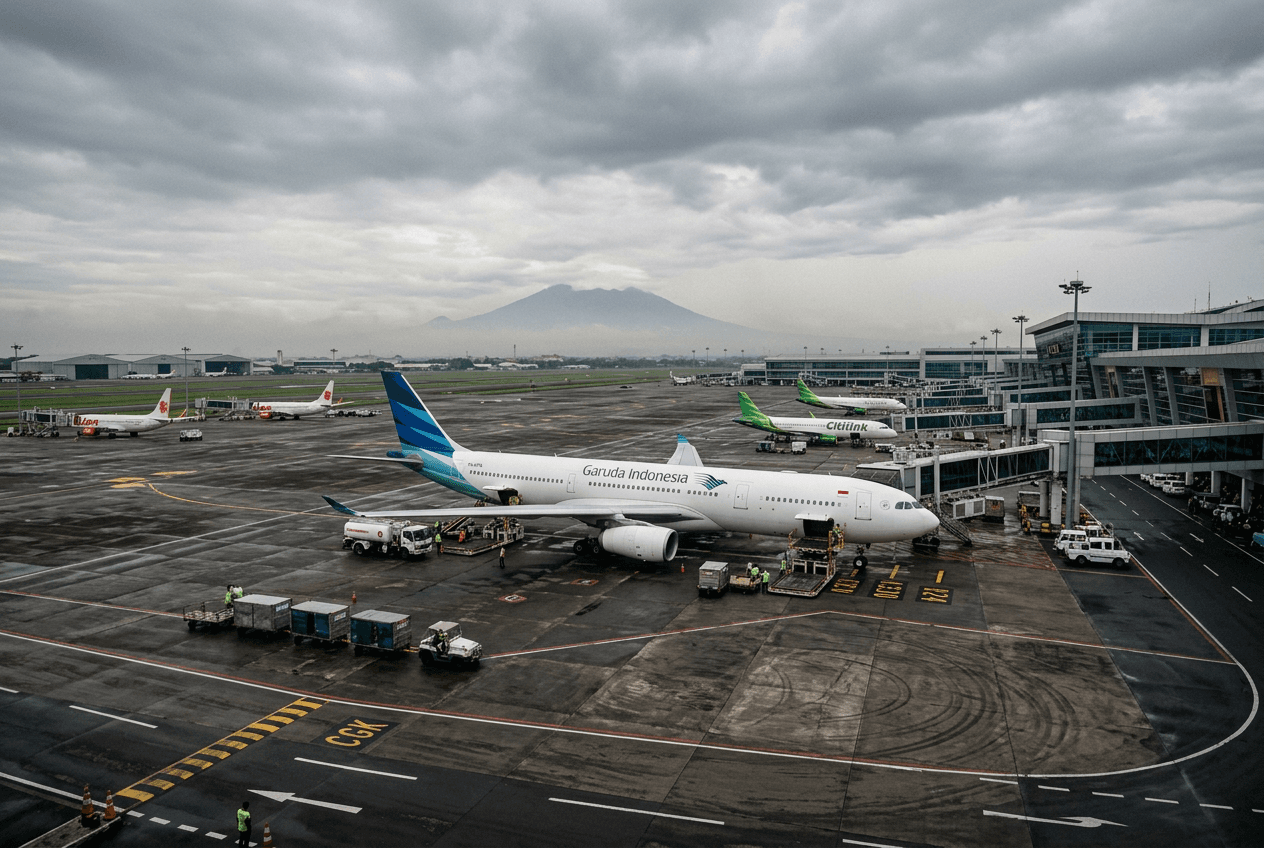
The emergency measure follows major disruption across western and central Indonesian transit corridors. Between Sept. 5, 2026 and Sept. 7, 2026, the eruption of Mount Anak Krakatau led to the cancellation or rerouting of 528 flights at Jakarta's Soekarno-Hatta International Airport alone, state news agency RRI reported.
The airport disruptions affected 86,760 passengers over the three-day period. By Sept. 7, 2026, Soekarno-Hatta immigration staff had processed 26 ITKT applications through dedicated emergency counters, officials confirmed.
The operational response extends well beyond the capital city. Immigration offices in Central Jakarta, North Jakarta, South Jakarta, Depok, Bekasi, Tangerang and Juanda in Surabaya are actively handling individual applications.
In Bali, the Ngurah Rai Immigration Office updated administrative files for 94 foreign nationals whose departing flights were grounded, ensuring their profiles reflect approved disaster relief rather than unlawful overstays, local authorities reported.
Mandatory documentation and filing procedures
The emergency permit isn't applied automatically at exit gates and requires specific paperwork before clearing airport checks. Foreign nationals must submit applications either in person at an immigration office or through an authorized airline representative.
To qualify for the fee waiver, travelers must provide three specific items:
A valid passport
Their current visa or stay permit
Official proof of disruption issued by the airline, airport authority or civil aviation board
Immigration counters at Soekarno-Hatta were expanded to handle incoming filings quickly and prevent bottlenecks at departure terminals. Travelers holding expiring 30-day visit visas, electronic visas on arrival (e-VoA) or temporary stay permits must initiate the filing before attempting to pass through border control.
Attempting to board without formal processing can result in delays at exit gates while officers verify disruption manifests against airline records, legal advisers noted. Submitting the documentation early ensures that the electronic immigration database reflects the ITKT status ahead of departure screening.
Practical impact for remote workers and visitors
For remote workers and extended travelers managing their time through Indonesia's residency rules, the emergency waiver removes financial and administrative penalties during unexpected natural events. Overstaying accidentally in Indonesia usually leads to detention at the border, mandatory cash payments and potential administrative blacklists that complicate future visa approvals.
The 30-day ITKT buffer provides enough time for nomads to rebook alternative routes without the pressure of purchasing inflated emergency tickets. Because the waiver is recognized across regional offices, travelers stranded in transit hubs outside Jakarta, including Bali and East Java, can resolve their documentation locally without traveling to the capital.
Foreign nationals must remember that the relief applies solely to travel disruptions caused directly by the volcanic activity. Anyone whose visa expired before the volcanic activity began on Sept. 5, 2026, remains subject to standard fines and deportation procedures, immigration authorities emphasized. The policy is designed strictly as disaster relief rather than a general visa extension.
Operational limits and future force majeure policy
Immigration officials stated that the ITKT framework functions as a broader disaster protocol rather than a one-off exemption. The same emergency waiver mechanism can be activated during future volcanic events, extreme weather disruptions or other force majeure conditions that ground international travel, the agency confirmed.
Some operational details still vary across municipal immigration desks. Processing speed differs between airport service points and municipal branch offices and travelers should confirm whether their airline handles group submissions or requires individual appearances.
Travelers facing flight cancellations must secure formal delay certificates from their carrier immediately, as informal cancellation emails or verbal notices don't satisfy immigration evidentiary standards. Obtaining written airline letters ensures that immigration officers can apply the Rp 0 tariff without procedural delays.
Frequently asked questions
What is the ITKT permit in Indonesia?
How long is the emergency stay permit valid in Indonesia?
Are Indonesia's overstay fines waived for stranded travelers?
Where can stranded travelers apply for the Indonesia emergency permit?
What documents do I need for the Indonesia emergency stay permit?
Who is eligible for Indonesia's waiver of overstay fines?
Stay updated on Indonesia
Visa changes, travel alerts, and destination news — delivered when they actually matter.