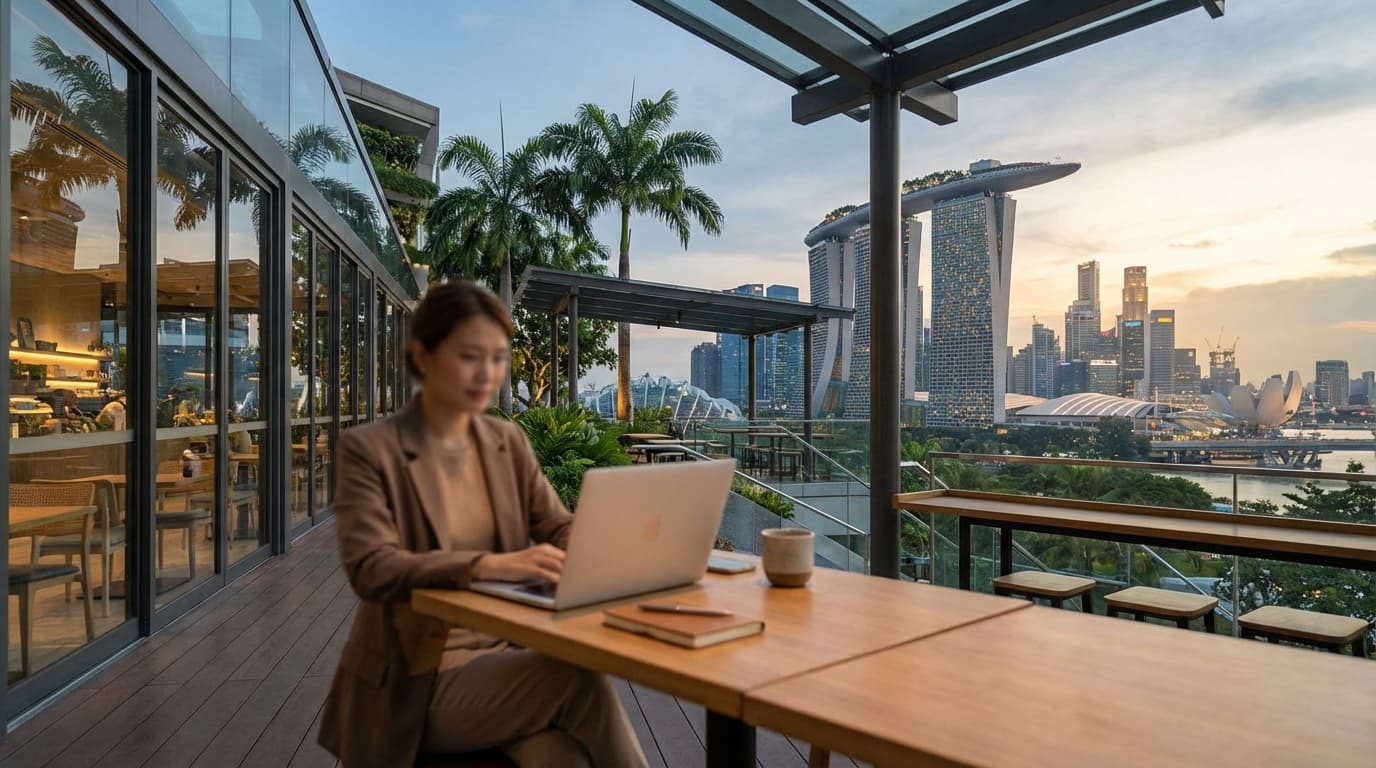
Indonesia landscape
Smooth SailingB211A Visa
🇮🇩

Indonesia

Complete Digital Nomad Guide

Brandon Richards
Brandon Richards ·

Policy Stability

Stamped Nomad Exclusive
5/10Moderate

How likely visa and immigration policies are to remain unchanged

Quick Facts

Nomad Visa Cost

$427

Income Requirement

$5,000/mo

Max Stay

12 months

Renewable

Yes

Cost of Living

$1,300/mo

Avg Internet

43 Mbps

Safety Score

6/10

Healthcare

Medium

Coworking

High

English Friendly

Medium

Time Zones

WIB (UTC+7), WITA (UTC+8), WIT (UTC+9)

Entry Methods Available

Visa FreeVisa on ArrivalE-Visa

Best For

solofamiliesbudgetbeachasia-base

The New Era of Indonesian Immigration

Indonesia has recently overhauled its visa system, moving toward a more streamlined digital experience. The 2025-2026 updates have simplified many categories, merging several older subtypes into more manageable groups. Whether you are landing in Bali for a month of surfing or setting up a long-term remote work base in Jakarta, you will likely manage your entire stay through the official immigration portal.

The most important thing to remember is the mandatory arrival card. Every traveler must complete this digital declaration within 3 days of their arrival. Once you land, ensure your passport is valid for at least 6 months and you have a confirmed onward ticket, as immigration officers check these strictly.

Visa-Free Entry (Category A)

For those planning a quick scouting trip or a short holiday, Indonesia offers visa-exempt entry to specific nationalities. This category, known as BVK, is primarily for ASEAN members, though recent reciprocal agreements have expanded the list to include Brazil and Turkey.

  • Duration: 30 days maximum.
  • Extension: None. You must leave the country before the 30 days expire.
  • Cost: Free.
  • Purpose: Tourism or visiting family only.

Visa on Arrival and e-VOA (Category B1)

The B1 visa is the go-to choice for most digital nomads. It covers over 90 nationalities and allows for a bit more flexibility than the visa-free option. While you can still buy this at a physical desk upon landing, it is much faster to apply for an e-VOA online before you fly.

  • Cost: Rp500,000 (approximately $35 USD).
  • Initial Stay: 30 days.
  • Extensions: One extension is allowed for an additional 30 days, giving you a total of 60 days.
  • Permitted Activities: Tourism, business meetings, and site visits. You cannot sell goods or perform local work.

If you overstay your visa, the penalties are steep. Expect to pay Rp1,000,000 per day in fines, and serious delays could lead to detention or deportation.

Long-Term Stays and Residency (KITAS)

For nomads who want to stay longer than two months, Indonesia offers several pre-issued eVisas under categories C, D, and E. These require more paperwork but offer much longer stability. Many remote workers now utilize these pathways to stay for 6 to 12 months at a time.

Employment Visa (C312)

  • Purpose: Working for an Indonesian-based company.
  • Validity: 6 months to 1 year, renewable.
  • Requirement: Requires a local employer sponsor and a formal work permit.

Investor Visa (E28A)

  • Purpose: For those actively managing a business or holding shares.
  • Validity: 2 years, renewable.
  • Requirement: Proof of company ownership and specific investment thresholds.

The Golden Visa

  • Purpose: High-net-worth individuals and entrepreneurs.
  • Validity: 5 to 10 years.
  • Requirement: Significant economic contribution or investment in the Indonesian economy.

Second Home Visa

  • Purpose: Long-term stays for those who do not intend to work locally, such as high-earning nomads or retirees.
  • Validity: Up to 10 years.
  • Requirement: Proof of stable income and significant funds.

Key Updates for 2025-2026

The recent system overhaul has simplified the business landscape. Most short-term business activities like negotiations or attending a conference are now bundled into the B1 category, eliminating the need for separate business visas for short trips. Additionally, the new Bridging Stay Permit has been emphasized to help travelers transition between different visa types without needing to leave the country, though you should always check your specific eligibility on the government website.

Source 1 | Source 2

Source 1 | Source 2

The Remote Worker Permit (E33G)

Indonesia finally streamlined the process for long-term remote workers with the introduction of the E33G Remote Worker Visa. This is a formal KITAS (Temporary Stay Permit) that replaces the old days of "border runs" and vague social visas. It is designed specifically for those employed by companies outside of Indonesia who want to call Bali or Jakarta home for a year at a time.

The biggest draw here is the stability. Unlike tourist visas that require constant extensions, the E33G is valid for 12 months and can be renewed. Once your visa is granted, you have a 90-day window to enter Indonesia and activate your permit.

Financial Requirements

The Indonesian government is looking for high-earning professionals for this specific program. To qualify, you need to demonstrate a minimum annual income of $60,000 USD. This must come from an employer or client base located outside of Indonesia.

In addition to your salary, you need to show liquidity in your bank accounts. The requirements differ slightly depending on where you are when you apply:

  • Offshore applicants: Bank statements from the last three months showing a balance of at least $2,000 USD.
  • Onshore applicants: If you are already in Indonesia, you need to show a balance of at least $5,000 USD.

What You Can and Cannot Do

This visa is strictly for remote work. You are legally allowed to work for your foreign employer while enjoying the Indonesian lifestyle, but there are firm boundaries to keep in mind.

  • No Local Employment: You cannot under any circumstances work for an Indonesian company or local employer.
  • No Local Sales: You cannot sell goods or services to people within Indonesia or receive any compensation from an Indonesian entity.
  • Tax Reality: Holders of the E33G visa are subject to Indonesian income tax on their foreign-earned income. It is a good idea to chat with a tax professional about how this interacts with your home country's tax laws.
  • Corporate Risk: If your job is client-facing or involves generating revenue directly within the Indonesian market, your employer might face "Permanent Establishment" risks. This is a medium-level risk, so ensure your HR department is comfortable with the arrangement.

The Application Process

The days of visiting embassies are mostly over. The entire process is handled online through the Directorate General of Immigration website. You will need to upload several digital documents to get started.

Standard processing usually takes between 8 and 10 working days. If you are in a rush, priority processing is available for an extra fee, which typically cuts the wait down to 7 business days. The base cost for the visa is approximately $150 USD.

Required Paperwork

Before you log on to the portal, have these documents scanned and ready to go:

  • A passport valid for at least 6 months beyond your arrival date.
  • A recent color photograph (passport style).
  • An up-to-date CV or resume.
  • A basic outline of your travel itinerary.
  • Your employment contract with a company based outside Indonesia.
  • The Certificate of Incorporation for your employing company.
  • Bank statements proving both your annual income and your current savings balance.

The Onshore Alternative

If you are already on the ground in Indonesia on a C1 visa (the standard tourism/business visit visa) and decide you want to stay longer, you can transition to the E33G without leaving the country. You will still need to meet the same income requirements and provide a recent photograph and bank statements showing at least $2,000 USD from the previous three months.

Source

The Basics: Getting Past the Gatekeepers

Indonesia has streamlined its entry process significantly, but the rules are strict. Before you pack your bags, ensure your passport has at least 6 months of validity remaining. If it expires sooner, you will likely be denied boarding at your departure airport.

Every traveler must complete the online All Indonesia Arrival Card. Starting September 1, 2025, this becomes mandatory via a dedicated app for everyone landing at major hubs like Jakarta or Bali. You should fill this out within 3 days of your flight. If you are heading to Bali, there is one extra step: a IDR 150,000 tourist levy. You can pay this online to save time at the terminal.

Visa-Free Entry

A handful of nations, primarily ASEAN neighbors, can enter Indonesia without a visa. This allows for a stay of up to 30 days. The catch? You cannot extend this stay or convert it to another visa type while in the country. If you think you might want to stay longer than a month, it is better to skip the visa-free option and pay for a Visa on Arrival instead.

The Go-To: Visa on Arrival (VOA)

For most digital nomads testing the waters, the VOA is the standard choice. It is currently available to citizens of 97 countries. It grants you an initial 30-day stay and can be extended exactly once for another 30 days, giving you a total of 60 days in the country.

You have two ways to get this:

  • e-VOA: Apply through the official e-Visa portal before you fly. This is the smartest move, as it lets you skip the payment queues at the airport. Submit your application at least 10 days before your trip.
  • On Arrival: You can still buy your visa at the airport desks using cash or card.

The cost is IDR 500,000 (roughly USD 35). To qualify, you need proof of a return or onward flight and a confirmed place to stay for your first few nights.

Longer Stays and e-Visas

If you already know 60 days won't be enough, look into the D1 Multiple Entry Tourist Visa. This allows for an initial 60-day stay and is handled entirely through the government website. You will need to upload a passport photo and a recent bank statement to prove you can support yourself. If you are from a high-risk country, you may be required to obtain a "Calling Visa," which involves a more rigorous background check by the Directorate General of Immigration.

Managing Your Extension

If you entered on a VOA and want to stay for that second month, you must apply for an extension. As of May 29, 2025, immigration rules require this to be done in person at a local office. Do not wait until the last minute. Start the process at least one week before your first 30 days are up. The extension costs another IDR 500,000.

The Reality of "Border Runs"

In the past, many nomads would fly to Singapore or Kuala Lumpur for lunch and fly back the same day to reset their visa. Indonesian authorities have become wary of this pattern. While not illegal, frequent back-to-back entries can lead to questioning, secondary screening, or being denied entry entirely. It is much safer to use the proper extension channels or apply for a longer-term visa if you plan to stay half the year.

Penalties and Overstays

Indonesia does not take overstays lightly. If you miss your flight or forget your expiry date, you will face daily fines that must be settled at the airport before you are allowed to leave. Serious overstays can result in time in a detention center, formal deportation, and a multi-year ban from entering the country. Always double-check the entry stamp in your passport, as the 30 days include both your arrival and departure dates.

Quick Cost Breakdown

  • Standard VOA: IDR 500,000
  • One-time Extension: IDR 500,000
  • Bali Tourist Levy: IDR 150,000
  • Maximum VOA Duration: 60 Days

Source 1 | Source 2

Source 1 | Source 2

Setting up a base in Indonesia requires a shift in mindset from "tourist" to "resident." While the country doesn't offer a specific freelancer or digital nomad visa by name, the immigration system has several pathways that allow you to stay for a year or even a decade. Choosing the right one depends entirely on your budget and how much paperwork you are willing to handle.

The Multiple-Entry Visa (B211A)

If you aren't ready to commit to a full residency permit, the 12-month multiple-entry visa is a solid middle ground. It allows you to come and go as you please, with each individual stay lasting up to 60 days. You can extend these stays while in the country, but the primary benefit is the flexibility to travel regionally without voiding your visa.

  • Requirements: A passport valid for at least 6 months, proof of funds, a return ticket, and an Indonesian sponsor if applying online.
  • Best for: Nomads who want a home base in Bali or Jakarta but plan to explore neighboring countries like Singapore or Thailand frequently.
  • Limitations: You cannot legally work for Indonesian companies or earn local income on this visa.

The Limited Stay Permit (KITAS)

The KITAS is the "holy grail" for most long-term expats. It is a residency permit valid for 1 to 2 years and includes a Multiple Re-entry Permit (MERP), meaning you can leave and return without extra paperwork. There are three main versions relevant to foreigners:

  • Investor KITAS: This is popular for those willing to put skin in the game. You must own shares in an Indonesian company (PT PMA). It often requires proof of investment but grants you the right to live and manage your business for up to 2 years at a time.
  • Work KITAS: This requires a local employer to sponsor you. They handle the heavy lifting with the Ministry of Manpower, but your residency is tied strictly to that specific job.
  • Spousal KITAS: If you are married to an Indonesian citizen, this is your most straightforward path. It requires your marriage certificate and your spouse’s sponsorship.

A KITAS makes life easier. You can open local bank accounts, get a local driver's license (SIM), and often pay local prices at attractions rather than tourist rates.

The Second Home & Golden Visa

Indonesia recently introduced high-tier options for those with significant capital. The Second Home Visa is designed for those who want to stay for 5 to 10 years without the hassle of constant renewals. It is essentially a residency-by-investment program.

  • Financial Threshold: You need to show proof of funds totaling at least $130,000 in a personal Indonesian bank account or purchase high-value real estate.
  • Fees: The application fee is approximately IDR 7,000,000 (around $450 USD), which covers your stay and entry permits.
  • The Golden Visa: This is a more intensive business-focused version. A 5-year stay requires a $350,000 investment, while a 10-year stay requires $700,000 or more invested in local companies or government bonds.

Permanent Residency (KITAP)

For those who have truly fallen in love with the archipelago, the KITAP offers a 5-year residency that is automatically renewable, effectively giving you permanent status. It is a difficult permit to get and usually requires you to have held a KITAS for several years first.

  • Eligibility: You can typically apply after 3 to 5 years of consecutive residency on a KITAS, or if you have been married to an Indonesian citizen for over two years.
  • Costs: Processing can be expensive, sometimes reaching $4,500 including all agency fees and legal filings.
  • Benefits: This grants you a KTP (Indonesian ID card), access to local loans, and the ability to stay indefinitely. After five years on a KITAP, you may even be eligible to apply for citizenship, provided you renounce your original passport.

Navigating these options can be tricky because rules change with little notice. Most expats use a reputable visa agency to handle the filings at the official immigration portal. While agencies charge a premium, they save you from the "red tape" that often defines Indonesian bureaucracy.

Source

The Price of Paradise: Budgeting for 2025-2026

Indonesia remains one of the most financially attractive hubs for remote workers, offering a lifestyle that feels premium without the western price tag. While inflation has nudged prices up in popular pockets like Canggu and Uluwatu, your dollars still go incredibly far here. Most people find they can live a high-quality life for about 60% less than they would in cities like London, Sydney, or San Francisco.

How much you spend depends entirely on your tolerance for local living versus western comforts. If you are eating at local warungs and driving a scooter, you can get by on $1,000 to $1,400 a month. However, most professional nomads land in the $1,600 to $2,400 range. This "comfortable tier" covers a private villa or modern apartment, daily cafe visits, a solid gym membership, and frequent dinners out.

Monthly Expense Breakdown

To give you a realistic idea of the monthly burn rate for a comfortable professional lifestyle, here is how the numbers usually shake out:

  • Housing: $600 to $1,500 for a quality one-bedroom villa or serviced apartment. If you want a luxury multi-bedroom setup, expect to pay $3,500+.
  • Food and Drink: $250 to $600. This covers a mix of $2 street food snacks, $5 local lunches, and $25 dinners at trendy western-style restaurants.
  • Utilities and Connectivity: $80 to $150. This includes electricity (AC is the big spender here) and high-speed home internet.
  • Workspace: $100 to $350 for a dedicated desk or premium membership at hubs like BWork or Outpost.
  • Transport: $50 to $250. A standard scooter rental is cheap, while frequent car hires or private drivers will push you toward the higher end.
  • Wellness: $30 for a standard gym, though high-end "recovery" centers with saunas and ice baths cost significantly more.

Regional Price Differences

Location is the biggest variable in your budget. Bali is the undisputed champion for community, but you pay a premium for the popularity.

Bali (Canggu & Pererenan)

  • Monthly Budget: $1,300 to $1,500 for lean living; $2,500+ for the "influencer" lifestyle.
  • Private Room: Expect to pay $600 to $800 at a minimum for anything modern.
  • Vibe: High concentration of cafes and co-working spaces, but traffic and rent prices are at an all-time high.

Jakarta

  • Monthly Budget: Approximately $900 to $1,200 for a single person.
  • Local Costs: Groceries and basic services are often cheaper than in the tourist heart of Bali.
  • Vibe: A massive metropolis with incredible food and malls, though the nomad community is smaller and more spread out.

Food and Connectivity

Eating is where you have the most control over your budget. A meal at a warung (a small, family-run eatery) typically costs between $3 and $5. If you prefer grocery shopping, a monthly bill averages around $125, though imported goods like cheese, wine, and certain meats carry heavy luxury taxes. Coffee is a daily staple for most, with a high-quality flat white usually costing around $2.50 to $3.50.

Internet reliability has improved drastically across the islands. Most villas come with fiber optic connections included in the rent. Mobile data is incredibly cheap; you can get a massive data package for $15 to $25. We recommend using an eSIM from Telkomsel for the best coverage if you plan on island hopping.

Safety Nets and Insurance

One expense that people often overlook is health insurance. While local clinics are affordable for minor issues, a serious accident or medical evacuation can be financially devastating. You should budget between $30 and $100 per month for a nomad-specific policy. Many residents use providers like SafetyWing or Genki because they allow you to start coverage while you are already traveling.

Indonesia isn't just a single destination; it is a collection of vastly different lifestyles. Whether you want to spend your mornings surfing before jumping on a Zoom call or you prefer the high-energy grit of a megacity, there is a corner of the archipelago built for your workflow. While Bali remains the heavyweight champion for remote work, other islands are quickly catching up with better infrastructure and lower price tags.

Canggu, Bali

Canggu is the undisputed capital of the digital nomad world. It is where you go if you want a high-density community, trendy cafes on every corner, and a social life that never hits a lull. The infrastructure here is the most developed in the country, but that comes with the trade-off of heavy traffic and a "bubble" feel.

  • Monthly Cost: $1,000 to $2,000 depending on your villa standards.
  • Internet: Excellent. Most cafes and villas offer high-speed fiber.
  • Community: Massive. You will find networking events and "coworking brunches" daily.
  • Top Coworking: Tropical Nomad and Dojo are local staples for beachside productivity.
  • The Draw: Surfing, world-class sunsets, and an endless supply of healthy smoothie bowls.
  • The Downside: The traffic can be soul-crushing and it is the most expensive spot on this list.

Ubud, Bali

If Canggu is the party, Ubud is the yoga retreat. Located in the highlands, this is the spot for nomads who prioritize wellness, focus, and nature. It is slightly more affordable than the coast and offers a more "spiritual" atmosphere, though it remains very popular with tourists.

  • Monthly Cost: $800 to $1,500.
  • Internet: Very reliable, especially in the established coworking hubs.
  • Community: Strong focus on wellness, crypto, and conscious living.
  • Top Coworking: Outpost and Hubud provide some of the best jungle views you can work from.
  • The Draw: Lush rice terraces, daily yoga classes, and a massive vegan food scene.
  • The Downside: No beach access and it gets very crowded during peak tourist seasons.

Jakarta

Most nomads skip the capital, but that is a mistake if you thrive on big-city energy. Jakarta is a sprawling metropolis with some of the best shopping, nightlife, and networking opportunities in Southeast Asia. It feels like a "real" city rather than a resort town.

  • Monthly Cost: $800 to $1,800. High-end apartments in the center can be pricey.
  • Internet: The fastest in Indonesia. You will rarely struggle with a connection here.
  • Community: More professional and corporate. Great for those in tech or business development.
  • Top Coworking: WeWork and GoWork have multiple locations across the central business districts.
  • The Draw: Incredible food, high-end malls, and a gateway to the rest of the country.
  • The Downside: Intense pollution and some of the worst traffic in the world.

Yogyakarta

Known as the cultural heart of Java, Yogyakarta (or Jogja) is the best choice for budget-conscious nomads who want an authentic Indonesian experience. It is a university town, which means it is full of creative energy, affordable coffee shops, and a much slower pace of life.

  • Monthly Cost: $500 to $800. Your money goes significantly further here than in Bali.
  • Internet: Surprisingly good in the city center and dedicated cafes.
  • Community: Smaller but very welcoming. It is easy to meet local artists and entrepreneurs.
  • The Draw: Proximity to Borobudur and Prambanan temples, low living costs, and traditional arts.
  • The Downside: Fewer dedicated coworking spaces and a much quieter nightlife scene.

Kuta Lombok

Not to be confused with Kuta in Bali, this Lombok gem is what Bali used to be twenty years ago. It is rugged, beautiful, and currently booming with new infrastructure. It is the perfect middle ground for someone who wants the beach life without the Canggu crowds.

  • Monthly Cost: $1,000 to $1,500.
  • Internet: Rapidly improving. Most new boutique hotels have solid Wi-Fi.
  • Community: An emerging scene of surfers and "slow-travel" nomads.
  • The Draw: Pristine, empty beaches and world-class surfing.
  • The Downside: Limited amenities compared to Bali; you might have to hunt for a consistent workspace.

When choosing your base, think about your priorities. If you need a pre-made social circle and don't mind the noise, Canggu is the easy choice. If you are watching your budget and want to dive into Indonesian culture, Yogyakarta offers a level of affordability that is hard to beat. For those who need to stay connected to the global corporate world, Jakarta provides the most professional environment. Regardless of where you land, ensure you have the right documentation by checking the official immigration portal for the latest visa requirements.

The Connectivity Landscape

Internet speeds in Indonesia have seen a massive upgrade recently. While rural areas can still be a gamble, urban centers like Jakarta, Bali, and Surabaya offer reliable fiber optic connections. You can generally expect fixed broadband speeds between 20-50 Mbps. In a coworking environment, this is usually much higher, often backed by dedicated fiber lines to ensure you don't drop out during a Zoom call.

Mobile data is your best safety net. Local providers like Telkomsel and XL offer generous data packages, often ranging from 50GB to 100GB for approximately Rp 100,000 to Rp 300,000. If your phone supports it, grab an eSIM before you land to get 4G or 5G coverage immediately in the major cities. While coworking Wi-Fi is the gold standard, having a local SIM ensures you stay online during those inevitable island power flickers.

Bali’s Top Work Hubs

Bali is the heart of the digital nomad world, and the infrastructure reflects that. The island is split into distinct vibes depending on whether you want a beach club atmosphere or a quiet jungle retreat.

  • Canggu: BWork is the premium choice here. It offers 24/7 access and a quiet, focused environment at Jl. Subak Canggu 2. For a more social, open-air feel, Tropical Nomad and SOKKOOL are favorites. If you want a "work cafe" vibe without a membership fee, ZIN@Work on Jl. Nelayan is free, though it fills up fast; bring noise-canceling headphones.
  • Ubud: For those heading inland, Ubud Co-Working at Jl. Raya Andong No.92 provides a professional setup with proper ergonomic desks and a much quieter atmosphere than the coastal spots.
  • Seminyak & Uluwatu: Biliq Seminyak is a standout for its soundproof booths and plunge pool. In the south, Monday in Uluwatu offers a calm, minimalist space for deep work sessions.

Professional Spaces in Jakarta

The capital is built for corporate efficiency. You won't find many poolside desks here, but you will find high-end facilities and networking opportunities with the local tech scene. Most premium spaces in Jakarta can be booked within 48 hours notice.

  • Regus: With over 63 locations across Indonesia, they are the most flexible option. Prices vary by prestige; a spot in the Equity Tower starts around Rp 2,550,000 per month, while Menara Sunlife is more affordable at Rp 1,690,000.
  • WeWork: Located in prime spots like Revenue Tower and Noble House. Monthly memberships typically start around Rp 1,800,000. They also offer "On Demand" pay-as-you-go options via their app if you only need a desk for a day.
  • Local Favorites: GoWork has excellent footprints in Chubb Square and RDTX Square, while ke:kini in Cikini offers a more creative, community-focused environment.

Budgeting for your Office

Your monthly "desk rent" will likely be one of your biggest fixed costs after housing. Prices are fairly consistent between high-end Bali hubs and Jakarta business districts.

  • Premium Monthly Pass: Rp 1,690,000 to Rp 2,550,000
  • Daily Pass: Rp 150,000 to Rp 250,000
  • Mobile Data (100GB): Rp 300,000

Cafes and Public Wi-Fi

Working from cafes is a rite of passage in Bali, but it comes with caveats. Most "nomad cafes" have decent Wi-Fi, but speeds can crawl when the lunch crowd arrives and everyone jumps on the router. Hybrid spaces like Kembali Innovation Hub or ZIN@Work offer the best of both worlds. If you have a heavy upload day or an important client presentation, skip the cafe and pay for a day pass at a dedicated coworking space. The peace of mind and air conditioning are worth the investment.

Staying healthy while working from a tropical paradise is priority number one. Indonesia offers a mix of ultra-modern private clinics and basic public facilities, but the experience you have depends entirely on your location and your insurance policy. While the local system has improved significantly over the last decade, most digital nomads treat the public system as a last resort.

Public vs. Private Care

Indonesia operates a national health scheme called JKN (via BPJS Kesehatan). While it is technically available to expats who have been residents for more than 6 months, you likely won't want to rely on it. Public hospitals are often crowded, involve long wait times, and suffer from significant language barriers outside of the main administrative hubs.

Private healthcare is the standard for the nomad community. In cities like Jakarta and Bali, private hospitals feel more like boutique hotels with English-speaking doctors and modern diagnostic equipment. However, keep in mind that for extremely complex surgeries or life-threatening conditions, even the best private hospitals in Indonesia often stabilize patients before evacuating them to Singapore or Malaysia.

Top Facilities for Nomads

If you are based in the main nomad hubs, you have access to some high-quality international-standard clinics. These facilities are accustomed to dealing with travel insurance and provide clear medical reports in English.

  • Jakarta: SOS Medika Klinik (Kuningan and Cipete) and Good Practice are the go-to spots for expats. They offer everything from routine check-ups to vaccinations and specialist referrals.
  • Bali: The Bali Travellers and Expat Health Clinic in Denpasar and Sanur is specifically designed for the international community. For emergencies in the Bukit or Canggu areas, BIMC is the most well-known name for urgent care.
  • Surabaya & Bandung: These major cities also host reputable private hospitals like Siloam, which maintain a consistent standard across the archipelago.

Insurance Strategies

You shouldn't land in Indonesia without a solid policy. Many of the newer digital nomad visas actually require proof of health insurance as part of the application process. You generally have three paths to choose from:

  • International Nomad Insurance: Providers like SafetyWing or World Nomads are popular because they cover travel-related mishaps and can be renewed while you are already abroad.
  • Comprehensive Expat Plans: If you plan to stay for a year or more, a global policy from companies like AXA or Cigna is better. These usually include medical evacuation, which is vital if you are exploring remote islands like Sumba or Raja Ampat.
  • Local Indonesian Plans: These are more affordable but often limit you to a specific network of hospitals within Indonesia. They are a good "top-up" if you already have a high-deductible global plan.

What It Costs

Without insurance, costs can add up quickly in the private sector. While a simple consultation might only set you back $30 to $50, more serious issues get expensive fast. An overnight stay in a private room in Bali can cost hundreds of dollars, and complex emergency procedures frequently run into the thousands. Pharmacies, known locally as Apotek, are everywhere. You can find common medications and generics quite cheaply, and in places like Ubud or Seminyak, the staff usually speak enough English to help you find what you need.

Emergency Situations

In a serious emergency, dial 118 for an ambulance, though traffic in Jakarta and Bali often makes these slow to arrive. Most nomads prefer to take a private car or Grab to the nearest international hospital if they are mobile. If you are staying in a remote area, ensure your insurance covers air evacuation. Because Indonesian facilities can be limited when it comes to advanced specialized care, having the option to be flown to Singapore can be a literal lifesaver.

For minor ailments or prescriptions, many nomads now use telemedicine apps like Halodoc. It allows you to chat with a doctor and have medicine delivered to your villa within an hour, which is often much easier than battling traffic to reach a clinic.

The Banking Reality for Nomads

Managing your money in Indonesia is a bit of a paradox. On one hand, you can pay for a beachside coconut using a QR code on your phone. On the other, opening a traditional bank account as a foreigner can feel like a bureaucratic marathon. While the system is modern, the entry requirements for expats are strict due to rigorous anti-money laundering laws.

If you are here on a KITAS (Temporary Stay Permit) or KITAP (Permanent Stay Permit), the doors are wide open. You can walk into almost any major branch and walk out with a debit card. If you are on a standard tourist visa or the new D12 remote worker visa, your options are narrower, but certainly not impossible.

Opening an Account with a Residency Permit

For those with a long-term permit, the process is straightforward. You will want to target one of the "Big Four" banks: BCA, Mandiri, BNI, or BRI. BCA is generally the favorite for nomads because their mobile app is excellent and their ATMs are everywhere.

To get started, head to a physical branch with these items in hand:

  • Your original passport.
  • A physical or digital copy of your KITAS or KITAP.
  • Proof of address, such as a rental agreement or a utility bill in your name.
  • An initial deposit, usually between IDR 500,000 and IDR 5,000,000.
  • Your NPWP (Indonesian Tax ID) if you have one, though some branches may waive this.

Options for Tourists and Short-Term Nomads

If you don't have a residency permit, you can still find a way in. Some banks, particularly OCBC NISP, offer accounts for those on a Visa on Arrival or the D12 visa. You might also look into "Tourist Accounts," which usually require a higher initial deposit of USD 2,000 and limit your maximum balance to USD 50,000.

In Bali, many nomads use services like Emerhub to facilitate the process. They act as a bridge between you and the bank, helping you bypass the residency requirement through established partnerships. It costs more than doing it yourself, but it saves hours of frustration.

ATMs and Local Payments

The Indonesian Rupiah (IDR) is the only legal tender for transactions. You will find that Indonesia has largely skipped credit cards and moved straight to QRIS (QR code) payments. Almost every warung and cafe has a QRIS code. To use this, you generally need a local bank account or a local e-wallet like GoPay or OVO.

For cash, ATMs are plentiful. Be aware that Indonesian ATMs often dispense either IDR 50,000 or IDR 100,000 notes. Look for the sticker on the machine to see which one it gives. Foreign cards work well at most machines, but you will likely face a withdrawal limit of IDR 1,250,000 to IDR 3,000,000 per transaction.

Digital Banks and Money Transfers

Most seasoned nomads in Indonesia rely on Wise (formerly TransferWise). It is significantly cheaper than a standard bank wire. You can hold a balance in Rupiah and spend directly from your Wise debit card at most major retailers and cafes in tourist hubs like Canggu or Ubud.

Revolut is also widely accepted for payments and ATM withdrawals, though it is less common for direct IDR transfers to local businesses. If you need to pay rent to a local landlord, using Wise to send money directly to their Indonesian bank account is the most cost-effective method.

A Note on Crypto and Fees

While Indonesia has a thriving crypto trading scene, using Bitcoin or other tokens for daily payments is technically illegal. The government treats crypto as a commodity for investment rather than a currency. If you plan to trade, you must use platforms registered with Bappebti, the local regulatory body.

Regarding fees, local accounts usually charge a small monthly administration fee, often around IDR 10,000 to IDR 20,000. If your balance drops below a certain threshold, typically IDR 100,000, the bank may charge an additional penalty fee. Always keep a small buffer in your account to avoid these automated deductions.

Visa Logistics for the Whole Crew

Moving your family to Indonesia is a significant project, but the immigration framework is relatively straightforward for dependents. If you are heading over on a work permit, a Golden Visa, or an investor KITAS, your spouse and children can join you under a Dependent KITAS. This permit tethers their legal status to yours, meaning if your visa is valid for two years, theirs will be too.

The "dependent" category covers legally married spouses and unmarried children under 18 years old. In some specific scenarios, you can also sponsor parents. While this permit allows your family to live in the archipelago legally, it does not grant them the right to work locally; they would need their own independent work permit for that.

To get the ball rolling, you will need to gather a specific stack of paperwork. Make sure your family’s passports are valid for at least 18 months to avoid mid-stay renewals. You will also need legalized or translated birth certificates for the kids and a marriage certificate for your spouse. Indonesian immigration requires the sponsor to show a bank statement with a minimum balance of $2,000 USD. Most offices also ask for 2 recent passport photos, traditionally with a red background.

The process usually starts outside the country. You apply for a single-entry VITAS (electronic visa), which gives your family 90 days to enter Indonesia. Once they land, you have a 90-day window to convert that entry permit into a full KITAS at a local immigration office. Expect to pay between 13.5 million and 18 million IDR per person for a one-year permit, depending on whether you use an agent or handle the legwork yourself.

Education and Schooling

If you are settling in Jakarta or Bali, you will find a healthy selection of international schools. These institutions typically follow the IB (International Baccalaureate), British, or American curricula. Schools like the Jakarta Intercultural School or the British School Jakarta are gold standards for expat families, though they come with a price tag. Annual tuition often ranges from 200 million to 500 million IDR per child.

In Bali, many digital nomad families opt for "green" or alternative schools that focus on sustainability and outdoor learning. These are popular in the Ubud and Canggu areas. Regardless of the curriculum, it is wise to start the enrollment process months in advance, as waitlists for the top-tier schools can be long.

Healthcare and Pediatric Care

Healthcare quality varies significantly depending on your location. In major hubs like Jakarta, Surabaya, and Bali, you will have access to high-quality private hospitals such as Siloam or RSCM. These facilities have English-speaking pediatricians and modern equipment. Some visas may require proof of full vaccination, so keep your family's immunization records handy.

Most expats rely on private international insurance rather than the local public system (BPJS). A robust policy is a smart move, especially one that covers medical evacuation to Singapore for complex emergencies. Local pharmacies, known as Apotek, are found on almost every corner and are well-stocked with common children's medications.

Where to Plant Roots

Choosing the right city changes the family experience entirely. Here are the primary contenders for expat life:

Jakarta

  • Benefits: Best international schools, top-tier healthcare, and massive indoor play centers for rainy days.
  • Drawbacks: Intense traffic and higher pollution levels.

Bali (Canggu/Ubud/Sanur)

  • Benefits: Active outdoor lifestyle, large community of nomadic families, and plenty of kid-friendly cafes.
  • Drawbacks: Limited specialized medical facilities compared to the capital.

Surabaya

  • Benefits: A more "local" feel with excellent infrastructure and lower costs than Jakarta.
  • Drawbacks: Fewer western-style entertainment options for teenagers.

Childcare and Daily Life

One of the biggest perks for families in Indonesia is the availability of affordable help. Many families hire a pengasuh (nanny) to help with childcare. In urban centers, a full-time nanny typically costs between 2 million and 5 million IDR per month. This allows parents to focus on their remote work while the kids are engaged in activities or supervised at home. Safety is generally high in expat neighborhoods and gated compounds, though it is always smart to stay aware of traffic risks and local travel advisories.

Personal Safety and Crime Trends

Indonesia is generally a safe haven for digital nomads, especially when compared to the violent crime rates of major Western cities. In fact, national crime rates dropped by 7.4% in 2022 due to more proactive policing. You’ll likely find that the biggest threat to your peace of mind isn’t physical danger, but rather opportunistic petty theft.

Pickpocketing, bag-snatching, and smartphone theft are the most frequent issues in high-traffic hubs like Kuta, Seminyak, and North Jakarta. Motorbike theft is also a reality, so always use the steering lock and park in designated "Parkir" areas with attendants. While many female travelers report feeling comfortable walking alone at night in popular nomad enclaves, it is best to avoid poorly lit or deserted areas in cities like Makassar or Surabaya.

For a deeper dive into regional safety data, you can review the latest security report for Indonesia. While Bali and Java are the primary nomad spots, exercise caution or avoid travel to Papua, Central Sulawesi, and Aceh due to localized unrest or stricter legal environments.

Avoiding Common Scams

In tourist-heavy areas, scams are often more sophisticated than simple theft. Digital nomads should be wary of ATM skimming; always use machines located inside bank branches rather than standalone kiosks on the street. In Jakarta, be skeptical of "art gallery" invitations from overly friendly strangers, which often lead to high-pressure sales tactics for overpriced goods.

  • Transportation: Only use reputable taxi companies like Blue Bird or ride-sharing apps like Grab and Gojek to avoid "broken meter" scams.
  • Online Fraud: Cybercrime is on the rise, and national defenses are often lagging, so use a VPN and avoid conducting banking on public Wi-Fi.
  • Currency Exchanges: Stick to authorized money changers that display a government license. If a rate looks too good to be true, they are likely using sleight-of-hand to shortchange you.

Cultural Etiquette and Local Harmony

Indonesian culture is rooted in "ramah tamah" (politeness and hospitality) and "gotong royong" (mutual aid). Building rapport with locals will make your stay much smoother. Remember that the left hand is traditionally considered unclean; always use your right hand to eat, shake hands, or hand over your credit card.

Modesty is vital outside of the beach clubs. When visiting temples or government offices, cover your shoulders and knees. It is also a major faux pas to touch someone’s head, as it is considered the most sacred part of the body, or to point your feet at people. Keeping your voice low and avoiding public confrontations will help you maintain "social face," which is highly valued in local communities.

LGBTQ+ Considerations

Indonesia is a socially conservative country with diverse views on LGBTQ+ issues. While same-sex relations are not illegal under national law, they are criminalized in the province of Aceh under Sharia law. In Bali, the atmosphere is significantly more relaxed and tolerant toward foreign tourists. However, discretion is generally recommended nationwide to avoid unwanted attention or friction with more conservative elements of society.

Social Integration and the Expat Scene

If you’re looking for a ready-made community, Bali is the undisputed king. Neighborhoods like Canggu and Ubud are packed with co-working spaces and weekly networking events. Jakarta and Yogyakarta also host vibrant expat circles, though they feel more "industrial" or "academic" compared to Bali's tropical vibe.

  • Language: English is widely spoken in Bali and expat pockets of Jakarta, but learning basic Bahasa Indonesia will drastically reduce your "tourist tax" and help you make local friends.
  • Community Groups: Join Facebook groups like "Canggu Community" or "Jakarta Expats" for real-time advice on everything from housing to visa agents.
  • Safety in Numbers: For solo female nomads, "buddying up" for nightlife in areas like Kuta or North Jakarta is a smart move.

Integrating into Indonesian life is about patience. Traffic is chaotic, "rubber time" (jam karet) means meetings might start late, and bureaucracy can be slow. If you approach these quirks with a smile and a calm demeanor, you'll find the local community incredibly welcoming.

Understanding Tax Residency

Living the dream in Bali or Jakarta comes with a few administrative strings attached. Indonesia determines your tax status based on a simple 183-day rule. If you spend more than 183 days in the country within any 12-month period, you are legally considered a tax resident. This isn't just about consecutive days; it's a rolling window that the tax office monitors closely.

There is a significant caveat for those on the E33G Remote Worker Visa or other KITAS holders. Because these permits establish an "intent to reside," you might be classified as a tax resident the moment you arrive, regardless of your day count. If you stay under the 183-day threshold on a B211A visa and earn no money from Indonesian sources, you generally remain a non-resident and owe nothing to the local tax authorities.

The Cost of Residency

Your tax bill depends entirely on that residency status. Non-residents only pay tax on income sourced directly from within Indonesia, usually at a flat 20% rate. However, once you cross into tax residency, Indonesia expects a slice of your worldwide income. The country uses a progressive tax bracket system for residents:

  • Up to 60 million IDR: 5%
  • 60 million to 250 million IDR: 15%
  • 250 million to 500 million IDR: 25%
  • 500 million to 5 billion IDR: 30%
  • Above 5 billion IDR: 35%

If you are a resident, you must apply for an NPWP (tax ID) through the Directorate General of Taxes. Skipping this step is a bad idea; the government applies a 20% surcharge on top of standard rates for those who fail to register.

Avoiding Double Taxation

The thought of paying tax in two countries is enough to make any nomad pack their bags. Fortunately, Indonesia has tax treaties with dozens of countries to prevent this. These agreements usually allow you to claim foreign tax credits, meaning you can often offset the taxes you paid at home against your Indonesian liability.

For Americans, the situation is slightly more complex because the US taxes based on citizenship. You will still need to file with the IRS, but you can typically use the Foreign Earned Income Exclusion or tax credits to avoid paying twice. It is worth chatting with a professional to ensure your specific home country has an active treaty with Indonesia.

Reporting and Compliance

If you qualify as a tax resident, you are required to file an annual tax return. This is done through an online portal where you declare your global earnings. For nomads on short-term visas like the B211A who stay under six months, there is typically no reporting requirement at all as long as your clients are based outside of Indonesia.

There are no special "nomad-only" tax breaks or exemptions currently in place. While the E33G visa makes it legal to work remotely, it does not grant you tax-free status. You should keep a meticulous log of your entry and exit dates to track your 183-day limit. Small mistakes in counting days can lead to unexpected residency and a much larger tax bill than you planned for.

Consumption Taxes

Beyond income, keep an eye on VAT, which currently sits at 11%. This is usually baked into the price of goods and services you buy daily. While there has been talk of a specific tourist tax for those heading to Bali, it has not changed the fundamental income tax rules for remote workers. For now, your biggest financial concern remains the calendar and that 183-day marker.

Staying Connected: SIMs and eSIMs

Reliable internet is the lifeblood of any remote worker. In Indonesia, your choice depends on where you plan to plant your laptop. Telkomsel is the gold standard for coverage, reaching into Bali's rural mountains and remote beaches where other networks fail. It is the best bet for anyone relying on stable video calls. XL Axiata is a strong runner-up, offering great value in urban areas like Jakarta and Bali, often providing deals like 25GB for 30 days that can even be delivered to your hotel.

For those who want to skip the hassle of physical stores, eSIMs are the most convenient route. You can set up Airalo or Holafly before you even land. Airalo offers flexible data-only packages ranging from 1GB to 20GB, while Holafly provides unlimited data options. If you prefer a physical SIM, head to an official GraPARI outlet with your passport for registration. Avoid buying "local" SIMs from small street kiosks; these often stop working after a few days because they haven't been properly registered with the government's IMEI database.

  • Telkomsel: Best for rural coverage and high-speed stability.
  • XL Axiata: Great for city dwellers and budget-conscious nomads.
  • IM3 (Indosat): Very cheap (starting around IDR 25,000) but spotty outside major hubs.
  • Airalo/Holafly: Instant activation via app, no physical card required.

Getting Around and Eating Well

Forget trying to hail a taxi on the street. Download Grab and GoJek immediately. These are the "super-apps" of Southeast Asia, handling everything from motorbike taxis (Gojek) to premium car rides. They are significantly cheaper than local transport and eliminate the need for haggling. You can link your international credit card or load up a local e-wallet like OVO or Gopay for seamless, cashless payments.

These apps also double as your personal kitchen. GrabFood and GoFood deliver everything from IDR 15,000 Nasi Goreng from a local warung to high-end smoothie bowls in Canggu. If you are looking for inter-city travel, use RedBus to book buses and trains across Java and Sumatra without needing to visit a terminal in person.

Where to Set Up Your Desk

Bali remains the undisputed king for nomad infrastructure. Canggu is the primary hub, packed with coworking spaces like Outpost and endless cafes. It is perfect for networking, though the traffic can be a nightmare. If you want a slower pace, Ubud offers rice field views, yoga studios, and dedicated workspaces like Dojo. For a more "big city" expat vibe with high-end amenities, the Kemang or Menteng neighborhoods in Jakarta are your best bets.

  • Canggu: Best for surfing, social life, and high-speed coworking.
  • Ubud: Ideal for wellness, focus, and creative inspiration.
  • Lombok: The "next Bali," quieter with improving connectivity.
  • Jakarta: Best for networking with professionals and urban luxury.

Finding Your Home

For stays under a month, Airbnb is the standard. Look for "Superhosts" and always message the host to ask for a speed test screenshot of their WiFi before booking. If you are staying longer, Booking.com and Agoda often have better rates for boutique hotels or guesthouses. For the best deals, join local Facebook groups like "Digital Nomads Bali" or "Canggu Community" where people post villa sublets and roomshares that never make it to the big platforms.

Local Logistics and Safety

While English is widely spoken in tourist zones, Google Translate is a lifesaver for reading menus or chatting with delivery drivers. Download the Indonesian offline pack so you can use the camera feature on signs even without data. For emergencies, the nationwide number is 112. If you are in Bali, keep the Tourist Police number +62 361 754 599 saved in your contacts.

A few rookie mistakes to avoid: never connect to a public coworking WiFi without a VPN, and don't overpack. You can rent a motorbike for around IDR 1,500,000 per month and buy almost any clothing you need locally. Most importantly, ensure your phone is registered if you plan to stay longer than 90 days, otherwise, the local network will block your device entirely.

Latest Nomad News

How Indonesia’s Family KITAS Works for Remote Workers

Indonesia has overhauled its Family (Dependent) KITAS framework, introducing tighter synchronization between family permits and the primary sponsor's employment status. The update integrates family visas into the national digital system and reinforces strict prohibitions on employment for dependents.

Indonesia Inflation Hits Highest Level Since 2023

Rising utility and food costs in Indonesia directly increase the cost of living for nomads in popular hubs like Bali, potentially tightening monthly budgets.

Indonesia Updates Remote Work Policy for Holiday Travel

While aimed at locals, this normalization of remote work within the Indonesian government infrastructure is a positive signal for digital nomads. It suggests that the 'E33G Remote Worker Visa' will see continued support and that local businesses (cafes, coworking spaces) will be exceptionally busy and high-demand during these periods.

Understanding Indonesia's Visa-Free Entry for Brazil and Turkey

Indonesia has expanded its visa-free (BVK) regime to include citizens of Brazil and Turkey under a reciprocal policy. Travelers from these nations will be able to enter Indonesia for short-term stays without a visa fee or prior application starting in 2026.

Indonesia Updates Extension Rules for D12 Pre-Investment Visas

New mandatory regulations for extending the D12 Pre-Investment Visa took effect on February 2, 2026, across all Bali immigration offices. Foreigners using this visa category must now follow updated procedural requirements to maintain their legal stay while exploring investment opportunities.

More Guides from Southeast Asia

Stay Updated on Indonesia

Get notified about visa changes, policy updates, and new information for digital nomads in Indonesia.