Bulgaria Digital Nomad Visa

At a Glance
- €27,533.07 a year50 x the Bulgarian minimum monthly wage for the previous calendar year (Art. 24s(1)); for 2026 applications, 50 x BGN 1,077 (the 2025 minimum wage), read in euro at EUR 1 = BGN 1.95583; gross income counts · main applicant
- €255.65 one-timeBGN 500 for a permit of up to 1 year under Art. 10(3) of Tariff No. 4 of the Ministry of Interior, converted at EUR 1 = BGN 1.95583; plus BGN 10 (EUR 5.11) for the service · each extended residence permit of up to 1 year (first permit and the extension)
- 1 yearArt. 24s(2)
- Once, for 1 more yearArt. 24s(2); a holder whose extension request was filed while the permit was valid may stay until the decision
- 2 years1 year plus a single 1-year extension (Art. 24s(2))
- Get a type D long-stay visa from a Bulgarian embassy or consulate where one is required, enter Bulgaria and file the residence application in person at the Migration Directorate of the Ministry of Interior in Sofia or a regional Migration unitArt. 32g(1) of the implementing regulations incorporates Art. 14(1)(1): a passport copy showing the Art. 15(1) visa, where one is required, and the last entry stamp; IISDA 21815: the application is filed in person
- 60 daysExtended residence applications are decided in 14 to 60 days depending on the ground, extendable by up to two months in complex cases; general rule for Art. 24 permits, not a nomad-specific figure
- NoThe permit is for remote work for employers or clients abroad; company owners and self-employed holders may not work for, or provide services to, people in Bulgaria, and self-employed holders may not freelance in Bulgaria
- YesGeneral family ground Art. 24(1)(13): family members of a foreigner holding an extended or permanent residence permit, when documents proving the family tie and right to support are recognized under Bulgarian law
- None of its own, since the permit lasts at most 2 years in totalArt. 24s(2) caps the permit at one year plus one one-year extension
Last checked Oct. 5, 2026
Bulgaria's digital nomad permit is an extended residence permit for foreigners who work remotely for an employer or clients outside the EU, EEA and Switzerland. A June 2025 amendment to the Foreigners in the Republic of Bulgaria Act created it (State Gazette 52/2025), and a Council of Ministers decree set the procedure and document list (State Gazette 109/2025; Council of Ministers).
- Status: active; the application procedure has applied since Dec. 20, 2025
- Type: a residence permit filed in Bulgaria, usually after entry on a type D long-stay visa
- Suits: remote employees of foreign companies, owners of companies registered abroad and self-employed people who work online
Investors after permanent status have a separate route, the Bulgarian investor residence program, and the Bulgaria guide compares the country's options, costs and cities.
The Act defines a digital nomad as one of three kinds of foreign national (State Gazette 52/2025): employees of an employer registered outside the EU, EEA and Switzerland who work remotely using information technology; legal representatives, managers, owners or partners holding more than 25% of such a company who provide remote services through it; or self-employed people who have provided remote IT-based services for at least one year before applying. The last two groups may not work for, or provide services to, people in Bulgaria. A fixed-term employment contract must run at least as long as the permit.
Income: an average yearly gross income of at least €27,533.07. The Act sets the floor at 50 Bulgarian minimum monthly wages for the previous calendar year; this figure uses the 2025 minimum wage (Decree No. 359/2024) at the fixed euro conversion rate. Measured against the current minimum wage of €620.20 a month (Decree No. 243/2025), the floor would be higher. The Migration Directorate has published no euro amount, so income above the higher reading is the safer case to file.
Local work allowed: No. The permit covers remote work for an employer or clients abroad, and self-employed holders may not freelance in Bulgaria.
Family: Yes. Relatives apply separately under the Act's general ground for family members of extended residence holders, and documents proving the family tie must be recognized under Bulgarian law (IISDA register).
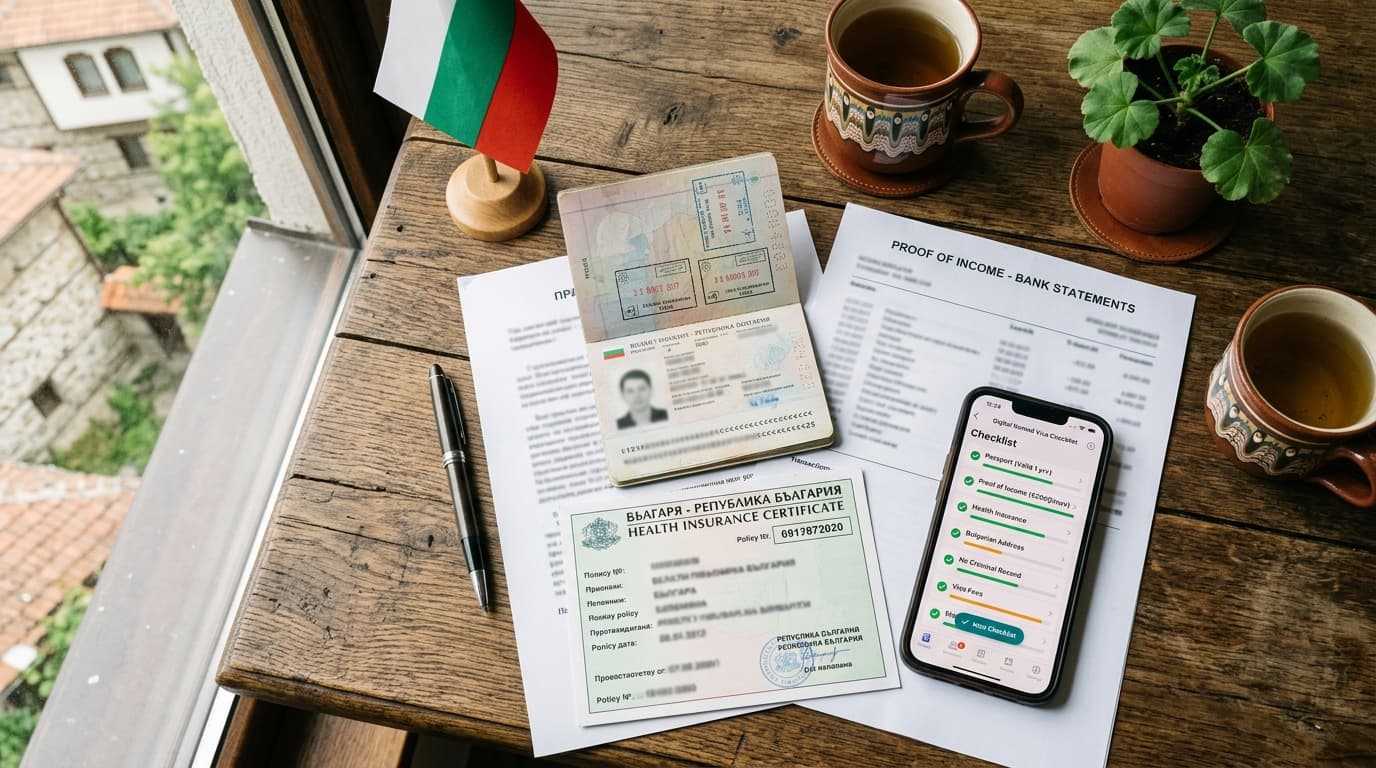
The implementing regulations list the same documents for the first application and the renewal (Decree No. 286, State Gazette 109/2025; IISDA register):
- The application form.
- A copy of the passport pages with the photo, personal data, the type D visa where one is required and the last entry stamp, with the original for comparison.
- Proof of payment of the state fee.
- Proof of accommodation in Bulgaria.
- Mandatory health insurance valid in Bulgaria, for applicants not covered by Bulgarian public health insurance.
- A criminal record certificate from the country of citizenship or usual residence, with the first application.
- Proof of income for the previous calendar year.
- Employees: the employment contract or an employer document showing the parties, position, pay and term, plus a registration document for the employer issued within six months and a link to an official company register where one exists.
- Owners and managers: a registration document for the company showing its owners and representatives, issued within six months, plus at least one contract and a reference from a client confirming the services are fully remote.
- Self-employed applicants: at least one contract and a reference from a client confirming fully remote services, with the client's identifying details.
Foreign documents need an apostille or legalization, depending on the issuing country, and a certified Bulgarian translation.
- Residence permit: a €255.65 one-time state fee for a permit of up to one year, plus €5.11 for the service (IISDA register).
- Type D visa: charged by the consulate under the Foreign Ministry's tariff; check with the consulate handling the application.
Health insurance, translations, apostilles and any legal help come on top and vary by provider.
Get a type D long-stay visa from a Bulgarian embassy or consulate where one is required, enter Bulgaria and file the residence application in person at the Migration Directorate of the Ministry of Interior in Sofia or a regional Migration unit (IISDA register).
The Migration Directorate decides extended residence applications within 60 days of filing, a general limit that can grow by up to two months when it asks for more documents. No official processing time is published for the type D visa.
Because the IISDA register has not yet added the digital nomad ground, applicants should confirm current practice with the Migration Directorate before traveling.
- First permit: 1 year (State Gazette 52/2025).
- Renewal: Once, for 1 more year, on the same documents as the first application. A holder who files the extension while the permit is still valid may stay in Bulgaria until the decision.
- Residence path: None of its own, since the permit lasts at most 2 years in total. Staying longer needs a different residence ground.
Neither the 2025 amendment nor its implementing rules say anything about tax. Tax residence depends on presence and ties, not on the permit.
Under Bulgarian income tax law, a person is resident if they stay in Bulgaria more than 183 days in any 12-month period, or have a permanent address in Bulgaria, unless their center of vital interests is elsewhere. Residents are taxed on income from Bulgaria and abroad; non-residents only on Bulgarian-source income. Personal income tax on the annual tax base is a flat 10% (Ministry of Finance).
A full year on the permit can therefore make the holder tax resident in Bulgaria. Holders should check how Bulgaria and the home country treat the remote income, and any tax treaty between them.
Frequently Asked Questions
How much income does Bulgaria's digital nomad permit require?
An average yearly gross income of at least €27,533.07, set in the law as 50 Bulgarian minimum monthly wages for the previous calendar year. No official euro figure is published, so income well above the floor is the safer case.
Is it a visa or a residence permit?
A residence permit. Applicants who need a visa enter Bulgaria on a type D long-stay visa, then file for the permit in person with the Migration Directorate.
How long can a digital nomad stay in Bulgaria?
1 year at first, renewable once, for 2 years in total.
Can permit holders work for Bulgarian companies or clients?
No. The permit covers remote work for an employer or clients outside Bulgaria.
How much does the permit cost?
The state fee is €255.65 for a permit of up to one year, plus the consulate's fee for the type D visa.
How It Compares
More Bulgaria programs
| Program | Country | Income / month | Fee | Max stay | Renewable |
|---|---|---|---|---|---|
| Bulgaria Golden Visa | Bulgaria | €511,292 saved | €511 | - |
Similar visas elsewhere
| Program | Country | Income / month | Fee | Max stay | Renewable |
|---|---|---|---|---|---|
| Slovenia Digital Nomad Visa | Slovenia | €3,391/mo | €50↓ | 12 mo | |
| Belize Work Where You Vacation Program | Belize | $75,000-100,000/yr | BZD 200-500 | 6 mo | |
| Kazakhstan Neo Nomad Visa | Kazakhstan | $3,000/mo | £170↓ | 12 mo | |
| Bahamas Digital Nomad Visa | Bahamas | - | $25↓ | 12 mo |
Bulgaria Digital Nomad Guide
Cost of living, internet, healthcare, coworking, and every visa option for Bulgaria.
Visa rules change. We'll tell you.
Get notified about policy updates and new requirements for the Bulgaria Digital Nomad Visa and other Bulgaria visas.