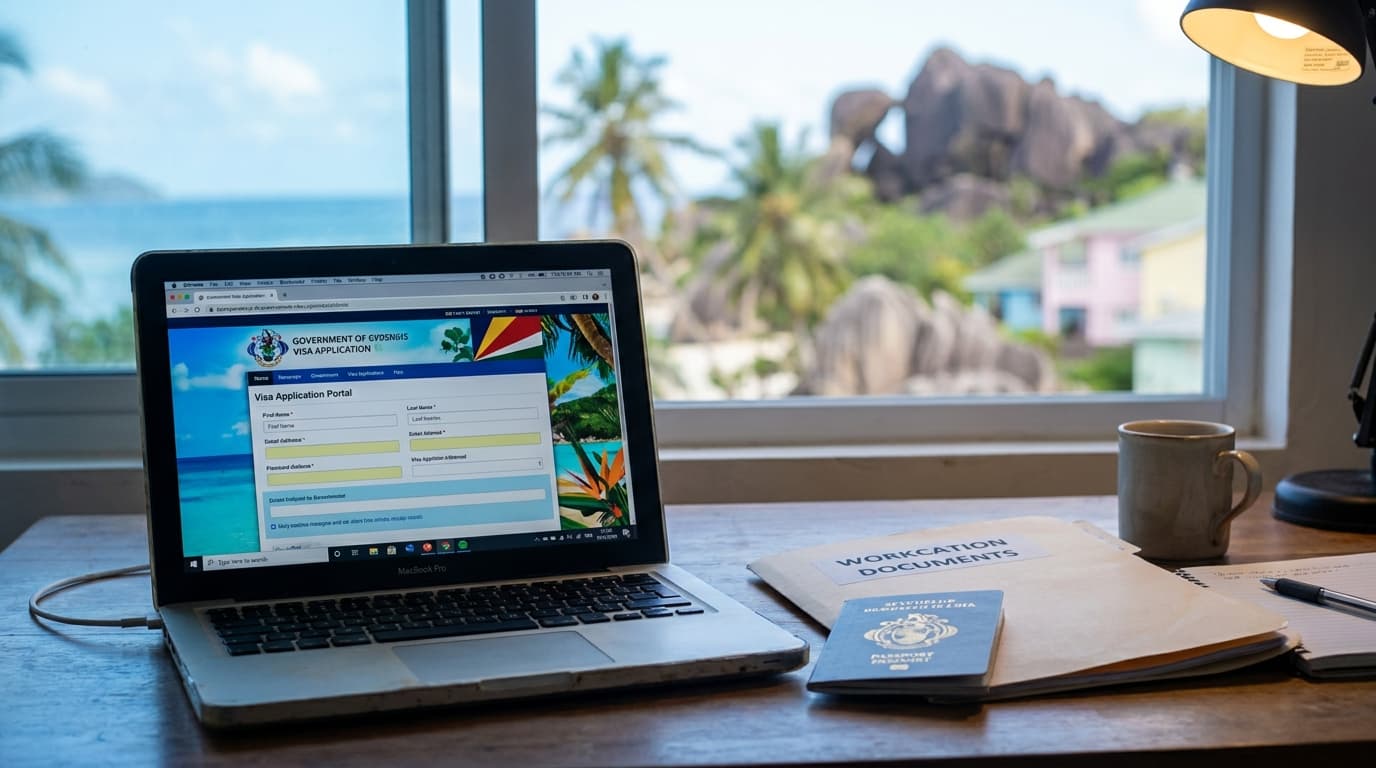
Seychelles Workcation Program

Visa Data Sheet
The Seychelles Workcation Retreat Program was built for remote workers who want to live in Seychelles for up to 365 days instead of arriving as short-stay tourists. It’s tied to the Visitors Workcation Permit, which was designed for foreign employees, freelancers and business owners earning outside Seychelles.
The setup is narrow by design. You can work remotely for a foreign employer or your own foreign-based business, but it doesn’t authorize work for a local Seychelles employer. That line matters, because the program is for outside income, not a local job search.
The official brochure says the process ran online through the Seychelles Electronic Border System and bundled the Visitors Workcation Permit with the Health Travel Authorisation for a one-time fee of about €45 ($49). That’s a low entry cost compared with many digital nomad programs, though the live government portals no longer show a dedicated Workcation page, so some operational details are now murky.
The program was introduced in April 2021 and was aimed at digital nomads and other professionals who can do their jobs online while staying on the islands long term. The idea was straightforward, bring in people who can spend money on accommodation and services without taking local jobs. The current problem is that the official immigration sites don’t prominently list the permit anymore, so the brochure is the clearest source, not the live portal.
- Who it was for: Foreign employees, freelancers and business owners with income from outside Seychelles.
- Stay length: Up to 365 days.
- Work limit: Remote work for foreign employers or foreign-based businesses only, not local employers.
- Published fee: About €45 ($49) for the permit and Health Travel Authorisation together.
That missing online detail is the catch. If you’re checking the program now, don’t assume every brochure detail still matches the current application setup, because the official pages don’t fully confirm the permit’s active status or its live rules.
The Seychelles Workcation Retreat Program is aimed at remote workers who earn their money outside Seychelles. That includes foreign employees, freelancers and business owners, so long as they’re working for clients, employers or companies based abroad. It doesn’t give you permission to take a job with a local Seychelles employer.
The original official brochure describes the permit as a path for “visitors” who want to stay and work remotely in Seychelles for up to 365 days. It doesn’t appear to be tied to a narrow list of nationalities, so the program seems open to a broad range of applicants rather than only citizens of specific countries.
There’s no published minimum income threshold in the brochure, which is unusual and a bit frustrating if you want a clean yes-or-no test. Instead, applicants are expected to show that they’re gainfully employed or run a stable business and that they have enough money to support themselves during the stay.
Family members may be included under the same workcation framework, according to the promotional material. The problem is that the live government portals don’t spell out the current dependant rules, so details like age limits, supporting papers for spouses or children and how those applications are handled aren’t clearly confirmed there.
- Employment type: remote employee, freelancer or business owner.
- Income source: outside Seychelles.
- Work restriction: no local employment.
- Stay length: up to 365 days.
- Family option: mentioned in promotional material, but not fully detailed on the live portals.
The brochure also doesn’t list a fixed age limit or specific disqualifying factors beyond the usual immigration and public-health issues. So if you’re trying to figure out whether you qualify, the key question isn’t your profession, it’s whether your work and income clearly stay outside the Seychelles labor market.
The Seychelles Workcation Retreat Program, tied to the Visitors Workcation Permit, was built for remote workers who want to stay in Seychelles for up to 365 days. It’s for foreign employees, freelancers and business owners whose income comes from outside Seychelles. It doesn't allow work for local employers.
The old official brochure says applicants applied online through the Seychelles Electronic Border System and paid a one-time fee of about €45 ($49) for the permit and Health Travel Authorisation together. The current government sites don’t clearly show the same workcation page, so some details are no longer easy to verify from the live portal.
- Valid passport: The brochure calls for a passport, but it doesn’t spell out a fixed passport-validity rule.
- Proof of remote work: A letter of employment or proof of self-employment or business ownership, plus evidence that the work is tied to an employer or business outside Seychelles.
- Accommodation booking: Proof of where you’ll stay in Seychelles.
- Financial means: Evidence that you can support yourself during the stay, such as bank statements.
- Insurance: A valid medical and travel insurance policy that meets Seychelles’ public health guidelines.
Once the Visitors Workcation Permit is validated, applicants then complete a separate Health Travel Authorisation application on the same electronic border platform using their travel and health details. That extra step matters because the permit alone isn’t the final entry clearance.
The brochure doesn’t give a confirmed processing time and it doesn’t say whether police clearances, translations or apostilles are required. It also doesn’t list a fixed passport-validity rule, so if you’re relying on a tight travel date, you’ll want to double-check the current official requirements before you book anything nonrefundable.
The official brochure for Seychelles’ Workcation Retreat Program gives a very simple price tag: one combined fee of €45 ($49) for the Visitors Workcation Permit and the Health Travel Authorisation. That’s a one-time charge paid during the online application on the Seychelles Electronic Border System.
There isn’t a published breakdown showing how much of that €45 goes to the permit itself and how much covers the health authorisation. The brochure also doesn’t mention any separate fee for dependants, so the only fixed amount the official material gives is the single application charge.
Here’s the cleanest way to think about the costs:
- Application fee: €45 ($49) for the combined Workcation application.
- Fee structure: One payment only, with no official split between permit and health authorisation.
- Dependants: No different pricing is listed in the brochure.
That’s where the official pricing trail stops. The public govtas portal doesn’t currently show a live Workcation fee schedule and the Immigration and Civil Status site doesn’t list a Workcation permit either, so there’s no updated official guidance on insurance costs, professional help or extra service charges.
That makes this a slightly awkward program to budget for. If you’re trying to cost it properly, the €45 fee is the only verified number on the books and anything beyond that needs to be treated as unconfirmed until an official update appears.
The Seychelles Workcation Retreat Program uses the Visitors Workcation Permit or VWP and the basic idea is simple, work from Seychelles without taking a local job. It’s meant for foreign employees, freelancers and business owners whose income comes from outside Seychelles, so it doesn’t authorize work for a Seychelles employer.
The official brochure says you start by preparing your documents, then submit the VWP application online through the Seychelles Electronic Border System. The brochure also gives a wide filing window, you can apply as early as 60 days before arrival and no later than two weeks after you get there. That said, the current government portals don’t clearly show a dedicated Workcation page, so some live details are harder to verify now than they were in the brochure.
- Step 1: Gather the required documents before you apply.
- Step 2: Submit the Visitors Workcation Permit application through the official electronic border system.
- Step 3: Pay the combined fee of about €45 for the VWP and Health Travel Authorisation.
- Step 4: Wait for review by the Department of Immigration and Civil Status.
- Step 5: After approval, complete the standard Health Travel Authorisation for entry clearance.
Once the application is reviewed and approved, the permit is validated in the system. After that, you still need the Health Travel Authorisation and the brochure says the final document carries a Workcation logo and an amber color code. That’s the version you present when boarding and on arrival.
The weak point is timing. The brochure doesn’t give a fixed processing time in days or weeks and the current portal doesn’t publish one either, so you shouldn’t plan around a guaranteed turnaround. If you’re trying to line up travel, give yourself extra room and don’t leave it to the last minute.
The Seychelles Workcation Retreat Program is built for a temporary stay, not a long-term immigration route. The official brochure says the Visitors Workcation Permit allows remote workers to live in Seychelles for up to 365 days, so you’re looking at a one-year ceiling rather than a rolling short-stay setup.
That said, the rules around what happens after the first year are thin. The brochure doesn’t spell out any built-in renewal or extension process and the current government pages don’t clearly say whether the permit can be extended at all. There’s also no guidance on a maximum cumulative stay if someone were to apply again later.
That silence matters. If you’re planning around this permit, don’t assume you can just keep extending it from inside the country. The public information available doesn’t support that and the government’s current sites don’t lay out a clear path for renewals.
There’s also no indication in the brochure or the accessible government pages that the Workcation route leads to permanent residency or citizenship. It’s presented as a temporary permission to stay and work remotely from Seychelles, under the general immigration framework.
- Maximum stay: up to 365 days.
- Renewal rule: no official renewal or extension mechanism is described in the brochure.
- Repeat stays: no public rule on cumulative time across multiple permits.
- Long-term status: no stated path to permanent residency or citizenship.
One more practical wrinkle, the program’s active status isn’t fully clear from the current government websites. The old brochure describes an online application through the Seychelles Electronic Border System and a one-time fee of about €45 ($49) for the VWP plus Health Travel Authorisation, but the dedicated Workcation page no longer appears on the main portal. If you’re considering it, don’t rely on assumptions about renewal. The paperwork path may have changed and the public guidance isn’t filling in the blanks.
The Seychelles Workcation Retreat Program was built for people whose income comes from outside Seychelles. That matters, because the permit doesn't authorize work for local employers and the official material doesn't describe any special tax break for holders.
That leaves a lot unanswered. The brochure and the public border-system page don't spell out income-tax treatment, tax-residency rules, filing duties or reporting requirements tied to the permit, so you shouldn't assume the workcation status changes your tax position in Seychelles.
One more practical wrinkle, the current public government pages don't clearly show a dedicated Workcation permit page anymore, so some operational details are murky. If you're planning a stay based on this route, get written tax advice before you travel, especially if you split time between Seychelles and another country.
- Allowed income source: Work must remain outside Seychelles.
- Local work: The permit doesn't cover employment with a Seychelles employer.
- Tax rules: The official workcation documents don't list any specific tax regime.
- Double taxation: No workcation-specific treaty guidance is provided in the accessible official material.
- Compliance: Filing and reporting obligations aren't explained in the current brochure or public permit page.
The original brochure also pointed to a one-time online fee of about €45 ($49) for the Visitors Workcation Permit plus Health Travel Authorisation, but that figure was tied to the application process, not to taxes. Don't mix the two up. One is a permit charge, the other is a separate question that the official workcation material simply doesn't answer.
How It Compares
Similar visas elsewhere
| Program | Country | Income / month | Fee | Max stay | Renewable |
|---|---|---|---|---|---|
| Slovenia Digital Nomad Visa | Slovenia | €3,391/mo | €50 | 12 mo | |
| Belize Work Where You Vacation Program | Belize | $75,000-100,000/yr | BZD 200-500 | 6 mo | |
| Kazakhstan Neo Nomad Visa | Kazakhstan | $3,000/mo | £170 | 12 mo | |
| Bahamas Digital Nomad Visa | Bahamas | - | $25↓ | 12 mo |
Seychelles Digital Nomad Guide
Cost of living, internet, healthcare, coworking, and every visa option for Seychelles.
Visa rules change. We'll tell you.
Get notified about policy updates and new requirements for the Seychelles Workcation Program and other Seychelles visas.