Japan Digital Nomad Visa

At a Glance
- ¥10,000,000 a yearat least, at the time of application · main applicant
- 6 monthsfixed six months
- No extension. After using the six-month maximum, the holder must wait six months before reapplying for the same status.
- 6 monthssix months, then six months out before reapplying
- Visa application at a Japanese embassy or consulate, either directly with income and insurance documents or with a Certificate of Eligibility obtained from a regional immigration services bureau in Japan.
- No
- Yes
- None. The status lasts six months, cannot be extended and no residence card is issued.
Japan's digital nomad route is a status of residence called Designated Activities (Digital Nomad). It lets nationals of eligible countries and regions live in Japan for 6 months while doing international remote work: working through information and communication technology for an employer abroad, or selling services or goods to people outside Japan.
The status is short by design. It can't be extended, no residence card is issued and it doesn't lead to long-term residence. After a full stay, the holder waits six months before applying for the same status again. A spouse and children can come along under a matching family status.
It suits high earners who want half a year in one Japanese base. Anyone planning to settle, or to work for a Japanese employer, needs a different status of residence. The Japan guide compares the options.
The Immigration Services Agency (ISA) sets four conditions for the main applicant.
- Nationality: Nationals of countries or regions that are both covered by Japan's visa exemption arrangements (Temporary Visitor) and party to a tax convention with Japan, as listed in the ISA chart. Spouses and children need only a visa-exempt nationality. The ISA publishes the list of eligible countries and regions.
- Income: the applicant's own annual income must be at least ¥10,000,000 at the time of application.
- Work: remote work through information and communication technology for an employer abroad, or paid services and sales to people outside Japan. Work under an employment contract with a Japanese public or private organization isn't allowed, and neither is work that needs physical presence in Japan.
- Insurance: private medical insurance covering death, injury and illness for the whole stay, with at least ¥10,000,000 of cover for medical treatment.
Spouses and children qualify under their own Designated Activities status. They need a visa-exempt nationality and their own insurance on the same terms, but no income. They get the same stay with no extension and, in principle, may not work.
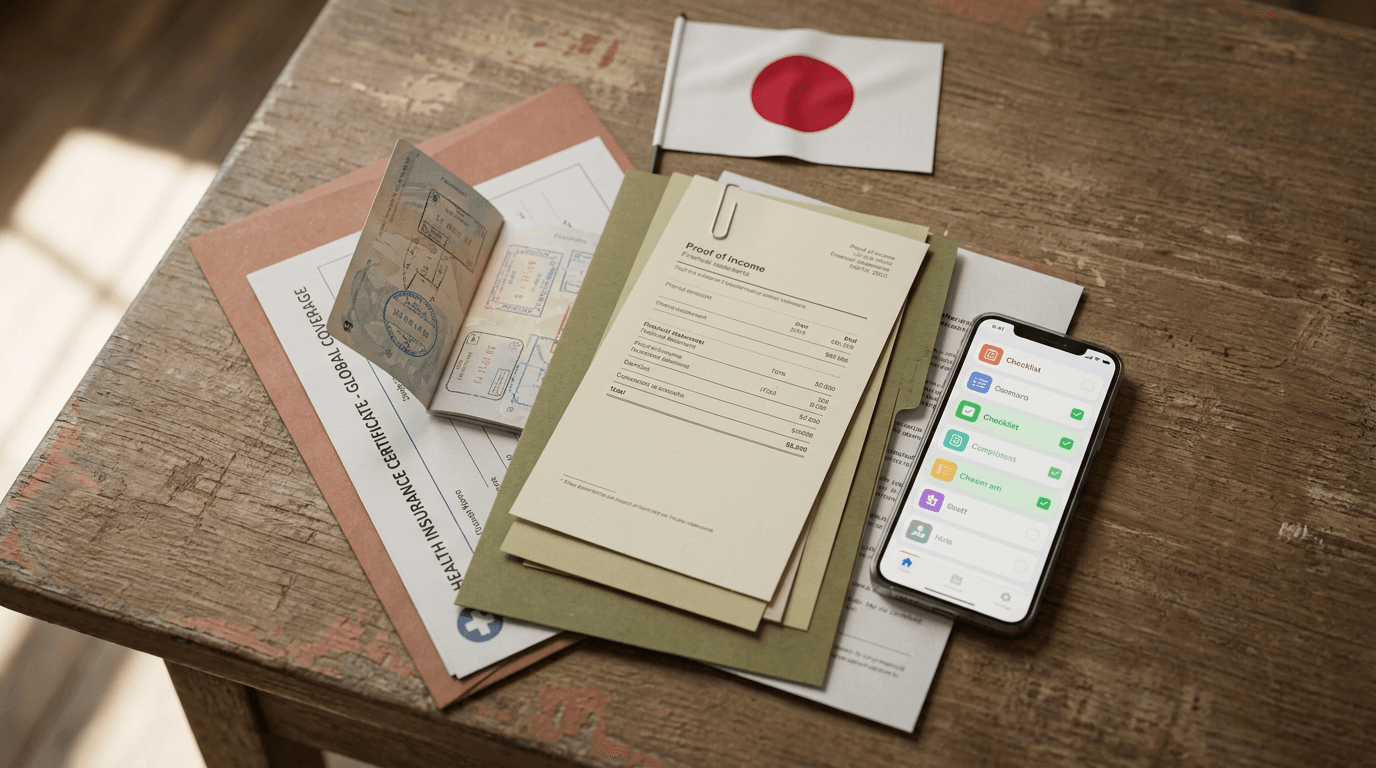
At a Japanese embassy or consulate, the Ministry of Foreign Affairs (MOFA) asks the main applicant for:
- A visa application form with a photo
- A passport
- A Certificate of Eligibility, if the applicant has one. It replaces the three documents below.
- A document describing the planned activities in Japan
- Proof of annual income of ¥10,000,000 or more, such as a tax payment certificate, an income certificate, an employment contract or a client contract that states its term and amount
- Proof of insurance: a copy of the insurance certificate and policy summary or, for cover through a credit card, a copy of the card and the documents showing the extra cover
Spouses and children submit the form, a passport, proof of their own insurance, a marriage or birth certificate and a copy of the digital nomad's passport.
A Certificate of Eligibility application to a regional immigration services bureau in Japan needs the application form, a photo, a reply envelope, the activity schedule and the insurance documents. The main applicant adds proof of income and of the current work.
No official page lists a fee specific to this status. The embassy or consulate handling the application confirms any visa charge.
The larger costs sit elsewhere: private insurance with at least ¥10,000,000 of medical cover for every family member, and the certificates or contracts used as proof of income.
The status can't be extended, so the new immigration fee schedule for applications received from Oct. 1, 2026 doesn't apply to it.
Visa application at a Japanese embassy or consulate, either directly with income and insurance documents or with a Certificate of Eligibility obtained from a regional immigration services bureau in Japan.
- Certificate of Eligibility (optional): filed with a regional immigration services bureau in Japan, which issues the certificate if the application succeeds.
- Visa: filed at the Japanese embassy or consulate, with the certificate or with the full income and insurance file.
- Entry: the status is granted at the landing examination. No residence card follows.
MOFA notes that a certificate makes the visa application and the landing examination smoother but doesn't guarantee a visa. No official processing time is published for either step, so the consulate handling the file is the place to ask.
The stay is 6 months. No extension. After using the six-month maximum, the holder must wait six months before reapplying for the same status.
Spouses and children follow the same limits. Route to residence: None. The status lasts six months, cannot be extended and no residence card is issued.
Longer stays need a different status of residence, applied for on its own terms. Founders can look at the Startup Visa.
The immigration pages say nothing specific about tax. Japan's National Tax Agency (NTA) treats a person as a non-resident unless they have a domicile in Japan or have lived there continuously for 1 year or more. A single digital nomad stay is too short to meet the continuous-residence limb.
Non-residents still pay Japanese tax on Japan-source income, and the NTA counts salaries and other pay for work carried out in Japan as Japan-source income. Tax treaties can change that result. The status is open only to nationals of countries with a tax convention with Japan, so the treaty with the home country and home-country rules decide where pay earned during the stay is taxed.
Frequently Asked Questions
How much income does Japan's digital nomad visa require?
¥10,000,000 a year, earned by the applicant personally and shown at the time of application. Spouses and children don't need income of their own.
Can Japan's digital nomad visa be extended?
No. No extension. After using the six-month maximum, the holder must wait six months before reapplying for the same status.
Who is eligible for the digital nomad status?
Nationals of countries or regions that are both covered by Japan's visa exemption arrangements (Temporary Visitor) and party to a tax convention with Japan, as listed in the ISA chart. Spouses and children need only a visa-exempt nationality.
Can digital nomads in Japan work for Japanese companies?
No. Work under an employment contract with a Japanese public or private organization isn't allowed. The work must be for employers or clients outside Japan, done through information and communication technology.
Does the digital nomad visa lead to permanent residence in Japan?
No. None. The status lasts six months, cannot be extended and no residence card is issued.
How It Compares
More Japan programs
| Program | Country | Income / month | Fee | Max stay | Renewable |
|---|---|---|---|---|---|
| Japan Startup Visa | Japan | - | - | 24 mo |
Similar visas elsewhere
| Program | Country | Income / month | Fee | Max stay | Renewable |
|---|---|---|---|---|---|
| Georgia Digital Nomad Program (Remotely from Georgia) | Georgia | - | - | - | |
| Kyrgyzstan Digital Nomad Status | Kyrgyzstan | - | - | 12 mo | |
| Kenya Class N Permit | Kenya | - | $200 | 24 mo | |
| Nepal Digital Nomad Visa (Not Yet Open) | Nepal | - | - | - |
Japan Digital Nomad Guide
Cost of living, internet, healthcare, coworking, and every visa option for Japan.
Visa rules change. We'll tell you.
Get notified about policy updates and new requirements for the Japan Digital Nomad Visa and other Japan visas.