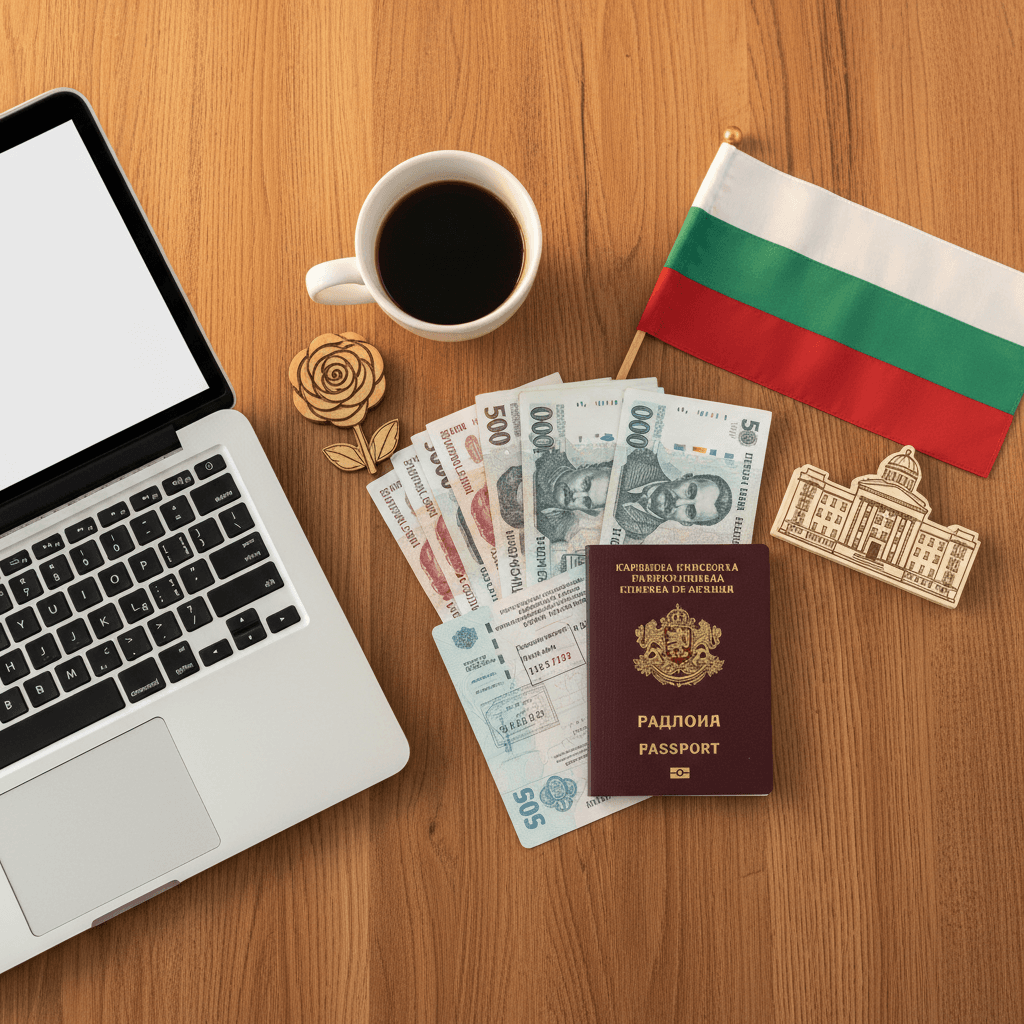
Bulgaria

Policy Stability
Stamped Nomad ExclusiveHow likely visa and immigration policies are to remain unchanged
Quick Facts
Yes
$1,560/mo
191 Mbps
7/10
Medium
High
Medium
EET, EEST
Entry Methods Available
Best For
Last verified: September 25, 2026
Compare Visa Programs
| Program | Best for | Minimum income or savings | Government fee | Initial stay | Where to apply |
|---|---|---|---|---|---|
| Bulgaria Golden Visa | Golden / Investor Visa | €511,291.88 one-time | €511.29 one-time | — | For fund, securities and concession routes, first obtain preliminary approval from the InvestBulgaria Agency, then make the investment, enter on a type D long-stay visa from a Bulgarian consulate and apply in person to the Migration Directorate of the Ministry of Interior (or a regional Migration unit). |
Bulgaria's options for a long stay depend on how the applicant earns a living.
- Remote workers: a June 2025 amendment to the Foreigners Act created an extended residence permit for digital nomads (State Gazette 52/2025). It's open to employees of an employer registered outside the EU, EEA and Switzerland who work remotely using information technology; legal representatives, managers, owners or partners holding more than 25% of such a company who provide remote services through it; or self-employed people who have provided remote IT-based services for at least one year before applying. The last two groups may not work for, or provide services to, people in Bulgaria. Applicants need an average yearly gross income of at least 50 Bulgarian minimum monthly wages, counted for the previous calendar year, and the permit lasts 1 year, extendable once for 1 more year. This site has no page for it yet.
- Investors: the Bulgarian golden visa gives permanent residence directly for investments in Bulgarian funds, listed securities, concessions or company capital. Property purchases lead to extended residence first.
- Retirees and freelancers: the Act also has extended residence routes for pensioners and for self-employed people with a labor ministry permit (IISDA).
Short stays: Bulgaria is one of the 29 Schengen countries (European Commission). Visa-exempt visitors and short-stay visa holders get 90 days in any 180-day period, and that allowance is shared across the whole Schengen area, so time in Bulgaria counts against the same total as time in Greece or Italy.
Costs vary most with rent. These figures come from Numbeo's crowd-sourced data for September 2026, with dollar amounts at the Sept. 24, 2026 rate; treat them as rough guides.
- Sofia: a one-bedroom apartment runs about €687 a month in the center and €520 outside it, and a single person's other costs about €764 (Numbeo). A central setup comes to about €1,451, or $1,650; taking the midpoint of the two rents, about €1,368, or $1,560.
- Varna: about €554 for a central one-bedroom and €715 in other costs, roughly €1,269 or $1,450 (Numbeo).
- Plovdiv: about €476 for a central one-bedroom and €628 in other costs, roughly €1,104 or $1,260 (Numbeo).
- Burgas: about €460 for a central one-bedroom and €599 in other costs, roughly €1,059 or $1,210 (Numbeo).
Sofia costs the most, mostly because of rent. Short furnished lets usually cost more than these long-term averages.
- Sofia: the capital and the easiest base for work, flights and services, with the highest rents in Numbeo's data.
- Plovdiv: a walkable old city with lower costs than Sofia, for people who want a slower pace without leaving city life.
- Varna: Bulgaria's largest city on the Black Sea, for people who want the coast with city services.
- Bansko: a ski and mountain town with a strong remote-worker community built around coworking and coliving.
- Burgas: a quieter coastal city and the cheapest of the four cities in Numbeo's data.
The Speedtest Global Index put Bulgaria's median fixed broadband speed at 190.6 Mbps and median mobile speed at 282.7 Mbps in August 2026, fast enough for video calls from most homes and a mobile backup.
Sofia has the widest choice of coworking spaces, and Plovdiv and Varna have smaller scenes. In the mountain town of Bansko, Coworking Bansko runs a combined coworking and coliving space that has become a meeting point for remote workers.
A person is tax resident in Bulgaria after more than 183 days there in any 12-month period, or with a permanent address in Bulgaria, unless their center of vital interests is elsewhere (Ministry of Finance).
Residents are taxed on income from Bulgaria and abroad; non-residents only on income from Bulgarian sources. Personal income tax on the annual tax base is a flat 10%, with social security and health contributions charged separately where they apply.
The digital nomad permit and the investor routes come with no tax regime of their own. A remote worker who stays past the day limit becomes resident like anyone else, so it's worth checking the tax treaty, if any, between Bulgaria and the home country before a long stay.
- Money: euro since Jan. 1, 2026 (fixed rate EUR 1 = BGN 1.95583). Older price lists and official pages may still show leva.
- SIM cards: local prepaid SIMs and eSIMs are easy to find. Travelers with a SIM from another EU country can use it under the EU roaming rules.
- Health: non-EU residents need private health insurance; EU nationals should check what their home cover includes in Bulgaria.
- Emergencies: 112 works free of charge everywhere in the EU, Bulgaria included (European Commission).
- Arrival: non-EU visitors on short stays are registered in the Entry/Exit System at the external border, which started on Oct. 12, 2025 (EES).
- ETIAS: Not yet operating and no official start date. The EU says it will announce the date several months before launch. The earlier official target, the last quarter of 2026, was removed from the official ETIAS website on July 14-17, 2026. Updates appear in the ETIAS FAQ.
- Safety: check the home government's travel advice before arrival and take the usual care with valuables in busy areas.
Frequently asked questions
Does Bulgaria have a digital nomad visa?
Is the Bulgarian golden visa still available?
How long can visitors stay without a visa?
What currency does Bulgaria use?
How fast is the internet in Bulgaria?
Latest Nomad News
Bulgarian draft law ends automatic residence loss for single permit holders
Bulgaria's government approved draft amendments to the Foreigners Act on July 22 that would let single-permit holders keep residence while unemployed and tighten permanent residence oversight. The changes still need parliamentary approval.
EES now replaces passport stamps at Schengen borders
The EU's new biometric Entry/Exit System (EES) will automate border controls across 29 Schengen countries, digitizing stay tracking and replacing physical passport stamps for non-EU travelers.
More Guides from Europe
Stay Updated on Bulgaria
Get notified about visa changes, policy updates, and new information for digital nomads in Bulgaria.