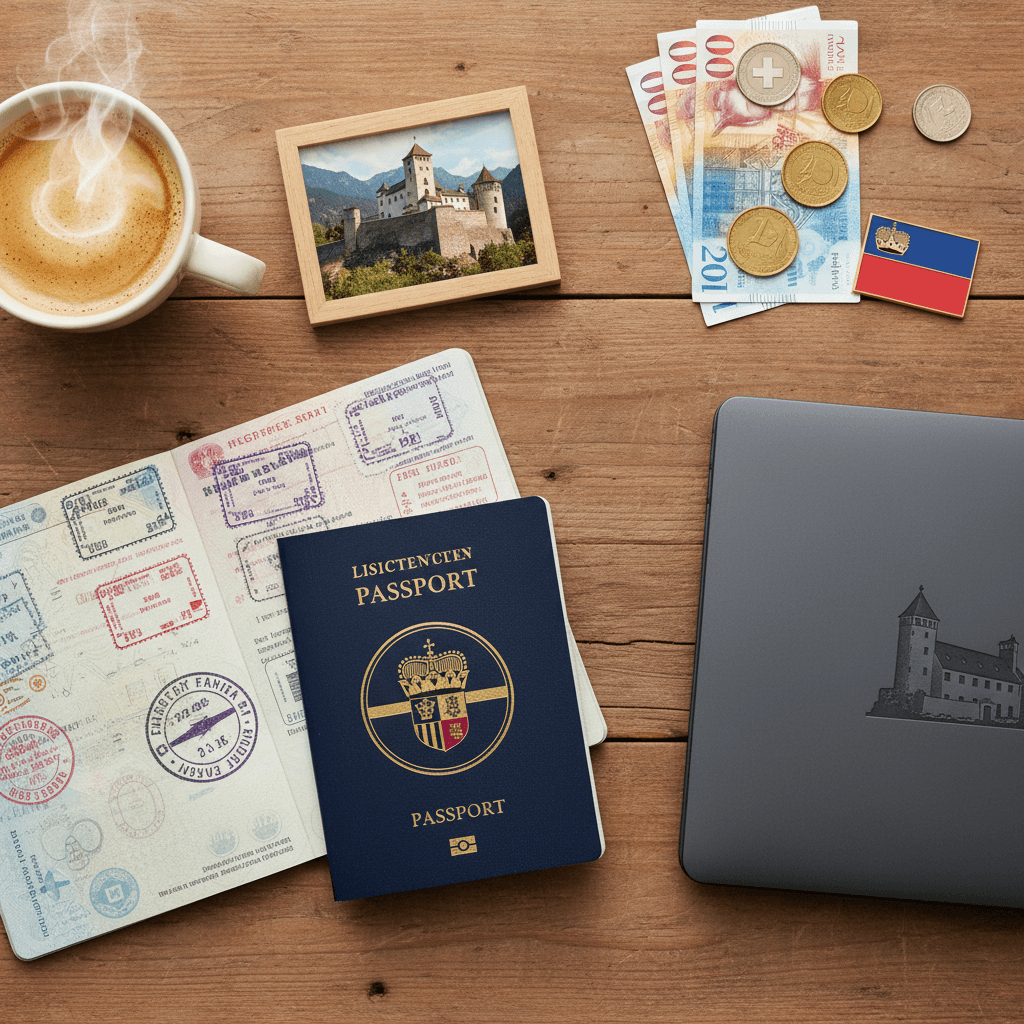
Liechtenstein

Policy Stability
Stamped Nomad ExclusiveHow likely visa and immigration policies are to remain unchanged
Quick Facts
$2,850/mo
223 Mbps
9/10
High
Medium
High
CET, CEST
Entry Methods Available
Best For
Last verified: October 11, 2026
Compare Visa Programs
| Program | Best for | Minimum income or savings | Government fee | Initial stay | Where to apply |
|---|---|---|---|---|---|
| Liechtenstein Financially Independent Residence Permit | Passive Income Visa | CHF 2,600 a month | CHF 1,060 one-time | 1 year | Migration and Passport Office (Auslaender- und Passamt, APA), Vaduz, online form "Wohnsitznahme ohne Erwerbstaetigkeit"; third-country nationals wait abroad for the assurance or visa authorization |
Liechtenstein has no digital nomad visa. Most remote workers come as short-stay visitors under the Schengen rules: up to 90 days in any 180-day period across the whole Schengen area. Days spent in other Schengen countries count toward the same allowance. Whether a visa is needed depends on nationality, and holders of a Schengen visa can visit. Switzerland handles immigration and customs for Liechtenstein, and the border between the two is open.
The EU Entry/Exit System has registered short-stay visitors at the Schengen external border since Oct. 12, 2025, with full operation from April 10, 2026. ETIAS, the travel authorization for visa-exempt visitors, isn't operating yet and has no official start date. Once it starts it will cost €20 and last 3 years.
For a longer stay, the only route that doesn't involve a local job is the residence permit without gainful employment. It suits very few nomads. Non-EEA nationals must be of special interest to the country under Article 20 of the Foreigners Act, and EEA nationals compete in a public draw for a quota of 16 permits a year. On top of that, applicants show CHF 2,600 a month in ongoing income or a bank guarantee of CHF 156,000, and no gainful activity in Liechtenstein is allowed.
EEA nationals admitted through the draw may keep employment abroad. Non-EEA applicants should confirm with the Migration and Passport Office before applying, since its checklist counts pensions, rental income or a guarantee as means of support rather than a salary. Taking a job in Liechtenstein needs a separate work permit.
Liechtenstein is one of the most expensive places in Europe to live. A single remote worker in Vaduz or Schaan should budget roughly US$2,500 to US$3,200 a month (about CHF 2,100 to CHF 2,650), and more in a hotel or serviced apartment. Prices are in Swiss francs (CHF).
Rent. A one-bedroom apartment in the center runs about CHF 1,117 a month, with entries from CHF 900 to CHF 1,500. A central one-bedroom in Vaduz comes to US$1,257 on another estimate. Rental supply is small and furnished short-term apartments are scarce, so a stay of a few weeks often means a hotel or serviced apartment at a much higher monthly cost.
Everyday costs. A single person's monthly costs before rent come to CHF 1,471 (US$1,777) on the first estimate and about US$1,287 on the second. Food and eating out, at Swiss price levels, are most of that. A monthly public transport pass costs about CHF 84. Some visitors base themselves across the border in Switzerland or Austria and visit for the day.
The permit's funds test (CHF 2,600 a month) is an immigration threshold, not a budget estimate.
Vaduz, the capital, has most of the hotels, cafes and government offices, including the Migration and Passport Office. It suits short stays and anyone dealing with residence paperwork.
Schaan borders Vaduz to the north and works much like an extension of the capital, with bus links toward Switzerland and Austria. It suits people who want to be close to Vaduz without staying in the center.
The Unterland villages such as Eschen and Mauren are quieter and more residential. They suit longer stays for people who don't need a coworking space every day.
The country is small enough that every village is a short bus ride from Vaduz, so the choice is mostly about housing and quiet.
Liechtenstein has some of the fastest home internet in the world. A 2024 worldwide speed league measured an average download of 222.98 Mbps, fourth of 229 countries. Too few tests are recorded for a Speedtest monthly median.
Telecom Liechtenstein (FL1), Swisscom and Salt sell home broadband and mobile plans. Rental and hotel connections are usually fast, and a recent speed test from the host is still worth asking for before a long booking.
Coworking is limited to a small number of spaces and business centers, mostly around Vaduz and Schaan. More options in nearby Swiss and Austrian towns are within reach by bus or train.
Liechtenstein taxes a person without limit on worldwide wealth and income once they have a domicile or habitual abode in the country, under Article 6 of the Tax Act. Habitual abode means a continuous stay of more than 6 months, counted from the first day; short interruptions don't break it. A Schengen short stay of up to 90 days falls short of that.
People who move in without working can apply for taxation based on spending instead. It's open to non-citizens taking up residence for the first time or after at least 10 years away, who do no gainful work in Liechtenstein and live on investment income or payments from abroad. The tax is 25% of total spending, the Tax Administration decides each case, and Liechtenstein real estate still bears wealth tax (SteG Arts. 30 to 33).
There is no tax regime for remote workers. Before a long stay, check three things with the Tax Administration or a licensed adviser: when the six-month continuous stay starts to count, whether a double taxation agreement applies with the home country and how the home country treats income earned while abroad.
- Arrival: Liechtenstein has no airport, so most people arrive through Switzerland. Schengen rules require a passport issued less than 10 years before arrival and valid at least three months after leaving the Schengen area.
- Border records: The Entry/Exit System records fingerprints and a photo at the Schengen external border, and stays beyond 90 days need a national permit.
- Health: Call 112 or 144 for an ambulance. European health insurance cards are accepted for medically necessary state care, but they don't replace travel insurance with medical evacuation cover.
- Residents: Article 20 of the Foreigners Act requires permit holders to have statutory health insurance covering all risks in Liechtenstein.
- Money: Prices are in Swiss francs, so a card without foreign transaction fees saves money on a long stay.
Frequently asked questions
Does Liechtenstein have a digital nomad visa?
How long can visitors stay in Liechtenstein?
Can a non-EEA national retire or live on savings in Liechtenstein?
When does someone become tax resident in Liechtenstein?
How fast is the internet in Liechtenstein?
Latest Nomad News
More Guides from Europe
Stay Updated on Liechtenstein
Get notified about visa changes, policy updates, and new information for digital nomads in Liechtenstein.