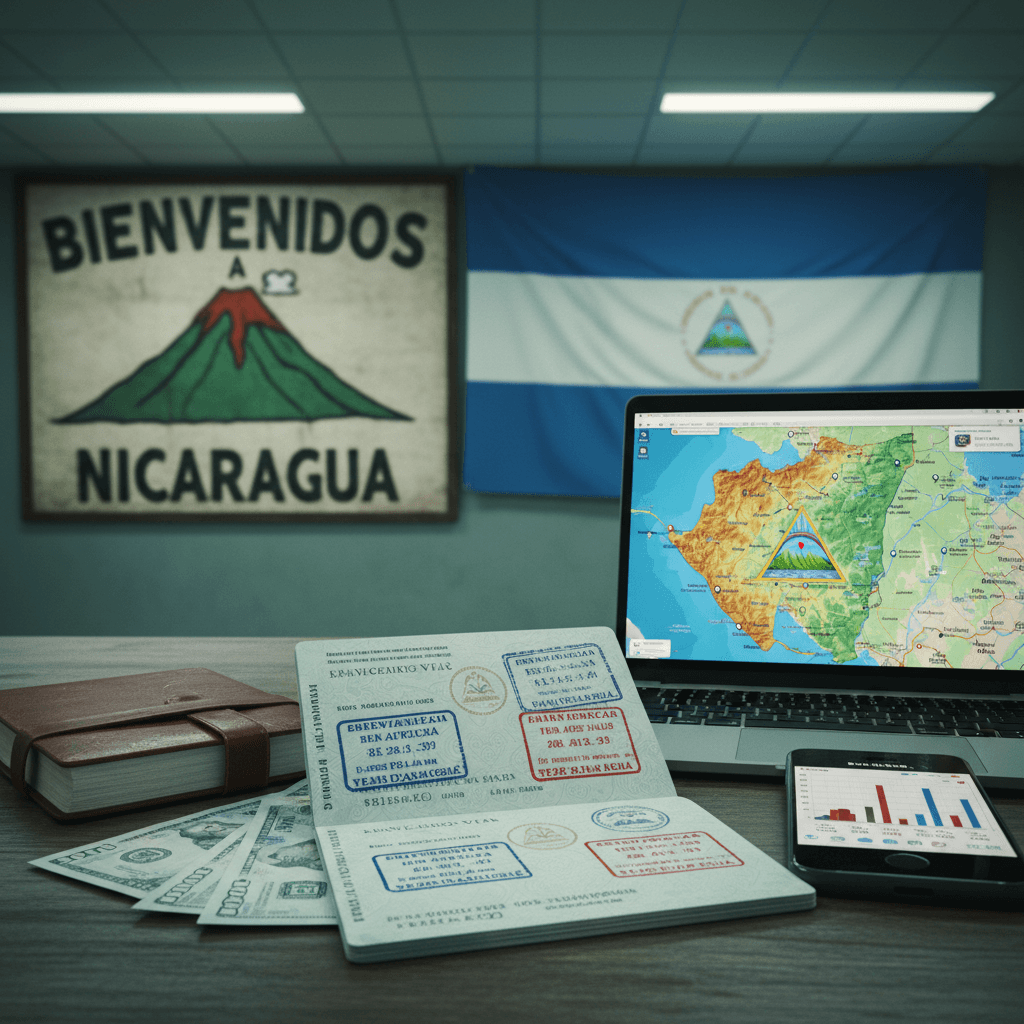
Nicaragua landscape
🎒Adventure Ready
🇳🇮

Nicaragua

Complete Digital Nomad Guide

Brandon Richards
Brandon Richards ·

Policy Stability

Stamped Nomad Exclusive
4/10Volatile

How likely visa and immigration policies are to remain unchanged

Quick Facts

Nomad Visa Cost

N/A

Income Requirement

$600/mo

Max Stay

6 months

Renewable

Yes

Cost of Living

$1,500/mo

Avg Internet

94 Mbps

Safety Score

5/10

Healthcare

Medium

Coworking

Medium

English Friendly

Medium

Time Zones

CST

Entry Methods Available

Visa FreeVisa on Arrival

Best For

budgetbeachamericas-basesolo

Understanding the 2026 Shift

Nicaragua recently overhauled its entry requirements, and the changes are significant. Following the implementation of Disposición 002-2026, the government removed the "visa on arrival" option for over 120 nationalities. This move was designed to tighten border security and manage migration flows more strictly. If you used to just show up and pay a fee at the airport, you need to double-check your status before booking a flight.

The system is now split primarily into two groups: Category A and Category C. There is currently no e-visa system available. Every traveler who isn't visa-exempt must deal directly with a Nicaraguan embassy or the DGME (Dirección General de Migración y Extranjería). Planning ahead is no longer optional; it is a requirement for a smooth entry.

Category A: Visa-Exempt Entry

If you hold a passport from one of the 69 countries in Category A, the process remains relatively straightforward. You can enter for tourism or business purposes for up to 90 days without a prior visa application. This group includes:

  • North America: United States and Canada.
  • Europe: All European Union nations and the United Kingdom.
  • Oceania & Asia: Australia, Japan, and Taiwan.
  • Latin America: Central American nations (CA-4 and others), Ecuador, and the Dominican Republic.

While you don't need a visa, you still need to present a passport valid for at least six months. You should also be prepared to show proof of a return or onward ticket if asked by immigration officers at the border or airport.

Category C: The Consulted Visa

For those not on the exempt list, the process is now much more rigorous. If you fall into Category C, you must apply for a Consulted Visa through a Nicaraguan consulate. This requires prior authorization from the DGME in Managua, which can take 30 days or longer to process. You cannot simply fly in and hope for the best.

  • Processing Time: Minimum 30 days.
  • Visa Fee: Between USD 30 and USD 50.
  • Validity: You must enter within 90 days of the visa being issued.
  • Initial Stay: Valid for a 90-day stay upon arrival.

Business travelers from non-exempt nations follow a similar path but must include a formal invitation letter and a clear statement of their business purpose. If you are from a Category A country, you can conduct business meetings and scouting trips under your 90-day visa-free entry.

Extensions and the End of Border Runs

If you fall in love with the Pacific surf or the vibes in Granada and want to stay longer, you can extend your stay. Extensions are handled at DGME offices or Sertrami locations across the country. You can typically extend your stay in 30-day increments, up to three times, for a total of 180 days in the country.

The extension fee is approximately USD 25 plus a small fee for the application form. You will need to provide copies of your passport and entry stamps. It is important to remember that the old "border run" strategy has been heavily curtailed. If you are a Category C traveler, crossing into Costa Rica and trying to come back the same day will not grant you a new visa; you would need a new authorization from the DGME.

Important Compliance Details

The Nicaraguan government is strict about these new 2026 regulations. Overstaying your visa results in daily fines and can lead to complications if you try to re-enter the country in the future. Always keep a digital copy of your entry stamp and any extension paperwork. Since the system is paperwork-heavy and lacks a digital portal for applications, keeping your physical documents organized is your best defense against administrative headaches.

Source 1 | Source 2

The Reality of the Nomad Visa

If you are looking for a official "Digital Nomad Visa" with a fancy name and a dedicated application portal, you won't find one in Nicaragua. The government hasn't caught up to the remote work trend with specific legislation yet. However, that hasn't stopped a thriving community of remote workers from setting up shop in San Juan del Sur or Popoyo.

Most nomads operate on a standard tourist visa. For the majority of Western nationalities, this means you show up, pay $10 for a tourist card at the airport or border, and get a 90-day stamp. While you are technically not allowed to work for a local Nicaraguan company, the authorities generally don't care if you are typing away on a laptop for a client back in London or New York.

The CA-4 Trap and Extensions

Nicaragua is part of the CA-4 Border Control Agreement along with Guatemala, Honduras, and El Salvador. This is a double-edged sword. Your 90-day limit applies to the entire region. If you spend 60 days in Guatemala and then cross into Nicaragua, you only have 30 days left before you need to take action.

When your time starts running low, you have two main choices:

  • The Extension: You can visit a DGME (Migration) office to request an extension for another 30 to 90 days. This costs roughly $25 and requires a valid passport, a couple of copies of your entry stamp, and a bit of patience for the paperwork.
  • The Border Run: Many nomads prefer to head south to Costa Rica for a weekend. Once you cross back into Nicaragua, your 90-day clock resets. Just keep in mind that entry requirements can change, and you should always check if your specific nationality requires a "consulted visa" or pre-approval via email before you arrive.

Long-Term Residency Alternatives

If you decide that the Nica life is for you and you want to stop counting days on a calendar, there are two residency paths that work well for remote professionals. These require a bit more legwork but offer a one-year renewable status and a path to permanent residency after three years.

Rentista (Income-Based) Residency

  • Income Requirement: You must prove a stable monthly income of at least $600 from a source outside of Nicaragua.
  • Source: This can be from investments, a pension, or a long-term contract.
  • Benefits: You get a local ID card (cédula) which makes opening bank accounts and getting local internet contracts much easier.

Investor Residency

  • Investment Amount: A minimum of $30,000 in a local business or real estate.
  • Verification: This must be certified by the Ministry of Development, Industry, and Trade.
  • Renewal: Annual renewal is required, provided the investment remains active.

The Application Process

Getting residency is an analog journey. There is no online application; you have to show up at the DGME office in Managua. You will need your birth certificate and a police clearance report from your home country. Both must be apostilled and translated into Spanish by a certified translator.

Once you submit your documents and pay the fees, which usually start around $195, the processing time typically takes between 4 and 8 weeks. You will also need a local guarantor, which is usually a Nicaraguan citizen or a legal resident who can vouch for you.

Taxes and Fine Print

Nicaragua uses a territorial tax system. This is great news for nomads because it means the government generally only taxes income earned from within the country. Your remote salary from a foreign employer is typically taxed at 0% locally. There are no specific tax exemptions for nomads because, officially, the category doesn't exist.

Be aware of the "exit visa" requirement. As a foreign resident, you often need to pay a small fee of about $10 for an ordinary exit permit when leaving the country. Also, keep your passport valid for at least 6 months at all times; the migration officers are strict about this and will deny entry or extensions if your document is nearing its expiration date.

Source 1 | Source 2

The 90-Day Entry: Category A

Nicaragua remains relatively accessible for many digital nomads, particularly those from the US, UK, Canada, Australia, and the EU. If you hold a passport from one of these nations, you fall into Category A. This means you do not need to apply for a visa before your flight. You simply show up with a passport that has at least six months of validity remaining.

Upon landing or crossing a land border, you will purchase a tourist card. This typically costs between $10 and $14 USD. It is best to have crisp, clean US dollar bills on hand, as officials can be picky about the condition of the currency. This card grants you an initial stay of 90 days.

Recent Shifts in Visa Policy

The rules saw a significant shake-up heading into 2026. Nicaragua eliminated the "Visa on Arrival" option for approximately 128 nationalities that previously had easier access. These travelers now fall into Category C, which requires a "consulted visa."

If you are in Category C, you must receive pre-approval from the Nicaraguan Immigration Department before you arrive. This process involves emailing your application and passport scans to the official government portal. Processing times can stretch from 15 to 30 days, and once approved, you will need to get the physical stamp at a Nicaraguan consulate. Expect to pay between $30 and $100 depending on the specific consulate's fees.

Extending Your Stay

If three months in the land of lakes and volcanoes isn't enough, you can extend your stay without leaving the country. You are allowed to request extensions in 30-day increments for a total of 90 additional days. This gives you a maximum of six months before you are required to exit.

To handle an extension, head to a SERTRAMI office. There are 28 of these locations across the country, including spots in Managua, Granada, and San Juan del Sur. You will need to bring:

  • A completed application form (costs about C$5).
  • Copies of your passport photo page and your latest entry stamp.
  • The extension fee of $25 USD for every 30 days.

The Reality of Border Runs

The "border run" is a classic nomad move where you exit to Costa Rica or Honduras for a few hours to reset your 90-day clock. While this is still technically allowed, immigration officers have become more observant. They are looking for patterns of long-term residency without a proper permit.

If you choose this route, be prepared for questions about your remote work or your source of funds. Always ensure any previous overstay fines are settled before you try to re-enter, or you might find yourself stuck on the other side of the border.

Overstays and Fines

Life happens, and sometimes you miss your exit date. Nicaragua handles overstays with a daily fine rather than immediate deportation. You will be charged $3 USD per day for every day you stayed past your permit. This fine is collected at the airport or border when you leave.

While the daily fee is small, an extended overstay can lead to more serious complications, including potential detention or being barred from returning. If you hold dual citizenship with Nicaragua and the US, you may be able to use your Nicaraguan passport to waive certain fees, though this requires keeping your local documentation current.

Nicaragua Visa Quick Facts

  • Tourist Card: $10 to $14 USD (Cash).
  • Extension Fee: $25 USD per month.
  • Overstay Fine: $3 USD per day.
  • Max Extension: 90 days total.
  • Passport Validity: 6 months minimum.

Source

Making Nicaragua Your Long-Term Base

Nicaragua remains one of the most accessible corners of Central America for those looking to trade the cubicle for a hammock. While the country lacks a flashy "digital nomad visa" like its neighbors, the rules for staying long-term are straightforward and surprisingly affordable. Most nomads start with a simple 90-day tourist entry, which can be extended at local migration offices, but those looking for true stability generally pivot toward formal residency.

The process happens through the Dirección General de Migración y Extranjería (DGME) in Managua. You will need to arrive with your paperwork in order, specifically birth certificates, police records, and health certificates that have been apostilled in your home country. If you plan on staying, start gathering these documents months before you fly, as getting them while abroad is a logistical headache.

The Pensionado (Retirement) Route

Don't let the name fool you. You do not need to be a senior citizen to qualify for this category, you just need a guaranteed monthly check. This is often the path of least resistance for remote workers who have a steady, passive income stream or a formal pension. To qualify, you must prove a monthly income of at least $600 USD from a permanent pension or Social Security. If you have dependents, add $150 USD for each person joining you.

  • Government Fee: Between $200 and $250 USD for the residency card.
  • Legal Costs: Most expats hire a lawyer to handle the bureaucracy, which typically costs $1,000 USD or more.
  • Income Source: If your income is from a private company or investment, the requirement usually jumps to $1,000 or $1,250 USD per month.

The Investor Pathway

If you have some capital and want to skip the waiting period for permanent status, the Investment Visa is the heavy hitter. This requires a minimum investment of $30,000 USD into a local business, real estate project, or agricultural venture. The catch is that your project must create at least two local jobs and get a stamp of approval from the Ministry of Fomento, Industria y Comercio (MIFIC) before you even talk to migration.

The upside is significant. Unlike other routes that start with a temporary permit, investors get a 5-year permanent residency card immediately. You should budget between $35,000 and $50,000 USD to cover the investment, legal fees, and setup costs. The government fee for the card itself is $500 USD.

The Reality for Freelancers

There is no specific freelancer visa in Nicaragua. If you are a digital nomad working for clients outside the country, you are technically operating in a gray area on a tourist permit. Most people in this boat either do "border runs" to Costa Rica every few months or apply for Rentista status. The Rentista category is similar to the Pensionado route but is designed for people with $1,250 USD in monthly passive income from investments or certificates of deposit.

Residency Permits and Timelines

Most newcomers start with Temporary Residency. This is valid for one year and must be renewed annually. To keep this status, you need to spend at least six months of the year inside Nicaragua. It is a bit of a paperwork dance, but it builds the foundation for your future in the country.

  • Temporary Card Fee: $200 USD per year.
  • Permanent Residency: You can apply for this after holding temporary status for three consecutive years.
  • Permanent Card Fee: $500 USD, renewable every five years.
  • Citizenship: You are eligible to apply after five years of total residency.

The system rewards those who are patient and organized. While the DGME offices can feel intimidating, the requirements are consistent. Once you have that residency card in your wallet, the constant worry about visa expiry disappears, and you can focus on the surf, the volcanoes, and your next project.

Nicaragua remains one of the most affordable frontiers for digital nomads heading into 2025 and 2026. While its neighbors often see prices creeping toward North American levels, Nicaragua offers a high quality of life for a fraction of the cost. Most nomads find they can live comfortably on $1,200 to $1,800 per month, though minimalist travelers can easily get by on $1,000 or less if they stick to local markets and off-center housing.

Your biggest variable will be your lifestyle "tier." A budget lifestyle relies on local 1BR apartments, "comedores" (local eateries), and public transit. A comfortable tier allows for air conditioning, frequent dinners out, and a dedicated coworking membership. Premium living usually involves beachfront villas, imported groceries, and private drivers, often pushing budgets past $2,000.

Managua: The Urban Value Play

As the capital, Managua offers the lowest rents for those who want modern amenities without the "tourist tax" found on the coast. It is the logistical heart of the country, making it ideal for those who need reliable infrastructure.

  • 1BR Rent: $190–$300 for budget areas; $500–$900 for premium gated communities or high-rises.
  • Food: $200–$300 if shopping at local markets; $400–$500 for those frequenting upscale restaurants in areas like Carretera a Masaya.
  • Transport: $30–$50 via local buses; $80–$100 if relying on private taxis or rideshares.
  • Coworking: $100–$150 per month at hubs like CoWork Managua.

Granada and León: Colonial Charm

These twin colonial cities are the cultural heartbeat of Nicaragua. They offer a middle ground in pricing, with a heavy emphasis on walkability and historic architecture. Renting a room in a converted colonial mansion is a common nomad experience here.

  • 1BR Rent: $200–$350 for a simple local setup; $600–$900 for a restored colonial home with a pool.
  • Food: $200–$300 for a mix of street food and groceries; $400+ for a more "expat-style" diet.
  • Transport: $40–$80; most nomads save money here because the city centers are highly walkable.
  • Coworking: $100–$150 at popular spots like Casa Bloom or Selina.

San Juan del Sur: The Beach Premium

This is the most expensive pocket of the country. You are paying for the Pacific sunset, the surf culture, and a dense community of international remote workers. Prices here are noticeably higher for everything from a beer to a studio apartment.

  • 1BR Rent: $400–$600 for basic hillsides; $900–$1,500 for modern beachfront condos.
  • Food: $250–$350 for basics; $500+ if you eat at the popular beach clubs and cafes daily.
  • Transport: $50–$100+; most people rent scooters or use "tuk-tuks" to get between the town center and the surf breaks.
  • Coworking: $100–$200 at established hubs like the SPACE or Selina.

Health and Connectivity

Budgeting for health insurance is a variable that depends on your age and coverage needs. Local plans can be found for as low as $50–$80 per month, while international nomad policies with emergency evacuation typically run $150–$200. High-speed internet is increasingly stable in the hubs mentioned above, but many nomads include a $20–$40 monthly buffer for a local SIM card with a generous data plan to use as a hotspot during power flickers.

Utilities are generally affordable, but air conditioning is the ultimate "hidden" cost. If you run a modern AC unit all day in the Nicaraguan heat, expect your electricity bill to jump by $100 or $150. Many budget-conscious nomads opt for homes with high ceilings and powerful ceiling fans to keep these costs down.

San Juan del Sur: The Surf and Work Hub

If you are looking for the quintessential Nicaragua nomad experience, San Juan del Sur is the place to start. This coastal town has transformed from a sleepy fishing village into a vibrant hub where beach culture meets remote work productivity. It offers the most developed social infrastructure in the country, making it incredibly easy to land and find your tribe within 48 hours.

The work setup here is surprisingly robust for a beach town. While home Wi-Fi can be hit or miss depending on the neighborhood, dedicated spaces like LSM Resort provide reliable environments with bay views. Downtown is packed with aesthetic cafes like Ding Repair and Simon Says, where you can put in a few hours of deep work before heading out for a sunset surf or a skate session.

  • Cost of Living: Approximately $700 to $1,500 per month depending on how often you eat out.
  • Internet: Speeds range from 10 to 50 Mbps, though it varies by provider.
  • Community: High. Expect regular open mics, pizza nights, and a very active expat population.
  • Vibe: Social, active, and heavy on the nightlife.

Granada: Colonial Charm and High-Speed Fiber

Granada is the choice for nomads who prefer architecture and history over surfboards. It is one of the oldest cities in the Americas, characterized by colorful colonial buildings and cobblestone streets. It feels more established and "grown-up" than San Juan del Sur, offering a calmer pace of life while still maintaining a solid expat community.

Surprisingly, Granada currently holds the crown for the fastest internet in the country. Spaces like Casa Bloom offer fiber optic connections reaching 200 Mbps, which is a rarity in Nicaragua. If your job requires heavy video uploading or constant Zoom calls, Granada is your safest bet. The city is also a gateway to Lake Nicaragua and the Islets, providing plenty of weekend exploration options.

  • Cost of Living: Very affordable, with many nomads living comfortably on $1,200 per month.
  • Internet: The best in the country, with speeds up to 200 Mbps at specialized coworking hubs.
  • Community: Moderate to High. Well-established but less "party-centric" than the coast.
  • Vibe: Sophisticated, historical, and photogenic.

León: The Cultural Capital

León is Granada’s grittier, more authentic rival. It is a university town with a revolutionary heart, filled with art galleries, political murals, and local markets. Because it is less "polished" for tourists, you get a much stronger sense of real Nicaraguan life here. It is also the jumping-off point for volcano boarding down Cerro Negro.

The infrastructure for nomads is still catching up. While you will find plenty of hostels with decent Wi-Fi and a few quiet cafes, the internet speeds generally lag behind San Juan del Sur and Granada. It is an excellent choice for a "slow travel" stint where you prioritize culture and local immersion over high-speed connectivity.

  • Cost of Living: One of the cheapest urban options in the country.
  • Internet: Often slow; best to have a backup local SIM card for hotspots.
  • Community: Growing. Popular with younger travelers and backpacker-turned-nomads.
  • Vibe: Academic, edgy, and hot (it is famously one of the warmest cities in the country).

Managua and Rivas: The Alternative Options

For most nomads, Managua is simply a transit point. While it offers the amenities of a capital city, it lacks the charm of the colonial towns and the safety profile of the coast. It is also the most expensive city in the country, with a monthly cost of living often exceeding $1,300. Unless you need to be near government offices or specialized medical care, you likely won't stay long.

Rivas, on the other hand, is a budget-friendly lakefront town. It serves as the gateway to Ometepe Island. It is much quieter and lacks a formal coworking scene, but it offers a very low cost of living for those who want to disappear into a local rhythm. It is best suited for self-sufficient nomads who don't mind a lack of organized social events.

Budget Breakdown by City

  • San Juan del Sur: Rent ($400-$800), Food ($300), Coworking ($150).
  • Granada: Rent ($350-$700), Food ($250), Coworking ($115).
  • León: Rent ($300-$600), Food ($200), Coworking ($100).
  • Managua: Rent ($600-$1,000), Food ($400), Coworking ($200).

Connectivity Overview

Nicaragua has made significant strides in its digital infrastructure, moving away from its old reputation for spotty connections. You can now find reliable fiber optic lines in major hubs, making it a viable base for remote workers who need to stay on Zoom calls or upload large files. While the infrastructure is robust in cities and established surf towns, the rural fringes still require a bit of tactical planning.

Fixed broadband speeds across the country average around 73 Mbps download and 22 Mbps upload. If you stick with the major providers like Tigo or Claro, those numbers often climb higher. Tigo leads the pack with averages near 95 Mbps, while Claro follows closely at 83 Mbps. Mobile data is a solid safety net, typically hovering around 29 Mbps, which is plenty for a hotspot during a brief power flicker.

Fiber Availability

Fiber optic cables now span over 5,000 km across the country. In Managua, you can secure a 100 Mbps line for roughly $19 per month through Claro. This level of accessibility extends to Granada and San Juan del Sur. In more remote beach pockets, fiber is less frequent, though many boutique coliving spaces are now supplementing their setups with Starlink to guarantee uptime during tropical storms.

Top Coworking Spaces

  • Waves & Wifi (Popoyo): This is the gold standard for beach-dwelling nomads. It offers ocean views, ergonomic chairs, and speeds exceeding 100 Mbps. It bridges the gap between a surf camp and a professional office.
  • Selina Granada: Located in the heart of the colonial city, this spot is perfect if you want a built-in community. It is reliable, centrally located, and sits right in the shadow of the Mombacho volcano.
  • The Space Maderas: Just outside San Juan del Sur, this jungle-based hub features hot desks and private meeting pods. It is a favorite for those who want to work in the trees without sacrificing high-speed internet.
  • Impact Hub Managua: The go-to for serious networking in the capital. It draws a mix of local entrepreneurs and international freelancers focused on social innovation.
  • Sunslice Surf House (El Transito): A quieter, northern coast alternative that focuses on the coliving experience with dedicated work zones.

Membership Costs

Budgeting for a desk is straightforward, with most spaces offering flexible tiers. Monthly passes generally fall between $100 and $300 depending on the location and amenities.

  • Waves & Wifi Popoyo: $150 per month, $40 per week, or $10 for a day pass.
  • Impact Hub Managua: Starts around $100 for basic monthly access.
  • Selina Locations: Usually around $300 for a monthly "Co-Live" pass that includes desk space.

Cafe Culture and Reliability

Working from cafes is common in Granada and San Juan del Sur, where speeds range from 10 to 50 Mbps. Spots like Ding Repair Cafe are specifically geared toward the laptop crowd. However, reliability in cafes is lower than in dedicated offices, with some areas like the Corn Islands seeing reliability scores around 55%. Always carry a backup power bank and a local SIM card, as brief power outages are a reality of Nicaraguan life, especially during the rainy season.

Mobile Data and SIM Cards

Staying connected on the move is cheap. You can pick up a prepaid SIM from Claro or Tigo almost anywhere. A 1GB plan for 7 days costs about $3.50, while larger 8GB plans for 15 days run between $5 and $6. If you prefer the convenience of an eSIM, Maya offers 5GB plans with 100 Mbps capability. Nomad also provides 1GB for $11 or 10GB for $45, which is more expensive but saves you the hassle of finding a local shop upon arrival.

Public vs. Private Care

Nicaragua presents a dual-track healthcare system that might feel unfamiliar if you are coming from the US or Europe. The public system is technically free or very low-cost for residents, but it is often stretched thin. You will find long wait times, crowded clinics, and a lack of specialized equipment in rural outposts. While it works for minor issues in a pinch, most digital nomads and expats bypass public facilities entirely.

The private sector is where you will want to head. It offers modern facilities, high-tech diagnostic tools, and English-speaking doctors who often trained in the US or Europe. The quality of care in top-tier private hospitals is on par with international standards, but without the bureaucratic headaches or the massive price tag.

Top International Hospitals

If you have a serious medical concern, Managua is your destination. Hospital Metropolitano Vivian Pellas is the gold standard; it is JCI-accredited and features advanced departments for cardiology, oncology, and neonatal care. Other reliable options in the capital include Hospital Bautista and the Military Hospital. For those living in the colonial hubs of León or Granada, AMOCSA is the go-to private provider for reliable local care.

A unique perk in Nicaragua is the hospital membership program. Vivian Pellas offers a "Gold" package for roughly $50 to $65 per month. This isn't traditional insurance, but it grants you deep discounts of up to 70% on surgeries, lab work, and imaging, making it a smart move for long-term nomads.

Health Insurance and MedEvac

You have three main paths for staying covered. Many nomads opt for international plans like Cigna Global or IMG, which cost between $1,200 and $8,000 annually depending on your age and deductible. These plans are great because they cover you worldwide and often include repatriation to your home country. If you want something local and lean, INISER or Seguros América offer plans for $50 to $200 per month.

Because some specialized surgeries still require a trip to the States, a MedEvac membership is a popular "just in case" addition. For about $250 a year, services like REVA will airlift you to Houston or Miami in a medical emergency. If you are healthy and have a high risk tolerance, the low cost of out-of-pocket care makes "self-insuring" a viable alternative for minor issues.

What You Will Pay Out-of-Pocket

The cost of medical procedures in Nicaragua is a breath of fresh air. You can expect to pay 60% to 80% less than you would in the US for the exact same service. Here is a quick look at common private sector costs:

  • General Doctor Visit: $25 (roughly 10x less than US averages)
  • Specialist House Call: $35
  • MRI: $400 (compared to $3,000+ in the US)
  • Cataract Surgery: $800
  • Dental Cleaning: $25
  • Hip Replacement: $8,000
  • Overnight Hospital Stay: $100

Pharmacies and Prescriptions

Pharmacies, or farmacias, are everywhere. You will find one on almost every other block in major towns. The system is incredibly relaxed; many medications that require a strict prescription elsewhere are available over-the-counter here. Chains like Pharma Value are known for their aggressive pricing. You might pay $20 for a six-week supply of a specialty drug that would cost $150 in the US. Many pharmacies even offer free motorcycle delivery, and you can often message them on WhatsApp to check stock before you head out.

Emergency Response

In a crisis, don't wait for a public ambulance. While the Red Cross (dial 118) is available, their response times can be slow and equipment is basic. Most expats keep the direct emergency number for Vivian Pellas or AMOCSA saved in their phones. These private providers maintain their own fleets of modern ambulances that are much more efficient for navigating city traffic or reaching remote beach towns.

The Dual-Currency Reality

Nicaragua operates on a unique financial rhythm where the Nicaraguan Cordoba (NIO) and the US Dollar live side-by-side. The exchange rate hovers around 36.80 NIO to 1 USD. You will find that most guesthouses, real estate agents, and high-end restaurants list prices in Dollars, while local markets and "pulperias" stick to Cordobas.

Carry a mix of both. When you pay in Dollars, you will often receive your change in Cordobas at a slightly lower street rate. It is a good idea to keep small denominations of both currencies to avoid the "no change" dance that happens frequently in smaller towns like Popoyo or San Juan del Sur.

Navigating the ATM Maze

Cash is still king in many parts of the country. Fortunately, most ATMs in Nicaragua are surprisingly friendly to foreign cards. Many banks do not charge a local transaction fee, though some may hit you with a $3 to $6 charge. Always look for the BAC or Banpro machines first as they tend to be the most reliable for international networks.

  • Withdrawal Limits: Expect a cap of $500 per transaction and a daily limit between $1,000 and $1,500.
  • Currency Choice: Most ATMs give you the option to withdraw in either USD or NIO.
  • The DCC Trap: If the screen asks if you want the ATM to "do the conversion for you," always decline. Choose to be charged in the local currency to let your home bank handle the math; it is almost always cheaper.

Digital Wallets and Neobanks

If you use Wise, you are in luck. While you cannot hold a specific Cordoba balance in your account, the card works seamlessly for withdrawals and point-of-sale transactions. It converts your balance at the mid-market rate in real-time. Revolut is a bit more temperamental here; some users report issues with card acceptance and account verification while physically in the country, so have a backup plan.

For sending money to yourself or local landlords, PayPal and its sister service Xoom are the standard. They allow for bank deposits or cash pickups at various locations across the country. Traditional bank wires are an option but involve a mountain of paperwork to prove where the money originated.

Opening a Local Account

Unless you are staying for more than six months or buying property, opening a local bank account is usually more trouble than it is worth. If you do decide to take the plunge as a non-resident, prepare for a bureaucratic marathon. You will need:

  • Your passport with a valid entry stamp.
  • Proof of residence in your home country, like a tax return.
  • Two bank reference letters from your home banks.
  • Two reference letters from Nicaraguan citizens.
  • An initial deposit of at least $50.

If you have your residency cédula, the process shrinks significantly, requiring only your ID, bank references, and a local utility bill.

The Crypto Scene

Nicaragua is not exactly a crypto hub, but it is not a "no-go" zone either. The government does not recognize Bitcoin as legal tender, but they do regulate the service providers. If you are trading or selling, keep in mind that crypto gains are technically subject to a 15% capital gains tax.

You will find a few enthusiasts in the expat pockets of San Juan del Sur, but do not expect to pay for your gallopinto with a Lightning wallet. Use crypto for your personal transfers, but convert it to cash for your daily life.

Financial Quick Stats

  • Daily ATM Limit: $1,000 to $1,500
  • Typical ATM Fee: $0 to $6
  • Capital Gains Tax: 15%
  • Minimum Bank Deposit: $50
  • Current Exchange: 1 USD ≈ 36.80 NIO

Residency and the Red Tape

Moving your family to Nicaragua involves a decent amount of paperwork, but the path is well-trodden for those seeking a lower cost of living. Most nomad families enter on a 90-day tourist visa. However, if you plan to stay long-term, you will need to apply for residency through the Immigration Office in Managua. This process typically takes 6 to 8 months, so hiring a local lawyer is a smart move to handle the apostilled birth certificates and police records required for your spouse and children.

The financial requirements are manageable compared to North America or Europe. If you are applying for a pensioner or rentista visa, you only need to show an additional $250 per month in income for each dependent. For those with significant capital, an Investor visa requires a minimum investment of $30,000. Keep in mind that all official documents must be translated into Spanish and legalized before you arrive.

Education Options

If you want high-end schooling, Managua is your primary hub. You will find institutions like the American Nicaraguan School and Lincoln International Academy, which offer IB curricula and U.S. accreditation. Tuition in the capital ranges from $3,000 to $9,700 annually, depending on the grade level. For example, a PK2 program might cost around $6,600 per year.

For families who prefer a beach or colonial vibe, San Juan del Sur and Granada offer smaller bilingual schools. These are significantly more affordable, with monthly fees ranging between $132 and $520. While these schools have smaller facilities, they offer a tight-knit community feel that many nomad families prefer over the large campuses in Managua.

Healthcare and Pediatric Care

The public healthcare system, known as MINSA, is free for residents and focuses heavily on preventive care. While this is a great safety net, most expats choose private care for their children to avoid long wait times and crowded facilities. Private pediatric visits in Managua or Granada typically cost between $20 and $40 per appointment, and many doctors speak excellent English.

Comprehensive international family insurance is a popular choice for nomads, costing roughly $4,800 per year. This ensures access to the best private hospitals in Managua if an emergency arises. On a daily basis, your biggest health concerns will be sun safety, staying hydrated, and using mosquito protection to prevent tropical fevers.

Childcare and Daily Support

One of the biggest perks for nomad parents in Nicaragua is the affordability of help. You can find full-time private daycare or kindergarten for $90 to $250 per month. If you prefer in-home care, nannies and babysitters usually charge between $3 and $5 per hour. English-speaking nannies might command a slightly higher rate, but even then, it remains a fraction of the cost you would find in the U.S. or Canada.

Where to Set Up Base

Different cities offer vastly different lifestyles for kids. Your choice will likely depend on whether you want urban amenities or outdoor adventure.

  • Managua: Best for infrastructure. It has the best museums, zoos, and specialized sports academies for soccer or swimming.
  • Granada: Best for culture. Kids love the colonial parks and the many pools found in the courtyard homes. It is a very walkable city for families.
  • San Juan del Sur: Best for active families. This is the spot for surfing, beach days, and a very active expat social scene.
  • Esteli and Jinotega: Best for nature lovers. These highland areas offer cooler weather, hiking trails, and plenty of green space.

Safety Considerations

While Nicaragua is generally welcoming to families, it is important to stay informed about the local climate. Stick to well-known expat hubs and consider gated communities like Rancho Santana if security is a top priority. These developments often provide extra layers of safety and private amenities for children. Beyond political awareness, the most common safety issues for kids involve natural factors like strong riptides at the Pacific beaches and stray animals in rural towns. Always keep a close eye on the kids during beach days and stick to lit, populated areas after dark.

Keeping Safe in the Land of Lakes and Volcanoes

Nicaragua often gets a bad rap in international headlines, but the reality on the ground is surprisingly peaceful for most nomads. The country boasts a homicide rate of 6.2 per 100,000, which is lower than several U.S. states like California or North Carolina. While petty theft exists, the national theft rate sits at less than a quarter of the global average.

Most issues are concentrated in Managua, specifically around crowded hubs like the Oriental, Huembes, and Mayoreo Markets. Pickpocketing is the main threat here. Avoid walking alone at night in neighborhoods like Rene Schick or Jorge Dimitrov. When it comes to transport, stick to radio taxis or ride-sharing apps. Unregulated street taxis have been linked to "express kidnappings" where passengers are forced to withdraw cash from ATMs.

For your home base, look for rentals with "vigilancia" (uniformed security), solid perimeter fencing, and secure gates. While violent home entries are rare, having a physical barrier and a friendly guard provides peace of mind while you're out exploring.

Avoiding the "Gringo Tax" and Common Scams

Scams in Nicaragua are usually opportunistic rather than sophisticated. You might encounter "helpful" strangers who offer unsolicited directions and then demand a tip, or taxi drivers who claim their meter is broken to quote an inflated flat rate. Always agree on a price before your luggage hits the trunk.

  • Rental Fraud: Be wary of property listings that demand large upfront deposits via wire transfer before you've seen the place.
  • Card Skimming: Keep your credit card in sight at restaurants. Skimming devices are occasionally reported in high-traffic tourist zones.
  • Counterfeit Cash: Check your C$500 and C$1,000 bills for watermarks, as fake currency does circulate in local markets.
  • "Free" Tours: If a local offers a free walk, expect a request for a "donation" or a stop at a high-priced souvenir shop where they get a kickback.

LGBTQ+ Life and Local Etiquette

Nicaragua is notably progressive for the region. Same-sex activity has been legal since 2008, and the government has established specific protections against discrimination based on sexual orientation. While the culture remains traditional, locals generally adopt a "live and let live" attitude.

The social scene is most vibrant in Managua, which hosts an annual Pride celebration in June. Granada is also a major hub, home to several LGBTQ-owned boutique hotels and businesses. Most queer expats find that while locals might be curious about their relationships, the interactions are almost always respectful rather than confrontational.

Culturally, manners are your best currency. Use "Usted" for anyone you don't know well and "Don" or "Doña" for elders. A simple "Adiós" is a standard greeting when passing someone on the street. If you're dining in Granada or San Juan del Sur, check your bill for a 10% to 15% service charge. It’s often included automatically, so there's no need to tip extra unless the service was stellar.

The Language Gap and Social Integration

Spanish is the heartbeat of the country. While you can get by with English in tourist hotspots, your experience will be shallow without the local tongue. Nicaraguan Spanish is unique; it uses "vos" instead of "tú" and has a rhythmic, colonial feel. Even if your grammar is messy, making an effort to speak Spanish opens doors and builds genuine trust with neighbors.

Socializing is easy if you know where to look. Expats tend to cluster in Granada, San Juan del Sur, and León. Integration usually happens through:

  • WhatsApp Groups: This is how the community communicates, from buying eggs to finding a weekend hiking partner.
  • Local Cafes: Places like Garden Café in Granada act as unofficial community centers for newcomers.
  • Active Hobbies: Joining a surf camp or a volcano hiking group is the fastest way to bridge the gap between "tourist" and "resident."

Nicaraguans are generally passive and won't pry into your business. They won't ask what you do for a living five minutes after meeting you. Respect this privacy, dress modestly when away from the beach, and you’ll find the local community to be incredibly warm and hospitable.

Understanding the Territorial Advantage

Nicaragua offers a distinct advantage for digital nomads thanks to its territorial tax system. Unlike many Western nations that tax your worldwide earnings, Nicaragua generally only cares about the money you earn within its borders. If you are working remotely for a company in London or freelancing for clients in New York, that income is typically exempt from local taxation. This makes the country a financially attractive base for those who can prove their income originates from abroad.

Defining Tax Residency

You become a tax resident in Nicaragua if you spend more than 180 days in the country during a single calendar year. These days do not need to be consecutive. If you hop over the border to Costa Rica for a weekend and return, those days still count toward your annual total. You might also be considered a resident if your primary economic interests are centered in Nicaragua, though for most nomads, the physical presence test is the primary trigger.

It is wise to track your stay meticulously. Use your passport stamps or a dedicated tracking app to ensure you know exactly where you stand. While being a resident isn't necessarily a bad thing due to the territorial rules, it does trigger specific reporting requirements that you might prefer to avoid.

Income Tax Rates for Residents

If you do earn money from a Nicaraguan source, perhaps by consulting for a local business or running a local Airbnb, you will be subject to progressive tax rates. These rates apply only to the portion of your income sourced within the country:

  • 0% on income up to NIO 100,000
  • 15% on the portion between NIO 100,000 and NIO 200,000
  • 20% on the portion between NIO 200,000 and NIO 350,000
  • 25% on the portion between NIO 350,000 and NIO 500,000
  • 30% on any income exceeding NIO 500,000

For those who are not residents but earn local income, a flat 20% withholding tax is generally applied at the source. Again, remember that your foreign remote salary stays out of these brackets entirely.

The Reality of Double Taxation

Nicaragua does not have a broad network of double taxation treaties. There are no general agreements in place with the US, Canada, or the UK to prevent you from being taxed twice on the same dollar. However, because Nicaragua does not tax your foreign income in the first place, the lack of treaties rarely impacts the average digital nomad. The main concern remains your tax obligations back in your home country, so you should check if your citizenship requires you to pay taxes regardless of where you live.

Crypto and Digital Assets

The government has not yet established specific, modern laws regarding cryptocurrency. Currently, digital assets are treated as intangible assets under general tax principles. If you sell crypto for a profit and that transaction is somehow tied to Nicaragua, it could be hit with a 15% capital gains tax. However, if your crypto activities happen on foreign exchanges and the funds stay in foreign accounts, they usually fall under the same territorial exemptions as your remote salary. If you use crypto to buy goods or services locally, expect the standard 15% VAT to be baked into the price.

Filing and Reporting Requirements

If you cross that 180-day threshold and become a tax resident, you are technically required to file an annual tax return by March 31. This covers the previous calendar year. Even if you owe zero dollars because all your income is foreign-sourced, the filing requirement still exists to declare those sources.

Keep your records organized. The local tax authorities can conduct audits looking back 4 to 6 years. While digital nomads are rarely the primary target of these audits, having clear proof that your income comes from overseas clients will save you a massive headache if questions ever arise.

No Special Nomad Perks

Some neighboring countries have introduced specific digital nomad visas with tax holidays, but Nicaragua hasn't followed suit. There is no "Nomad Visa" here. You will likely be operating on a standard tourist visa or a residency permit for retirees or investors. The "perk" is simply the existing tax code. You are treated like any other resident, and as long as your money stays international, your tax bill in Managua stays at zero.

Getting Connected

Staying online in Nicaragua is surprisingly straightforward, provided you choose the right provider. Claro is the undisputed king of coverage, especially if you plan on heading to more remote beach towns. Movistar and CooTel are solid alternatives in urban areas, often offering competitive data bundles. You can pick up a physical SIM at Managua airport kiosks or malls like Metrocentro for $1 to $5, then load it with data for roughly $5 to $30 per month. Always bring your passport for registration to ensure a quick activation.

If your phone supports it, eSIMs are the way to go. Providers like Nomad and GoMoWorld offer instant 4G or 5G data packages starting around $7. This lets you skip the physical hunt for a store and get connected the second you touch down.

Moving Around

While local buses (chicken buses) are an adventure, they aren't ideal for carrying laptops and gear. For daily city travel, download inDrive. It is the dominant ridesharing app here, allowing you to negotiate fares directly with drivers. Uber and DiDi operate in Managua but have a smaller footprint elsewhere.

  • Safety Tip: Never hail unmarked taxis on the street at night. Use an app-tracked ride or have your accommodation call a trusted driver.
  • Fare Estimates: Most short city hops cost between $2 and $5.
  • Long Distance: For moving between cities like Granada and San Juan del Sur, private shuttles are the standard for nomads.

Where to Set Up Your Desk

Nicaragua has three main hubs that cater to the remote work crowd. Each offers a different pace of life and price point.

San Juan del Sur

  • Vibe: Surf culture, sunset parties, and a high concentration of expats.
  • Internet: Reliable speeds of 10 to 20 Mbps in most cafes and coworking spaces like Selina.
  • Rent: Expect to pay $400+ per month for a decent apartment.

Granada

  • Vibe: Colonial architecture, cobblestone streets, and a slower, more traditional pace.
  • Internet: Generally stable, with plenty of "work-friendly" cafes.
  • Rent: Very affordable, often around $300 per month for a central colonial home.

León

  • Vibe: Gritty, artistic, and intellectual, with a heavy university influence.
  • Internet: Decent in the city center, though it can fluctuate during afternoon heatwaves.
  • Rent: Similar to Granada, ranging from $250 to $400 per month.

Finding a Home and Food

For short-term stays, Airbnb and Booking.com are reliable and feature verified reviews. If you are looking for a monthly stay, check Hostelz.com to compare nomad-specific hostels that offer dedicated coworking areas. For the best long-term deals, join local Facebook expat groups, but never send a deposit before a video call to verify the property exists.

When you don't feel like cooking, PedidosYa is the go-to delivery app. It covers everything from local gallo pinto to international burgers in Managua and Granada. Expect to pay $3 to $10 for a full meal delivered to your door.

The Language Barrier

English is common in San Juan del Sur, but you will need basic Spanish elsewhere. Busuu is particularly helpful for Nicaragua because it focuses on Latin American nuances. Since Nicaraguans use voseo (using "vos" instead of "tú"), pairing an app with an iTalki tutor can help you master the local slang. Aim for 15 minutes of practice daily to make your life significantly easier at the local markets.

Emergency Contacts

Keep these numbers saved in your phone. Note that emergency operators usually speak Spanish, so have a translation app ready if your skills are shaky.

  • Police/Fire/Ambulance: 118
  • Red Cross: 128
  • Tourist Police (Claro users): 101
  • US Embassy: +505 2522-7100

Avoiding Common Pitfalls

The biggest mistake nomads make here is assuming the Wi-Fi is great everywhere. In rural areas, speeds often dip below 10 Mbps, which is a nightmare for Zoom calls. Always ask for a speed test screenshot before booking a long-term stay.

Additionally, don't overpack. Nicaragua is casual, and dragging heavy suitcases through cobblestone streets or onto small boats is a hassle you don't need. Finally, keep an eye on your visa. Most visitors get 90 days on arrival, and extensions cost between $25 and $50. Plan your renewal trip to the immigration office at least a week before your time is up.

Latest Nomad News

More Guides from Central America

Stay Updated on Nicaragua

Get notified about visa changes, policy updates, and new information for digital nomads in Nicaragua.