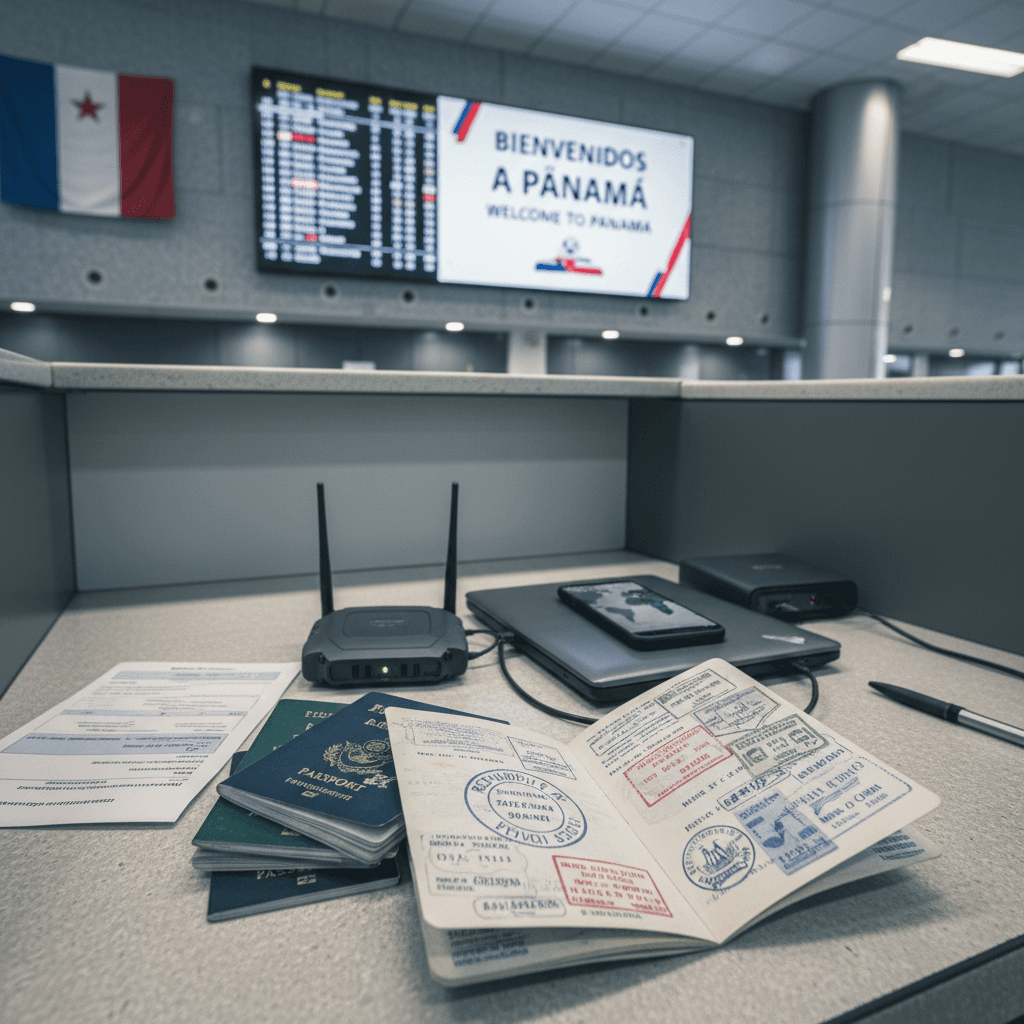
Panama
Complete Digital Nomad Guide
Policy Stability
Stamped Nomad ExclusiveHow likely visa and immigration policies are to remain unchanged
Quick Facts
Nomad Visa Cost
$250
Income Requirement
$3,000/mo
Max Stay
18 months
Renewable
Yes
Cost of Living
$2,000/mo
Avg Internet
150 Mbps
Safety Score
6/10
Healthcare
Medium
Coworking
High
English Friendly
Medium
Time Zones
EST
Entry Methods Available
Best For
The Tourist Entry Lowdown
For most nomads coming from the US or Canada, Panama makes the initial entry process incredibly smooth. You don't need to apply for anything in advance; you simply show up and get a stamp. US and Canadian citizens are currently granted 180 days of stay right at the airport. If you are coming from the UK, most of Europe, or Australia, you will typically receive 90 days upon arrival.
While the initial entry is easy, the border agents have become stricter about seeing your "exit strategy." Always have a flight booked out of the country within your allotted timeframe, or you might find yourself stuck at the check-in counter. You also need to show proof of economic solvency, which usually means having at least $500 in cash or a recent bank statement to prove you can support yourself while you are exploring the Isthmus.
Extending Your Stay
If those first few months fly by and you aren't ready to leave, you can apply for an extension through the National Immigration Service. You should start this process at least two weeks before your current stamp expires. The extension can give you up to 90 additional days, but it involves some paperwork and a bit of patience. Expect to pay between $50 and $100 in fees and provide proof of your accommodation and financial standing.
Residency for the Long Haul
Panama is famous in the nomad community for its "Friendly Nations" visa. If you hail from one of the 50 or so countries on their preferred list, the path to residency is much faster than in most other Latin American nations. It usually requires either getting a job with a Panamanian company or making a fixed-term deposit in a local bank. It is the gold standard for those looking to make Panama a permanent base.
Other popular avenues include:
- The Pensionado Visa: Perfect for those with a guaranteed lifetime pension of at least $1,000 per month. It offers some of the best discounts in the world on everything from utility bills to movie tickets.
- The Professional Residency Visa: Available to those with a university degree who want to work in specific fields not reserved for Panamanian citizens.
- The Business Investor Visa: This requires a more significant commitment, specifically a minimum investment of $160,000 into a local business that employs at least five Panamanian staff members.
Important Recent Policy Changes
A new decree issued in late 2024 changed the game for travelers who rely on third-party visas for entry. If you are a citizen of a country that normally requires a Panamanian visa but you hold a valid visa from the US, Canada, Australia, or the UK, you must physically present that visa when you land. Simply having the authorization isn't enough anymore; the physical documentation is mandatory for the exemption to apply.
Panama does not currently use an e-visa system. If you are from a country that isn't on the visa-free list, you must coordinate with a consulate or embassy well in advance. For the most accurate and up-to-date requirements, you should check the current immigration procedures and fee schedules before you book your flight.
Investment-Based Residency
For those with significant capital who want to skip the line, the Qualified Investor program is the fastest route to permanent residency. While the Business Investor visa focuses on company operations, this program allows for investment in real estate or the stock market. The government fees for these applications are around $5,000 for the main applicant, plus an $800 repatriation deposit that you get back later.
Keep in mind that Panama's bureaucracy moves at its own pace. Whether you are applying for a simple extension or a complex residency permit, the "Mañana" culture is real. Give yourself plenty of buffer room on your passport expiration and always keep physical copies of every document you submit.
The Remote Worker Visa: Your Ticket to Panama
Panama officially joined the remote work revolution with its Short Stay Visa as a Remote Worker. It is designed for those who want to trade their home office for a view of the Pacific or the Caribbean without the headache of traditional residency hurdles. It is a straightforward program, but you need to make sure your paperwork is tight before you land in Panama City.
This visa allows you to live and work in the country for an initial period of 9 months. If you decide you aren't ready to leave the tropical life behind, you can renew it once for an additional 9 months. This gives you a total of 18 months to explore everything from the skyscrapers of the capital to the surf breaks in Santa Catalina.
The Financial Bar
Panama wants to ensure you can support yourself while you are here. The income requirements are clear and non-negotiable. You must prove you earn enough from sources outside of Panama to qualify.
- Individual Applicants: A minimum monthly income of $3,000 USD (or $36,000 USD annually).
- Families: If you are bringing dependents, the requirement jumps to $4,000 USD monthly.
You will need to back these numbers up with certified bank statements, employment contracts, or business affidavits. The authorities are looking for proof that your money is coming from foreign entities and that your job is truly remote.
The Application Process
While some countries allow you to handle everything online, Panama prefers a more hands-on approach. You will need to work with a Panamanian immigration lawyer or coordinate through a consulate. Most nomads find that hiring a local attorney is the path of least resistance, as they can handle the filings with the National Migration Service on your behalf.
Expect to pay a $250 application fee plus an additional $50 for your visa card. The approval process is relatively quick, usually taking between 1 and 2 months. You will need to gather several documents to get started:
- A valid passport and three passport-sized photos.
- Proof of health insurance that covers you in Panama.
- A clean criminal record from your home country.
- A sworn affidavit stating you will not seek local employment.
- A letter from your employer or proof of your own business registration abroad.
Taxes and Fine Print
One of the biggest perks of living in Panama is the territorial tax system. This means the government generally only taxes income earned within Panamanian borders. Since your visa specifically prohibits you from working for local companies, your foreign-sourced income is typically exempt from local taxes. Even if you stay long enough to be considered a tax resident, your overseas earnings usually remain untouched by the local tax man.
There are a few hard rules to keep in mind. You cannot take a job with a Panamanian company or provide services to local clients while on this visa. It is strictly for those working for employers or clients based elsewhere. Also, keep in mind that this visa is a temporary stay. It does not lead to permanent residency or citizenship. If you fall in love with the country and want to stay forever, you will eventually need to transition to a different residency program, such as the Friendly Nations Visa.
You can find the official forms and latest updates through the Panama National Migration Service website. It is best to start the process well before your planned arrival to ensure your paperwork is processed in time for your move.
The Basics of Entry
Panama is remarkably welcoming to digital nomads, offering one of the most straightforward entry processes in Central America. For the majority of travelers, your journey starts with a simple stamp in your passport rather than a mountain of paperwork. If you hold a passport from the US, Canada, UK, EU, Australia, or Japan, you can walk right up to the immigration desk without a pre-arranged visa.
While the standard stay for most visa-exempt nationalities is 90 days, there is a major perk for North Americans. Due to reciprocal agreements, citizens of the US and Canada are typically granted up to 180 days upon arrival. You just need to ensure your passport is valid for at least 6 months from your date of entry.
When you land at Tocumen International, have these three things ready for the immigration officer:
- Proof of onward travel, such as a flight out of Panama within your allotted stay.
- Economic solvency, which means showing you have at least $500 USD available via cash, bank statements, or a credit card.
- A valid passport with plenty of blank pages.
E-Visas and Visas on Arrival
If you aren't from a visa-exempt country, Panama has modernized its process with an e-visa system. Nationalities from India, China, and parts of the Caribbean can apply through the official Panama migration portal. These digital visas usually cost between $50 and $100 and take about 7 to 10 days to process. Once approved, they generally allow for a 30-day stay.
A few specific nationalities, such as travelers from Egypt or Angola, may be eligible for a visa on arrival. This is a bit more old-school and requires payment at the port of entry. It is a less common route, so it is always smart to double-check your specific requirements with a consulate if you fall into this category.
Extending Your Stay
If you fall in love with the Casco Viejo coffee scene or the surf in Santa Catalina and want to stay longer, you can apply for an extension. You will need to visit the National Immigration Service office on Ricardo J. Alfaro Avenue in Panama City. Most travelers can snag an extra 60 to 90 days this way.
To get the extension, bring your passport, a copy of your current visa stamp, a formal letter requesting the extension, and the fee, which ranges from $50 to $100 USD. Try to get this sorted at least a week before your original time runs out so you aren't sweating the deadline while waiting in line.
The Reality of Border Runs
In the past, nomads would simply hop over the border to Costa Rica for a weekend and come back for a fresh 90-day stamp. Those days are largely over. Panamanian immigration officials have become much stricter about tracking these patterns. If they see you are trying to live in the country indefinitely on back-to-back tourist stamps, they might deny you entry or give you a significantly shortened stay. It is much safer to use the formal extension process or look into the Short-Stay Visa for Remote Workers if you plan on staying long-term.
Costs and Penalties
Staying legal in Panama is relatively affordable, but the fines for laziness add up quickly. Here is what you should budget for:
- Visa-Exempt Entry: Free.
- E-Visa/Stamped Visa: $50 to $250 depending on your nationality.
- Stay Extensions: $50 to $100 plus any legal or translation fees if required.
- Overstay Fine: $50 USD per month.
If you do happen to overstay, you must pay your fines at the immigration office before you head to the airport. Unpaid fines will block you from leaving the country and could lead to a permanent red flag on your record or a future ban on re-entry. It is a headache that is easily avoided with a little bit of planning.
Panama has long been a heavyweight in the world of residency programs, and for good reason. Whether you are looking to spend eighteen months working by the beach or you want a forever home with a tax-friendly setup, the country provides clear, structured pathways to get you there. Unlike many of its neighbors, Panama treats residency more like a business transaction; if you meet the criteria and pay the fees, the red tape is relatively manageable.
The Digital Nomad Visa
If you are not ready to commit to a multi-year investment, the Short-Term Remote Worker Visa is your best bet. It is designed specifically for freelancers and remote employees who earn at least $3,000 per month (or $36,000 per year) from sources outside of Panama. You will need a clean criminal record and valid health insurance to qualify.
- Duration: Valid for 9 months, with a one-time extension for another 9 months.
- Total Stay: Up to 18 months maximum.
- Cost: Government fees are roughly $300, though legal assistance usually brings the total package to around $1,500.
- Limitation: This visa does not lead to permanent residency or citizenship.
The Friendly Nations Visa
This remains one of the most popular routes for citizens from roughly 50 "friendly" countries, including the US, Canada, and much of Europe. While the rules changed recently to make it slightly more expensive, it is still a fantastic path to permanent residency. You can qualify by purchasing real estate worth $200,000 or by getting hired by a Panamanian company.
- The Process: You receive a 2-year temporary residency card first. After those two years, you can apply for permanent status.
- Costs: Government fees sit around $1,020, plus legal fees which typically start at $3,000.
- Benefit: This is a direct gateway to a Panamanian ID card (cedula) and eventually a passport.
The Pensionado (Retirement) Visa
You do not actually have to be "retired" in the traditional sense to use this, but you do need a guaranteed lifetime income. If you have a government or corporate pension of at least $1,000 per month (plus $250 for a spouse), you are eligible. This is widely considered one of the best retirement programs in the world because of the massive discounts it grants on everything from utility bills and movie tickets to flights and hospital visits.
- Status: Grants immediate permanent residency.
- Costs: Government fees are low at approximately $300, with legal fees ranging between $1,000 and $2,000.
- Restriction: You are not permitted to work for a Panamanian company under this visa.
High-Value Investment Options
For those with significant capital who want to skip the waiting periods, Panama offers "Golden Visa" style programs. The Qualified Investor program grants permanent residency in about 30 days if you invest $300,000 in real estate, $500,000 in the stock market, or $750,000 in a fixed term bank deposit. You must hold these investments for at least five years.
Alternatively, the Reforestation Visa allows for a lower entry point. An investment of $80,000 to $100,000 in an environment-certified forest plantation can put you on a path to permanent residency after 2 years. It is a slower burn than the Qualified Investor route but much lighter on the wallet.
The Path to Citizenship
Panama is a great place to "stack" residencies. Most of the tracks mentioned above, excluding the Digital Nomad visa, allow you to apply for full citizenship after 5 years of holding permanent residency. While Panama officially requires you to renounce your original citizenship during the ceremony, in practice, many expats maintain dual nationality as the country does not strictly enforce the relinquishment of your original passport.
If you are looking to start the process, you can find more details on the official Panama Immigration Department website. Just keep in mind that for almost all these options, you are legally required to hire a Panamanian attorney to file the paperwork on your behalf.
Panama remains one of the few places where you can genuinely tailor your overhead to your income without sacrificing a high quality of life. Whether you are looking for a skyscraper view in a tropical metropolis or a simple wooden shack over the Caribbean, the numbers generally work in your favor. On average, a solo nomad can live quite well here on $1,300 to $1,800 per month, though you can drop that closer to $900 if you head into the interior and live like a local.
Panama City: The Metropolitan Hub
This is the most expensive spot in the country, but it is also where you will find the most reliable fiber-optic internet and a social scene that rivals Miami. If you want to be in the heart of the action, look for apartments in neighborhoods like El Cangrejo or Marbella. Prices for a 1BR in these nomad-friendly areas typically range from $600 to $800 for a comfortable mid-range setup, though luxury high-rises easily clear $1,000.
- Rent: $600–$800 for a comfortable mid-range apartment; $1,000+ for premium views.
- Food & Groceries: Budget around $360 for a mix of home cooking and local markets.
- Dining Out: Local "fondas" cost about $6–$10, while mid-range restaurants run $18–$25 per person.
- Coworking: Dedicated desks average $126–$180 per month, with daily drop-ins around $10.
- Transport: A monthly budget of $50 covers plenty of Uber rides and the clean, efficient Metro system.
Bocas del Toro: The Island Life
Bocas is where you go to trade the suit for a swimsuit. While the vibe is laid-back, the logistics of being on an island mean that imported goods and electricity can be a bit pricier than on the mainland. Most nomads find that a monthly budget of $1,400 to $1,800 allows for a very comfortable lifestyle including plenty of boat taxis and weekend excursions.
- Rent: Expect to pay $500–$700 for a decent 1BR; premium beachfront spots can reach $1,200.
- Food & Groceries: Groceries run about $300–$350, though selection is more limited than in the city.
- Dining Out: Tourist-oriented spots average $15–$20 per meal.
- Coworking: Monthly access generally sits around $150.
- Transport: Budget $75 for water taxis and bicycle rentals, which are the primary ways to get around.
David: The Budget-Friendly Alternative
If your priority is keeping costs low while maintaining access to great healthcare and infrastructure, David is the smart play. It is roughly 20–40% cheaper than Panama City. It serves as a gateway to the Chiriquí highlands, so you get the benefit of city amenities with cooler mountain towns like Boquete just a short drive away.
- Rent: You can find solid 1BR apartments for $400–$600.
- Food & Groceries: Local produce is abundant and cheap, keeping grocery bills around $250–$300.
- Dining Out: You can eat very well for $12–$18 at mid-range spots.
- Coworking: Spaces are more affordable, usually ranging from $120–$150 per month.
- Transport: Very low, with $30–$50 covering most local needs.
Healthcare and Insurance
Panama is a major hub for medical tourism, and for good reason. Private health insurance is surprisingly affordable compared to North American or European rates. Local plans for healthy nomads often start between $40 and $50 per month. If you want a more comprehensive plan that includes international coverage, expect to pay between $75 and $150 depending on your age and health history.
The Bottom Line
Panama’s tax laws are a major draw for remote workers. If your income is sourced from outside the country, you are generally exempt from local income tax. This effectively gives you a significant boost in purchasing power. When you combine that with the fact that the US Dollar is the official currency, you avoid the headache of fluctuating exchange rates and hidden conversion fees.
- Most affordable: David, where you can live well on $1,000–$1,400 per month.
- Best for networking: Panama City, with its high density of coworking spaces and 100 Mbps fiber internet.
- Best for nature: Bocas del Toro, though you should budget for slightly higher "island prices."
Panama isn't a one-size-fits-all destination. Depending on whether you crave a skyscraper skyline, a misty mountain trail, or a surfboard under your arm, your "perfect" base will shift. Most nomads find their rhythm in one of three distinct hubs: Panama City, Boquete, or Bocas del Toro.
Panama City: The Metropolitan Powerhouse
If you need high-speed fiber and the hum of a global financial hub, the capital is your best bet. It feels like a mix of Miami and Madrid, offering a skyline of glass towers right next to the cobblestone charm of Casco Viejo. You can expect reliable 50-100+ Mbps internet speeds and a massive selection of dedicated workspaces like The Cube and DEKOBE.
Living here is a premium experience compared to the rest of Central America. You will likely spend between $2,000 and $2,500 per month for a comfortable lifestyle in safe, walkable neighborhoods like Obarrio or Marbella. While the nightlife is world-class and the cafe culture is thriving at spots like Café Unido, remember that this is a busy city; traffic can be intense and certain areas like El Chorrillo are best avoided.
- Pros: Fastest internet in the country, endless networking opportunities, and an international airport that connects you to the rest of the world.
- Cons: Higher cost of living and the typical noise and heat of a tropical metropolis.
Boquete: The Highland Sanctuary
For those who prefer hiking boots over high heels, Boquete is the clear winner. Located in the Chiriquí highlands, it offers a spring-like climate that lets you ditch the air conditioning. It is a haven for nature lovers and coffee aficionados, with a tight-knit community of expats and nomads who gather at Selina Boquete or local favorites like Café Ruiz.
The pace of life is slower here, and the costs are slightly more manageable, averaging $1,500 to $2,300 a month. While fiber optic upgrades are rolling out, standard speeds often hover around 30 Mbps. It is remarkably safe and peaceful, though you should be prepared for occasional power flickers during heavy mountain storms and a nightlife scene that usually wraps up by dinner time.
- Pros: Stunning mountain scenery, cool weather, and a very high safety rating.
- Cons: Limited shopping and entertainment compared to the city; internet can be less consistent.
Bocas del Toro: The Caribbean Soul
Bocas is where work-life balance tilts heavily toward "life." This archipelago is famous for its turquoise water, overwater bungalows, and a social scene that revolves around surfing and island hopping. The nomad community here is surprisingly robust, supported by over 13 coworking spaces and reliable Wi-Fi in hubs like Isla Colón.
Expect to spend $1,500 to $2,200 a month. While the "island time" vibe is real, the infrastructure has improved significantly. You can work from a beachside cafe with speeds between 9 and 46 Mbps, then hit a "Filthy Friday" party or a sunset surf session. Just keep in mind that the humidity is constant and the tourist crowds can get thick during the high season.
- Pros: Incredible beaches, active social calendar, and a wide variety of coliving options.
- Cons: Can feel overly touristy; goods and groceries are more expensive since everything is boated in.
Quick Comparison
Panama City
- Monthly Cost: $2,000-$2,500
- Internet: 50-100+ Mbps (Fiber)
- Vibe: High-energy urban jungle
- Best For: Tech professionals and city lovers
Boquete
- Monthly Cost: $1,500-$2,300
- Internet: 30 Mbps (Fiber available)
- Vibe: Chill mountain retreat
- Best For: Hikers, writers, and those seeking peace
Bocas del Toro
- Monthly Cost: $1,500-$2,200
- Internet: 9-46 Mbps
- Vibe: Tropical party and surf
- Best For: Beach bums and social butterflies
Panama has quietly become one of the most reliable tech hubs in Central America. While the country is famous for its canal, digital nomads are increasingly sticking around for its fiber-optic backbone. You can expect a massive divide between the urban sprawl of Panama City and the remote jungle outposts, but for the most part, staying connected here is straightforward and affordable.
The Connectivity Breakdown
In Panama City, Costa del Este, and Panama Pacifico, the internet is world-class. Broadband speeds typically range from 50 to 320 Mbps during peak hours. If you are staying in a modern apartment building, you will likely have access to fiber-to-the-home (FTTH) connections that make video calls and heavy uploads a breeze. Providers like Tigo and PaNETma lead the market, with the latter offering symmetrical speeds up to 10 Gbps for power users.
Once you head into the interior or toward the coast, things change. Rural speeds often hover between 6 and 50 Mbps. If you are heading to Bocas del Toro or the mountains of Boquete, it is a good idea to check if your accommodation has Starlink, which has become the go-to solution for nomads living off the beaten path.
Coworking Spaces: Where to Post Up
Panama City is packed with professional spaces that cater to different vibes, from corporate to creative. Most offer high-speed backups, so you are rarely at risk of a blackout-induced deadline disaster.
- Panama Coworking Center: Known for having the fastest WiFi in the city across multiple locations. It has an artistic, high-energy atmosphere.
- Selina Casco Viejo: Located in the historic district, this is the social heart of the nomad scene. It features a stylish rooftop terrace for post-work drinks.
- Works: A newer spot that feels very welcoming. They even have ping pong tables for when you need a mental break.
- The Cube Coworking: Best for those who prefer an open-plan layout and collaborative energy.
- Workings: This has a more polished, corporate feel with incredible terrace views of the skyline.
Membership and Day Pass Costs
Pricing is flexible depending on how long you plan to stay. Most spaces offer a significant discount if you commit to a full month. Here is what you can expect to pay for a desk:
- The Cube: Monthly passes start at $60.
- Be Productive: A budget-friendly monthly option at $90.
- My Office Panamá: Flexible plans starting from $99.
- Panama Coworking Center: $300 for a full month or $150 for a 10-day pass.
- Spaces: $270 per month, which is a great deal if you already use their global membership.
- Daily Rates: Most spots charge between $10 and $50 for a single day pass.
Cafe Culture and Public WiFi
If you prefer the hum of a coffee shop, Panama City has a sophisticated cafe scene. Café Unido is the gold standard, specifically their branches in Via Argentina and Coco del Mar. They offer reliable speeds over 20 Mbps and plenty of power outlets. Coffee Max and Nomada Eatery are also popular, though they can get a bit loud during the lunch rush, so bring your noise-canceling headphones.
Mobile Data and SIM Cards
Do not rely on international roaming; it is much cheaper to grab a local SIM. Mas Movil is the most popular choice for nomads because their 4G/5G coverage is surprisingly resilient, even reaching the San Blas Islands. You can pick up a prepaid SIM at the airport or any convenience store for just a few dollars.
- 7-Day Unlimited Data: $5
- 14-Day Unlimited Data: $10
- 30-Day Unlimited Data: $15
For those who prefer to be set up before they land, eSIM providers like Yesim or Nomad offer Panama packages starting around $5 to $30. These are convenient, but keep in mind that local prepaid physical SIMs usually offer better value for unlimited data.
One of the biggest perks of basing yourself in Panama is the healthcare. You get a system that feels surprisingly familiar to North American or European standards, but without the soul-crushing price tag. Whether you are living in the high-rises of Panama City or the highlands of Boquete, you will find that the medical infrastructure is robust, modern, and built to cater to an international crowd.
Public vs. Private: Choosing Your Path
Panama operates on a dual system. The public side, managed by MINSA (Ministry of Health) and CSS (Social Security), is where locals and tax-paying expats go for low-cost or free care. While it is affordable, it is often plagued by long wait times, crowded waiting rooms, and shared wards. Most digital nomads skip this entirely.
The private sector is where you want to be. It is efficient, high-tech, and incredibly accessible. You can often book a specialist appointment for the same afternoon, and the facilities look more like luxury hotels than clinics. Doctors in the private sector almost always speak fluent English, having often trained in the US or Europe.
Top-Tier Hospitals
If you are in Panama City, you have access to some of the best medical facilities in Latin America. Hospital Punta Pacífica is the crown jewel, as it is affiliated with Johns Hopkins Medicine. It is the go-to for complex procedures and high-end care.
- Hospital San Fernando: The first hospital in Panama to be Joint Commission International accredited; excellent for long-term expat care.
- Hospital Paitilla: Known for its oncology and cardiology departments.
- The Panama Clinic: A newer, TEMOS-accredited facility located in the Pacific Center complex.
- Centro Médico Mae Lewis: The primary reliable private option if you are based in David or near Boquete.
The Real Cost of Care
The price difference compared to the US is staggering. You can expect to pay 60% to 85% less for most procedures. To give you a better idea of what your "out-of-pocket" might look like without insurance, here are some typical costs at private facilities:
- Specialist Visit: $50–$80
- Comprehensive Blood Work: $50–$100
- MRI: $300–$400
- Colonoscopy: $400–$600
- ER Visit: $25–$50 per hour
- Knee Replacement: $10,000–$15,000
Insurance for the Modern Nomad
If you are working remotely and paying taxes in Panama, you can technically join the CSS public system, but most nomads opt for private coverage. Local plans from providers like ASSA or MAPFRE typically run between $800 and $2,500 per year depending on your age and health history.
For those who move around more frequently, international nomad insurance is the smarter play. Many in the community use SafetyWing or Atlas Nomads because they offer private care access without requiring you to maintain a permanent residence in your home country. These plans generally range from $40 to $350 per month.
Pharmacies and Prescriptions
Pharmacies are everywhere, from standalone shops to counters inside Rey or Super 99 supermarkets. Many medications that require a prescription elsewhere are available over-the-counter here. It is always a good idea to bring your initial supply and a doctor's note, but refilling generics is cheap and easy once you arrive. Chains like Farmacias Arrocha are great because they accept credit cards and often offer discounts if you ask.
Emergencies
In an emergency, head straight to a private hospital ER if you can. They are open 24/7 and the wait times are minimal. For ambulance services in Panama City, private subscriptions like SEMM (+507-366-0122) or SOS (+507-569-6969) are much faster and more reliable than the public 911 services. Keep these numbers saved in your phone the moment you land.
Banking on the Ground
Opening a local bank account in Panama is a rite of passage for many long-term nomads. It is entirely possible for foreigners to do, but you should prepare for a fair amount of paperwork and "Know Your Customer" (KYC) scrutiny. Panamanian banks are notoriously conservative and thorough.
Most institutions require an initial deposit to get things moving. Depending on the bank and the specific account type, this can range from $1,000 to $10,000 USD. While it sounds like a lot, having a local account eventually saves you a fortune in ATM fees and makes paying local bills significantly easier.
To get started, you will generally need to provide:
- Your original passport and a clear copy.
- A second form of ID, such as a driver's license.
- Two bank reference letters from your current or former banks abroad.
- Proof of income, which could be an employment contract, tax returns, or business registration.
- Proof of address, usually a utility bill or a signed lease agreement.
- A signed source of funds declaration.
Some branch managers might also ask for a personal reference letter from a Panamanian resident. It helps to have a clear reason why you want to bank in Panama, such as holding a specific visa or renting long-term property.
The Digital Wallet Situation
If you rely heavily on Wise, you need to plan ahead. Wise does not currently support residents of Panama. You cannot open a new account if you list Panama as your home, and they do not ship cards here. However, if you already have a Wise account from your home country, you can still use it to send money to Panamanian bank accounts.
Similarly, Revolut does not issue cards to Panama residents. If you are visiting, your existing Revolut card will work fine for daily spending, but do not expect to manage your local life through their app once you officially move your residency. For data, Revolut does offer handy eSIM plans that work well across the country.
Cash, ATMs, and Fees
Panama uses the US Dollar as its official currency. This makes life simple for Americans and provides a level of stability you won't find in neighboring countries. You will see "Balboa" coins for smaller denominations, but they are 1:1 with the dollar and used interchangeably.
ATMs are everywhere, but they aren't cheap. Most local banks charge between $5.50 and $6.50 USD per withdrawal. To keep costs down, look for BAC Bank machines; they usually charge a slightly lower fee of $5.35 and allow you to pull out up to $500 at a time. Most other machines cap you at $250 per transaction.
Pro tip: Always use ATMs located inside a bank branch. Avoid the independent "Euronet" style machines in convenience stores, as their fees and exchange rates are predatory. If the machine asks if you want it to "convert" the currency for you, always hit "Decline" to let your home bank handle the math.
Moving Money Internationally
Since Wise is restricted for residents, you will need a reliable way to move your funds into the country. Here are the most effective methods:
- Wise: Still the champion for speed. A $1,000 transfer typically costs about $4.62 in fees and arrives almost instantly.
- Xe: Great for larger bank-to-bank transfers with a straightforward interface.
- Remitly: Known for fast transfers and very competitive initial rates for new users.
- Western Union or Ria: Best if you need physical cash pickup. There are over 4,800 locations across the country.
The Crypto Landscape
Panama has a reputation for being tech-forward, and while the crypto scene is legal, it is still finding its feet. There isn't a massive, all-encompassing legal framework yet, but things are moving in a digital direction. For example, Panama City has started allowing residents to pay municipal taxes and permits using BTC, ETH, USDC, and USDT.
You will find crypto ATMs in the capital, but be warned: the fees are significantly higher than traditional banking. If you are running a business that involves crypto, you are legally required to maintain strict KYC and anti-money laundering protocols. It is legal to hold and trade, but don't expect every coffee shop in the jungle to accept your Bitcoin wallet just yet.
Final Financial Tips
If you are from the US, the Charles Schwab debit card is the ultimate nomad hack. They reimburse all international ATM fees at the end of every month, which effectively makes Panamanian ATMs free to use. Once you have a local visa, opening a local account at an institution like Banco General or Banistmo will give you much higher withdrawal limits and better integration with local apps like Yappy, which is Panama's version of Venmo or CashApp.
Bringing the Crew: Dependent Visas
Moving your family to Panama is remarkably straightforward compared to many other digital nomad hubs. The Family Regrouping Visa is the primary path for bringing your spouse and children along. It covers kids under 18, or up to 25 if they are full-time students and still rely on you financially. If you have a permanent residency or a temporary residency lasting more than two years, your dependents can ride on your status.
The paperwork pile is standard for Latin America. You will need a notarized power of attorney, passport copies, and a clean criminal background check. Most importantly, you need proof of kinship, like birth or marriage certificates, which must be less than 6 months old when you submit. Budget for fees like $250 to the National Treasury and $800 to the Immigration Service. Once approved, your family gets a 2-year provisional residency, which can be converted to permanent status later. You generally need to show you can support everyone, typically $1,000 per month plus an extra $100 for each dependent.
Education and International Schools
While public schools are free, almost all nomad families opt for international schools. These offer familiar curricula like IB or IGCSE and teach primarily in English. Most of the top-tier schools are clustered in Panama City, particularly in the Clayton area. You should expect annual tuition to range between $5,000 and $15,000, though elite institutions can climb above $20,000.
- King's College Panama: Fees range from roughly €7,995 to €23,624 per year.
- Metropolitan School of Panama: Tuition sits between $10,974 and $18,123 annually.
- Extra Costs: Factor in one-time registration fees of $500 to $1,000 and uniforms which run about $200 to $500.
Keeping the Kids Healthy
Healthcare for children in Panama is excellent, provided you use the private system. Public facilities like Hospital del Niño offer free care for kids under five, but wait times can be long. Most expats prefer private pediatricians who offer 24/7 "concierge" access. These doctors often trained in the U.S. and provide a very high standard of care. Since the local CSS coverage is mostly for employees paying local taxes, it is best to keep a solid international insurance policy that covers private hospital visits.
Where to Set Up Camp
Panama City is the heartbeat of family life in the country. If you want green space and a suburban feel, Clayton is the gold standard. It is full of gated communities, parks, and is right next to the best schools. Punta Pacifica is better if you want high-rise luxury and proximity to the best private hospitals. For a more walkable, urban vibe, El Cangrejo and San Francisco offer plenty of cafes and proximity to Parque Omar, which is the city's version of Central Park. Stick to these neighborhoods and avoid higher-crime districts like Colón or El Chorrillo.
The Cost of Childcare
One of the biggest perks of Panama is the affordable help. Private full-day preschool or kindergarten averages around $476 per month. If you just need daycare, prices fluctuate between $200 and $600 depending on the neighborhood. Many nomad families also hire nannies, which is significantly more affordable than in North America or Europe. If you need extended hours from 6am to 7pm, expect to add about $70 to $180 to your monthly bill for meals and extra care.
Safety and Security
Panama remains one of the safest bets in Central America. While the homicide rate is around 12.9 per 100,000, violent crime rarely touches the expat bubbles. Petty theft is the main concern, especially in crowded tourist spots. Most families feel perfectly secure living in gated communities in areas like Costa del Este or Clayton. Use Uber instead of hailing random taxis on the street, and keep an eye out for local curfews for unaccompanied minors, which are occasionally enforced in certain provinces to keep kids off the streets late at night.
Navigating Local Safety
Panama is generally one of the safer bets in Central America, maintaining a homicide rate around 12-13 per 100,000. While that number might sound high compared to Western Europe, violent crime rarely touches the nomad community. Most serious incidents are concentrated in specific neighborhoods like El Chorrillo in Panama City, the city of Colón, or the remote jungle near the Colombian border. Stick to the well-trodden paths in Casco Viejo, Boquete, or Costa del Este, and you will likely feel as secure as you do back home.
The real nuisance is petty theft. Pickpockets frequent crowded buses and tourist hotspots, so keep your phone out of your back pocket. If you are heading out for drinks in Panama City, use Uber rather than hailing a cab on the street. It provides a digital paper trail and prevents the "gringo tax" where drivers conveniently forget how meters work or take the long way around to pad the fare.
Be wary of common street scams. You might encounter "fake police" asking for a passport check just to solicit a bribe, or distraction artists who spill a drink on you while an accomplice lightens your pockets. Carry a printed copy of your passport and leave the original in your room safe. If someone approaches you with a "found" wallet or a deal that seems too good to be true, keep walking.
Social Norms and Etiquette
Panamanians are formal yet warm. A simple "Buenos días" or "Buenas tardes" when entering a shop or an elevator is expected. If you are addressing someone older or in a professional setting, use Señor or Señora to show respect. While the country has a tropical soul, the dress code is surprisingly modest. Save the bikinis and board shorts for the beach; in Panama City or inland towns, wearing swimwear to a grocery store or a restaurant is considered disrespectful.
Punctuality is a bit of a mixed bag. For a business meeting or a doctor's appointment, show up on time. However, if you are invited to a social gathering, expect "Panama time" to take over. Arriving 30 to 60 minutes late to a party is often more polite than showing up exactly on the dot. Also, do not be startled by the constant honking on the roads. In many cases, it is just a friendly "hello" or a way for a taxi to see if you need a ride, rather than a sign of road rage.
LGBTQ+ and Inclusion
Panama is a conservative, predominantly Catholic country, but it is relatively progressive for the region. Same-sex activity has been legal since 2008, and you will find a vibrant, visible queer scene in Panama City and Bocas del Toro. Casco Viejo even hosts its own Pride parades. That said, public displays of affection can still draw unwanted stares in rural areas. While gender-affirming care is available, the country does not yet recognize same-sex marriage or non-binary gender identities, so the legal framework still has some catching up to do.
Language and the Expat Scene
Spanish is the heartbeat of the country. In nomad hubs like Boquete or the high-rise offices of Panama City, you can get by with English, but you will hit a wall quickly in local markets or government offices. Locals tend to speak fast and drop the "s" at the end of words, which can be a hurdle even for intermediate speakers. Learning the basics will transform your experience from a tourist to a neighbor.
You won't be alone in your transition. There are massive expat communities in:
- Panama City: The hub for urbanites, featuring co-working spaces like Selina and Workings.
- Boquete: A mountain retreat popular with retirees and remote workers who prefer coffee plantations to skyscrapers.
- Coronado: A beachfront community with a steady stream of weekend events and social mixers.
The infrastructure is built for remote work, with typical speeds ranging from 30-50 Mbps. If you earn at least $36,000 annually from sources outside Panama, the Short Stay Visa for Remote Workers is a straightforward way to stay for up to 18 months. To integrate, skip the expat-only bars once in a while. Join a local "intercambio" language exchange or head to a neighborhood fonda for lunch. Being a "good guest" goes a long way in a country that prides itself on hospitality.
The Territorial Advantage
Panama is a heavy hitter in the nomad world for one primary reason: its territorial tax system. Unlike many countries that want a piece of everything you earn globally, Panama generally only taxes income generated within its borders. If you are sitting in a cafe in Panama City working for a client in London or a tech firm in San Francisco, your income is considered foreign-sourced and remains untaxed by the Panamanian government.
This setup makes Panama an incredible base for remote workers. You get the infrastructure of a modern hub without the heavy tax drag on your global earnings. However, staying on the right side of the law means understanding how the local tax office, the General Directorate of Revenue (DGI), defines your status.
Establishing Tax Residency
You don't become a tax resident the moment you land at Tocumen Airport. Generally, you need to spend more than 183 days in the country during a calendar year to trigger residency. These days do not have to be consecutive; the DGI just looks at the total tally between January and December.
Physical presence isn't the only metric. You can also be considered a resident if you establish your "center of vital interests" here. This usually means having a permanent home, moving your family over, or establishing significant economic ties. If you want a formal Tax Residency Certificate to show your home country, you will need to provide proof of address and evidence of your economic activity in Panama.
Income Tax Brackets
If you do end up earning local income, perhaps by consulting for a Panamanian company or running a local business, you will fall into the progressive tax brackets. The rates are fairly straightforward:
- $0 to $11,000: 0% (Tax-free)
- $11,001 to $50,000: 15%
- Over $50,000: 25% (Specifically, you pay a fixed $5,850 on the first $50k and 25% on everything above that)
The Digital Nomad Visa
Panama's dedicated visa for remote workers allows you to stay for up to two years. While this visa makes it easy to live here legally, it does not change the fundamental tax rule: foreign-earned income is exempt. Even if you stay long enough to be considered a tax resident, your remote salary from abroad stays in your pocket. There are no special "nomad-only" tax rates because the standard system is already so favorable.
Crypto and Digital Assets
Panama remains a relatively hands-off jurisdiction for crypto enthusiasts. Because of the territorial principle, gains from trading crypto on foreign exchanges or income from offshore DeFi protocols are not taxed locally. If your crypto activity is sourced outside of Panama, it is generally invisible to the local tax man. There is currently no specific capital gains tax or VAT applied to digital asset transactions, though any income deemed "Panama-sourced" would fall under the standard 25% corporate or personal income tax rates.
Reporting and Global Treaties
Being a tax resident comes with some paperwork. You are expected to file an annual tax return, similar to a Form 1040, by March 15. Even if your Panama-sourced income is zero and you owe nothing, filing keeps your status clean, especially if you need to renew a residency certificate.
Panama has signed tax treaties with several countries to help nomads avoid being taxed twice on the same dollar. These treaties include "tie-breaker" rules that help determine which country has the primary right to tax you. Current treaty partners include:
- Europe: Spain, France, Italy, Netherlands, Portugal, Ireland, Czech Republic
- Americas: Mexico, Barbados
- Asia & Middle East: Singapore, South Korea, Israel, Qatar, United Arab Emirates
Keep in mind that Panama participates in the Common Reporting Standard (CRS) and FATCA for US citizens. This means local banks share account information with foreign tax authorities. Panama is a great place to lower your tax burden legally, but it is not a place to hide assets from your home country.
Staying Connected
Landing in Panama City without a data plan is a rookie mistake you'll want to avoid. While the airport has Wi-Fi, it can be spotty when you're trying to hail a ride. Grab an eSIM before you board your flight to save yourself the headache of hunting for a physical SIM card shop. Providers like Nomad, Airalo, and Holafly offer plans ranging from $9 for a basic 1GB week-long starter to unlimited data packages between $19 and $47 for a full month.
Make sure your plan includes a local voice service. Data is great for Google Maps, but you’ll need a working phone number to call emergency services or coordinate with local delivery drivers. If you prefer a physical card, BitJoy is a reliable local choice with solid 4G and 5G coverage throughout the capital and most coastal hubs.
Getting Around
Don't bother haggling with street taxis; they often overcharge foreigners and lack the safety features of modern apps. Stick to Uber, DiDi, or Cabify for transparent pricing and GPS tracking. Most rides around the city center will cost you between $3 and $8. If you're heading out from Tocumen Airport, request your ride only after you’ve cleared customs and grabbed your bags. For a local flavor, try Lift Panama, which often competes well on price during peak hours.
Where to Set Up Your Base
Panama City isn't a "one size fits all" destination. Your neighborhood choice will dictate your social life. Casco Viejo is the historic heart of the city; it’s perfect if you want to walk to upscale coffee shops, coworking spaces, and late-night rooftop bars. It's beautiful, but it can get loud on weekends.
For a more "local professional" vibe, look at El Cangrejo. It’s a walkable district filled with international restaurants, parks, and a younger crowd of digital nomads. If you prefer high-rises and ocean views, Punta Pacifica and Paitilla offer luxury apartments and proximity to the city’s best private hospitals and shopping malls, though you'll be doing more driving in these areas.
Finding a Place to Sleep (and Work)
For stays longer than a week, skip the standard hotel sites. Check out Coliving.com or Nomad Stays to find furnished apartments that actually understand what a nomad needs: reliable Wi-Fi and a desk. Many coliving spots near the bay offer all-inclusive pricing with 24/7 access to shared workspaces.
If you're on a tighter budget, Hostelz.com lists several hostels with dedicated work zones starting as low as 3 balboas per night for a basic dorm. Just be sure to read the recent reviews regarding the internet speed before you book a long stay.
Food and Language
When you're deep in a work sprint and can't leave your desk, PedidosYa is the king of delivery in Panama. It has a massive selection of local eateries and usually beats Uber Eats on delivery fees. You can track your order minute-by-minute, which is helpful when you're hungry and on a deadline.
While you can get by with English in the business districts, knowing basic Spanish makes life much easier. Use Duolingo to get your feet wet, but download HelloTalk to chat with actual Panamanians. It’s a great way to find language partners who can give you the "real" tips on where to eat or which beaches are currently overcrowded.
Safety and Local Quirks
Panama operates on "Panama time." If someone tells you they will arrive "manana," it doesn't always mean tomorrow; it just means "not right now." Stay flexible and don't overschedule your first week. As a pedestrian, keep your eyes on the ground; Panama City is notorious for missing sidewalk covers and deep potholes that can ruin your trip in a second.
In case of an actual emergency, dial 911 for general assistance. For specific needs, use these direct lines:
- Police: 104
- Fire Department: 103
- Private Ambulance (SEMM): +507-366-0122
- Private Ambulance (SOS): +507-569-6969
Always use a VPN when working from cafes in Casco or El Cangrejo. Public networks are common, but they aren't always secure. A little digital hygiene goes a long way when you're running your business from a tropical paradise.
Latest Nomad News
US Expands Visa Bond Requirements for Travelers in Panama
The US has introduced a visa bond requirement for applicants from 12 specific countries, a move that directly impacts travel and immigration logistics through Panama. Travelers and expats from affected nations may face significant financial hurdles when applying for US visas or transiting through the region.
Why Panama’s Qualified Investor Visa Remains a Top Residency Choice
Panama has finalized the minimum real estate investment for its Qualified Investor Visa at $300,000, ending previous temporary lower thresholds. The program continues to offer permanent residency within 30 to 60 days with a minimal physical presence requirement of one visit every two years.
Why Panama’s Qualified Investor Visa Remains a Top Tier Choice
Panama has finalized the 2026 requirements for its Qualified Investor Visa, maintaining the real estate investment threshold at $300,000. The program also offers residency through capital market investments or fixed-term bank deposits with updated compliance standards.
Panama Opens Permanent Residency Path for Long-Term Students
International students with six consecutive years of study in Panama can now apply for permanent residency. The new pathway includes a two-year provisional permit and waives the previously mandatory repatriation deposit.
More Guides from Central America
Stay Updated on Panama
Get notified about visa changes, policy updates, and new information for digital nomads in Panama.

