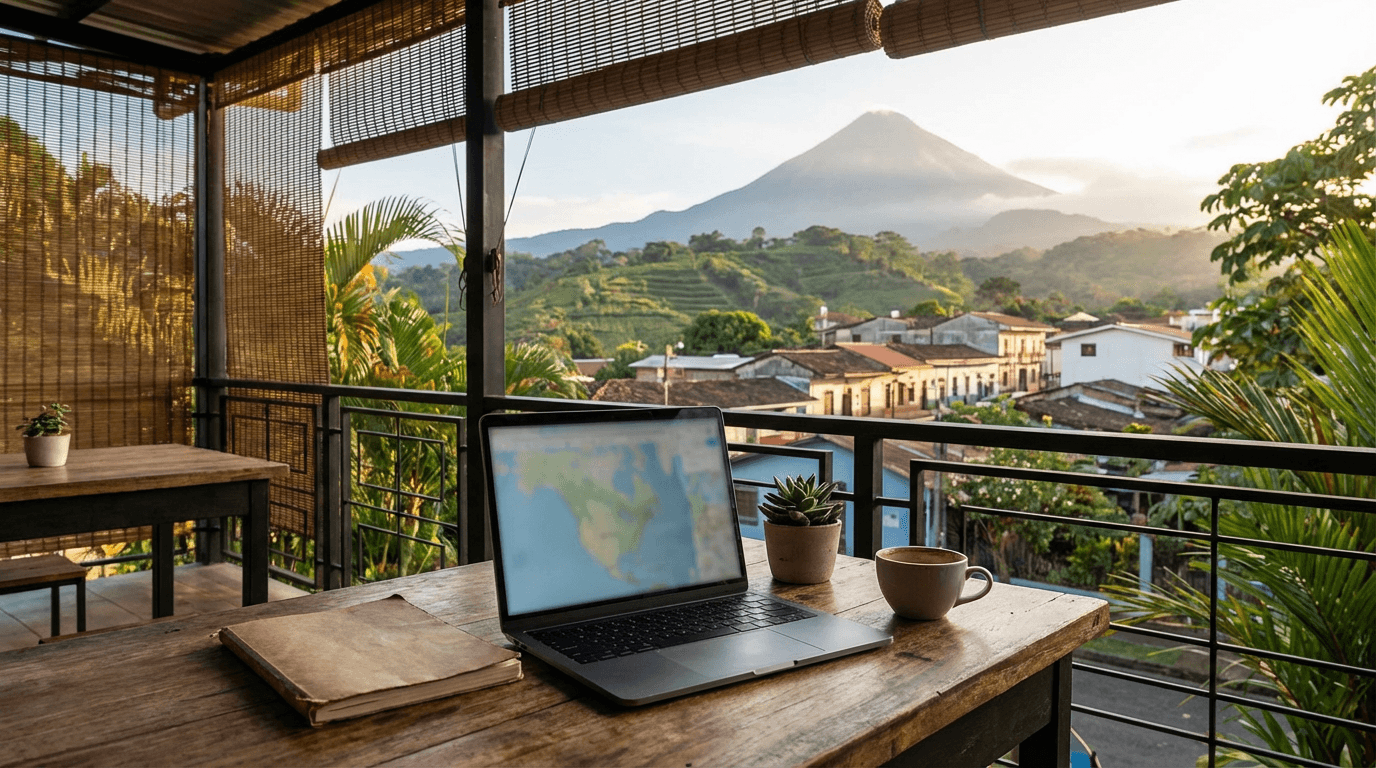
Costa Rica landscape
⛵Smooth SailingDN Visa
🇨🇷

Costa Rica

Complete Digital Nomad Guide

Brandon Richards
Brandon Richards ·

Policy Stability

Stamped Nomad Exclusive
7/10Stable

How likely visa and immigration policies are to remain unchanged

Quick Facts

Nomad Visa Cost

$100

Income Requirement

$3,000/mo

Max Stay

24 months

Renewable

Yes

Cost of Living

$1,800/mo

Avg Internet

151 Mbps

Safety Score

5/10

Healthcare

Medium

Coworking

High

English Friendly

Medium

Time Zones

CST

Entry Methods Available

Visa FreeVisa on Arrival

Best For

solofamiliesbeachamericas-base

The Golden Ticket: Tourist Entry

Most nomads start their journey on a standard tourist visa. For citizens of the United States, Canada, the UK, and most EU nations, you don't need to apply for anything in advance. You simply show up at the airport with a passport valid for at least six months and proof of onward travel. Immigration officers can grant a stay of up to 180 days, though the specific duration is at their discretion. Always check your passport stamp before leaving the booth to ensure you know your exact exit date.

If you decide to stay longer, you have two main choices. You can apply for an extension through the official immigration page, or you can do a "border run." This involves crossing into Panama or Nicaragua for a few days and re-entering to reset your stamp. While common, the border run carries slight risks; immigration officers prefer to see that you are moving toward a legal residency status rather than living indefinitely on tourist entries.

The Digital Nomad Law (Ley de Nómadas Digitales)

Costa Rica recently introduced a specific category for remote workers that changes the game. This "Estancia" status is designed specifically for people who work for companies outside of Costa Rica or run their own freelance businesses. It grants you a one-year stay, which can be extended for an additional year if you spent at least 180 days in the country during the first year.

The perks of this specific visa are significant. You are exempt from local income taxes, you can open a local bank account, and your foreign driver's license remains valid for the duration of your stay. You also get to skip the "border run" stress every few months. To qualify, you must meet a few specific criteria:

  • Provide proof of a stable monthly income of at least $3,000 USD for individuals.
  • Provide proof of a stable monthly income of at least $4,000 USD if you are applying with a spouse or family.
  • Obtain medical insurance that covers you for the entirety of your stay in Costa Rica.
  • Provide documentation showing you work for a foreign entity or own a business based abroad.

The Application Process

The application is handled through an online portal managed by the Costa Rica General Directorate of Migration. While the process is digital, you will need to gather several documents, including bank statements and proof of employment. Some documents may require an apostille or official translation into Spanish, so it helps to start this process while you are still in your home country. Once you submit, the government typically has 15 calendar days to issue a decision.

Entry Requirements to Keep in Mind

Regardless of which path you take, certain requirements are non-negotiable at the border. You must have a return ticket or a ticket to a third country. "Proof of onward travel" is the most common reason nomads get flagged at check-in counters. If you don't have a firm plan, many travelers use "onward ticket" services that provide a valid, temporary flight reservation for a small fee.

Customs officials may also ask for proof of funds. While they rarely ask to see your bank balance on a tourist entry, having a digital copy of a recent statement or a credit card with a healthy limit is good practice. If you are bringing pets, the rules are strict. You will need a health certificate from a licensed veterinarian and a USDA-endorsed (or equivalent) international health certificate issued within 14 days of your arrival.

Overstaying and Fines

Costa Rica has become stricter regarding overstays. If you exceed your allotted time, you may face a fine of $100 USD for every month you overstayed. More importantly, you could be barred from re-entering the country for a period of time equal to triple the length of your overstay. It is always better to file for an extension or leave the country before your stamp expires to keep your record clean for future visits.

Source 1 | Source 2

Making the Move: The Remote Work and Stay Visa

Costa Rica has officially rolled out the red carpet for remote workers with its Remote Work and Stay Visa, often called the Estancia Visa. It is designed specifically for freelancers, digital nomads, and remote employees who want to swap their home office for a hammock without the red tape of a traditional residency permit. This visa allows you to stay in the country for one year, with the option to extend it for a second year if you can prove you actually spent at least 180 days in the country during your first year.

Financial Requirements

The most important part of your application is proving you have a steady paycheck coming from outside Costa Rica. The government wants to see that you are self-sufficient and won't be competing for local jobs. You will need to provide bank statements from the last 12 months and a signed affidavit confirming your income source.

  • Individual Applicants: You must earn at least $3,000 USD per month.
  • Families: If you are bringing a spouse or dependents, the requirement jumps to $4,000 USD per month.
  • Annual Total: This equates to a minimum yearly income of $36,000 USD for individuals.

The Application Process

The entire process is handled digitally through the TramiteYa platform. Once you submit everything, the immigration department usually gives an answer within 14 to 30 days. If they find an error in your paperwork, you typically have 5 to 8 days to fix it, so keep a close eye on your email after you hit submit.

You will need to gather several documents before starting. Make sure you have a valid passport, a completed application form, and proof of health insurance that covers you for at least $50,000 USD within Costa Rica for the duration of your stay. If you are applying with family, you will also need to provide apostilled marriage or birth certificates.

Costs and Fees

There is some conflicting information regarding total costs because government fees can change, but you should budget for both the application and the issuance of your visa ID card. Most applicants pay a $100 USD government fee via bank deposit to Banco de Costa Rica to get the process started.

Expense Type Estimated Cost (USD)
Application Fee $100
Visa Issuance/Processing $90
Health Insurance Varies by age/provider

Tax Perks and Restrictions

One of the biggest draws of this visa is the tax exemption. Under the current law, you are exempt from paying local income tax on your foreign earnings. You also do not have to pay into the Costa Rican social security system. This makes it an incredibly cost-effective home base for high earners.

However, there are a few strict rules. You are strictly forbidden from working for any company or client based in Costa Rica. Your income must come from abroad. Additionally, you must maintain your health insurance policy for the entire time you are in the country; if your insurance lapses, your visa could be revoked. For those who need a consular visa to enter the country, like citizens of certain Asian or African nations, you may need to visit an embassy before you can apply for the nomad status.

While the process is streamlined, it is always smart to check the latest updates from the Dirección General de Migración. Requirements for family income and specific processing fees can shift, but for most digital nomads, the $3,000 monthly threshold remains the standard benchmark for approval.

The 90-Day Entry Reality

For most nomads, entering Costa Rica is a straightforward process. If you hold a passport from the United States, Canada, the UK, or most EU nations, you fall into the visa-exempt category. This means you skip the consulate entirely and get a stamp upon arrival at the airport or land border.

While the entry is easy, the clock starts immediately. You are typically granted a stay of up to 90 days. Immigration officers have the discretion to grant fewer days if your passport is near expiration or if you lack proof of onward travel, so always double-check the handwritten number on your entry stamp before walking away from the counter.

Required Documentation at the Border

Even if you don't need a formal visa, you must satisfy three specific requirements to enter the country legally:

  • Passport Validity: Your passport must be valid for at least 6 months from your date of entry.
  • Proof of Onward Travel: You must show a confirmed flight or bus ticket out of Costa Rica dated within your 90-day window. "Ghost tickets" or rental confirmations are risky; most airlines will check for a legitimate ticket before you even board your flight to San Jose or Liberia.
  • Entry Tax: While often included in airfare, some land crossings require a $10 USD entry fee.

Consular Visas and E-Visa Procedures

If your nationality is not on the exempt list, you will need to apply for a consular visa. Costa Rica does not currently offer a fully automated e-visa system where you simply upload a photo and receive a PDF. Instead, the process involves scheduling an appointment and submitting physical or digital documentation to a consulate.

The standard fee for a consular visa is $50 USD, plus service fees that usually range between $20 and $30 USD. You can find the specific requirements for your nationality and start the scheduling process through the official immigration portal for Costa Rica. Expect a processing time of 15 to 30 days, so plan your travel dates with a buffer.

The Art of the Border Run

Costa Rica does not allow you to extend a tourist stay while remaining inside the country. If you want to stay longer than your initial 90 days, you have to leave and come back. This is the classic "border run."

Most nomads head to Nicaragua (via the Peñas Blancas or Los Chiles crossings) or Panama (via Paso Canoas or Sixaola). You can technically exit and re-enter on the same day, but spending a night or two abroad is often safer to avoid scrutiny. While there is no formal law against "perpetual tourism," immigration officers are trained to spot people living in the country on back-to-back tourist stamps. If an officer suspects you are working locally or living there permanently without a residency permit, they can deny you entry or give you a significantly shortened stay of only 8 or 15 days.

Overstays and Penalties

Overstaying your visa is a gamble that rarely pays off. If you are caught or if you try to leave the country after your 90 days have expired, you face a fine of $100 USD per month of overstay. If you cannot pay the fine on the spot, you may be barred from re-entering the country for a period of 1 to 3 years.

In extreme cases, overstaying can lead to detention and deportation. The costs of deportation, which can range from $500 to $1,000 USD, are legally the responsibility of the traveler. It is always cheaper and easier to book a quick weekend trip to Panama City or San Juan del Sur than to deal with the DGME's enforcement branch.

Official Guidelines by Nationality

Entry rules can shift based on international agreements. For the most current list of which countries require a visa and which are exempt, you should consult the official immigration guidelines by nationality. These PDF documents are updated regularly and serve as the final word on entry requirements for every passport type.

Source 1 | Source 2

Making the Move: Your Residency Roadmap

Costa Rica is more than just a vacation spot; for many nomads, it becomes a permanent base. If you want to stay beyond the standard tourist entry, you will need to deal with the Dirección General de Migración y Extranjería (DGME). While the paperwork can feel heavy, the pathways are well-defined for those with a steady income or savings.

Most people start with temporary residency. After holding this status for three years, you can usually apply for permanent residency, which gives you more freedom to work locally and fewer renewal headaches. You can explore the specific requirements for each category on the official immigration page.

Retirement Residency (Pensionado)

This is the most popular route for those with a guaranteed lifetime income. Despite the name, you do not actually have to be "retired" in the traditional sense, though you must prove a monthly income of at least $1,000. If you are bringing a spouse or dependents, that requirement bumps up to $1,200.

  • Proof of Income: A certified letter showing a lifetime pension or social security benefit.
  • Application Fee: Approximately $250 plus a $150 annual stamp fee.
  • Documents: You will need an apostilled police record, birth certificate, and a health certificate.
  • Renewals: This status is typically renewed every two years.

Rentista: The Freelancer Path

If you are a self-employed nomad or a remote worker who does not have a fixed pension, the Rentista category is your best bet. This requires showing that you have a steady stream of outside income that does not depend on a local Costa Rican employer.

  • Income Requirement: You must prove a monthly income of $2,500 for at least two years.
  • The Deposit Alternative: Many nomads choose to deposit $60,000 into a Costa Rican bank account to cover the two-year requirement upfront.
  • Legal Costs: While you can fly solo, most expats hire a lawyer. Expect to pay between $1,000 and $2,000 for professional processing.
  • Limitations: You can run your own business or work remotely, but you cannot take a local job that a Costa Rican citizen could do.

Investor Residency (Inversionista)

For those looking to buy property or start a local business, the Investor route offers a direct path to residency. The threshold recently dropped to make the country more competitive for foreign capital.

  • Investment Minimum: At least $150,000 in real estate, registered shares, or productive projects.
  • Fees: Expect a $250 application fee and an additional investor levy ranging from $1,000 to $2,500.
  • Flexibility: This category does not require a minimum stay in the country to maintain status, though you must visit at least once a year.

The Fine Print and Logistics

Every residency application requires a bit of "tico" patience. All foreign documents must be apostilled in your home country and translated into Spanish by an official translator in Costa Rica. You will also need to register your fingerprints with the Ministry of Public Security in San José.

Total costs for the entire process, including government fees and legal assistance, usually land between $1,500 and $5,000 depending on the complexity of your case and the number of dependents. To see the full list of regulations and latest decrees, check the official immigration regulations.

Once you hit the three-year mark as a temporary resident, the door to permanent residency opens. This usually involves a basic demonstration of your integration into the country, including a grasp of the Spanish language and a bit of local history. It is a long game, but for most who make the move, the Pura Vida lifestyle is worth the paperwork.

Source

The Price of Pura Vida

Costa Rica isn't the cheapest destination in Central America, but it offers a high quality of life that balances modern infrastructure with raw natural beauty. For most digital nomads, a monthly budget falls between $1,400 and $2,300. If you are eyeing a luxury villa in a surf town or a high-rise in the upscale suburbs, expect those figures to climb toward $3,500 or more.

Your biggest variable will be location. Inland cities like San José offer urban conveniences and lower rent, while popular Guanacaste beach hubs like Tamarindo command a premium. Living near the coast often adds a 20% to 30% markup on housing and dining due to the high volume of tourism.

Cost Breakdown by Location

Where you choose to set up your workstation dictates your monthly burn rate. San José is the practical choice for those on a budget, while Escazú caters to those who want North American-style amenities. Tamarindo remains the go-to for surfers, though you'll pay for the privilege of being steps from the sand.

Category San José (Urban) Tamarindo (Beach) Escazú (Upscale)
1BR Furnished Rent $600–$1,200 $800–$2,000 $1,200–$2,000
Groceries $250–$350 $300–$400 $300–$450
Dining Out (Monthly) $300 $350 $450+
Transport $50 (Bus/Train) $100–$500 (Rental) $100 (Uber/Taxi)
Coworking/Net $240–$490 $40–$200 (Cafes) $240–$500

Three Ways to Budget

Most nomads find themselves in the "Comfortable" bracket, which allows for a private apartment, frequent meals out, and weekend trips to national parks. If you are looking to save, stick to local "Sodas" (small family-run restaurants) where a hearty casado plate costs around $7 to $10.

  • The Budget Nomad (~$1,400/month): This lifestyle involves living slightly outside city centers, using the reliable public bus system, and cooking most meals at home. You'll likely work from local cafes or a modest home setup with $40/month internet.
  • The Balanced Nomad (~$2,100/month): This covers a mid-range furnished apartment in a safe neighborhood. It includes a dedicated coworking membership, private health insurance, and enough wiggle room for a few guided tours or surfing lessons.
  • The Premium Nomad (~$3,800+/month): This tier is for those settling in high-end areas like Escazú or Santa Ana. It assumes a $1,500+ rent, a car rental or SUV purchase, and frequenting upscale international restaurants where dinner for two can easily hit $70.

Hidden Costs and Considerations

Don't forget the logistical expenses. While the digital nomad visa offers a tax-free stay on foreign earnings, you must prove a monthly income of at least $3,000 to qualify. Health insurance is another mandatory line item, usually costing between $100 and $200 per month depending on your coverage level.

Utilities generally run between $100 and $150, though air conditioning in the humid coastal regions can spike your electric bill significantly. If you plan on staying mobile, car rentals are a major expense. Many nomads opt for scooters or local buses to keep transport costs closer to $50 rather than $500.

For more details on the financial requirements for residency, check the official Costa Rica Tourism Board site. Keeping an extra 10% cushion in your bank account is wise, as seasonal tourism spikes can occasionally drive up short-term rental prices without much warning.

Choosing where to set up your laptop in Costa Rica depends entirely on your tolerance for power outages versus your desire for world-class surf. While the country is a pioneer in the digital nomad space, the infrastructure varies wildly between the paved streets of the capital and the dusty roads of the peninsula.

1. San José: The Practical Urban Hub

If your job requires back-to-back Zoom calls and high-speed stability, the capital is your best bet. San José isn't usually the first choice for travelers seeking the "Pura Vida" postcard, but it offers the most reliable infrastructure in the country. You will find a sophisticated coffee culture and a growing craft beer scene that rivals major North American cities.

  • Workspaces: Options like Costa Rica Workstation offer incredible value at $10 per day or $100 per month, often including perks like pool access. Selina Cowork and Impact Hub provide more traditional, high-energy networking environments.
  • The Vibe: It is bustling and authentic. You can spend your mornings at Caféoteca sipping some of the world's best beans and your weekends hopping on a bus to reach either coast in a few hours.
  • Cost: This is arguably the most affordable spot for long-term stays, as you avoid the "beach tax" found in tourist heavyweights.

2. Tamarindo: The Social Powerhouse

Located on the Nicoya Peninsula, Tamarindo is the gold standard for nomads who want a "plug and play" lifestyle. It has successfully balanced its reputation as a party town with a legitimate infrastructure for remote work. The internet here is surprisingly resilient for a beach town, making it a favorite for those who need to stay connected while staying sandy.

  • Workspaces: The Tamarindo Freelancers Hub is a staple for the local community, offering strong Wi-Fi and a steady stream of networking events.
  • Community: This is a massive expat and nomad hub. If you are traveling solo, you will find a community of surfers and yoga enthusiasts within forty-eight hours of arriving.
  • Lifestyle: Expect a fusion of high-end dining and local sodas. It is touristy, yes, but that comes with the benefit of gyms, grocery stores, and reliable transport.

3. Santa Teresa: The High-End Jungle Hideaway

Santa Teresa is the trendy darling of the nomad world, but it comes with a "buyer beware" tag regarding connectivity. It is breathtakingly beautiful, characterized by white sand and jungle-fringed cafes, but the infrastructure struggles to keep up with its popularity. Power outages are a common occurrence here.

  • Workspaces: Somos Cafe is the place to see and be seen, while Selina South offers a dedicated workspace for about $20 for a day pass.
  • The Reality: While the community is vibrant, the cost of living has spiked. You might find yourself paying premium prices for a dorm bed or a renovated airstream.
  • Connectivity: It is not the place for heavy uploads. Keep a local SIM card handy as a backup for when the town's grid takes a breather.

4. Puerto Viejo: The Caribbean Alternative

For a completely different rhythm, head to the Caribbean coast. Puerto Viejo de Talamanca trades the Pacific surf-vibe for reggae beats and Afro-Caribbean culture. It feels less commercialized than the west coast and attracts a creative, adventurous crowd.

  • Workspaces: Puerto&Co is the primary hub here, combining a vegan cafe with a dedicated work area and wellness activities.
  • Lifestyle: Life moves slower here. You will likely get around by bicycle, exploring beaches like Punta Uva or eating rondon (a traditional coconut milk stew) at local spots.
  • Infrastructure: It is surprisingly stable, though it lacks the sheer volume of coworking spaces found in San José or Tamarindo.

At-a-Glance Comparison

Location Internet Reliability Nomad Density Monthly Cost Primary Draw
San José High Medium Lower Reliability & Transit
Tamarindo High High Medium Surfing & Socializing
Santa Teresa Medium High High Jungle Vibe & Yoga
Puerto Viejo High Medium Medium Culture & Nature

If your priority is keeping your job with zero technical friction, start in San José or Tamarindo. If you are looking for a lifestyle shift and can handle the occasional afternoon offline, Santa Teresa and Puerto Viejo offer a much more immersive tropical experience.

Internet Infrastructure and Connectivity

Costa Rica has undergone a massive digital transformation, evolving from a vacation spot for backpackers into a legitimate hub for remote professionals. While you won't find specific government-issued speed benchmarks for every corner of the jungle, the reality on the ground is that high-speed fiber optic internet is now the standard in major hubs. San José and the surrounding Escazú area offer the most stable infrastructure, largely due to the concentration of corporate headquarters and tech parks.

Once you head toward the coast, the experience shifts slightly. In popular nomad enclaves like Tamarindo, Santa Teresa, and Nosara, coworking spaces have invested heavily in redundant connections to combat the occasional tropical storm interference. You can generally expect reliable Wi-Fi that handles video calls and large uploads without much fuss, though your experience in a remote Airbnb might vary wildly compared to a dedicated workspace.

Mobile data serves as a vital backup here. While local SIM cards are easy to acquire, most nomads find that the 4G and 5G coverage in urban centers is excellent. If you plan on working from more secluded beaches like Puerto Viejo or Uvita, having a local data plan as a hotspot is a smart move to bridge any gaps in café Wi-Fi.

Top Coworking Destinations

The coworking scene is split between "corporate professional" and "barefoot chic." If you need a traditional office environment with ergonomic chairs and soundproof phone booths, stick to the Central Valley. If you prefer taking a surf break between meetings, the coastal hubs have perfected the open-air office vibe.

  • San José & Escazú: This is where you will find heavy hitters like WeWork and Regus. These spaces offer the most consistent amenities, including showers, secure parking, and networking events.
  • Santa Teresa & Nosara: Selina and Ares Workspace are the go-to spots here. They focus heavily on community, often blending coliving with coworking to help you meet other travelers quickly.
  • The Nicoya Peninsula: Spots like Locoworking in Samara offer beachfront views that make the workday feel significantly shorter.

Cost Comparison and Access

Budgeting for your "office" in Costa Rica requires a bit of planning, as prices are higher than in neighboring Nicaragua or Colombia. Most premium spaces offer tiered membership levels based on how much "desk time" you actually need.

Location Type Top Examples Key Features
Urban Hubs WeWork, Regus, Impact Hub Fiber Wi-Fi, meeting rooms, 24/7 access, AC
Beach Towns Selina, Ares, WiFi Tribe Community events, surf access, outdoor lounges
Niche/Boutique BOA Coworking, Locoworking Quiet environments, local community focus

Expect to pay around $380 USD (approx. GBP 300) for a monthly dedicated desk in a top-tier space. If you only need a spot for a day or two to crunch through a project, day passes usually start at $63 USD (approx. GBP 50). Many spaces offer "hot desk" discounts if you don't mind moving around or only working during off-peak hours.

Café Culture and Remote Work

Working from cafés is a common practice in Costa Rica, particularly in Tamarindo and Jacó. Many local spots have embraced the laptop lifestyle, providing plenty of power outlets and decent Wi-Fi for the price of a few cups of world-class Costa Rican coffee. However, these are better suited for light admin work rather than deep-focus tasks or sensitive calls.

For those who need a more structured environment, look for hybrid café-offices. These spots bridge the gap by offering a social atmosphere alongside professional-grade internet. In places like Puerto Viejo, these venues often serve as the primary social engine for the local nomad community, making them great places to find leads on housing or local weekend trips.

Always check the latest rates and speed tests before committing to a long-term pass. While the infrastructure is robust, the "Pura Vida" lifestyle occasionally means things move at a slower pace, and it pays to have a verified home base for your most important deadlines.

Understanding the Dual System

Costa Rica is famous for its "Pura Vida" lifestyle, but its healthcare system is the real backbone of that longevity. The country operates a dual-track system: the public Caja Costarricense de Seguro Social (CCSS), known simply as "the Caja," and a thriving private sector. For digital nomads, this means you get the best of both worlds. You have a social safety net that covers everything from sniffles to major surgery, alongside high-end private hospitals that feel more like boutique hotels.

The Caja is funded by income-based contributions, usually between 7% and 11% of your monthly earnings. While it offers 100% coverage with no out-of-pocket costs at the point of service, it does come with a catch: wait times. For a routine check-up or a non-emergency specialist, you might wait weeks or months. This is why most expats and nomads use the Caja for emergencies or expensive long-term prescriptions but lean on private care for day-to-day needs.

Private Healthcare and Top Facilities

If you want speed and English-speaking doctors, the private sector is where you will spend most of your time. Many doctors actually work in the public system during the morning and see private patients in the afternoon. This ensures the quality of care remains high across the board. In the San José area, two names stand out for international standards:

  • Hospital CIMA (Escazú): Widely considered the best in the country. It is modern, uses the latest tech, and is fully staffed by English speakers.
  • Clínica Bíblica (San José): A massive facility equipped for complex surgeries and specialized treatments. They are very experienced with international insurance providers.

These hospitals are walk-in friendly. If you have a minor emergency, you can typically see a doctor in under an hour without an appointment.

The Digital Nomad Insurance Mandate

To secure your Digital Nomad Visa, you have to prove you are covered. The government requires a policy with a minimum of $50,000 in emergency coverage for the duration of your stay. You also need to show a monthly income of at least $3,000 (or $5,000 for families) to ensure you can support yourself.

While local insurance from the state-owned INS is an option, most nomads stick with international providers. These plans often include medical evacuation, which is important if you plan on living in remote beach towns like Nosara or Santa Teresa where advanced medical facilities are a few hours away by road.

Cost Comparison

Healthcare here is remarkably affordable, often 50% to 70% cheaper than in the United States or Europe. Even if you pay out-of-pocket at a private clinic, the prices rarely break the bank. Here is a quick look at what you can expect to pay without insurance:

Service Estimated Private Cost (USD)
General Consultation $50 - $80
Specialist Visit $80 - $120
Dental Cleaning $50 - $70
Dental Implant $800 - $1,200
Emergency Room Visit $150 - $300

Pharmacies and Prescriptions

Finding a farmacia is easy in any town. They are often the first stop for locals with minor ailments, as pharmacists in Costa Rica have more authority to recommend treatments than in many other countries. If you are enrolled in the Caja, your prescriptions are covered. If you go private, you will pay at the counter and seek reimbursement from your insurance. In expat hubs like Tamarindo or Escazú, you will have no trouble finding a pharmacist who speaks English.

Emergencies and 911

In a crisis, dial 911. The response is generally quick in urban centers, though it can be slower in rural or mountainous areas. For peace of mind, make sure your insurance policy includes "Medevac" coverage. If you are in a remote jungle lodge and need urgent care, a private helicopter or specialized ambulance to San José is the fastest way to get to CIMA or Bíblica.

The Banking Reality for Nomads

Banking in Costa Rica used to be a bureaucratic headache for anyone without a residency card. Thankfully, the tide has turned. Major state-owned banks like Banco Nacional and Banco de Costa Rica (BCR) have opened their doors to non-residents, meaning you can get a local debit card without waiting for your official DIMEX card to arrive.

Most nomads find that a local account is helpful for paying rent or utilities, but it isn't always a total replacement for your home bank. You will likely operate in a dual-currency environment. Most banks offer accounts in both USD and Costa Rican colones (CRC), which is incredibly handy since larger purchases like car rentals or long-term leases are often priced in dollars, while your daily coffee and groceries are priced in colones.

What You Need to Bring

Don't just walk into a branch expecting a five-minute setup. You need a specific paper trail to satisfy "Know Your Customer" (KYC) regulations. If you have already secured your Digital Nomad Visa, bring those documents along; it often smoothens the process and builds trust with the bank officer.

  • A valid passport with a clear entry stamp showing your legal status.
  • Proof of address, such as a utility bill or a formal lease agreement.
  • Proof of income, which can be an employment contract, recent pay stubs, or three months of bank statements.
  • A local or international cell phone number and a functional email address.
  • A minimum deposit, usually between $25 and $100 USD or 5,000 CRC.

The Non-Resident Catch

While you can get an account, it comes with "lite" features. The biggest hurdle is the monthly deposit limit. Most non-resident accounts are capped at approximately $1,500 USD per month. If you try to wire in more than that, the bank may freeze the transfer until you provide a constancia de salario (proof of salary) or additional tax documentation from your home country.

Another minor annoyance is the lack of SINPE access. SINPE is the local instant-payment system used by everyone from taxi drivers to farmers' market vendors. It usually requires a local ID card to activate. Without it, you will be relying on your physical debit card or cash for smaller transactions.

Comparing Account Types

Choosing between a state bank and a private bank (like BAC Credomatic) depends on where you plan to live. State banks have branches in almost every tiny surf town, while private banks often offer better digital apps and English-speaking support.

Feature Non-Resident Account Resident (DIMEX) Account
Monthly Deposit Limit Usually $1,500 USD Unlimited (with proof of funds)
SINPE Access Rarely available Standard
Dual Currency (USD/CRC) Yes Yes
Minimum Opening Balance $25 - $100 Variable (often $0 - $25)

Practical Tips for Managing Money

Since you might face limits on local accounts, keep your international accounts active. While the search results didn't specifically detail Wise or Revolut's local status, these are generally used by the nomad community to move money into Costa Rica via wire transfers. Just be aware that receiving banks in Costa Rica may charge an incoming wire fee, often ranging from $15 to $30 per transaction.

Always carry a bit of cash when heading to more remote coastal areas. While cards are widely accepted in San José and tourist hubs like Tamarindo, smaller "sodas" (local restaurants) or rural shops might have a minimum spend for card use or occasionally deal with "sistema caído" (the system is down) during heavy tropical storms.

Moving your family to the tropics is a massive life shift, but Costa Rica is one of the few places where the bureaucracy actually makes room for the kids. If you are coming in on a digital nomad visa or a traditional residency track, the government allows you to bring your inner circle along, provided you can prove you have the means to support them.

The Dependent Visa Path

Most families choose to apply for residency together. Your children can be included as dependents if they are under 25 years old and unmarried. If you have adult children over 25 who have disabilities, they can also be included, though you will need to provide formal medical documentation to the immigration department.

For those with kids in that "young adult" bracket of 18 to 25, the rules get a bit more specific. You will need to show they are either enrolled in school or are financially dependent on you. It is a great way to keep the family unit together while they finish their studies remotely or at a local university.

Financial Requirements

The "price of admission" for a family depends heavily on which visa route you take. The digital nomad visa (Estancia para Trabajadores y Prestadores Remotos de Servicios) has a higher barrier for families than it does for solo travelers. You will need to show a stable monthly income that hits specific benchmarks.

Visa Type Monthly Income Requirement Who is Covered?
Digital Nomad (Family) $5,000 USD Main applicant plus spouse and children
Rentista / Pensionado $2,500 USD Main applicant plus spouse and minor children
Perpetual Tourist N/A No income proof, but must exit every 180 days

The Paperwork Grind

Costa Rican immigration loves their stamps. Every document you submit for your children must be apostilled or legalized in your home country and then translated into Spanish by an official translator. You should start gathering these documents at least three or four months before you plan to move.

  • Birth Certificates: Required for all children to prove the family link.
  • Marriage Certificate: Necessary if you are applying with a spouse.
  • Police Clearances: Required for the parents and any children over the age of 18. These must be less than six months old when you file.
  • Financial Statements: Bank records or certified letters showing you meet the income thresholds.

Living as "Perpetual Tourists"

Some families skip the residency headache and live on tourist visas. This is doable, but it means the whole family has to leave the country every 180 days to reset their status. While "border runs" to Panama or Nicaragua can be a fun family road trip, they get expensive and exhausting with kids in tow. Most long-termers eventually find that securing residency is worth the upfront cost for the peace of mind.

Important Considerations for Parents

While the visa side of things is straightforward, the logistics of daily life require some planning. If you are working as a nomad, you will need to factor in the cost of private international schools, which are mostly concentrated in the Central Valley and popular coastal hubs like Tamarindo or Nosara. Public schools are available, but most expats opt for private options to keep their kids in a familiar curriculum.

Healthcare is another bright spot. Once you have your residency underway, you will eventually contribute to the Caja, the national healthcare system. However, most expat families maintain private insurance to access the high-end private hospitals in San José, which are world-class and surprisingly affordable compared to US prices.

Safety Reality Check

Costa Rica remains one of the safest bets in Latin America for remote workers, though it is not a bubble. The country is currently grappling with a rise in organized crime related to drug trafficking, which pushed the homicide count to 907 in 2023. While that number sounds alarming, these incidents are almost exclusively confined to gang-on-gang conflicts in specific areas like the Caribbean coast of Limón or near the Panama border.

For the average nomad, the real threat is "theft of opportunity." Pickpocketing and bag-snatching are common in crowded San José plazas, bus stations, and popular beaches. Violent crime against foreigners is statistically rare, representing only 5% to 10% of total reported incidents. If you keep your wits about you, the risk is manageable. You can find detailed security protocols and regional alerts on the U.S. Department of State travel advisory page.

Safe Havens for Nomads

Your experience with safety will depend heavily on your zip code. While San José requires a higher level of vigilance, especially after dark, several expat-heavy towns offer a much more relaxed environment. The following table compares safety levels and vibes across popular nomad hubs:

Location Crime Index Primary Risk Vibe
Atenas 40.5 Low / Residential theft Quiet, family-oriented
Tamarindo 57.8 Petty theft on beaches Surf, party, high energy
Escazú Low/Moderate Vehicle break-ins Upscale, suburban
San José Central High Pickpocketing / Mugging Urban, gritty, fast-paced

Cultural Nuances: Pura Vida

You will hear the phrase Pura Vida dozens of times a day. It translates to "pure life," but it is more of a national philosophy than a greeting. It represents a commitment to positivity, a relaxed pace, and a refusal to sweat the small stuff. Ticos (locals) are famously hospitable and will often go out of their way to help a visitor who looks lost.

This relaxed attitude extends to "Tico time." If you hire a local contractor or meet a new friend for coffee, do not be surprised if they arrive 15 to 30 minutes late. It is rarely intended as a sign of disrespect; it is just the rhythm of the country. To integrate well, match this energy. Being overly pushy or demanding will get you nowhere.

LGBTQ+ and Social Inclusivity

Costa Rica is a regional leader in human rights. Same-sex marriage has been legal since 2020, and the country has a progressive stance on LGBTQ+ rights compared to its neighbors. In nomad hubs like Santa Teresa, Tamarindo, and the San José suburbs, queer travelers generally feel safe and welcomed. While rural areas remain more conservative and Catholic-oriented, the "live and let live" culture tends to prevail.

Practical Integration Tips

  • Learn the basics: While English is widely spoken in Tamarindo and Escazú, knowing how to greet someone in Spanish is the fastest way to earn respect.
  • Transport safety: Avoid walking alone on unlit beaches or city streets at night. Use licensed red taxis or rideshare apps like Uber, which are widely available and safer than hailing a random car.
  • Beach etiquette: Never leave your laptop, phone, or passport unattended on the sand while you swim. This is the number one way nomads lose their gear.
  • Stay connected: Join local Facebook groups or WhatsApp chats for your specific neighborhood. These communities are excellent for real-time safety updates and social meetups.

Ultimately, your safety in Costa Rica comes down to common sense. Secure your valuables in a high-quality safe, use reputable transportation, and embrace the local pace of life. If you respect the land and the people, the Pura Vida lifestyle will likely be the highlight of your remote work career.

One of the biggest draws to Costa Rica, aside from the world-class surf and "Pura Vida" lifestyle, is the favorable tax environment. The country operates on a territorial tax system. This means the government generally only cares about money you earn within their borders. For a digital nomad, this is often the difference between a break-even year and a highly profitable one.

The 183-Day Rule and Your Status

Costa Rica determines your tax residency based on a simple calendar: the 183-day rule. If you spend 183 days or more in the country during a single year, the tax authorities consider you a tax resident. This count is strict. Short trips across the border to Nicaragua or Panama won't reset your clock unless you can prove you are paying taxes somewhere else.

Most nomads on the official Digital Nomad Visa (DNV) maintain their tax residency in their home country. This keeps things simple because it limits your local tax exposure to zero, provided your income stays "foreign-sourced."

Tax Rates for Remote Workers

If you hold a Digital Nomad Visa, your income tax rate in Costa Rica is 0%. You are legally exempt from paying local income tax on your foreign earnings, no matter how much you make. To keep this status, you just need to meet the baseline visa requirements:

  • Proof of a steady monthly income of at least $3,000 (or $5,000 for families).
  • Valid health insurance covering your entire stay.
  • Documentation showing your work is performed for entities outside Costa Rica.

The moment you start taking on local clients or opening a physical shop in San José, the rules change. Local income is subject to standard Costa Rican tax brackets, which can scale up to 25% for individuals.

Comparing Residency Types

The type of permit you hold dictates your paperwork load. Temporary residents have it much easier than those pursuing permanent status.

Residency Type Tax on Foreign Income Annual Filing Required
Digital Nomad Visa 0% No
Pensionado / Rentista 0% No (on foreign source)
Permanent Resident Varies Yes (Form D-101)

Permanent residents are treated like local citizens. They must file the D-101 form by March 15 every year. This form covers worldwide income and can lead to complex double-taxation issues if your home country doesn't have a specific treaty with Costa Rica.

Special Considerations for Americans

Uncle Sam follows you everywhere. Even if Costa Rica asks for nothing, U.S. citizens must still file federal returns. However, you can use the Foreign Earned Income Exclusion to protect up to $120,000 of your earnings from U.S. taxation. You'll need to pass the Physical Presence Test to qualify.

Since you aren't paying taxes to the Costa Rican government under the DNV, you won't be able to claim a Foreign Tax Credit. You can, however, look into the Foreign Housing Exclusion. This allows you to write off certain living expenses like rent and utilities in high-cost areas like Nosara or Escazú.

Paperwork and Reporting

While you won't be paying income tax, the government still requires a paper trail to grant you these exemptions. When applying for your nomad status, you'll need to provide 12 months of bank statements. These must clearly show your income is stable and originates from abroad. You should also keep a digital folder of your criminal background checks and insurance policies. If the tax office ever questions your status, having a clear record of your "temporary" intent is your best defense.

For those dealing in cryptocurrency, the local laws are still catching up. There isn't a specific "crypto tax" for nomads yet, but it is wise to treat those gains as foreign-sourced income. If you are moving large sums of Bitcoin into a local Costa Rican bank account, expect the bank to ask for proof of funds to satisfy anti-money laundering regulations.

Setting up your life in Costa Rica requires a mix of modern tech and old-school preparation. While the "Pura Vida" lifestyle is laid back, your logistics shouldn't be. From securing a stable connection to picking the right base of operations, these practicalities will define your experience as a digital nomad.

Connectivity and Power

Don't rely solely on your home country’s roaming plan. Pick up a prepaid SIM card from Kolbi or Claro as soon as you arrive. You can find these for about $2 at the airport or local supermarkets. Top up your data credit frequently to use your phone as a mobile hotspot; it is your best insurance policy against the occasional coastal power outage.

The local voltage is 110V, the same as the US and Canada. However, the tropical climate and frequent storms can cause power surges. Bring your own surge protectors and high-quality backup batteries. Electronics are expensive and often hard to find locally, so pack extra chargers, memory cards, and waterproof cases before you fly in.

Choosing Your Base

Your environment will dictate your productivity. If you need city amenities and 100% uptime, stick to the Central Valley. If you're here for the waves, head to the peninsula, but be prepared for a more rugged lifestyle.

Location Vibe Best For Coworking Options
San José Urban & Fast Reliable fiber internet High (Barrio Escalante)
Santa Teresa Boho & Surf Community & Yoga Medium (Selina, various)
Tamarindo Social & Active Expat networking High (Tamarindo Freelancers Hub)
Puerto Viejo Relaxed & Caribbean Nature lovers Low (Puerto&Co)

Getting Around and Eating

Uber is your best friend in San José, Heredia, and Alajuela. It's affordable and bypasses the hassle of negotiating taxi fares. For food, Uber Eats is active in these urban hubs, making it easy to grind through a workday without leaving your desk.

Once you head to remote spots like Santa Teresa or Puerto Viejo, transport changes. Public buses exist but are infrequent and slow. Most nomads rent a car or use bicycles and ATVs. In these beach towns, delivery apps are rare. You'll likely be walking to local "sodas" (small family-run restaurants) for your meals. A quick tip: local cafes aren't fond of "laptop squatting." If you plan to work for four hours, book a spot at a dedicated coworking space instead.

The Digital Nomad Visa vs. Tourist Entry

Most visitors enter on a 90-day tourist stamp. If you plan to stay longer, the Costa Rica Digital Nomad Visa is a game changer. It allows for a stay of up to 2 years and offers significant perks like tax exemptions and the ability to open a local bank account.

  • Apply through the official Dirección General de Migración y Extranjería portal.
  • Proof of a stable monthly income of at least $3,000 for individuals is required.
  • Families must show a combined monthly income of $4,000.
  • The visa grants you the legal right to work remotely for companies outside of Costa Rica.

Safety and Communication

In any emergency, dial 911. This covers police, ambulance, and fire services. While English is common in tourist hotspots like Tamarindo, it fades quickly in rural areas. Download Spanish basics on Duolingo or Babbel before you land. Knowing how to ask for the bill or directions in the local tongue goes a long way. Always remember that "Pura vida" isn't just a slogan; it's a greeting, a goodbye, and an answer to "how are you?" all rolled into one.

For housing, Airbnb and Booking.com are fine for short stints. For better long-term rates, join local Facebook groups for the specific town you're eyeing. Many landlords prefer direct rentals and will offer a "nomad discount" for stays longer than 30 days.

Latest Nomad News

More Guides from Central America

Stay Updated on Costa Rica

Get notified about visa changes, policy updates, and new information for digital nomads in Costa Rica.