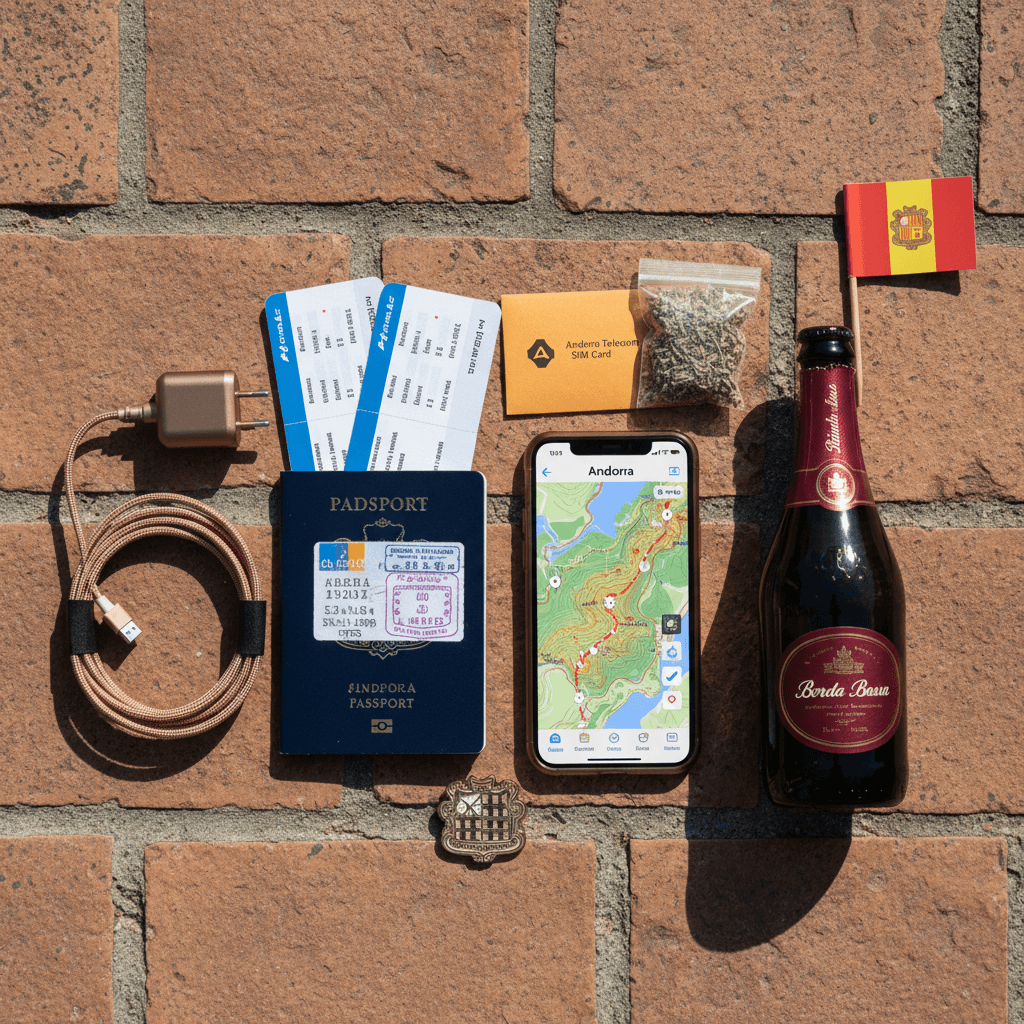
Andorra

Policy Stability
Stamped Nomad ExclusiveHow likely visa and immigration policies are to remain unchanged
Quick Facts
$4,644/mo
24 months
Yes
$2,100/mo
211 Mbps
9/10
High
Medium
Medium
CET, CEST
Entry Methods Available
Best For
The Schengen Paradox
Andorra is a unique case in the world of travel logistics. Technically, the country does not issue visas of any kind. You cannot apply for a tourist visa at an embassy because there simply isn't one to give. Every nationality on the planet can enter Andorra for up to 90 days without a specific permit from the Andorran government. However, there is a catch that catches many nomads off guard.
Because Andorra is landlocked between France and Spain and has no international airport, you have to cross through the Schengen Area to get there. If your passport requires a visa to enter France or Spain, you must ensure you have a double-entry or multiple-entry Schengen visa. If you only have a single-entry visa, you will legally leave the Schengen zone when you enter Andorra and find yourself unable to cross back into Spain or France to catch your flight home.
Tourist Stays and Extensions
For most digital nomads, the 90-day rule is plenty of time to enjoy a season of skiing or summer hiking. There is no cost for this entry and no paperwork to file. You simply show your passport or EU national ID at the border. While the border checks are often relaxed, you should always have your documents ready.
If you decide the mountain life is for you and want to stay beyond the three-month mark, things get complicated. Extensions for tourists are not standard. You can technically request one through the Servei d'Immigració, but you will need to provide proof of significant funds, local accommodation, and a compelling reason why you cannot leave. Processing these requests takes anywhere from 5 to 15 days, and approval is never guaranteed.
Residency for the Long-Term Nomad
Andorra does not have a specific "Digital Nomad Visa" like those found in Spain or Portugal. Instead, nomads who want to make this their base look toward Active or Passive Residency. These are not visas but immigration authorizations that allow you to live in the country year-round. These applications must be done in person or through the official government portal, as there is no e-visa system in place.
For those who want to be self-employed or run a business from the Pyrenees, the Active Residency permit is the standard path. Here is what the high-level requirements look like:
- Financial Proof: You must demonstrate a minimum of €46,500 for an individual.
- Clean Record: A certified criminal record check from your home country and any country where you have lived recently.
- Business Plan: A detailed breakdown of your professional activity for the Servei d'Immigració.
- Initial Duration: Permits are usually granted for 2 years and are renewable.
The 2025-2026 Regulatory Environment
The government recently tightened the screws on residency through Law 2/2026, often called the Omnibus Law. This was designed to cool down the real estate market and ensure that residents are actually contributing to the local community rather than just using the country as a tax haven.
One major change is the stricter refusal grounds for residency. The government is now much more aggressive about spotting "fake" relationships or attempts to bypass investment minimums, which often start around €50,000 for certain business categories. They have also introduced rules that can revoke a permit if a resident is found to be overworking, specifically more than 52 hours per week, in an effort to maintain the country's high standard of living and work-life balance.
Getting it Right at the Border
Do not be fooled by unofficial websites claiming to offer Andorran e-visas or "quick entry" permits for a fee. Sites like evisa-adgov.org are unofficial and should be avoided. Stick to the official Servei d'Immigració portal for any residency paperwork. Remember that while Andorra is incredibly welcoming to visitors, they are meticulous about their paperwork once you move from "tourist" to "resident."
The Digital Nomad Residence Permit (D.3)
Andorra officially joined the digital nomad movement with the introduction of the Residència per a nòmada digital. This permit is a game changer for remote workers who want to trade the humidity of the coast for the crisp air of the Pyrenees. Unlike the traditional residency categories that often require massive deposits, this visa is designed specifically for the modern, tech-reliant professional.
The legal framework is built on flexibility. While you are technically a resident, you are not authorized to work for local Andorran companies. Your income must come from abroad, ensuring you remain a "guest" worker in the digital sense. It is a perfect fit if you are a freelancer, a business owner with international clients, or a remote employee for a firm based in London, New York, or anywhere else on the map.
Income and Financial Requirements
Andorra is a premium destination, and the entry requirements reflect that. To qualify, you need to prove a steady stream of income that supports a high standard of living. Here is the breakdown of what you will need to show in your bank statements:
- Personal Income: You must earn at least €4,128.81 per month. This is calculated as three times the national minimum wage.
- Dependents: If you are bringing a partner or children, you need to add one additional minimum wage amount for each family member.
- Income Source: At least 85% of your earnings must be generated from activities outside of Andorra.
The Application Process
Getting your permit involves a two-step dance between the Ministry of Economy and the Immigration department. First, you submit an application to the Ministry of Economy to prove your work is truly "digital." You will need to provide a sworn declaration that you can perform your job using only technology and telecommunications, alongside certificates from your employer or clients. They usually give you an answer within 15 working days.
Once you have that green light, you move to the immigration phase. This is where the paperwork gets serious. You will need to provide:
- Clean police records from your country of birth, your country of citizenship, and your last place of residence. These must be apostilled.
- Proof of accommodation in Andorra, such as a rental contract.
- Private health insurance that provides full coverage within the principality.
- A commitment to spend at least 90 days per year physically present in the country.
Renewal and Long-Term Stay
One of the best features of this permit is the clear path to long-term residency. You are not just a short-term visitor; you are building a life here. The renewal schedule is generous and designed to give you peace of mind:
- Initial Permit: Valid for 2 years.
- First Renewal: Grants another 2 years.
- Second Renewal: Grants 3 years.
- Subsequent Renewals: Valid for 10 years at a time.
Tax Perks for Nomads
The financial setup in Andorra is one of the most attractive in Europe. While many countries hit nomads with high social security fees, this permit exempts you from the mandatory self-employed fee, which usually costs over €500 every month. You also skip the €50,000 government deposit required for other residency types.
The personal income tax brackets are straightforward and competitive. You pay 0% on your first €24,000 of annual income. For anything earned between €24,001 and €40,000, the effective rate is only 5%. If you are a high earner making above €40,001, the rate is capped at a flat 10%. It is a simple, transparent system that lets you keep more of what you earn while enjoying some of the best mountain infrastructure in the world.
Source
Understanding the Entry Requirements
Andorra is a bit of a geographic anomaly. While it sits tucked away in the Pyrenees between France and Spain, it is not actually a member of the European Union or the Schengen Area. However, because the country has no airports or train stations of its own, you have to pass through either France or Spain to get there. This means your entry into Andorra is governed by Schengen visa rules.
There is no such thing as an "Andorran Tourist Visa." If you have the legal right to be in France or Spain, you have the right to be in Andorra. The Andorran government maintains an open-border policy for tourists, delegating the heavy lifting of immigration checks to its neighbors. You will just need to make sure your passport is valid for at least 3 months beyond your planned stay.
Visa-Free Entry and ETIAS
If you hold a passport from a country like the US, Canada, Australia, or the UK, you can enter Andorra visa-free. This allows for a stay of up to 90 days within any 180-day period. EU, EEA, and Swiss citizens have it even easier; a national ID card or passport is all that is required to cross the border.
A major change is coming for visa-exempt travelers, although it has no official start date yet. You will need to apply for an ETIAS (European Travel Information and Authorisation System) before you fly to Europe. It costs €20, is valid for 3 years and usually gets approved within minutes. Since Andorra can't be reached without entering the Schengen zone first, this authorization will be mandatory for nomads from visa-exempt countries.
The Schengen Visa Process
If you are from a country that does not have a visa-waiver agreement with the EU, you will need to apply for a standard Schengen Visa through a French or Spanish consulate. You cannot apply for this in Andorra. The cost is generally €80 for adults.
One detail many nomads overlook: because Andorra is technically outside the Schengen Area, leaving Spain to enter Andorra counts as "exiting" the Schengen zone. If you have a single-entry visa, you might find yourself stuck in the mountains unable to get back into Spain to catch your flight home. Always ensure you have a multiple-entry visa if you aren't from a visa-exempt country.
Duration, Extensions, and Border Runs
The 90/180-day rule is strictly enforced. Andorra does not offer "tourist extensions" if you simply want to stay longer to enjoy the ski season or the summer hiking trails. If you want to stay beyond three months, you have to pivot from a tourist mindset to a residency mindset and deal directly with the Servei d’Immigració.
In the past, some travelers tried "border runs" to reset their clock, but those days are over. The new Entry/Exit System (EES) tracks every movement across the border electronically. Trying to game the system by crossing into Spain and back will not reset your 90 days. If you overstay, you risk fines ranging from €500 to over €3,000, and you could be banned from the entire Schengen Area for up to 5 years.
Entry Requirements Summary
- Visa-Exempt Nationals: 90 days maximum stay; will require ETIAS, which has no official start date yet.
- EU/EEA Citizens: Unlimited entry with a Passport or National ID.
- Schengen Visa Holders: Must have a multiple-entry visa to return to France or Spain from Andorra.
- Extension Policy: No extensions for tourism; residency permits are required for longer stays.
- Visa on Arrival: Not available; all documentation must be cleared at the French or Spanish border.
If you find yourself falling in love with the high-altitude lifestyle and want to stay longer than a season, your best bet is to contact the Servei d’Immigració in Andorra la Vella. They handle all applications for active or passive residency, which is the only legal way to call the principality home for more than 90 days.
Making Andorra Your Home Base
Andorra doesn't have a flashy "Digital Nomad Visa" or a traditional "Golden Visa" like its neighbors, but don't let the lack of marketing fool you. The country offers a highly structured residency system through the Servei d’Immigració. Whether you want to run your global empire from the Pyrenees or simply enjoy a quiet retirement in a tax-efficient mountain tax haven, there is a clear path forward. The process is bureaucratic and requires some upfront capital, but the payoff is a high-quality lifestyle in one of the safest countries on earth.
Active Residency for Freelancers and Nomads
If you plan to work while living in Andorra, active residency is your primary route. This category is designed for people who spend at least 183 days a year in the country. Most remote workers and digital nomads apply under the self-employed category or the specific remote work authorization. You will need to show the Ministry of Economy that your business is viable and that at least 85% of your income comes from clients outside of Andorra.
The financial bar is set higher than in many other European hubs. You should be prepared for the following requirements:
- Income: You must prove an annual income of at least 300% of the minimum wage, which currently sits around €46,500.
- Security Deposit: A refundable deposit of €50,000 must be paid to the Andorran Financial Authority (AFA).
- Local Presence: You must have a local address, either through a rental contract or property ownership.
- Health Insurance: Registration with CASS, the local social security system, is mandatory.
Passive Residency for Investors and Retirees
Passive residency is the choice for those who want the benefits of an Andorran tax ID without the requirement to live there year-round. You only need to spend 90 days per year in the country to maintain this status. This is perfect for high-net-worth individuals or retirees who travel frequently. Since you aren't working locally, the government requires a significant investment into the country to grant this permit.
The investment thresholds and income requirements for passive residents are specific:
- Investment: You must invest between €400,000 and €600,000 in Andorran assets, such as real estate, local company shares, or government debt instruments.
- Passive Income: You need to demonstrate personal earnings of at least €52,000 per year, plus an additional €17,400 for every dependent joining you.
- Initial Deposit: A €50,000 deposit for the main applicant, plus €10,000 to €12,000 per dependent, is held by the AFA.
The Paperwork Trail
Andorran officials are meticulous about documentation. Every applicant over 18 must provide a clean criminal record from their home country and any country where they have lived recently. These documents, along with birth and marriage certificates, must be apostilled and less than 3 months old at the time of your application. You will also have to undergo a local medical exam to ensure you don't have any contagious diseases that could impact public health.
Expect the processing time to take anywhere from 1 to 3 months. You have to apply in person at the Servei d’Immigració by booking a "cita prèvia" (prior appointment). While you can handle this yourself if you speak Catalan, most nomads hire a local gestor or legal expert to navigate the due diligence and tax filings, which can cost between €3,000 and €18,000 depending on the complexity of your case.
Long-Term Residency and Citizenship
Andorra doesn't hand out permanent residency immediately. Instead, you enter a cycle of renewals. Your first permit usually lasts for 1 or 2 years. After a few successful renewals, you can move to a 5-year and eventually a 10-year permit, which functions as indefinite residency as long as you continue to meet the financial and physical presence rules.
Citizenship is a much longer game. You generally need to live in the country for 20 years to apply for naturalization. This can be shortened to 10 years if you completed your secondary education in Andorra. To become a citizen, you must pass a Catalan language exam and a test on Andorran history and geography. Most importantly, Andorra does not allow dual nationality; you will have to formally renounce your current passport to hold an Andorran one.
The Bottom Line on Living in Andorra
Andorra offers a unique financial sweet spot for digital nomads. While it sits tucked between France and Spain, it manages to maintain a cost of living that is notably more affordable than major Western European hubs like Paris or Barcelona. For a single person, you can expect your monthly baseline expenses to hover around €760, excluding rent. It is a high-quality lifestyle where your money stretches further, especially when you factor in the low tax environment and duty-free shopping.
Where to Plant Your Flag
Most nomads gravitate toward three main areas, each with a slightly different price tag:
- Andorra la Vella: The capital is the heart of the action. It is vibrant and walkable but carries the highest price tag for housing. A central 1BR apartment typically averages €1,100, though you can find spots on the outskirts for around €867.
- Escaldes-Engordany: This area is essentially an extension of the capital, famous for its thermal spas. It is often 20% to 30% cheaper overall than the center of Andorra la Vella, with 1BR apartments starting around €1,000.
- Santa Coloma: Located just down the road, this is a more residential, quiet alternative. Prices here are more approachable, usually ranging between €800 and €1,000 for a solid one-bedroom flat.
Fueling Your Workday
Grocery shopping in the principality is a pleasant surprise. You can expect to spend between €330 and €550 per month on high-quality produce, meats, and pantry staples. For example, a liter of milk is roughly €1.11 and a fresh loaf of bread is about €1.09.
Eating out is where the local culture shines. Many restaurants offer a "menú del día" for €12 to €20, which usually includes three courses and a drink. If you are looking to save, Escaldes-Engordany often undercuts the capital's dining prices by about 10% to 15%. A budget-conscious nomad can eat well on €50 to €80 per week, while those frequenting upscale bistros should budget €120 or more.
Getting Around and Staying Productive
Andorra is compact, and in the central parishes, your own two feet are your best asset. If you need to go further, the public bus system is efficient. A one-way ticket is €1.90, but a monthly pass for €30 to €50 is the smarter play. If you prefer the freedom of a car, gasoline is relatively cheap at €1.38 per liter, but parking in the city centers can be a headache and an extra expense.
For your workspace, the coworking scene is concentrated in the capital and Escaldes-Engordany. Spaces like Hive Five and Smart Coworking provide the fiber speeds you need to stay connected.
- Shared Desks: Expect to pay €150 to €250 per month.
- Dedicated Desks: These run between €300 and €400.
- Day Passes: Perfect for occasional use at €25 to €30.
Health and Wellness
Since you likely won't have access to the local CASS social security system without full residency, private health insurance is a must. Basic emergency coverage starts as low as €40 to €70 per month. For a more robust plan that covers everything from specialists to hospitalization, a 30-something nomad should budget €70 to €150. If you plan on hitting the slopes in the winter, make sure your policy includes specific coverage for mountain sports, as rescue fees can be steep.
Andorra la Vella: The High-Altitude Hub
If you want to be in the thick of it, the capital is your best bet. Andorra la Vella feels more like a cosmopolitan mountain village than a traditional city. It is the primary base for the country’s growing remote work scene, largely because it hosts the most robust infrastructure. You will find several dedicated workspaces here, including SMART Coworking and HiveFive, where fiber speeds regularly hit 100 to 250 Mbps.
The lifestyle here balances work and social life better than anywhere else in the principality. Between deep-work sessions, you can grab a specialty brew at Nomad Coffee or meet other expats for a drink at Plaça Guillermó. It is incredibly safe, even late at night, though the streets can get crowded with shoppers and tourists during the weekends.
- The Upside: You get the best selection of coworking spaces, the fastest internet in the country, and a genuine community of digital nomads.
- The Downside: Expect to pay a premium for housing, with one-bedroom apartments often starting at $1,100 per month. It also feels the most "urban" and least "mountainous" of the three options.
Escaldes-Engordany: The Wellness Retreat
Technically a separate parish, Escaldes-Engordany flows directly into the capital. It is the perfect middle ground for nomads who want access to the city's perks but prefer a slightly more relaxed atmosphere. It is famous for the Caldea spa complex, which is a great place to soak after a long day of meetings. The nomad scene here is active, thanks to spaces like Monday Escaldes and Ingeni.
Living here feels a bit more residential. You still get reliable 100 Mbps connections and plenty of cafes, but the nightlife is quieter. It is a smart choice if you want to save a little on coworking fees, which typically hover around €200 per month, while remaining within walking distance of the capital's main strip.
- The Upside: Incredible focus on wellness and balance; slightly quieter streets; affordable coworking options.
- The Downside: You will likely find yourself walking or busing into Andorra la Vella for any major networking events or late-night social gatherings.
Encamp: The Adventurer’s Basecamp
For those who moved to the Pyrenees for the peaks rather than the tax perks, Encamp is the place to be. It sits at the foot of the Grandvalira ski resort, making it the ultimate location for "ski-in, work-out" lifestyles. The vibe here is much more authentic and less polished than the capital, offering a glimpse into local Andorran life.
The trade-off for those mountain views is a more limited infrastructure. You won't find a dozen coworking spaces here, so you will likely be working from your apartment or local spots like Gir Café. Internet speeds average around 58 Mbps, which is plenty for video calls but a step down from the fiber hubs in the valley below.
- The Upside: Direct access to world-class skiing and hiking; lower cost of living; a more traditional, local atmosphere.
- The Downside: Very few formal coworking options; a smaller expat community; you will definitely want a car or a bus pass to get into the city.
Quick Comparison
Andorra la Vella
- Coworking: Excellent (5+ spaces)
- Internet: 100–250 Mbps
- Nomad Community: Largest in the country
- Monthly Cost: ~$1,830
- Safety: Very High
Escaldes-Engordany
- Coworking: Good (3+ spaces)
- Internet: 100+ Mbps
- Nomad Community: Medium
- Monthly Cost: Similar to Capital
- Safety: Very High
Encamp
- Coworking: Limited
- Internet: ~58 Mbps
- Nomad Community: Small but growing
- Monthly Cost: Lower than Capital
- Safety: Very High
The Backbone of the Pyrenees: Internet Infrastructure
Andorra might be tucked away in the mountains, but its digital infrastructure is anything but rustic. The country boasts nationwide fiber optic coverage, a feat few larger nations can claim. You can expect average download speeds of over 200 Mbps, making it a dream for video editors, developers, or anyone who spends their day on Zoom calls.
Andorra Telecom is the primary provider here. If you are renting an apartment for a longer stay, fiber plans are surprisingly affordable. You can get a 300 Mbps connection for around €25 per month. If you need serious bandwidth, 1 Gbps plans top out at roughly €42 per month. The reliability is high even during heavy snowfalls, so you won't have to worry about the weather cutting your connection mid-meeting.
Top Coworking Hubs
While your Airbnb likely has great WiFi, the local coworking scene is where you will find the community. Most spaces are concentrated in Andorra la Vella and Escaldes-Engordany. These hubs offer 24/7 access for members and often host networking events to help you meet the local tech crowd.
- Hive Five: Located at Av. Doctor Mitjavila, 5. This is the go-to for a modern, social vibe. It is pet-friendly, features an on-site gym, and hosts regular community events. Shared desks start at €197 per month.
- Ingeni Coworking: Found at Passatge d’Europa, 1. This space has a distinct tech focus and hosts specialized workshops. It is a bit more premium, with monthly desks starting at €285.
- Smart Executive Center: Located at Av. Príncep Benlloch 26-30. This is the choice for professionals needing high-end facilities, including a podcast studio. It offers great value with rates starting at €105 per month.
If you are just passing through for a few days, daily passes are easy to come by. Expect to pay between €13 and €29 depending on the amenities and location you choose.
Cafe Culture and Remote Work
Working from a cafe is a bit of a mixed bag in Andorra. In the capital, spots like Cafe de l'Estadi, Panaderia La Vienesa, and the aptly named Wifi Cafe offer free connections that work fine for clearing out your inbox or light browsing. However, these spaces can get loud during lunch hours and the WiFi stability can dip when the crowds arrive.
In more remote parishes or high-altitude ski areas, cafe internet becomes much less predictable. If your work requires a steady, high-speed connection, stick to the coworking spaces. Use the cafes for your morning coffee and casual planning rather than your heavy-duty tasks.
Staying Connected on the Move
Andorra is not part of the EU, which means your standard European "roam like at home" plan might not apply. Always check with your provider first to avoid massive bills. For local data, Andorra Telecom offers 4G and 5G speeds that reach up to 300 Mbps.
- Local SIMs: A prepaid "M Rate" plan from Andorra Telecom gives you 12GB of data for about €20 per month.
- eSIM Options: If you want to skip the shop visit, Holafly provides unlimited data starting at $6.90 per day. Nomad is another solid choice, offering 5GB to 10GB packages for $15 to $27 valid for 30 days.
- Roaming Backups: Some Spanish and French providers like Movistar or Airtel Vodafone have agreements that include Andorra, but verify the data caps before you rely on them.
Having a local SIM or an eSIM is highly recommended if you plan on hiking or exploring the ski resorts. While the towns are well-connected, having a backup map and data source in the mountains is a basic safety measure.
A World-Class System in the Pyrenees
Andorra consistently ranks at the top of global healthcare indices, boasting a Healthcare Access and Quality (HAQ) score of 95 out of 100. For a small mountain nation, the infrastructure is remarkably modern. The system is built on a "co-payment" model managed by the CASS (Caixa Andorrana de Seguretat Social). While residents with local work contracts get the majority of their costs reimbursed, digital nomads usually sit outside this public net unless they are paying into the social security system via a specific residency category.
The quality of care is uniform across the country. Whether you are visiting a public facility or a private clinic, the technology is current and the wait times are significantly shorter than what you would find in the UK, Canada, or the US. Most doctors speak Catalan, Spanish, and French, but English-speaking staff are becoming increasingly common in the capital and popular expat hubs like La Massana.
Public vs. Private Care
The Hospital Nostra Senyora de Meritxell in Escaldes-Engordany is the country's sole hospital and the heart of the public system. It handles everything from emergency room visits and complex surgeries to specialized cardiology. If you have an emergency, this is where you will go. The facilities are excellent, and the care is efficient.
Private clinics, such as Clínica Sant Vicenç or the Centre Mèdic Vascular d’Andorra, focus more on outpatient services. These are great for nomads who want to skip any administrative hurdles and see a dermatologist, physiotherapist, or dentist quickly. It is important to remember that Andorra does not have full-scale private hospitals; for highly complex or rare procedures, patients are often stabilized and transferred to world-class facilities in Barcelona or Toulouse via established bilateral agreements.
Health Insurance for Nomads
Since most digital nomads won't automatically qualify for CASS, having a solid private policy is the smartest move. If you are applying for a passive residency or a self-employed category, proof of private coverage is usually a requirement. You have a few ways to play this:
- International Plans: Providers like Cigna Global, Allianz Care, or AXA offer the most robust coverage. These typically cost between €500 and €1,000 per year depending on your age and medical history.
- Nomad-Specific Insurance: Services like SafetyWing are popular for shorter stays, with rates starting around €137 per month.
- Local Supplements: If you do end up qualifying for CASS (which costs about €534 per month for self-employed residents), many locals buy a "top-up" private plan for €40 to €80 per month to cover the remaining 10% to 25% of costs not reimbursed by the state.
Typical Healthcare Costs
If you are paying out-of-pocket, the prices are surprisingly reasonable compared to other Western nations. While not "cheap" in a global sense, they represent high value for the level of expertise provided. Here is a breakdown of what to expect for public services before any reimbursements:
- GP Consultation: Roughly €40 to €50, which is about half the price of many Western European neighbors.
- Primary Outpatient Visit: Approximately €81.
- Hospital Bed (Primary Care): Around €194 per day.
- Hospital Bed (Tertiary/Specialized): Around €346 per day.
- Surgical Fees: Hospitalization costs are capped at €1,455 per month, with the first surgical day costing €150 and subsequent days dropping to €45.
Pharmacy and Medication Access
Andorra has one of the highest densities of pharmacies in the world, with over 50 locations across the country. You will recognize them by the glowing green crosses. Most are open from 9:30am to 8pm, Monday through Saturday. For Sundays or late-night needs, there is always a rotating "farmàcia de guàrdia" on duty. Farmàcia Carolina Garrallà in La Massana and Gran Farmàcia in Andorra la Vella are reliable 24-hour options that serve customers through a window hatch after hours.
Medication prices are a major draw here; many international brands are stocked at prices roughly 10% lower than in Spain. While you can get basic pain relief and cold meds over the counter, you will absolutely need a physical prescription for antibiotics or specialized maintenance drugs.
Emergency Services
In a crisis, the number to dial is 112. This is the universal emergency line for police, fire, and ambulance services. The response times are incredibly fast due to the small geographic area. If you are in a remote hiking spot or on the ski slopes, mountain rescue teams are highly trained and efficient. However, these rescues can be expensive, so ensure your insurance specifically covers "mountain search and rescue" if you plan on exploring the peaks.
Navigating the Local Banking Scene
Andorra’s banking sector is small but sophisticated, dominated by three major players: Andbank, Creand, and MoraBanc. For digital nomads, the ease of opening an account depends entirely on your residency status. If you are just passing through as a tourist, expect a steep uphill climb. Non-resident accounts usually fall under private banking umbrellas, often requiring a minimum deposit of €250,000 and a face-to-face meeting.
The game changes once you apply for the 2023 digital nomad permit. Residents and active applicants have a much smoother path to standard current accounts. While some digital onboarding is starting to emerge, most banks still prefer you to walk into a branch in Andorra la Vella to sign the final paperwork. These accounts give you a local IBAN, which is handy for local utilities or long-term lease agreements.
To get started, you will need to gather a specific stack of paperwork. Banks here are rigorous about Anti-Money Laundering (AML) checks, so don't be surprised if they ask deep questions about where your money comes from. Have these ready:
- A valid passport or national ID card.
- Proof of address, such as a utility bill or recent bank statement.
- Proof of income, including payslips or tax returns.
- Source of funds documentation like an employment contract or business incorporation papers.
- Occasionally, a reference letter from your current bank in your home country.
Digital Alternatives: Wise and Revolut
If you aren't ready to commit to a local bank, you can easily survive using Wise or Revolut. Both are widely accepted across the country and are fully compatible with the SEPA network used in Andorra. These platforms are often the better choice for daily spending because they avoid the currency conversion markups that traditional banks love to hide in the fine print.
Wise is excellent for moving larger sums of money into the country to pay for rent or deposits, usually charging around 0.4% to 0.5% in fees. Revolut is the go-to for daily coffee runs and peer-to-peer transfers with other nomads. Most shops and restaurants in the high-street districts accept these cards without a second thought.
Handling Cash and ATM Fees
Andorra uses the Euro, and while card payments are the norm in the city, you will want some cash for mountain huts or smaller villages. Local ATMs can be a bit of a gamble regarding fees. If you use a foreign card, expect to see a surcharge between €4 and €7 per withdrawal. Some banks, like Andbank, have historically been more lenient with foreign cards, but this changes frequently.
To keep costs down, use a card like Wise or Revolut that offers a certain amount of free international withdrawals. Always choose to be charged in the local currency (EUR) rather than letting the ATM perform the conversion for you; the "convenience" of seeing the price in your home currency usually comes with a 5% markup.
Moving Money Efficiently
For moving funds across borders, stick to SEPA transfers whenever possible. Since Andorra is part of the SEPA zone, euro-to-euro transfers are often free or cost just a few cents. They typically clear within one business day. Avoid using SWIFT transfers if you can help it; the intermediary bank fees can easily swallow €25 or more before the money even hits your account.
- Wise: Best for large transfers. Takes 1 to 2 days with fees around 0.4%.
- Revolut: Best for instant peer transfers and daily spending. Fees range from 0% to 1% depending on your plan.
- SEPA Bank Transfer: Best for paying local bills. Usually costs between €0 and €15 and takes 24 hours.
The Crypto Landscape
Andorra has moved quickly to position itself as a crypto-friendly hub. Under the 2022 Digital Assets Law, the country created a clear legal framework for blockchain technology and digital currencies. This makes it an attractive spot if you earn in crypto or trade actively. The Andorran Financial Authority (AFA) oversees the sector, ensuring that exchanges and wallet providers follow strict security and KYC protocols.
From a tax perspective, capital gains on crypto generally fall between 0% and 10%, which is significantly lower than much of Western Europe. There is also no VAT on crypto transactions. While you can't pay for your groceries in Bitcoin at the local supermarket just yet, the government is actively encouraging businesses to integrate blockchain solutions into the local economy.
Moving your family to a new country is a massive undertaking, but Andorra is one of the few places where the "quality of life" trope actually holds up. It is essentially a giant mountain playground with a safety net so tight you can let your eight-year-old walk to the bakery alone without a second thought. For digital nomads, the transition involves a bit of paperwork, but the infrastructure for children is world-class.
Dependent Visa Options
To bring your family along, you will use the family reunification process. The requirements depend on whether you are here on an active residency (working for a local company or your own Andorran entity) or a passive residency (living off investments). Active residents can typically apply to bring their spouse and children after 3 months of residency. You will need to show an income of at least 100% of the minimum wage, roughly €2,460 per month, plus an additional 70% for each minor child.
Passive residents have a higher financial bar. You will need to demonstrate income at 300% of the minimum wage, which is about €40,500 per year, and an extra 100% for every dependent. You also need to prove assets of €600,000 and spend at least 90 days a year in the country. The resulting residency cards usually last between 1 and 10 years depending on your status.
Education and International Schools
The local public school system is free and unique, offering tracks in French, Spanish, or Catalan. However, most nomad families opt for the international private schools where English is a primary language. There are two heavy hitters here:
- British College of Andorra: Located in Andorra la Vella, this school follows the English curriculum for kids aged 3 to 18. Annual fees range from €9,250 to €12,750.
- Agora International School: Based in La Massana, this school offers a Spanish-based curriculum with heavy English and French components. It includes boarding options and caters to ages 3 to 18, with fees ranging from €5,800 to €26,700 per year depending on the grade and services.
Childcare and Early Years
If your children aren't school-age yet, you will find the communal nurseries (escoles bressol) surprisingly affordable compared to the US or UK. These are run by the local parishes and are exceptionally well-maintained.
- Communal Nurseries: These average about €395 per month for full-board, which includes meals. Prices vary slightly by location; Escaldes-Engordany is around €358, while Ordino is closer to €440.
- Discounts: Most parishes offer 5% to 20% discounts for large families or single parents.
- Private Preschool: Expect to pay around €523 per month if you prefer a private setting over the communal options.
Healthcare for Kids
Healthcare is one of Andorra's strongest selling points. Children under 18 have access to free public healthcare through CASS, the national social security system. This covers 92% of costs for almost all medical services, and it is funded through the taxes paid by the resident parent. The system includes everything from routine check-ups to mental health support and emergency services. If you are a passive resident not paying into CASS, you will use private insurance, but the facilities remain the same: modern, efficient, and rarely crowded.
Where to Plant Your Roots
While the whole country is small, each parish has a different vibe for families. Most nomads gravitate toward a few specific areas:
- La Massana: This is the hub for the international community. It houses Agora International School and offers direct access to the Vallnord ski resort. It feels like a mountain village but has all the necessary amenities.
- Andorra la Vella and Escaldes-Engordany: These two parishes blend together into one urban center. This is where you will find the British College, the largest hospitals, and the most affordable communal nurseries.
- Ordino and Canillo: These are for families who want a quiet life. They are more rural, surrounded by nature, and perfect if you want your kids growing up with hiking trails right outside the front door.
Safety and Freedom
It is hard to overstate how safe Andorra is. The homicide rate is frequently zero. It is common to see children as young as 8 or 10 years old navigating the bus system or walking to school alone. There is a deep-seated culture of community trust, and the police response time is incredibly fast, usually between 6 and 8 minutes. For a digital nomad family, this means less time worrying about logistics and more time enjoying the Pyrenees.
Safety Standards and Crime
Andorra is frequently cited as one of the safest places on the planet. For digital nomads, this means you can walk through Andorra la Vella at 2:00 AM without looking over your shoulder. The country maintains a remarkably low criminality score of 2.70/10, with violent crime being almost non-existent. Most residents feel a deep sense of security, which is a massive draw for those tired of the high-stress environments of larger European hubs.
While the streets are safe, the digital landscape is seeing some shifts. Fraud cases rose to 174 recently, marking a 27% increase. This is mostly related to online scams rather than physical theft. Property crime remains very low, so while you should obviously lock your apartment, the general risk of a break-in is minimal compared to Spain or France.
Common Scams to Avoid
Even in a mountain paradise, you need to keep your wits about you in high-traffic tourist zones. Most issues are petty and centered around the shopping districts. Watch out for:
- The "Tax-Free" Trap: Some shops might promise massive tax-free savings but charge hidden fees or use inflated exchange rates.
- Fake Police: Occasionally, scammers pose as plainclothes officers asking to check your wallet for "counterfeit bills." Real Andorran police will rarely do this on the street.
- ATM Skimmers: Always check the card slot at bank machines, especially those in heavily crowded shopping areas.
- Distraction Tactic: The classic "you have something on your shirt" trick is rare here, but it can happen in busy plazas.
LGBTQ+ Life
Andorra is a progressive and welcoming spot for LGBTQ+ travelers. Same-sex marriage became legal in 2022, and the country ranks 24th on the Gay Happiness Index. While you won't find a massive "gay neighborhood" or a sprawling nightlife scene like you would in Barcelona, the culture is one of quiet acceptance.
Public displays of affection are generally met with indifference rather than hostility. It is an ideal destination if you prioritize safety and legal protection over a high-energy party scene. Discrimination has been legally prohibited since 2005, making it a very stable environment for queer nomads.
Cultural Etiquette
Andorran culture is a blend of Catalan roots and mountain stoicism. People are direct, polite, and value their privacy. When meeting someone for the first time, stick to formal titles and a firm handshake. Once you are part of the inner circle, the double cheek kiss becomes the standard greeting.
Respect the local rhythm. Shops typically open between 9:00 AM and 10:00 AM and close around 8:00 PM. Many smaller businesses still observe a midday break for lunch, so don't expect 24/7 service outside of the major supermarkets. Silence is also appreciated; loud phone calls in public spaces or aggressive behavior will quickly mark you as an outsider.
The Language Barrier
Catalan is the only official language, and the government is getting serious about its use. A new law requires residents to prove A1 or A2 level Catalan for residency renewals by 2029. While you can get by with Spanish, French, or Portuguese, English is mostly restricted to tourist centers and the expat community.
If you plan to stay long-term, take advantage of the free Catalan classes offered by the government. It is the fastest way to navigate local paperwork and earn the respect of your neighbors. Without at least a basic grasp of the language, social integration will feel like an uphill climb.
The Nomad and Expat Scene
The expat community is thriving, fueled by tech professionals and freelancers drawn in by the low tax environment and high-speed fiber internet. You will find a concentrated group of remote workers in Andorra la Vella and Escaldes-Engordany. Coworking spaces serve as the primary hubs for networking and social events.
To break out of the "expat bubble," try the following:
- Join a local hiking or skiing club to meet outdoor enthusiasts.
- Attend the Festa Major in your local parish, which are vibrant community festivals held throughout the summer.
- Volunteer with local associations to build ties outside of the tech world.
- Use coworking spaces to find "Foreign Residents of Andorra" meetups.
Integration takes effort because the society is close-knit, but the payoff is a high-quality, secure lifestyle in the heart of the Pyrenees.
Understanding Tax Residency
Becoming a tax resident in Andorra isn't just about where you sleep; it's about where your life actually happens. The most common way to trigger this status is by spending more than 183 days in the country during a calendar year. Short vacations or business trips abroad generally don't stop the clock if Andorra remains your home base. Even if you spend fewer days there, you might still be considered a tax resident if your "center of economic interests" is in the country, or if your spouse and children live there.
For those on the digital nomad or passive residency permits, there is a slight nuance. These permits only require you to be physically present for 90 days to maintain your administrative status. However, just because you have the permit doesn't mean you are automatically a tax resident. To get the full benefits and avoid being claimed as a resident by your home country, you'll need to prove genuine ties to the principality through housing, utility bills, and bank statements.
The 10% Ceiling: Income Tax Rates
Andorra offers one of the most attractive personal income tax (IRPF) structures in Europe. The system is progressive, but it caps out at a very low rate. The breakdown is straightforward:
- 0% tax on the first €24,000 of annual income.
- 5% tax on income between €24,001 and €40,000.
- 10% tax on everything above €40,000.
To put that into perspective, if you earn €70,000 in a year, your total tax bill would be roughly €3,800. This low barrier makes it a top-tier destination for high-earning remote workers who want to maximize their take-home pay.
The Digital Nomad Visa Regime
The specific Digital Nomad Visa is designed for remote workers who bill at least 85% of their services to clients outside of Andorra. You'll need approval from the ministry regarding your contribution to tech or innovation, but the perks are significant. Unlike other residency types, this path doesn't require the standard €50,000 deposit or immediate social security contributions.
Requirements for this visa include proof of health insurance, a local place to live, and showing you have sufficient funds. This is defined as earning at least 3x the minimum wage, plus an additional 1x for every dependent you bring along. Your foreign-sourced income is still taxed under the standard IRPF rates, keeping that 10% maximum in play.
Crypto and Capital Gains
If you trade or hold digital assets, Andorra is a friendly jurisdiction. There is no wealth tax or holding tax on your portfolio. Instead, you only pay tax when you realize a gain through a sale or exchange. Capital gains are taxed at a flat 10%, but you get an exemption on the first €3,000 of profit. You are required to declare all transactions in your annual return, using the euro-equivalent value on the day the trade happened.
Double Taxation and Reporting
Andorra has been busy expanding its network of Double Taxation Agreements (DTAs) to ensure you aren't taxed twice on the same income. There are currently 22 agreements in place or pending, including deals with France, Spain, Portugal, and the UK. These treaties are vital for protecting your dividends and interest earned abroad.
To take advantage of these treaties, you'll need a tax residency certificate from the Andorran tax authorities. Be aware that they are quite strict about issuing these during your first year. You will need to provide solid proof of life in the country, such as gym memberships, grocery receipts, or local bank activity, to show you aren't just a "paper resident." Filing happens annually, where you must declare your worldwide income, including professional fees, crypto gains, and foreign dividends.
Connectivity and Communication
Andorra is not part of the EU roaming zone, so relying on your home SIM card can lead to a massive bill. To stay connected, head to an Andorra Telecom shop in Andorra la Vella or Escaldes-Engordany. You can snag a prepaid SIM starting at €10 per month for 3GB of data and 40 minutes of calls. If you need more bandwidth for Zoom calls, the €20 plan bumps you up to 12GB with 5G coverage. You can easily top up through their app as you go.
For those who prefer a digital-first approach or are hopping across the border into Spain or France, an eSIM from Holafly is a solid alternative. They offer unlimited data plans from roughly £1.43 per day. It is a one-and-done setup via QR code, which saves you the hassle of finding a physical store the moment you land.
While Catalan is the official language, you will hear a mix of Spanish and French everywhere. It helps to have the basics down. Duolingo is great for gamified practice, while Talkpal or Busuu can help you practice with native speakers. If you are just looking to get through a grocery run or a restaurant order, FunEasyLearn has a library of 5,000 phrases that cover most daily interactions.
Getting Around the Parishes
Public transport is surprisingly efficient here, provided you have the right tools. Download FEDA Mou-te immediately. It is the Swiss Army knife of local travel, offering real-time bus schedules, ticket purchases, and even locations for EV chargers and e-bikes. For more personalized travel, CityXerpa acts as the local version of Uber, while Mobilitat Andorra is your best friend for live traffic updates if you decide to rent a car for mountain excursions.
Where to Set Up Base
Choosing a neighborhood depends entirely on your pace of life. Andorra la Vella is the heartbeat of the country. It is perfect for nomads who want cafes, nightlife, and shopping within walking distance. If you want a bit more relaxation without leaving the urban core, Escaldes-Engordany is famous for its wellness spas and modern vibe.
- Santa Coloma: Ideal for a quieter, historic feel with easy access to hiking trails.
- La Margineda and El Pui: Best for those who want to wake up to mountain views and immediate access to the outdoors.
- Andorra la Vella: The central hub for transport links and coworking spaces.
For housing, Airbnb is the reliable choice for furnished rentals with verified WiFi. However, the coliving scene is growing fast. Spots like Kora Living Andorra, Residència Indalo, and Circles offer a community-first approach. These spaces typically include utilities, coworking desks, and social events, with prices starting around €650 per month.
Daily Life and Logistics
When you do not feel like cooking, CityXerpa is the dominant delivery force. They do more than just restaurant food; you can order groceries from Carrefour or even have them run errands for you across the country. It is a lifesaver during the snowy winter months when you would rather stay inside and work.
Keep these emergency numbers saved in your phone just in case:
- 110: Police
- 118: Fire and General Health
- 116: Medical Emergencies
- 112: Mountain Rescue
- +376 871 000: Hospital Nostra Senyora de Meritxell
Avoiding Common Pitfalls
The most frequent mistakes nomads make here involve taxes and paperwork. Andorra is a tax haven, but that does not mean it is a free-for-all. Overlooking local accounting rules or delaying your filings can lead to heavy penalties. Make sure you declare foreign income correctly and consult a local pro if you plan on staying long-term.
On a practical level, do not overpack. The terrain is rugged and moving heavy luggage through mountain towns is a chore. High rental costs can also catch people off guard, so budget more than you would for neighboring Spain. Plan for the language barrier in smaller villages and always have a backup plan for your tech, as specialized repairs can take time in the mountains.
More Guides from Europe
Stay Updated on Andorra
Get notified about visa changes, policy updates, and new information for digital nomads in Andorra.