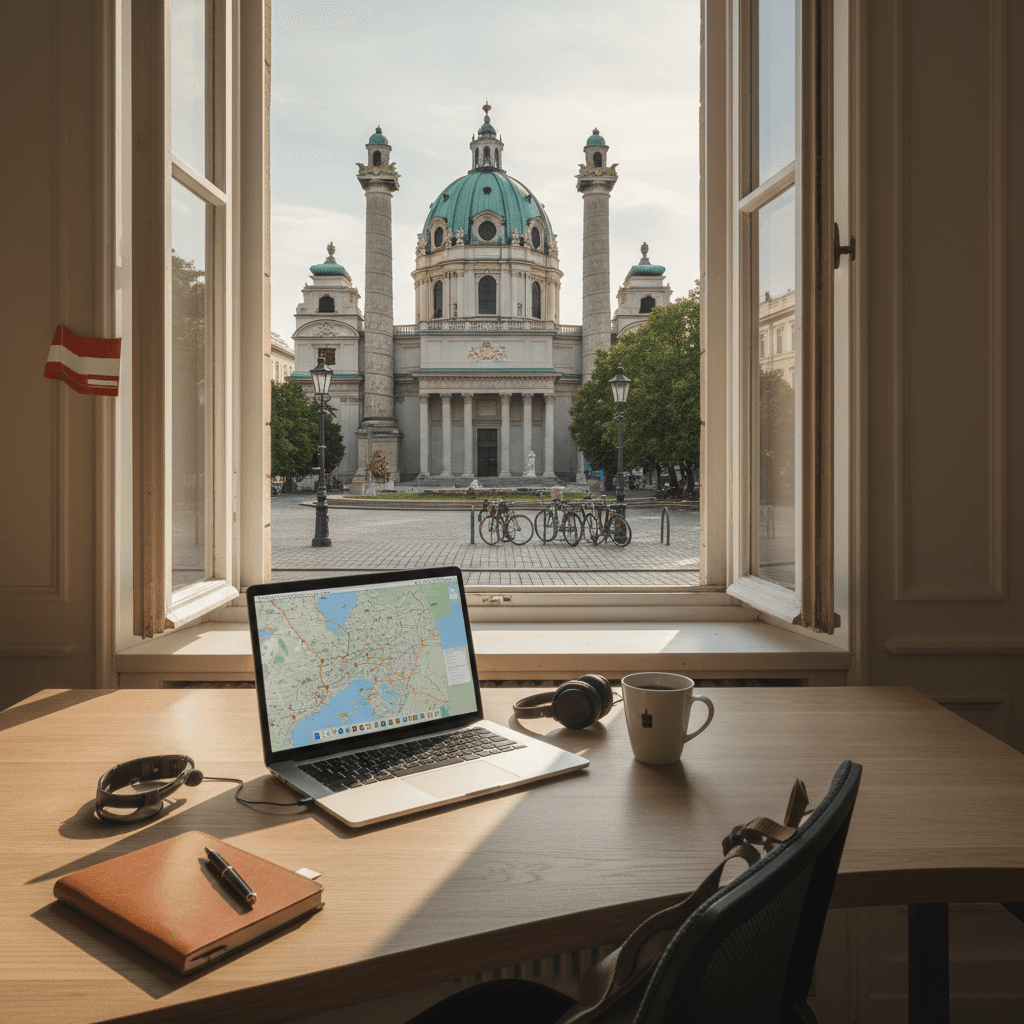
Austria

Policy Stability
Stamped Nomad ExclusiveHow likely visa and immigration policies are to remain unchanged
Quick Facts
N/A
$2,355/mo
6 months
Yes
$2,800/mo
126 Mbps
8/10
High
High
High
CET
Entry Methods Available
Best For
Austria doesn't make things easy with a flashy, dedicated "Digital Nomad Visa" like some of its neighbors. Instead, the country relies on a structured system of residence permits and Schengen regulations that require a bit of homework. If you are coming from within the EU or EEA, you have it easy; you can live and work here with minimal paperwork. For everyone else, the path involves specific permits that cater to self-employed individuals or those with significant savings.
The Short-Term Stay: Schengen Rules
For many nomads, the journey starts with a standard Schengen Visa or a visa-waiver entry. This allows you to stay for up to 90 days within a 180-day period. While this is perfect for a summer in Vienna or a winter in Innsbruck, it does not legally allow you to take up local employment. If you are working remotely for a company outside of Austria, you occupy a gray area that most travelers use for short-term stints.
The Settlement Permit (Gainful Employment Excepted)
This is the closest thing Austria has to a long-term residency for remote workers who don't need to access the local job market. Often called the "Quota Permit," it is designed for individuals with "means of subsistence." It is a bit of a golden ticket because it allows you to live in Austria without a local employer, but it comes with strings attached.
The Quota: There are a limited number of these permits issued each year. Applications usually open at the start of January, and they go fast.
Financial Requirements: You must prove a stable monthly income. For a single person, this usually sits around €2,220 per month after taxes and rent, though having significant savings in a bank account can also satisfy the requirement.
Health Insurance: You need "all-risk" insurance that covers you in Austria, providing the same benefits as the national social insurance system.
Accommodation: You must provide a legal rental contract or proof of property ownership before the permit is granted.
The Red-White-Red Card for Self-Employed Key Workers
If you are a freelancer or business owner whose work brings a specific economic benefit to Austria, you might look into the Red-White-Red Card. This is a points-based system that evaluates your age, education, and language skills. To qualify as a self-employed key worker, your business must involve a transfer of investment capital of at least €100,000 or create new jobs in the country. It is a high bar, but it leads to a 24-month residency period.
The Visa D: A Six-Month Bridge
If three months isn't enough but a full year is too much, the Visa D is your best bet. It allows for a stay of 91 to 180 days. You cannot work for an Austrian company on this visa, but it provides a legal way to stay in the country longer than a standard tourist entry. You will need to apply at an Austrian embassy or consulate in your home country well before you plan to travel.
Application Steps and Requirements
The paperwork in Austria is notorious for being precise. Most documents, including birth certificates and police clearances, must be translated into German by a certified translator and may require an apostille. You should consult the Austrian government's guide for residence and entry to confirm the specific document checklist for your nationality.
Language Skills: For most long-term settlement permits, you need to prove basic German skills at an A1 level.
Processing Times: Expect to wait anywhere from 8 to 12 weeks for a decision on a residence permit.
Application Fee: The cost for most residence permits is approximately €160, plus additional fees for biometric data and translations.
In-Person Requirement: You generally cannot apply for these permits while already inside Austria as a tourist; you must apply from your country of residence.
Staying on top of the regulations is vital because Austria does not take overstays lightly. If you plan to make the Alps your permanent office, starting your application at least four to six months in advance is the smartest move you can make.
Let's clear up the biggest misconception right away: Austria doesn't actually have a specific "Digital Nomad Visa." If you’re looking for a shiny, streamlined permit designed specifically for remote workers, you won't find one in the 2026 handbook. However, this doesn't mean you can't make the Alps your office. You just have to navigate the existing immigration categories, specifically the Self-Employed Key Worker route or the Freelance (Freiberufler) Visa.
The Freelance Alternative
Most nomads looking to settle in Vienna or Innsbruck opt for the Visa for Self-Employed Activities. This is technically a Type D visa that allows you to live in the country while running your independent business. It is designed for "liberal professions," which is a fancy way of saying IT consultants, graphic designers, writers, and specialized consultants.
The catch? You need to prove that your presence in Austria provides a "macroeconomic benefit." For nomads, this usually means demonstrating a high level of income and showing that you won't be a burden on the state. You’ll need to prove you can bring in at least €40,000 to €50,000 annually through your business activities. The initial permit usually covers 6 to 12 months, but it can be extended for up to two years if your business stays healthy.
Financial and Entry Requirements
The Austrian government is strict about paperwork. You can't just show up and figure it out; you must apply through an official Austrian embassy or consulate in your home country before you travel. Here is what you need to have ready:
Monthly Income: Proof of consistent earnings between €2,000 and €3,000.
Business Plan: A detailed breakdown of your services, target market, and projected earnings.
Qualifications: University degrees or specialized certifications that prove you are an expert in your field.
Logistics: Proof of health insurance that covers all risks in Austria and a signed rental agreement for a local apartment.
Clean Record: A certified criminal record check from your home country.
The Application Process
Expect to pay an application fee of roughly €120 to €150. The real cost, however, is time. Processing usually takes between 3 and 6 months, so don't book your flights until you have the permit in hand. Once you arrive in Austria, your first stop must be the local registration office (Meldeamt) to register your address and finalize your residence permit.
Taxes and Social Security
Austria is a high-tax country, and they are very efficient at collecting. If you spend more than 183 days in the country during a calendar year, you become a tax resident. This means your worldwide income is subject to Austrian tax rates, which range from 0% to 55%. Most high-earning nomads find themselves in the 42% bracket.
On top of income tax, you'll be responsible for social security contributions. For the self-employed, this is usually about 28% of your income, covering health insurance, pension, and accident insurance. It’s a steep price, but it grants you access to one of the best healthcare systems in the world. Always consult a local tax advisor to see if you qualify for double taxation treaties between your home country and Austria.
Living with Restrictions
There are a few "rules of the road" you need to follow to keep your permit valid. First, your work must stay remote. You cannot take a local job at an Austrian company under this visa. You are expected to work primarily for clients based outside of Austria. Second, while you can bring your family along through a reunification process, they must apply separately and meet their own financial requirements. Finally, keep in mind that this isn't a fast track to a new passport. Austria has some of the toughest citizenship laws in Europe, usually requiring 10 years of residency before you can even apply.
If you're ready to start the paperwork, the Work in Austria portal provides the most current forms and checklists for self-employed professionals.
Austria is a dream destination for digital nomads, but since it sits right in the heart of the Schengen Area, your entry depends heavily on your passport's origin. The country follows standardized European rules, meaning your time spent in Vienna or the Tyrolean Alps counts toward your total allowance for most of Western and Central Europe.
The 90-Day Visa-Free Window
If you hold a passport from the United States, Canada, Australia, Japan, or Brazil, you are among the citizens of roughly 60 countries who can enter Austria without applying for a visa beforehand. You can stay for up to 90 days within any 180-day period. This is perfect for a summer scouting trip or a winter ski season, provided you aren't seeking local employment.
To breeze through the border, make sure your passport is valid for at least 3 months beyond your planned departure date. You should also have proof of a return ticket, evidence of sufficient funds for your stay, and travel insurance that covers you for the duration of your trip.
Applying for a Schengen Visa (Type C)
If your home country isn't on the visa-exempt list, you'll need to secure a Schengen Visa (Type C) before you arrive. Austria does not offer a visa on arrival at airports or land borders. You must submit your application in person at an Austrian embassy or a VFS Global center in your home country.
The paperwork is standard but strict. You'll need to provide:
- Completed application forms and recent passport photos
- A detailed travel itinerary and proof of accommodation
- Proof of financial means, generally requiring a minimum of €50 per day
- Travel medical insurance with a minimum coverage of €30,000
Processing usually takes about 15 days, though it can stretch to 45 days during peak seasons. It is best to apply well in advance of your flight.
Costs and Extensions
The price for a standard Schengen visa is €80 for adults and €40 for children aged 6 to 12. Children under 6 are free. Keep in mind that these fees are non-refundable, and you will likely pay an additional service fee of €30 to €40 if you use a VFS processing center.
Extensions are notoriously difficult to get. They are typically reserved for "force majeure" situations, such as a medical emergency or a natural disaster that prevents travel. If you are granted one through a local immigration office, it usually costs around €30 and extends your stay for up to another 90 days.
The Reality of Border Runs
The old trick of "border running" to a neighboring country for a day to reset your clock does not work here. The 180-day rolling window is strictly tracked. Once you have used your 90 days, you must leave the entire Schengen Area for a full 90 days before you can return. Attempting frequent re-entries can flag you in the system, and border guards may deny entry if they suspect you are effectively living in Austria on a tourist allowance.
For more details on how these regulations are managed across the region, you can review the official EU visa policy guidelines.
Overstaying Your Welcome
Austria is efficient and precise, and that extends to immigration enforcement. Overstaying your visa, even by a few days, can lead to significant headaches. Penalties include:
- Fines ranging from €200 to over €3,000
- Immediate deportation and potential detention
- An entry ban for the entire Schengen Area lasting 1 to 5 years
If you realize you cannot leave on time, contacting the local authorities voluntarily is always better than being caught at the airport. Voluntary departures often result in lower fines and may help you avoid a long-term entry ban.
Austria doesn't hand out residency permits like flyers on a street corner. It is one of the more bureaucratic corners of Europe, but for a nomad looking to trade a laptop screen for Alpine views, the "Settlement" path is surprisingly sturdy once you understand the mechanics. Unlike its neighbors, Austria lacks a flashy "Digital Nomad Visa," so you’ll be looking at the Red-White-Red Card system or specific temporary residence permits.
The Ground Rules
Before you pick a specific track, you need to meet the baseline. Austria wants to see that you can support yourself without touching their social welfare system. For 2026, the bar is set at €1,308.93 per month for individuals and €2,064.12 for couples. If you have kids, add €201.88 for each child.
You also need "local-standard" housing. This means a signed lease or a property deed that provides enough space for your family size. You’ll also need full health insurance that covers all risks in Austria and a clean criminal record from any country where you’ve lived for more than six months. Most paperwork needs to be translated into German and legalized, so factor in a few hundred euros for a certified translator.
The Freelancer Route
Most nomads fall under the Self-employed Persons permit. This isn't a "show up and work" deal; you have to prove your business brings a specific economic benefit to Austria. This usually means having service contracts that last longer than six months. The Public Employment Service (AMS) will review your business plan and contracts to decide if you’re a net positive for the local economy.
- Application Fee: Approximately €160.
- Business Setup: Expect to pay between €3,000 and €10,000 for notary fees and Chamber of Commerce registration.
- The Point System: Some applicants use the Red-White-Red Card for Self-employed Key Managers, which requires scoring at least 20 points based on your age, language skills, and investment capital.
Retirement and Passive Income
If you aren't planning to work for an Austrian company or run a local business, you might look at the Settlement Permit - Gainful Employment Excepted. This is the closest thing Austria has to a retirement visa. It’s designed for people with significant passive income, like pensions or investment dividends. You are strictly forbidden from working locally on this permit, and there is a very limited annual quota for these spots, so you have to apply the moment the window opens in January.
The Red-White-Red Card
For those who want to work for a specific Austrian employer, this is the gold standard. It’s a points-based system that looks at your degree, your salary history, and your age. Very Highly Qualified Workers need to score 70 out of 100 points. If you land a job that pays at least €3.96 million annually (for seniors) or you are a specialized researcher, the process moves much faster.
You can check your eligibility through the official Austrian Migration points calculator. This permit is usually issued for 24 months and ties you to a specific employer initially.
Permanent Residency and the Long Game
Austria is a "slow and steady" jurisdiction. You won't find a "Golden Visa" shortcut here, regardless of how much money you put into a bank account. To get Long-term Resident EU status, you must live in Austria legally and continuously for 5 years.
During those five years, you cannot spend more than six consecutive months (or ten months total) outside the country. You’ll also need to prove A2 or B1 German language proficiency and show that you’ve contributed to the social security system. Once you hit that five-year mark, you get a Settlement Permit, which gives you much more freedom to change jobs or move between self-employment and traditional roles.
Quick Cost Breakdown
- Initial Permit Fee: €120 to €160
- Visa D (for entry): €80 to €150
- Renewal Fee: €80
- Criminal Record Extracts: Must be less than 3 months old at the time of your application.
For more details on the specific requirements for each category, the Austrian Government Migration Portal provides the most up-to-date checklists for third-country nationals.
Austria is rarely described as a "budget" destination, but for nomads coming from cities like New York, London, or Zurich, it offers a surprisingly high quality of life for the price. The country operates on a system where you pay a bit more for infrastructure that actually works. You are paying for pristine public transit, tap water that tastes like it came from a glacier, and public spaces that are impeccably maintained.
Most digital nomads should budget between €2,300 and €3,200 per month to live comfortably. This range covers a private apartment, frequent meals out, and a dedicated desk in a coworking hub. If you are looking to live lean, you could squeeze by on €1,800, but you will likely be sharing a flat or sticking to the outer districts of the smaller cities.
Vienna: The Urban Standard
Vienna consistently tops liveability rankings, and while prices are rising, it remains more affordable than Paris or Munich. The city is divided into districts; the closer you are to the 1st District, the more your wallet will feel the pinch.
- Monthly Rent (1-bedroom): Expect to pay between €950 and €1,400 for a furnished apartment in a trendy area like Neubau or Leopoldstadt. Check Willhaben for the most accurate local listings.
- Coworking: A hot desk at a spot like Impact Hub or WeWork usually runs around €250 to €350 per month.
- Daily Expenses: A flat white costs about €4.50, while a mid-range dinner for two with wine will set you back roughly €60.
Salzburg and Graz: The Alternatives
Salzburg often carries a premium because of its tourist appeal and limited housing stock. Graz, being a major student city, offers a more youthful, slightly cheaper vibe that appeals to long-term travelers.
- Salzburg Rent: High demand keeps 1-bedroom apartments in the €900 to €1,300 range.
- Graz Rent: You can often find great spots for €750 to €1,100, making it one of the best value-for-money cities in the country.
- Public Transport: Most cities offer a "Klimaticket" or regional passes. In Vienna, an annual pass is famously cheap at €365, though short-term nomads might prefer the monthly pass for around €51.
Groceries and Dining
Supermarkets like Billa and Spar are everywhere. If you want to save, Hofer (the Austrian version of Aldi) is your best friend. Cooking at home is the most effective way to keep your costs down, as labor costs in Austria make dining out a luxury rather than a daily habit.
- Weekly Groceries: A single person can eat well on €70 to €100 per week.
- Lunch Specials: Look for the "Mittagsmenü" at local gasthofs. You can often get a hearty two-course meal for €12 to €15.
- Beer and Wine: A large beer in a pub is usually €4.50 to €6.00. Austria is a wine country, and a glass of local Grüner Veltliner is often cheaper than bottled water in restaurants.
Insurance and Bureaucracy
If you are staying on a Digital Nomad Visa (Settlement Permit for Gainful Employment), you must have health insurance that meets local requirements. Private "Expat" plans are common, but many nomads opt for the Österreichische Gesundheitskasse (ÖGK) if they are registering locally.
- Health Insurance: Comprehensive private plans for nomads typically range from €120 to €250 per month depending on your age and coverage level.
- Phone and Internet: A prepaid SIM with 20GB of data usually costs about €15 to €20. Home fiber internet averages €35 to €50 per month.
The "hidden" cost of Austria is often the social one. While the prices are manageable, the country runs on rules. Expect to pay small fees for things like recycling bags in certain regions or "Kurtaxe" (tourism tax) if you are staying in short-term rentals. It is a predictable financial environment; once you set your budget, you are unlikely to be hit with many surprises.
Vienna: The Urban Powerhouse
Vienna consistently ranks as one of the most livable cities on the planet, and for a digital nomad, that translates to a seamless daily routine. The infrastructure is world-class, featuring a public transport system so efficient you will never need a car. With over 50 coworking spaces like Impact Hub and WeWork, finding a desk is never an issue.
The city boasts a massive community of thousands of active nomads, making it the easiest place in Austria to network. You can spend your mornings working from one of the 1,000+ traditional cafes and your evenings exploring a nightlife scene that ranges from underground techno clubs to sophisticated wine bars. While it is the most expensive city in the country at roughly $2,500 per month, the quality of life justifies the price tag.
- Pros: Unrivaled networking, incredible public transit, and a deep international vibe.
- Cons: It gets very crowded during the summer tourist peak; higher rent than other Austrian hubs.
Innsbruck: The Alpine Office
If your version of a lunch break involves a cable car or a hiking trail, Innsbruck is your spot. Located in the heart of the Alps, this city offers a rare balance of high-speed 150 Mbps internet and immediate access to world-class skiing and mountain biking. It feels more like a large mountain village than a bustling metropolis.
The nomad community here is tighter, hovering around 500+ members, often congregating at spots like Coworking Innsbruck. Living costs are more manageable than Vienna, averaging $2,000 per month. It is remarkably safe, with a crime index of just 1.2, allowing for a stress-free lifestyle focused on wellness and the outdoors.
- Pros: Stunning mountain views from your desk; fresh air; great for winter sports enthusiasts.
- Cons: The community is smaller; housing can be tight during the ski season.
Salzburg: Culture and Coffee
Salzburg is much more than a Mozart museum. It is a highly functional city for remote workers who appreciate a slower, more aesthetic pace of life. With 20 coworking spaces and internet speeds averaging 180 Mbps, the technical side of work is well-covered. The city is extremely walkable, meaning you can cross the historic Old Town between meetings.
The lifestyle here revolves around beer gardens and festivals. At $2,200 per month, it sits in the middle of the price spectrum. It is also statistically one of the safest cities you can choose, boasting a safety index of 1.1. Check out more details on the local scene via Nomad List's Salzburg guide.
- Pros: Historic beauty; very walkable; easy access to the Austrian Lake District.
- Cons: It rains more often than in the east; nightlife options are limited after midnight.
Graz: The Budget-Friendly Tech Hub
Graz is Austria’s hidden gem for the budget-conscious nomad. As a major university city, it has a youthful, energetic atmosphere and a lower cost of living at approximately $1,900 per month. The tech scene is surprisingly robust, supported by 25+ coworking spaces like The Hive.
The city is incredibly bike-friendly, and the Mediterranean influence on the architecture gives it a different feel than the northern cities. With 600+ nomads and plenty of student-priced cafes, it is easy to find a community without breaking the bank.
- Pros: Excellent value for money; vibrant student energy; great cycling infrastructure.
- Cons: Less international than Vienna; further away from major international flight hubs.
Linz: The Industrial Innovator
Linz is often overlooked, but for those who like a modern, industrial-cool aesthetic, it is a top contender. It actually offers the fastest internet speeds in our research at 220 Mbps. It is also the most affordable major city on the list, with monthly costs averaging $1,800.
The city has reinvented itself as a center for media arts and technology. You will find 12+ coworking hubs and a unique nightlife scene centered around electronic music and riverside hangouts. While the nomad community is the smallest at 400+, it is growing quickly among those who prefer an edgy, contemporary vibe over traditional baroque charm.
- Pros: Fastest internet in the country; lowest cost of living; very modern art scene.
- Cons: The industrial landscape isn't for everyone; smaller nomad social circle.
Quick City Comparison
Vienna
- Coworking Spaces: 50+
- Avg Internet: 200+ Mbps
- Monthly Cost: $2,500
- Safety Index: 1.7
Innsbruck
- Coworking Spaces: 15+
- Avg Internet: 150 Mbps
- Monthly Cost: $2,000
- Safety Index: 1.2
Salzburg
- Coworking Spaces: 20
- Avg Internet: 180 Mbps
- Monthly Cost: $2,200
- Safety Index: 1.1
Graz
- Coworking Spaces: 25+
- Avg Internet: 190 Mbps
- Monthly Cost: $1,900
- Safety Index: 1.3
Linz
- Coworking Spaces: 12+
- Avg Internet: 220 Mbps
- Monthly Cost: $1,800
- Safety Index: 1.4
The Digital Infrastructure
Austria is a dream for nomads who prioritize stability. Whether you are tucked away in a Viennese coffee house or working from a mountain lodge in Tyrol, you can expect a robust backbone for your remote office. Fixed broadband speeds currently average a snappy 216 Mbps, with mobile speeds trailing closely behind at 200 Mbps. If you want the most up-to-date performance data, you can check the latest speed benchmarks for Austria.
Fiber (FTTH) is the gold standard here, covering about 60-70% of urban households. Providers like A1 and Magenta offer gigabit plans that make video calls and heavy uploads seamless. While rural coverage sits lower at under 30%, the government is aggressively subsidizing expansion. If your work requires high bandwidth, stick to major hubs like Vienna, Salzburg, or Graz where 5G and cable networks frequently exceed 300 Mbps.
Top Coworking Hubs
The coworking scene in Austria is sophisticated and varied. You aren't just paying for a desk; you're buying into a community and, more importantly, a guaranteed 500+ Mbps connection. Vienna is the undisputed heavyweight, but other cities hold their own with personality and reliability.
- Vienna: WeWork offers modern amenities and 24/7 access for those working across time zones. Talent Garden caters to the creative crowd, while Impact Hub focuses on sustainability and social entrepreneurship.
- Salzburg: Regus provides a corporate, highly reliable environment perfect for focused deep work.
- Graz: Couch is the local favorite, known for its strong community vibe and steady connectivity.
What You'll Pay
Budgeting for your workspace depends heavily on your location. Vienna is the most expensive, but the perks usually justify the premium. Most spaces include printing services, coffee, and networking events in their base price.
- Vienna: Monthly hot desks typically run between €150 and €250. A dedicated spot at WeWork averages €199.
- Secondary Cities: In places like Innsbruck or Graz, expect to pay between €120 and €200 per month.
- Short-term: If you only need a spot for a day, passes generally range from €20 to €30.
The Cafe Culture Reality
Austria invented the coffee house, but don't expect every historic cafe to double as a high-speed office. While urban spots like Cafe Central or international chains like Starbucks offer WiFi, it is often inconsistent. Speeds usually hover between 50 and 100 Mbps, but performance drops significantly during the afternoon rush. Use cafes for clearing your inbox or light browsing, but keep a mobile hotspot handy for important calls.
Mobile Data & eSIMs
Staying connected on the move is affordable and straightforward. 5G coverage is excellent, reaching 90% of urban areas. For nomads, the best value often comes from prepaid or no-contract plans that you can manage from your phone.
- HoT Unlimited: A fan favorite for its simplicity, offering 100GB+ of 5G data for €29.90 per month.
- Magenta & A1: These giants offer nomad-friendly eSIM plans starting around €20 to €30.
- Short Stays: Look for Salzburg AG’s prepaid options, which offer roughly 50GB for €15.
Remember that Austrian SIM cards include EU roaming caps, so you can take your data with you if you decide to hop over the border to Germany or Italy for the weekend. Just ensure you have a valid ID or passport ready, as registration is required by law for all local SIM cards.
The Dual System: Public vs. Private
Austria’s healthcare system is frequently ranked among the top five in Europe, and for good reason. It operates on a two-tier system where the public sector handles the heavy lifting of emergency and primary care, while the private sector offers a more curated, high-speed experience. The public system is universal and incredibly efficient, but as a nomad, you might find the bureaucracy a bit stiff if you aren't yet integrated into the social security network.
Opting for private care is a popular move for expats. You get significantly shorter wait times, doctors who definitely speak fluent English, and facilities that feel more like boutique hotels than clinics. While the medical outcomes are excellent in both sectors, the private route lets you skip the crowded waiting rooms and get straight to a specialist.
Top-Tier International Hospitals
If you find yourself needing more than a quick check-up, Austria has several world-class facilities that are well-versed in treating the international community. In Vienna, Privatklinik Döbling and the Wiener Privatklinik are the gold standards. They offer high-end amenities and specialized departments that attract medical tourists from across the globe.
For those based in the western part of the country, Salzburg’s Paracelsus Kliniken is the go-to. They have multilingual staff on hand to make sure nothing gets lost in translation during your treatment. These hospitals handle everything from complex surgeries to routine diagnostics with a high level of transparency regarding their fees.
Your Insurance Roadmap
Unless you are an EU citizen with an EHIC card, you need a solid insurance plan to avoid massive out-of-pocket bills. Once you’ve lived and worked in Austria for 6 months, you can usually transition into the public ÖGK system, which costs about 7.65% of your salary. Until then, you have two main routes.
Digital Nomad Policies: Services like SafetyWing are the most affordable, starting around €40 per month. These are great for emergencies but might not cover routine dental or chronic issues.
Expat International Insurance: Providers like Cigna Global or Allianz Care offer more robust coverage, usually between €50 and €200 per month. These plans often include €1 million+ in coverage and are widely accepted by private clinics.
What You’ll Pay Out of Pocket
If you don't have coverage that pays the provider directly, you'll likely pay upfront and claim it back later. Here is a look at what common procedures and visits typically cost for expats in the private sector:
General Practitioner Visit: €50 to €120
Dental Cleaning: €80 to €150
MRI Scan: €300 to €600
Colonoscopy: €800 to €1,500
Appendectomy: €5,000 to €10,000
You can find a more detailed breakdown of official rates and medical services at the Austrian Public Health Portal.
Pharmacies and Prescriptions
Pharmacies, or Apotheken, are everywhere. They are easy to spot by the large red "A" sign. Most are open Monday through Friday from 8 AM to 6 PM and on Saturday mornings. If you have an emergency in the middle of the night, every city has a "duty pharmacy" that stays open 24/7 on a rotating schedule.
You can find the nearest open pharmacy at any hour by checking 1440.at. While over-the-counter meds are easy to grab, you will need a valid prescription for anything stronger. Most pharmacists speak excellent English and can help you find local equivalents to brands you use back home.
Emergency Services
If things go sideways, dial 144 for an ambulance. In major cities, the response time is impressive, usually between 8 and 15 minutes. If you are hiking in the Alps and get into trouble, the Christophorus air ambulance service is the primary responder, though this can be expensive if your insurance doesn't specifically cover mountain rescue.
For more details on handling medical crises, the government provides a guide on health and emergency procedures. It is always a good idea to keep your insurance policy number and the address of the nearest private clinic saved in your phone just in case.
Managing Your Euros in Austria
Austria is a country that still respects the power of physical cash, but its banking infrastructure is world-class. If you're planning a stint in Vienna or a winter in Innsbruck, you'll find that while you can survive on international fintech apps, having a local "IBAN" makes life significantly easier for things like gym memberships or long-term apartment leases.
Opening a Local Account
Opening a bank account as a foreigner is straightforward if you have your paperwork in order. For EU citizens, the process is a breeze. If you're coming from outside the EU, you'll generally need to show a residence permit or proof of a long-term stay. Major institutions like Erste Bank, Raiffeisen, and UniCredit Bank Austria are the big players here. Most offer "Basic Payment Accounts" which are designed for accessibility and usually take 1 to 2 weeks to process.
To get started, head to a branch with these documents in hand:
Valid passport or national ID card.
Meldezettel (your residence registration form) or a rental contract.
Visa or residence permit for non-EU citizens.
Tax ID (not always required immediately, but helpful to have).
Digital Banking: Wise and Revolut
If you aren't ready to commit to a traditional Austrian bank, you're in luck. Both Wise and Revolut are widely accepted across the country. They work perfectly for daily contactless payments and SEPA transfers. In fact, Revolut now provides local Austrian IBANs to many users, which helps you blend in with the local financial system without the stiff fees of a legacy bank.
ATM Etiquette and Fees
Austria uses the Euro (€). You will find ATMs (called Bankomats) on almost every street corner. Most bank-run ATMs, such as those from Bank Austria, won't charge you a fee for using a Visa or Mastercard. However, independent ATMs found in convenience stores often charge between €2 and €5 per withdrawal.
When using a foreign card, the machine might ask if you want it to handle the conversion for you. Always decline this "Dynamic Currency Conversion." It is a notorious rip-off. Let your home bank or fintech app handle the exchange rate to save around 5% to 10% on every transaction.
Moving Money Efficiently
When you need to move larger sums of money, skip the traditional wire transfers and Western Union. The fees will eat your budget alive. Instead, rely on these methods:
SEPA Transfers: If you are moving money within Europe, these are usually free and often arrive instantly.
Wise: Best for international transfers from outside the EU, with fees typically between 0.4% and 1%.
Revolut: Great for peer-to-peer payments if you're splitting a dinner bill with other nomads.
The Crypto Scene
Austria is actually quite progressive when it comes to digital assets. It is home to Bitpanda, one of Europe's largest crypto exchanges. You can legally trade and hold crypto here, but keep in mind that the tax man wants his share. Capital gains on crypto are generally taxed at a flat rate of 27.5%. If you are moving more than €1,000 in or out of an exchange, expect to go through standard identity verification checks to comply with local anti-money laundering laws.
Quick Finance Summary
Currency: Euro (€)
Typical ATM Fee: €0 at main banks; €2-€5 at private kiosks.
Account Setup Time: 7 to 14 days for traditional banks.
Crypto Tax: 27.5% on gains.
Moving your family to the heart of Europe might seem like a logistical mountain to climb, but Austria is one of the most supportive environments for parents in the world. It’s a place where children still walk to school alone and the state actually helps foot the bill for their upbringing. Whether you’re eyeing the imperial streets of Vienna or the alpine air of Innsbruck, here is how the pieces fit together for your move.
Visas and Staying Legal
If you're heading to Austria on a residence permit, your spouse and children under 18 can join you through the family reunification process. You'll need to show you have enough space for everyone, generally calculated as at least 12m² per person. Financially, the bar is set at a net income of roughly €1,300 per month for a family of three in 2025, though this varies based on your specific rent and debt obligations.
The application can take anywhere from 3 to 6 months to process. Keep in mind that spouses usually need to show a basic A1 level of German before arriving. You can find the specific document checklists and income requirements through the official Austrian migration portal.
Education and International Schools
While the local school system is excellent, many nomad families opt for international schools to keep their kids in an English-speaking curriculum. Vienna is the primary hub for this, though you will find options in most major cities.
- Vienna International School (VIS): Offers the full IB curriculum with fees ranging from €15,000 to €25,000 per year.
- American International School Vienna (AIS): A popular choice for those following US standards, with similar pricing structures.
- Salzburg International School: A great regional option for those settled near the Alps, costing around €18,000 annually.
Admission usually involves an interview and a review of previous school records. You can check the latest fee schedules at the VIS admissions page or the AIS tuition portal.
Keeping the Kids Healthy
Healthcare is one area where Austria truly shines. Once you are enrolled in the public insurance system (ÖGK), your children are covered for free. This includes everything from routine GP visits and vaccinations to hospital stays. If you’re self-employed or on a specific visa, expect to pay about 5% of your income into the state system.
The "Mutter-Kind-Pass" program is a standout feature here. It provides a series of mandatory, free preventive check-ups up to age 6. If you want perks like private hospital rooms or specialized dental work, you can add a private supplemental policy. Detailed coverage info is available via the ÖGK health portal.
Where to Plant Your Roots
Choosing a city in Austria usually comes down to whether you want urban culture or mountain access. Every major city is built with families in mind, featuring expansive parks and reliable public transit.
- Vienna: Consistently ranked as the world's most livable city. It has a playground on almost every corner and a massive network of bike lanes.
- Salzburg: Perfect for families who want a smaller city feel with immediate access to hiking and skiing.
- Graz: Known for its green spaces and a slightly more relaxed, Mediterranean-influenced pace of life.
- Innsbruck: The ultimate choice for outdoorsy families who want to be on the slopes within 20 minutes of leaving the house.
The Cost of Childcare
Childcare is heavily subsidized by the government, making it much more affordable than in the US or UK. Since 2023, federal subsidies have pushed costs down even further. Even as an expat, you can benefit from these rates once you are a registered resident.
- Public Kindergartens (ages 3+): Usually cost between €100 and €300 per month for full-time care.
- Crèches (under age 3): Expect to pay between €400 and €800 per month.
- Private Nannies: Generally charge between €10 and €15 per hour.
You can find more about the subsidy tiers on the official government help site.
Safety Standards
Austria is remarkably safe, frequently landing in the top 5 of the Global Peace Index. Violent crime is extremely rare, and the "safety feeling" in cities is high even late at night. For parents, this translates to a high level of independence for older children. Just remember that Austrian laws are strict regarding car safety; age-appropriate car seats are mandatory for all children under 14 who are shorter than 1.5 meters. You can see the latest safety metrics on the Global Peace Index map.
Safety on the Ground
Austria is consistently ranked among the safest countries in the world, making it a dream for solo travelers and remote workers who enjoy late-night walks or early-morning coffee runs. With a crime index sitting between 25 and 30, violent incidents are remarkably rare. You can generally feel comfortable working from a park in Vienna or a cafe in Innsbruck without constantly looking over your shoulder.
That said, being a nomad means staying sharp in high-traffic areas. Petty theft is the most common headache, particularly around Vienna's Prater amusement park or the crowded streets of Salzburg's Old Town. Keep an eye on your gear in transit hubs and be wary of "fake petition" scams where someone tries to get you to sign a document while an accomplice eyes your laptop bag. If you are looking for long-term housing, stick to reputable platforms; rental fraud on social media can occasionally target foreigners with listings that look too good to be true.
LGBTQ+ Life
Austria is a progressive hub for LGBTQ+ nomads, especially since same-sex marriage was legalized in 2019. The legal framework is solid, with anti-discrimination protections dating back to 2004. Vienna is the heart of the scene, hosting the massive Regenbogenparade (Pride) and offering a wealth of queer-friendly spaces like the legendary bar Why Not.
While the urban centers of Linz and Graz are equally welcoming, the rural Alpine villages can feel more traditional. You are unlikely to face hostility, but the vibe in small mountain towns is often more conservative than the cosmopolitan energy of the capital. For a deeper look at local rights and community resources, check out Equaldex's Austria profile or the official Vienna LGBT guide.
Cultural Etiquette and Language
Austrian culture is built on a foundation of respect, formality, and a borderline-obsessive love for punctuality. If you have a meeting at a coworking space or a dinner date, arrive 5 to 10 minutes early. Being "on time" is often considered late here. When meeting locals, a firm handshake and direct eye contact are the standard. Use the greeting "Grüß Gott" to instantly earn some local respect.
German is the official language, and while English proficiency is high in Vienna (reaching over 80% in many circles), it drops off significantly once you head into the mountains. You can get by with English in nomad hubs like Impact Hub or WeWork, but learning basic phrases will change your experience entirely. Use tools like DeepL for complex translations, as it handles German nuances much better than most competitors.
- Tipping: Round up the bill or add 5-10%. Don't leave money on the table; tell the server the total amount you want to pay as you hand over your card or cash.
- Public Decorum: Keep your voice down on public transport. Austrians value a quiet, orderly environment.
- Sundays: Almost everything closes on Sundays. Use this day for hiking or museum visits, but don't expect to run errands.
Building a Social Life
Austrians can be "peach" cultures in reverse; they have a hard outer shell but are incredibly loyal once you are in. Don't expect to make best friends at a bar in one night. Instead, join an Alpenverein (Alpine Club) for hiking or find a local hobby group. Shared activities are the fastest way to bypass the initial social reserve.
The nomad community is thriving, particularly in Vienna, which boasts over 5,000 members on platforms like Nomad List. You can find active groups on Facebook under "Digital Nomads Austria" or attend monthly meetups in the city. For a more organic experience, spend time in the Kaffeehaus (coffee house) culture. While it is more for reading or quiet chatting than networking, it is the soul of Austrian social life.
Integration Quick Tips
- Learn the Basics: Enroll in a Volkshochschule (adult education) course for affordable A1 German lessons.
- Respect Privacy: Avoid prying into personal finances or political leanings during your first few meetings with locals.
- The Heuriger: Visit these traditional wine taverns in the outskirts of Vienna for a relaxed, communal atmosphere that makes socializing easier.
- Apps to Download: Use Meetup for expat events and Sag's Wien for reporting any local issues in the city.
Austria is a dream destination for alpine views and high-speed internet, but its tax system is famously rigorous. If you're planning to set up your laptop in a Viennese coffee house or an Innsbruck chalet, you need to understand where the line is drawn between a guest and a tax resident. The Austrian tax office, known as the Finanzamt, moves with precision, so getting your ducks in a row early is your best bet for a stress-free stay.
The 183-Day Threshold
The primary rule for digital nomads is the 183-day trigger. If you spend more than 183 days in Austria within any 12-month period, or stay for six consecutive months, you are automatically considered a tax resident. This isn't just about calendar years; it's a rolling window that counts partial days, arrivals, and departures. Once you hit this limit, you face unlimited tax liability on your worldwide income, regardless of where your clients or employer are located.
Even if you stay for a shorter period, having a "habitual abode" or significant family ties in the country can lead the authorities to view you as a resident. If you're just passing through on a standard 90-day Schengen stay, you generally remain a non-resident, only liable for income actually sourced from within Austria.
Income Tax Brackets
Austria uses a progressive tax system that can feel steep compared to some nomad-friendly hubs. The rates for the upcoming cycle are tiered to ensure those earning more contribute a larger share:
- 0% for income up to €12,816
- 20% to 48% for middle-income brackets
- 50% for income over €66,612
- 55% for income exceeding €1 million
If you're working as a freelancer, you can deduct legitimate business expenses to lower your taxable base. However, if you're employed by a local Austrian entity, expect an additional 18.12% to be deducted for social security contributions.
Navigating Double Taxation
The good news is that you likely won't pay tax on the same dollar twice. Austria has established double taxation treaties with over 90 countries, including the US, UK, and most of the EU. These agreements use "tie-breaker" rules to determine which country has the primary right to tax your remote work income. Usually, this depends on where your "center of vital interests" lies, protecting you from being squeezed by two different tax authorities simultaneously.
The Reality of Nomad Visas
Unlike some neighbors, Austria hasn't rolled out a flashy, low-tax "Digital Nomad Visa." Most nomads who stay long-term apply for the Self-Employed Key Worker residence permit. While this allows you to live and work in the country for up to two years, it doesn't grant any special tax breaks. You'll be subject to the standard progressive rates from day one. There is a lump-sum tax option for highly qualified expats, but the entry requirements are so narrow that they rarely apply to the average remote worker.
Crypto and Digital Assets
If your portfolio is heavy on Bitcoin or Ethereum, Austria has specific rules you need to follow. Crypto is treated as a private asset. If you hold your coins for more than one year, any gains from selling them are currently tax-free. However, if you trade or sell within 12 months, you'll face a 27.5% capital gains tax. For those who receive crypto as payment for freelance work or through staking and mining, it's treated as regular income and taxed at those progressive rates up to 55%.
Reporting and Deadlines
Once you are classified as a resident, you're required to file an annual tax return. Most nomads handle this through FinanzOnline, the government's digital portal. The deadlines are firm:
- April 30 for paper filings
- June 30 for electronic filings
Missing these dates can result in late surcharges of up to 10% of the tax due. Even if you aren't a resident, you may still need to report income earned from Austrian sources or local crypto transactions. It’s a transparent system, and because of international bank reporting standards, the Finanzamt generally knows about your foreign accounts before you even tell them.
Connectivity and SIM Cards
Staying connected in Austria is straightforward, but there is one legal hurdle you need to know: you must register your SIM card with a valid ID before it will work. If you want to hit the ground running, Airalo offers eSIMs that you can set up before your flight lands, though these are usually data-only.
For a local number and better rates, head to a supermarket like Billa or a tobacco shop (Tabak-Trafik). Providers like A1, Drei, and HoT (Magenta) are the big players here. You can find unlimited data packages starting around €15 to €20 for 30 days. These plans are robust enough to handle Zoom calls from a park or a cafe without breaking a sweat.
Getting Around
Public transport in Austria is legendary for its punctuality. If you are based in the capital, the WienMobil app is your best friend. It handles everything from trams and subways to the city’s bike-sharing system. For traveling between cities like Salzburg or Graz, download the ÖBB Scotty app. It provides real-time tracking and allows you to buy tickets directly on your phone, which is often cheaper than buying them at the station.
- WienMobil: Best for Vienna's local metro, trams, and buses.
- ÖBB Scotty: The go-to for national rail and regional trains.
- Uber and Bolt: Reliable in major cities, though local taxis are also plentiful.
Where to Set Up Your Desk
Vienna is the primary hub, but different neighborhoods offer very different vibes. Neubau (the 7th district) is the undisputed heart of the nomad scene, packed with specialty coffee shops and independent coworking spaces. If you want something more central but slightly more relaxed, Leopoldstadt (the 2nd district) sits right between the city center and the Prater park.
Outside of Vienna, Innsbruck is the perfect choice if you prefer mountains over museums. It is small enough to walk everywhere but has a surprisingly high-tech infrastructure. Graz offers a more Mediterranean feel and a lower cost of living, making it a great alternative for those on a tighter budget.
Finding a Home
Short-term rentals can be pricey, so it pays to look beyond the standard hotel sites. While Airbnb and Booking.com are fine for a week, look at HousingAnywhere or Spotahome for stays of a month or longer. These platforms specialize in furnished apartments and often include "work-from-home" filters to ensure you have a proper desk and fast internet.
For the best deals, join local Facebook groups like "Digital Nomads Vienna" or "Apartments in Vienna." You can often find sub-lets from locals traveling abroad, which can save you 20% to 30% compared to commercial platforms. Always ask for a speed test screenshot before you sign anything; while fiber is common, some older buildings still rely on sluggish copper wires.
Food and Daily Life
When you are deep in a project and don't want to cook, Lieferando and Wolt are the primary delivery apps. They both have English interfaces and cover everything from traditional Schnitzel to vegan bowls. Most places in the cities accept cards, but keep some cash on hand for smaller bakeries or rural areas.
While most younger Austrians speak excellent English, learning a few phrases in German goes a long way. Use Duolingo or Babbel to get the basics down. Even a simple "Guten Tag" or "Entschuldigung" (excuse me) can change the tone of an interaction with a local shopkeeper.
Safety and Emergencies
Austria is incredibly safe, but it is better to have the numbers saved just in case. The general European emergency number is 112, but you can also dial 133 for the police or 144 for an ambulance. If you have a minor health issue, look for an "Apotheke" (pharmacy); the pharmacists here are highly trained and can often provide advice or over-the-counter meds that might require a prescription in other countries.
Avoiding Common Pitfalls
The biggest mistake nomads make is losing track of their 90-day Schengen allowance. Austria is strict about immigration, so if you plan to stay longer, you must look into the specific digital nomad permits or visas well in advance. Also, remember that you are legally required to register your address (Meldezettel) at a local district office if you stay for more than 3 days in a private residence, though hotels and official Airbnbs usually handle this for you.
- Visa Rules: Don't treat the 90-day limit as a suggestion; fines are heavy.
- Insurance: Ensure your travel insurance specifically covers remote work and expensive gear.
- Sunday Closures: Almost all supermarkets and shops close on Sundays. Stock up on food by Saturday evening.
Latest Nomad News
Mandatory EES checks now required at all external Schengen borders
On 6 September 2026, the European Union’s Entry/Exit System (EES) emergency flexibility measures expired, meaning Schengen states can no longer routinely suspend biometric data collection at busy border points.[10][6] Non‑EU travellers, including British passport holders, now face mandatory biometric registration on every entry and exit, with longer processing times and fewer options for relaxation during peak congestion.[6][10] Digital nomads and expats should plan for slower queues at external Schengen borders and factor in extra time for flights and cross‑border trips.
EU bans return ticket cancellations and sets 250 euro delay payouts
The European Commission’s transport page states that the EU has advanced a landmark agreement to modernise and strengthen air passenger rights across the EU, and it also lists new Commission proposals to simplify regional, long-distance, and cross-border travel planning while improving rail-passenger protection. For travelers who move between Western European countries, this is relevant because it points to a broader EU-level change affecting how cross-border trips and compensation rules are handled.[2] This is a policy-development item rather than an immediate operational rule change, and the
Austria hikes Vienna nightly tax to 5% as 8% rate looms for next July
Vienna has increased its visitor tax from 3.2% to 5% as of July 2026, with additional hikes scheduled for 2027. This change directly increases the daily cost of accommodation for digital nomads and travelers staying in hotels or short-term rentals within the city.
Austria banks join Wero network to expand instant payments for nomads
Austrian banks have officially joined the European Payments Initiative to roll out Wero, a real-time mobile payment service. This provides digital nomads and expats in Austria with a cross-border alternative to traditional card networks for instant transfers within Europe.
What Non-EU Travelers Need to Know About Austria's Border Checks
A foreign-police “Planquadrat” immigration sweep at Salzburg’s main station on April 7, 2026, resulted in three arrests and 280 identity checks. This reflects Austria’s shift toward more flexible, intensified border and internal policing. It may cause delays or increased scrutiny at transport hubs for travelers, expats, and digital nomads. Concurrent April 7–8 reporting reminded travelers of impending biometric checks under the EU Entry/Exit System (EES) starting April 10.
More Guides from Europe

Stay Updated on Austria
Get notified about visa changes, policy updates, and new information for digital nomads in Austria.