Bosnia and Herzegovina

Policy Stability
Stamped Nomad ExclusiveHow likely visa and immigration policies are to remain unchanged
Quick Facts
N/A
3 months
No
$1,580/mo
45 Mbps
6/10
Medium
Low
Medium
CET, CEST
Entry Methods Available
Best For
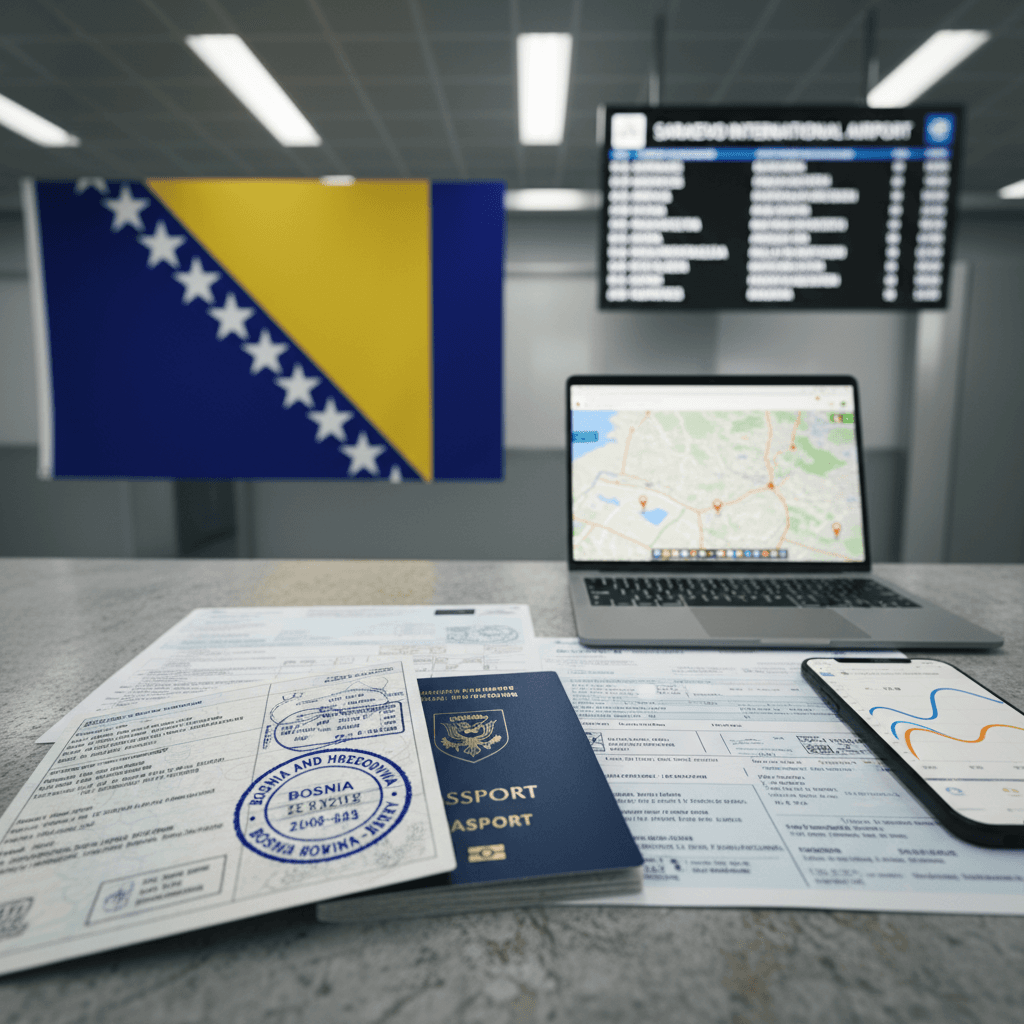
Bosnia and Herzegovina has a fairly straightforward visa policy for most Western passport holders. If you're from the EU, US, UK, Canada, or Australia, you can enter visa-free and stay for up to 90 days within any 180-day period. That's a generous window for scoping out the country as a potential base, and more than enough time to figure out whether the Balkans are your thing.
There's no e-visa system in place, so if your nationality does require a visa, you'll need to apply at a Bosnian embassy or consulate before you travel. Visa on arrival isn't available either. Citizens from many Asian and African countries fall into the visa-required category, so check with the nearest BiH diplomatic mission well in advance.
Visa-Free Entry Requirements
- Valid passport with at least 3 months validity beyond your planned stay
- Proof of sufficient funds for the duration of your visit
- Return or onward ticket (sometimes requested at the border)
- Health insurance coverage (recommended, occasionally asked for)
At the border, you'll typically get a passport stamp with no fuss. Land crossings from Croatia, Serbia, or Montenegro are usually quick, though summer weekends can see longer queues. The immigration officers are generally laid-back and the process takes minutes.
Registration Requirement
Here's something many travelers miss: you're legally required to register with local police within 48 hours of arrival. If you're staying at a hotel, hostel, or registered Airbnb, they handle this automatically. But if you're crashing at a friend's place or renting privately, you'll need to visit the nearest police station yourself. It's rarely enforced, but it's technically the law and could cause issues if you overstay or run into bureaucratic trouble.
The 90/180 rule is strictly calendar-based, not tied to a rolling window. Keep track of your days if you're planning to border hop around the region. Bosnia shares borders with Croatia (EU/Schengen) and Serbia and Montenegro, each with their own separate visa clocks, which gives you a lot of flexibility for extended stays in the Balkans.
Let's get this out of the way: Bosnia and Herzegovina does not have a digital nomad visa. There's no special program, no application portal, and no government initiative specifically targeting remote workers. As of early 2026, it hasn't been seriously discussed in parliament either.
That said, the lack of a formal nomad visa doesn't mean Bosnia is off the table. Most digital nomads from visa-exempt countries simply use the standard 90-day visa-free entry and work remotely during that period. It occupies a legal gray area that's common across the Balkans. You won't find immigration officers asking about your laptop or remote work habits at the border.
The Border Hop Strategy
Plenty of nomads extend their time in the region by crossing into neighboring countries when their 90 days are up. Here's how the math works:
- Croatia has its own 90/180 rule (and actually offers a digital nomad visa for stays up to 1 year)
- Serbia allows visa-free stays of 90 days for most Western nationals
- Montenegro also offers 90 days visa-free on a separate counter
By rotating between these countries, some nomads spend the better part of a year in the Balkans. Just keep careful track of your days in each country. Border officials don't always coordinate, but that doesn't mean overstays go unnoticed.
Freelancer Registration
If you want to do things properly and plan to stay longer, one option is registering as a freelancer (slobodni profesionalac) with the local tax authorities. This gives you a legal basis for working in the country and can support a temporary residence application. The process involves some paperwork and patience, but it's doable with a local accountant helping you through it.
The bigger picture here is that Bosnia's affordable living costs and improving infrastructure make it attractive even without a dedicated program. While neighbors like Croatia have rolled out nomad visas, Bosnia's lower prices and authentic Balkan experience draw plenty of remote workers who are happy to work within the existing visa-free framework.
The tourist visa situation in Bosnia and Herzegovina is relatively simple once you know which category you fall into. The country maintains bilateral agreements with dozens of nations, and the rules are consistent and predictable.
Visa-Exempt Nationalities
Citizens from the EU, US, UK, Canada, Australia, New Zealand, Japan, South Korea, and many other countries enjoy visa-free entry. The standard allowance is 90 days within any 180-day period. No application needed. Just show up at the border with a valid passport and you're in.
Your passport should have at least 3 months of validity remaining beyond your intended departure date. Having a return or onward ticket isn't always checked, but carrying proof of your travel plans is smart practice.
Visa-Required Nationalities
If you're from a country that requires a visa (this includes many nations in Asia, Africa, and parts of the Middle East), you'll need to apply at a Bosnian embassy or consulate before traveling. The process typically requires:
- Completed visa application form
- Passport-sized photos
- Proof of accommodation (hotel booking or invitation letter)
- Proof of sufficient financial means
- Travel insurance with minimum EUR 30,000 coverage
- Processing fee (varies by nationality, usually EUR 30-60)
Processing times range from 5 to 15 working days, so don't leave it to the last minute. There's no visa on arrival option and no e-visa system.
Police Registration
Everyone, visa-free or not, must register with local police within 48 hours of entering the country. Hotels and licensed accommodations handle this for you automatically. If you're staying in a private apartment or with friends, you'll need to register in person at the nearest police station. Bring your passport and your host's ID or rental agreement.
Overstay Penalties
Overstaying your allowed period is taken seriously. Penalties can include fines starting at BAM 200 (roughly EUR 100), potential deportation, and a ban on re-entry that can last from 1 to 5 years depending on the length of the overstay. If you realize you've miscounted your days, it's better to leave voluntarily than to be caught at the border on exit.
Staying in Bosnia beyond the 90-day visa-free window requires a temporary residence permit (privremeni boravak). The system isn't designed for digital nomads specifically, but several categories can work if you're creative and patient with paperwork.
Temporary Residence Permit
This is the main pathway for longer stays. It's issued for 1 year and is renewable. You'll apply at the Service for Foreigners' Affairs (Sluzba za poslove sa strancima) in the city where you plan to live. The process can take 30 to 60 days, so start well before your visa-free period expires.
General requirements across all categories:
- Valid passport (minimum 3 months beyond the permit period)
- Proof of accommodation (lease agreement or property ownership)
- Health insurance valid in BiH
- Clean criminal record certificate (apostilled, translated into Bosnian)
- Proof of sufficient financial means
- Application fee of approximately BAM 50-100
Common Permit Categories
Employment: Tied to a specific employer who must sponsor your work permit. The employer handles much of the paperwork, but the job market for foreigners is limited.
Business/Freelancing: You can register a business entity or work as a freelancer. This is the route many longer-term nomads take. You'll need to register with the local tax office and potentially the chamber of commerce. A local accountant is practically a requirement for navigating this.
Family reunification: If your spouse or partner is a Bosnian citizen or legal resident, you can apply under this category with marriage/partnership documentation.
Education: Enrollment in a recognized educational institution qualifies you for a student residence permit.
The Freelancer Route
Registering as a freelancer is the most practical option for digital nomads who want to stay long-term and stay legal. The process involves:
- Registering with the municipal tax office
- Obtaining a tax identification number
- Paying social contributions (health and pension, roughly BAM 400-500/month)
- Filing periodic tax returns
The monthly contributions might seem steep relative to local wages, but they're still very affordable by Western standards. Plus, they give you access to the public healthcare system.
Work Permits
A work permit is separate from a residence permit and is required if you're employed by a Bosnian company. The employer must demonstrate that no local candidate could fill the role. Processing takes 30 to 45 days and costs the employer a fee. This route is less relevant for remote workers with foreign clients, but worth knowing about.
Bosnia and Herzegovina is one of the most affordable countries in Europe, full stop. Your money stretches remarkably far here, and the quality of life you get for the price is hard to beat. A comfortable monthly budget for a digital nomad runs between $1,000 and $1,800, depending on your lifestyle and city.
Housing
Rent is the biggest expense, and it's still shockingly reasonable. In Sarajevo's city center, expect to pay $300-600/month for a furnished one-bedroom apartment. Move to the suburbs or smaller cities like Tuzla, and you can find decent places for $200-350. Mostar sits somewhere in between, with tourist-season premiums bumping prices slightly.
- 1BR apartment, city center: $300-600/month
- 1BR apartment, outside center: $200-400/month
- Shared apartment/room: $150-250/month
- Utilities (electric, heating, water, internet): $80-150/month
Most rentals come furnished and include basic appliances. Heating costs spike in winter (November through March), especially if your building uses older systems. Ask about heating costs before signing a lease.
Food and Dining
Eating out in Bosnia is an absolute bargain. The local food scene revolves around grilled meats, fresh bread, and seasonal produce. A full local meal at a casual restaurant runs $3-7. Even a nice dinner at a mid-range restaurant rarely tops $15-20 per person.
- Cevapi (the national dish): $2-4
- Local restaurant meal: $3-7
- Mid-range restaurant dinner: $12-20
- Monthly groceries: $150-250
- Beer at a bar: $1.50-3
Grocery shopping at local markets (pijaca) is dirt cheap, especially for fruits, vegetables, and dairy. Imported or specialty items cost more, but the local produce quality is excellent.
Coffee Culture
Coffee deserves its own mention because it's practically a religion here. A Bosnian coffee (bosanska kafa) costs just $1-2 and comes with a ritual. You'll sit for an hour, sip slowly, and nobody rushes you. Cafes are everywhere and double as social hubs, coworking spots, and meeting points. Budget for a lot of coffee. It's part of the experience.
Transportation
Getting around is affordable. Monthly public transit passes in Sarajevo cost about $25-30. Taxis and ride-hailing are cheap, with most city trips costing $2-5. Intercity buses connect all major cities for $5-15 per trip.
Sample Monthly Budget
- Budget nomad: $800-1,000 (shared housing, cooking at home, public transit)
- Comfortable nomad: $1,200-1,500 (own apartment, eating out regularly, coworking)
- Premium lifestyle: $1,800-2,500 (central apartment, dining out daily, gym, car rental)
Bosnia doesn't have dozens of cities competing for your attention, but the ones worth considering each bring something different to the table. The nomad community is still small, which means less infrastructure but more authentic experiences and genuinely curious locals.
Sarajevo
The capital is the obvious first pick and where most nomads end up. Sarajevo sits in a valley surrounded by mountains, giving it dramatic scenery and a surprisingly compact feel. The old town (Bascarsija) blends Ottoman and Austro-Hungarian architecture in a way that's genuinely unique in Europe.
- Population: roughly 275,000 (metro area ~400,000)
- Internet: best in the country, 50-100 Mbps common with fiber
- Coworking: several options including MESH and others
- Vibe: cultural, cosmopolitan for the Balkans, growing cafe-work scene
- Rent: $350-600 for a 1BR in center
The city has the best selection of restaurants, nightlife, cultural events, and international connections. Winter brings cold and sometimes heavy snow, but also a cozy atmosphere and very cheap skiing at nearby Jahorina and Bjelasnica (former Olympic venues, 30 minutes away).
Mostar
Famous for its rebuilt Stari Most (Old Bridge), Mostar is a tourist magnet with a more Mediterranean feel. The Neretva River runs turquoise through the center, and the surrounding Herzegovina region produces excellent wine.
- Population: roughly 65,000
- Internet: decent, 30-50 Mbps typical
- Coworking: limited options, cafes are the main workspace
- Vibe: touristic, laid-back, warmer climate than Sarajevo
- Rent: $250-450 for a 1BR
Mostar is smaller and quieter, which some nomads prefer. It gets very touristy in summer but empties out pleasantly in the off-season. Closer to the Croatian coast if you want weekend beach trips.
Banja Luka
The capital of Republika Srpska (one of Bosnia's two entities) is a green, relaxed city that flies under the radar. The Vrbas River runs through it, offering rafting and outdoor activities right in the city.
- Population: roughly 185,000
- Internet: solid, 30-50 Mbps
- Coworking: a few small spaces, growing slowly
- Vibe: calm, affordable, less tourist-focused
- Rent: $200-400 for a 1BR
Banja Luka is noticeably cheaper than Sarajevo and has a strong local cafe culture. It's a good pick if you want to live very affordably and don't need a big nomad community.
Tuzla
An industrial city in the northeast that's not on most nomad lists, Tuzla is the budget option. Its claim to fame is the Pannonian Salt Lakes, a unique man-made beach complex in the city center.
- Population: roughly 110,000
- Internet: adequate, 20-40 Mbps
- Coworking: very limited
- Vibe: local, no-frills, very cheap
- Rent: $150-300 for a 1BR
Tuzla won't win any awards for aesthetics, but it's dirt cheap and has a friendly local population. Good for nomads who want zero distractions and rock-bottom costs.
Bosnia's internet infrastructure has improved significantly in recent years, though it still lags behind Western European averages. In the major cities, you'll find workable speeds that handle video calls, file transfers, and general remote work without major headaches.
Internet Speeds
Average broadband speeds in urban areas sit around 30-50 Mbps download. Sarajevo leads the pack with fiber availability expanding, and some connections hitting 100 Mbps or more. Smaller cities and rural areas are less consistent, sometimes dropping to 10-20 Mbps.
- Sarajevo: 50-100 Mbps (fiber available in many neighborhoods)
- Mostar: 30-50 Mbps typical
- Banja Luka: 30-50 Mbps typical
- Rural areas: 10-20 Mbps, less reliable
When apartment hunting, always ask specifically about internet speeds and whether fiber is available in the building. Some older buildings are stuck on DSL, which can be frustrating. Test the connection before committing to a long-term rental.
Coworking Spaces
MESH Sarajevo is the most established coworking space in the country and a natural gathering point for the small nomad community. It offers hot desks, dedicated desks, and meeting rooms with reliable high-speed internet. Other coworking options have popped up in Sarajevo over the past few years, though the market is still maturing.
Outside Sarajevo, dedicated coworking is sparse. Mostar and Banja Luka have a handful of spaces, but options are limited. Most nomads in smaller cities default to working from cafes or their apartments.
Cafe Working Culture
Here's where Bosnia actually shines for remote workers. The country has one of the strongest cafe cultures in Europe. Bosnians spend hours in kafanas (traditional coffeehouses) and modern cafes alike, and nobody bats an eye if you pull out a laptop. You can nurse a $1-2 coffee for a couple of hours without anyone pressuring you to leave or order more.
That said, not every cafe has Wi-Fi, and those that do may have spotty connections. The trick is finding your regular spots with decent internet and comfortable seating. Many nomads in Sarajevo develop a rotation of 3-4 favorite cafes.
Mobile Data
Three mobile operators serve Bosnia: BH Telecom, m:tel, and HT Eronet. Prepaid SIM cards are easy to get at any shop or kiosk, and data packages are very affordable.
- Prepaid SIM: BAM 5-10 (about $3-6)
- Monthly data package (10-20 GB): BAM 15-30 ($8-17)
- 4G coverage: good in cities, patchy in rural/mountainous areas
- 5G: not yet widely deployed
Having a local SIM as backup is strongly recommended. If your apartment internet goes down mid-call, hotspotting from your phone can save the day. BH Telecom generally has the best coverage in the Federation entity, while m:tel is strongest in Republika Srpska.
Healthcare in Bosnia and Herzegovina operates on a two-tier system: public and private. The public system provides basic coverage but is underfunded and often overcrowded. Private clinics fill the gaps nicely and remain affordable by Western standards. For digital nomads, the practical approach is carrying international health insurance and using private facilities when needed.
Public Healthcare
The public system is split along the country's complex political lines, with separate healthcare funds for the Federation of BiH, Republika Srpska, and Brcko District. Quality varies by location and facility. Sarajevo's main hospitals are the best-equipped, while rural facilities can be basic.
As a foreigner without a local health insurance card, you'll typically pay out of pocket at public facilities. The fees are low (a doctor's visit might cost BAM 20-50, roughly $11-28), but wait times can be long and English-speaking staff aren't guaranteed outside of Sarajevo.
Private Healthcare
Private clinics are the way to go for most nomads. They offer shorter wait times, more modern equipment, and staff who are more likely to speak English. Sarajevo has a good selection of private medical and dental clinics.
- GP visit (private): BAM 30-80 ($17-45)
- Specialist consultation: BAM 50-150 ($28-85)
- Dental cleaning: BAM 50-100 ($28-55)
- Dental crown: BAM 200-500 ($112-280)
Dental tourism is actually a thing here. Prices for dental work are a fraction of what you'd pay in Western Europe or North America, and the quality at top private clinics is solid. Some nomads specifically schedule dental work during their Bosnia stays.
Pharmacies
Pharmacies (apoteke) are widespread and many medications that require prescriptions elsewhere are available over the counter. Pharmacists are generally knowledgeable and can recommend treatments for common ailments. Prices for medications are very affordable.
Emergency Services
For emergencies, dial 124 for ambulance services. Emergency rooms at public hospitals will treat you regardless of insurance status. The quality of emergency care in Sarajevo and larger cities is adequate, though response times in rural areas can be slower.
Health Insurance
International travel insurance with medical coverage is strongly recommended. Make sure your policy covers:
- Emergency medical treatment and hospitalization
- Medical evacuation (the nearest top-tier hospital facilities are in Zagreb or Belgrade)
- Repatriation
- Coverage amount of at least EUR 30,000
If you register as a freelancer or obtain a temporary residence permit, you'll be enrolled in the local public health insurance system through your social contributions. This gives you access to public facilities on the same terms as locals.
For anything serious or complex, many locals and expats travel to Zagreb (Croatia) or Belgrade (Serbia), both within a few hours by car. Keep this in mind when evaluating your insurance coverage and evacuation options.
Managing money in Bosnia and Herzegovina takes a bit of planning, but the country's financial system works well enough once you understand the quirks. The currency situation is actually one of the more stable in the region, which is a nice perk.
Currency
The official currency is the Convertible Mark (BAM), also written as KM locally. It's pegged to the Euro at a fixed rate of 1 EUR = 1.95583 BAM and has been since 1998. This peg means the exchange rate never fluctuates, making budgeting predictable. One BAM is roughly $0.56 USD, though that varies with Euro-dollar movements.
In practice, some businesses (especially in tourist areas and Herzegovina) accept Euros informally. You'll get a slightly worse rate than the official peg, but it works in a pinch. Don't count on this everywhere though, especially in Republika Srpska or smaller towns.
ATMs and Cash
ATMs (bankomati) are plentiful in all cities and most towns. They dispense BAM and most accept international Visa and Mastercard. A few things to watch for:
- Some ATMs charge a BAM 5-10 fee per withdrawal
- Always decline the ATM's own conversion rate (dynamic currency conversion) and let your bank handle it
- Withdrawal limits vary, typically BAM 1,000-2,000 per transaction
- UniCredit and Raiffeisen ATMs tend to be the most reliable for foreign cards
Cash is still king in Bosnia, especially in smaller towns, markets, and traditional restaurants. Always carry some BAM on you. Card acceptance has improved in Sarajevo and touristy Mostar, but many places still prefer or only accept cash.
Opening a Bank Account
Opening a Bosnian bank account as a non-resident is difficult but not impossible. Most banks require a temporary residence permit or at minimum a local address and a valid reason for the account. The documentation requirements are heavy and the process can take weeks.
For most nomads staying under 90 days, a local bank account isn't worth the hassle. Instead, rely on:
- Wise (TransferWise): works well for currency conversion, the multi-currency card is widely accepted at terminals that take Mastercard
- Revolut: another solid option with good exchange rates
- Your home bank card: just check foreign transaction fees beforehand
Transferring Money
If you need to transfer money to someone in Bosnia (like a landlord), Wise is the most cost-effective option. You can send directly to Bosnian bank accounts in BAM with transparent fees and near-mid-market rates. Western Union and MoneyGram have locations everywhere if you need cash pickup options.
Tipping and Payments
Tipping isn't mandatory but is appreciated. Rounding up or leaving 5-10% at restaurants is standard. In cafes, rounding to the nearest Mark is fine. Nobody will be offended if you don't tip, but service staff earn low wages and appreciate the gesture.
Contactless payments and Apple/Google Pay work at major retailers and chain restaurants in Sarajevo, but don't assume they're available everywhere. When in doubt, ask before ordering.
Moving to Bosnia and Herzegovina with a family might not be the first thing that comes to mind, but it's a genuinely viable option for nomad families looking for affordability and a slower pace of life. The culture here is very family-oriented, and kids are welcomed pretty much everywhere.
Education
For international families, Sarajevo International School (SIS) is the main English-language option. It follows an international curriculum and serves students from preschool through high school. Tuition runs $5,000-12,000/year depending on the grade level, which is significantly less than international schools in Western Europe or Asia.
Other options in Sarajevo include:
- French International School
- Several private Bosnian schools with English-language programs
- Local public schools (free, but instruction is in Bosnian)
Outside Sarajevo, international school options are very limited. If you're based in Mostar or Banja Luka, homeschooling or online schooling becomes the more practical choice.
Childcare
Childcare is affordable compared to Western countries. Private kindergartens in Sarajevo charge roughly BAM 300-600/month ($170-340). Public kindergartens are cheaper but have long waiting lists. Babysitters charge BAM 10-20/hour ($6-11).
The family-oriented culture means you'll find that locals are generally patient and warm with children. Restaurants, cafes, and public spaces are kid-friendly, and it's common to see families out late into the evening in warmer months.
Family-Friendly Activities
Bosnia offers plenty for kids beyond city life:
- Skiing: Jahorina and Bjelasnica mountains are 30 minutes from Sarajevo, with affordable family lift passes
- Nature: Vrelo Bosne park, Una National Park, Kravice Waterfalls
- Swimming: Tuzla's Pannonian Salt Lakes, rivers in summer
- Parks: every city has well-maintained parks where kids play freely
- Cultural sites: Sarajevo's old town, Mostar's Old Bridge, medieval fortresses
Dependent Residence Permits
If you hold a temporary residence permit, your spouse and children can apply for dependent residence permits under family reunification. The requirements are similar to the primary applicant's, plus marriage and birth certificates (apostilled and translated). Processing takes 30-60 days.
Healthcare for Kids
Pediatric care is available at both public and private facilities. Sarajevo has several private pediatric clinics with English-speaking doctors. Vaccinations follow a standard European schedule. For anything complex or specialized, Zagreb (3.5-hour drive) has excellent children's hospitals.
The biggest adjustment for families is usually the language barrier. Outside of international school circles and tourist areas, English proficiency drops off. Your kids will likely pick up Bosnian faster than you, which is actually a great educational experience. The local community tends to be welcoming and inclusive toward foreign families once you become familiar faces in the neighborhood.
Bosnia and Herzegovina is a very safe country for visitors and residents alike. Violent crime is rare, street crime is low, and the biggest safety concern for most nomads is the occasional pickpocket in touristy areas (and even that's uncommon). You'll probably feel safer walking around Sarajevo at midnight than you would in most mid-sized European cities.
General Safety
Petty crime exists but at low levels. Keep standard precautions in mind:
- Don't leave valuables unattended in cafes (though locals often do)
- Be aware of your surroundings in crowded markets and tourist spots
- Avoid displaying expensive jewelry or electronics unnecessarily
- Scams targeting tourists are rare but not unheard of, mainly overcharging at unlicensed taxis
Landmines
This is the one serious safety topic to address. The 1992-1995 war left landmines and unexploded ordnance in some rural and mountainous areas. Affected zones are marked with red warning signs featuring a skull and crossbones. The rule is simple: stick to paved roads, marked trails, and populated areas. Don't go wandering off-path in rural or wooded areas, especially near former front lines. In cities and on established hiking trails, you have nothing to worry about.
Cultural Landscape
Bosnia sits at a crossroads of cultures in the most literal sense. The population is made up of three main groups: Bosniaks (primarily Muslim), Croats (primarily Catholic), and Serbs (primarily Orthodox). This mix creates a fascinating cultural tapestry but also underlies the country's complex political structure.
The country is divided into two entities: the Federation of Bosnia and Herzegovina and Republika Srpska, plus the Brcko District. Each has its own government, police force, and somewhat different cultural feel. As a visitor, you'll notice the differences but they won't affect your daily life much.
Coffee Culture
If there's one cultural experience you absolutely must embrace, it's Bosnian coffee. This isn't espresso or filter coffee. It's a slow ritual involving a dzezva (small copper pot) and tiny cups, served with sugar cubes and sometimes a piece of Turkish delight. Coffee isn't a caffeine delivery system here. It's how relationships are built, deals are made, and afternoons are spent. Refusing an offer of coffee can be considered mildly rude.
Hospitality
Bosnians are genuinely some of the warmest, most hospitable people you'll meet. Invitations to someone's home for coffee or a meal are common once you've established any kind of relationship. Accept these invitations when you can. It's the fastest way to connect with local life.
LGBTQ+ Considerations
Bosnia is a conservative society when it comes to LGBTQ+ rights. There are no legal protections for same-sex partnerships, and public displays of affection between same-sex couples can attract negative attention, particularly outside Sarajevo. The capital has a small but growing LGBTQ+ community, and younger Bosnians tend to be more accepting. Discretion is advisable.
Language
The official languages are Bosnian, Croatian, and Serbian, which are mutually intelligible (variations of the same language). English proficiency is growing, especially among people under 35 in urban areas. In tourist zones, you'll manage fine with English. In smaller towns and with older residents, a few phrases in the local language go a very long way.
Taxes in Bosnia and Herzegovina are refreshingly simple compared to many European countries. The rates are low, the system is flat, and the bureaucracy, while present, is manageable. That said, understanding when you actually become a tax resident is where most nomads need to pay attention.
Tax Residency
You become a tax resident of Bosnia if you spend more than 183 days in the country within a calendar year, or if you establish a permanent home or center of vital interests there. For nomads using the 90-day visa-free entry and leaving, tax residency generally isn't a concern. It becomes relevant if you extend your stay through a residence permit.
As a non-resident, you're only taxed on income sourced within Bosnia. Foreign-sourced remote work income isn't typically taxable if you're not a resident and not registered locally.
Income Tax
Bosnia uses a flat income tax rate of 10%. This applies to:
- Employment income
- Self-employment/freelance income
- Rental income
- Capital gains
That 10% flat rate is one of the lowest in Europe. There are no progressive brackets, no surcharges, no solidarity taxes. What you see is what you pay.
Social Contributions
If you're registered as a freelancer or employed locally, social contributions are mandatory and add significantly to the tax burden:
- Pension insurance: 17% (Federation) or 18.5% (Republika Srpska)
- Health insurance: 12.5% (Federation) or 12% (Republika Srpska)
- Unemployment insurance: 1.5% (Federation) or 1% (Republika Srpska)
Combined, social contributions run roughly 31-32% on top of income tax. However, these are calculated on a base amount that can be relatively low for freelancers. Your accountant can help optimize this. The minimum contribution base means you might pay around BAM 400-500/month regardless of actual income.
Freelancer Tax Obligations
If you register as a freelancer (slobodni profesionalac), your obligations include:
- Monthly or quarterly advance tax payments
- Annual tax return filing
- Monthly social contribution payments
- Record keeping of income and expenses
The filing process is relatively straightforward, but having a local accountant handle it is worth the BAM 100-200/month fee. They'll keep you compliant and potentially reduce your burden through legitimate deductions.
Double Taxation Treaties
Bosnia has double taxation agreements with over 40 countries, including most EU member states, the US, UK, and Canada. These treaties prevent you from being taxed twice on the same income. If you're a tax resident of both Bosnia and another country, the treaty determines which country gets primary taxing rights on different types of income.
VAT
Bosnia has a flat VAT rate of 17% on goods and services. As a consumer, this is already included in prices. Freelancers with annual revenue exceeding BAM 50,000 (about $28,000) must register for VAT.
There are no special tax incentives or exemptions for digital nomads. Bosnia hasn't joined the trend of offering tax breaks to attract remote workers. The appeal here is purely the low baseline rates and affordable living costs.
Here's the practical stuff that'll make your time in Bosnia smoother. These are the things you learn after a few weeks in-country, so consider this a head start.
Getting There
Sarajevo International Airport (SJJ) is the main gateway. It's a small airport with limited direct routes, mostly connecting to European hubs like Istanbul, Vienna, Munich, and Zagreb. Budget carriers like Wizz Air and FlyBosnia offer seasonal routes. Flights are generally cheaper into Sarajevo than you'd expect, especially off-season.
Alternative entry points:
- By bus: excellent connections from Zagreb (5-6 hours), Split (4-5 hours), Dubrovnik (4-5 hours), and Belgrade (7-8 hours)
- By car: border crossings from Croatia, Serbia, and Montenegro are straightforward
- Mostar airport: tiny, seasonal flights only
- Banja Luka airport: limited service, mainly Wizz Air
Local Transportation
Sarajevo has a functional tram and bus network. Trams run along the main east-west corridor and are the easiest way to get around the city center. Single tickets cost BAM 1.80 from kiosks or BAM 2.00 from the driver. A monthly pass runs about BAM 50 ($28).
Between cities, buses are the main option. The railway exists but it's slow and limited. FlixBus and local carriers connect all major cities. Tickets are cheap: Sarajevo to Mostar runs about BAM 15-25 ($8-14).
Renting a car is worth considering if you want to explore beyond the cities. Roads are generally decent on main routes but can be narrow and winding in mountainous areas. Parking in Sarajevo city center is a headache, so a car is best for weekend trips rather than daily use.
Language Tips
Bosnian, Croatian, and Serbian are the three official languages, and they're all mutually intelligible. Think of it like British English, American English, and Australian English but with different names. Learning a few phrases goes far:
- Hvala (HVAH-lah) = Thank you
- Molim (MOH-leem) = Please / You're welcome
- Dobar dan (DOH-bar dahn) = Good day
- Koliko kosta? = How much does it cost?
- Racun, molim = Check, please
English is widely spoken by younger Bosnians in cities. Older generations and people in rural areas may speak German (from guest worker connections) or limited English.
Coffee Etiquette
Don't order a Turkish coffee in Bosnia. It's Bosnian coffee (bosanska kafa). The preparation is slightly different and locals take pride in the distinction. When served, let the grounds settle for a minute, dip a sugar cube in the coffee, take a bite, then sip. Never rush it. A coffee session can last an hour or more, and that's by design.
Tipping
Service charges aren't included in bills. Tipping 5-10% at restaurants is appreciated but not expected. At cafes, rounding up to the nearest Mark is standard practice. For taxis, rounding up the fare is sufficient.
SIM Card and Connectivity
Grab a prepaid SIM card on arrival. You can buy them at airport shops, mobile operator stores, or even some kiosks. Bring your passport as registration is required. A basic package with 10-20 GB of data costs BAM 15-30 ($8-17) per month.
Seasonal Considerations
Bosnia has four distinct seasons. Winters are cold and snowy, especially in Sarajevo (temperatures drop to -5 to -10C). Summers are warm and pleasant (25-35C). Spring and autumn are the sweet spots for comfortable weather and fewer tourists. If you're coming for winter, make sure your apartment has reliable heating.
More Guides from Europe
Stay Updated on Bosnia and Herzegovina
Get notified about visa changes, policy updates, and new information for digital nomads in Bosnia and Herzegovina.