Portugal residence permit holders risk 90 day limit at airport e-gates

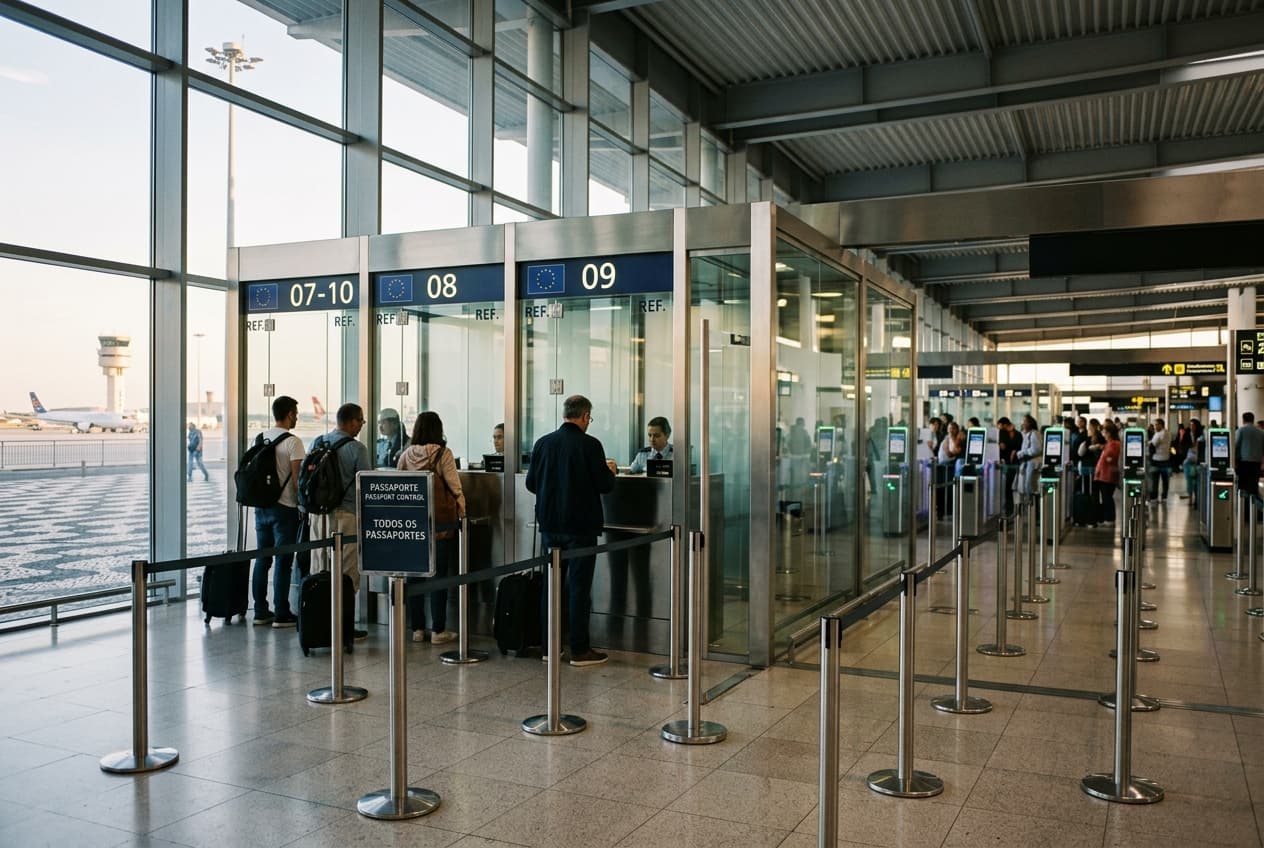
Why residence permit holders should skip the e-gates
The EU Entry/Exit System (EES) became fully operational at Schengen external borders on April 10, 2026, replacing passport stamps with biometric records for non-EU short-stay travelers. Portugal joined the phased rollout on Oct. 12, 2025, with PSP and GNR running border checks at airports including Lisbon, Porto and Faro.
Third-country nationals holding a Portuguese residence permit or long-stay visa are exempt from EES registration, per the European Commission and notices from Portuguese embassies in London and Tokyo. The catch sits in the lane choice. E-gates and self-service kiosks at Portuguese airports are built around EES logic for short-stay visitors, so a resident card processed through them risks being logged as a tourist entry against the 90-in-180 limit.
Who this hits
The lane question matters most for non-EU nationals living in Portugal under the D7, D8 digital nomad visa, D2, Golden Visa or family reunification permits. It also covers long-stay visa holders waiting on their AIMA residence card appointment.
Short-stay tourists, business travelers and nomads without Portuguese residency remain fully inside EES. Their fingerprints, facial image and entry-exit dates get recorded at first crossing, with subsequent trips processed faster through kiosks or e-gates.
EU and EEA citizens, plus Swiss nationals, are outside the system entirely and can use any lane.
What residents should do at the border
Residence permit holders arriving from outside Schengen should head to a staffed booth rather than an e-gate. Practical steps:
- Use the EU/EEA/CH lane or an "All Passports" staffed booth, not the e-gate.
- Present the passport and Portuguese residence card together before the officer scans anything.
- If routed to an EES kiosk by mistake, stop and ask staff to redirect to manual processing.
- Keep the residence card valid; expired cards default the traveler back into short-stay EES tracking.
Signage and staff routing vary between Lisbon, Porto and Faro because border duties shifted from the dissolved SEF to PSP, GNR and AIMA. Travelers report inconsistent enforcement during the rollout, so flagging resident status verbally remains the safest route.
For entry rules and living costs, see the Portugal guide.
Frequently asked questions
Can Portuguese residence permit holders use airport e-gates in Portugal?
Why should residence card holders avoid the e-gates in Portugal?
What should I do at the border if I have a Portuguese residence card?
Are D7, D8, D2, Golden Visa, and family reunification permit holders affected?
Do long-stay visa holders waiting for an AIMA residence card need to use e-gates?
What happens if my Portuguese residence card is expired at the border?
Stay updated on Portugal
Visa changes, travel alerts, and destination news — delivered when they actually matter.