Northern Thailand air pollution hits 314 PM2.5 for remote workers

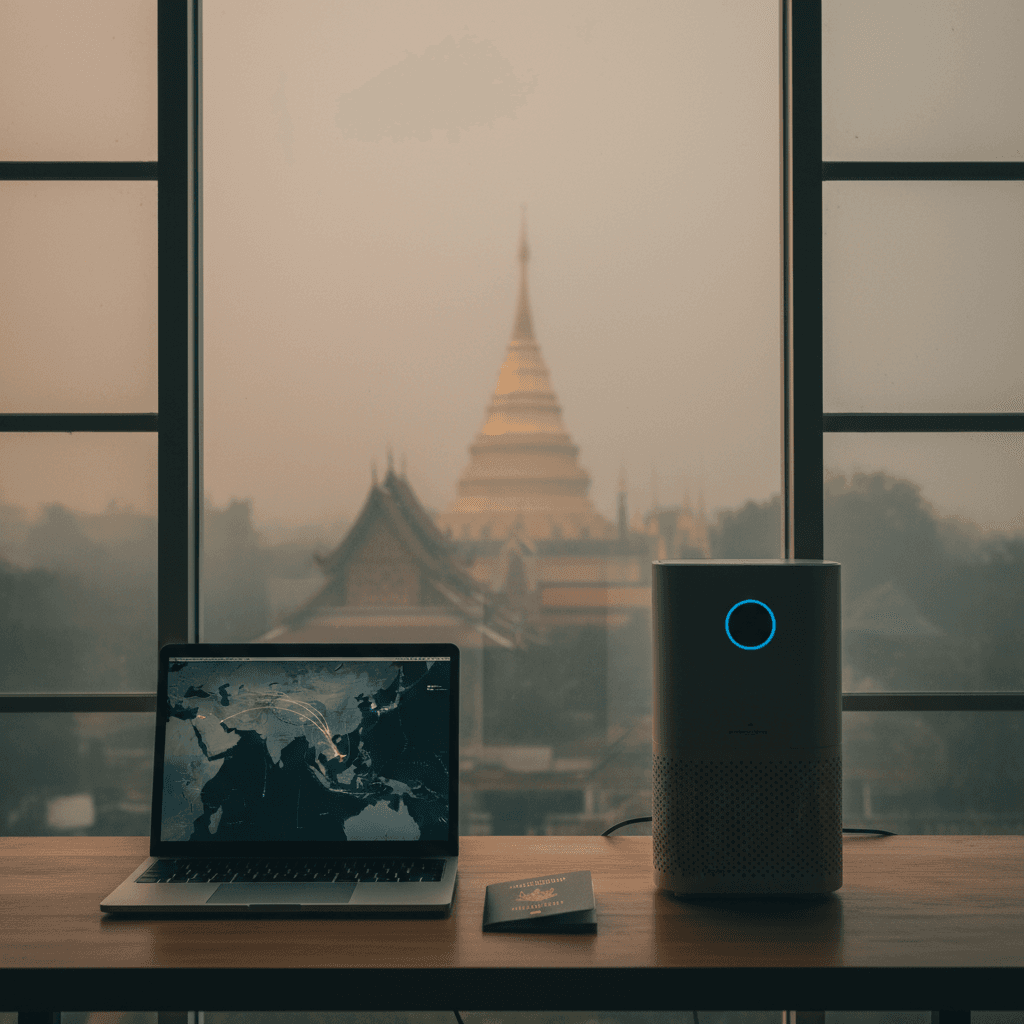
| Chiang Mai | 314.3 µg/m³ |
|---|---|
| Chiang Rai | 225.4 µg/m³ |
| Lamphun | 183 µg/m³ |
Northern Thailand air pollution hits 314 PM2.5 in northern hubs
Remote workers and travelers heading to Chiang Mai and surrounding provinces face seasonal air hazards that routinely push particulate levels deep into hazardous territory.
Dry season smoke drives hazardous air across the north
Agricultural burning and regional forest fires drive severe smoke across northern Thailand between Jan. 1 and May 31. During the peak burning window from February through April, ground stations in Chiang Mai recorded PM2.5 readings reaching 314.3 µg/m³ and Air Quality Index ratings as high as 471, according to the Ministry of Public Health.
The pollution affects 13 northern provinces, including Chiang Rai, Lamphun and Mae Hong Son. Regional authorities enforce seasonal no-burning orders, yet light winds and mountain geography regularly trap toxic smoke for weeks. Anyone planning an extended stay through moving to Thailand needs to account for this disruption, especially when choosing base locations between February and April.
What remote workers encounter on the ground
Provincial governments push emergency cell broadcast alerts directly to local and international SIM cards when air quality hits red levels. These alerts instruct residents to stay indoors, seal windows and wear N95 masks outside.
- Local hospitals and community centers open designated dust-free rooms to treat respiratory irritation and eye strain.
- Open-air cafes, rooftop workspaces and outdoor tour operators in hubs like Pai and Chiang Mai close or see sharp drop-offs in business.
- Public health agencies distribute protective masks and deploy mobile medical clinics to severely affected districts.
Nomads staying in northern hubs during early spring should secure lodging equipped with sealed windows and HEPA air purifiers rather than relying on standard air conditioning units. Tracking daily readings through apps like Air4Thai or IQAir lets remote workers shift working hours indoors or temporarily relocate south to coastal provinces until seasonal rains clear the haze.
Frequently asked questions
How bad is the air quality in Chiang Mai right now?
Which parts of Thailand are affected by the haze?
What health symptoms are people reporting from the haze?
Who is most at risk from the haze in northern Thailand?
What should I do before going outside in Chiang Mai?
How can I reduce haze exposure indoors while staying in Thailand?
Stay updated on Thailand
Visa changes, travel alerts, and destination news — delivered when they actually matter.