Japan yen hits 161 per dollar as nomads see lower local costs

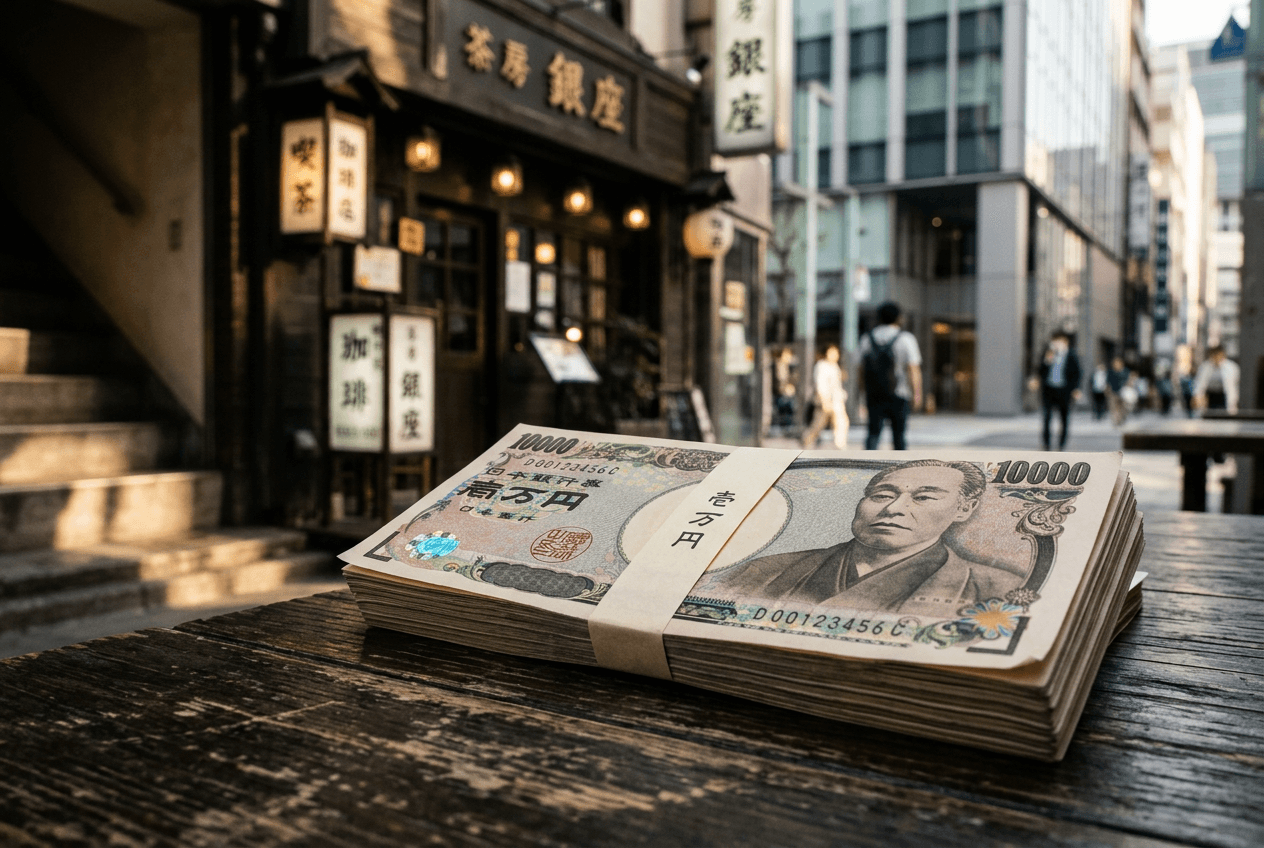
Yen sits near 161 per dollar as Tokyo readies intervention
The yen traded in the upper 161 range against the US dollar this month, matching its weakest level since 1986. Finance Minister Satsuki Katayama said Japan will take "decisive action" against speculative moves and can respond in currency markets "at any time," per Kyodo.
Tokyo has already spent roughly 11.73 trillion yen (about $73 billion) on yen-support operations between late April and late May, yet the currency remains pinned near 160 per dollar. Wide US-Japan interest rate gaps continue to drive the weakness, even after the Bank of Japan raised its short-term rate to about 1.00% in mid-2026, its highest since 1995.
Who feels the swing
Foreign-currency earners spending in Japan see sharply lower yen-denominated costs on food, transit and many services compared with a few years ago. Accommodation in Tokyo and Kyoto has climbed well above pre-pandemic levels, though, trimming some of the currency advantage, per Japan travel market reports.
Expats paid in yen face the opposite squeeze. Imported food, energy and overseas remittances cost more in foreign-currency terms, while export-sector employers in autos and electronics tend to benefit, according to CNBC and Al Jazeera reporting.
Digital nomads earning abroad and spending locally get the largest real boost, particularly on short-term rentals, dining and domestic travel. The risk is timing: prior interventions have moved dollar-yen several yen within minutes, hitting anyone exchanging cash or booking large purchases at the wrong moment.
Managing the exchange risk
A few practical moves while the yen sits at multi-decade lows:
- Avoid converting large lump sums at once; stagger exchanges to smooth out intervention spikes.
- Use multi-currency accounts or cards that settle at interbank rates rather than airport kiosks, where spreads widen during volatile sessions.
- Watch for Ministry of Finance statements escalating from "monitoring" to "decisive action," the verbal pattern that preceded the April 2024 and April-May 2026 interventions.
- Lock in big-ticket bookings (JR Pass, long-stay rentals, flights) when the yen is weakest rather than waiting, since a sudden BOJ surprise or MOF action can erase the discount.
Read our full Japan guide for the complete picture and check our nomad news feed for ongoing currency moves.
Frequently asked questions
Why are digital nomads seeing lower costs in Japan right now?
How low has the Japanese yen fallen against the US dollar?
Who benefits most from the weak yen in Japan?
What costs are still high in Japan despite the weak yen?
Can the yen move suddenly while I am booking or exchanging money?
How should nomads manage exchange risk in Japan?
Stay updated on Japan
Visa changes, travel alerts, and destination news — delivered when they actually matter.