Investigation targets Thailand immigration officers tied to $450 entry fees

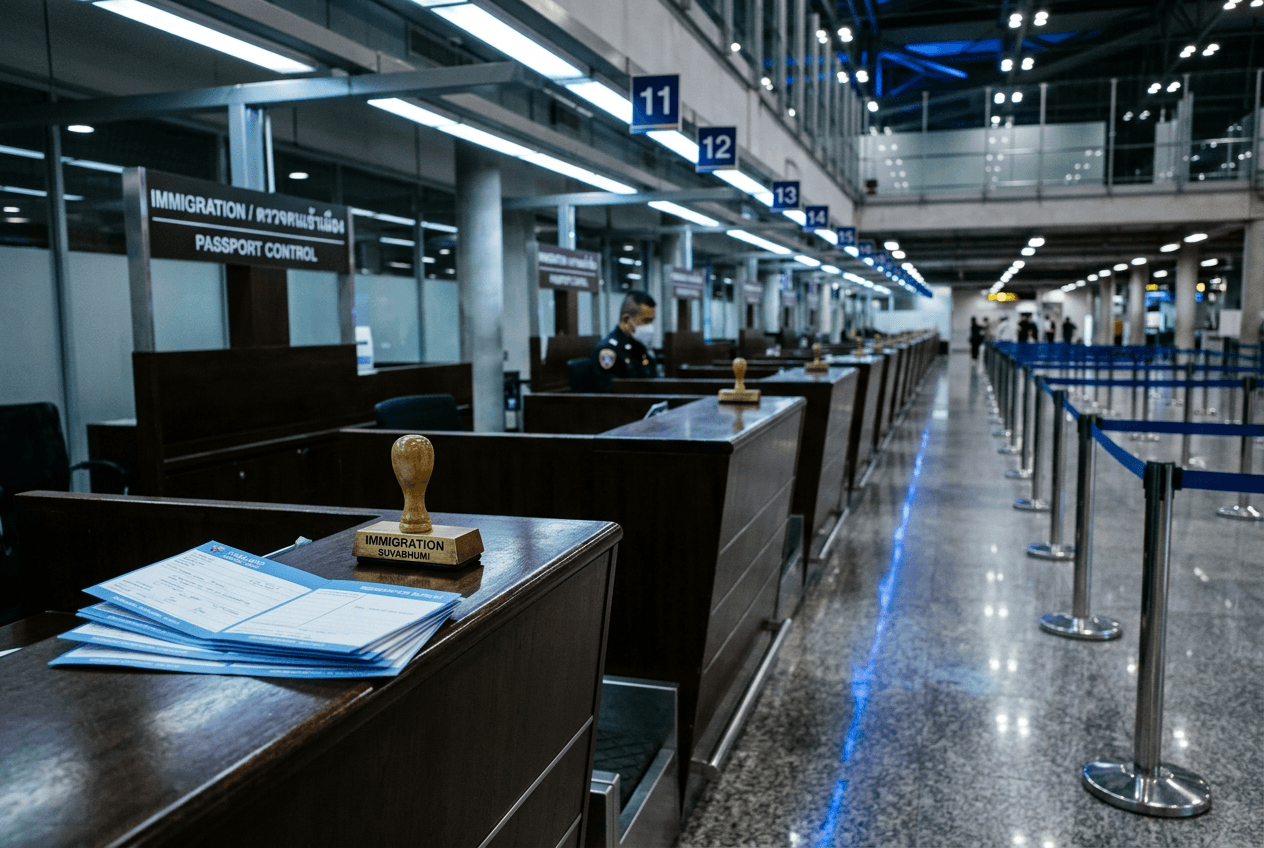
The "bao guan" broker probe
Thailand's Immigration Division 2 has opened a fact-finding investigation into so-called "bao guan" brokers who claim they can guarantee passage through immigration at Suvarnabhumi Airport for a fee, according to The Nation Thailand. The brokers reportedly target Chinese-speaking travelers and charge between 4,500 and 12,000 baht depending on visa type and the perceived risk of refusal.
Officials said any officers found linked to the scheme will face "decisive disciplinary and criminal action," and stressed that no payment to a third party produces a lawful guarantee of entry. The probe sits inside a broader "3 NOs" campaign (No Entry, No Stay, No Escape) that immigration authorities have run through the first half of 2026.
Who's getting turned away
Immigration Division 2 said more than 13,229 foreigners have been refused entry at its airports since the start of 2026, against 22,339 refusals across all of 2025. The national Immigration Bureau put the wider figure at 29,490 denials in the first five months of the year, alongside 668 cancelled "fake student" visas and 14,161 arrests of overstayers and illegal workers.
The screening hits several groups hard:
- Digital nomads running back-to-back tourist entries or visa runs, now flagged by the APIS tracking system
- ED and volunteer visa holders not genuinely studying or volunteering, who can have status revoked on the spot
- Short-term tourists unable to show funds, accommodation or a clear purpose of stay
- Travelers on the blacklist, with 169,506 individuals currently flagged in APPS and blockable before boarding
The Immigration Bureau named call-center gangs and illegal labor networks as the primary targets, though officers retain full discretion at the desk.
What to carry at the checkpoint
Officers are asking for hotel confirmations or rental contracts, onward tickets and proof of funds shown via cash, bank apps or card statements. Insufficient funds was cited as a leading reason in the 29,490 denials.
Nomads working online should hold a visa that matches the activity rather than relying on tourist or ED stamps. Paying a broker carries no protection: travelers risk losing the fee, being refused anyway and exposure to a criminal probe if corrupt officials are charged.
Read our full Thailand guide for the complete picture and check ongoing visa updates for further enforcement changes.
Frequently asked questions
Can a broker guarantee entry into Thailand for a fee?
How much do 'bao guan' brokers reportedly charge in Thailand?
What documents are Thai immigration officers asking for at the checkpoint?
How many foreigners have been refused entry in Thailand this year?
Who is being targeted by Thailand's tighter immigration screening?
Can Thailand block travelers before they board a flight?
Stay updated on Thailand
Visa changes, travel alerts, and destination news — delivered when they actually matter.