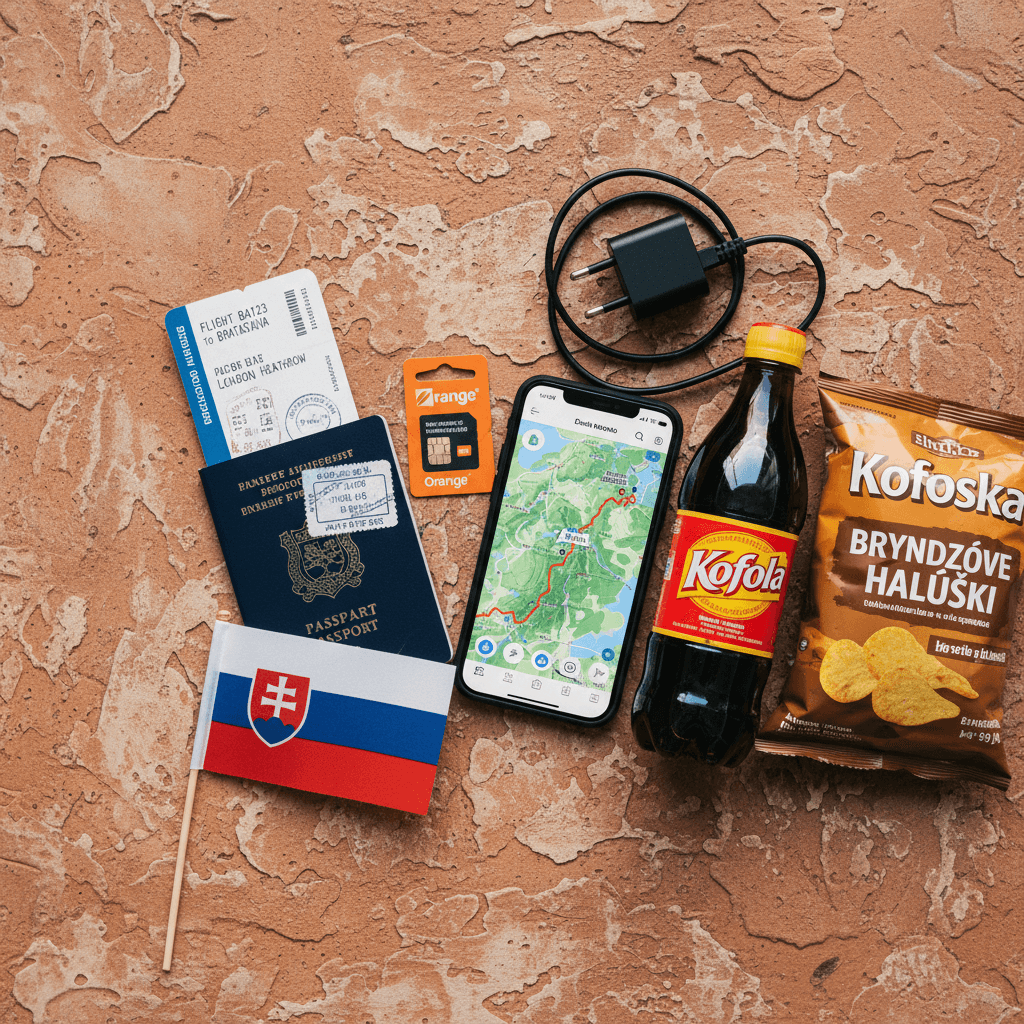
Slovakia

Policy Stability
Stamped Nomad ExclusiveHow likely visa and immigration policies are to remain unchanged
Quick Facts
N/A
$270/mo
3 months
No
$1,975/mo
90 Mbps
7/10
Medium
Medium
Medium
CET, CEST
Entry Methods Available
Best For
The Schengen Basics
Because Slovakia is a member of the Schengen Area, your entry requirements depend largely on your passport and how long you plan to stick around. For most nomads, the journey starts with the 90/180-day rule. This means you can explore the Tatra Mountains or the cafes of Bratislava for up to 90 days within any 180-day window without needing a long-term permit.
If you hold a passport from the USA, Canada, Australia, the UK, or Japan, you fall into the visa-free category. You simply show up, get your stamp, and start working from your laptop. Just keep in mind that by late 2026, you will need to apply for an ETIAS authorization online before you fly. It is not a visa, but a quick digital pre-screening that will be mandatory for all visa-exempt travelers.
Schengen Visa (Type C)
If your home country does not have a visa-waiver agreement with the EU, you will need a Type C Schengen Visa. This covers tourism, short business trips, and scouting missions. You should apply at a Slovak embassy or consulate in your home country. The standard Schengen visa application fee is €90 for adults and €45 for children aged 6 to under 12. Children under 6 are exempt. Other exemptions and reduced fees can apply under the relevant rules; visa-centre service fees are separate.
Do not expect to get a visa when you land. Slovakia does not offer a standard "visa on arrival" for tourists or business travelers. Border visas are rare, limited to 15 days, and reserved strictly for humanitarian emergencies or national interest cases. Plan ahead and book your appointment online, as the system now mandates digital scheduling.
National Visa (Type D)
For those planning to make Slovakia a semi-permanent base, the National Visa (Type D) is the bridge to a longer stay. This visa is valid for up to one year and is typically granted if you have already applied for a residence permit or if you are enrolled in intensive language studies. To qualify through language school, you must be at least 15 years old and enrolled in a program that meets for at least 25 hours per week.
Recent updates have made this process slightly more flexible. Starting in July 2025, the validity of a National Visa issued for the purpose of collecting a residence permit increases to 120 days, up from the previous 90. This gives you a bit more breathing room to handle the paperwork once you arrive in the country.
Business Travel and Quotas
If you are heading to Slovakia for specific business projects, you might need a formal invitation verified by the Foreign Police. The requirements for business travelers are getting stricter, with specific quotas being introduced. For 2025, the government has set a quota of 700 for certain business-related entries. You will need to provide an employer letter, a clear itinerary, and proof that you have the funds to support yourself during your stay.
Key Requirements and Changes
The application process is shifting toward a digital-first model. Expect to submit most of your documents through an online portal before your physical appointment. One helpful change is that physical photos are often no longer required at the time of application, as biometric data is captured digitally. Here is a quick look at what you need to keep in mind:
- Financial Proof: You must demonstrate you can afford your stay, though specific financial limits now apply only to certain visa categories.
- Mandatory Appointments: You cannot walk into a consulate; online booking is required.
- Extensions: Standard tourist visas are almost never extended. Unless there is a "force majeure" event or a serious medical emergency, you will need to leave the Schengen Area once your 90 days are up.
- Processing: Always allow at least 15 to 30 days for processing, especially during the peak summer or winter holiday seasons.
While Slovakia does not have a specific "Digital Nomad Visa" in the way some Mediterranean countries do, the combination of the 90-day Schengen entry and the Type D National Visa provides enough flexibility for most remote workers to enjoy the country for a season or longer.
Slovak Ministry of Foreign Affairs: Schengen visas and fees | Slovak Ministry of Foreign Affairs: national visas
The Reality Check: Is There a Nomad Visa?
Let's get the big question out of the way first. Slovakia does not offer a specific digital nomad visa. You won't find a "remote work" application designed for people who just want to sit in a Bratislava cafe while working for a company in Austin or London. If you have an EU passport, you are golden; just show up and register. For everyone else, you have to get a bit more creative with the existing immigration paths.
Most travelers start with a standard 90-day Schengen stay. If you want to stay longer, you generally have two paths: a National (Type D) visa for stays up to one year, or a Temporary Residence permit. For the long-term nomad, the Temporary Residence for Business is the most common workaround, though it requires setting yourself up as a local freelancer or business owner.
The Business Residence Path
This permit is designed for people who want to run a business or work as a sole trader (živnosť) within Slovakia. It is valid for up to 3 years, but keep in mind that as of July 2025, the government has introduced an annual quota of 700 permits. This makes the application process more competitive than it used to be.
You cannot simply say you are working for a foreign boss. You need a business plan that the Ministry of Economy reviews to see if your work benefits the Slovak economy. It is a bit of a hurdle, but for those committed to making Slovakia their base, it provides a legal, long-term footing that a tourist visa cannot match.
Financial and Document Requirements
Slovakia wants to see that you can support yourself without leaning on their social system. The financial requirements are broken down into two parts: personal subsistence and business capital. Here is what you need to have in the bank:
- Personal Funds: You must show at least €284.13 per month of your stay. For a one-year permit, this usually means having roughly €3,410 in a personal account.
- Business Funds: If you are applying as a sole trader, you need to show an additional €5,682 (which is 20 times the subsistence minimum) in a separate business account.
- Clean Record: You need an apostilled criminal background check from your home country, and it must be less than 90 days old when you submit it.
- Housing: You must provide proof of accommodation for at least 6 months. A formal lease agreement is the standard here.
The Application Process
The days of showing up in Bratislava and applying at the local Foreign Police are mostly over for new business applicants. You must now submit your application at a Slovak embassy or consulate abroad. Once you hand over your documents and pay the €350 fee, the authorities have 90 days to make a decision.
After your permit is approved and you arrive in the country, the clock starts ticking on a few errands. You have 3 days to report your arrival to the Foreign Police. Within 30 days, you must get a medical exam from a specific Slovak clinic and secure health insurance. It is a bit of a bureaucratic sprint, but once it is done, you are legally set.
Taxes and Fine Print
Living in Slovakia for more than 183 days usually makes you a tax resident. This means you will be looking at progressive tax rates between 19% and 25%. Because the business permit assumes you are operating locally, you should expect to pay Slovak taxes and social contributions on your earnings. It is a good idea to hire a local accountant early on to handle the filings, as the Slovak system is not particularly user-friendly for non-Slovak speakers.
One major restriction to remember is that this permit is tied to your business activity. While you can travel freely throughout the Schengen area, your primary residence and business focus must remain in Slovakia. If you stop running the business or fail to show enough taxed income when it comes time to renew, the police will likely deny your extension.
The 90-Day Rule and Visa-Free Entry
If you hold a passport from the US, Canada, Australia, or any of the 60+ countries on the EU's exempt list, you can roll into Slovakia with nothing more than a scan of your passport. This allows you to stay for up to 90 days within any 180-day period. It is the gold standard for most nomads passing through Central Europe.
While the process is seamless, border guards occasionally ask for proof of self-sufficiency. You should be prepared to show you have at least €56 per day for the duration of your stay. Having a return ticket and a confirmed booking for your first few nights in Bratislava or Košice will usually settle any questions at the gate.
The Schengen Short-Stay Visa (Type C)
For those who do not qualify for visa-free entry, the Type C Schengen Visa is your primary path. This is not an e-visa system. You will need to visit a Slovak embassy or a VFS Global center in person to provide biometrics and sit for a brief interview. The application fee is €90 for adults and €45 for children aged 6 to 12. If you are covered under an EU visa facilitation agreement, that fee might drop to €35.
Expect to provide a few standard documents to get the green light:
- Travel insurance with a minimum coverage of €30,000.
- A passport valid for at least three months beyond your intended departure.
- Proof of accommodation and financial means.
- A flight itinerary showing your plans to exit the Schengen Area.
Processing and Logistics
Slovakia does not offer a visa-on-arrival for tourists. Everything must be handled before you touch down. While you can fill out forms online to speed things up, the physical appointment is mandatory for the sticker to be placed in your passport. Service fees at VFS centers usually add another €20 to €40 to your total cost.
The National Type D visa exists for longer stays, but it is rarely granted for simple tourism. It is generally reserved for students, researchers, or those with specific work contracts. If you are looking to stay longer than three months as a nomad, you will likely need to explore residency permits rather than a tourist visa.
Extensions and the Reality of Border Runs
Extending a Type C visa is notoriously difficult. The Foreign Police generally only grant extensions for "force majeure" or serious humanitarian reasons. If you have a legitimate personal emergency, the fee is €45, but do not count on this as a way to stretch your summer holiday. If your 90 days are up, you need to leave the Schengen Area entirely.
The concept of a "border run" does not work here like it might in Southeast Asia. Since the 90-day limit applies to the entire Schengen zone, hopping over the border to Austria or Poland keeps your clock ticking. You must exit the zone to a non-Schengen country, like Serbia or the UK, and you cannot return until your rolling 180-day window allows it.
Overstays and Penalties
Slovakia has modernized its tracking with the Entry/Exit System (EES), making it nearly impossible to slip through the cracks when leaving. Overstaying your welcome can result in immediate fines ranging from €500 to over €3,000. Beyond the financial hit, you risk a formal entry ban lasting 1 to 5 years. This ban is recorded in the Schengen Information System, meaning you could be barred from entering almost any country in Europe for several years.
Making Slovakia Your Long-Term Base
If you've fallen for the charm of Bratislava’s cobblestone streets or the rugged peaks of the High Tatras, you’ll eventually need to look beyond the standard 90-day Schengen shuffle. Slovakia doesn't have a flashy "Digital Nomad Visa" like some of its neighbors, but it offers a sturdy, predictable framework for those willing to do a little paperwork. The system is built on specific purposes of stay, meaning you need a clear reason to be there beyond just liking the local beer.
Most remote workers and entrepreneurs find their footing through the Temporary Residence Permit. This is governed by Act No. 404/2011 and covers everything from business and employment to study and family reunification. If you're looking to stay for more than three months, this is your primary path. You'll generally need to apply at a Slovak embassy abroad or, if you're already legally present, at a Foreign Police Department within the country.
The Freelancer’s Path: Business Residence
Since there isn't a dedicated freelancer visa, most nomads go the business route. This involves registering as a self-employed person (živnostník) or setting up a limited liability company (s.r.o.) in Slovakia. It’s a bit more "boots on the ground" than other nomad schemes, but it grants you a solid legal standing in the EU.
- Income Requirements: You'll need to show you can support yourself, with some contexts noting a minimum income of around €250 per month, though having significantly more is recommended for a smooth approval.
- New Quotas: Starting in 2025, the government is introducing a business quota limited to 700 permits annually. This makes early applications more important than ever.
- Processing Times: Expect to wait up to 90 days for a decision.
- Administrative Costs: National long-stay visa fees usually fall between €50 and €90.
Investment and Residency by Interest
Slovakia doesn't run a standard "Golden Visa" program, but they do leave a door open for those bringing significant capital into the country. If you can prove your presence is "in the interest of the Slovak Republic," the path to residency becomes much shorter. This usually requires a recommendation from the Ministry of Finance.
- Investment Threshold: Typically involves €200,000 or more in real estate or business ventures that create local jobs.
- The Benefit: This can bypass the usual temporary stay requirements and lead directly to a five-year permanent residence permit.
- Fast Track: While most decisions take three months, investor applications are often processed within 30 days.
Settling Down: Permanent Residency
For those who decide that Slovakia is home for good, permanent residency is the ultimate goal. This status gives you almost the same rights as a Slovak citizen, minus the right to vote in national elections. The standard track requires five years of continuous legal stay on a temporary permit. Once you hit that milestone, you can apply for a five-year permanent permit.
If you hold that five-year status for another four years, or if you meet specific long-term conditions, you can upgrade to unlimited permanent residency. For nomads moving around the continent, the EU Long-Term Resident status is also an option after five years of living across the EU, provided your most recent stay was in Slovakia.
Permit Breakdown at a Glance
Temporary Business/Freelance Permit
- Key Requirements: Proof of business purpose, health insurance, and proof of accommodation.
- Duration: Valid for the length of your business purpose, often one year and renewable.
- Costs: Visa fees of €50 to €90 plus business registration costs.
Temporary Employment or Study Permit
- Key Requirements: A formal job offer from a Slovak employer or enrollment in a recognized university.
- Duration: Matches your employment contract or your study program.
- Costs: Standard administrative fees.
Permanent Residence (5-Year Track)
- Key Requirements: Five years of prior temporary residence or specific family/investor ties.
- Duration: Five years and renewable.
- Costs: Standard administrative fees; no additional investment required if following the residency track.
The Investment Pathway
- Key Requirements: €200,000+ investment and Ministry of Finance recommendation.
- Duration: Leads directly to a five-year permanent permit.
- Costs: The investment amount plus standard application fees.
Slovak Ministry of Foreign Affairs: national visas | European Commission: self-employed residence in Slovakia
The Housing Market: Capital vs. The Rest
Finding a place to live in Slovakia usually boils down to a choice between the high-energy vibe of Bratislava or the significantly cheaper, laid-back charm of the east. In Bratislava, a one-bedroom apartment in a nomad-friendly district typically costs between €620 and €780. If you are looking for something high-end or right in the historic center, be prepared to see prices closer to €1,000.
The savings become obvious once you head toward Košice. You can snag a comparable one-bedroom there for €400 to €500. If you really want to stretch your budget, smaller hubs like Banská Bystrica or Žilina offer comfortable spots for as little as €350. These cities provide a authentic Slovak experience without the capital city price tag.
Eating and Drinking on a Budget
One of the best perks of living here is the food cost. Your grocery bill will be remarkably low compared to Western Europe. A loaf of bread is about €1.31, a dozen eggs cost around 3.19, and chicken fillets are roughly €3.16 per pound. Even if you hate cooking, you won't break the bank.
Dining out is a staple of the nomad lifestyle here because it is so accessible. You can grab a solid lunch at an inexpensive local spot for €8. A three-course dinner for two at a mid-range restaurant averages about €40. Coffee culture is thriving too; expect to pay between €2 and €2.38 for a latte, while a large local beer is a steal at €2.
Getting Around and Staying Connected
Slovakia is compact, and its public transit reflects that efficiency. In Bratislava, a monthly transit pass is only €31, and single tickets are just €1. Taxis are also affordable, starting at €3 with a rate of roughly €1.93 per mile, making it easy to get home after a late night out.
Staying online is just as cheap. You can pick up a mobile data plan with at least 10GB for anywhere between €8 and €28. If you prefer a professional environment, Bratislava’s coworking scene is well-established. A hot desk at popular spots like The Spot or Connect averages €262 per month. In smaller cities, most nomads stick to laptops in cafes or work from their rentals.
Health and Wellness
You shouldn't overlook insurance, but it won't eat up much of your budget. Private health insurance for nomads generally runs between €30 and €100 monthly. Many people choose flexible plans like SafetyWing, which provide the necessary coverage without the long-term commitment of local private providers.
Cost Breakdown by City
Bratislava
- Budget Tier: Expect to spend $1,430–$1,530 inclusive of rent. This covers life in the cheaper neighborhoods and cooking most meals at home.
- Comfortable Tier: Budget $1,680–$1,880 for a central apartment, regular dining out, and a dedicated coworking membership.
- Premium Tier: At $2,180–$2,480, you can live in a luxury flat and enjoy the city's best upscale dining and services.
Košice
- Budget Tier: A very manageable $1,000–$1,200 per month covers all the basics in the second-largest city.
- Comfortable Tier: $1,200–$1,450 offers an excellent quality of life with plenty of room for weekend trips and social activities.
- Premium Tier: $1,600–$2,000 allows for the best housing available, though high-end luxury services are more limited than in the capital.
Banská Bystrica
- Budget Tier: You can get by on $900–$1,100, making this one of the most affordable urban options in the country.
- Comfortable Tier: $1,100–$1,350 provides a very high standard of living relative to the local economy.
- Premium Tier: $1,350–$1,750 covers all expenses with ease, though you will find fewer "luxury" specific venues here.
For a solo nomad living in Bratislava, a realistic monthly total sits between $1,767 and $1,946. If you move into the countryside or smaller cities, that figure quickly drops to a range of $1,200 to $1,500. It is a rare European destination where you can enjoy modern infrastructure and a high safety rating for under $2,000 a month without feeling like you are pinching pennies.
Bratislava: The High-Octane Capital
Bratislava is the natural first stop for most nomads entering Slovakia. It sits right on the border with Austria and Hungary, making it a perfect base for those who want to explore Central Europe on their weekends. The city feels like a compact version of Prague or Vienna, but without the suffocating crowds and astronomical tourist prices.
The infrastructure here is the best in the country. You will find a dense concentration of laptop-friendly cafes and established coworking hubs like Progressbar, Connect, and The Spot. Internet speeds average around 22 Mbps, but most modern apartments and dedicated workspaces offer much faster fiber connections. It is the only city in Slovakia where you can find a truly international nomad community that meets up regularly for drinks or networking events.
- Monthly Cost: Approximately €350 to €500 for a one-bedroom apartment in the center. Total monthly nomad budget is around $2,900.
- Internet: Reliable and widely available in public spaces.
- Vibe: Fast-paced, safe, and social with a legendary craft beer scene.
The main trade-off is the price. Bratislava is easily the most expensive city in the country, with costs sitting about 20% to 50% higher than the eastern regions. If you crave a big-city feel and want the easiest airport access, the extra cost is usually worth it.
Košice: The Cultural Powerhouse
If Bratislava feels too frantic, head east to Košice. Slovakia’s second-largest city has a distinct personality, anchored by the stunning St. Elizabeth’s Cathedral and a massive, pedestrian-only main square. It offers a "sweet spot" for nomads: it has all the amenities of a major city but at a significantly lower price point than the capital.
The tech scene here is surprisingly robust. Spaces like Eastcubator and iHub provide excellent environments for deep work, and the local community is a friendly mix of Slovak techies and foreign remote workers. Internet speeds often outperform the capital, frequently hitting 26-27 Mbps or higher in central areas.
- Monthly Cost: Around €300 to €500 for central rent, with a total monthly spend of roughly $2,400.
- Workspaces: Plenty of modern options including Regus and local boutique spaces.
- Vibe: Artistic, historic, and slightly more laid back than Bratislava.
The nightlife is smaller than the capital, and you might find fewer direct flight options from the local airport. However, the lower cost of living and the high quality of the cafes make it a favorite for those staying long-term.
Banská Bystrica: The Nature Lover’s Retreat
Banská Bystrica is the hidden gem of central Slovakia. It is located in the heart of the mountains, making it the premier choice if you prefer hiking boots over high-end clubs. The city is historic and picturesque, offering a very high quality of life for a fraction of what you would pay in Western Europe.
While you won't find a massive list of dedicated coworking offices here, the cafe culture is excellent. Most nomads work from the modern cafes lining the main square, which generally offer fast, reliable WiFi. It is a smaller community, so you will likely get to know the locals rather than just hanging out with other expats.
- Monthly Cost: The most affordable of the three, with central rents ranging from €250 to €400.
- Nature Access: Immediate access to the Low Tatras for skiing in winter and hiking in summer.
- Vibe: Quiet, safe, and outdoorsy.
This city is best for those who are self-sufficient and don't need a constant calendar of nomad events. It is a place to focus on your work during the day and disappear into the mountains by 5:00 PM.
Slovakia has quietly become a powerhouse for digital nomads who need high-performance connectivity without the Western European price tag. While the country might feel traditional in its mountain villages, its digital infrastructure is modern and aggressive. You can expect a seamless experience whether you are uploading 4K video from a Bratislava cafe or joining a Scrum meeting from a coworking space in Trencin.
Internet Speeds and Fiber Infrastructure
The national average for fixed broadband sits comfortably at 91.9 Mbps download, but in the major hubs, those numbers often climb higher. Slovak Telekom leads the pack with average download speeds around 114 Mbps. If you are a mobile-first worker, the 4G and 5G networks are equally impressive, delivering speeds between 70 Mbps and 104 Mbps in urban centers.
Fiber-to-the-premises (FTTP) currently reaches about 67% of households. The government is pushing for 80% coverage within the next few years, with a goal of gigabit speeds nationwide by the end of the decade. While rural villages in the Tatras are still catching up, the cities of Bratislava and Kosice are fully wired with reliable, high-speed fiber that handles heavy bandwidth tasks with ease.
Top Coworking Spaces
Bratislava is the heart of the coworking scene, offering a mix of industrial-chic lofts and high-end corporate suites. Most spaces offer daily passes starting between €25 and €29 for those just passing through.
- Campus Cowork (Bratislava): At €140 monthly, this is a favorite for its high-speed WiFi and built-in coffee shop. They also offer business consulting services if you are looking to scale locally.
- Space Up (Bratislava): For €150 a month, you get access to fixed or flex desks and a fantastic terrace for after-work drinks.
- Coworking Cvernovka (Bratislava): A budget-friendly pick at €99 per month. It provides 24/7 access and hosts frequent community events in a creative atmosphere.
- HubHub (Bratislava): The premium choice starting at €220. It features modern design, gaming zones, and a very tech-forward crowd.
- Fleck (Trencin): If you venture outside the capital, this space offers a community-focused vibe for €119 a month, complete with bike showers and regular networking events.
Cafe Culture and Remote Work
Working from cafes is a standard practice in Slovakian cities. In Bratislava, hotspots like Lab.cafe offer WiFi speeds exceeding 100 Mbps, which is plenty for video conferencing. Most baristas won't mind you staying for a few hours if you keep the coffee orders coming. Outlets are generally easy to find in modern cafes, though it is always smart to carry a portable battery if you are heading to smaller, historic spots.
Mobile Data and eSIMs
Staying connected on the move is affordable and straightforward. If you prefer the convenience of an eSIM, providers like Nomad offer 1GB plans starting at $4.50 for a week. For longer stays, you can find 20GB plans for around $3.99 through providers like Saily or Cellesim. Local giants like Orange and Telekom provide the most robust coverage, ensuring you have a signal even when hiking through the national parks. Most plans are hotspot-friendly, making it easy to share data with your laptop if the hotel WiFi fails.
The Public vs. Private Divide
Slovakia’s healthcare system is built on a universal public model funded by mandatory insurance contributions. If you are working for a Slovak company or have official residency, you will likely be paying about 4% of your income into this system. While the public sector handles complex surgeries and emergencies well, the facilities often feel like a time capsule from the Soviet era, with outdated equipment and long waiting lists.
Most nomads and expats gravitate toward the private sector, especially in Bratislava and Košice. Private clinics offer modern interiors, English-speaking staff, and appointments that actually happen on time. If your case is particularly complex and you have the budget, some expats even hop across the border to Vienna, which is only an hour from the capital and offers world-class specialized care.
International Hospitals and Clinics
For high-end care, Nemocnica Bory in Bratislava is the gold standard. It feels more like a tech campus than a hospital, featuring advanced MRI and CT technology and private single-bed rooms. If you just need a check-up or a prescription, the ProCare network has clinics across the country and is very accustomed to dealing with foreigners. Medissimo is another solid choice in the capital for specialized surgeries and diagnostics.
University hospitals like UNB in Bratislava are technically proficient and handle the most difficult medical cases in the country. However, be prepared for a language barrier and a more "no-frills" experience if you end up in one of these public wards.
Insurance Requirements
If you are an EU citizen, your EHIC card covers "medically necessary" care for short stays. For everyone else, or for those staying long-term, you need a more robust solution. Major public insurers like Dovera, Union, or VšZP are the standard for residents, but digital nomads typically opt for international expat policies. These plans usually cost around US$4,000 annually but ensure you can access private clinics without paying massive bills upfront.
Keep in mind that proof of health insurance is mandatory for almost any residence permit application. You cannot skip this step if you plan on staying legally.
What You’ll Pay Out-of-Pocket
If you don't have local insurance and need to pay as you go at a private facility like Bory, the costs are reasonable compared to US or UK private rates. Here is a breakdown of what to expect:
- Specialist Consultation: €70 for an initial visit, €50 for follow-ups.
- Emergency Exam: Roughly €40 at private facilities.
- Dental Hygiene: €95 to €115 for a full session.
- Standard Filling: €55 to €90 depending on the tooth.
- Minor Dermatosurgery: €15 to €30.
- Physical Therapy: Around €15 per laser session.
Pharmacies and Prescriptions
Look for the green cross. Slovakia has over 1,800 pharmacies, and unlike some Western countries, you won't find basic meds like ibuprofen in a supermarket; you have to go to a "Lekáreň." Most are open from 8am to 6pm on weekdays. If you have an emergency at 3am, every major city has at least one on-call pharmacy open 24/7. You can check otvorenalekaren.sk to find the nearest one.
Prescriptions are usually valid for 5 to 7 days, so don't sit on them. If you aren't in the public system, you will pay the full price for medication and then claim it back from your private provider. On the bright side, over-the-counter prices in Slovakia are some of the lowest in the EU.
Emergency Services
In a crisis, dial 112 for general emergencies or 155 specifically for medical help. Ambulance response times are generally good, aiming for under 15 minutes. Following recent updates, there are now 344 ambulance stations across the country. Emergency transport and life-saving care are generally provided regardless of your insurance status, though you may be billed later if you aren't covered.
Managing Your Money in Slovakia
Slovakia is a member of the Eurozone, which makes financial life incredibly straightforward if you are coming from within the EU. For everyone else, the country offers a modern, digital-first banking infrastructure that plays well with the tools most nomads already use. Whether you are tapping your phone for a coffee in Bratislava or setting up a local account for a long-term lease, the system is reliable and accessible.
Opening a Local Bank Account
You can open a bank account in Slovakia even if you aren't a permanent resident. For EU citizens, the process is usually a breeze; you just need a valid ID or passport and some proof of your connection to the country, like a rental agreement or a work contract. If you are from outside the EU, expect a bit more paperwork. You will typically need to show your residence permit and a second form of identification.
It is a good idea to call ahead and book an appointment with an English-speaking representative. While the big banks in major cities usually have staff who speak English, smaller branches might not. Popular local options include Tatra banka, VÚB Banka, and Slovenská sporiteľňa. Most of these offer slick mobile apps and contactless cards as standard.
Digital Banking and Fintech
If you don't want to deal with the bureaucracy of a traditional bank, you are in luck. Both Wise and Revolut are widely used and accepted across the country. They are often the best choice for nomads because they allow you to hold Euros and spend with Apple Pay or Google Pay without the sting of hidden exchange fees.
- Wise: Best for receiving international transfers with local bank details and using the real mid-market exchange rate.
- Revolut: Great for day-to-day spending and quick currency swaps, though keep an eye on the €1,000 monthly limit on free plans.
Cash and ATM Tips
Slovakia is very card-friendly, but you will still want some cash for small village pubs or mountain huts in the Tatras. Most ATMs here do not charge a local access fee, which is a rare win for travelers. However, keep your eyes peeled for one specific bank that charges a €5 fee per withdrawal.
The golden rule at the ATM is to always decline the conversion. If the machine asks if you want to be charged in your home currency, say no and choose Euros (EUR). This ensures your own bank handles the exchange rate, which is almost always cheaper than the predatory rates offered by the ATM software.
Moving Money Internationally
If you need to move larger sums of money into a Slovak account for a deposit or long-term stay, skip the traditional wire transfers. They are slow and expensive. Instead, look at these providers for the best balance of speed and cost:
- Wise: Usually the fastest option, often delivering funds instantly or within 48 hours.
- Remitly: Often has great promotional rates for your first few transfers.
- Currencies Direct: A solid choice for very large transfers as they typically charge no transfer fees and have high trust ratings.
Crypto Regulations
Slovakia follows the EU's MiCA framework, meaning the crypto space is regulated and relatively safe. If you are running a crypto business, you will need a specific license and must follow strict Anti-Money Laundering (AML) rules. For individuals, remember that crypto isn't a tax-free haven here. Exchanging your Bitcoin for Euros, or even using it to buy goods and services, is a taxable event. The government has also stepped up its tracking of crypto transactions, with new data exchange rules fully kicking in by January 2026.
Bringing the Kids: Visas and Paperwork
Moving your family to Slovakia is a relatively straightforward process if you already hold a valid residence permit. Minor children under 18 can join you through a family reunification permit. You will need to provide apostilled and officially translated birth certificates, proof of legal custody, and written parental consent if only one parent is moving.
You can submit these applications at a Slovak embassy or directly at a foreign police department within the country. Expect a decision within 90 days, though this can sometimes be extended if the paperwork is complex. Once approved, your children gain the same residency rights as you, making the transition to local life much smoother.
Education and International Schools
Bratislava is the primary hub for international education, offering curricula that allow students to transition easily between countries. The British International School Bratislava (BISB) is a popular choice, alongside other institutions offering the International Baccalaureate (IB) or American diplomas.
Quality education comes with a significant price tag. Annual tuition generally falls between $8,000 and $20,000 (roughly €7,400 to €18,500), but top-tier academies can exceed $25,000 per year. Beyond tuition, keep these extra costs in mind:
- Registration fees: €460 to €920
- School uniforms: €185 to €460
- Additional costs: School lunches, bus services, and extracurricular clubs are typically billed separately.
Childcare and Preschool Options
If your children are younger, you will have to choose between municipal kindergartens and private preschools. Municipal spots are very affordable but can be difficult to secure in popular Bratislava boroughs. Fees for state-run options range from €20 to €90 per month, plus about €30 to €50 for meals.
Many nomads opt for private or international preschools where English is spoken. These facilities usually cost between €420 and €720 per month. For infants, private daycare centers often start at €270 and increase based on the level of specialized care provided.
Healthcare for the Little Ones
Slovakia operates a mandatory public health insurance system that covers children of legal residents. If you are paying into the system, your children under 18 are covered for full medical services. You just need to provide proof of your residency and school attendance to get them enrolled in your plan.
While the public system is reliable for emergencies and routine checkups, many expats choose to buy supplemental private insurance. This helps avoid long wait times and provides access to facilities with more English-speaking staff. It is a common way to ensure a higher standard of comfort for specialized pediatric care.
Where to Live: Family-Friendly Hubs
Bratislava is the most convenient choice for nomadic families because of its density of parks and international services. Neighborhoods like Karlova Ves, Ružinov, and Nové Mesto are favorites for their proximity to schools and green spaces like Sad Janka Kráľa. The city center is walkable, which makes weekend outings to Bratislava Castle or the Danube riverfront easy with a stroller.
If you prefer a slower pace, consider these locations:
- Košice: Features a beautiful pedestrian-only main street and frequent family festivals.
- Bojnice: Home to the country's most famous "fairytale" castle and a large national zoo.
- Spiš Castle Area: Perfect for families who love hiking and exploring historic ruins.
Safety and Daily Life
Slovakia is one of the safer corners of Europe for raising a family. Violent crime is rare, and the general safety index in the capital sits at a high 75 out of 100. You will see local children playing in parks or walking to school independently, which speaks to the high level of community trust.
While public transport in Bratislava can sometimes be a bit of a squeeze with a double stroller, the streets themselves are safe and clean. Petty theft is the only real concern, mostly limited to crowded tourist areas in the Old Town. For the most part, you can expect a quiet, secure environment where kids can be kids.
Safety and Street Smarts
Slovakia is one of the safer corners of Europe, maintaining crime rates well below the US national average. Violent crime is rare, and you will likely feel comfortable walking through most neighborhoods or using public transit late at night. In 2023 and 2024, the entire country saw only 117 reported murders, a statistic that highlights the generally peaceful nature of the local environment.
The main headaches for nomads are petty crimes in high-traffic areas. Bratislava's Old Town is the primary hotspot for pickpockets and phone snatchers, especially during the peak summer months and Christmas markets. Professional thieves often work in teams near major hotels, shopping centers, and on overnight trains heading to Prague or Warsaw. Keep your belongings secure in these zones and be wary of "friendly" strangers in nightlife districts. Some strip clubs and late-night bars in the capital have a reputation for spiking drinks or presenting tourists with wildly inflated bills backed by physical intimidation.
Avoiding Common Scams
Digital nomads often run into trouble on local online marketplaces. Scammers frequently list high-end electronics or apartments at "too good to be true" prices, then ask for bank verification details to process the payment. Once they have your login info, they drain the account. Always use protected payment methods and never share your banking credentials.
In the physical world, watch out for these classic traps:
- Fake Police: Men posing as plainclothes officers may stop you to "inspect" your currency for counterfeits or demand immediate cash fines for imaginary infractions. Real police will be in uniform and provide official documentation.
- Creative Taxi Fares: Drivers near the main train station or tourist squares sometimes add "surcharges" that don't exist on the meter. Use apps like Bolt or Hopin to ensure a fixed, fair price.
- Dual Pricing: While fading out, some smaller establishments still try to charge "tourist prices." Always check the printed menu before ordering.
The Social Climate and LGBTQ+ Rights
The social landscape in Slovakia is conservative, particularly regarding LGBTQ+ rights. It remains one of the more challenging EU destinations for queer travelers, as the country does not recognize same-sex marriage or civil unions. In fact, marriage is constitutionally defined as a union between a man and a woman. Public sentiment can be cool; roughly 63% of the population opposes the expansion of LGBTQ+ rights.
While anti-discrimination laws have been on the books since 2004 and hate crimes based on orientation were criminalized in 2013, the legislative trend is currently restrictive. Proposed amendments for 2025 aim to further limit gender recognition. If you are visiting as a same-sex couple, discretion is often the safest path in smaller towns, though the community in Bratislava is more visible and resilient.
Cultural Etiquette and the Toasting Ritual
Slovaks are formal but deeply hospitable once the ice breaks. When meeting someone for the first time, a firm handshake and direct eye contact are mandatory. Avoid using first names until you are specifically invited to do so; stick to formal titles and surnames. The casual greeting "ahoj" is strictly for friends and family.
If you are grabbed for a drink, pay close attention to the toasting ritual. When someone says "Na zdravie!", you must clink glasses with every single person at the table. Crucially, you have to maintain eye contact with the person whose glass you are hitting. Failing to do this is considered incredibly rude and, according to local lore, brings seven years of bad luck. In cafes and restaurants, keep your volume moderate. Slovaks value a calm, orderly public atmosphere and generally find loud conversations boorish.
Language and Integration
The Slovak language is a beast. With six grammatical cases and a phonetic system that feels like a tongue-twister, it is a significant hurdle for most expats. While younger people in Bratislava and those in the tech sector speak excellent English, the "real" Slovakia runs on Slovak. Learning basic phrases isn't just a courtesy; it is your ticket to better service and actual friendships.
Bratislava has a surprisingly vibrant expat scene thanks to its proximity to Vienna and its status as a regional corporate hub. To find your footing, consider these steps:
- Sign up for a language course early; the state doesn't provide them, so private schools are your best bet for meeting other arrivals.
- Lean into the cafe culture. Slovaks use cafes as living rooms, often lingering for hours over a single coffee.
- Join a local sports club or "hobby group" to meet locals outside of the workspace.
Integration takes patience. You will likely face some bureaucratic friction with banking and residency permits, but nomads who put in the effort to learn the customs generally find a loyal, welcoming community underneath the initial formal exterior.
Tax Residency Rules
Understanding when you become a tax resident in Slovakia is the first step in planning your stay. The most common trigger is the 183-day rule. If you spend 183 days or more in the country during a single calendar year, you are generally considered a tax resident. This count includes every partial day you are physically present, so even quick weekend trips back after you have moved on can push you over the limit.
Slovakia also looks at your habitual abode. If you maintain a permanent residence or show a clear intent to stay through personal and economic ties, the authorities may view you as a resident regardless of the day count. For digital nomads moving through Europe, this means your "center of vital interests" matters. If you are a resident, you owe tax on your worldwide income. If you remain a non-resident, you only pay tax on income sourced directly from Slovakia, such as local rental property or work for a Slovak company.
Income Tax Rates
Slovakia uses a progressive tax system that scales based on how much you earn. The thresholds are tied to the national subsistence minimum, which means they shift slightly each year. For 2026, the tax brackets are structured as follows:
- 19% on income up to approximately €44,000.
- 25% on income between €44,000 and €60,000.
- 30% on income between €60,000 and €75,000.
- 35% on any income exceeding €75,000.
Capital gains are generally taxed at a flat 19%. Dividends face a withholding tax between 7% and 10% depending on the year the profits were earned and their source. While these rates might look high compared to some nomad hubs, the local cost of living often balances the scales.
Double Taxation Treaties
Slovakia has established over 70 double taxation treaties with countries like the US, UK, Canada, Australia, and most of the EU. These agreements are vital for nomads because they prevent you from paying tax on the same dollar twice. If both Slovakia and your home country claim you as a resident, these treaties provide "tie-breaker" rules to decide which country gets first dibs. Usually, this depends on where you have a permanent home or where your life is more deeply rooted.
Special Nomad Regimes
There is no specific "Digital Nomad Visa" with its own tax perks in Slovakia. Most remote workers apply for a business or temporary residence permit. These permits often require proof of income around €250 per month, but keep in mind that holding one of these permits makes it much more likely you will be flagged as a tax resident.
There is a glimmer of hope for high-earning expats. Certain non-resident remote workers employed by foreign firms might qualify for a flat 19% tax rate or even exemptions on some foreign income. However, business visas are becoming more competitive, with quotas limited to roughly 700 per year starting in 2025.
Crypto Taxation
Slovakia has specific rules for your digital assets. While standard crypto gains are taxed at the usual progressive rates of 19% to 35%, there is a major incentive for long-term holders. If you hold your crypto for more than one year before selling, the tax rate drops to a flat 7%.
- Exemptions: Small crypto payments or receipts up to €2,400 per year are tax-free.
- Swaps: Trading one cryptocurrency for another can trigger a taxable event.
- Reporting: Starting in 2026, new reporting standards mean exchanges will share more data with the government.
Reporting Requirements
The tax year follows the calendar year, and your return is typically due by March 31. You are required to file if your taxable income exceeds €2,983. For most nomads, filing is done electronically. If you are working as a traditional employee for a local company, your employer can handle much of this paperwork for you if you request it by February 15. If you have paid foreign withholding taxes on dividends or other income, you must report those to claim the appropriate credits under a tax treaty.
Getting Connected
Staying online in Slovakia is straightforward, though your choice depends on how much you value convenience over cost. If you want to skip the hunt for a physical store, grab an eSIM from providers like Nomad or Gigago before you land. Plans typically start around $4.50 for 1GB, and they use the reliable Orange or O2 networks. It is a smart move if your flight arrives late, as most airport kiosks shut down after midnight.
For those who prefer a local physical SIM, head to a Tabakpress or Heinemann Duty-Free shop at Bratislava Airport once you clear customs. You will need your passport for registration. O2 offers a solid deal with 5GB of data and 100 minutes for approximately $21, valid for 30 days. If you are on a tight budget and just need a little data to get to your accommodation, Orange has 1GB options for about $2.
Moving Around
Hailing a taxi on the street is a rookie mistake that usually ends in an inflated bill. Stick to apps to ensure you see the price upfront and have a digital trail of your trip. Uber and Bolt work perfectly in Bratislava and Košice. For travel in smaller cities or the Tatra Mountains, download Hopin. It is the local favorite because it also tracks public transport and lets you buy bus or tram tickets directly in the app.
If you are planning a trip between cities, check out BlaBlaCar for carpooling. It is often cheaper than the train and a great way to meet locals. Just remember that while English is common among drivers in the capital, it becomes hit-or-miss once you head into more rural territory.
Where to Set Up Camp
Bratislava is the primary hub, but different neighborhoods cater to different vibes. Staré Mesto is the heart of the action, packed with third-wave coffee shops and coworking spaces. It is the most walkable part of the city, though you will pay a premium for the convenience. If you want a more local feel with plenty of green space, Ružinov is a fantastic alternative that remains well-connected by the tram network.
For nomads watching their bank balance, Košice is a gem. It offers a slower pace of life and a lower cost of living, with total monthly expenses often hovering around $3,000 for a comfortable lifestyle. The internet infrastructure there is just as modern as the capital, making it a viable long-term base.
Finding a Home
Standard rental markets can be tough for nomads because of high deposits and long-term lease requirements. Flatio is the best workaround here. They specialize in mid-term stays and usually only charge a small reservation fee of around 19 EUR without requiring a massive security deposit. For shorter stays or social vibes, look into Vibe Station Loft or use Nomad Stays to find apartments that have verified high-speed WiFi.
Food and Grocery Delivery
Slovakia has a robust delivery culture. Bistro.sk is the heavy hitter with over 2,000 restaurants and grocery stores on its platform. Wolt is another excellent choice, known for its quick 30-minute delivery times and a wide variety of vegan and international options. Bolt Food often runs aggressive discounts, so it is worth keeping all three on your phone to compare prices before you order your evening pizza.
Language and Local Life
While you can get by with English in Bratislava, learning a few Slovak phrases goes a long way. Use the Ling App or Mondly for speech recognition practice. Locals appreciate the effort, especially when you are navigating smaller shops or government offices. Keep your ID or passport on you at all times as it is a legal requirement, though the country is generally very safe for solo travelers.
Emergency Information
In the event of an emergency, the primary number to remember is 112. This works for police, fire, and medical services and usually has English-speaking operators available.
- General Emergency: 112
- Ambulance: 155
- State Police: 158
- City Police (Towing/Parking): 159
- Fire Brigade: 150
Pro Tips to Avoid Hassles
Slovakia is part of the Schengen Area, so keep a close eye on your 90-day limit if you do not have a specific residency visa. Avoid the "Instagram traps" in the Old Town where prices are doubled; walk two blocks away from the main square and you will find better food for half the price. Finally, if you are driving and find your car missing, call 159 before panicking. You likely just parked in a restricted zone and got towed to a city lot.
Latest Nomad News
Nomads face 90 minute delays as 4 EU countries extend border checks through March
The European Commission’s Schengen border-control notifications updated on 18 August 2026 list temporary internal-border controls affecting several Central Europe and Balkan-facing routes, including Austria with the Czech Republic, Hungary, Slovakia and Slovenia; Germany with the Czech Republic and Poland; Italy with Slovenia and Spain; and Poland with Germany and Lithuania.[1] For travelers, expats, and digital nomads, this means checks may still occur at affected internal borders and crossing times can be longer, even inside Schengen.[1]
Slovakia extends national D visa validity to 120 days for residence applicants
Slovakia is implementing new immigration rules that increase the validity of national visas and double the unemployment grace period for residency holders. While work permit rules for some sectors will tighten, the reforms provide significantly more stability for expats navigating residency renewals.
EES now replaces passport stamps at Schengen borders
The EU's new biometric Entry/Exit System (EES) will automate border controls across 29 Schengen countries, digitizing stay tracking and replacing physical passport stamps for non-EU travelers.
More Guides from Europe
Stay Updated on Slovakia
Get notified about visa changes, policy updates, and new information for digital nomads in Slovakia.