Montenegro
Complete Digital Nomad Guide
Policy Stability
Stamped Nomad ExclusiveHow likely visa and immigration policies are to remain unchanged
Quick Facts
Nomad Visa Cost
$27
Income Requirement
$2,171/mo
Max Stay
24 months
Renewable
Yes
Cost of Living
$1,200/mo
Avg Internet
91 Mbps
Safety Score
7/10
Healthcare
Low
Coworking
Medium
English Friendly
Medium
Time Zones
CET, CEST
Entry Methods Available
Best For
The Visa Landscape
Montenegro is currently in a state of flux as it aligns its immigration policies with the European Union. While the country is a favorite for its relatively open borders, the rules are tightening. Most travelers will interact with four primary visa categories defined by the Law on Foreigners: A, B, C, and D.
The Short Stay Visa (C) is the standard choice for most nomads and tourists. It allows you to stay for up to 90 days within a 180-day period. This can be issued for single or multiple entries and is generally valid for one year, though it can stretch to five years in rare cases. If you are planning a quick scouting trip or a three-month summer stay, this is your target.
The Long Stay Visa (D) is a different beast. It is designed for those who need to be in the country for more than 90 days but less than six months in a year. This is typically used for specific business activities, studies, or diplomatic service. If you intend to stay longer than six months, you will likely bypass the standard Visa D and apply for a temporary residence permit, which serves a similar legal function.
Visa-Free Entry
Many nationalities can skip the embassy visit entirely. Citizens of the EU, USA, Canada, UK, Australia, and neighboring Balkan states like Serbia and Albania can enter visa-free. Depending on your passport, you are usually granted a stay of 30 to 90 days.
Keep a close eye on your passport's expiration date. Your travel document must be valid for at least three months beyond your intended date of departure. Border officials are strict about this, and they have the authority to shorten your permitted stay right at the gate if they feel your proof of funds or accommodation is lacking.
Recent Policy Shifts
The government is actively adjusting which countries get a free pass to meet EU standards. Recent updates have changed the game for several nationalities. For instance, travelers from Türkiye recently saw their visa-free stay slashed from 90 days down to 30 days.
Other recent changes include the suspension of visa-free access for citizens of Armenia, Egypt, and Uzbekistan. If you hold a passport from Azerbaijan, expect new restrictions to kick in by January 2026. Always verify your specific nationality's status before booking a flight, as these "regime" updates happen frequently and without much fanfare.
Application Realities
Despite what some third-party websites claim, Montenegro does not currently offer a legitimate government-run e-Visa or a Visa on Arrival. You must apply the old-fashioned way through a Montenegrin diplomatic or consular mission in your home country.
To get your application moving, you will generally need to provide:
- A valid passport and a recent passport-sized photo.
- Proof of the purpose of your stay, such as a letter of invitation or a business guarantee.
- Evidence of sufficient funds to cover your stay in the country.
- Proof of health insurance and confirmed accommodation.
While you can technically apply for a visa extension through the Ministry of Foreign Affairs, do not count on it. These are only granted in exceptional circumstances and require a heavy amount of documentation and justification. It is almost always better to plan your exit or your residency application well before your initial 90 days expire.
Business and Residency
For those looking to do more than just work from a laptop at a cafe, the Business Visa (under the C or D category) requires a formal invitation from a Montenegrin company. If your goal is to stay long-term and establish a tax home, the temporary residence permit is the standard path. This permit covers employment and economic activities and is often treated as the functional equivalent of a long-term visa for those moving their lives to the coast or the mountains.
The Legal Pathway to the Adriatic
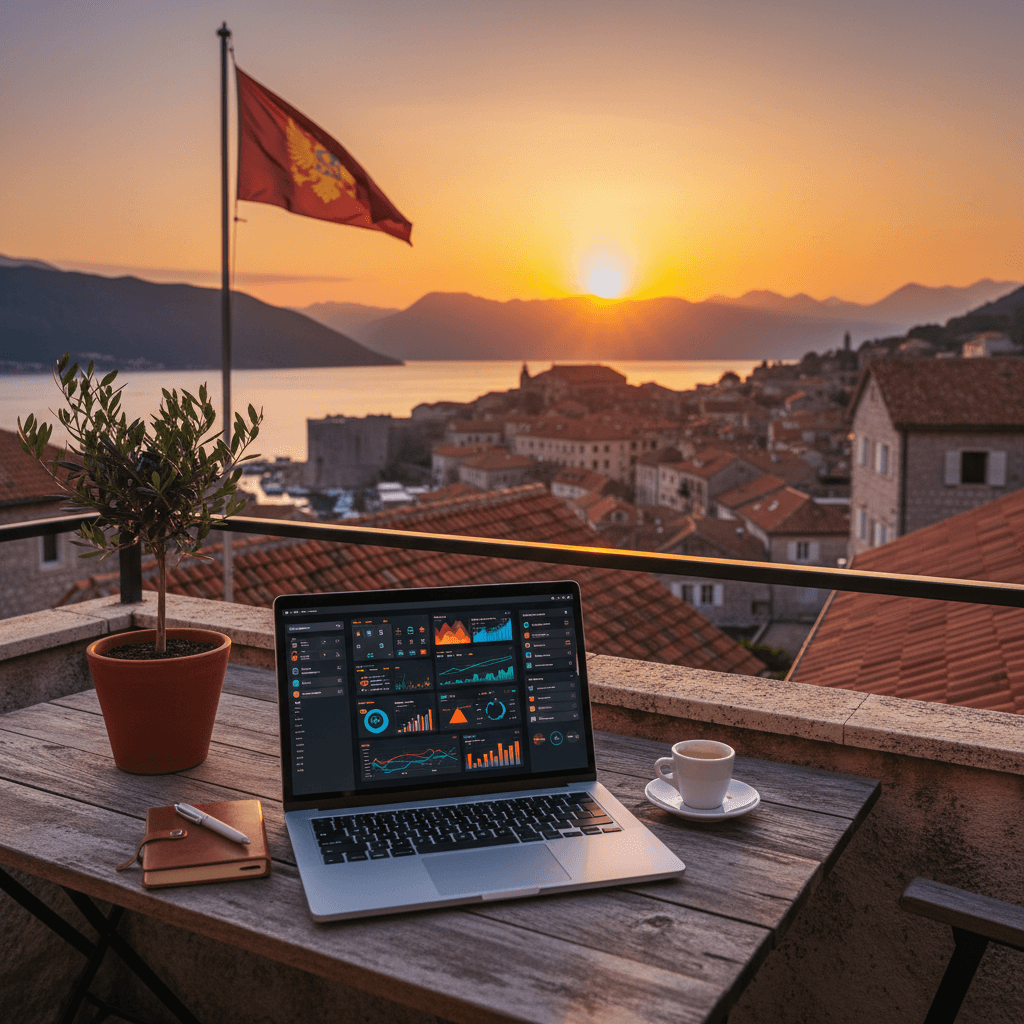
Montenegro has transitioned from a hidden Balkan gem to a top-tier destination for remote workers, largely thanks to its official Digital Nomad Visa program. This isn't just a marketing buzzword; it is a formalized residency track established by the Law on Foreigners. The program is designed to attract professionals who work for foreign companies or own businesses registered outside Montenegro, allowing you to trade your home office for a view of the Bay of Kotor or the rugged peaks of Durmitor.
The process generally involves two stages. If your nationality requires a visa to enter the country, you will start with a long-stay D visa, which covers you for up to 180 days. However, the real prize is the temporary residence permit (TRP). This permit grants you the right to live in Montenegro for up to 2 years. You can renew it once for an additional 2 years, giving you a total of four years in the country. Just keep in mind that after that four-year stint, you have to take a 6-month break outside the country before applying again.
Income and Eligibility
To qualify, you need to prove you have the financial means to support yourself without dipping into the local labor market. The government sets the bar based on the national minimum wage. Currently, you need to show a monthly income that is at least three times the minimum wage, which works out to approximately €1,350 per month.
- Proof of Earnings: You will need to provide bank statements, payslips, or employment contracts from the last 12 months.
- Foreign Employment: You must prove you work for a company registered outside Montenegro or own a foreign business. Local employment is strictly prohibited under this permit.
- Clean Record: You need an official criminal record certificate from your home country showing no prison sentences longer than 6 months.
The Application Workflow
The application happens on the ground in Montenegro. While you can handle the initial D visa at an embassy if necessary, the residency permit is processed at the Ministry of Internal Affairs (MUP) in the municipality where you choose to live. You should start this process well before your initial tourist stay expires.
First, register your arrival within 24 hours at a local tourist booth or police station to get your "white card." Once you are settled, head to the MUP with your documentation. You will need a valid passport, proof of health insurance for at least 30 days, and a lease agreement or proof of property ownership to show where you are living. They will also take your biometric data during the appointment.
The MUP usually takes about 40 days to process the application. Once approved, you have to pick up your residency card in person. If you have a spouse or children, they can apply for family reunification once your own permit is secured.
Taxes and Fine Print
Montenegro is known for its competitive tax environment, but the specifics for nomads can be nuanced. If you spend less than 183 days in the country, you are generally considered a non-resident for tax purposes. However, obtaining a residence permit might change your status. Personal income tax rates typically range between 9% and 15%. It is a good idea to talk to a local tax consultant to see how your specific income source fits into the local system.
Remember that this program is active through 2025 as part of a broader government initiative to build a nomad ecosystem. With hundreds of permits already issued, the local MUP offices are becoming more familiar with the paperwork, making the process smoother than it was in the early days of the program.
Montenegro is surprisingly accessible for most travelers, particularly those coming from the West. For the majority of digital nomads, the entry process is as simple as showing up at the border with a valid passport. However, the specific rules depend heavily on your citizenship and how long you plan to stay within the country's borders.
Visa-Free Entry and the 90-Day Rule
If you hold a passport from the US, UK, Canada, Australia, or any EU nation, you can enter Montenegro visa-free for up to 90 days within a 180-day period. This same privilege extends to citizens of many other nations, including New Zealand, Japan, Brazil, and Israel. Your passport must be valid for at least three months beyond your planned date of departure.
There are a few specific variations to keep in mind:
- Citizens of Turkey, Russia, and Belarus are generally limited to 30 days.
- EU, Serbian, and Bosnian citizens can enter using only a valid national ID card for a stay of up to 30 days.
- If you hold a valid Schengen, US, UK, or Canadian visa (or residence permit), you can enter Montenegro for up to 30 days regardless of your original nationality.
The Short-Stay (C) Visa and E-Visas
If your country isn't on the visa-free list, you will need to apply for a Short-Stay (C) Visa. Montenegro has been rolling out an eVisa system to streamline this, allowing you to submit your application online through the official government portal. You should start this process at least 15 days before your trip, though it can take up to 30 days to process during busy periods.
To secure a tourist visa, you will need to provide:
- A passport-sized photo (35x45mm).
- Proof of funds, typically showing at least €50 per day of your stay.
- Evidence of health insurance and a return flight ticket.
- A confirmed accommodation booking or an invitation letter.
Visa on Arrival
While Montenegro does offer a visa on arrival at major airports and sea ports, it is not a "catch-all" for everyone. This is generally reserved for specific nationalities or emergency situations where a prior application wasn't possible. It is always safer to verify your eligibility with a consulate before flying, as most travelers will be expected to have their paperwork sorted in advance.
Managing the 90/180 Rule and Border Runs
The "border run" is a common tactic for nomads in the Balkans, but you have to play it smart in Montenegro. The 90/180 rule is strictly enforced. This means that once you have spent 90 days in the country, you must leave and cannot return until another 90 days have passed. Simply crossing the border into Albania or Croatia for a coffee and coming back the same day will not reset your clock if you have already hit your 90-day limit.
Authorities have become more diligent about tracking entry and exit stamps. If you overstay, you risk heavy fines, potential deportation, or a multi-year ban from re-entering the country. There are no "automatic" extensions for tourists; if you want to stay longer, you must look into a Long-Stay (D) Visa or apply for temporary residency through the Ministry of Interior.
Registration Requirements
One quirk of Montenegrin law is the requirement to register with the local police or tourist office within 24 hours of arrival. If you are staying in a hotel or a registered Airbnb, the host usually handles this for you. If you are staying in a private home or a less formal rental, you must go to the local "Turistička Organizacija" yourself, pay a small daily tourist tax (usually around €1 per day), and get your registration confirmed. Keep your registration receipts, as border guards occasionally ask for them upon exit.
The Basics of Staying Long-Term
Montenegro doesn't have a specific "retirement" or "freelancer" visa category in the traditional sense. Instead, the country uses a system of temporary residence permits, known locally as Boravak. These permits are typically valid for one year and can be renewed annually as long as you still meet the initial requirements. If you manage to stay for five continuous years, you can level up to permanent residency.
The application process happens on the ground. You have to visit the Ministry of the Interior, or MUP, in the municipality where you plan to live. You will need to provide proof of funds, a clean criminal record from your home country, health insurance, and a registered place to stay. Expect a waiting period of up to 40 days for the government to process your paperwork and issue your ID card.
The Digital Nomad Permit
For remote workers, the Digital Nomad program is the most straightforward path. This permit allows you to stay for two years and can be renewed once for an additional two years, giving you a total of four years in the country. To qualify, you must work for a company or clients based outside of Montenegro and show a monthly income of at least €1,600, which is roughly three times the local average wage.
- Duration: 2 years, renewable once.
- Income Requirement: Minimum €1,600 per month.
- Restrictions: You cannot work for Montenegrin employers.
- Costs: Around €150 for application and renewal fees.
Residency Through Property or Business
If you aren't a remote worker, the two most common routes are buying real estate or starting a local company. Currently, owning a house or apartment of any value can qualify you for a one-year renewable permit. However, keep an eye on shifting regulations, as some new rules suggest a minimum value of €150,000 for certain property-based applications in the near future.
The "Company Route" involves registering a Montenegrin business and appointing yourself as the director. This is a popular choice for entrepreneurs or those with passive income. You will need to maintain a bank balance of at least €3,650, pay yourself a minimum salary, and handle monthly social security contributions and accounting fees. While there are no massive upfront investment fees, the ongoing monthly "maintenance" of the company usually costs between €150 and €250.
Permanent Residency and the Five-Year Rule
If you fall in love with the Adriatic coast or the northern mountains and decide to stay for the long haul, you can apply for permanent residency after five years. The "continuous" part is vital here. You cannot be outside of Montenegro for more than six months in a single stretch, or more than 10 months total over the five-year period.
Once you secure a permanent permit, it is valid for five years and is much easier to renew. You get almost all the same rights as a Montenegrin citizen, except for the right to vote. The decision for permanent residency takes longer than the temporary version, often up to six months, so you should start the paperwork well before your current permit expires.
Estimated Costs for Setup
Beyond the official government fees, you should budget for the "hidden" costs of relocation. Most documents, like your birth certificate or background check, must be translated into Montenegrin by a court-certified translator.
- Government Application Fees: €60 to €150 per year.
- Translations and Notarization: €50 to €150 depending on the volume of paperwork.
- Health Insurance: Local policies for residency usually cost around €30 per month, though private international plans are also accepted.
- Company Formation: €300 to €600 for initial legal and registration fees if using an agency.
The Price of Paradise: Montenegro 2025-2026
Montenegro continues to be one of the most compelling value propositions in Europe for the remote work crowd. While the secret is definitely out, your monthly burn here still stretches significantly further than in neighboring Croatia or Italy. Depending on your lifestyle and location, a single nomad can live comfortably on anything from €910 to €3,130 per month.
The biggest factor in your budget will be the "Coast vs. Capital" divide. Podgorica offers stable, year-round pricing and the lowest rent in the country. Meanwhile, coastal hubs like Budva and Kotor operate on a dual-pricing reality; what you pay in January might triple by July as the Mediterranean yachting crowd moves in.
Where You'll Hang Your Hat
Rent is your primary expense, and the market is segmented by city and season. If you are looking for long-term value, the southern port of Bar or the capital city are your best bets. If you want the postcard view, be prepared to pay a premium for the Bay of Kotor or the luxury marinas of Tivat.
- Podgorica: The most affordable hub. Budget studios start at €350-€450, while premium city-center apartments rarely exceed €600.
- Bar: A great middle ground with coastal access. Expect €350-€450 for budget stays and €700+ for high-end waterfront builds.
- Kotor: The charm of the Old Town comes at a price. Budget options in Dobrota run €450-€650, but premium units easily top €1,000.
- Tivat: Home to Porto Montenegro. Expect to pay €500-€700 on the low end, with luxury rentals hitting €1,200+.
- Budva: The most volatile market. While you can find budget spots for €400 in the off-season, premium summer rentals often spike to €1,500+.
Fueling Your Workday
Groceries at local chains like Voli or Idea are reasonably priced, but the "tourist tax" is real on the coast. In Podgorica or Bar, €200-€300 covers a month of high-quality local produce and meats. In the coastal hotspots, expect that to jump to €250-€350 as imports and convenience items dominate the shelves.
Dining out is where Montenegro shines. You can grab a massive pljeskavica (Balkan burger) for a few euros or sit down for a mid-range meal for €15-€25. If you are living the premium lifestyle with frequent upscale dinners and wine, budget around €400 per month for your social calendar.
Staying Mobile
Most nomads find that these cities are highly walkable, especially in the historic centers. However, if you want to explore the national parks or hop between coastal towns, you have three main options:
- Budget: Local buses are reliable and cheap, costing €1-€2 per ride. A monthly pass is roughly €30-€40.
- Comfortable: A mix of walking and the occasional taxi. Short trips usually cost between €3 and €10.
- Premium: Renting a car gives you ultimate freedom but starts at €300 per month plus fuel. Total monthly transport for car users sits around €150-€250.
Workspace and Health
The coworking scene is maturing rapidly. In Podgorica, NEST is the go-to hub at €150 per month. Budva’s MONTECO is more expensive at €280, reflecting the coastal demand. If you are on a budget, the local cafe culture is welcoming to laptops; just budget about €100-€150 a month for "coffee rent."
Don't forget health insurance, which is a requirement for the digital nomad visa. A solid private policy will cost between €80 and €200 per month. This ensures you can access private clinics where English-speaking doctors are common, avoiding the longer waits often found in the public system.
Montenegro has quickly evolved from a hidden Balkan gem into a legitimate hub for remote work. Whether you want to wake up to the sound of Adriatic waves or prefer the grit and reliability of a capital city, there is a corner of this country that fits your workflow. Here are the five best spots to set up your laptop.
1. Budva: The Social Epicenter
If you thrive on networking and high-energy surroundings, Budva is your base. It boasts the most active nomad community in the country, centered largely around MONTECO coworking. Between beach volleyball games and organized meetups, you will never struggle to find a lunch partner here.
- The Setup: MONTECO offers a professional environment for €280 a month, featuring high-speed internet and an on-site cafe.
- The Lifestyle: You get a mix of medieval Old Town charm and a modern, neon-lit nightlife. Beaches are within walking distance for a quick swim between meetings.
- The Reality Check: Prices swing wildly. Rent can jump from €500 in the winter to €1,500 in July. Summer brings massive crowds and long waits at every restaurant.
- Monthly Cost: €1,360 to €3,130
2. Podgorica: The Practical Choice
Podgorica lacks the "wow" factor of the coast, but it makes up for it with sheer utility. This is where you go for the fastest internet in the country and the lowest cost of living. It feels like a real city rather than a resort, offering a consistent experience throughout the year.
- The Setup: NEST Coworking is a top-tier space for €150 a month. If you are on a budget, Mtel Digitalna Fabrika offers free workspace.
- The Lifestyle: It is perfectly central. You can reach the coast in an hour or the northern mountains in 90 minutes. The cafe culture is strong, even if the architecture is mostly functional concrete.
- The Reality Check: It gets punishingly hot in the summer, often hitting 40°C. Without the sea breeze, the city can feel quite stagnant in August.
- Monthly Cost: €910 to €1,520
3. Kotor: The Aesthetic Dream
Living in Kotor feels like stepping into a postcard. Surrounded by limestone cliffs and the still waters of Boka Bay, it offers a dramatic backdrop for deep work. It is quieter and more authentic than Budva, attracting those who prefer hiking trails over nightclubs.
- The Setup: Dedicated coworking is scarce. Most nomads here adopt a "cafe-hopping" strategy within the stone walls of the Old Town.
- The Lifestyle: Mornings are best spent hiking the 1,350 steps to the fortress before the cruise ships arrive. The cultural scene is sophisticated, featuring upscale dining and summer art festivals.
- The Reality Check: The Old Town is tiny. You might feel a bit trapped after a couple of months if you do not have a car to explore the surrounding bay.
- Monthly Cost: €1,130 to €2,700
4. Tivat: The Modern Marina
Tivat is the most "westernized" town in Montenegro. Thanks to the Porto Montenegro development, the infrastructure is polished and the services are international. It is clean, organized, and incredibly convenient for frequent flyers.
- The Setup: Shipyard Coworking provides a sleek, professional atmosphere with hot desks starting at €88 a month.
- The Lifestyle: It is high-end living. You will find designer boutiques, specialty grocery stores, and a yacht-filled marina. The airport is literally a five-minute taxi ride from the center.
- The Reality Check: It can feel a bit sterile. If you are looking for "Old World" Balkan soul, you won't find much of it among the luxury condos.
- Monthly Cost: €1,218 to €2,055
5. Bar: The Local Favorite
Bar is often overlooked, which is exactly why it is great. It offers the best balance of coastal access and local prices. Unlike the tourist towns, Bar stays open and active all winter long, making it a solid choice for long-term stays.
- The Setup: Montenegro Tower is the primary hub, offering impressive fiber speeds up to 1 Gbps for €170 a month.
- The Lifestyle: This is a working port city surrounded by ancient olive groves. It is unpretentious, affordable, and just a short hop away from the Albanian border.
- The Reality Check: It is not a "pretty" town in the traditional sense. The industrial areas and older buildings give it a rougher edge compared to the manicured streets of Tivat.
- Monthly Cost: €980 to €1,340
Connectivity and Safety
Across the board, Montenegro is safe. You can walk through any of these cities late at night with zero issues. For your phone, grab a local SIM from providers like Mtel or Crnogorski Telekom. You can usually get 500GB of data for around €15. While coastal Wi-Fi can get strained in the peak of summer, the fixed fiber lines in coworking spaces remain reliable for video calls and heavy uploads.
Reliable Connectivity in the Land of the Black Mountain
Montenegro has made massive strides in its digital infrastructure over the last few years. While you might still find some sleepy mountain villages where the signal struggles, the major coastal hubs and the capital are more than ready for high bandwidth tasks. Fixed broadband speeds across the country average about 98.6 Mbps for downloads, which is plenty for seamless Zoom calls or uploading large video files. If you stick to the urban centers, you are likely to see even higher performance.
Fiber-to-the-home (FTTH) is the gold standard here, currently covering more than 25% of households. You will find the most consistent fiber connections in Podgorica, Budva, Tivat, and Kotor. Providers like Crnogorski Telekom and M:tel are aggressively expanding their networks, particularly in newer apartment blocks. When booking an Airbnb, always ask the host for a Speedtest screenshot to ensure they have a modern fiber setup rather than an older ADSL connection.
Top-Tier Coworking Hubs
The coworking scene in Montenegro is intimate but high quality. Most spaces are concentrated where the nomads are: the Bay of Kotor, the Budva Riviera, and the capital city.
- Kolektiv Novi (Herceg Novi): Located in the charming Old Town, this spot features a great terrace for breaks and dedicated video booths for private calls.
- Impact Coworking (Herceg Novi): A favorite for night owls because of its 24/7 access. It is also pet-friendly, so you can bring your dog along for the workday.
- Monteco / MONTEHUB (Budva): This is the go-to spot in the tourism capital, offering professional conference rooms and shared desks for those who need a traditional office vibe.
- MTEL Digitalna Fabrika (Podgorica): Uniquely, this space often offers free access. It includes a Skype room and a gaming area for when you need to decompress.
- Kotor Nest (Kotor): More than just an office, this is a coliving community with 24/7 access, making it the best choice for those who want to live and work in the same building.
- Innovation Center (Tivat): Situated near the luxury marinas, this space offers both indoor and outdoor desks to make the most of the Adriatic sun.
Budgeting for Your Office Space
The cost of a desk varies significantly depending on the city and the level of luxury you are after. Generally, you can expect to pay between €100 and €280 per month for a hot desk or a dedicated workstation. If you need a private office for a small team, prices typically scale from €170 to €450.
Many spaces offer discounts if you commit to a longer stay. For instance, signing a 12-month agreement at a space like Monteco can bring your monthly overhead down considerably. If you are on a tight budget, the MTEL Digitalna Fabrika in Podgorica remains the best value play in the country.
Mobile Data and Remote Backups
Mobile data in Montenegro is surprisingly cheap and fast. 4G and 5G coverage is excellent in the cities, with mobile speeds averaging between 40 and 50 Mbps. This makes your phone a perfect hotspot backup if your apartment WiFi ever flickers.
- Local SIM Cards: Providers like Mtel and Telekom offer massive data packages. You can often find "tourist" SIMs with 500GB or more for just €10 to €20 per month.
- eSIM Options: If you prefer to be connected the moment you land, providers like Nomad or Yesim offer 10GB for $15 or unlimited monthly data for approximately €44.
The Cafe Culture Reality
Working from cafes is a popular pastime in Montenegro, but it comes with caveats. Most cafes offer free WiFi, but reliability fluctuates wildly. During the peak summer tourist season, networks in Kotor and Budva often become congested and sluggish. While a seaside cafe is perfect for clearing out your inbox, stick to a dedicated coworking space or a fiber-equipped apartment for client presentations or heavy data lifting.
The Healthcare Split: Public vs. Private
Montenegro operates a dual-tier healthcare system. The public side, funded by the Health Insurance Fund, is what most locals use. If you obtain a residency permit through employment or a digital nomad visa, you can access these services for very low costs. However, the public system often feels like a step back in time. You will likely encounter long wait times, aging equipment, and a significant language barrier, as few public sector doctors speak fluent English.
For most nomads, private healthcare is the way to go. It is efficient, modern, and surprisingly affordable compared to North America or Western Europe. Private clinics in hubs like Podgorica, Budva, and Kotor feature multilingual staff and high-end diagnostic tools. You will pay more out-of-pocket, but the convenience of booking a same-day appointment usually outweighs the cost.
Top Facilities and Where to Go
You won't find massive "international" branded hospitals here, but several private institutions cater specifically to the expat community. If you are in the capital, Codra Hospital is the premier choice for surgeries and specialized diagnostics. For those based on the coast, Medical Centar Budva and General Hospital Kotor are reliable options for routine care and emergencies.
- Codra Hospital (Podgorica): High-end private facility with English-speaking specialists.
- Medical Centar Budva: Convenient for those living in the coastal tourism hub.
- Clinical Centre of Montenegro (KCCG): The main public hospital in Podgorica for complex emergencies, though staff rarely speak English.
Health Insurance Requirements
If you are applying for a residency permit or the digital nomad visa, proof of health insurance is mandatory. For short-term stays, standard travel insurance works, but long-termers usually opt for international nomad plans. These plans provide the flexibility to use private clinics without draining your bank account.
- International Plans: Providers like SafetyWing, Cigna, or Allianz typically cost between €100 and €300 per month. These are vital for medical evacuation and private hospital stays.
- Local Private Top-ups: If you have public coverage through residency, you can add a local private policy for €50 to €150 per month to skip the public queues.
Typical Out-of-Pocket Costs
If you choose to pay as you go in private clinics, the prices are manageable. Most facilities accept credit cards, but it is wise to keep some cash on hand for smaller local "apotekas."
- GP or Therapist Visit: €15 to €30
- Specialist Consultation: €25 to €50
- Ultrasound: €40
- Dental Filling: €30
- Dental Crown: €130
- Day Hospitalization: Starts at €30
Pharmacies and Prescriptions
Pharmacies, known locally as apoteka, are everywhere. You can find them on almost every major street corner in Podgorica and Budva. Most common medications are available over the counter, though you will need a valid prescription for antibiotics or controlled substances. Many pharmacists speak basic English and can recommend generics if your specific brand isn't in stock. For late-night needs, cities operate a "dežurna" (on-call) rotation where specific pharmacies stay open 24 hours; these rotations are usually posted on pharmacy doors or local news sites.
Emergency Protocol
In a serious emergency, dial 112. This is the general emergency line and usually has English-speaking operators who can dispatch an ambulance, police, or fire services. If you need an ambulance specifically, the direct number is 124. While ambulances will take you to the nearest public hospital, those with private insurance often coordinate with their provider to move to a private facility as soon as they are stabilized.
The Euro Without the Eurozone
One of the first things you will notice about Montenegro is that they use the Euro (€). It is a bit of a unique situation because the country is not actually part of the Eurozone or the EU, but they adopted the currency as their own years ago. You will find coins in all standard denominations and notes ranging from €5 to €500. Small shops and markets often struggle with large bills, so try to keep €5, €10, and €20 notes handy for your daily coffee and burek runs.
Opening a Local Bank Account
While you can get by with international cards, opening a local account makes sense if you are staying long-term or renting an apartment through a formal contract. Most banks now require you to have a residence permit before they will let you open an account. You will need to bring your valid passport, proof of address like a lease agreement, and proof of your employment or business activity. You will also have to fill out an anti-money laundering form known as a PEL.
The process is usually done in person and can take anywhere from a few minutes to a few days depending on the branch. Popular choices for nomads include:
- Hipotekarna Banka: Known for being relatively tech-forward with decent apps.
- CKB Banka: The largest bank in the country with the most widespread ATM network.
- NLB Banka: A solid regional choice with reliable customer service.
- Erste Banka: Familiar to many Europeans and generally efficient with foreign transfers.
Maintenance fees are usually very low, often around €5 per month or even free for basic accounts.
Digital Banking: Wise and Revolut
If you do not want the hassle of a local bank, you are in luck. Both Wise and Revolut work well across Montenegro. You can use your physical or virtual cards at almost any POS terminal in supermarkets, restaurants, and gas stations. Wise is particularly useful for sending money to local landlords via SEPA or international transfers because their exchange rates are hard to beat.
Revolut is great for tracking daily spending, but keep an eye on the 1% weekend exchange fee. If you are on a standard plan, remember that Revolut limits fee-free ATM withdrawals to £200 or five withdrawals per month. After that, they tack on a 2% fee, which adds up quickly when combined with local ATM surcharges.
ATM Fees and Cash Access
Montenegro is still very much a cash-heavy society, especially once you leave the coastal tourist hubs or shop at local green markets. Most ATMs in the country charge a fee for using a foreign card. You can expect to pay between €3 and €5 per transaction. For example, Erste typically charges €4, while Addiko and Adriatic Bank are often around €3.
To keep costs down, try to withdraw the maximum amount allowed in one go rather than making multiple small trips to the machine. Always choose "Decline Conversion" if the ATM asks so your home bank handles the exchange rate instead of the local machine.
Moving Money Internationally
For moving larger sums, SWIFT transfers through Montenegrin banks are reliable and easy to track. If you need to send cash to someone quickly, MoneyGram and Western Union have booths in most major towns and post offices. However, for the average nomad, Wise remains the gold standard for moving money into the country with the lowest possible overhead.
The Crypto Scene
Montenegro is currently building a framework for digital assets. New regulations require crypto service providers to register with the Capital Market Commission, with a public registry expected to launch around November 2025. While you might find a few crypto ATMs in places like Budva or Tivat, crypto is not legal tender here. The government is focused on transparency and anti-money laundering, so do not expect to pay for your rent or groceries in Bitcoin just yet.
Navigating Family Life in Montenegro
Moving a family across borders is a massive undertaking, but Montenegro’s small size and community-focused culture make it surprisingly manageable. The country is safe, the people are genuinely fond of children, and the coastal lifestyle offers a playground of mountains and Adriatic waters. While it lacks some of the massive infrastructure of Western Europe, it makes up for it with a slower pace of life and a welcoming atmosphere for expats.
Dependent Visa Options
If you have secured your own residency, bringing your family along is a relatively straightforward administrative process. The Temporary Residence Permit for Family Reunification applies to spouses, partners, and children under 18. You will need to show a valid passport with at least 15 months of validity, plus birth and marriage certificates that are less than 6 months old.
The financial side is accessible compared to most of Europe. You generally need to show a bank balance of about €3,650 or a valid job contract to prove you can support your dependents. The permit costs roughly $27 and takes between 6 to 10 weeks to process. Once approved, your children gain full access to the local school system and public healthcare.
International Schools and Education
Education is often the biggest hurdle for nomad parents. If your children don't speak Montenegrin, international schools in the coastal region and the capital are your best bet. These schools offer globally recognized curricula and a ready-made social circle for expat kids.
- Knightsbridge Schools International (KSI) in Tivat: This is a premium IB World School for ages 3 to 18. Tuition starts at €11,860 for nursery and goes up to €21,560 for the IB Diploma years. They also offer boarding for an additional fee of €13,321 to €16,036.
- QSI International School in Podgorica: A great option if you prefer the capital. It follows an American-style curriculum for students from preschool through grade 12.
- Arcadia Academy in Tivat: This school follows the British curriculum with fees starting around €7,000 per year for younger children.
Healthcare for the Little Ones
Public healthcare is available to all residents, and children are covered under the national system. However, the public sector faces a shortage of pediatricians, especially in rural and northern areas. While cities like Podgorica, Tivat, and Kotor have established clinics, you might find wait times frustrating.
Most expats opt for private health insurance for the first year or two. This gives you access to private clinics in the major coastal hubs where English-speaking staff are more common. It is a good safety net while you get used to how the local "Dom Zdravlja" (community health center) operates.
Family-Friendly Cities
Choosing where to plant roots depends on your lifestyle. The coast is generally more popular for families due to the climate and school access.
- Tivat: Perhaps the most convenient for expats. It is home to Porto Montenegro, international schools, and very safe, walkable neighborhoods.
- Kotor: The old town is pedestrian-only, which is great for wandering with kids, and the bay offers calm waters for swimming.
- Budva: This is the heart of the coast. It has the most amenities and beaches, though it gets very crowded and loud during the peak summer months.
- Ulcinj: If you want wide, sandy beaches, this is the spot. Velika Plaža is perfect for younger children because the water stays shallow for a long distance.
Childcare Costs
If your children are too young for school, childcare is quite affordable. Private kindergartens and preschools usually cost between €300 and €350 per month. In Podgorica, you might pay around €351, while Budva averages closer to €423. Public kindergartens are much cheaper, around €40 to €50 monthly, but these are taught in Montenegrin and require you to have your residency permits finalized first.
Safety and Security
Montenegro is consistently ranked as one of the safer countries for families. Violent crime is rare, and the culture is one where children are often seen playing outside until late in the evening. You should still be mindful of petty theft in heavy tourist zones during the summer, but generally, the biggest safety concern is the narrow, winding coastal roads. Stick to the well-lit family areas in Tivat or Kotor, and you will find the environment very secure and relaxed.
Safety Overview
Montenegro is remarkably safe compared to most of Western Europe or North America. Violent crime is rare, and as a nomad, you are more likely to be offered a glass of rakija by a neighbor than to face any real physical threat. The country consistently ranks high on global peace indices, and you will quickly notice a relaxed atmosphere where children play outside long after dark.
The main thing to watch for is petty theft during the high season from May to September. When the cruise ships dock in Kotor or the beach clubs in Budva hit capacity, pickpockets occasionally migrate to the coast. Keep your laptop bag close in crowded cafes and avoid leaving valuables visible in your car. While organized crime exists in the Balkans, it stays within its own circles and almost never touches the expat or nomad community.
Common Scams to Avoid
Most "scams" here are just opportunistic overcharging rather than elaborate stings. Taxis are the biggest culprits; always ensure the meter is running or agree on a price before the wheels move. In Podgorica and the coastal towns, stick to reputable taxi apps or call a radio taxi company via Viber or WhatsApp to get the local rate.
- Rental Fraud: Be careful with "too good to be true" listings on social media. Always see a property in person before sending a deposit, or stick to verified platforms.
- ATM Skimming: Use ATMs attached to actual bank branches rather than standalone machines in high-traffic tourist alleys.
- Fake "Guides": You might encounter people offering unofficial tours that end with an inflated bill at a specific restaurant. Stick to licensed operators.
Cultural Etiquette and Social Norms
Montenegrin culture is built on hospitality, but it comes with a certain stoic reserve. When meeting someone, a firm handshake and direct eye contact are expected. Don't be put off if locals seem "short" or unsmiling at first; they generally value authenticity over performative politeness. Once you break the ice, you will find they are incredibly loyal and generous.
If you are invited to a local's home, never show up empty-handed. A bottle of wine or a box of chocolates is the standard move. You should also be prepared to eat. Refusing food can be seen as a slight, so arrive hungry. One word you need to live by is "polako", which means "slowly." Life moves at a different pace here, and getting frustrated by slow service or bureaucracy won't help. Embrace the slower rhythm.
LGBTQ+ and Social Climate
The legal framework in Montenegro is surprisingly progressive for the region. Same-sex activity has been legal since 1970, and civil partnerships were officially recognized in 2020. Despite these laws, the country remains socially conservative, particularly in the mountainous northern regions.
In coastal hubs like Tivat and Kotor, or the capital of Podgorica, things are more relaxed. You will find gay-friendly venues and a more "live and let live" attitude. However, public displays of affection are still rare and might draw unwanted stares or comments. Most nomads find that exercising a bit of discretion ensures a hassle-free experience.
Language and Communication
The official language is Montenegrin, which is mutually intelligible with Serbian, Croatian, and Bosnian. In the tourist centers and among the younger generation, English is widely spoken and you won't have much trouble getting by. However, learning a few phrases will completely change how locals treat you.
- Hvala: Thank you
- Molim: Please
- Dobar dan: Good day
- Živjeli: Cheers!
The Expat and Nomad Scene
The nomad community has exploded since the government introduced specific visa programs in 2021. You won't feel isolated here. Most of the action is concentrated in a few key hubs, each with its own vibe:
Top Nomad Hubs
- Tivat: High-end, polished, and very international thanks to Porto Montenegro.
- Kotor: Stunning scenery with a tight-knit community, though it gets crowded in summer.
- Budva: The center of nightlife and co-working, with the most active Facebook and Telegram groups.
- Podgorica: The best spot for those who want a "real" city feel and lower prices away from the coast.
To integrate, look for meetups at spots like AdriaHub or Impact Hub. There are also very active WhatsApp groups for hiking, padel, and weekend trips. Joining these is the fastest way to turn a solo trip into a social experience. Locals appreciate it when you show interest in their history and mountains, so don't spend all your time in the expat bubble.
The 183-Day Threshold
Montenegro uses a standard calendar year for its tax cycle, running from January 1 to December 31. You become a tax resident if you spend 183 days or more in the country during that period. This count includes partial days and transit time, so it is smart to keep a detailed log of your entry and exit stamps.
Even if you stay fewer than 183 days, the tax authorities might consider you a resident if your "center of vital interests" is in Montenegro. This usually refers to having a permanent home, a spouse and children living locally, or your primary economic ties being based in a Montenegrin city. If you are moving between countries frequently, check if your home nation has a Double Taxation Treaty (DTT) with Montenegro. These treaties use tie-breaker rules to ensure you aren't taxed twice on the same Euro.
The Digital Nomad Visa Tax Perk
The most attractive part of the Montenegrin digital nomad visa is the specific tax exemption. If you hold this permit, you are generally exempt from paying income tax and social security contributions on the money you earn from a foreign employer. This holds true even if you stay long enough to become a tax resident.
To keep this status, you must strictly work for companies or clients located outside of Montenegro. If you start taking on local clients or open a Montenegrin business, you lose this specialized exemption and fall into the standard tax brackets. The visa requires a minimum monthly income of €1,350, though some administrative paths may look for closer to €3,000 depending on the specific residency track you choose.
Standard Income Tax Brackets
If you don't qualify for the nomad exemption, or if you decide to set up a local freelancing business, you will deal with a progressive tax system. The rates are relatively low compared to Western Europe.
- 0% on the first €8,400 of annual income.
- 9% on income between €8,401 and €12,000.
- 15% on any amount exceeding €12,000.
- 15% flat rate for investment income, dividends, and rental earnings.
Keep in mind that local municipalities often add a small surtax on top of these amounts. If your annual turnover exceeds €30,000, you are required to register for VAT.
Crypto and Digital Assets
Montenegro is still developing specific legislation for the crypto space. Currently, profits from trading or staking are treated as capital gains or personal income. You are expected to declare these gains annually, converting the value to Euro based on the exchange rate on the day the transaction occurred. The tax rate for these gains is 15% on the profit made above your initial acquisition cost.
Reporting and Deadlines
Tax residents must file an annual return through the Tax Administration’s electronic portal. The deadline is April 30 for the previous year's income. Even if you are on the nomad visa and owe 0%, you should still maintain records of your foreign employment contracts and bank statements to prove your income source if asked.
- Tax Year: January 1 to December 31.
- Filing Deadline: April 30.
- Primary Tax Trigger: 183 days.
- Nomad Exemption: Applies to foreign-sourced employment income only.
Staying compliant is mostly a matter of tracking your dates and keeping your foreign and local income streams separate. If you plan to stay for the full two-year permit duration, consulting a local accountant during your first month is a good move to set up your reporting portal correctly.
Connectivity & SIM Cards
Staying connected is surprisingly cheap here. You can pick up a prepaid tourist SIM from Crnogorski Telekom or One Montenegro at the airport or any street kiosk. These plans are a steal, often starting around €15 for a massive 500GB of data valid for 15 days. If your phone supports it, grab an eSIM from Mtel or Airalo before you land to skip the kiosk lines.
The signal is reliable enough to use your phone as a hotspot, even in more remote spots. Just remember to bring your passport when buying in-store, as local regulations require registration for every SIM card issued.
Getting Around
Public buses handle long-haul trips between towns well enough, but for daily movement, you will want MonteGO on your phone. It is the most reliable ride-sharing app for taxis and airport transfers in Podgorica, Kotor, and Budva. It gives you upfront pricing and real-time tracking, which saves you from the "tourist tax" sometimes found with street hails.
- MonteGO: Best for city rides and airport transfers with multilingual support.
- AdriGo: A solid backup for specific coastal regions.
- Local Buses: Best for traveling between major hubs like Budva and Herceg Novi.
Where to Set Up Your Base
The "best" spot depends entirely on the season. Kotor and Dobrota offer stunning bay views and a growing community of remote workers, though they get incredibly crowded and expensive during the peak summer months. If you prefer a more "real life" vibe with better infrastructure and lower prices, Podgorica is your best bet year-round.
Beach lovers usually head to Budva. It has a high energy and plenty of coworking spaces like MONTECO. Wherever you choose, always prioritize spots with verified WiFi over a "rustic" mountain cabin if you have deadlines to meet. Rural infrastructure can still be spotty.
Finding a Place to Stay
Airbnb and Booking.com are fine for short stays, but for a month or longer, look at local platforms like Ugosti.me. They often have lower service fees, usually around 8%, and list legally registered apartments. Agencies like ReMax Capital can also help find nomad-friendly rentals with proper contracts.
Many nomads find their best deals through local Facebook groups. It allows you to talk directly to owners, though you should always see the place and test the internet speed before handing over any cash.
Food & Grocery Delivery
When you are deep in a flow state and cannot be bothered to cook, Glovo is the dominant player here. They deliver everything from Mediterranean grilled meats to basic groceries. Eat Mo is another local favorite that works well in the main cities. Just keep in mind that delivery options get very thin once you move away from the urban centers, so stock up on essentials if you are staying in the hills.
Bridging the Language Gap
Montenegrin is very similar to Serbian, so apps like Drops, Ling, or Mango are perfect for learning the basics. While younger people in tourist hubs speak excellent English, a few phrases go a long way at the local green market. Using HelloTalk to connect with locals for a coffee and language exchange is a great way to integrate into the community quickly.
Safety & Emergencies
Montenegro is generally very safe, but it is good to have the right numbers saved. Dial 112 for any general emergency; the operators usually speak English and can route you to the police, fire department, or an ambulance. For direct lines, use these:
- 122: Police
- 123: Fire Department
- 124: Ambulance
Avoiding Common Pitfalls
The biggest mistake nomads make is assuming Montenegro is a tropical paradise all year. Winter can be surprisingly harsh and rainy, especially on the coast where many buildings lack proper insulation or heating. If you visit between November and March, ensure your apartment has a dedicated heating system, not just a small AC unit.
Always carry some Euro cash. While cards are accepted in supermarkets and malls, smaller cafes and local markets are strictly cash-only. Finally, join the local expat and nomad Facebook groups a few weeks before you arrive. It is the fastest way to find out about local meetups and avoid "ghost" rentals that do not actually exist.
More Guides from Europe
Stay Updated on Montenegro
Get notified about visa changes, policy updates, and new information for digital nomads in Montenegro.