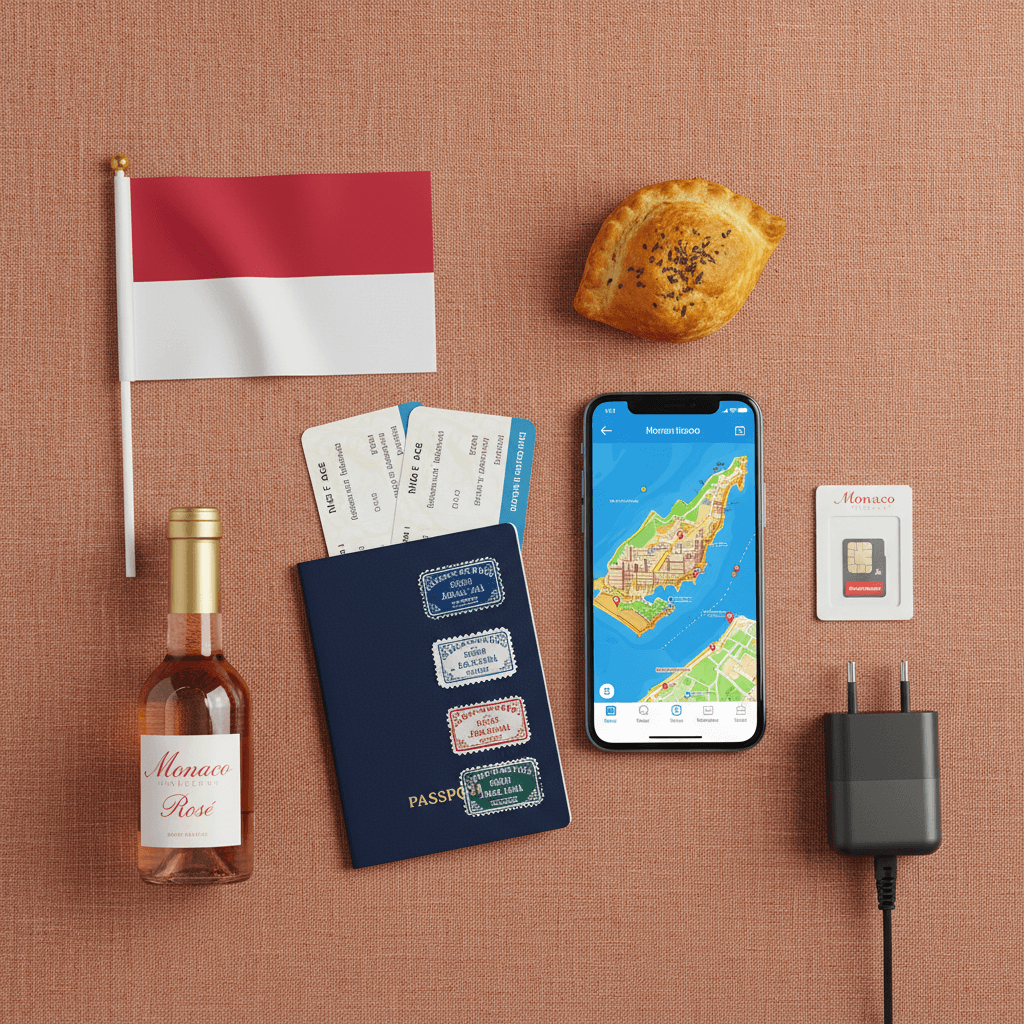
Monaco

Policy Stability
Stamped Nomad ExclusiveHow likely visa and immigration policies are to remain unchanged
Quick Facts
N/A
3 months
No
$8,400/mo
222 Mbps
10/10
High
Medium
High
CET, CEST
Entry Methods Available
Best For
The Schengen Gateway
Monaco is a sovereign principality, but when it comes to crossing the border, it operates in lockstep with France. There is no such thing as a "Monaco Visa" for short trips. Instead, the country is part of the Schengen Area. If you have permission to be in Nice or Paris, you have permission to be in Monte Carlo.
For most digital nomads, this means you can treat Monaco as a 90-day playground within any 180-day period. You will not find a border post or a passport stamper when you drive in from France or hop off the train at Gare de Monaco. Your entry is managed by the first Schengen country you land in.
Short-Stay Rules for Nomads
If you hold a passport from the USA, Canada, Australia, Japan, or the UK, you do not need to apply for anything before you fly. You can simply show up and start your 90-day clock. For those who do require a visa to enter Europe, you will need to apply for a Schengen Type C visa through a French consulate. This usually costs around €80.
Business travelers and remote workers should remember that these short-stay rules cover general meetings and scouting trips. However, there is no specific "Digital Nomad Visa" for Monaco. You are essentially visiting as a tourist who happens to have a laptop.
- EEA and Swiss Citizens: You have the easiest path. A valid national ID or passport is all you need for entry.
- Visa-Exempt Nationalities: Over 60 countries can enter for 90 days without prior paperwork.
- ETIAS Requirements: Starting in 2025, visa-exempt travelers will need to apply for an ETIAS pre-authorization before arrival.
Settling In: Long-Term Residency
If you want to make the move permanent and stay longer than three months, the process gets significantly more formal. You cannot simply "extend" a tourist stay. You must first apply for a French Long-Stay Type D Visa specifically for the purpose of settling in Monaco. This is the mandatory first step for anyone who isn't an EEA or Swiss national.
Once you arrive in the Principality with your Type D visa, you have eight days to apply for your Carte de Séjour (residency permit). The initial application fee is €80. This permit is your golden ticket, but the requirements are steep compared to other nomad hubs.
To secure residency, you generally need to prove three things:
- Accommodation: A lease agreement or property deed in Monaco.
- Financial Means: Proof of significant savings. While the exact number can vary, many banks require a deposit of €500,000 to issue the necessary reference letter.
- Clean Record: An official criminal background check from your previous country of residence.
Permit Tiers and Renewals
Monaco uses a tiered system for its residents. You start with the Temporary permit, which is valid for one year. You will need to renew this annually for the first three years. After that, you can graduate to the Ordinary permit, which is valid for three years.
Eventually, long-term residents can apply for the Privileged permit. This is valid for 10 years and offers the most stability, but you usually need to have lived in the Principality for a decade before you can claim it.
Digital Tracking and Border Changes
The days of manual passport stamps are fading. The EU Entry/Exit System (EES) is now active, using biometric data to track exactly how many days you have spent inside the Schengen zone. This makes it impossible to "overstay" without the system flagging you immediately. If you are planning to bounce between Monaco and neighboring Italy or France, keep a close eye on your 90-day limit to avoid fines or future entry bans.
Source 1 | Source 2
The Reality of Remote Work in the Principality
If you are searching for a specific "Digital Nomad Visa" for Monaco, you can stop scrolling. It doesn't exist. Monaco doesn't have a flashy, streamlined remote work scheme like Portugal or Barbados. Instead, digital nomads who want to call the Monte Carlo skyline home have to go through the traditional residency route. It is a more formal process, but for those with the right financial backing, it offers a lifestyle that is practically unmatched in terms of safety and tax efficiency.
Most nomads start this journey by obtaining a Type D long-stay visa from a French consulate. Because of the tight-knit bilateral agreements between France and Monaco, this visa serves as your entry ticket. Once you arrive, you have three months to apply for the Temporary Residence Permit, known locally as the Carte de Résident Temporaire. This is your official status as a resident, allowing you to live in the Principality while you manage your global business or remote career.
Financial Requirements and the Bank Letter
Monaco is famously selective. While the government doesn't publish a rigid "minimum salary" like other countries, they expect you to prove you have sufficient financial resources to live without ever needing a local job. You can demonstrate this through a high remote salary, professional income from abroad, or significant savings.
In practice, most applicants choose the "savings" route. This typically involves depositing a substantial sum into a Monegasque bank account; €500,000 is the common benchmark used by banks to issue the required bank reference letter. This letter is the backbone of your application. It proves to the authorities that you are self-sufficient and won't become a financial burden on the state.
The Application Process
The roadmap to residency depends on your passport. If you are an EEA national, you can skip the French visa and apply for the permit directly. For everyone else, the steps are specific:
- The French Visa: Apply for a Type D visa at the French consulate nearest to your current home. You will need to provide proof of accommodation in Monaco, a clean criminal record, and evidence of your finances.
- The Residency Interview: Once in Monaco, you will submit your application to the Residency Section at 9 rue Suffren-Reymond. This includes a formal interview where you present your documents, including your lease or property deed and that all-important bank letter.
- The Fees: The initial permit costs €80. It is valid for one year and must be renewed annually for the first three years.
After you have lived in Monaco for three years on the temporary permit, you can upgrade to the Ordinary Resident permit, which is valid for three years. After a decade, you become eligible for the Privileged Resident permit, which lasts for ten years.
Taxation and Lifestyle Restrictions
The primary draw for digital nomads is the tax code. Monaco famously charges zero personal income tax for its residents. This applies to your remote income, capital gains, and even wealth. There is one major exception: French nationals living in Monaco are still subject to French income tax due to a long-standing treaty. For everyone else, what you earn is what you keep.
However, there are strings attached. You are strictly prohibited from local employment. The Monegasque job market is heavily protected by a quota system, so your income must come from outside the borders. You also need to maintain a physical presence in the country to keep your permit active. If you spend most of your year traveling and your Monaco apartment sits empty, the government may decline your renewal.
Key Requirements at a Glance
- Accommodation: You must provide a registered lease or a deed of ownership for a property in Monaco that is large enough for everyone living there.
- Clean Record: You need a criminal record check from every country you have lived in during the last five years. These must be less than three months old when you apply.
- Age: All applicants must be at least 16 years old to hold their own residency card.
- Processing Time: Expect the process to take anywhere from a few weeks to several months depending on the complexity of your background and the current backlog.
Source 1 | Source 2
The Schengen Connection
Monaco is a sovereign city-state, but when it comes to your passport, it functions as an extension of France. Because of a long-standing customs union, there are no border controls between the two. This means Monaco follows the Schengen Area rules to the letter. If you are planning a stint here, your entry requirements depend entirely on your nationality and how long you intend to stay among the superyachts.
For most nomads from "visa-exempt" countries like the United States, United Kingdom, Canada, Australia, and New Zealand, the process is seamless. You can roll into Monte Carlo with just a valid passport and stay for up to 90 days within any 180-day period. Just make sure your passport is valid for at least three months beyond your planned departure date.
Applying for a Schengen Visa
If you aren't from a visa-free country, you will need to secure a Schengen Short-Stay Visa (Type C) before you arrive. Since Monaco doesn't have its own visa processing centers, you will handle everything through a French consulate or a VFS Global center in your home country. There is no such thing as a visa on arrival here; if you show up without the right paperwork, you won't get past the airport in Nice or the train station.
The application process is handled through the France-Visas portal. You will need to submit a few standard items:
- A completed application form and recent photos.
- Proof of accommodation in Monaco or neighboring France.
- Evidence of sufficient funds for your stay.
- Travel insurance covering at least €30,000 in medical expenses.
- A return or onward flight itinerary.
The standard processing time is about 15 days, though it can take longer during the busy summer months or the Grand Prix season. It is best to apply at least a month before your trip.
Costs and Fees
Budgeting for your entry is the cheapest part of a Monaco trip. The fees are standardized across the Schengen zone:
- Adults: €90
- Children (6-12): €45
- Children (under 6): Free
Keep in mind these fees are non-refundable, even if your application is denied. If you use a third-party service like VFS, expect to pay an additional service fee on top of the government cost.
The 90/180 Rule and Border Runs
The "border run" strategy doesn't work the same way in Europe as it does in Southeast Asia. The 90/180-day rule is a rolling window. To stay legal, you cannot spend more than 90 days in the entire Schengen Area (which includes France, Italy, Spain, and 26 other countries) during any 180-day block.
Leaving Monaco to go to Italy for the weekend doesn't reset your clock. If you try to hop out of the zone and immediately back in, border officials will likely flag you. Using an online Schengen calculator is a smart way to track your remaining days and avoid accidental overstays.
Staying Longer Than Three Months
If 90 days isn't enough to soak up the Mediterranean sun, you'll need to pivot from a tourist mindset to a residency mindset. Tourist extensions are incredibly rare and usually only granted for medical emergencies or "force majeure" events.
For a long-term stay, you must apply for a Long-Stay Visa (Type D) through the French consulate first. Once you have that, you can apply for a Monaco residence permit. The first permit carries a fee of €80. This is a much more involved process that requires proving you have a place to live and significant financial assets.
Penalties for Overstaying
French authorities handle immigration enforcement for Monaco, and they have become increasingly strict. Overstaying your visa can result in fines ranging from €150 to over €3,000. Beyond the financial hit, you risk being deported and slapped with an entry ban that could keep you out of all 29 Schengen countries for one to five years. It will also make getting any future visas significantly harder, so it is best to play by the rules.
Source
The Monaco Residency Reality
Forget the flashy marketing for "Golden Visas" or specialized digital nomad schemes you might see elsewhere in Europe. Monaco keeps things surprisingly simple, albeit high-stakes. There is exactly one path for foreigners looking to stay longer than three months: the Carte de Séjour. Whether you are a retiree, a high-frequency trader, or a tech founder, you apply for this same residence permit. The difference lies entirely in how you prove you can afford the Mediterranean lifestyle.
For non-EEA nationals, the process actually begins outside of Monaco. You first need to secure a French Long-Stay (Type D) visa from the French consulate in your current country of residence. Once you have that in hand, or if you already hold an EU/EEA passport, you can begin the formal application with the Residency Section of the Monaco Police Department.
The Three Pillars of Approval
To call the Principality home, you have to satisfy three specific requirements. First is accommodation. You cannot just "float" in Monaco; you must prove you have a place to live for at least 12 months. This means providing a registered lease, a property deed if you’ve purchased a home, or a certificate of free accommodation if you are living with a spouse or partner.
Second is the financial threshold. While there is no official "minimum" set by the government, most Monaco banks require a deposit of at least €500,000 to issue the necessary bank attestation. This letter proves you have sufficient resources to live without becoming a burden on the state. If you are working, you will need to show a salary or business income; if you are retired, your pension or savings must do the heavy lifting.
Finally, there is the "good character" check. You will need to provide criminal record extracts from every country where you have lived during the past five years. These documents must be less than three months old at the time of your application. If your records are clean and your bank account is full, the rest is mostly paperwork and a formal interview.
Pathways for Nomads and Freelancers
If you plan to run a business or work as a freelancer while based in Monte Carlo, be aware that you cannot simply show up and start billing clients. You must obtain official authorization to work or register a business. This involves an application to the Business Development Agency or the Employment Office. Because of strict quotas and space limitations, many nomads choose to apply under the "self-sufficiency" category first, proving they have the funds to live there without local employment while they get their business permits sorted.
For those looking at the long game, the residency ladder has three rungs:
- The Temporary Card: Valid for 1 year, costing €80 for the initial issuance.
- The Ordinary Card: Available after three years of residency, valid for 3 years at a renewal cost of €50.
- The Privileged Card: The holy grail of residency, valid for 10 years. You can apply for this after living in Monaco for 10 continuous years. The issuance fee is €160.
The Cost of Entry
While the administrative fees for the permits are remarkably low, the "real" costs are found in the prerequisites. You should budget for the following:
- Initial Residency Card: €80
- Typical Bank Deposit: €500,000 minimum (refundable if you leave)
- Annual Rent: Expect to pay €50,000 or more for a modest studio, as market rates are among the highest globally.
- Document Costs: Budget several hundred dollars for apostilled birth certificates and criminal checks, which must be issued within 90 days of your interview.
The timeline from submission to holding your card usually takes between 3 and 6 months. You will attend an interview about 5 to 7 weeks after applying, followed by a due diligence period of roughly 8 to 10 weeks. It is a slow, methodical process, but it grants you access to one of the most secure and tax-efficient jurisdictions in the world.
Let’s be honest: nobody moves to the Principality to save money on rent. Monaco is the ultimate "flex" for high-earning digital nomads, offering a lifestyle that is as exclusive as it is expensive. For those used to the budget-friendly cafes of Chiang Mai or the mid-range lofts of Lisbon, the price tags here will be a massive culture shock. You aren't just paying for a roof over your head; you’re paying for zero income tax, world-class safety, and a networking pool that consists of the global elite.
For the 2025-2026 window, a single person should expect to spend anywhere from €5,000 to over €15,000 per month. While you can technically find "budget" options, that term is used very loosely here. Most of your capital will vanish into housing, as Monaco remains the most expensive real estate market on the planet.
The Monthly Breakdown by Tier
The Budget Tier: ~€5,000 per month
This is "roughing it" by Monegasque standards. You’ll likely be in a small studio in La Condamine or Fontvieille. You’re shopping at the local Carrefour, using the excellent public bus system, and keeping your dining out to a minimum.
- 1BR/Studio Rent: €3,000–€4,500
- Food: €400–€600
- Transport: €20–€50 (Public pass)
- Coworking: €250–€500 (Hot desk)
- Health Insurance: €50–€100
The Comfortable Tier: ~€8,000 per month
This is where most successful remote founders land. You can afford a nicer apartment in Monte-Carlo or near the beaches in Larvotto. You’ll eat out at decent bistros a few times a week and perhaps opt for a dedicated desk at a premium coworking space.
- 1BR Rent: €5,000–€7,000
- Food: €800–€1,000
- Transport: €100–€300 (Mix of bus and taxis)
- Coworking: €800–€1,200 (Dedicated desk)
- Health Insurance: €150–€250
The Premium Tier: €15,000+ per month
If you want the full Monaco experience, the sky is the limit. This includes high-floor apartments with Mediterranean views, private office suites, and valet service for your vehicle.
- Luxury 1BR: €10,000+
- Food & Fine Dining: €1,500+
- Transport: €500+ (Private car or frequent chauffeur)
- Coworking: €1,500+ (Private office)
- Health Insurance: €300+ (Full comprehensive)
How Monaco Measures Up
Comparing Monaco to traditional nomad hubs is almost comical. You could live like a king in Southeast Asia or South America for what you’ll pay for a parking spot in Monte-Carlo. Here is how the monthly "Comfortable" lifestyle compares across the globe:
Monaco
- Total Monthly: €8,000
- 1BR Rent: €5,000–€7,000
- The Vibe: Ultra-luxury, high-stakes networking, and extreme security.
Lisbon, Portugal
- Total Monthly: €2,000–€2,500
- 1BR Rent: €1,000–€1,400
- The Vibe: Historic charm, massive nomad community, and great surfing nearby.
Bangkok, Thailand
- Total Monthly: €1,500–€2,200
- 1BR Rent: €800–€1,200
- The Vibe: Incredible street food, modern skyscrapers, and lightning-fast internet.
Bali (Canggu), Indonesia
- Total Monthly: €1,500–€2,000
- 1BR Rent: €400–€800
- The Vibe: Tropical paradise, villa living, and a heavy focus on wellness.
Medellín, Colombia
- Total Monthly: €1,200–€1,800
- 1BR Rent: €400–€700
- The Vibe: Perfect weather year-round and a very low cost of living for high-quality amenities.
The takeaway is simple: Monaco is a strategic choice, not a lifestyle whim. If your business benefits from being in the room with billionaires and you want to legally minimize your tax burden, the €8,000+ monthly burn is an investment. If you just want a nice place to work by the sea, there are far cheaper ways to do it.
Where to Base Your Business in the Principality
Monaco might be the second smallest country in the world, but it packs a massive punch for remote workers who prioritize security, speed, and a high-end lifestyle. While it is technically a single city-state, the different districts offer distinct atmospheres. Whether you want the glitz of the casino district or the relative quiet of a modern commercial hub, you will find 100% fiber coverage across the entire territory, with average download speeds ranging from 177 to 267 Mbps.
The elephant in the room is the cost. Living here requires a significant bankroll, with monthly expenses for a single person averaging around $7,728. However, for high earners, the lack of personal income tax often balances the scales. Here are the three best districts to set up your mobile office.
Monte Carlo
This is the Monaco you see in the movies. It is the center of the action, defined by the iconic Casino de Monte-Carlo and luxury high-rises. It feels like a high-stakes finance and tech hub, attracting a crowd that works as hard as it plays. If you want to be in the middle of the networking scene, this is your spot.
- Coworking and Connectivity: You will find top-tier spaces like MonacoTech and The Office. Public Wi-Fi is reliable, and cafes like Café de Paris offer a surprisingly quiet environment for morning emails with 130+ Mbps speeds.
- The Lifestyle: The nightlife is legendary. You can transition from a day of deep work to an evening at Sass Café or Jimmy’z. It is also the best place for cultural events like the Grand Prix.
- The Trade-off: It is the most expensive district in the world's most expensive country. Rents can hit €190 per square meter, and the tourist crowds can be overwhelming during the summer months.
La Condamine
If Monte Carlo feels like a movie set, La Condamine feels like a neighborhood. Located around Port Hercule, it has a more authentic, local energy. It is the best choice for nomads who want a bit of a "village" feel while still being steps away from superyachts and high-speed infrastructure.
- Coworking and Connectivity: This area is home to Regus and Spaces, providing flexible desks and meeting rooms. The local cafes around the Condamine Market, like A Roca and Starbucks, are favorite hangouts for digital nomads.
- The Lifestyle: The market is the heart of the district, offering fresh food and a place to socialize. It is also the most practical spot for travel, with easy access to the train station for quick trips to Nice or Cannes.
- The Trade-off: While it feels more "local," it is far from cheap. Expect to pay between €75 and €100 per square meter for rent, and total monthly living costs hover around $6,250.
Fontvieille
Fontvieille is the southernmost ward and was largely reclaimed from the sea. It is modern, organized, and leans more toward the commercial side. It is perfect for nomads who want a quiet, functional environment with less "noise" than the tourist-heavy districts.
- Coworking and Connectivity: The Office has a massive 700-square-meter facility right in the heart of Fontvieille. The district is favored by tech startups and professional services, so the infrastructure is rock solid.
- The Lifestyle: It is much quieter than Monte Carlo. You have beautiful parks, the waterfront, and easy access to the heliport if you need to reach the airport in Nice in seven minutes.
- The Trade-off: Some find it a bit sterile or "industrial" compared to the historic charm of other areas. The nomad community here is smaller and more focused on business than social meetups.
District Comparison at a Glance
- Monte Carlo: Best for networking, luxury, and being in the center of the action. Expect the highest rents and most tourists.
- La Condamine: Best for a balanced lifestyle, local markets, and easy transport links to the rest of the French Riviera.
- Fontvieille: Best for focused work, peace and quiet, and proximity to the heliport and sports facilities.
Regardless of the district you choose, the safety standards are unparalleled. With a high police presence and almost zero crime, you can walk home with your laptop bag at 3:00 AM without a second thought. It is a premium experience for a premium price tag.
Connectivity and Infrastructure
Monaco might be one of the smallest countries on the planet, but its digital infrastructure is a heavyweight. The entire principality is wired with 100% fiber-optic coverage. You can expect average download speeds between 232 and 267 Mbps, which comfortably places it among the fastest internet hubs globally. Whether you are uploading large video files or running back-to-back video calls, bandwidth is rarely an issue here.
Monaco Telecom handles the heavy lifting for fixed broadband. They offer fiber packages ranging from 100 Mbps for €39.99 per month up to a staggering 10 Gbps for €99.99 per month. On the mobile front, 5G coverage is ubiquitous across the territory. Mobile latency is impressively low, usually hovering between 20 and 50 ms, ensuring your connection stays snappy even when you are working away from a desk.
Top Coworking Spaces
While many nomads choose to work from their apartments, Monaco has a few high-end coworking hubs that cater to the international business crowd. These spaces are sleek, professional, and offer the kind of networking opportunities you would expect in a billionaire's playground.
- Regus Monte Carlo Sun: Located on Boulevard d'Italie, this is arguably the most popular spot for visiting professionals. It offers 24/7 access, underground parking, and a very polished reception service. It is often cited as the most reliable facility in the city for those needing a corporate-grade environment.
- Spaces Monaco: With locations across Monte Carlo, La Condamine, and Fontvieille, Spaces is the go-to for flexibility. They offer a mix of hot desks and dedicated offices with a more modern, community-focused vibe than traditional executive suites.
- One Business Office: This is a solid local alternative for those looking for open-plan setups. Their packages are designed for various business tiers, making it a good fit if you are looking to establish a more permanent presence.
Membership and Desk Costs
Working in Monaco comes with a price tag that reflects its real estate market, though some daily rates are surprisingly competitive if you know where to look. Expect to pay premium rates for private offices, while flexible memberships offer better value for short-term stays.
- Day Pass: Prices range from €20 to €89 depending on the prestige of the location.
- All Access Plans: Some providers, like Spaces, offer plans that average out to €8 per day for unlimited monthly access.
- Dedicated Desk: Usually costs around €29 per day for a guaranteed spot.
- Monthly Open Space: Expect to budget between €245 and €300 per month.
- Private Office: These start at €845 and can easily climb above €1,500 per month.
Cafe Culture and Public WiFi
If you prefer a more casual atmosphere, Monaco is surprisingly well-equipped for the "laptop and a latte" lifestyle. There are over 370 free WiFi hotspots scattered throughout the principality. While cafe internet is generally reliable for light tasks, it can get crowded during the peak tourist season.
For a reliable connection and a decent workspace, Starbucks and Café de Paris are reliable staples. Gran Caffe and La Reginella also offer stable connections and a great atmosphere. If you need a more upscale environment without committing to a coworking contract, the lobbies at Le Méridien Beach Plaza provide high-speed access in a very comfortable setting.
Mobile Data and eSIMs
Staying connected on the move is straightforward thanks to the rise of eSIM providers. Since Monaco is not always included in standard "Europe" roaming plans by some international carriers, getting a local or travel-specific data plan is a smart move to avoid surprise charges.
- Nomad eSIM: Offers plans between $7 and $15 USD for 1 GB, which is great for short trips.
- Saily: Provides flexible data buckets from 1 GB to 20 GB. These plans usually stay valid for 7 to 30 days and activate as soon as you touch down.
- YeSim: A great choice if you need unlimited data. Their plans often include VPN access, which adds an extra layer of security for your work.
- Monaco Telecom: The local giant. You can pick up a prepaid SIM if you prefer a local number and direct access to their 5G network.
Quality of Care: Public vs. Private
Monaco's healthcare is world-class, sitting comfortably among the best in Europe. Whether you are using the public system or opting for private clinics, the standard of medical technology and practitioner expertise is exceptionally high. Most doctors are multilingual, so English speakers rarely face a language barrier.
The Princess Grace Hospital Centre (CHPG) is the backbone of the public system. It offers state-of-the-art facilities and surprisingly short wait times compared to other European hubs. While it is the "public" option, the environment is modern and highly efficient, providing 80% to 100% reimbursement for most services if you are registered with the local social security system.
Private clinics in the Principality cater to those looking for a luxury experience and immediate specialist access. These facilities feel more like high-end hotels than hospitals, offering total discretion and highly personalized care. While the medical quality is similar to the CHPG, you pay a premium for the comfort and the speed of elective procedures.
Key Medical Facilities
The Princess Grace Hospital Centre is the primary destination for 24/7 emergency care and complex specialties like cardiology and oncology. If you are looking for a high-end preventative health check-up, they offer VIP screening packages ranging from €2,000 to €4,000.
For specialized needs, Monaco has several world-renowned private centers:
- Cardiothoracic Center: Famous for advanced heart and lung surgeries.
- Monaco Institute for Sports Medicine: The go-to spot for orthopedic issues and sports-related injuries.
- Rainier III Centre: A dedicated facility focusing on geriatric care and specialized medicine.
Insurance Requirements for Nomads
If you are working for a Monaco-based company, you will be registered with the Caisses Sociales de Monaco (CSM). This involves a contribution of roughly 15% of your salary, which then covers you and your dependents. French and Italian nationals can often maintain their home country contributions while living in the Principality.
Most digital nomads and independent expats will need to secure private international insurance to meet residency requirements. You should look for plans that include full repatriation coverage. Popular providers for the Monaco expat community include:
- AXA (Standard to Prestige Plus): Highly recognized locally.
- April International: Flexible tiers from Essential to Premium.
- Allianz Care: Known for robust professional plans.
- IMG: Offers Gold and Platinum tiers for high-limit coverage.
Expect to pay between €200 and €600 per month for a quality private plan, depending on your age and the level of coverage.
Out-of-Pocket Costs
Without insurance, medical costs in Monaco are steep. Public rates are lower but still significant, while private clinics require upfront payment at much higher rates.
Standard Consultation Fees:
- Public GP Visit: €34 to €41
- Private GP Visit: €100 to €150
- Public Specialist: €46 to €55
- Private Specialist: €200 or more
Hospitalization and Surgery:
- Public Hospital Room: €700 to €900 per day
- Private Clinic Room: €2,000 to €3,000 per day
- Major Surgery: Starting at €8,000 in public facilities; €10,000 or more in private clinics.
- Knee or Hip Replacement: Between €6,000 and €11,000 at the CHPG.
Pharmacies and Prescriptions
Monaco has 16 pharmacies spread across its small territory. They operate similarly to French pharmacies, stocking both brand-name and generic medications. If you need a script filled in the middle of the night, there is always an on-call pharmacy available. You can find the current rotation by calling 116 117.
For those on the CSM public plan, remember to keep all receipts and prescriptions to claim your reimbursement. Basic over-the-counter items, like cold medication, usually cost around €11. Some pharmacies also offer home delivery for those with mobility issues or severe illness.
Emergency Services
In a medical emergency, you have several options. The universal European emergency number is 112, which is free to call and available 24/7. For specific medical emergencies, you can dial 15 for the SAMU. If you need an ambulance or the fire department, dial 18. All emergency cases are typically routed to the Princess Grace Hospital Centre, which is equipped to handle any crisis around the clock.
The Reality of Monegasque Banking
Opening a bank account in Monaco is a status symbol, but for the average digital nomad, it is rarely a practical move. While the principality allows foreigners and non-residents to open accounts, the barrier to entry is high. Most banks require a minimum deposit of €500,000 for new residents. If you are looking to open an account as a non-resident, expect that figure to jump to €2 million or even €3 million.
The process is far from instant. You will need to visit in person and undergo a rigorous vetting process that can last several weeks or even months. Local institutions like CMB Monaco, Barclays, UBS, and CFM Indosuez focus almost exclusively on high-net-worth private banking rather than everyday checking accounts.
Documentation Requirements
If you decide to proceed with a local account, the paperwork is exhaustive. Monaco’s banks are strict about "Know Your Customer" (KYC) and Anti-Money Laundering (AML) protocols. You will need to provide:
- A valid passport or national identity card.
- Proof of address, such as a utility bill less than three months old or official residency documents.
- Source of funds evidence, including employment contracts, the last 3 years of tax returns, and bank references.
- A professional profile detailing your business background and financial history.
Digital Banks and Modern Workarounds
Since traditional banking is out of reach for many, most nomads rely on fintech. Wise is a reliable companion here; you can hold, spend, and receive Euros with a Monaco address if you are a resident, or simply use your existing account while visiting. It offers the mid-market exchange rate and works seamlessly for SEPA transfers into the country.
Revolut is a bit more complicated. While you cannot currently open a new Revolut account using a Monaco residential address, existing accounts from other European countries work perfectly. You can use your card at any merchant or transfer funds to Monaco-based accounts without issues.
Cash, Cards, and ATM Strategy
Monaco is fully integrated into the Eurozone, and the Euro (EUR) is the only currency you will need. Cashless payments are the standard, and you will find that almost every boutique, cafe, and taxi accepts major credit and debit cards.
When you do need cash, ATMs are plentiful. Many local bank ATMs do not charge a convenience fee for foreign cards, though your home bank might still hit you with a withdrawal or foreign exchange fee. Always decline the "Dynamic Currency Conversion" (DCC) prompt at the machine; choose to be charged in EUR to let your own bank handle the conversion at a fairer rate.
Moving Money Efficiently
Avoid traditional bank wire transfers if you can. They are notoriously slow and often hide heavy markups in the exchange rate. For moving money in and out of the principality, these methods are generally better:
- Wise: The gold standard for speed and transparency, usually settling transfers within 48 hours.
- SEPA Transfers: If you have a bank account within the European Economic Area, SEPA transfers are often free and processed within one business day.
- Currencies Direct or OFX: Better suited for those moving very large sums, such as rental deposits for luxury apartments, as they offer personalized service for high-value transfers.
The Crypto Landscape
Monaco has taken a progressive but regulated stance on digital assets. Since 2022, crypto has been legal under a specific licensing regime. This means you can freely hold and trade your own assets as an individual. However, any company providing exchange or custody services within Monaco must be registered and approved by the Ministry of State. This ensures the sector remains clean and compliant with international security standards, making it a safe, albeit regulated, environment for crypto-native nomads.
Bringing the Family Along
Moving your family to the Principality involves a bit more paperwork than a solo nomad stint, but the process is well-defined. To bring dependents, you'll need to apply for a family reunification visa. This covers legally married spouses and children under 18. In some specific cases, you can also sponsor adult children who remain dependent or elderly parents.
The government wants to see that you can support everyone without becoming a burden on the state. You must prove you have a stable income, valid health insurance for the whole group, and a clean criminal record. Most importantly, you need a lease or deed for a home large enough to accommodate everyone comfortably. Expect the application to take anywhere from four to twelve weeks. If your documents aren't in French, get them officially translated before you start.
Education and International Schools
Monaco is home to some of the most prestigious international schools in Europe. The curriculum is rigorous, and the student bodies are incredibly diverse, often representing over 60 different nationalities.
- International School of Monaco (ISM): Located on Quai Antoine 1er, this school serves ages 3 to 18. It offers a bilingual French and English track. Annual tuition ranges from €6,230 to €23,460. You should also budget for a €250 application fee and a €1,500 registration fee.
- The British School of Monaco: A newer option focusing on the British curriculum. Fees are higher here, starting at €32,000 for Early Years and reaching €41,000 for Upper Secondary. The registration fee is €3,000, plus a €600 application fee.
Healthcare for the Little Ones
The healthcare system here is world-class. The main public hub is the Centre Hospitalier Princesse Grace (CHPG), which provides 24/7 pediatric emergency services and excellent maternal care. If you are contributing to the Monégasque social security system (CCSS), you can expect reimbursements between 80% and 100% for most medical costs, including prescriptions and dental work.
Most doctors in the Principality are multilingual, so you won't have trouble finding a pediatrician who speaks English. Private clinics and specialists are also plentiful if you prefer to supplement the public system with your own insurance.
Where to Live with Kids
While the whole country is small, certain pockets feel more "residential" than others. Fontvieille is a top choice because it was designed with families in mind. It has plenty of green space, including the Princess Grace Rose Garden, and is very close to the International School. It feels a bit quieter and more community-focused than the glitz of Monte Carlo.
Larvotto is the place to be if your kids love the water. The beach has been recently renovated with clean play areas and a safe promenade. For a more traditional vibe, La Condamine offers easy access to the Princess Antoinette Park, which features olive groves and mini-golf. It’s also home to the famous Condamine Market, great for weekend family lunches.
Childcare and Nannies
For younger children, the state provides several public nurseries and crèches. Costs for these are sliding-scale, calculated based on your household income and rent. If you prefer a more personal touch, the Family Crèche system connects you with registered childminders who care for small groups of children in their own homes.
If you are looking for a full-time, private international nanny, the market is competitive. Expect to pay a gross salary of €3,800 to €4,000 per month for a qualified professional who speaks English or multiple languages.
Unrivaled Safety
Safety is perhaps the biggest "pro" of moving a family to Monaco. It is frequently cited as the safest square mile in Europe. The police presence is constant but polite, and the streets are monitored by an extensive 24-hour CCTV network. It is one of the few places in the world where you will see young children walking to school or playing in public parks entirely unaccompanied. In 2023, petty crime rates dropped by 17%, making an already secure environment even safer for residents.
Safety in the Principality
Monaco isn't just safe; it is arguably the most secure square mile on the planet. With roughly one police officer for every 70 residents and a surveillance network of over 900 cameras, the "Big Brother" vibe is real, but it translates to a nearly nonexistent crime rate. Violent crime is extremely rare, and even petty theft is an anomaly compared to neighboring European hubs. In 2023, street crimes dropped by 17%, with car thefts plummeting by 75%.
You can walk home at 3:00 AM with a laptop bag and a luxury watch without looking over your shoulder. However, the high concentration of wealth does attract sophisticated international scammers. While you won't get mugged, you should stay alert for financial fraud or "phantom" rental listings that target newcomers. Always use official services for currency exchange and verify apartment rentals through licensed agencies.
The Social Code: Dress and Demeanor
Monaco operates on a foundation of "discreet elegance." The culture is formal, and your attire should reflect that. While you don't need a tuxedo for a coffee run, beachwear is strictly for the beach. Walking through the streets in a swimsuit or shirtless can actually result in a fine. For evening dining, smart-casual is the bare minimum; most high-end spots expect a jacket.
Social interactions are polite and reserved. Punctuality is a sign of respect here, and loud or boisterous behavior in public is frowned upon. When meeting locals, a firm handshake is standard. If you become part of a social circle, the French la bise (cheek kissing) becomes the norm. A little effort goes a long way: always start a conversation with a "Bonjour" before switching to English.
Language and Communication
French is the official language and the heartbeat of administration and daily life. While you can survive on English in the Monte Carlo casinos or major hotels, you will hit a wall when dealing with government offices or local contractors. Italian is also widely spoken due to the proximity to the border.
- French: Necessary for admin, utilities, and deeper social integration.
- English: Universal in tourism, finance, and the tech sector.
- Italian: Very common in service industries and among the expat population.
If you plan to stay more than a few weeks, download a language app or hire a local tutor. Showing that you are trying to learn French will instantly change how locals perceive you.
LGBTQ+ and Inclusivity
Monaco is a conservative Catholic principality. While it is physically safe for LGBTQ+ travelers and hate crimes are virtually unheard of, the legal framework lags behind much of Western Europe. Same-sex civil partnerships have been recognized since 2020, offering some tax and inheritance protections, but same-sex marriage and adoption are not yet legal. Discretion is the general rule of thumb. You will find a tolerant atmosphere, but the "scene" is quiet; many locals head to nearby Nice or Cannes for a more active queer nightlife.
Building a Network
Integration in Monaco requires a proactive approach. It is a small, tight-knit community where everyone seems to know everyone. Digital nomads can find their footing at coworking spaces like MonacoTech or The Office, which serve as the primary hubs for the growing tech scene. About 20% of new residents are now identified as "nomadic" professionals, particularly in the finance and green-tech sectors.
To break the ice, consider these avenues:
- The Yacht Show: Even if you aren't buying a boat, the networking events around this September event are legendary.
- Expat Clubs: Groups like the Cercle Franco-Monégasque offer a bridge between the international crowd and local citizens.
- Fitness and Leisure: Joining a club like the Monte-Carlo Country Club is a classic way to meet the resident elite.
Remember that Monaco is a "village" for the wealthy. Building a reputation for being reliable, well-dressed, and respectful of local traditions will open more doors than any business card ever could.
The 183-Day Rule and Residency
Living in the Principality isn't just about finding a luxury apartment overlooking the Port Hercule; it’s about establishing a "genuine residence." To be considered a tax resident and secure a certificat fiscal, you generally need to spend at least 183 days per year within Monaco's borders. Authorities take this count seriously, often verifying your presence through utility bills, bank statements, and even local activity logs during your permit renewal process.
If you don't hit the 183-day mark, you might still qualify if you can prove Monaco is your center of economic interests. This usually means your primary investments or business activities are based here, and you spend more time in the Principality than in any other single country. For the initial residency permit, be prepared to show a clean criminal record, a lease or property deed, and a significant bank deposit, which often starts at €500,000.
Zero Percent Personal Income Tax
Monaco is famous for its tax policy, which has remained largely unchanged since 1869. For the vast majority of digital nomads, the personal income tax rate is 0%. This applies to your worldwide income, whether you are earning a salary from a remote tech firm, collecting dividends from a portfolio, or realizing capital gains on investments.
There is one major exception: French nationals. Due to a long-standing treaty, French citizens who move to Monaco generally still pay French progressive tax rates, which can reach 45% plus social charges. For everyone else, the lack of wealth tax, property tax, or inheritance tax for direct heirs makes it one of the most efficient places on earth to build and maintain wealth.
Cryptocurrency and Digital Assets
If your portfolio is heavy on Bitcoin, Ethereum, or NFTs, Monaco is a true safe haven. There are no taxes on crypto gains, sales, or exchanges for residents. You won't find specific reporting requirements or crypto-only tax returns because the zero-tax policy on capital gains covers digital assets by default.
While the local government doesn't take a cut, your home country might still have a claim on those assets depending on your citizenship and their specific exit tax rules. Monaco doesn't currently have crypto-specific provisions in its double taxation treaties, so it's a "hands-off" environment for digital asset holders.
Double Taxation and Reporting
Monaco has 21 ratified double tax treaties currently in effect. These agreements with countries like the UK, Australia, and various EU states are designed to ensure you aren't taxed twice on the same income. While you aren't paying local income tax, these treaties often require you to provide proof of residency and foreign tax payments to stay compliant.
Even with no income tax to pay, don't expect total anonymity. Monaco participates in the Common Reporting Standard (CRS). This means the Principality automatically exchanges financial account information with treaty partners by June 30 every year. It’s a transparent system built to prevent fraud while maintaining a low-tax environment for legitimate residents.
The Nomad Reality Check
There is no specific "Digital Nomad Visa" here. You’ll apply under the standard residency rules, which come with high entry barriers. To keep your status, you should aim for the following:
- Annual Presence: At least 3 months of physical stay for basic permit renewals, though 6 months is the gold standard for tax certificates.
- Financial Proof: Evidence of a €300,000+ annual income or sufficient savings to live without working locally.
- Business Tax: If you move your actual company to Monaco, be aware that corporate tax is 25% if more than 25% of your turnover is generated outside the Principality.
- VAT: A standard rate of 20% applies to most goods and services, mirroring the French system.
For the remote worker who has reached a high level of financial success, the trade-off is clear. You navigate a rigorous application process and a high cost of entry in exchange for a 0% tax bill and one of the most secure, high-end lifestyles in the Mediterranean.
Connectivity and SIM Cards
Staying connected in the Principality is straightforward, though prices reflect the local market. For most nomads, an eSIM is the path of least resistance. Providers like Nomad and Esimatic offer data packages ranging from $7 to $22. These allow you to bypass the kiosks and get online the second you cross the border.
If you prefer a physical SIM or a local number, head to a Monaco Telecom outlet. You will need your passport for registration. Prepaid plans usually start around €20 for 2GB, while monthly postpaid options begin at €30. Just keep in mind that Monaco is not in the EU; while many French SIM cards include roaming here, always double-check your provider's fine print to avoid surprise roaming charges.
Getting Around the Principality
Monaco is famously vertical, but the transport tech is excellent. Download Monapass immediately. It is an all-in-one digital wallet where you can buy bus tickets, rent electric bikes, and pay for parking. For navigating the complex layers of tunnels and elevators, Citymapper is more reliable than standard maps, as it integrates everything from the rail lines to the famous public lifts.
- ClicBus Monaco: This is a brilliant on-demand service for areas the standard bus lines don't reach.
- Monaco Bus: Use this for real-time arrivals if you are sticking to the main routes.
- Mobee: This is the go-to app for local car-sharing if you need a vehicle for a quick trip.
Where to Set Up Base
Choosing a neighborhood in Monaco is less about "vibes" and more about your specific daily needs. Unlike larger cities, everything is close, but the topography matters.
Monte-Carlo and the Carré d'Or are the heart of the action. This is the spot for entrepreneurs who want to be steps away from the major banks and high-end meeting spots. It is expensive and flashy, but the networking potential is unmatched.
Fontvieille offers a more modern, residential feel. Built largely on reclaimed land, it features wider walkways and plenty of green space. It is a favorite for families and those who want a quieter evening after the laptop closes.
La Condamine is where you will find a bit of "old world" Monaco. It centers around the Port Hercule and the traditional market. It feels more authentic and lived-in than the glitzy hills of Monte-Carlo.
Larvotto is for the beach lovers. If your ideal lunch break involves a swim in the Mediterranean, look for apartments here. It has recently undergone major renovations, making it one of the most polished waterfronts in the world.
Logistics: Housing and Food
Most nomads rely on Airbnb for stays. While expensive, booking by the month can unlock significant discounts. Always message the host to ask for a speed test screenshot before you book. Monaco’s thick stone walls can sometimes be the enemy of a stable 5G signal.
For dining in, EatIn Monaco is the local heavy hitter for deliveries. It covers everything from high-end bistros to basic groceries. If you have specific dietary needs, Dinest is a smart alternative; it uses AI to filter menus for vegan or gluten-free options across the city.
Daily Life and Safety
While English is spoken almost everywhere, picking up some French will change how locals treat you. Babbel or Duolingo work for the basics, but Tandem is great for finding local language partners for a coffee at the port. If things go wrong, the European emergency number is 112. For local police, dial 17, and for the Princess Grace Hospital, call +377 97 98 99 00.
Common Pitfalls
The biggest mistake nomads make here is committing too early. Book a place for three or four days first. This gives you time to check the WiFi and see if the neighborhood noise levels suit your work style before signing a longer agreement. Also, watch your data security. Public networks in high-profile areas are targets; always use a VPN and keep your client data encrypted. Finally, track your spending. Between the €15 cocktails and the €5 coffees, it is easy to burn through a monthly budget in a single week.
More Guides from Europe
Stay Updated on Monaco
Get notified about visa changes, policy updates, and new information for digital nomads in Monaco.