Ireland
Complete Digital Nomad Guide
Policy Stability
Stamped Nomad ExclusiveHow likely visa and immigration policies are to remain unchanged
Quick Facts
Nomad Visa Cost
$331
Income Requirement
$4,410/mo
Max Stay
12 months
Renewable
Yes
Cost of Living
$2,500/mo
Avg Internet
133 Mbps
Safety Score
7/10
Healthcare
High
Coworking
High
English Friendly
High
Time Zones
GMT, IST
Entry Methods Available
Best For
The Basics of Irish Entry
Ireland is an incredible base for a digital nomad, but it operates with its own specific set of rules. Unlike much of mainland Europe, Ireland is not part of the Schengen Area. This means even if you have a visa for France or Italy, you still need to check the specific Irish requirements before booking your flight to Dublin.
Most travelers fall into one of two camps: those who can walk through immigration with just a passport, and those who need to apply for a sticker in their passport beforehand. If you are from the US, Canada, Australia, the UK, or the EU, you are currently in the clear for visa-free entry for up to 90 days. If your nationality isn't on the exempt list, you will need to apply for a Short Stay 'C' visa well in advance.
Short Stay 'C' Visas
The 'C' visa is the standard choice for anyone looking to spend a season working remotely while exploring the Wild Atlantic Way. There are two main versions depending on your primary reason for visiting:
- Tourist Visa: Perfect for those focusing on sightseeing. It allows for a stay of up to 90 days. The fee is €60 for a single entry or €100 for multiple entries.
- Business Visa: If you are heading to Ireland for meetings, a conference, or short-term work projects lasting less than 14 days, this is the correct path. The costs and 90-day limit remain the same as the tourist version.
Processing times usually hover around 8 weeks. You should start the application on the AVATS online portal, but keep in mind that Ireland does not offer a true "e-visa." You will still need to mail your physical passport and supporting documents to an embassy or a VFS center to get your visa approved.
Visa-Free Travel and Entry Requirements
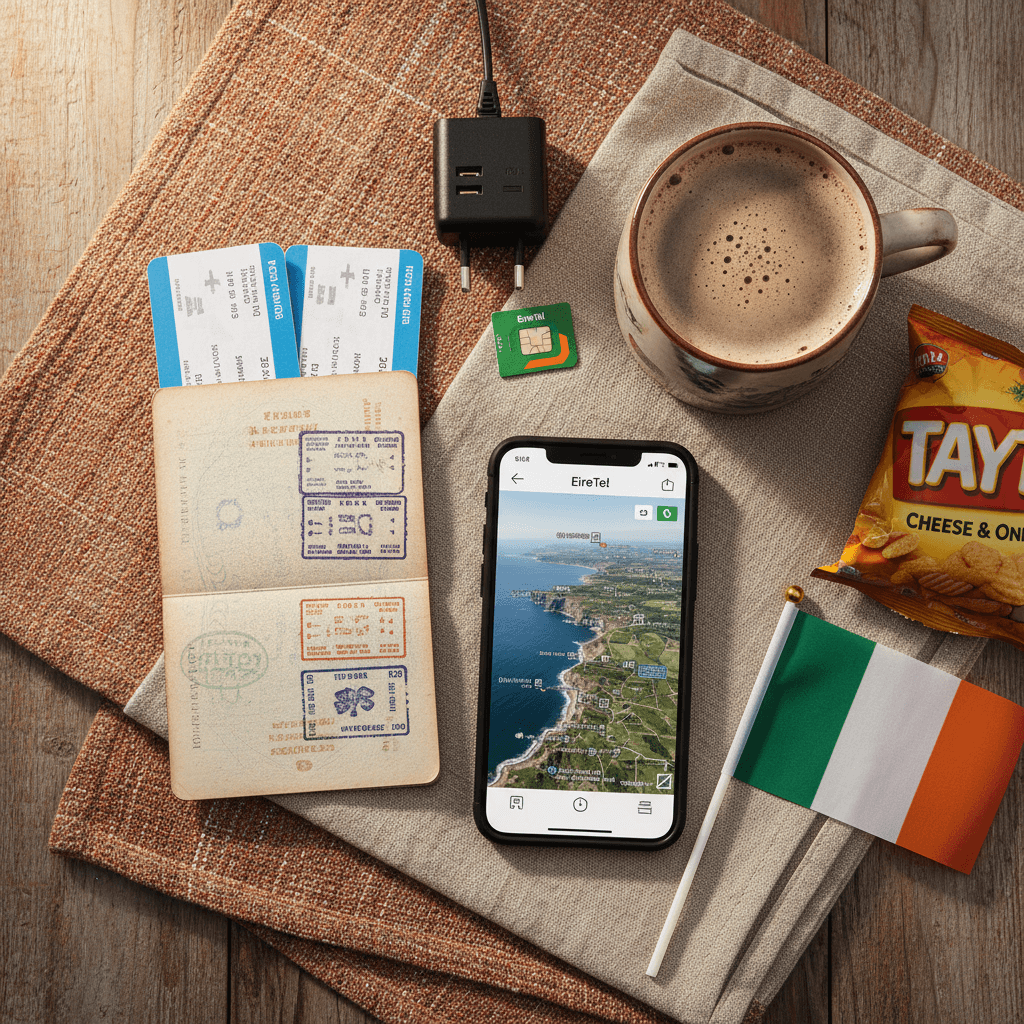
If you are lucky enough to be from a visa-exempt country, you don't need to do anything online before you arrive. However, "visa-free" does not mean "guaranteed entry." When you land, an immigration officer will ask about your plans, where you are staying, and how you intend to fund your trip. They will then stamp your passport with a specific date by which you must leave, usually 90 days from your arrival.
Recent updates have changed the landscape for a few nationalities. As of 2025, travelers from Eswatini, Lesotho, Nauru, and Trinidad and Tobago now require a visa prior to arrival. It is always a good idea to double-check the current list of visa-required nationalities on the Immigration Service Delivery portal before you pack your bags.
Extending Your Stay
Ireland is notoriously strict about extensions. In general, you are expected to leave before your 90 days are up. Extensions are only granted for unforeseen, exceptional circumstances, such as a medical emergency or a major family event. If you are granted an extension that pushes your stay beyond the initial 90 days, you may be required to register with the immigration office and pay a €300 fee.
For those looking to stay longer than three months for reasons like full-time study or long-term employment, you would need to look into a Long Stay 'D' visa. These are much more complex and require specific permits or enrollment proof before you even arrive in the country.
Important Reminders for Your Arrival
- No Visa on Arrival: Ireland does not have a "pay at the border" system. If your nationality requires a visa, you must have it in your passport before you board your plane.
- Proof of Funds: While there isn't a set daily amount, being able to show a bank statement with enough to cover your stay is a common request at the border.
- Insurance: You should always carry proof of private medical insurance. It is often a formal requirement for visa applicants and a recommended safeguard for visa-free travelers.
- Transit Visas: If you are just passing through a Dublin airport to get somewhere else, check if your nationality requires a transit visa, as these rules are separate from standard visitor rules.
The Reality of Remote Work in the Emerald Isle
Ireland is one of the most sought-after destinations for digital nomads, but it is important to clear one thing up immediately: there is no official "Digital Nomad Visa" in the Republic of Ireland. While other European nations have rushed to create specific remote work permits, Ireland relies on its existing immigration framework to manage long-term stays.
For most nomads looking to call Ireland home for a year or more, the path forward involves a specific category known as Stamp 0. This is a temporary residency permission intended for people of independent means or those working for foreign companies who will not be a burden on the Irish state.
Understanding the Stamp 0 Permission
The Stamp 0 is the primary route for remote workers who want to stay beyond the standard 90-day tourist window. It allows you to live in Ireland while working for an employer located outside the country. However, the financial bar is set quite high to ensure you can support yourself in a country with a relatively high cost of living.
- Income Requirement: You typically need to prove a minimum annual income of €50,000. If you are moving as a couple or family, this requirement increases.
- Savings: Immigration officers often look for substantial capital reserves, sometimes as high as €100,000 to €150,000, to demonstrate long-term financial stability.
- Duration: This permission is usually granted for 12 months. You can renew it annually, provided you still meet the criteria.
- The "No Irish Work" Rule: You must sign a formal commitment stating you will not seek employment with an Irish company or provide services to Irish clients while resident under this stamp.
The Application Process
Unlike some visas you can figure out once you arrive, the Stamp 0 process starts before you pack your bags. You must apply for "Letter of Permission" from the Immigration Service Delivery (ISD) while you are still in your home country. This process uses the AVATS online portal.
Once you receive your letter of approval, you can travel to Ireland. After arrival, you have to register in person with the Garda National Immigration Bureau (GNIB) or your local Garda station. This registration carries a €300 fee. Once processed, you will receive your Irish Residence Permit (IRP) card, which serves as your official ID for your stay.
What You Need to Provide
The Irish government is thorough with documentation. Expect to provide a deep dive into your financial history to prove your income is stable and remote-friendly.
- Financial Proof: You will need 12 to 24 months of detailed bank statements showing your salary or passive income.
- Employment Verification: A contract or letter from your employer confirming you can work remotely from Ireland.
- Health Insurance: You must hold private medical insurance that covers hospital stays in Ireland; your home country's policy or a basic travel plan usually won't suffice.
- Accommodation: Evidence of where you intend to stay, such as a long-term lease agreement or booking confirmation.
Alternative Routes for Nomads
If the Stamp 0 requirements feel out of reach, there are a few other ways to experience Ireland. For those with a shorter timeline, the Short-Stay 'C' Tourist Visa allows for stays up to 90 days. While it doesn't officially recognize remote work, many nomads use this period to scout locations before committing to a longer stay.
If you have an innovative business idea and the capital to back it, the Start-Up Entrepreneur Visa is an option. It requires €50,000 in funding and allows you to build a business within the Irish ecosystem. For those with specialized skills in tech or engineering, the Critical Skills Employment Permit is the gold standard, though it requires a job offer from an Irish-based employer rather than remote work for a foreign one.
A Note on Taxes
Living in Ireland for more than 183 days in a single year generally makes you a tax resident. This means you may be liable for Irish income tax on your worldwide earnings. If you stay for less than that and keep your income sources strictly outside of Ireland, your tax obligations usually remain with your home country. It is a good idea to consult with a cross-border tax specialist before you cross the six-month mark.
The 90-Day Rule
Ireland is a dream base for nomads, but it operates under its own set of rules separate from the Schengen Area. Most visitors enter on a short-stay permission that allows for a stay of up to 90 days. If you are from the US, Canada, Australia, or the UK, you can simply show up at the airport with a valid passport and get your stamp.
For those who do need a visa, you will be applying for a Short Stay 'C' Tourist Visa. This must be done well in advance through the AVATS online system. Ireland does not offer visas on arrival for any nationality, so if your passport requires a sticker, make sure it is in hand before you head to the boarding gate.
Visa-Free Nationalities
A significant number of countries enjoy visa-free entry for tourism. Citizens of these nations can generally stay for up to three months without prior paperwork:
- North America: United States, Canada, Mexico
- Oceania: Australia, New Zealand, Fiji, Solomon Islands
- South America: Brazil, Argentina, Chile, Uruguay, Paraguay
- Asia/Middle East: Japan, South Korea, Singapore, UAE, Israel, Malaysia
- Europe: All EU/EEA countries, Switzerland, and the United Kingdom
There is also a specific Short Stay Visa Waiver Programme running through October 2026. This allows travelers from certain countries, like India, China, and Bahrain, to enter Ireland if they already hold a valid, used UK short-stay visa.
The Application Process
If you aren't on the visa-free list, you will need to use the official AVATS portal. The process is thorough and requires a bit of patience. You should submit your application at least 8 to 12 weeks before your planned arrival date to account for processing backlogs.
You will need to provide proof of your travel purpose, a detailed itinerary, and evidence that you can support yourself financially during the stay. Once the online form is finished, you usually have to mail your physical passport and supporting documents to a designated embassy or consulate.
Costs and Fees
Budgeting for your entry is straightforward, but remember that these fees are non-refundable even if your application is denied. The current rates are:
- Single-entry 'C' Visa: €60
- Multiple-entry 'C' Visa: €100
- Transit Visa: €25
Multiple-entry visas are notoriously difficult for tourists to get on their first visit. Most first-time applicants are granted single-entry only, so plan your trips to the UK or the continent accordingly.
Extensions and Border Runs
Ireland is quite strict about the 90-day limit. Extensions are only granted in "force majeure" situations, such as a medical emergency or a major flight disruption. You cannot extend your stay just because you want more time to explore the Wild Atlantic Way or finish a remote project. Routine extension requests are almost always denied.
Regarding border runs, proceed with caution. Leaving for a weekend in Belfast or London and immediately returning to "reset" your 90 days is not a sanctioned move. Immigration officers at the airport and land borders track your entry patterns. If they suspect you are effectively living in Ireland by stringing together tourist stays, they can and will refuse you entry at the border.
Overstaying Your Welcome
Staying past your stamped date is a serious mistake that can haunt your future travels. Overstaying can lead to fines of €500 or more, immediate deportation, and a formal re-entry ban that lasts between 1 and 5 years. Since Ireland shares data with the UK and other partners, a deportation record here can make getting visas for other countries significantly harder. If you find yourself in a situation where you cannot leave on time, contact the Immigration Service Delivery (ISD) immediately to regularize your status.
Navigating the Long-Term Reality
Ireland is a dream destination for many nomads, but the hard truth is that the Emerald Isle doesn't make it easy to stay long-term. Unlike some of its European neighbors, Ireland hasn't jumped on the digital nomad visa bandwagon. If you're looking to call Dublin or Galway home for more than a few months, you'll need to fit into very specific boxes centered around financial independence, specialized skills, or significant business investment.
For most non-EEA citizens, the ninety-day tourist window is the limit. Moving beyond that requires a formal residency stamp, and the path you take depends entirely on your bank balance or your job title. Since the popular Golden Visa program was scrapped in February 2023, the remaining options have become even more competitive and scrutinized.
Retirement and Independent Means (Stamp 0)
If you've already made your fortune and want to spend your days hiking the Wild Atlantic Way, the Stamp 0 permission is your best bet. This is designed for people who are fully self-sufficient and won't be a drain on Irish state services. You aren't allowed to work for an Irish company or start a business on this permit; it's strictly for those living off their own wealth.
- Income Requirement: You must prove an individual annual income of at least €50,000. For couples, this jumps to €100,000.
- Emergency Fund: You need access to a substantial lump sum for major expenses, often expected to be roughly the price of a local home.
- Certification: An Irish accountancy firm must verify your financial documents before you apply.
- Registration Cost: Expect to pay €300 for your Irish Residence Permit (IRP) card plus variable fees for the required accountancy audit.
The application goes through the Immigration Service Delivery (ISD) in Dublin. If you're from a country that requires a visa to enter Ireland, you'll need to secure a D Reside visa from your local embassy before you even think about packing your bags. Processing generally takes about four months.
The Freelance Gap
Ireland currently lacks a dedicated freelancer visa. If you're a remote worker for a company outside of Ireland, you're technically in a grey area that usually limits you to a short-stay 'C' visa for up to 90 days. To stay longer as a self-employed person, you generally have to apply for Business Permission or the Start-up Entrepreneur Programme.
These aren't for casual bloggers or remote consultants. They require a serious business plan, an investment of €50,000 to €75,000, and the potential to create jobs within the country. Application fees for these permits usually hover around €1,000, making it a high-stakes move for most solo nomads.
Employment-Based Residency
The most common way to secure a long-term future here is through an employment permit. The Department of Enterprise, Trade and Employment (DETE) issues these for specific roles, particularly in tech, healthcare, and engineering. If you land a job on the Critical Skills list, you're on a fast track to more permanent rights.
- Stamp 1 to Stamp 4: You typically start on a Stamp 1 while tied to a specific employer. After 60 months of reckonable residence, you can apply for a Stamp 4.
- Stamp 4 Benefits: This is the holy grail. It allows you to work for any employer or even work for yourself without needing a separate permit.
- Fees: The long-term residency application costs €500, plus the standard €300 for your residence card.
The Path to Citizenship
Ireland doesn't offer a traditional "permanent residency" card that lasts forever without renewal. Instead, the Stamp 4 serves as your long-term anchor. Once you've accumulated five years of reckonable residence, including one year of continuous residence immediately before you apply, you can begin the process of naturalization. Becoming an Irish citizen is the only way to truly settle the score and gain the freedom to live and work across the entire European Union.
The Financial Reality of the Emerald Isle
Ireland is legendary for its hospitality and tech-forward culture, but living here requires a realistic budget. For the 2025-2026 season, digital nomads should expect to spend anywhere from €2,000 to over €6,000 per month. The wide range depends heavily on whether you are prioritizing a social life in the capital or seeking a quieter pace in the midlands.
Dublin remains the heavyweight in terms of cost. It is a vibrant, global hub, but the housing market is notoriously tight. If you are looking for a more balanced lifestyle where your Euro goes further, cities like Limerick or even Cork offer a similar cultural punch with a slightly smaller price tag.
Monthly Housing Estimates
Rent will be your biggest hurdle. The market is competitive, so being ready to move quickly on a lease is vital. Here is how the monthly costs for a one-bedroom apartment in nomad-friendly neighborhoods break down by city:
Dublin (Docklands, Portobello, Stoneybatter)
- Budget Tier: €1,800 - €2,200
- Comfortable Tier: €2,300 - €2,500
- Premium Tier: €2,500+
Cork (Shandon Street, Victorian Quarter)
- Budget Tier: €1,300 - €1,600
- Comfortable Tier: €1,700 - €2,000
- Premium Tier: €2,000 - €2,300
Galway (Latin Quarter, Salthill)
- Budget Tier: €1,800 - €2,100
- Comfortable Tier: €2,200 - €2,300
- Premium Tier: €2,300+
Limerick (City Core, Georgian Quarter)
- Budget Tier: €1,000 - €1,300
- Comfortable Tier: €1,400 - €1,700
- Premium Tier: €1,800+
Groceries and Dining Out
Food costs are relatively stable across the country, though you will pay a 10% to 20% premium in Dublin and Cork for trendy brunch spots and high-end dinners. Shopping at discount retailers like Lidl or Aldi is the gold standard for keeping the budget under control. Expect to spend €250 to €350 monthly if you are mostly cooking at home.
For those who prefer a mix of home-cooked meals and social dining, a budget of €350 to €500 is more realistic. If your lifestyle involves organic markets and frequent restaurant visits where meals average €18 to €55, plan for €500 to €700 per month.
Transport and Getting Around
Most nomads rely on the Leap Card or TFI (Transport for Ireland) networks. Public transport is efficient in the city centers, and many spots offer e-bike schemes with the first 30 minutes free. Monthly passes are the most cost-effective way to commute.
- Dublin: €96 for a monthly pass.
- Cork: €68 - €116 depending on the zone.
- Galway and Limerick: Approximately €60 for a monthly city pass.
If you prefer the convenience of taxis or Uber, add another €10 to €20 per ride to your weekly estimates. Ireland is walkable, but the frequent rain often makes a quick cab ride a tempting luxury.
Coworking and Connectivity
Reliable Wi-Fi is standard in most rentals, but the coworking scene is where the networking happens. Dublin and Cork lead the way with the highest density of spaces. A hot desk in a shared environment typically costs €200 to €300 per month. For a dedicated desk or a more premium office environment with better amenities, expect to pay €300 to €450.
Health and Wellness
While Ireland has a public system (HSE), it can be slow for non-emergencies. Private health insurance is highly recommended for digital nomads. Local providers like VHI or Laya offer basic plans starting around €80 to €200 per month. For comprehensive international coverage that follows you across borders, budget between €200 and €400 monthly.
Dublin: The Tech Powerhouse
If you want to be in the thick of Ireland's professional action, Dublin is the obvious choice. It functions as the country's primary tech artery, housing the European headquarters for giants like Google and Meta. This corporate presence has trickled down into a massive nomad ecosystem, meaning you will never struggle to find a desk at a high-end coworking space like WeWork or a quiet corner in a Wi-Fi-enabled cafe in the Creative Quarter.
The city's infrastructure is the most robust in the country. You can expect average download speeds of 133.7 Mbps, which is plenty for heavy video conferencing or large file transfers. After hours, the social scene is unmatched. From the tourist-heavy pubs of Temple Bar to the more local spots along Camden Street, the networking opportunities are endless. The trade-off is the price tag. Dublin is expensive, with monthly living costs often hitting €3,500. It is also a busy capital city, so expect a bit more grit and a moderate safety index of 46.4.
- Pros: Largest nomad community, premium coworking options, world-class nightlife.
- Cons: Highest cost of living in Ireland, lower relative safety, crowded public transport.
Cork: The High-Speed Alternative
Cork is often called the "Real Capital" by locals, and for digital nomads, it might actually be the better choice. It currently holds the crown for the fastest internet in the country, clocking in at 158.9 Mbps. It offers a more intimate, friendly atmosphere than Dublin while still providing a professional backbone of growing coworking spaces and a solid tech community.
Your money goes further here, too. A single nomad can get by on roughly €2,300 per month, and the safety index sits much higher at 63.5. The city center is walkable, filled with specialty coffee shops and the famous English Market for fresh food. While it has fewer international flight connections than Dublin, its proximity to the Wild Atlantic Way makes it a perfect base for weekend explorers.
- Pros: Fastest internet speeds, more affordable than the capital, very safe.
- Cons: Smaller international airport, fewer dedicated nomad events.
Galway: The Cultural Hub
Galway is where you go if you want your workday to end with a traditional fiddle session in a 100-year-old pub. It is arguably Ireland’s most charming city, boasting a safety index of 69.0 and a very high quality of life. The Latin Quarter is packed with cafes that welcome remote workers, though you will find fewer formal coworking offices here compared to the bigger cities.
Living costs hover around €2,275 per month. The internet is reliable for standard remote work, but speeds can dip if you head too far into the scenic outskirts. It is a creative, bohemian environment that suits freelancers and those who value culture and coastline over corporate networking.
- Pros: Exceptional safety, vibrant arts scene, beautiful coastal location.
- Cons: Limited coworking offices, can feel very "touristy" in summer.
Limerick and Waterford: The Budget Picks
For those looking to keep their overhead low, Limerick is a rising star. It has surprisingly strong mobile internet speeds reaching 113.71 Mbps and a growing tech scene centered around the local university. It is the most affordable major city, with monthly costs often staying under €2,000. It is quieter than the other hubs, but it offers a genuine Irish experience without the "big city" price tag.
Waterford is another excellent shout for the budget-conscious. It is Ireland's oldest city and offers the lowest cost of living on this list. While the nomad community is still in its infancy there, the combination of history and affordability makes it a great spot for a slow-travel stint.
Cost of Living Breakdown
Dublin
- Monthly Cost: €2,627 to €3,500
- 1-Bed Rent: €1,000 to €1,300
- Vibe: Fast-paced, expensive, and tech-heavy.
Cork
- Monthly Cost: €2,297
- 1-Bed Rent: €900 to €1,100
- Vibe: Friendly, high-speed, and balanced.
Galway
- Monthly Cost: €2,275
- 1-Bed Rent: €800 to €1,000
- Vibe: Artistic, safe, and scenic.
Limerick
- Monthly Cost: €1,969
- 1-Bed Rent: €800 to €1,000
- Vibe: Affordable, quiet, and emerging.
The Connectivity Landscape
Ireland has undergone a massive digital transformation, evolving from a country known for rural isolation to a legitimate European tech powerhouse. You can generally expect fixed broadband speeds to average between 60 and 200 Mbps. In well connected hubs like Dublin and Kildare, those numbers often climb much higher, with providers like Virgin Media and Eir Fibre hitting peaks between 243 and 269 Mbps.
Fiber-to-the-premises (FTTP) now reaches about 76% of homes and offices. If you are eyeing a cottage in the countryside, the National Broadband Ireland rollout has already covered two-thirds of its rural targets. Before you book a long-term rental, always ask for the Eircode (Ireland's postal code system) and plug it into openeir.ie to verify exactly what kind of speeds are wired to that specific front door.
Top Coworking Hubs
While Dublin is the undisputed heavyweight with over 39 distinct spaces, the "Silicon Docks" energy has matured and spread across the island. These spaces aren't just desks; they are the primary social arteries for the nomad community.
- Dogpatch Labs (Dublin): Located in the historic CHQ building, this is the heart of the Irish startup scene. It is best for those looking to network with founders and tech talent.
- Portershed (Galway): A brilliant community-led space near the train station, perfect for those who want to balance work with the West Coast's famous traditional music scene.
- Glandore (Dublin, Cork, Belfast): A more corporate, high-end feel with impeccable service and locations in the most prestigious corners of these cities.
- RDI Hub (Kerry): Proof that you can work from the edge of the Atlantic. This is a world-class facility located in Killorglin, ideal for nature lovers.
- WeWork (Dublin): Multiple locations including 2 Dublin Landings, offering the familiar global standard of glass walls and free-flowing craft beer.
Membership and Day Pass Costs
Budgeting for a desk in Ireland depends on how much flexibility you need. Prices are generally higher in the capital, but regional hubs offer significant value. Expect to pay these standard rates:
- Day Passes: Usually start around €45 at premium spots like WeWork or Regus.
- Basic Hot Desk: Around €129 per month for part-time or drop-in access at local suites.
- Full-Time Hot Desk: Typically ranges from €269 to €329 per month for 24/7 access and perks.
- Fixed Desks: Dedicated spots in shared offices usually hover around €249 per month depending on the location.
Cafe Culture and Public Wi-Fi
If you prefer the hum of a coffee shop over the silence of a library, Irish cities are increasingly nomad-friendly. In Dublin, spots like Accents, Network Café, and The Fumbally are famous for reliable Wi-Fi and a "laptop-friendly" attitude. These cafes provide stable connections for emails and light tasks, though you should save your heavy 4K video uploads for a dedicated coworking space.
Most Irish cafes don't have strict time limits, but the unspoken rule is to buy a fresh coffee or snack every 90 to 120 minutes. Power outlets can be hit-or-miss in older buildings, so show up with a full charge if you are heading to a popular city center spot.
Mobile Data and eSIMs
Mobile internet is a reliable backup, with 5G coverage now standard in most major towns. Three offers some of the best mobile speeds, averaging around 70 Mbps. For nomads staying a month or less, an eSIM is the most frictionless way to get online the moment you land.
- Three: €20 for 28GB of data over a 30-day period.
- Holafly: Unlimited data plans starting from €19 for 5 days.
- Nomad: Flexible tiers ranging from €6 for 1GB to €36 for 10GB.
- Airalo/Saily: Great for quick arrivals, with 1GB "top-up" plans starting around $4.
If you plan to hop over to the UK or the Continent during your stay, ensure your plan includes EU roaming. Most local Irish SIMs from Three or Vodafone include this as standard, making them a better long-term value than travel-specific eSIMs.
The Two-Tier Reality
Ireland operates on a dual healthcare system that can be a bit of a head-scratcher for newcomers. While the public system, managed by the Health Service Executive (HSE), provides high-quality medical care, it is notorious for long wait times. You might find yourself waiting weeks for a routine GP appointment or even years for certain elective procedures.
Because of these bottlenecks, about 47% of people in Ireland opt for private health insurance. For a digital nomad, private care is usually the way to go. It grants you much faster access to specialists, often within days or weeks, and provides perks like private hospital rooms and your choice of consultant. To be considered "ordinarily resident" and qualify for full public subsidies, you generally need to live in the country for at least one year.
Top-Tier Medical Facilities
If you are based in Dublin, you are near some of the best medical technology in Europe. The city hosts several world-class institutions that are well-versed in treating international patients. Beacon Hospital is famous for its advanced tech, while Blackrock Clinic and Mater Private are the go-to spots for cardiology and oncology.
Outside the capital, you aren't left in the lurch. Cork University Hospital and University Hospital Galway provide excellent regional coverage. The staff at these facilities speak English, and the standard of care matches what you would find in the best US or European hospitals.
Insurance for Nomads
You have two main paths when it comes to coverage: local Irish providers or international expat plans. Local giants like VHI, Laya, and Irish Life Health typically cost between €80 and €200 per month for basic plans. On average, an adult pays roughly €1,685 to €1,858 per year for a standard local policy.
Most nomads prefer international plans from companies like Cigna or AXA. These run higher, usually €200 to €400 per month, but they offer global portability. If you are moving between Ireland and the rest of the EU or heading back home for the holidays, these plans keep you covered everywhere. While insurance isn't always a legal requirement for every visa, having it is a practical necessity to avoid massive out-of-pocket bills in the private system.
What You’ll Pay Out of Pocket
Even with insurance, you should keep some cash aside for day-to-day medical needs. The costs are relatively predictable but can add up if you aren't prepared:
- GP Visit: Expect to pay €40 to €65 per consultation.
- A&E Visit: Walking into the emergency room without a GP referral costs €100.
- Inpatient Stay: Public hospital stays cost €80 per night, capped at €800 in a 12-month period.
- Specialist Consultation: Private specialists often charge up to €150 for an initial visit.
Prescriptions and Pharmacies
Pharmacies, or chemists as they are often called here, are easy to find in any Irish town. Most stay open from 9am to 6pm, though urban areas have late-night options. If you are from the US, keep in mind that many American brands aren't available over the counter. It is smart to bring a backup supply of your regulars.
If you need a prescription filled, it must be from an Irish or EU-registered doctor. Non-EU prescriptions aren't valid, so you will need to visit a local GP to get an Irish equivalent. Under the Drugs Payment Scheme, the most an individual or family will pay for monthly prescriptions is €144; the government covers the rest.
Emergency Situations
In a true emergency, dial 999 or 112. Ambulance services are free for life-threatening issues, and response times usually range from 10 to 40 minutes depending on your location. For urgent but non-life-threatening issues after hours, look for "Doc on Duty" services like SouthDoc or NorthDoc. These allow you to see a doctor in the evening or on weekends without sitting in a hospital waiting room for twelve hours.
Banking as a Foreigner
Opening a traditional bank account in Ireland is doable, but the bureaucracy can be a bit of a hurdle if you’re only staying for a few months. For those planning a longer stint, Bank of Ireland and AIB are the two largest players. If you have a local address, you just need your passport and a utility bill or rental agreement from the last six months.
If you haven't secured a permanent spot yet, you can apply for a non-resident account. This usually requires two forms of certified ID and proof of address from your home country. Be prepared for a bit of paperwork; some banks require these documents to be certified by a solicitor or a police officer before they’ll even look at your application.
The Digital Nomad Essentials: Wise and Revolut
Most nomads in Ireland skip the traditional banks entirely. Revolut is practically the national currency of social life here; "I’ll Revolut you" is the standard phrase for splitting a dinner bill or a round of Guinness. It’s perfect for daily spending and offers free ATM withdrawals up to €200 or five uses per month.
Wise is your best friend for the "back end" of your finances. It offers the most transparent exchange rates and the lowest fees for moving money between your home account and euros. Many people use Wise to receive client payments in USD or GBP and then move that money to Revolut for their day-to-day coffee and pub runs.
Handling Cash and ATMs
Ireland is very card-friendly, but you’ll still want some cash for small rural pubs or local markets. Most high-street bank ATMs are free to use, but stay away from the standalone machines tucked into the back of convenience stores or nightclubs. These private ATMs can charge up to €5 per transaction.
- Avoid Euronet ATMs: These often charge high fees and offer terrible exchange rates.
- Say no to DCC: If an ATM asks if you want to be charged in your home currency, always decline. Choose to be charged in Euros so your own bank handles the conversion.
- Withdrawal Strategy: Pull out €200 to €250 at a time to minimize the impact of any potential fees from your home bank.
Moving Money into Ireland
When you need to fund your Irish adventures, you have a few reliable options beyond the standard wire transfer. Here is how the top services stack up:
- Wise: Best for international transfers with the lowest fees and near-instant delivery.
- Remitly: A solid choice for fast transfers, often arriving within minutes.
- Bank Transfers (SEPA): Very cheap or free if you are moving money from another Eurozone account.
- CurrencyFair: An Irish-based company that offers competitive peer-to-peer exchange rates.
Crypto and Taxes
If you're trading or holding crypto while based in Ireland, keep your spreadsheets updated. Cryptocurrency is legal, but the Central Bank doesn't view it as official money. This means you won't get any consumer protection if a platform goes bust.
From a tax perspective, you need to keep records of every transaction for six years. Any profits you make from selling or swapping crypto are generally subject to Capital Gains Tax. While crypto is zero-rated for VAT, the Revenue Commissioners are quite strict about reporting income, so it pays to be diligent with your digital paper trail.
Checklist for Getting Started
- Valid Passport or EU National ID card.
- Proof of Address like a utility bill or government letter.
- Certified copies of documents if you are applying as a non-resident.
- A smartphone for digital banking apps which often require a "selfie" for identity verification.
Visas and Residency for the Whole Crew
Moving your family to the Emerald Isle is relatively straightforward if you have your own residency sorted. Children under 18 (or up to 23 if they are still in full-time education and financially dependent on you) can join you on a dependent visa. You will need to provide the basics like birth or adoption certificates and proof of your own legal status in Ireland.
The application is handled through the Irish Immigration Service portal. Keep in mind that you will need to show you have sufficient funds to support the family without relying on state benefits. There is a €300 fee for renewals, and you must have private medical insurance for everyone in the family to meet the visa requirements.
Schooling Options and Costs
Ireland has a stellar reputation for education, but as a digital nomad, you have a few different paths to consider. Many expat families opt for international schools, particularly in the Dublin area. St. Kilian’s Deutsche Schule, for example, charges around €4,000 to €4,200 per year. If you are looking for the International Baccalaureate (IB) curriculum, prices can climb significantly higher, with some private day schools reaching €20,000 or more.
Public and comprehensive schools are also an option, though non-EU families often pay a fee ranging from €3,000 to €7,000 per year. Don't forget to budget for the "extras" that are standard in Irish schooling. Uniforms, books, and extracurricular activities can add another €500 to €2,000 to your annual bill. Spaces fill up fast, so start reaching out to admissions offices as soon as your move dates are firm.
Childcare and Early Education
Childcare used to be a major pain point in Ireland, but recent government caps have made it more manageable. By late 2025, full-day childcare fees (covering 40 to 50 hours a week) are capped at €295 per week. With national subsidies, many parents end up paying closer to €112 to €198 per week depending on their income and the hours needed.
- ECCE Programme: Ireland offers two years of free preschool for children aged 3 to 5, which is a massive help for working parents.
- Core Funding: Most providers are now part of a national scheme that keeps prices predictable and prevents sudden hikes.
- After-school Care: Many primary schools offer "wraparound" care until 5:30 PM or 6:00 PM for an additional fee.
Keeping the Kids Healthy
The healthcare system for children in Ireland is quite robust. All children receive free screenings and vaccinations through the National Healthy Childhood Programme. If your child is under 8 years old, they are eligible for a GP Visit Card, which covers all visits to the family doctor for free. Dental care is also provided through the public system up to age 15.
While the public system (HSE) is high quality, wait times for specialists can be long. Many digital nomad families choose to maintain private health insurance. This allows you to skip the queues for non-emergency consultants and provides access to private hospitals like the Beacon or Blackrock Clinic.
Where to Set Up Camp
While Dublin is the business hub, the surrounding coastal towns and rural counties often offer a better quality of life for families. Here are a few spots that consistently rank high for safety and amenities:
Howth, Dublin
- The Vibe: A coastal village with world-class seafood and cliff walks.
- Family Perks: Excellent schools and a direct DART train line into the city center.
- Safety: Very low crime rates and a tight-knit community feel.
Westport, Mayo
- The Vibe: A picturesque town on the Atlantic coast, perfect for active families.
- Family Perks: Home to the Great Western Greenway for cycling and plenty of festivals.
- Safety: Known as a peaceful haven with a very high level of personal safety.
Galway City
- The Vibe: The cultural heart of the west, vibrant and artistic.
- Family Perks: Proximity to top-tier universities and a very walkable city center.
- Safety: Boasts a very low crime index of 29, making it one of the safest cities in Europe.
Safety and Quality of Life
Ireland is objectively one of the safest places in the world to raise a family. Violent crime is rare, and the culture is famously child-friendly. You will find that most pubs are welcoming to families during the day, and green spaces are everywhere. Organizations like Tusla and the Gardaà maintain high standards for child protection, and most parents report feeling perfectly comfortable letting their older children walk to school or the local shop alone.
Safety in the Emerald Isle
Ireland is consistently ranked as one of the safest destinations in the world for solo travelers and remote workers. Violent crime is remarkably rare, with a homicide rate of 0.5 per 100,000 people, which sits comfortably below the OECD average. While you might see headlines about rising theft or robbery in urban centers, these incidents are rarely targeted at foreigners specifically. Most issues are driven by local socio-economic factors rather than any bias against the nomad community.
Dublin feels like any other major European capital. You should feel confident walking around most areas, but keep your wits about you in crowded tourist districts after dark. The general rule of thumb here is that if you stay aware of your surroundings, you are unlikely to encounter anything more serious than a bit of local rowdiness on a Friday night.
Avoiding Common Scams
Most Irish people are genuinely helpful, but a few bad actors focus on high-traffic areas like Temple Bar or the transport hubs. Petty theft and "distraction" techniques are the most common issues you will face. Keep your phone out of your back pocket when boarding the Luas or DART trains.
- ATM Safety: Use machines located inside bank branches whenever possible. Skimming devices are occasionally found on outdoor street-side ATMs.
- Transport: Stick to official taxi apps like Free Now or Uber. If you hail a cab on the street, ensure the meter is running or agree on the fare before the wheels move.
- Rental Fraud: The housing market is tight, and scammers know it. Never send a deposit for a flat you haven't seen in person, especially if the "landlord" claims to be out of the country.
- Tourist Pricing: Be wary of third-party sellers for major attractions. Buy your tickets for the Cliffs of Moher or the Guinness Storehouse directly from official websites to avoid paying double.
The LGBTQ+ Experience
Ireland has undergone a massive cultural shift over the last few decades. Since legalizing same-sex marriage by popular vote in 2015, the country has become a beacon for LGBTQ+ travelers. You will find a relaxed, "live and let live" attitude in both cities and rural towns.
Dublin, Cork, and Galway have the most visible scenes. The Dublin Pride festival attracts upwards of 60,000 participants annually, and gay bars are integrated into the social fabric rather than being tucked away in hidden corners. Anti-discrimination laws have been robust since the 2010s, making it one of the safest spots in Europe for the community.
Mastering the Social Scene
Irish culture is built on "the craic," a broad term for fun, conversation, and entertainment. To fit in, you need to understand the unwritten rules of the pub. If someone buys a "round" for the group, it is expected that you will do the same when your turn comes. Skipping your round is a quick way to lose social points.
Politeness is the local currency. You will hear "please" and "thank you" constantly, even for the smallest interactions. When driving on rural roads, it is customary to give a small wave to drivers who pull over to let you pass. If you're invited to someone's home, a small gift or a compliment on the food goes a long way. The Irish can be modest and slightly reserved when you first meet them, but they warm up quickly once the conversation starts flowing.
Language and Communication
English is the primary language spoken by everyone you will encounter. While Irish (Gaelic) is the first official language and appears on all road signs, it is mostly spoken as a daily language in specific western regions called Gaeltachts. For a digital nomad, there is effectively zero language barrier. In tech-heavy cities, you will hear a mix of accents from all over the world, making it easy to blend in.
Finding Your Community
The expat and nomad scene is thriving, particularly in the "Silicon Docks" area of Dublin where companies like Google and Meta have their headquarters. However, because of the high cost of living in the capital, many remote workers are drifting toward Galway and Cork.
- Co-working Spaces: There are over 240 co-working hubs across the country, ranging from high-tech urban offices to "digital hubs" in small seaside towns.
- Online Groups: Platforms like Expat Exchange and various Facebook groups for "Expats in Ireland" are active and helpful for finding advice on everything from PPS numbers to the best local barbers.
- Integration: The best way to make local friends is through shared interests. Join a five-a-side football team, a hiking club, or a local sea-swimming group. Showing up regularly to community events is the fastest way to turn a "hello" into a genuine connection.
Understanding Tax Residency
Ireland’s tax rules are straightforward but strictly enforced. You become a tax resident if you spend 183 days in the country during a single tax year. There is also a "look-back" rule: if you spend 280 days across two consecutive years, with at least 30 days in each, you are considered a resident for the second year. Keep in mind that even a few minutes in Ireland counts as a full day toward these totals.
Once you hit these thresholds, your worldwide income is generally subject to Irish tax. However, a unique status called "ordinary residence" kicks in after you have been a tax resident for three consecutive years. This is a bit of a trap for long-term nomads. Even after you leave Ireland, you remain an ordinary resident for another three years, meaning you could still owe Irish tax on worldwide income unless your work is entirely foreign-based with no Irish connection.
Income Tax and Social Charges
Ireland uses a two-tier progressive system. For 2026, the rates for single individuals are 20% on the first €44,000 and 40% on everything above that. If you are married with two incomes, each partner can earn up to €44,000 at the lower rate.
Your take-home pay is also affected by two additional levies: the Universal Social Charge (USC) and Pay Related Social Insurance (PRSI). The USC is a tiered tax that starts at 0.5% and climbs to 8% for income over €70,044. If you are self-employed, expect to pay an additional 4% PRSI on your total income.
The Non-Domiciled Advantage
If you are a nomad who doesn't plan on making Ireland your permanent "forever home," you might benefit from the remittance basis of taxation. This applies to people who are resident in Ireland but not "domiciled" there. Under this regime, you only pay Irish tax on Irish-sourced income and any foreign money you actually bring into an Irish bank account.
This is a major win for remote workers. If you keep your foreign earnings in a non-Irish account and only transfer what you need for living expenses, you can significantly lower your tax bill. You will need to prove your true home is outside Ireland, which is usually simple for those born elsewhere holding foreign passports.
Cryptocurrency and Digital Assets
Ireland treats crypto as a standard asset rather than a currency. If you sell or swap crypto for a profit, you are hit with a 33% Capital Gains Tax (CGT). Everyone gets a small break with a €1,270 annual exemption, but you must pay tax on any gains above that amount.
- Staking and Mining: These rewards are taxed as income at your marginal rate (20% or 40%) plus USC and PRSI.
- Payment Deadlines: For gains made between January and November, you must pay the tax by December 15th of the same year.
- Record Keeping: You are required to keep detailed logs of every transaction for at least five years.
Double Taxation and Filing
You won't necessarily be taxed twice on the same Euro. Ireland has treaties with 78 countries, including the USA, UK, Canada, and most of Europe. These agreements allow you to claim credits for taxes already paid abroad. To stay compliant, you must file an annual return by October 31st of the following year. Self-employed nomads can use the Revenue Online Service (ROS) to claim business expenses like co-working fees, equipment, and travel to offset their taxable totals.
Getting Connected
Staying online is the first priority for any nomad landing on the Emerald Isle. You have two main paths: physical prepaid SIMs or instant eSIMs. If your phone is unlocked, grab a Three or Vodafone SIM at the airport or any convenience store. Three is a favorite for its generous data bundles, often offering "all you can eat" data for around €20 for 30 days. Vodafone is generally better if you plan on hiding away in a remote cottage in Donegal, as their rural 4G and 5G coverage is the most reliable in the country.
For those who want to skip the shop visit, Airalo or Holafly work perfectly here. These eSIMs activate the moment you touch down, though they can be pricier for high-volume data users. If you are staying long-term, Tesco Mobile and Eir also offer competitive prepaid rates that you can top up via an app.
Moving Around
Public transport in Ireland is manageable if you have the right apps. Download TFI Live immediately; it provides real-time data for buses, the Luas (tram), and Irish Rail. To pay for your fares without fumbling for coins, use TFI Go to buy mobile tickets directly on your phone. It is almost always cheaper than paying the driver in cash.
Ride-sharing works differently here than in the US or mainland Europe. FreeNow is the dominant app for taxis and is the fastest way to get a car in Dublin or Cork. While Uber exists, it only connects you with licensed limos or taxis, so do not expect private citizen drivers. Bolt is also gaining ground in the capital, so it is worth having both apps to compare wait times during peak hours.
Where to Set Up Your Desk
Dublin is the obvious choice, but it is divided by distinct vibes. Grand Canal Dock, often called the Silicon Docks, is the tech heart of the city. You will be surrounded by Google and Meta offices, high-end coworking spaces, and plenty of cafes with reliable Wi-Fi. It is modern, polished, and expensive.
For something more local, Ranelagh is a fantastic suburban village just a short tram ride from the center. It feels like a community, packed with independent coffee shops and brunch spots that are friendly to laptop workers. If Dublin’s prices are a deterrent, Cork and Galway offer a more creative, compact alternative with a lower cost of living and a slower pace of life.
Finding a Home
The housing market in Ireland is tight, so traditional rentals can be a headache. Flatio is a standout for nomads because they specialize in mid-term, furnished stays of 30 days or more. The best part is that Wi-Fi is usually included and many listings do not require a massive deposit. For those seeking a built-in social life, Coliving.com has listings in Dublin and even some unique spots in Ballycastle.
- Flatio: Best for 1 to 6-month stays with no hidden utility bills.
- Coliving: Ideal for solo travelers looking for community events and shared workspaces.
- Airbnb: Useful for the first week, but try to negotiate a monthly rate to save significantly.
Food and Sustenance
When you are deep in a work sprint and cannot cook, Just Eat is the nationwide leader for food delivery. In the larger cities like Dublin, Cork, and Limerick, Deliveroo and Uber Eats provide faster service and a wider range of healthy or high-end restaurant options. Delivery fees usually hover between €2 and €5. If you want to support local businesses more directly, check if a restaurant uses Flipdish, which keeps more profit in the hands of the chef.
Language and Communication
English is the language of business and daily life, so you will have no trouble getting by. However, learning a few words of Irish (Gaelic) goes a long way in rural areas or just as a conversation starter in the pub. Duolingo is great for the basics, while Nemo is helpful for mastering the tricky pronunciation of local place names. Do not worry about fluency; a simple "Go raibh maith agat" (thank you) is always appreciated.
Safety and Emergencies
Ireland is generally very safe, but it pays to be prepared. For any emergency requiring police (GardaÃ), fire, or ambulance, dial 112 or 999. These numbers work across both the Republic and Northern Ireland. If you are driving and hit a snag, The AA is the primary breakdown service. For tourists or nomads who are victims of a crime, the Irish Tourist Assistance Service (ITAS) provides specialized support to help you get back on your feet.
Common Pitfalls to Avoid
The most frequent mistake is underestimating the weather. The phrase "four seasons in a day" is a literal warning. Even if it is sunny at 10:00 AM, carry a high-quality waterproof shell. Umbrellas are often useless against the Atlantic winds.
On the administrative side, never assume your tourist visa allows for local employment. While digital nomadism occupies a grey area, you should always check the latest residency rules if you plan to stay beyond 90 days. Finally, if you are heading into the countryside, do not trust Google Maps' travel times blindly. Narrow, winding roads often take twice as long to navigate as the distance suggests.
Latest Nomad News
Ireland Updates Rental Laws with Six-Year Tenancies
Ireland's mandatory six-year tenancies and 2% rent cap provide significantly more housing security and cost protection for expats living in the country long-term.
Ireland Updates Rental Rules with Nationwide Increase Cap
Expats in Ireland benefit from a new nationwide 2% cap on annual rent increases, providing greater budget predictability for long-term housing.
Ireland Updates Rental Laws with Six Year Tenancy Protections
Ireland's new six-year minimum tenancy requirement drastically changes the rental market, potentially making it much harder for medium-term expats to secure flexible housing.
Ireland Rolls Out Major Rental Reforms
While providing long-term stability for expats, the six-year minimum tenancy requirement could drastically reduce the supply of flexible, short-term housing for digital nomads.
Ireland Updates Rental Laws with Long-Term Security
The Act introduces 6-year minimum rolling tenancies and 2% rent caps for new rentals from March 2026, making it harder for digital nomads, expats, and long-term travelers in Ireland to secure short-term housing or exit leases early due to relocation needs. This could limit flexibility for frequent movers despite no direct impact on visas, banking, insurance, or travel.
More Guides from Europe
Stay Updated on Ireland
Get notified about visa changes, policy updates, and new information for digital nomads in Ireland.