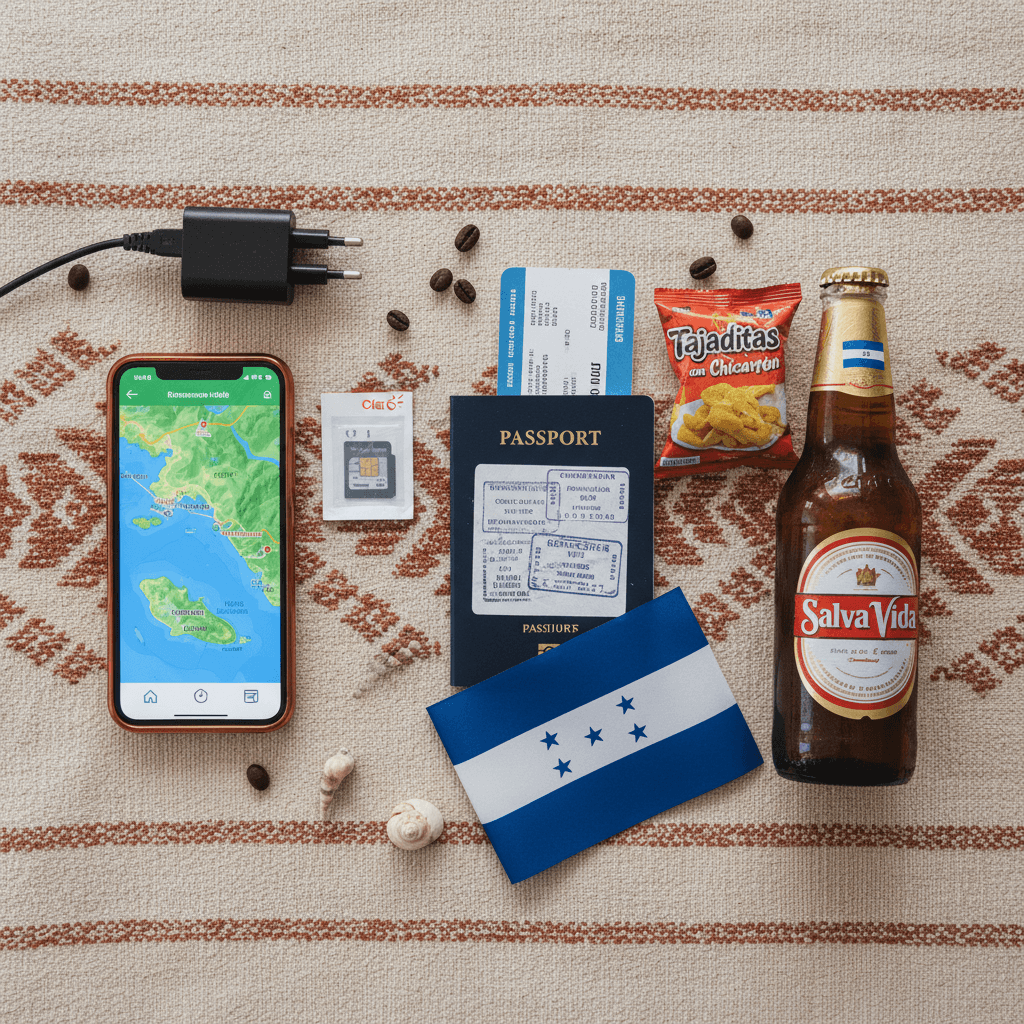
Honduras

Policy Stability
Stamped Nomad ExclusiveHow likely visa and immigration policies are to remain unchanged
Quick Facts
N/A
4 months
Yes
$1,000/mo
67 Mbps
3/10
Low
Medium
Low
CST
Entry Methods Available
Best For
The Lowdown on Entry Requirements
Honduras is surprisingly accessible for most digital nomads, though the paperwork depends heavily on your passport. If you are from the US, Canada, the UK, or the EU, you fall into the visa-exempt category. This means you can show up at the border or airport and get a stamp for 90 days without any prior application. Just make sure your passport is valid for at least 6 months from your arrival date.
There is no digital nomad visa yet, and Honduras does not offer visas on arrival or e-visas for those who aren't exempt. If your country isn't on the "free entry" list, you will need to head to a Honduran consulate. They offer a Consular Visa for tourism or business. A single-entry visa costs $30 USD and lasts for 30 days, while a multiple-entry version costs $60 USD and covers 90 days. You will need to provide bank statements, a work certificate, and photos to get this processed.
The CA-4 Border Agreement
Honduras is part of the Central America-4 (CA-4) Border Control Agreement alongside Guatemala, El Salvador, and Nicaragua. This is a double-edged sword for travelers. While it allows you to move between these four countries without extra paperwork, the 90-day limit is shared across all of them. If you spend 60 days in Guatemala and then cross into Honduras, you only have 30 days left before you need to leave the entire CA-4 zone or apply for an extension.
Staying Longer: Extensions and Residencies
If three months isn't enough time to explore the Bay Islands and the mainland, you can squeeze out a bit more time. You are allowed to extend a tourist stay once for an additional 30 days. You must visit an Instituto Nacional de Migración (INM) office, like the headquarters in Tegucigalpa, before your initial 90 days expire. After that 120-day total, you generally have to leave the CA-4 region to reset your clock.
For those looking to settle in more permanently, Honduras offers several residency pathways. These are more formal and require a lawyer, but they are great options for long-term nomads:
- Rentista: For those with a guaranteed monthly income from outside the country of at least $2,500.
- Retiree (Pensionado): Requires a permanent monthly pension of at least $1,500.
- Investor: Requires a minimum investment of $50,000 in a local business or project.
Recent Policy Updates
The immigration landscape saw some movement recently. In July 2025, the government introduced Ministerial Agreement 374-2025, which clarified the rules for "exceptional residency." This is mostly for specific legal cases rather than casual travelers, but it shows the INM is refining its framework. Additionally, a migrant amnesty extension was announced in January 2026, primarily helping those in transit through the country.
One major win for travelers is that the digital pre-check form was eliminated for almost everyone back in late 2023. Unless you are a Nicaraguan national, you no longer have to deal with that specific bit of online bureaucracy before you fly in. Keep an eye on the official INM portals, as they are the final word on any sudden shifts in fees or entry requirements.
Visa Summary for Quick Reference
- Visa-Exempt Nationalities: 90 days on arrival (includes US, UK, Canada, EU, Australia, Japan).
- Consular Tourist Visa: $30 for single entry, $60 for multiple entry.
- Visa Consultada: $100 fee; requires a local sponsor and INM approval.
- Extension: One-time 30-day addition at an INM office.
- Passport Requirement: Minimum 6 months validity.
The Current Reality of Remote Work in Honduras
If you are looking for a flashy, modern "Digital Nomad Visa" with a streamlined online portal, you won't find it here. Unlike its neighbors Costa Rica or El Salvador, Honduras hasn't hopped on the nomad-specific visa trend yet. However, that doesn't mean you can't live and work here legally. Professional nomads simply use existing residency categories that have been around for decades.
Most remote workers enter on a standard tourist window, which usually grants 90 days. If you want to stay longer and establish a base in Roatán or the Copán Valley, you'll need to look into residency as a Rentista or a Pensionado. These pathways weren't built for software engineers or freelance writers, but they work well if you have the right financial setup.
The Rentista Option: For the Investor Nomad
The Rentista visa is the primary route for non-retirees. The catch is that Honduras prefers "passive" income over a standard salary. To qualify, you need to show you receive US$2,500 every month from foreign sources like rental properties, investment dividends, or annuities.
- Income Requirement: At least US$2,500 per month from passive sources.
- Permit Duration: Each permit lasts for 4 years.
- Renewal: You can renew indefinitely as long as that bank statement keeps showing the required funds.
- Path to Citizenship: You can apply for citizenship after 3 years of residency, provided you pass a Spanish and civics exam.
- Permanent Residency: You become eligible for permanent status after 5 years.
The Pensionado Option: For the Early Retiree
If you are lucky enough to have a pension or a guaranteed government payout, the barrier to entry drops significantly. This isn't just for seniors; anyone with a guaranteed lifetime annuity can technically apply.
- Income Requirement: A minimum of US$1,500 per month from a government, private company pension, or bank annuity.
- Physical Presence: You must visit Honduras at least once every 12 months to keep the visa active.
- Duration: Like the Rentista, this is granted in 4-year blocks.
The Application Process
Applying for residency is handled by the Instituto Nacional de Migración (INM). While they have an online presence under the "Servicios Extranjeros" section of their website, don't expect a fully digital experience. You will likely need to hire a local attorney to handle the paperwork, as the process is notoriously bureaucratic.
Expect to provide a valid passport, proof of your monthly income through certified bank statements, and a clean criminal record. The timeline isn't fast; most nomads see their applications processed in 6 to 9 months. It is a game of patience, but the tax benefits on the other side are worth the wait.
Tax Benefits and Trade-offs
Honduras is incredibly tax-friendly for those on these specific residency permits. The government does not tax foreign-sourced income for Rentistas or Pensionados. This means the money you earn from your investments or properties abroad stays in your pocket. You only pay local taxes if you start a business within Honduras or earn money from a local Honduran source.
The biggest hurdle remains the nature of your income. If you are a traditional remote employee with a 1099 or W2, you might struggle to qualify for the Rentista visa since it technically requires passive income rather than active employment wages. Many nomads get around this by restructuring how they receive their pay, but it is a detail you should discuss with a legal expert before making the move.
Contacting the Authorities
For the most direct information, you can reach out to the Instituto Nacional de Migración. They operate a call center at +504 2232 7800 and accept inquiries via email at callcenter@inm.gob.hn. If you are already in the country, their main offices in Tegucigalpa are the hub for all foreign residency services.
The 90-Day Entry Reality
Honduras makes the initial entry process remarkably smooth for most digital nomads. If you hold a passport from the United States, Canada, the UK, the European Union, Australia, or Japan, you don't need to apply for anything before you land. You'll typically receive a tourist stamp for up to 90 days right at the airport or land border. Just make sure your passport is valid for at least six months from your date of entry.
There is no "visa on arrival" program for nationalities not on the exempt list. If your home country isn't part of the visa-free group, you'll need to coordinate with a Honduran consulate or use a third-party processor to secure a visa before you travel. While some third-party sites offer digital processing that can be handled in minutes, always double-check your specific requirements well in advance of your flight.
Understanding the CA-4 Trap
The most important thing to grasp about Honduran immigration is the CA-4 Border Control Agreement. Honduras shares a common "open border" zone with Guatemala, El Salvador, and Nicaragua. Think of it like a mini-Schengen Area. Your 90-day allowance is cumulative across all four countries.
If you spend 60 days in Antigua, Guatemala, and then cross into Copán Ruinas, you only have 30 days left on your original clock. Many travelers make the mistake of thinking a quick weekend in Nicaragua will reset their stay. It won't. To truly reset your 90 days, you have to leave the CA-4 zone entirely, usually by heading to Mexico, Belize, or Costa Rica.
How to Extend Your Stay
If 90 days isn't enough to soak up the Bay Islands or the jungles of La Ceiba, you can apply for a one-time extension. This is known as a prórroga. This adds another 30 days to your stay, bringing your total time in the CA-4 region to 120 days. This is the absolute legal limit for a tourist.
To get this done, you'll need to visit an Instituto Nacional de Migración (INM) office in a major city like Tegucigalpa, San Pedro Sula, or La Ceiba. You can also use the ALAM online system to start the process. You'll need to bring your passport, fill out the required forms, and pay the processing fee. It is much better to do this a week before your time expires than to deal with the headache of an overstay later.
Costs and Fees
- Single-entry consular visa: $30 USD (for non-exempt citizens).
- Multiple-entry consular visa: $60 USD (for non-exempt citizens).
- Air travel exit tax: Between $25 and $38 USD (usually included in your ticket price, but worth verifying).
- Extension fee: Generally a low administrative cost, but prices fluctuate based on current local regulations.
Overstays and Penalties
Honduras has become more diligent about tracking tourist stays through regional digital databases. If you overstay your 90 or 120 days, you'll face fines when you try to leave. These fines are scaled based on how long you stayed past your welcome. While a few days might just result in a fine, significant overstays can lead to entry bans ranging from three to six months.
Pay any fines at the immigration office before you head to the airport to avoid being turned away at the gate. If you plan on staying longer than four months, you should look into residency options rather than trying to "border run" your way through the year. The authorities are hip to the "perpetual tourist" lifestyle and can deny entry if they see a pattern of immediate re-entries.
Health Requirements
Honduras generally doesn't require specific vaccinations for entry. However, if you are arriving from a country with a high risk of Yellow Fever, such as certain regions in Brazil or Angola, you must show proof of vaccination. Keep your yellow card with your passport just in case your travel history triggers a check at the border.
Source
Understanding the Residency Landscape
Honduras doesn't currently offer a specific "digital nomad visa" or a trendy "golden visa" package. If you want to stay longer than a standard tourist entry allows, you'll need to fit yourself into one of the established residency categories. While the bureaucracy can feel slow, the pathways are relatively straightforward if you have a stable income or capital to deploy.
Most nomads enter on a 90-day CA-4 tourist permit, which can be extended, but for a true home base, you'll be looking at temporary residency. These permits generally lead to permanent residency after 5 years of continuous legal stay. You should expect the entire application process to take between 9 and 12 months, and you will definitely need to hire a Honduran lawyer to handle the filings with the government.
The Rentista: Best for High-Earning Freelancers
The Rentista category is the go-to for remote workers who can prove their income is passive or derived from sources outside of Honduras. The primary hurdle here is the income floor. You must demonstrate a stable, legal monthly income of at least $2,500 USD. This income needs to be transferred through a Honduran bank once your status is active.
- Cost: Expect to pay between $1,500 and $2,500 in legal fees, plus government stamps and authentication costs.
- Requirements: You'll need authenticated documents proving the source of your funds, such as investment dividends, rental income, or long-term contracts.
- Flexibility: This permit is renewable indefinitely as long as you keep meeting the income requirements.
The Pensionado: For the Early Retiree
If you have a guaranteed lifetime pension, the Pensionado visa is significantly more accessible. The income requirement drops to $1,500 USD per month. While typically used by traditional retirees, anyone with a permanent government or private corporate pension can apply. Adding dependents is relatively easy, costing about $150 in additional fees per person.
The Inversionista: Investing in the Local Economy
For those looking to start a business, such as a boutique hotel or a dive shop, the Investor visa is the primary route. This requires a minimum investment of $50,000 USD into a lawful economic activity. Simply buying a condo for yourself usually won't cut it; the investment needs to be part of a business plan that ideally creates local jobs.
- The Deposit: You must place a $5,000 USD deposit in the Central Bank, which is refundable once your residency is approved.
- The Paperwork: This path requires a feasibility study, a business timeline, and registration with the local Chamber of Commerce.
- Total Outlay: Between the investment, the deposit, and legal fees, you should budget $3,000 to $5,000 for the process itself, on top of your business capital.
The Application Checklist
Regardless of the category you choose, the paperwork remains fairly consistent. You will need to gather several documents from your home country, all of which must be apostilled or authenticated. Keep in mind that documents like police records and medical certificates are usually only valid for 6 months from the date of issuance.
- Police Record: A clean background check from your last place of residence.
- Medical Certificate: A signed statement from a doctor confirming you are in good health.
- Passport: A full copy of your passport, often required to be notarized locally.
- Movement Certificate: A document from the migration office showing your entry and exit dates from Honduras.
The Long Game: Permanent Residency and Citizenship
Once you’ve maintained your temporary status for 5 years, you can apply to become an "Inmigrado" or permanent resident. This removes the need for constant renewals and simplifies your life significantly. If you decide to go all in, you can apply for Honduran citizenship after 3 years of residency. For those from Central America or Spain, this timeline is shortened to 1 or 2 years.
Budgeting for this move is vital. Between government fees, lawyer retainers, and document translations, most nomads spend between $2,500 and $5,000 to get their residency over the finish line. It’s a significant upfront investment, but it provides a level of stability that hopping across borders every 90 days simply can't match.
Source 1 | Source 2
The Honduras Advantage
Honduras remains one of the most affordable frontiers for digital nomads in the 2025-2026 season. While neighboring hotspots in Costa Rica or Panama have seen costs skyrocket, Honduras offers a unique value proposition where a single person can live comfortably for anywhere between $700 and $1,500 per month. The price you pay depends largely on whether you want the urban energy of the mainland or the Caribbean lifestyle of the Bay Islands.
Your budget will stretch furthest in places like La Ceiba, while Roatán demands a premium for its world-class diving and beachfront real estate. Even in the high-end bracket, you are looking at a fraction of the cost of living in North America or Western Europe.
Breaking Down Monthly Rent
Housing is your biggest variable. In the major cities, modern apartments with reliable power and internet are becoming easier to find, though you should expect to pay more for units in gated communities or areas with 24/7 security.
- Tegucigalpa: Budget options start around $215, while a comfortable 1BR in a central, modern building averages $350. High-end units in luxury towers can exceed $500.
- San Pedro Sula: The business hub is slightly pricier. Expect $300 for basic living, $450 for a standard nomad setup, and up to $700 for premium gated residences.
- La Ceiba: This is the ultimate budget win. You can find decent spots for $150, and even a premium experience rarely tops $400.
- Roatán: Island life comes with a price tag. Budget rentals start at $600, while comfortable beachfront units sit between $900 and $1,400.
Food and Dining
Groceries and dining out for one person generally hover around $250 to $350 per month. If you stick to local markets and seasonal produce, you will save a fortune. Imported goods from the US or Europe are readily available in major supermarkets but will quickly inflate your grocery bill.
A typical meal at a local "comedor" costs about $5 to $7. If you prefer western-style cafes or high-end restaurants in Roatán or Tegucigalpa, expect to pay $15 to $25 per person. Food costs on the islands are naturally higher because almost everything is shipped in from the mainland.
Connectivity and Coworking
Reliable internet is no longer the hurdle it once was. Coworking spaces have popped up in all major hubs, offering high-speed fiber and backup generators. A monthly hot desk typically costs between $100 and $250. If you require a private office or heavy air conditioning, some premium spaces in San Pedro Sula or Roatán charge upwards of $300.
Transportation and Health
Getting around is relatively cheap if you use local transport. Monthly costs for buses and occasional taxis usually range from $50 to $150. In Roatán, many nomads rent scooters or use water taxis, which can push the monthly transport budget closer to $100.
Healthcare is an area where you can save significantly. An out-of-pocket visit to a local doctor usually costs between $20 and $50. However, comprehensive digital nomad insurance is highly recommended for emergencies, usually costing between $45 and $150 per month depending on your age and coverage level.
Monthly Budget Estimates by City
Tegucigalpa (The Capital)
- Budget Tier ($700): $250 Rent, $250 Food, $50 Transport, $100 Coworking/Insurance.
- Comfortable Tier ($1,030): $350 Rent, $300 Food, $100 Transport, $280 Coworking/Insurance.
- Premium Tier ($1,500+): $500 Rent, $400 Food, $150 Transport, $450 Coworking/Insurance.
San Pedro Sula (The Business Hub)
- Budget Tier ($800): $300 Rent, $300 Food, $50 Transport, $150 Coworking/Insurance.
- Comfortable Tier ($1,180): $450 Rent, $350 Food, $100 Transport, $280 Coworking/Insurance.
- Premium Tier ($1,650+): $600 Rent, $450 Food, $150 Transport, $450 Coworking/Insurance.
La Ceiba (The Gateway)
- Budget Tier ($590): $150 Rent, $250 Food, $40 Transport, $150 Coworking/Insurance.
- Comfortable Tier ($840): $250 Rent, $300 Food, $60 Transport, $230 Coworking/Insurance.
- Premium Tier ($1,250+): $400 Rent, $350 Food, $100 Transport, $400 Coworking/Insurance.
Roatán (The Island Paradise)
- Budget Tier ($1,180): $600 Rent, $300 Food, $80 Transport, $200 Coworking/Insurance.
- Comfortable Tier ($1,680): $900 Rent, $350 Food, $100 Transport, $330 Coworking/Insurance.
- Premium Tier ($2,400+): $1,300 Rent, $450 Food, $150 Transport, $500 Coworking/Insurance.
Roatán (Bay Islands)
If you want the Caribbean lifestyle without the price tag of the Caymans, Roatán is the clear winner. It is currently the most developed hub for remote workers in the country, specifically around West End and West Bay. You will find dedicated spaces like Roatan Cowork that offer something rare on the mainland: backup power generators and stable 20-30 Mbps connections.
The vibe here is centered on diving and beach life. While it is the most expensive spot in Honduras with monthly costs between $1,500 and $2,000, the safety trade-off is significant. It feels much more secure than the big cities, though you should still keep an eye on your gear in tourist crowds.
- Monthly Cost: $1,500-$2,000
- Internet Speed: 20-30 Mbps
- Vibe: Tropical, active, and social
- Pros: Best nomad infrastructure, incredible diving, and reliable power backups.
- Cons: Higher rent (around $400 for a basic studio) and island-price markups on groceries.
Tegucigalpa
The capital is a sprawling mountain city that offers the best "big city" amenities in the country. For those who need professional environments, Tegucigalpa has the most variety in coworking, including established names like Regus and Davinci. You can grab a desk for about $13 an hour when you need to grind, then hit a jazz festival or a high-end cafe in the evening.
Living here is surprisingly affordable, often averaging $660 to $2,000 a month depending on your lifestyle. However, the traffic is notoriously bad. You will want to base yourself in central, safer neighborhoods like Colonia Palmira to avoid long commutes and safety risks in the outskirts.
- Monthly Cost: $660-$2,000
- Internet Speed: 12-25 Mbps
- Vibe: Urban, cultural, and fast-paced
- Pros: Excellent cafe culture, cheap rent (averaging $350), and professional networking.
- Cons: Heavy traffic and higher crime rates in non-central districts.
San Pedro Sula
Often overlooked because of its gritty reputation, San Pedro Sula is the country's industrial engine. It is not a "pretty" city, but it works well for nomads who want a base with modern malls, gyms, and a surprisingly vibrant nightlife in the Zona Viva. Places like Cielo Rooftop offer a sophisticated side to a city that is otherwise all business.
Internet speeds hover around 7-13 Mbps, which is enough for basic Zoom calls but might struggle with heavy video editing. It is a humid place, so factor in a higher electricity bill for air conditioning. Safety is a serious consideration here; you need to be intentional about where you walk and stay.
- Monthly Cost: $1,500-$3,500
- Internet Speed: 7-13 Mbps
- Vibe: Industrial, business-heavy, and humid
- Pros: Great food scene, modern amenities, and easy airport access.
- Cons: High crime statistics, slow internet, and intense heat.
La Ceiba
Known as the "Friendship City," La Ceiba is the gateway to the Bay Islands and the Cangrejal River. It offers a gritty, authentic coastal feel with much lower prices than Roatán. You can find decent apartments for $300 a month and enjoy a very low cost of living, often staying under $1,000 total.
The nomad community is small here, but the expat scene is welcoming. It is a great spot if you want to balance work with weekend trips to the Cayos Cochinos or rainforest hikes. Just be prepared for the occasional power outage and stick to well-lit areas after dark.
- Monthly Cost: $625-$1,960
- Internet Speed: 10-20 Mbps
- Vibe: Gritty, coastal, and unpretentious
- Pros: Very affordable, great nightlife, and easy ferry access to the islands.
- Cons: Inconsistent infrastructure and small remote work community.
Copán Ruinas
If the chaos of the big cities sounds exhausting, Copán Ruinas is the antidote. This is a charming, cobblestoned town famous for its Mayan ruins. It is easily the safest mainland option for nomads. The pace is slow, the air is clean, and the cost of living is bottom-of-the-barrel cheap, with groceries costing as little as $40 a week.
The internet is surprisingly reliable for such a remote-feeling town, and there are several quiet cafes where you can work for hours. It is ideal for writers, researchers, or anyone who prefers birdwatching over bar-hopping. Don't expect a wild nightlife scene; this is a place for early risers and history buffs.
- Monthly Cost: $600-$1,200
- Internet Speed: Reliable for basic tasks
- Vibe: Quiet, historic, and safe
- Pros: Extremely low cost of living, high safety levels, and beautiful scenery.
- Cons: Very limited nightlife and a long trek from major airports.
Connectivity Overview
Honduras has made significant strides in its digital infrastructure, moving away from its reputation for spotty service. While you shouldn't expect lightning-fast speeds in remote mountain villages, the urban hubs and major islands now offer reliable environments for serious remote work. Fiber optic expansion has pushed average fixed broadband speeds to around 95 Mbps, with some providers like Newcom hitting peaks over 100 Mbps.
If you are planning to base yourself in Tegucigalpa or San Pedro Sula, you will find a professional setup comparable to most North American cities. Mobile data serves as an excellent fallback, with 4G and 5G networks delivering download speeds between 25 and 67 Mbps. It is a stable enough environment for video conferencing and heavy file uploads, provided you choose your base wisely.
Fiber Availability and Home Internet
Fiber optic (FTTH) is the gold standard here and is widely available in key economic zones. Tegucigalpa and San Pedro Sula lead the way, but you can also find reliable fiber in Danlí, Puerto Cortés, and parts of Roatan. Major providers like Tigo, Claro, and Cable Color offer residential and business plans ranging from 100 to 300 Mbps.
A recent partnership between the national telecom Hondutel and Starlink is also bridging the gap in more rural areas. This hybrid approach is making satellite-backed public access more common, though for a dedicated home office, sticking to a fiber-ready apartment in a major city remains the safest bet for consistent uptime.
Top Coworking Spaces
The coworking scene is concentrated where the infrastructure is strongest. These spaces are your best insurance policy against the occasional power flicker, as many include backup generators and redundant internet lines.
- Roatan Cowork (Roatan): The premier choice for island life. It features air conditioning, high-speed WiFi, and generator backup to keep you online during tropical storms.
- Regus (Tegucigalpa & San Pedro Sula): Located in Torre Nova 2 in the capital, this offers a corporate, polished environment for those who need private meeting rooms and professional amenities.
- sinergiaHN (San Pedro Sula): A great spot for networking with local entrepreneurs and creatives in a modern setting.
- Workspace (San Pedro Sula): Known for its flexible desk options and community vibe.
- Connect Cowork & Easyofficehn (Tegucigalpa): Reliable urban spots with all the standard office perks like printing and bottomless coffee.
Membership and Pass Costs
Pricing for professional space varies significantly between local boutique spots and international chains. Expect to pay a premium for the convenience of Roatan or the reliability of a global brand.
- Roatan Cowork: General monthly memberships hover around $195 USD.
- Regus Access: Monthly plans start at approximately $210 USD, though this often requires a longer commitment.
- Short-term Access: Day passes at high-end spots can be pricey at $45 USD, while hourly rates sit around $13 USD.
- Local Options: In cities like San Pedro Sula, local spots like sinergiaHN offer much more budget-friendly rates starting around $50 USD per month.
Cafe Culture and WiFi Reliability
Working from cafes is a viable option for light tasks, but it comes with caveats. Most popular spots like Cafe Aroma, Cafe del Sol, and Cafe Bohemio offer functional high-speed connections suitable for emails or social media management. You can generally expect speeds between 10 and 20 Mbps in these environments.
However, cafe WiFi can be inconsistent for high-stakes video calls or transferring massive datasets. The noise levels in urban cafes can also be a distraction. Use these spots for a change of scenery, but keep a mobile hotspot or a coworking membership handy for your "deep work" sessions.
Mobile Data for Nomads
Staying connected on the move is affordable and straightforward. Tigo and Claro are the two main players, and both offer eSIM options which are a lifesaver for modern devices. You can pick up a local SIM card at the airport or any convenience store for a few dollars.
- Short-term Data: 1GB for 7 days costs about $4.50 USD.
- Standard Monthly: 20GB for 30 days is roughly $29 USD.
- Heavy User: 50GB for 30 days with hotspot capabilities costs around $69 USD.
- Budget Weekly: Tigo offers 10GB for 7 days for about $15 USD (L300).
For those who prefer to have data the moment they touch down, ByteSIM provides 20GB plans on the Claro network, though local prepaid plans usually offer the best value for money.
The Two-Tier Reality
Honduras operates on a dual healthcare system that presents a stark contrast between public and private services. For the average digital nomad, the private sector is where you will spend your time. While the public system, managed by the Ministry of Health and IHSS, provides free or low-cost care to residents, it is frequently plagued by overcrowding, long wait times, and resource shortages. It works for basic needs in a pinch, but the quality varies wildly once you leave the major cities.
Private healthcare is the gold standard here. It offers modern facilities, faster service, and advanced medical equipment that rivals international expectations. Most expats find that even without insurance, out-of-pocket costs in private clinics are manageable, often 40% to 70% cheaper than similar procedures in North America.
Top-Tier Hospitals and Facilities
If you are basing yourself in Tegucigalpa or San Pedro Sula, you have access to some of the best medical care in Central America. Many specialists in these facilities were trained in the United States and speak excellent English.
- Tegucigalpa: Hospital Cemesa and Honduras Medical Center are the top choices for cardiology, oncology, and emergency care.
- San Pedro Sula: Hospital del Valle and Hospital de Especialidades provide high-standard surgical and orthopedic services.
- Roatan and La Ceiba: While smaller, these expat hubs have reliable private clinics capable of handling emergencies and stabilization before a transfer.
Insurance Strategies for Nomads
While permanent residents can contribute to the IHSS public system, it is rarely the best move for a nomad. Most travelers opt for international health plans from providers like Cigna Global, Allianz, or Bupa. These plans ensure you can walk into a private hospital and have your expenses covered, including emergency evacuations if you are diving in the Bay Islands or hiking in remote jungles.
For shorter stays, high-quality travel insurance is usually sufficient. Just be aware that most private hospitals expect payment upfront if they do not have a direct billing agreement with your specific provider. Always keep your digital policy handy and be prepared to pay via credit card and claim a reimbursement later.
What You Will Pay
The transparency of pricing in the private sector is a breath of fresh air compared to the opaque billing systems in the US. Here is a breakdown of what you can expect to pay out-of-pocket:
- General Doctor Visit: $5 to $15
- Private Hospital Room: $30 to $40 per night
- Complex Surgeries: Starting as low as $1,000
- Public Consultation: Approximately $0.25
Pharmacies and Prescriptions
You will find "farmacias" on almost every street corner in urban areas. Major chains like Farmacias Siman, Kielsa, and El Ahorro are reliable and well-stocked. One of the biggest perks is that many medications requiring a prescription elsewhere are available over-the-counter here, and generics are widely used to keep costs low.
Some larger pharmacies even have in-house doctors who can provide quick consultations for minor ailments. If you have specific maintenance medications, bring a supply from home along with a doctor’s letter, though you will likely find what you need locally at a fraction of the price.
Emergency Response
In an emergency, dial 911 nationwide. While this connects you to police, fire, and ambulance services, the response time for public ambulances can be slow, especially in rural areas. If you are in a city, it is often faster to call a private hospital directly for their ambulance service or take a taxi if the situation allows. Private EMS teams are better equipped and will take you directly to the facility best suited for your needs.
Managing Your Lempiras
Honduras operates on the lempira (HNL), but you will find that the U.S. Dollar is a powerful secondary currency. In tourist hubs like Roatán or Copán Ruinas, many hotels and tour operators list prices in USD. Always keep a stash of crisp, unmarked dollar bills for emergencies, but use lempiras for your daily baleadas and taxi rides to get the best value.
When you head to the ATM, always opt to be charged in the local currency rather than letting the machine do the conversion for you. This avoids "Dynamic Currency Conversion," which is essentially a hidden fee disguised as a convenience. Most machines have a withdrawal limit between 4,000 and 5,000 HNL per transaction. Since fees hover around 115 HNL ($4.60 USD) per pull, it is smarter to take out the maximum amount each time rather than making frequent small withdrawals.
Opening a Local Account
For most digital nomads staying a few months, a local bank account is more of a headache than a help. If you are settling in for the long haul, you will typically need residency status to open a personal account. However, major institutions like Banco Atlántida or Ficohsa sometimes work with non-residents if you can provide a solid paper trail.
Expect to visit a branch in person and bring the following:
- A valid passport and a secondary ID.
- Proof of a Honduran address (a utility bill or rental lease).
- A bank reference letter from your home country.
- An initial deposit, usually between $50 and $200 USD.
Banks like BAC Credomatic are popular with expats because they offer user-friendly online portals and accounts denominated in USD, which helps you avoid local currency fluctuations.
Digital Wallets and Neobanks
If you already have a Wise or Revolut card from your home country, bring it. These cards work reliably at ATMs and for card payments in major supermarkets or malls. They offer much better exchange rates than traditional banks. Just keep in mind that you cannot sign up for a new account using a Honduran address; these services do not currently issue cards to local residents.
For moving larger sums of money or paying a local landlord, Xoom and Remitly are your best bets. They allow for quick bank deposits or cash pickups at thousands of locations like Elektra or Banco Atlántida. Wise is excellent for peer-to-peer transfers if you find a landlord who also uses the platform.
The Crypto Scene
Honduras has a complicated relationship with crypto. As of 2024, the national banking regulator (CNBS) has prohibited supervised banks from touching crypto assets. This means you cannot use a local bank account to buy Bitcoin or trade on exchanges. While there is no law stopping you from trading personally, you are on your own if things go south.
If you do trade, remember that capital gains are technically subject to a 15% tax. Large transfers over $10,000 USD will trigger anti-money laundering reporting requirements. Stick to your international accounts for crypto activity to avoid getting your local funds frozen.
Best Practices for Nomads
- Banco Occidente often has lower ATM fees compared to the flashier machines in malls.
- Always carry some cash. While cards are fine in San Pedro Sula or Tegucigalpa, smaller beach towns still run on paper.
- Notify your home bank before you arrive. Honduran ATMs are frequently flagged for fraud, and you do not want your primary card blocked on day one.
- Use PayPal for larger business transactions, as it is widely recognized by local professionals.
Residency Options for Your Whole Crew
Honduras is surprisingly welcoming to families looking to plant roots. If you are working remotely with a steady income, the Rentista visa is your best bet, requiring $2,500 in monthly passive income. If you are retired or have a guaranteed pension, the Pensionado visa lowers that threshold to $1,500. Both options allow you to bring your spouse and children under 21 as dependents.
You will need to hire a local attorney to handle the paperwork. Make sure your birth certificates and marriage licenses are apostilled and translated into Spanish before you arrive. If you have the capital, an investment of $50,000 also opens the door for an investor visa that covers your family. These applications happen in person, so plan for a few trips to government offices in the city.
Schooling and Education
Most nomad families gravitate toward Tegucigalpa or San Pedro Sula because that is where the top-tier international schools are located. These institutions typically follow American or British curricula, offering instruction in English while keeping Spanish as a core subject. It is a great way for kids to integrate without losing a step in their home-country education.
Costs vary significantly depending on the prestige of the school:
- Discovery School: Annual tuition ranges from $3,465 to $8,146.
- Europa Schule: A more budget-friendly option at $2,674 to $3,080 per year.
- Elite Tiers: The most exclusive schools can exceed $12,000 annually.
Keep in mind that registration fees usually add another $500 to $1,000 to the bill. You will also need to budget $150 to $300 for uniforms, which are standard practice here.
Healthcare for the Little Ones
The public healthcare system can be slow and crowded, so private care is the standard for expat families. In the major cities, private hospitals feel very similar to those in the US or Europe, often staffed by doctors who trained abroad and speak fluent English. It is smart to find a pediatrician as soon as you land to establish a relationship for vaccinations and routine checkups.
International health insurance is a must. Plans from providers like Allianz Care usually cover pediatric services and emergencies. While urban care is excellent, remember that medical facilities in rural areas are much more basic. If you are living in a remote spot, always have a plan for getting to a city hospital quickly.
Where to Settle Down
Choosing the right neighborhood makes all the difference for a family's quality of life. Roatán is a top pick for many because of its laid-back island vibe, lower crime rates, and proximity to the reef. On the mainland, certain cities offer specific perks:
- Tegucigalpa: Home to the best museums, sports clubs, and the massive La Tigra National Park.
- San Pedro Sula: Offers great eco-parks and zoos for weekend outings.
- Copán Ruinas: A quiet, safe town perfect for families who love history and a slower pace of life.
Stick to gated communities or well-known expat enclaves like Lomas del Guijarro in the capital or Colonia Trejo in San Pedro Sula. These areas provide a buffer and a sense of community that helps kids adjust faster.
Childcare and Daily Support
One of the biggest perks of living in Honduras is the affordability of help at home. Private preschool or kindergarten costs around $220 to $272 a month, which is a fraction of what you would pay in North America. Hiring a nanny is also very common. Local rates for babysitters generally run between $2 and $5 per hour. Full-day care packages can be found for $18 to $40, allowing you to focus on your remote work while the kids are in good hands.
Staying Safe
Safety requires a common-sense approach. While the headlines about Honduras can be intimidating, crime is mostly concentrated in specific high-poverty areas. Families should avoid being out late at night, stay away from unlit areas, and use pre-arranged transport rather than hailing random taxis. Living in a secure neighborhood and staying aware of your surroundings goes a long way in ensuring a smooth experience for your family.
Understanding the Safety Landscape
Honduras carries a reputation that often precedes it. With a crime index of 72.0, it ranks as the sixth most dangerous country globally in terms of statistical data. However, for a digital nomad, the reality on the ground is nuanced. Most violent crime, including gang disputes and homicides, rarely targets the expat community. While major hubs like Tegucigalpa and San Pedro Sula require high levels of vigilance due to risks of carjacking and armed robbery, the Bay Islands tell a different story.
Roatán and Utila operate on a different frequency. These islands feature dedicated tourism policing and a much more relaxed atmosphere. Even in these "safer" zones, petty theft remains the primary concern. You should avoid walking alone at night on unlit beaches and keep your tech gear out of sight when moving between cafes. The general rule here is simple: don't flash your wealth, use private transport after dark, and stay within well-trafficked areas.
Common Scams to Avoid
Street smarts go a long way in Central America. In urban centers, you might encounter "fake police" who demand to see your passport or attempt to issue an immediate cash fine for a fabricated infraction. Legitimate officers will usually be in full uniform and won't mind heading to a station to process paperwork. Other common headaches include:
- The Meterless Taxi: Drivers may claim their meter is broken or take the long way around. Always negotiate the fare before you sit down.
- Phony Tour Guides: Someone might start giving you a history lesson unprompted and then demand a "service fee" at the end.
- Skimming: Credit card fraud spikes during local bonus seasons. Stick to ATMs located inside banks rather than those on the street.
- Donation Requests: Be wary of individuals collecting for "local charities" without official identification.
Cultural Etiquette and Social Integration
Honduran culture is built on personal connections. A quick "buenos días" or "buenas tardes" isn't just a politeness; it is a social requirement. If you dive straight into a business request or a coffee order without a greeting, you will likely be viewed as rude. People here value a relaxed pace of life, often referred to as "mañana" time. If a meeting starts 15 to 20 minutes late, don't take it as a sign of disrespect.
To truly integrate, you need to step out of the expat bubble. While it is tempting to stick to the gated communities of Lomas del Guijarro, joining a local football club or volunteering with a community project will earn you much more respect. Dress modestly when visiting smaller villages or churches, and always wait for your host to begin eating before you start your meal.
Language and Communication
If you are heading to Roatán, you can get by with English. Outside of the Bay Islands, Spanish is the undisputed king. You don't need to be fluent to survive, but you do need it to thrive. Locals deeply appreciate the effort of a foreigner trying to piece together a sentence, even if your grammar is a mess. Using apps is a start, but taking a few classes in a neighborhood like West End will change your experience entirely. Most digital nomads find that a basic grasp of Spanish is the difference between feeling like a permanent tourist and feeling at home.
LGBTQ+ Considerations
Honduras remains a conservative society where the Catholic Church and evangelical groups hold significant influence. While there are no laws criminalizing same-sex acts, there is no legal recognition for same-sex marriage, and trans individuals face significant legal hurdles. Violence and discrimination against the LGBTQ+ community are documented issues, with 43 reported murders in 2022. Discretion is often the default for travelers. While you will find safe spaces and supportive NGOs in the larger cities, public displays of affection may draw unwanted attention or harassment.
The Expat and Nomad Network
The nomad scene is small, making up less than 1% of the population, but it is incredibly tight-knit. You will find the highest concentration of remote workers in Roatán and Utila, where the lifestyle revolves around diving and beach-side coworking. In the capital, Tegucigalpa, the community is more professional, centered around spots like Impact Hub. Internet speeds in these hubs typically range from 10 to 50 Mbps, which is reliable enough for most video calls and remote workflows.
- Roatán (West End/West Bay): The primary hub for nomads who want a tropical lifestyle and established infrastructure.
- Tegucigalpa: Best for those who want a "real city" feel and access to better healthcare and networking.
- Utila: A younger, more budget-friendly crowd focused on the backpacker-to-nomad pipeline.
Understanding Tax Residency
Honduras has one of the most aggressive timelines for tax residency in the region. You are considered a tax resident if you spend just 90 days in the country during a calendar year. This is a much smaller window than the typical 183-day rule found in most of Europe or North America. While this makes it easy to plant a flag here, it also means you need to be mindful of your calendar if you are just passing through.
To formalize your status, you generally need to hold a specific residency permit. The Rentista visa is the go-to for nomads since it targets those with stable foreign income. There are also options for retirees (Pensionados) and investors. If you are living in Honduras on foreign-sourced income, the good news is that you generally won't be taxed on those earnings by the Honduran government.
Income Tax Brackets for Residents
If you do end up owing tax on local income, Honduras uses a progressive scale measured in Honduran Lempiras (HNL). The brackets break down as follows:
- 0% tax: On income from 0 to 209,369.62 HNL
- 15% tax: On income from 209,369.63 to 319,251.54 HNL
- 20% tax: On income from 319,251.55 to 742,445.49 HNL
- 25% tax: On income over 742,445.50 HNL
Non-residents are handled differently. If you aren't a resident but earn money from a Honduran source, the payer will usually apply a flat withholding tax at the source.
The Próspera ZEDE Lump Sum Program
On the island of Roatán, there is a unique jurisdiction called Próspera ZEDE that operates under its own legal and tax framework. They offer a specific "Lump Sum" program that is a game-changer for high-earning nomads who want a predictable tax bill. For an annual fee of $5,000 USD, you can cover all your income taxes regardless of how much you actually make. This program is available for elections made before December 31, 2029.
To qualify, you have to register a business entity in Próspera and pledge that you aren't a tax resident anywhere else. You also have to visit the island for at least 7 days within a 12-month period. If you make that visit, they give you a $1,000 USD rebate on your fee. Keep in mind that U.S. citizens generally can't benefit from this due to Uncle Sam's habit of taxing citizens no matter where they live. Also, this lump sum doesn't cover VAT or property taxes; those are still paid separately.
Crypto and Bitcoin Adoption
Honduras is becoming a fascinating spot for crypto enthusiasts, particularly within Próspera. They have officially recognized Bitcoin as a unit of account. This means businesses can actually use Bitcoin for their internal accounting and tax filings. You just have to notify the tax commission within 30 days of the tax period starting.
Currently, you still have to settle the final bill in USD or Lempiras while they finish building the tech to accept direct BTC payments. Outside of the ZEDE, the rest of Honduras follows standard capital gains logic. You need to keep meticulous records of your trades and cost basis to ensure you are reporting gains and losses correctly when you file.
Filing and Deadlines
Standard residents in Honduras need to file their annual tax returns by April 30th. This covers everything earned in the previous calendar year. If you are running a business, you are expected to keep formal accounting records that meet local standards.
For those in the Próspera program, the requirements are more about administrative compliance. You must submit your signed non-residency pledge, show proof of your business registration, and pay your annual fee on time. If you miss these steps, you lose the flat-fee benefit and revert to the standard progressive tax rates, often with penalties and interest tacked on.
Double Taxation Treaties
Honduras has a limited network of tax treaties. Currently, agreements are in place with Canada, Mexico, Spain, and Argentina. These treaties are designed to make sure you aren't paying the same tax twice on dividends or royalties. If you aren't from one of those countries, you'll want to check with a tax pro back home to see how your local government treats taxes paid in Honduras. The country also shares tax information with the U.S. and other Central American neighbors, so transparency is the standard here.
Connectivity and Data
Staying online is the baseline for any nomad, and Honduras offers a few reliable paths to get there. If you have a phone that supports eSIMs, providers like Nomad or Simsolo are your best bet for immediate data upon landing. You can snag 1GB of data for around $4.50 on the Claro network, which is generally robust. Simsolo even offers unlimited plans starting at $7.98. The beauty of the eSIM approach is that you keep your home number active for WhatsApp while using local data for everything else.
For those who prefer a physical SIM or need a local number, Tigo and Claro are the dominant players. You can find their kiosks in airports or small shops called "pulperias" in almost every neighborhood. Hondutel is the state provider, but most travelers stick to Tigo or Claro for better 4G and 5G coverage in urban areas and tourist hubs like Roatán.
Getting Around
While local buses and "colectivos" are cheap, they aren't always the safest or most efficient choice for someone carrying a laptop. In Tegucigalpa, Uber is your best friend. It provides a layer of accountability that street taxis lack. You can choose from several tiers:
- Uber Moto: Best for solo travelers beating city traffic.
- Uber Comfort Electric: A cleaner, modern ride for longer hauls.
- Uber XL: If you are moving between Airbnbs with all your gear.
DiDi Rider is another solid alternative that often competes on price. If you find yourself in a spot without apps, traditional taxis are available, but it is better to have your accommodation call a trusted driver rather than hailing one on a dark street corner.
Where to Set Up Your Base
Honduras has three distinct vibes depending on what you need from your workday. If you want city life and amenities, look at Tegucigalpa. The neighborhoods of Lomas del Guijarro and Colonia Palmira are the top picks for expats. They offer secure compounds, proximity to business districts, and plenty of cafes. El Progreso is also a favorite for those looking for furnished apartments that won't break the bank.
For the island life, West End in Roatán is the gold standard. It’s laid-back, filled with bars, and has a high concentration of other nomads. If you prefer the mountains and a colonial feel, El Centro in Gracias is a hidden gem with decent access to co-working spaces and a much slower pace of life.
Housing and Food Logistics
Airbnb is the most straightforward platform for finding monthly rentals. Many hosts offer significant discounts for stays over 28 days, and you can filter specifically for "dedicated workspaces." Booking.com is also useful, particularly for finding boutique hotels or short-term vacation rentals in Roatán or Copán Ruinas.
When you don’t feel like cooking, the delivery ecosystem is surprisingly good. Uber Eats and Glovo are the primary players. Glovo is especially useful because it partners with over 240,000 stores and restaurants, meaning you can get groceries or pharmacy items delivered right to your door alongside your dinner.
Safety and Common Pitfalls
Honduras requires a bit more situational awareness than some other nomad hubs. The most important rule is to keep a low profile. Avoid wearing flashy jewelry or expensive watches, and try not to pull out your latest iPhone or MacBook in crowded public areas. If you are working in a cafe, pick a seat away from the door.
ATM security is another big one. Always use machines located inside banks or well-lit shopping malls. Cover your hand when entering your PIN and check the card slot for any loose parts or "skimmers." If you are driving, stay off the roads at night. Potholes, unlit vehicles, and wandering livestock make night driving a genuine hazard.
Communication and Emergencies
Spanish is the primary language, and while you can get by with English in Roatán, the mainland is a different story. Duolingo is great for the basics, but if you want to actually hold a conversation with your neighbors, Taalhammer is a better investment for learning full sentences and local phrasing.
In case of trouble, keep these numbers saved in your phone:
- 911: General emergencies (Police, Fire, Ambulance).
- 195: Red Cross.
- 198: Fire Department.
Always use a VPN when connecting to public WiFi in cafes or airports to protect your data, and double-check your Airbnb for any security red flags, like broken window locks or doors that don't feel sturdy.
Latest Nomad News
EU keeps 3 hour delay rule and bans no-show fees in passenger rights overhaul
The EU reached a political agreement to revise air passenger rights, keeping the three-hour delay compensation threshold, improving fare transparency, banning no-show policies for return flights, and strengthening rights for passengers with reduced mobility. This matters for Central American travelers, expats, and digital nomads flying to or from the EU, but the rules still require formal adoption and later publication before they apply.
How Saint Lucia’s Non-Immigrant Visa Works for Honduran Nomads
Honduran passport holders can now apply for a one-year digital nomad visa to live and work remotely in Saint Lucia. Applicants must provide proof of remote employment, meet income requirements, and hold valid health insurance.
Inside Honduras’s Independent Means Residency
Honduras provides a residency pathway for foreign nationals who can demonstrate a consistent monthly foreign income of at least US$1,500. The Independent Means Visa offers a validity period of one to five years, making it a viable option for remote workers and retirees seeking long-term stays.
How Honduras Exceptional Residency Works for Remote Workers
Honduras has introduced Ministerial Agreement No. 374-2025, lowering the barrier for foreign nationals to obtain residency. Applicants can now qualify with only 50% of standard income thresholds if they meet specific exceptional criteria, such as family ties or humanitarian grounds.
Stay Updated on Honduras
Get notified about visa changes, policy updates, and new information for digital nomads in Honduras.