Finland landscape
🔌Plug & Play
🇫🇮

Finland

Complete Digital Nomad Guide

Brandon Richards
Brandon Richards ·

Policy Stability

Stamped Nomad Exclusive
9/10Very Stable

How likely visa and immigration policies are to remain unchanged

Quick Facts

Nomad Visa Cost

N/A

Income Requirement

$1,300/mo

Max Stay

3 months

Renewable

No

Cost of Living

$2,150/mo

Avg Internet

232 Mbps

Safety Score

8/10

Healthcare

High

Coworking

High

English Friendly

High

Time Zones

EET, EEST

Entry Methods Available

Visa Free

Best For

solocityeurope-basefamilies

The Basics: Short-Term Stays

If you are looking to test the Finnish waters for a few months, you will likely fall under the Schengen Category C visa. This allows you to stay for up to 90 days within any 180-day period. Finland offers single, double, and multiple-entry versions of this visa, with the multiple-entry option potentially valid for up to five years if you are a frequent visitor.

For most travelers, the application fee is €90. You will need to show up in person at a Finnish mission or application center to provide biometric data. Processing usually takes about 15 days, but it can stretch longer during peak seasons, so do not leave it until the last minute.

If you are from a visa-exempt country like the United States, Canada, Australia, or Japan, you can skip the paperwork for now. However, starting in 2025, you will need to register with the ETIAS system before boarding your flight. This digital authorization covers the entire Schengen area for the standard 90-day window.

Long-Term Stays and Category D Visas

Digital nomads and remote workers planning to stay longer than three months need to look into Category D visas and residence permits. Unlike short-stay visas, these are handled by the Finnish Immigration Service, known locally as Migri. You can manage your application and check current processing times on Finland's official immigration portal.

Business travelers also fall under specific rules. If you are coming for meetings or networking, you still pay the €90 fee but must provide an official invitation from a Finnish partner or company to justify the trip.

New Rules for 2025 and 2026

Finland has recently tightened its immigration policies, particularly regarding costs and long-term residency. If you are planning to transition from a nomad to a permanent resident, the bar is now significantly higher. As of January 8, 2026, the path to permanent residency changed from four years of living in Finland to six years.

Financial and language requirements have also become more strict. To qualify for permanent residency now, you must:

  • Show an annual income of at least €40,000.
  • Prove two years of work history.
  • Demonstrate B1-level proficiency in either Finnish or Swedish.

There is a small window of opportunity if you were already close to qualifying under the old rules. A six-month grace period exists for those who meet the previous four-year requirement, though you will still have to pay the updated, higher application fees.

Updated Processing Fees

Budgeting for your move now requires a bit more capital. Since January 1, 2026, the cost of securing your legal status in Finland has risen across the board. The current fee structure for common permits includes:

  • First-time work or study permit: €750 for online applications or €800 for paper.
  • Permit extensions: €210.
  • Permanent residence (Electronic): €380.
  • Permanent residence (Paper): €600.

The Transit and Entry Reality

Finland does not offer a traditional "visa on arrival" for tourism. If your nationality requires a visa, you must have it before you land. The only rare exception is for individuals who already hold a residence permit but lost their physical card while abroad. Additionally, travelers from specific nations, including Pakistan, Nigeria, and Iran, must obtain an Airport Transit Visa just to pass through the international zone of a Finnish airport.

While there is no dedicated "e-visa" for Finland yet, the move toward digital processing via ETIAS and the Enter Finland portal shows the system is becoming more streamlined, even if the entry requirements are getting tougher.

Source 1 | Source 2

If you are looking for a flashy, pre-packaged "Digital Nomad Visa" with a cool name and a simple landing page, you won't find it here. Finland doesn't have a dedicated visa specifically for remote workers. Instead, the Finnish government expects nomads to play by the same rules as local founders through the Residence Permit for an Entrepreneur.

This pathway is designed for freelancers, solo practitioners, and business owners who are serious about setting up shop in the Nordics. It is not a "visitor" permit; it is a commitment to becoming part of the Finnish business ecosystem. You will need to register a Finnish business and obtain a Business ID (Y-tunnus) to qualify. This means "light entrepreneurship" through third-party invoicing apps generally won't cut it for the initial application.

The Financial Threshold

Finland does not set a rigid, universal income number in stone, which can be a bit frustrating if you like clear-cut targets. Instead, authorities look at your business's viability and your ability to support yourself without touching public funds. While the official stance is case-by-case, most successful applicants show a net monthly income between €1,200 and €3,000.

The higher end of that range is safer, especially if you plan on living in Helsinki where rent eats a larger chunk of your budget. Your application first goes to the Economic Development Centre for a "partial decision" on whether your business plan actually makes sense. If they greenlight your business's potential, the Immigration Service (Migri) usually follows suit with the residency approval.

Application Steps and Costs

The process is mostly digital, which fits the Finnish reputation for efficiency. You should start the process while you are still abroad, as your first permit needs to be secured before you arrive.

  • Register your business details and draft a solid business plan that proves your income comes from your professional activity.
  • Submit your application through the Enter Finland online portal.
  • Pay the electronic application fee of €750. If you wait to do this on paper, the price jumps significantly.
  • Book an appointment at a Finnish embassy or VFS Global center to provide your biometrics and verify your identity.

Processing times are relatively quick for Europe, usually wrapping up within 1 to 2 months. Once approved, your first permit is typically valid for 1 year. When it comes time to renew, you can apply for an extended permit for up to 4 years, provided your business is still active and profitable.

The Reality of Finnish Taxes

Living the nomad life in Finland comes with a steep price tag in the form of taxes. If you stay for more than 183 days in a year, you are considered a tax resident. Finland taxes worldwide income on a progressive scale, and for high earners, that rate can climb north of 50% when you factor in municipal taxes.

You also need to budget for YEL pension insurance. If your estimated annual income exceeds roughly €9,200, this insurance is mandatory for self-employed individuals. On the plus side, new entrepreneurs often get a 22% discount on these premiums for their first four years of business.

Key Restrictions to Remember

This permit ties your residency to your business. You cannot suddenly decide to take a part-time job at a local cafe unless that work falls under your registered business activities. If your business stops trading or your income disappears, your permit may be at risk during the renewal phase.

  • EU/EEA Citizens: You can skip this entire process. You have the right to work and live in Finland for up to 3 months freely, though you must register your right of residence if you stay longer.
  • Short-term Nomads: If you only want to stay for 90 days, a standard Schengen visa works, but keep in mind that you technically aren't allowed to "work" on a tourist visa, even remotely.
  • Family: You can bring your spouse and children along, but you will need to show additional savings or income to cover their living costs.

For the most up-to-date forms and fee schedules, keep a close eye on the Finnish Immigration Service website.

Making the Move: Entry Basics

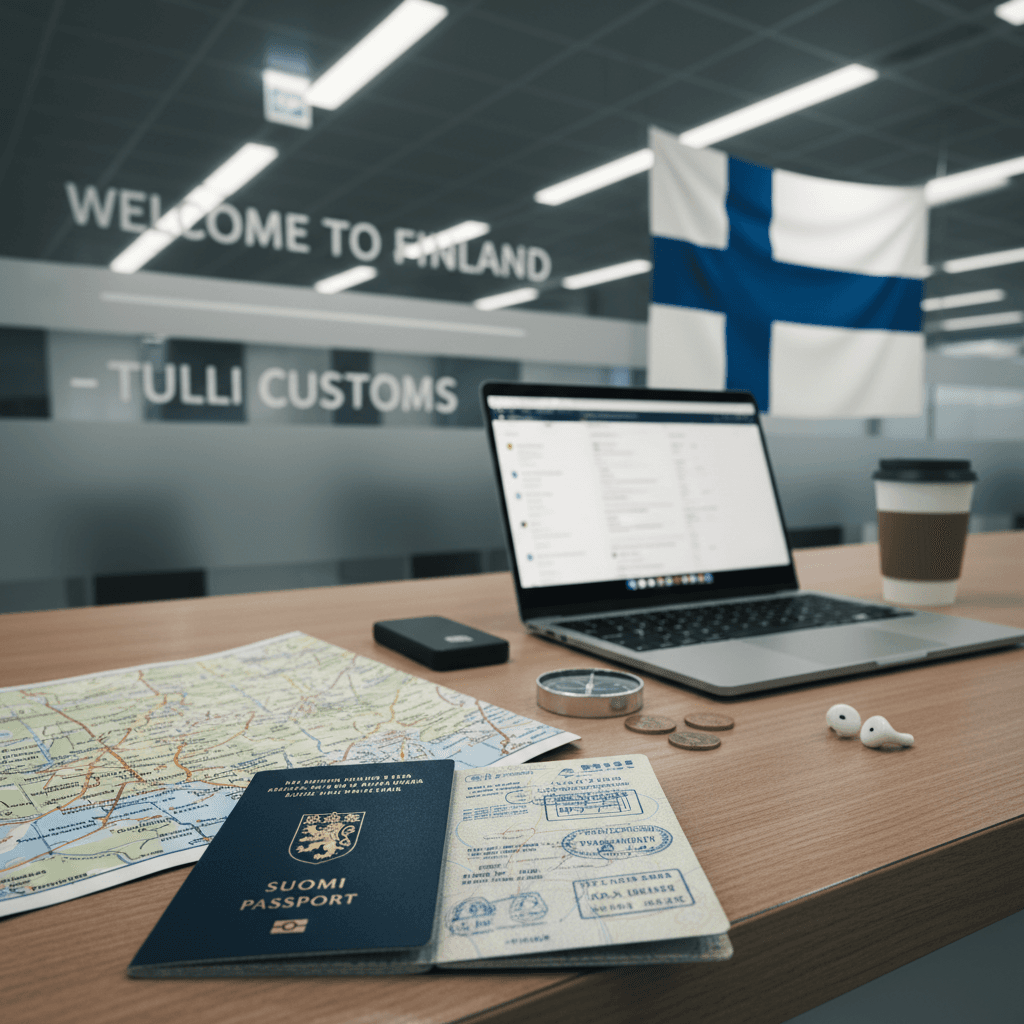
Finland doesn't have a specific "digital nomad visa" for short-term tourists, so your entry strategy depends entirely on your passport. Because Finland is a core member of the Schengen Area, it follows the standard European rules for border crossings. You won't find any "visa on arrival" kiosks or quick e-visa portals here; everything is handled either through visa-free agreements or formal embassy applications.

If you hold a passport from the USA, Canada, Australia, Japan, or the UK, you can skip the paperwork. You are allowed to enter Finland for up to 90 days within any 180-day period without a visa. This is the most common route for nomads looking to test the waters in Helsinki or chase the northern lights in Lapland before moving on to their next destination.

For those who do need a visa, you'll apply for a Type C Schengen Visa. This requires a bit of legwork. You need to submit your application through a VFS Global center or a Finnish embassy. You'll need to show proof of travel insurance with at least €30,000 in coverage, a confirmed itinerary, and proof that you can support yourself during your stay.

The Financial Threshold

Finnish border guards want to know you aren't going to run out of cash while enjoying those expensive craft beers. Here is the breakdown of what you need to account for:

  • Schengen Visa Fee: €90 for adults and €45 for children aged 6 to 11.
  • Daily Funds: You must prove you have at least €50 per day for the duration of your stay.
  • Service Fees: Expect to pay additional processing fees if using a third-party application center like VFS.

The 90/180 Rule and Border Runs

The 90/180-day rule is the golden rule of European nomadic life. It means you can stay in the Schengen Area for a total of 90 days, but once you hit that limit, you have to leave the entire zone for another 90 days before you can return. Finland uses the EES (Entry/Exit System) to track these dates digitally, so the days of "oops, I forgot" don't really fly anymore.

While some nomads try "border runs" by hopping over to a non-Schengen neighbor like the UK or Montenegro for a weekend, this does not reset your clock. It only pauses it. If a border official sees a pattern of someone trying to live in Finland on a tourist rotation, they have the authority to deny entry. If you want to stay longer than three months, you should look into a formal residence permit rather than trying to game the tourist system.

Extensions and Overstays

Extending a tourist visa in Finland is notoriously difficult. The police generally only grant extensions for "force majeure" situations. This includes things like a sudden serious illness, a major flight cancellation, or humanitarian emergencies. Wanting more time to explore the Finnish Lakeland is not considered a valid reason. If you do find yourself in a legitimate emergency, you apply for the extension at a local police station. It is free if approved, but you still have to prove you have the funds and insurance to cover the extra time.

Taking a "wait and see" approach with your exit date is a bad idea. Finland takes overstays seriously, and the penalties are steep:

  • Short Overstay (1-7 days): Expect a fine between €300 and €700 and likely deportation.
  • Long Overstay (31-90 days): Fines jump to €1,000 or €2,000, plus a 2 to 3 year ban from the entire Schengen Area.
  • Systemic Record: Any overstay is recorded in the Schengen database, making it incredibly hard to get any European visa in the future.

For most nomads, the 90-day window is plenty of time to soak up the Finnish summer or experience the "polar night" in the north. Just keep a close eye on your calendar and make sure your travel insurance is active the moment you land in Vantaa.

Source 1 | Source 2

Living Long-Term in the Land of a Thousand Lakes

Finland doesn't hand out residency like some of its Mediterranean neighbors. You won't find a "Golden Visa" where you can just buy a villa and get a passport. Instead, the Finnish system rewards those who actually contribute to the local economy, whether you're building a startup or freelancing from a lakeside cabin.

The good news is that while the bureaucracy is strict, it is incredibly efficient. Most of your interactions with the government happen through digital portals that actually work. If you want to call Finland home for more than ninety days, you'll need to choose a specific path that fits your professional life.

The Entrepreneur and Investor Route

If you have the capital and a solid business plan, the entrepreneur visa is your most direct path. This isn't for passive investors; the government expects you to be hands-on with your company. You'll need to show a minimum business investment of €350,000 and have at least three years of leadership experience under your belt. A bachelor’s degree is also a mandatory requirement here.

The first year is the most expensive, with setup costs and legal fees typically landing between €30,550 and €59,700. This includes the government processing fees, which range from €450 to €550. It's a significant commitment, but it places you firmly within the Finnish social system from day one.

The "DIY" Digital Nomad Path

Finland hasn't launched a specific digital nomad visa yet. However, the self-employment visa is a perfect workaround for freelancers. The secret sauce here is the Y-tunnus, which is your official business ID. You can register for this through OmaVero. The process is free and usually takes just one to three business days.

Once you have your Y-tunnus, you're no longer just a visitor; you're a registered freelancer in the Finnish system. This makes you eligible for a residence permit, provided you can show your business is viable and you aren't going to run out of cash by mid-winter.

Crunching the Numbers: Income Requirements

Finnish officials want to see that you can support yourself without needing local welfare. The specific amount you need to show depends on where you decide to park your laptop. For 2025, the baseline requirements for a single person are:

  • Monthly Net Income: Between €1,030 and €1,210
  • Annual Total: Approximately €12,000 to €14,500
  • Family of Four (Helsinki): Around €5,400 per month for a comfortable lifestyle

The Road to Permanent Residency

The rules for staying forever recently got a bit tougher. Starting January 8, 2026, you generally need to live in Finland for six consecutive years under a continuous "A" permit before you can apply for permanent status. You'll also need to prove you've been working for at least two of those years and show A2-level proficiency in either Finnish or Swedish.

If you're an overachiever, you can fast-track this to four years by hitting one of these milestones:

  • Earning a taxable annual income of at least €40,000.
  • Completing a Master’s degree in Finland and working locally for two years.
  • Reaching B1-level language skills and working in Finland for three years.

When you're ready to pull the trigger on the permanent permit, the application costs €380 online or €600 if you do it on paper. If you're bringing the family, kids under 18 cost €300 for an online application.

What About Retirement?

Finland doesn't have a specific "retirement visa" category, but that doesn't mean you can't spend your golden years here. Retirees usually apply for a permit based on "other grounds," using their private pension or savings as proof of funds. You'll need to meet the same monthly income thresholds as any other applicant, roughly €1,030 to €1,210. Just keep in mind that the cost of living, especially in Helsinki, is quite high, so you'll want a healthy buffer beyond the minimum requirements.

Source

Finland isn't the cheapest destination in Europe, but it offers a rare "get what you pay for" transparency. While the high taxes and social safety nets keep prices elevated, the infrastructure works flawlessly. If you are coming from North America or Western Europe, you will find the costs manageable, especially if you move beyond the posh districts of the capital.

Most nomads can live well here on €1,800 to €2,500 per month. If you are on a tight budget, you can squeeze by on €1,100 to €1,500 by sticking to northern cities and cooking at home. For those wanting a premium lifestyle with a private office and frequent dining, expect to budget €3,000 or more.

The City Breakdown

Helsinki is the undisputed hub for networking, but your wallet will feel the pinch in neighborhoods like Kallio. If you want the Finnish vibe without the capital's price tag, look toward Tampere or Turku. Oulu, located further north, is a hidden gem for tech-focused nomads who want the lowest possible overhead.

Helsinki

  • Budget Rent: €600–€700
  • Comfortable Rent: €800–€900
  • Premium Rent: €1,000–€1,200

Tampere

  • Budget Rent: €500–€620
  • Comfortable Rent: €700–€800
  • Premium Rent: €850+

Turku

  • Budget Rent: €560–€680
  • Comfortable Rent: €700–€800
  • Premium Rent: €900+

Oulu

  • Budget Rent: €400–€550
  • Comfortable Rent: €600–€700
  • Premium Rent: €800+

Food and Dining

Groceries will be your biggest variable. Shopping at budget-friendly chains like Lidl or Prisma keeps costs down. A liter of milk is about €1.18, and a loaf of fresh bread runs around €2.13. If you eat like a local and prep most meals, €250 to €400 a month is doable.

Dining out is where things get pricey. A mid-range dinner for two can easily hit €80. Nomads who enjoy the cafe culture and a few nights out should budget closer to €500 for food. If you are hitting the high-end bistros in Helsinki regularly, that number can soar past €1,000.

Transport and Connectivity

You won't need a car in Finnish cities. The public transit is world-class and punctual. In Helsinki, a monthly pass for zones AB costs between €62 and €102. In smaller cities like Tampere or Oulu, you can get around for about €50 to €70 a month. Taxis are expensive, averaging €1.93 per kilometer, so most nomads stick to the trains and buses.

For work, you have plenty of options. Many nomads save money by working from the stunning public libraries, which are free and have excellent Wi-Fi. If you need a dedicated desk, spaces like Regus or local hubs offer monthly memberships for €150 to €200. A private office usually starts around €250.

Health and Insurance

Unless you are a resident registered with Kela, you will need private health insurance. Basic plans for digital nomads, such as those from SafetyWing or Genki, typically cost between €50 and €100 per month. These cover emergencies and basic doctor visits. For more comprehensive coverage including dental or specialist care, expect to pay between €150 and €200.

Finland might be famous for its "Sisu" and stoic locals, but for the modern nomad, it is essentially a giant, high-tech playground with some of the most reliable infrastructure in the world. While the winters require a heavy coat and a tolerance for darkness, the trade-off is a society that actually works. You will find lightning-fast internet, tap water that tastes better than bottled, and a level of safety that lets you walk home from a coworking space at 3:00 AM without a second thought.

Most remote workers gravitate toward the southern coast, but the tech hubs further north offer a distinct, focused energy. Here is the breakdown of where to set up your workstation in the land of a thousand lakes.

Helsinki: The Entrepreneurial Hub

Helsinki is the undisputed heavy hitter. It hosts the largest nomad community in the country, typically seeing between 700 and 1,400 remote workers at any given time. If you want to network, this is where you do it. The city is home to Maria 01, one of Europe's premier startup hubs, and the cafe culture is tailor-made for people with laptops.

  • Monthly Cost: Around $3,527
  • 1BR Center Rent: $1,142
  • Coworking: $308 per month
  • The Vibe: Walkable, design-focused, and packed with high-end saunas and nightlife.

The mobile internet here is world-class, often hitting speeds of 185 Mbps. While it is the most expensive city in Finland, the sheer density of coworking spaces and English-speaking locals makes it the easiest transition for a first-timer.

Tampere: The Lakeside Alternative

If Helsinki feels too hectic, Tampere is the move. It is a former industrial powerhouse turned tech center, surrounded by two massive lakes. It feels a bit more "real" and a lot more relaxed than the capital. You will find a solid nomad scene of about 200 to 400 people and plenty of workspace at New Factory.

  • Monthly Cost: Approximately $3,790 (though day-to-day costs can be lower than Helsinki)
  • 1BR Center Rent: $778
  • Coworking: $359 per month
  • The Vibe: A mix of red-brick charm and modern innovation, with a legendary public sauna culture.

Rent here is significantly more affordable, often 20-30% lower than in Helsinki. It is the perfect middle ground for someone who wants city amenities without the capital city price tag.

Turku: Coastal History and Value

Turku is the oldest city in Finland and offers a slightly more academic, coastal atmosphere. It is incredibly walkable and serves as the gateway to a stunning archipelago. While the nomad community is smaller here, the quality of life is high and the pace of life is noticeably slower.

  • Monthly Cost: $3,520
  • 1BR Center Rent: $700
  • Coworking: $313 per month
  • The Vibe: Historic, river-centric, and very friendly toward families and LGBTQ+ travelers.

You can find great work spots like Werstas or the Startup Farm. It is a great choice if you prefer a quiet, English-friendly environment over a rowdy nightlife scene.

Oulu: The Northern Tech Fortress

Oulu is for the nomads who actually want to get work done. Located much further north, it is a global leader in telecommunications and 5G tech. The city is incredibly innovative and boasts some of the fastest fixed internet speeds in the country, averaging well over 26 Mbps even on basic plans.

  • Monthly Cost: $3,800 to $4,000 (depending on seasonal heating and lifestyle)
  • 1BR Center Rent: Around $700
  • Coworking: $300+ per month
  • The Vibe: Bicycles everywhere (even in snow), high-tech, and very quiet.

While the social scene is more reserved and the winters are genuinely intense, Oulu offers a unique "edge of the world" feeling. It is the best spot for deep work, though the small nomad community means you will have to be more proactive about making friends.

The Digital Backbone

Finland doesn't just have good internet; it has some of the most reliable connectivity on the planet. Whether you are hunkered down in a Helsinki loft or watching the Northern Lights from a cabin in Lapland, you can expect speeds that make video calls and heavy uploads feel effortless. Fixed broadband speeds typically hover between 150 and 314 Mbps, with providers like Valoo pushing the upper limits. Even mobile data is a powerhouse here, often hitting 150 Mbps in urban centers.

Fiber-optic coverage is currently available to 68% of households, and that number is climbing fast. If you find yourself in Ã…land or Ostrobothnia, you are almost guaranteed a high-speed connection, as fiber reaches 98% and 81% of those regions respectively. About 75% of the country can access 1 Gbps connections, so bandwidth throttling is rarely an issue for remote professionals.

Top Coworking Hubs

Helsinki is the undisputed heart of the Finnish coworking scene. The spaces here reflect the local design aesthetic: functional, minimalist, and often integrated with wellness facilities. If you want to be at the center of the action, these are the spots to book:

  • Epicenter: A massive startup hub that feels like the pulse of the city's tech scene. It is great for networking and high-energy days.
  • Maria 01: Located in a former hospital campus, this is one of Europe's premier tech hubs. It even features an on-site gym and the mandatory Finnish sauna.
  • VALO Work: This is a sophisticated hybrid space. It combines a hotel, office, and wellness area, making it perfect if you want to jump into a pool after a long meeting.
  • VillageWorks: Known for its ergonomic setups and community-driven events, this is a solid choice for those staying long-term.
  • Luna House: Situated in a beautiful historic building, this spot offers a more classic atmosphere with excellent transport links.

Monthly Pass Costs

Budgeting for a workspace depends on how much "extra" you need. Most spaces offer tiered memberships that include perks like 24/7 access or gym entries.

  • VALO Basic: €149 per month. Includes 24/7 access, coffee, and gym use.
  • Postitalo: €320+ per month. A more premium option located right by the central station, including printing and administrative support.
  • Spacent: €395 per month for their business plan. This is a great "nomad" hack because it grants access to over 125 locations across the country.
  • Day Passes: Expect to pay between €15 and €30 for a single day. If you sign a longer contract, the daily rate for a dedicated desk can drop as low as €4 to €7.

Working from Cafes and Libraries

If you prefer a change of scenery without the membership fee, Helsinki has a thriving cafe culture that welcomes laptops. Places like Espresso House, Kaffa Roastery, and Robert’s Coffee are local staples with reliable WiFi and plenty of power outlets. Ziara’s is another favorite for its cozy atmosphere and solid connection.

For a truly Finnish experience, head to Oodi, the Helsinki Central Library. It is a masterpiece of modern architecture where the WiFi is free, fast, and open to everyone. It can get busy during peak hours, but the "work zones" are generally respected. Just keep your security in mind; while public networks are generally safe, using a VPN is always a smart move in high-traffic tourist areas.

Staying Connected on the Move

You don't need a local ID to get online. For most nomads, an eSIM is the easiest path. Holafly offers unlimited data for about $64.90 per month, which is ideal if you are tethering your laptop. If you use less data, Airalo has smaller packages ranging from 1GB to 20GB for $4.50 to $26.

Local giants like DNA, Elisa, and Telia provide the actual infrastructure. If you want a physical SIM or a more robust data plan, MobiMatter offers 20GB to 60GB packages for $20 to $45. Coverage is excellent even in rural areas, so you can take your work to a lakeside cottage without fear of dropping a call.

The Dual System: Public vs. Private

Finland operates a high-quality universal healthcare system that consistently ranks among the best in the world. For digital nomads, the reality is a two-tier experience. The public system is incredibly efficient and emphasizes preventative care, boasting an 88% patient satisfaction rate. However, unless it is an emergency, public clinics often have wait times for specialists that can stretch into weeks or months.

Most expats lean toward private healthcare for day-to-day needs. It is significantly faster, and you will find more amenities and English-speaking staff in major hubs. You can expect to pay roughly three times more in the private sector than you would in a public clinic, but for a nomad on a tight schedule, the convenience is usually worth the premium.

Top-Tier Facilities and Hospitals

You are never far from world-class medical attention in Finland, even if you venture beyond Helsinki. The country is divided into 21 districts, each anchored by major university hospitals. These facilities are the backbone of Finnish medicine and handle everything from routine checkups to advanced surgeries.

  • Helsinki: Helsinki University Hospital (HUS) and the private Forum Medical Center are the go-to spots for international patients.
  • Tampere: Tampere University Hospital (TAYS) provides advanced care in the central region.
  • Turku: Turku University Hospital (TYKS) serves the southwest coast with high English proficiency.
  • Kuopio: Kuopio University Hospital (KYS) ensures coverage if you are heading toward the lake regions or eastern Finland.

Insurance Requirements for Nomads

Your insurance strategy depends entirely on your passport and how long you plan to stay. If you are an EU/EEA citizen, your European Health Insurance Card (EHIC) grants you access to public care at the same low rates as locals. For everyone else, private insurance is mandatory for peace of mind and visa compliance.

If you find yourself working in Finland for more than four months, you may be eligible to register for Kela, the national social insurance provider. Once registered, public visits are capped at just €20.60 per primary care visit. For shorter stays, nomadic-specific plans like SafetyWing are popular because they often include telehealth and mental health support, which are vital when you are moving between time zones.

What You Will Pay

If you are not covered by Kela or an EHIC card, you will be billed at the full rate. Even with insurance, it is helpful to know the baseline costs for reimbursement purposes. Public fees are modest but specific: expect to pay €71.30 for an outpatient visit, €71.50 per day for hospital stays, and €233.80 for day surgeries.

Private costs jump significantly. A standard doctor visit ranges from €50 to €200, while an MRI can cost between €500 and €1,500. More serious procedures, such as an appendectomy, hover around €5,000. If you are uninsured and find yourself in a maternity ward, childbirth can cost anywhere from €5,000 to €10,000.

Pharmacies and Prescriptions

Finland has over 600 licensed pharmacies (Apteekki), and they are easy to spot in any shopping center or near medical clinics. Most pharmacists speak excellent English and can help you find equivalent brands for over-the-counter meds. Many locations in urban areas offer 24-hour service and online ordering.

If you have a paper prescription from another country or an EU e-prescription, you can usually have it filled by showing your ID. However, to use the local digital prescription system, you will need a Finnish ID code. It is always a good idea to bring a supply of your regular medications along with a doctor’s note to avoid any hiccups at the counter.

Emergencies and the 112 System

In a crisis, the rules of residency take a backseat. Public emergency rooms treat everyone regardless of their status. If you need an ambulance, dial 112. The response times are remarkably fast, even in more remote areas. For situations that are not life-threatening but require medical advice, you can call the Medical Helpline at 116 117 before heading to a clinic. Just keep in mind that while the treatment is immediate, the final bill will still depend on your insurance coverage.

Money in the Land of a Thousand Lakes

Finland is one of the most digitized societies on the planet. You can easily spend an entire month in Helsinki or Lapland without ever touching a physical banknote. Whether you are tapping your phone for a cinnamon bun or setting up a local account for a long-term rental, the financial system is efficient, though it does have its quirks for non-residents.

Opening a Local Bank Account

While Finnish law prohibits banks from discriminating against foreign IDs, opening a full-service account as a nomad can be a bit of a hurdle. If you have a Finnish personal ID code (henkilötunnus) and a residence permit, the process is straightforward. Without those, you are looking at an "international account." These accounts often come with restricted online banking features until you can prove long-term residency.

Most nomads find success with the "Big Three" banks:

  • Nordea: The most international-friendly option with solid English support.
  • OP Financial Group: A massive cooperative bank with branches everywhere, even in smaller towns.
  • Danske Bank: A reliable alternative for those moving from other Nordic or Baltic countries.

To get started, you will generally need your passport, a secondary photo ID, and proof of address. If you are non-EU, bring your residence permit or proof of work/study. It is always smart to book an appointment in advance rather than just walking in.

The Digital Nomad’s Secret Weapon: Wise & Revolut

If you are only staying for a few months, don't bother with a local bank. Finland is a playground for borderless banking. Wise and Revolut are widely accepted at every merchant that takes Visa or Mastercard. Since Finland uses the Euro (EUR), you can hold a local balance and spend like a local without getting hit by nasty exchange rates from your home bank.

Using these cards at Otto or Nosto ATMs is seamless. Revolut is particularly handy for daily budgeting, while Wise remains the king for sending large transfers to pay for things like apartment deposits. Transfers via Wise usually land within one to two days, often beating the slow and expensive SWIFT network used by traditional banks.

ATMs and Hidden Fees

Cash is becoming a rarity, but you might still need some for small flea markets or remote cabins. Be aware that "free" ATMs are a myth for foreign cardholders. You should expect to pay between €2 and €5 per withdrawal. Some machines use dynamic pricing, charging around €0.10 for every €10 you take out.

  • Stick to Otto (blue) or Nosto (yellow) machines; they are the most reliable.
  • Avoid ATMs in airports or hotel lobbies, as these often have the highest markups.
  • Always choose "Decline Conversion" if the ATM asks. You want your bank to handle the exchange rate, not the machine.

Crypto and Taxes

Finland is quite progressive with cryptocurrency, but they are also very organized about taxing it. Crypto is legal and regulated under the EU’s MiCA framework. All local service providers must register with the FIN-FSA to operate.

If you become a tax resident in Finland, keep meticulous records. The government views crypto gains as capital gains. Starting in 2026, new reporting mandates will make it even easier for authorities to track transactions. If you are trading while living in Finland, use a tracking tool to ensure you don't get a surprise bill from the tax man later.

Quick Finance Cheat Sheet

  • Currency: Euro (EUR).
  • Payment Style: Contactless (Apple/Google Pay) is the standard.
  • Daily Budget: Expect to spend €40 to €70 per day excluding rent.
  • Transfer Fees: Use Revolut for free ATM withdrawals up to €200 per month.

Visa Logistics for Your Minors

Moving your family to Finland is a relatively straightforward process compared to many other European hubs. If you are relocating on a residence permit, your children under 18 can join you as dependents. They must be unmarried and under your legal custody to qualify. The application is typically handled through the Enter Finland portal, which is the most efficient route.

You will need a few key documents ready: a valid passport for each child, a legalized birth certificate, and proof of your own legal status and income. If only one parent is moving, you must provide written consent from the other. Fees sit at €750 for electronic applications or €800 if you prefer paper. Most families apply from their home country at a Finnish mission before making the move.

World-Class Education Options

Finland’s education system is legendary, and for good reason. For nomadic families, the choice usually falls between municipal international schools and private institutions. Municipal schools in cities like Espoo and Vantaa are actually tuition-free, making them an incredible value for expat families who want a high-standard English or bilingual curriculum without the private school price tag.

If you prefer a private environment, the International School of Helsinki (ISH) is a top-tier choice. While private schools charge fees, they are often subsidized. For example, ISH early years programs can cost around €500 per month after Kela daycare support. Other private options range from €6,000 per year to monthly rates between €445 and €1,050. These schools offer the International Baccalaureate (IB) and provide a soft landing for kids who don't yet speak Finnish.

Childcare and Daily Costs

The Finnish approach to childcare, known as varhaiskasvatus, is designed to be accessible for everyone. Fees are calculated based on your family income and the number of hours your child spends in care. The maximum fee for your first child is capped at €335 per month, and it drops significantly to €134 for a second child. If you have a lower income, fees can be as low as €32.

If you are looking for more flexible or private arrangements, you have options:

  • Private Daycare: Often costs more upfront, but Kela subsidies are available to help bridge the gap.
  • Au Pairs: Expect to pay between €300 and €500 per month plus room and board.
  • Hourly Sitters: Private rates usually hover between €8 and €15 per hour.

Healthcare and Wellbeing

Once you register with your local municipality and receive your Kela card, your children have access to public healthcare that is almost entirely free. This covers everything from routine vaccinations and dental check-ups to hospital visits until they turn 18. The system focuses heavily on prevention, and you will find that English-speaking doctors are common in the major cities.

The digital infrastructure here is excellent. You can book appointments and view medical records through online portals, making it easy to manage your family's health on the go. Specialized pediatric care and mental health services are available through referrals, and even then, any associated fees are low and strictly capped.

The Best Cities for Families

While the whole country is safe, certain hubs are particularly well-suited for families who need a mix of international services and high quality of life.

Helsinki, Espoo, and Vantaa

  • Vibe: The capital region offers the most international schools and English-language services.
  • Perks: Incredible public transport, endless parks, and the famous Linnanmäki amusement park.

Tampere and Turku

  • Vibe: Smaller, more manageable cities with a heavy focus on culture and nature.
  • Perks: More affordable housing than the capital and a slower pace of life that suits younger families.

Unrivaled Safety and Freedom

The biggest culture shock for many parents in Finland is the level of independence children enjoy. It is perfectly normal to see primary schoolers walking to school or taking the bus alone. The country consistently ranks as one of the safest in the world, with very low crime rates and a society that deeply respects children's rights. Schools also have robust programs to tackle bullying, ensuring that the environment is as secure emotionally as it is physically.

Street Safety and Crime Trends

Finland is consistently ranked as one of the safest countries on the planet. Recent data shows that crime rates continue to trend downward, with overall recorded offenses dropping 1.8% in 2024. Violent crime is rare; robberies fell by 5.1% to 2,587 incidents nationwide, and assaults dropped 2.6%. For a digital nomad, this means you can generally walk through Helsinki or Tampere at night without looking over your shoulder.

The biggest physical threat you’ll face is petty theft, specifically pickpocketing in crowded tourist hubs during the summer. While older statistics once showed foreigners were slightly more likely to be involved in property disputes, the modern reality for an expat is one of high security. Finnish police are highly effective, famously incorruptible, and widely trusted by the public.

The Digital Threat: Modern Scams

While the streets are safe, the internet requires more vigilance. Digital scams have surged lately, with residents losing between €70 million and €84 million in 2025. Phishing is the primary culprit, accounting for €22 million in losses. You might receive impersonation calls from people pretending to be bank officials or even the police asking for credentials.

  • Banking Security: Never click links in SMS messages claiming your account is locked. Finns use a system called BankID for almost everything; keep those credentials private.
  • Fake Websites: Double-check URLs when paying for services, as scammers create convincing clones of government and banking portals.
  • Home Security: Organized groups occasionally target homes for burglaries, often peaking on Fridays around midday. If you are staying in a ground-floor apartment or a detached house, ensure your locks are engaged even for quick errands.

LGBTQ+ Safety and Acceptance

Finland is a top-tier destination for LGBTQ+ nomads. The country has robust anti-discrimination laws and a culture that values privacy and individual rights. Helsinki Pride is a massive annual event that draws people from across the Nordics, and the organization SETA provides excellent resources and support nationwide.

While the most vibrant scenes are in the larger cities, you’ll find a high level of acceptance across the country. It is a place where you can generally be yourself without fear of harassment or legal hurdles.

Mastering Finnish Etiquette

Finns are famously reserved, but don't mistake their silence for rudeness. They value personal space, often maintaining an arm's length during conversation. Punctuality is a religion here; if you’re meeting a local at 2:00 PM, show up at 1:55 PM. Arriving late is seen as a sign of disrespect for their time.

  • The Indoor Rule: Always remove your shoes when entering someone’s home. It’s a non-negotiable part of the culture.
  • Public Behavior: Keep your voice down on public transport. Loud phone calls or boisterous behavior are frowned upon.
  • Sauna Culture: This is a sacred space. Always shower before entering, and use a towel to sit on. While many Finns go nude, it’s usually fine to wear a swimsuit if you’re in a mixed-gender public sauna.
  • Tipping: There is no tipping culture. You can round up the bill or add 5-10% for exceptional service, but it is never expected.

The Language Barrier and Integration

English proficiency is incredibly high in Finland, especially among the under-50 crowd. You can easily manage your daily life, banking, and shopping using only English. However, if you plan to stay long-term or look for local employment, the "Finnish Wall" is real. Roughly 60% of unemployed foreigners cite the language as their primary barrier to finding work.

The locals can be hard to crack socially because they don't do small talk. To make friends, you need to join organized activities. Whether it's a hobby group, a CrossFit box, or a volunteer organization, Finns bond over shared tasks rather than random bar conversations. Check out Helsinki Meetup groups or Facebook communities like "Expats in Finland" to find your initial footing.

The Nomad Community

Helsinki is the primary hub, but cities like Tampere and Turku are gaining traction due to lower costs. For those who want a more communal vibe, Hub Feenix offers a unique co-living and coworking environment outside the city. While the cost of living is high, the infrastructure, walkability, and reliable public transit make it a seamless place to run a remote business.

Understanding Tax Residency

Finland doesn't have a specific "digital nomad visa" that grants you a tax holiday. Instead, you fall under the standard rules of the Finnish Tax Administration. You become a tax resident if you spend more than 183 days in the country during a single calendar year or if you establish a permanent home here. If your "center of vital interests," like your family or primary business activities, shifts to Finland, you are also considered a resident.

Once you hit that residency threshold, you are required to report your worldwide income to the Finnish authorities. If you stay for less than six months and don't establish a permanent base, you only pay taxes on income sourced directly from Finnish clients or employers.

Income Tax Brackets for 2026

The Finnish tax system is famously progressive. You pay a combination of state income tax and municipal tax. While the state sets the primary brackets, your total bill depends on where you choose to live, as municipal rates fluctuate between 4.70% and 10.90%.

For the 2026 tax year, the state income tax brackets are structured as follows:

  • €0 – €22,000: 12.64%
  • €22,000 – €32,600: 19.00%
  • €32,600 – €40,100: 30.25%
  • €40,100 – €52,100: 33.25%
  • €52,100 and above: 37.50%

When you add the average municipal tax of 7.57% and potential church taxes, the top marginal rate is capped at 52%. Self-employed nomads should also factor in health insurance contributions of 1.10% and a daily allowance contribution of 0.88% if annual earnings exceed €17,255.

Double Taxation and Remote Work

Finland has signed bilateral tax treaties with over 70 countries to ensure you aren't paying twice on the same Euro. These agreements usually follow the foreign tax credit method. You pay tax where the income is earned first, then claim that as a credit against your Finnish liability.

If you are working remotely from a Finnish apartment for a company back home, Finland generally claims the exclusive right to tax that salary because the work is physically performed on Finnish soil. For freelancers without a fixed office in Finland, the taxing rights often remain with your country of residence, though this depends on the specific treaty details. Dividend withholding is usually reduced to 5-15% under these treaties, much lower than the standard 24.5%.

The Crypto Factor

Finland treats cryptocurrency as property rather than currency. Profits from trading are hit with capital gains tax. If your total gains for the year are under €1,000, they are tax-free. Above that, the rates are:

  • 30% on capital gains up to €30,000
  • 34% on gains exceeding €30,000

Mining and staking are treated differently; these are taxed as earned income at progressive rates up to 44%. You can offset your losses against gains and carry those losses forward for five years. New reporting rules starting in 2026 mean that crypto service providers will share your transaction data directly with the government, so keeping meticulous records is a must.

Filing and Compliance

The deadline for individual tax returns is May each year. If you are a resident, you must disclose everything you earned globally. Non-residents usually don't file a return because their Finnish-source tax is withheld at the point of payment.

If you are running your own show via a self-employment or startup permit, you will likely pay a corporate tax rate of 20% if you incorporate. Freelancers can deduct business expenses, including a standard remote work deduction of €980 if you work from home for more than half the year. You can find more specific forms and guidance on the Finnish Tax Administration website.

Employers have a tight window for reporting. Any wages paid must be reported to the Incomes Register within five days. This applies even to foreign employers if the employee is covered by the Finnish social security system.

Connectivity and Data

Finland has some of the fastest and most affordable internet in Europe, so there is no reason to pay for overpriced roaming. For instant connectivity, grab an eSIM from Elisa or DNA. Digital nomad favorites like Nomad or eSIM4 also offer great coverage. You can find unlimited data plans ranging from $4.50 to $42 for 30 days. If you prefer a physical SIM, Elisa is the most reliable bet for tourists and is available at the airport or local shops.

Getting Around

If you are based in the capital region, the HSL app is your lifeline. It handles tickets and real-time routing for buses, trams, the metro, trains, and even the ferry to Suomenlinna. For longer trips or quick rides across town in Helsinki, Tampere, or Turku, download Bolt or Free Now. These apps allow you to pay via card or MobilePay, which is the local standard for digital payments.

Where to Set Up Base

Choosing the right neighborhood changes your entire experience. Helsinki offers distinct vibes depending on what you need for your workflow:

  • Kallio: This is the bohemian heart of the city. It is perfect if you want affordable rents, a dense concentration of cafes to work from, and a social nightlife scene.
  • Punavuori: Located in the Design District, this area is better for creatives. It is a bit more upscale with great sea views and plenty of green space.
  • Kamppi: This is the central hub. Stay here if you want to be steps away from the major business centers, shopping malls, and the best coworking spaces.

Finding Your Home

For short-term stays, Airbnb and Booking.com remain the go-to platforms for furnished apartments with dedicated workspaces. If you want a built-in community, look into coliving options. Hub Feenix, located just outside Helsinki, is a popular retreat for nomads. You can also browse listings on Coliving.com or Nomad Stays to find spots that specifically cater to remote workers with high-speed Wi-Fi and shared office environments.

Food and Groceries

The delivery market in Finland is dominated by Wolt. It is incredibly efficient for ordering everything from restaurant meals to weekly groceries. They offer a subscription service that waives delivery fees, which pays for itself quickly if you are staying for a month or more. Note that Foodora is no longer an option in Finland, so stick to Wolt for the most reliable service across all major cities.

Bridging the Language Gap

While almost everyone in Finland speaks excellent English, learning a few basics goes a long way with the locals. Duolingo is great for a gamified introduction to the rhythm of the language. For something more practical, the Learn Finnish app offers over 9,000 offline words and native audio clips to help you master pronunciation while you are on the go.

Safety and Emergencies

Finland is exceptionally safe, but it is good to have the basics on hand. Dial 112 for any emergency, including police, medical, or fire services. The call is free from any phone and the operators generally speak English. This number works across the entire EU, connecting you to a 24/7 response center.

Pro-Tips to Avoid Burnout

Moving your life to a new country is exhausting if you do not plan ahead. Check your visa requirements and verify Wi-Fi speeds before booking any long-term stay. Set a strict budget early on, as Finland can be pricey if you are not careful. Most importantly, remember to step away from the screen. The Finnish lifestyle is built around balance; take breaks, visit a sauna, and keep in touch with people back home to stay grounded while you explore.

Latest Nomad News

More Guides from Europe

Stay Updated on Finland

Get notified about visa changes, policy updates, and new information for digital nomads in Finland.