Denmark
Complete Digital Nomad Guide
Policy Stability
Stamped Nomad ExclusiveHow likely visa and immigration policies are to remain unchanged
Quick Facts
Nomad Visa Cost
N/A
Max Stay
3 months
Renewable
No
Cost of Living
$2,800/mo
Avg Internet
151 Mbps
Safety Score
8/10
Healthcare
High
Coworking
High
English Friendly
High
Time Zones
CET
Entry Methods Available
Best For
Understanding the Danish System
Denmark is famously efficient, and its visa system is no exception. As a core member of the Schengen Area, the country follows standard European short-stay rules while maintaining strict, specific paths for anyone looking to stay longer. For nomads, the "90/180 rule" is the primary law of the land; you can spend up to 90 days in Denmark (and the rest of the Schengen zone) within any 180-day period.
If you are planning a scouting trip or a short-term stint in a Copenhagen coworking space, your entry path depends entirely on your passport. While there is no specific "Digital Nomad Visa" yet, the government has recently updated its work and residence rules to make the country more accessible to high-skilled international talent.
Visa-Free Entry and ETIAS
Citizens from the EU, EEA, and Switzerland have it easiest, with unrestricted access to live and work. Citizens from around 60 other countries, including the US, Canada, UK, Australia, Japan, and Brazil, can also enter visa-free for tourism or business for up to 90 days. You just need a passport valid for three months beyond your stay.
Keep an eye on the calendar for late 2026. This is when the ETIAS (European Travel Information and Authorisation System) is scheduled to launch. It isn't a visa, but a mandatory pre-travel registration for all currently visa-free travelers. It will cost €7 and be valid for three years.
The Schengen Visitor Visa
If your home country isn't on the visa-free list, you'll need a Schengen Category C visa. This requires an application through a VFS Global center or a Danish embassy. You should apply about two months before your trip, though the official processing time is usually 15 days.
- Adult Fee: €80
- Child Fee (6-12): €40
- Requirements: Proof of funds, travel insurance with €30,000 coverage, and a return flight itinerary.
Extensions for tourist visas are incredibly rare in Denmark. Unless you face a genuine emergency or "force majeure" event like a sudden illness, you should plan to exit the zone before your 90 days expire.
Working and Staying Longer
For those looking to trade the 90-day limit for a more permanent base, you must look into national long-stay permits. Denmark manages these through specialized "schemes" rather than a one-size-fits-all work visa. You can explore specific residence and work permit requirements to see which path fits your professional background.
- The Pay Limit Scheme: For those with a job offer from a Danish company meeting a specific salary threshold. On January 1, 2026, this minimum salary rises to DKK 552,000 per year.
- The Positive Lists: A faster track for professionals in industries facing labor shortages, such as engineering, healthcare, or IT.
- Business Permits: Aimed at self-employed individuals looking to establish a branch or business in Denmark.
- Event Exemptions: Since December 2025, speakers and researchers can work for up to 10 days at large international events (400+ attendees) without needing a permit at all.
Key Changes for 2025 and 2026
The Danish immigration landscape is shifting to favor specific high-growth sectors. A proposed change for 2025 aims to lower the salary threshold to DKK 300,000 for citizens of 16 specific non-EU countries, including the US, China, and India, provided the employer is officially certified.
Budgeting for your application is also important, as fees are set to increase on January 1, 2026. A standard work permit application for a main applicant will rise to DKK 6,810, while family reunification permits will cost DKK 3,080. Always verify the current rates before submitting, as these are adjusted annually based on the previous year's economic data.
Denmark is a dream for many nomads, but the visa situation is a bit more nuanced than in countries with dedicated remote work schemes. While you won't find a specific "Digital Nomad Visa" in the Danish archives, there are several ways to make your Nordic office a reality if you know which permits to target.
The EU/EEA Advantage
If you hold a passport from an EU or EEA country, you have it easy. You can move to Denmark tomorrow and start working from a café in Copenhagen without any visa paperwork. You are allowed to stay for up to three months before you need to register with the local authorities. If you plan to stay longer, you just need to apply for an EU residence document, which confirms your right to live and work in the country under freedom of movement rules.
The Start-up Denmark Scheme
For non-EU citizens with a big idea, the Start-up Denmark program is the closest thing to a nomad-friendly pathway. This permit is designed for entrepreneurs who want to run a business with growth potential. You have to submit a business plan to a panel of experts appointed by the Danish Business Authority. If they approve your idea, you can apply for a residence and work permit that lasts for two years, with the possibility of a three-year extension.
- Requirements: An innovative business plan approved by the Danish Business Authority.
- Proof of Funds: You must show you have enough money to cover your first year in Denmark, which is currently around 143,328 DKK for a single person.
- Active Involvement: You have to play an active role in running the business; you can't just be an investor.
Self-Employed and Freelance Permits
If you are a freelancer or run an established foreign business, you can apply for a permit as a self-employed person. This is traditionally a high bar to clear. Danish authorities generally look for businesses that will bring significant economic interest to Denmark or create local jobs. Unlike the digital nomad visas in Portugal or Spain, simply having a remote job with a foreign company usually isn't enough to qualify for this specific category.
The Work Permit Route
If you are a remote worker for a company that has a Danish branch, you might be eligible for a standard work permit. The most common paths are the Pay Limit Scheme and the Positive List. The Pay Limit Scheme requires you to have a job offer from a Danish employer with an annual salary of at least 475,000 DKK. The Positive List is for professionals in industries facing a labor shortage, such as engineering, IT, or healthcare.
Important Considerations and Logistics
Because Denmark doesn't have a one-size-fits-all nomad visa, your tax and residency status can get complicated quickly. Most permits will require you to register for a CPR number, which is your gateway to everything from opening a bank account to joining a gym. If you spend more than 183 days in the country, you will likely be considered a tax resident, meaning your global income could be subject to Denmark's famously high tax rates.
If you are just looking for a short stint, many nomads enter on a standard 90-day Schengen visa. While you aren't technically supposed to "work" on a tourist visa, checking emails and taking calls for your foreign employer is generally a gray area that many travelers navigate. However, you won't be able to rent a long-term apartment or access the public health system this way.
To get started on your application or check the latest financial requirements, visit the official portal at New to Denmark. It is the gold standard for immigration info and is managed by the Danish Immigration Service. You can also reach out to your local Danish embassy or consulate for a consultation on your specific case.
The Schengen Reality
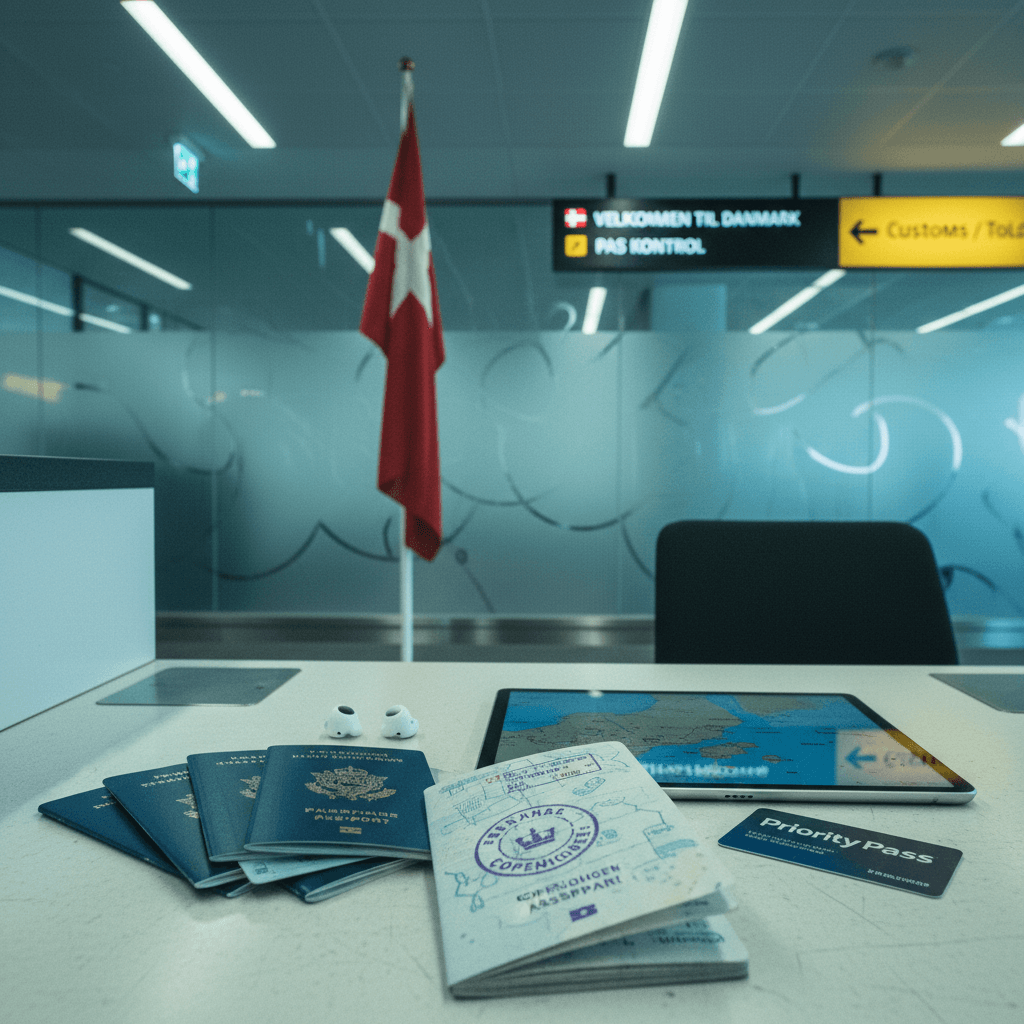
Denmark operates as a key member of the Schengen Area, meaning your entry requirements are dictated by uniform European rules rather than local Danish whims. For most nomads, this provides a predictable, albeit strict, framework for planning a Scandinavian stint. There is no specific "tourist visa on arrival" at Copenhagen Airport; you either arrive with pre-cleared access or a physical visa already pasted into your passport.
Visa-Free Entry and the ETIAS Update
If you hold a passport from the United States, Canada, Australia, the UK, or Japan, you are among the citizens of roughly 60 countries that can enter Denmark visa-free. You are allowed to stay for up to 90 days within any 180-day period. This is a rolling window, so once you hit that 90-day limit across the entire Schengen zone, you have to pack your bags and head to a non-Schengen destination like Montenegro or Turkey to wait out your reset.
A major change for 2025 and 2026 is the rollout of the ETIAS (European Travel Information and Authorisation System). Even if you don't need a full visa, you must apply for this digital authorization before you fly. It costs €7, is generally approved within minutes, and remains valid for 3 years or until your passport expires. You can handle the application through the official ETIAS portal.
The Standard Schengen Visa (Type C)
Nomads from countries that do not have a visa-waiver agreement must apply for a Type C Schengen Visa in advance. This process requires an in-person visit to a Danish embassy or a partner service provider like VFS Global to submit biometrics. Denmark does not offer a digital e-visa for tourists, so you’ll need to plan this several weeks before your departure date.
- Standard Fee: €80 for adults.
- VFS Service Fee: Usually an additional €30 to €40.
- Children 6-12: €40.
- Children under 6: Free.
Managing Your 90-Day Clock
The "border run" is a common strategy in Southeast Asia, but it works differently in Denmark. Leaving Denmark to cross into Germany or Sweden does nothing to reset your clock because you are still within the Schengen zone. Even leaving for London for a weekend only pauses the clock; it doesn't reset it. To accurately track your remaining time, use a digital Schengen calculator to ensure you don't miscount a single day.
Extensions are notoriously difficult to secure in Denmark. Unless you are facing a legitimate medical emergency or a "force majeure" event that prevents travel, the Danish Immigration Service rarely grants extra time. If you find yourself in an exceptional situation, you must contact the regional police or the Danish Immigration Service well before your initial 90 days expire.
Overstays and Penalties
Denmark is known for its efficiency, and that extends to border enforcement. Overstaying your welcome is a fast way to ruin future travel plans. Penalties are swift and strictly enforced at the border when you attempt to depart. You can expect fines starting at €500, but the real sting is the potential for an entry ban lasting 1 to 5 years, which effectively locks you out of most of Europe. If you realize you’ve accidentally overstayed, report it to the authorities immediately rather than trying to "sneak" out, as proactive reporting can sometimes mitigate the severity of the ban.
Denmark doesn't hand out residency like some of its southern European neighbors. You won't find a "Golden Visa" for buying a condo in Copenhagen or a simple path for passive investors. The Danish system is built on the idea of contribution; they want to see that you’re either bringing a viable business to the table, supporting yourself with a robust pension, or filling a gap in the labor market.
Most long-term paths are managed by the Danish Agency for International Recruitment and Integration (SIRI). If you’re coming from outside the EU or EEA, you should prepare for a process that is transparent but strictly regulated. You can explore the full range of permits on the official Danish immigration portal.
Retirement for Non-EU Citizens
While there isn't a dedicated "retirement visa," Denmark offers a specific residence permit for persons over retirement age. This is geared toward those who have a stable, secure financial life and won't rely on the Danish social safety net. You’ll need to prove you have sufficient funds, roughly DKK 6,135 per month, though many applicants show significantly more to ensure approval.
- Application Fee: Approximately DKK 11,500.
- Processing Time: Usually 1 to 3 months.
- Key Restriction: You are strictly prohibited from working under this permit.
- Health Coverage: You must maintain comprehensive private health insurance until you are fully integrated into the system.
The Freelancer and Self-Employed Path
If you’re a digital nomad looking to plant roots, the self-employed permit is your primary route. This isn't for casual side-hustles; the Danish authorities want to see a business plan that benefits the Danish economy or serves local clients. You'll need to register for a CVR number (central business register) once you arrive.
- Startup Capital: You generally need at least DKK 80,000 in liquid capital.
- Revenue Projection: Expect to show a projected annual turnover of DKK 147,000 or more.
- Application Fee: Roughly DKK 4,405.
- Renewal: Permits are typically granted for one year and are renewable as long as the business remains viable.
You can find the specific criteria for business owners on the SIRI freelancer page.
Start-up Denmark
For those with a high-growth, innovative idea, the Start-up Denmark scheme is the gold standard. A panel of experts evaluates your business model before you can even apply for the visa. It requires an investment of at least DKK 150,000 and a clear plan for job creation within the country.
- Application Fee: DKK 3,500 plus any legal or consulting costs.
- Benefits: This path offers a more direct route to permanent residency if the business scales.
- Eligibility: Check the requirements at the Start-up Denmark portal.
The Road to Permanent Residency
Getting a temporary permit is just the first step. To stay in Denmark indefinitely, you’ll usually need to live in the country for at least 4 to 8 years. The criteria for permanent residency are quite specific. You’ll need to pass the Danish language exam (Level 3), have no criminal record, and show that you’ve been in full-time employment or running your business for the vast majority of your stay.
- Application Fee for PR: Approximately DKK 8,500.
- Social Integration: You must pass a citizenship or integration test covering Danish history and values.
- Financial Stability: You cannot have received certain forms of public assistance or welfare benefits during your stay.
If you have a Danish spouse or partner, you might look into Family Reunification. This requires the Danish partner to meet a strict income test of roughly DKK 57,000 per year and provide a financial guarantee. It’s a common path, but it involves significant paperwork and a long waiting period for the initial approval.
Living the nomad life in Denmark means trading low prices for an incredibly high quality of life. It is one of the most expensive countries in the world, but your money buys you efficiency, safety, and some of the best infrastructure on the planet. To thrive here, you need to think in terms of tiers: budget-conscious, comfortable, or premium.
The Housing Market
Rent will be your biggest hurdle. In Copenhagen, trendy neighborhoods like Nørrebro or Vesterbro are the places to be, but they come with a high price tag. If you head to Aarhus, the Latin Quarter or Frederiksbjerg offer a similar vibe for slightly less. Here is what you should expect to pay for a 1-bedroom apartment in nomad-friendly areas:
- Copenhagen: Budget starts at 10,000-12,000 DKK; Comfortable ranges from 13,000-16,000 DKK; Premium is 18,000+ DKK.
- Aarhus: Budget is 7,000-9,000 DKK; Comfortable is 10,000-12,000 DKK; Premium is 14,000+ DKK.
- Odense: Budget is 6,000-8,000 DKK; Comfortable is 9,000-11,000 DKK; Premium is 13,000+ DKK.
- Aalborg: Budget is 5,500-7,500 DKK; Comfortable is 8,000-10,000 DKK; Premium is 12,000+ DKK.
Food and Dining
Danish food standards are exceptionally high, which means even "cheap" groceries are good quality. If you are on a budget, stick to supermarkets like Netto or Rema 1000. Eating out is where things get pricey quickly, especially in the capital.
- Budget: 2,500-3,500 DKK per month. This involves mostly home cooking and the occasional street food fix.
- Comfortable: 4,000-5,500 DKK per month. This allows for a mix of high-quality groceries and casual dining at cafes or food halls.
- Premium: 6,000+ DKK per month. This covers organic shopping and frequent dinners at mid-to-high-end restaurants.
Getting Around
Most nomads in Denmark skip the car and opt for a bike and a Rejsekort (travel card). The public transport system is seamless, and biking is a way of life here. Monthly passes in Copenhagen cost around 500 DKK, while Aarhus is closer to 400 DKK.
- Budget: 400-600 DKK. This covers a monthly pass or the maintenance of a used bike.
- Comfortable: 700-1,000 DKK. This includes your transit pass plus occasional taxis or regional trains.
- Premium: 1,200+ DKK. This covers frequent taxis, e-scooter rentals, and longer-distance travel.
Coworking and Connectivity
Denmark has a thriving startup scene. Spaces like Copenhagen Space or Republikken in Aarhus provide more than just a desk; they offer a community. If you prefer working from cafes, you will find plenty of laptop-friendly spots, though they expect you to keep the coffee orders coming.
- Hot-desking: 1,500-2,000 DKK per month.
- Dedicated Desk: 2,500-3,500 DKK per month.
- Private Office: 4,000+ DKK per month.
Health and Security
Unless you are a registered resident with a CPR number, you cannot access the public healthcare system for free. You must have private expat insurance. Basic plans for nomads usually start around 500-800 DKK, while comprehensive coverage that includes dental or global access can reach 2,000+ DKK.
Monthly Totals
For a single nomad in Copenhagen, a realistic budget starts around 15,000-20,000 DKK. If you want a comfortable lifestyle with a private apartment and regular social outings, plan for 25,000-35,000 DKK. Those seeking a premium experience can easily spend 40,000+ DKK. You can check more specific price breakdowns for the capital on Numbeo to see how these costs compare to your current city. If these numbers feel a bit high, moving your base to Odense or Aalborg can reduce your total monthly spend by 20% to 40%.
Copenhagen: The High-Octane Hub
Copenhagen isn't just Denmark's capital; it’s the heartbeat of the Scandinavian nomad scene. If you want to be where the action is, this is your base. The city is packed with world-class coworking spaces like Founders House and Republikken, and the cafe culture in neighborhoods like Vesterbro and Nørrebro is practically built for remote work. You’ll find ultra-fast WiFi speeds averaging 151 Mbps, making video calls and large file transfers seamless.
The trade-off for all this infrastructure is the price tag. Expect to shell out between DKK 10,000 and 15,000 for a one-bedroom apartment. While the monthly burn rate sits around $3,600 USD, the "hygge" lifestyle and the sheer density of English-speaking expats make it worth the investment for many. For the safest experience, look for housing in Frederiksberg or Østerbro, which offer a more polished vibe than the bustling areas near the central train station.
- Pros: Massive nomad network, endless specialty coffee shops, and top-tier public transit.
- Cons: The most expensive city in the country and can feel overcrowded during the summer tourist peak.
Aarhus: The Creative Alternative
If Copenhagen feels a bit too frantic, Aarhus is the perfect middle ground. Located on the Jutland peninsula, it’s a university town with a youthful, creative energy. It boasts over 126 coworking options, including the impressive Media Evolution City. While the community is slightly smaller than the capital's, it’s incredibly welcoming and less transient.
Life here is a bit more affordable, with rents typically ranging from DKK 7,000 to 10,000. You still get the benefit of Denmark’s safety and bikeability, but with a slower pace of life. The market square is a go-to for afternoon work sessions, and the nightlife, while more contained than Copenhagen, is vibrant thanks to the large student population.
- Pros: Lower rent than the capital, very high safety ratings, and a strong focus on work-life balance.
- Cons: Slower internet speeds in some older buildings (ranging 25–44 Mbps) and a smaller dedicated nomad scene.
Aalborg: The Budget-Friendly Rising Star
Aalborg is the dark horse of Danish cities. It’s currently undergoing a massive cultural revival, turning old industrial areas into artsy hubs and startup incubators. It is comfortably the most affordable major city for nomads, with rent prices often 20% to 30% lower than what you’d find in Copenhagen. You can often secure a solid spot for DKK 5,000 to 8,000.
The nomad community here is still in its early stages, making it ideal if you prefer a quieter environment where you can actually focus. The city is incredibly safe, and the nationwide fiber-optic network ensures your connection stays rock solid even this far north. It’s the best place to experience a genuine Danish lifestyle without the "big city" markup.
- Pros: Most affordable entry point into Denmark, emerging arts scene, and very safe streets.
- Cons: Limited selection of international cafes and a smaller pool of fellow remote workers to network with.
City Data at a Glance
Copenhagen
- Estimated Monthly Cost: ~$3,600 USD
- 1-Bedroom Rent: DKK 10,000–15,000
- Average Internet Speed: 151 Mbps
- Nomad Popularity: Very High
Aarhus
- Estimated Monthly Cost: ~$4,500–6,000 USD (including higher-end lifestyle choices)
- 1-Bedroom Rent: DKK 7,000–10,000
- Average Internet Speed: 25–44 Mbps
- Nomad Popularity: Medium
Aalborg
- Estimated Monthly Cost: ~$3,500+ USD
- 1-Bedroom Rent: DKK 5,000–8,000
- Average Internet Speed: Ultra-fast fiber
- Nomad Popularity: Emerging
While Denmark doesn't offer a specific "Digital Nomad Visa" yet, most remote workers utilize freelancer or self-employment permits to stay long-term. You can find more details on current rankings and community feedback via Nomad List or check out the latest infrastructure updates on ConnectPls. For those traveling with a family, Odense is a fantastic fourth option with a heavy focus on tech and family-friendly coworking spaces.
Speeds and Connectivity
Denmark is a heavy hitter when it comes to digital infrastructure. You won't have to hunt for a signal here; the country consistently ranks in the global top five for internet performance. Fixed broadband speeds average between 250 and 300 Mbps download, though if you are staying in a modern apartment in Copenhagen or Aarhus, fiber connections often surge past 500 Mbps.
Fiber-to-the-home coverage is impressive, reaching over 85% of households nationwide. While rural areas in Jutland might see a slight dip to around 60-70% coverage, the connection remains stable enough for video calls and heavy uploads. Major providers like TDC and Stofa keep the network running smoothly, so "dead zones" are a rarity in the Danish urban landscape.
Top Coworking Hubs
The coworking scene in Denmark reflects the local design aesthetic: functional, minimalist, and very comfortable. Most spaces offer a mix of "hygge" and high-tech facilities.
- The Hub (Copenhagen): Located right in the heart of the capital, this is the go-to for networking. It hosts frequent community events and attracts a mix of local startups and international nomads.
- Republikken (Multiple Cities): This space caters to the creative crowd. It has a solid reputation for its collaborative atmosphere and is a great pick if you need more than just a desk.
- DOJO (Copenhagen): If you are a night owl, DOJO is one of the few spots offering 24/7 access. It is built for productivity and has a very active Slack community.
- Talent Garden (Aarhus): This is the tech nerve center of Denmark’s second city. It’s ideal for developers and data scientists looking for a sophisticated work environment.
Membership Costs
Quality comes at a price in Scandinavia. While it isn't the cheapest place to set up shop, the facilities usually justify the spend. Expect the following price ranges for monthly access:
- Copenhagen: Monthly passes for a dedicated desk or consistent hot-desking typically run between 2,000 and 4,000 DKK (€270-540). Flexible "light" plans can be found for around 1,500 DKK (€200).
- Aarhus and Odense: You will find slightly more breathing room in your budget here, with monthly rates ranging from 1,200 to 2,500 DKK (€160-335).
The Cafe Office Culture
Working from cafes is widely accepted in Danish cities, provided you keep the coffee flowing. Most urban spots offer reliable speeds between 50 and 100 Mbps. Chains like Starbucks or the local favorite Baresso provide the most consistent connections, though independent roasteries in Nørrebro or Vesterbro are often more atmospheric.
Just be aware that some smaller boutique cafes have "laptop-free" zones or times during the weekend brunch rush. Reliability is excellent in the city, but it can get spotty if you take your laptop to a remote seaside cafe in North Zealand or the islands.
Mobile Data and SIMs
Mobile internet is incredibly fast, with 5G speeds often hitting 300+ Mbps. If you have a phone that supports it, an eSIM from Airalo is the easiest way to get online the moment you land, costing roughly €10-20 for 20GB.
For longer stays or heavy data users, local providers offer better value:
- Lebara: Known for being nomad-friendly, they offer prepaid plans like 100GB for 99 DKK, which is a steal for the region.
- 3 Denmark and Telenor: These providers offer unlimited 5G plans for 200 to 400 DKK (€27-54) per month. Check 3 Denmark for roaming deals if you plan to hop over the bridge to Sweden frequently.
The System: Public vs. Private
Denmark operates on a universal healthcare model that is often ranked among the best in the world. Residents get a Yellow Card (sygesikringskort), which grants them free access to GPs and hospitals. While the quality of public care is top-tier, the trade-off is often the wait time for specialists; you might find yourself waiting weeks or even months for a non-urgent appointment.
For nomads and expats, private healthcare is the shortcut. Facilities like Aleris or the Copenhagen International Clinic offer much faster turnarounds and a higher concentration of English-speaking staff. It is more expensive, but if you value your time or want a doctor who understands the specific hurdles of being an expat, it is the way to go.
Navigating Insurance Options
Your insurance strategy depends entirely on your residency status and where you are from. If you are an EU citizen, your EHIC card covers emergency treatments, but it is not a substitute for full coverage if you plan to stay long-term. Non-EU nomads typically need private international insurance to meet Schengen visa requirements.
- International Plans: Providers like Cigna or Allianz usually cost between €50 and €150 per month.
- Public Coverage: Once you have a residency permit and a CPR number, you are automatically enrolled in the public system.
- Private Top-ups: Many locals and long-term expats pay for supplemental insurance, costing roughly DKK 1,000 to 3,000 per year, to cover things like dental work or physiotherapy.
Out-of-Pocket Costs
If you aren't covered by the Danish public system yet, you will be paying out of pocket. Prices are high but transparent. A standard consultation with a GP will run you DKK 200 to 400. If you need more specialized care, the numbers jump quickly.
- Dental Checkup: DKK 600+
- Physiotherapy Session: DKK 400
- Private Appendectomy: Approximately DKK 50,000
- Antibiotics: DKK 100 to 300 per prescription
Pharmacies and Prescriptions
You will find an apotek (pharmacy) in almost every neighborhood. Most are open during standard business hours, usually 8:00 to 20:00, but major cities have 24/7 locations for emergencies. Over-the-counter meds are easy to find, though labels are in Danish; the pharmacists almost always speak perfect English and can help you find the local equivalent of your usual brand.
If you have a Danish CPR number, your prescriptions are subsidized. Without one, you will pay the full market price. For convenience, you can use online services like Apopro for home delivery of non-prescription items and health supplies.
Emergency Services
In a serious crisis, dial 112. The operators speak English and the response times are impressive, averaging about 7 minutes in urban areas. You do not need to pay anything upfront for emergency treatment at hospitals like Herlev or Rigshospitalet. However, if you are a non-resident, expect a bill for the ambulance transport later, which can cost around DKK 5,000. Always keep your insurance details handy to ensure these costs are handled by your provider rather than your personal bank account.
The Banking Reality Check
Denmark is famously cashless, but that doesn't mean it's easy to walk into a branch and walk out with a debit card. To get a local account, you need a CPR number (your personal ID). If you are an EU/EEA citizen, you get this after registering your residence. For everyone else, you'll need your residence permit in hand before a bank will even look at you.
Most nomads find that opening a local account is only worth the hassle if they plan to stay for more than six months or are working for a Danish company. If you're just passing through for a few months, your international fintech cards will handle almost everything without a hitch.
Opening a Local Account
If you decide to go local, Danske Bank and Nordea are the heavy hitters. They have the most experience with expats and offer the smoothest English-language interfaces. You can often start your application online, but you will eventually have to show up at a branch to prove you are who you say you are.
Have these items ready for your appointment:
- Your valid passport or national ID card.
- A CPR number (the golden ticket of Danish life).
- Proof of address, like a signed rental contract.
- An employment contract or proof of income if you're applying for more than a basic account.
Basic accounts are generally free, though some banks might sneak in a small annual fee for the physical card itself. If you're a student, look for specialized accounts that waive these minor costs.
The Fintech Advantage
Denmark is a dream for users of Revolut and Wise. Contactless payment is the standard everywhere from high-end boutiques to hot dog stands in Copenhagen. You can use these cards for almost every transaction, and they integrate perfectly with Danish banking systems for transfers.
For moving money across borders, skip the traditional banks. Their exchange rate markups are notoriously high. Wise is the go-to for most nomads because they use the mid-market rate and show you exactly what you're paying upfront. If you're moving money within the EU, SEPA transfers are usually free but can take a couple of days to clear.
Cash and ATMs
The local currency is the Danish Krone (DKK). While you might see prices in Euros in tourist zones, the exchange rate offered by shops is usually terrible. Stick to DKK for everything. You honestly might go your entire trip without touching a physical coin, but it's good to have a little backup cash for small flea markets or rural areas.
ATM tips to save your budget:
- Use bank-owned ATMs like those from Danske Bank or Jyske Bank to avoid extra fees.
- Generic, non-bank ATMs often charge between 20 and 50 DKK per withdrawal.
- Always choose "Decline Conversion" if the ATM asks. Let your own bank handle the exchange rate so you don't get fleeced.
Crypto and Taxes
Denmark is open to crypto, but they are very strict about the rules. The Danish Financial Supervisory Authority (FSA) keeps a close eye on exchanges. You can trade freely on platforms like Binance or Coinbase, but there is no such thing as anonymous trading here.
The tax man is also very interested in your gains. Crypto is treated as an asset, and profits can be taxed at rates up to 42%. Keep meticulous records of every trade; the Danish tax authorities (SKAT) expect you to report everything accurately, and they do not take "I forgot" as a valid excuse.
Making the Move with Your Family
Denmark is consistently ranked as one of the best places on earth to raise a child. For digital nomads and remote workers, the transition is supported by a society built around family life. Between the famous cargo bike culture and the high levels of public safety, you will find it is a place where kids are encouraged to be independent and active from a very young age.
Dependent Visa Options
If you are heading to Denmark on a work or residence permit, your family can usually come with you. Spouses and children under the age of 18 qualify for family reunification. You will need to show proof of your relationship, demonstrate that you have adequate housing for everyone, and prove you can support the family without relying on public funds.
The application process is handled through the Danish Immigration Service. Processing times are relatively quick, generally taking between 1 and 3 months. Once approved, your dependents get access to the same social benefits as you do, including the right to work for your spouse.
International Schools
While the Danish public school system is excellent and free, many expats choose international schools to keep their children in an English-speaking environment or the IB curriculum. These schools are located in most major hubs, though they are not subsidized like the local options.
- Copenhagen: Home to Copenhagen International School and the International School of Hellerup. Fees typically range from 15,000 to 25,000 EUR per year.
- Aarhus and Odense: Schools like A.P. Møller Skolen offer high-quality international programs for families based outside the capital.
- Resources: You can find a full directory of options at the International Schools Database.
Childcare Costs and Culture
Denmark's childcare system is a major draw for working parents. The government heavily subsidizes public daycare, meaning parents never pay more than 25% of the total cost. For children aged 0 to 3 (vuggestue), you can expect to pay between 300 and 800 EUR per month depending on your specific municipality and income level.
Private childcare is an option if you want to skip the waiting lists for public spots, but it is significantly more expensive, often starting at 1,000 EUR or more. You can read more about how the Danish system supports working parents through Ms. Magazine's analysis of their family leave and care policies.
Healthcare for Children
Once you receive your CPR number (your personal registration number), your children are covered under the universal healthcare system. This includes visits to the GP, specialist referrals, hospital stays, and all standard vaccinations at no cost. You can find the onboarding steps for new residents at Life in Denmark.
The system is world-class for emergencies and general wellness, but there is a caveat. If your child requires specialized mental health support, wait times can be quite long, sometimes stretching into years. Many expats maintain private insurance specifically to bypass these queues for specialist consultations.
Family-Friendly Cities
While the whole country is safe, different cities offer different vibes for families. Safety is a baseline here; it is common to see babies napping in strollers outside cafes while parents sit inside. This "trust-based" parenting is a hallmark of Danish life.
- Copenhagen: The gold standard for families. It features endless parks, child-centric public spaces, and a massive network of bike paths that make commuting with kids easy and safe.
- Aarhus: A great alternative if you want a smaller city feel with easy access to beaches and slightly lower living costs than the capital.
- Odense and Aalborg: Both cities are highly rated for their safety and the abundance of modern playgrounds. They offer a slower pace of life that suits families with younger children.
For more insight into the philosophy of raising children in these cities, check out this Business Insider report on the Danish approach to resilience and risky play.
Safety and Peace of Mind
Denmark consistently ranks as one of the safest countries on the planet. You’ll notice this immediately when you see parents leaving strollers with sleeping babies outside cafes while they grab a latte. Violent crime is extremely rare, even in the heart of Copenhagen. Most nomads find they can walk home alone at night through the city center without a second thought.
The biggest nuisance you’ll face is bike theft. If you buy or rent a cycle, invest in a heavy-duty lock and always secure it to a fixed object. While scams are uncommon, keep a lookout for "ghost rentals" on Facebook groups; never send a deposit for an apartment before seeing it in person or verifying the landlord through a platform like BoligPortal.
The "Law of Jante" and Social Norms
To understand the Danish psyche, you have to understand Janteloven. It’s an unwritten social code that emphasizes equality and humility. Essentially, it discourages boasting or trying to stand out as "better" than the group. In a coworking space, this means your flashy job title or high salary won't get you much clout; people value modesty and contribution over status.
Danish communication is refreshingly direct. If a local disagrees with you, they’ll say so plainly. It isn't rudeness; it's a sign of respect for your time. They value punctuality above almost everything else. If you meet a local for coffee at 10:00 AM, being five minutes late is considered a genuine slight. Show up at 9:59 AM instead.
Language and Connection
English proficiency in Denmark is among the highest in the world for non-native speakers. You can easily manage your banking, taxes, and grocery shopping without knowing a word of Danish. However, the "language barrier" is more of a social one. Danes are polite but can be private, and they often stick to their established friend groups from childhood or university.
Breaking into these circles takes effort. Joining a "forening" (a hobby-based club) is the golden ticket to social integration. Whether it’s a running club, a board game group, or a communal choir, Danes bond through shared activities rather than small talk at a bar. For digital nomads, coworking hubs in Vesterbro or Nørrebro are the best places to find like-minded expats and locals.
Inclusivity and LGBTQ+ Life
Denmark is a global pioneer in civil rights. It was the first country to recognize same-sex partnerships in 1989, and the culture of acceptance is deeply baked into society. Copenhagen’s Latin Quarter is the heart of the scene, but the reality is that the entire country is exceptionally safe for LGBTQ+ travelers. You’ll find gender-neutral bathrooms are common, and Pride festivals in Copenhagen and Aarhus draw massive, supportive crowds every summer.
Practical Integration Tips
- Get a Rejsekort: This is the universal transport card. It’s much cheaper than buying individual tickets for trains and buses.
- Trust the System: Danish society runs on high trust. People pay their taxes and follow rules because they see the direct benefit in their high-quality infrastructure.
- Learn the Basics: Even if everyone speaks English, learning "Tak" (Thank you) and "Hej Hej" (Goodbye) goes a long way in showing respect for the local culture.
- Digital Identity: Once you get your residence permit, you'll use MitID for everything from checking medical records to signing a gym membership. It’s the backbone of Danish digital life.
The Concept of Hygge
You can't live here without embracing Hygge. It’s often translated as "coziness," but it’s more accurately described as creating a warm atmosphere and enjoying the good things in life with good people. During the dark winter months, this means lots of candles, wool blankets, and slow coffee dates. It’s the Danish secret to staying happy when the sun sets at 3:30 PM. As a nomad, leaning into this lifestyle will help you survive the gloom and appreciate the slower pace of Nordic life.
Understanding Tax Residency
Denmark is a world-class place to live, but its social safety net is funded by one of the most rigorous tax systems on the planet. For nomads, the "invisible" line is usually crossed at the six-month mark. If you stay for 6 consecutive months, or accumulate 183 days within any 12-month period, you are generally considered a tax resident from day one.
SKAT, the Danish tax authority, doesn't care much about your intent. Whether you planned to stay forever or just liked the summer weather, crossing these thresholds triggers a liability for your worldwide income. If you have a permanent home or "center of vital interests" in Denmark, like a long-term lease or a spouse living there, you might be considered a resident even sooner. You can check the specific residency criteria through SKAT's residency guidelines.
Income Tax Rates and Brackets
If you trigger residency, prepare for progressive rates that can feel quite steep. The Danish system includes municipal taxes, labor market contributions, and health taxes. For 2025 and 2026, the math usually breaks down like this:
- Personal Allowance: The first DKK 49,700 is generally tax-free.
- Bottom Bracket: Approximately 12.01% plus municipal taxes (averaging 25%) on income up to DKK 58,200.
- Top Bracket: A rate of 52.07% for income exceeding DKK 637,300.
- Labor Market Contribution: A flat 8% (AM-bidrag) taken off the top of most earned income.
Double Taxation and Treaties
The silver lining is that Denmark has signed treaties with over 80 countries, including the US, UK, and most of the EU. These agreements ensure you aren't paying full tax to two different governments on the same dollar. If you are already paying tax in your home country, you can usually claim a credit or exemption via form 04.012. These "tie-breaker" rules are your best friend if you're splitting your year between Copenhagen and another home base.
The Crypto Catch
Denmark takes a firm stance on digital assets. Crypto gains are taxed as personal income rather than just a flat capital gains rate. This means your Bitcoin profits could be taxed at 27% for the first DKK 58,200 and jump to 42% for anything above that. They use the FIFO (First-In, First-Out) method for disposals, and you are required to report every single trade. You can find the specific reporting requirements on SKAT’s crypto portal.
Reporting and Deadlines
There is no specific "Digital Nomad Visa" or special tax break for remote workers. You fall into the same bucket as everyone else. If you are a resident, you must file an annual tax return (Årsopgørelse) through the digital SKAT portal by May 1st. Missing this deadline is expensive, as penalties can reach 40% of the tax due. Non-residents who only have Danish-source income use form 04.111 to settle their accounts.
Quick Summary for Nomads
- Residency Trigger: 183 days or 6 consecutive months.
- Top Tax Rate: 52.07%.
- Crypto Tax: 27% to 42% on gains.
- Filing Deadline: May 1st for the previous year.
Stay Connected
Getting online the moment you land is straightforward. You can pick up a prepaid SIM card at Copenhagen Airport or any 7-Eleven across the country. Lebara and LycaMobile are the go-to choices for nomads because they don't require a Danish social security number for basic prepaid plans.
A solid middle-of-the-road option is Lebara’s 50GB plan, which typically runs about 99 DKK per month. If you prefer established local networks, Three and Telia offer excellent 5G coverage, though their sign-up process can sometimes be slightly more rigid for short-term visitors.
Getting Around
Denmark functions on clockwork efficiency, but you need the right tools to navigate it. Download Rejseplanen immediately. It is the definitive source for every bus, train, and metro connection in the country, providing real-time delay updates that are actually accurate.
- DOT Tickets: Use this app for digital tickets and passes within the Copenhagen capital region.
- Citymapper: This is a great backup for walking and biking routes in the city center.
- Donkey Republic: Look for the bright orange bikes. It’s the easiest app-based bike rental for daily commutes.
Where to Set Up Your Desk
Copenhagen is the obvious choice, but each neighborhood has a distinct personality. Nørrebro is the multicultural heart of the city, packed with independent coffee shops and laptop-friendly spaces. Vesterbro feels a bit more polished and trendy, while Christianshavn offers a slower pace with beautiful canal views.
If you want to escape the capital, Aarhus is a fantastic alternative. The Latin Quarter there is vibrant and significantly more affordable than central Copenhagen, while still offering a high-end European city feel.
Finding a Home
The housing market is tight, and prices reflect that. Expect to pay between 10,000 and 15,000 DKK per month for a decent one-bedroom apartment in a popular area. For stays longer than a month, skip the standard tourist sites and look at HousingAnywhere, which focuses on verified mid-term rentals.
Facebook groups like "Digital Nomads Denmark" are also goldmines for sublets. Just be wary of anyone asking for a deposit before you’ve seen the place or received a contract; rental scams exist even in high-trust societies like Denmark.
Daily Life and Services
You won't go hungry here, even if you’re working late. Wolt is the king of food delivery in Denmark. They partner with high-quality local restaurants, so you can get authentic smørrebrød or organic salads delivered to your coworking space. Just Eat is the other major player, usually better for quick comfort food.
While almost everyone speaks perfect English, learning a few Danish phrases goes a long way. Duolingo and Babbel are great for the basics. Don't be surprised if locals switch to English the moment they hear you struggle, though; they’re just trying to be helpful.
Safety and Emergencies
Denmark is incredibly safe, but it helps to have the numbers saved. Dial 112 for any life-threatening emergency involving police, fire, or ambulance services. If you need the police for something non-urgent, like reporting a stolen bike, dial 114.
Avoid These Mistakes
The biggest hurdle for long-term nomads is the MitID. This is your digital key to everything from banking to healthcare. If you plan to stay long enough to open a local bank account, start this process as early as possible. Also, remember that if you stay longer than 3 months, you are legally required to register your address within 5 days of your arrival or face a fine.
Finally, do not underestimate the "Vintermørke" or winter darkness. In December and January, the sun sets around 3:30 PM. This can take a massive toll on your productivity and mood if you aren't prepared for it. Invest in a good SAD lamp and embrace the "hygge" lifestyle to get through the grey months.
More Guides from Europe
Stay Updated on Denmark
Get notified about visa changes, policy updates, and new information for digital nomads in Denmark.