Thailand land border runs now limited to 2 entries as stays drop to 30 days

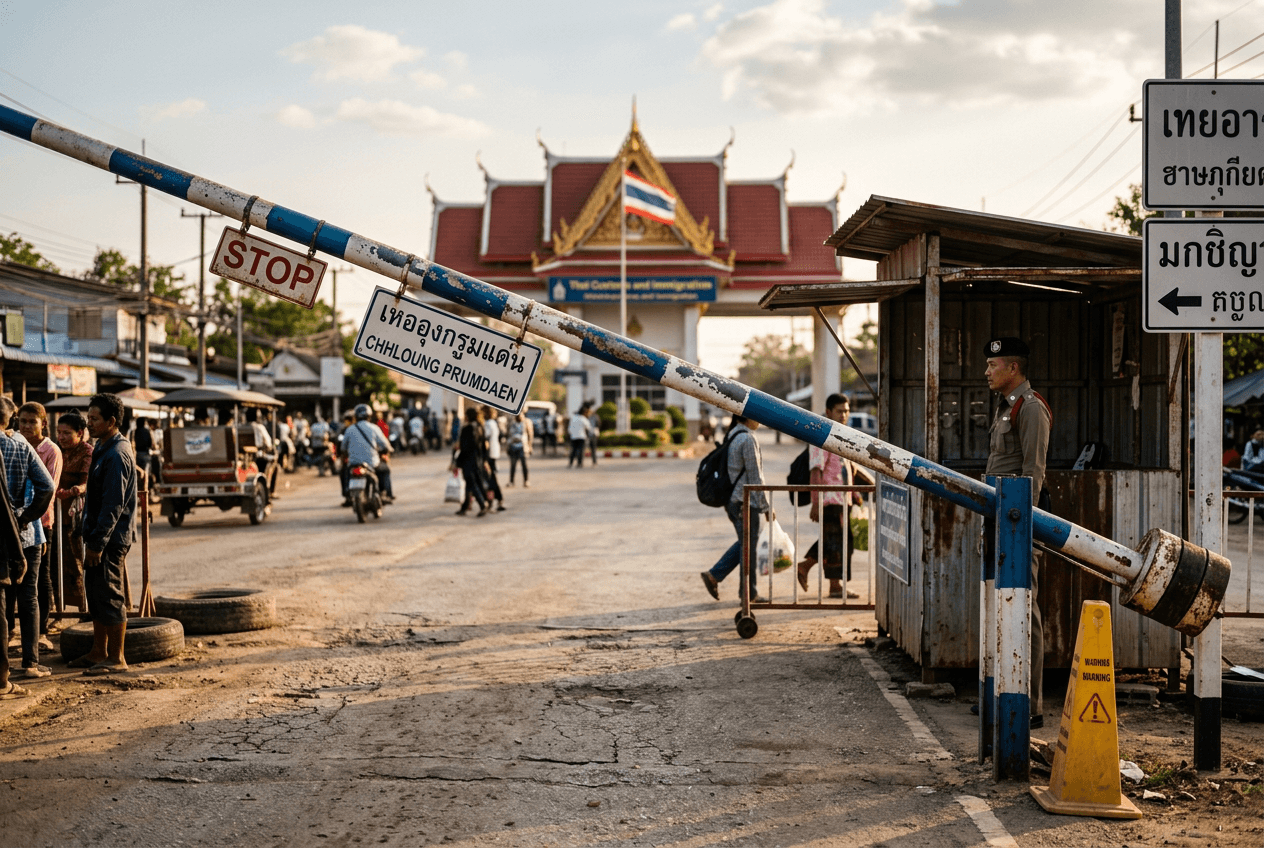
Thailand restricted visa-exempt border runs Sept. 15, capping visa-exempt entries through land-border checkpoints at two per calendar year while cutting standard tourist stays from 60 days to 30 days.
The two-entry land border cap and its restrictions
Travelers using the Tourist Visa Exemption Scheme may enter through land-border immigration checkpoints no more than twice per calendar year, according to the Tourism Authority of Thailand notice on the rules that took effect Sept. 15. The notice does not say whether land entries made earlier in 2026 count toward this year's limit, so travelers who have already crossed overland twice should confirm with Thai immigration before trying a third visa-exempt entry.
The published cap covers land-border checkpoints only, and the notice sets no equivalent numerical limit for arrivals by air or sea. Still, frequent visa-exempt arrivals face discretionary immigration scrutiny and repeated same-day turnaround flights don't guarantee admission, Khaosod English reported.
Four regional nationalities are exempt from the land-border entry ceiling:
Brunei Darussalam
Indonesia
Malaysia
Singapore
Citizens of all other qualifying countries must observe the two-crossing annual limit or secure a formal visa before attempting an overland entry.
Stay reductions and country eligibility cuts
The Ministry of Interior published the 60-day rollback in the Royal Gazette on Aug. 31, replacing the broader terms introduced in July 2024. The previous scheme allowed citizens from 93 countries and territories to stay for up to 60 days visa-free. Under the current decree, the standard exemption list dropped to 60 countries and territories, with permission to stay reduced to 30 days per visit.
Travelers who entered the country on or before Sept. 14 retain their original permission to stay for the full 60 days, the Public Relations Department confirmed. The updated policy doesn't shorten active stamps retroactively.
Separate bilateral agreements remain in effect alongside the standard 60-nation list. Travelers from Argentina, Brazil, Chile and Peru retain 90-day bilateral exemptions, while passport holders from China, Hong Kong, Kazakhstan, Laos, Macao, Mongolia, Russia, Timor-Leste and Vietnam receive 30-day stays under dedicated treaties. Nationals of Mauritius and Seychelles receive a 15-day exemption and Visa on Arrival eligibility is now restricted to Azerbaijan, Belarus and Serbia for a fee of 2,000 baht.
Tourism-only entry rules and remote work
The restructured exemption strictly limits the permitted purpose of entry to tourism. The former 60-day system explicitly accommodated work and short-term business engagements, but the new framework revokes that language entirely, corporate immigration firm Vialto Partners reported. Remote workers and nomads can't rely on standard visa-exempt stamps as legal authorization for ordinary employment or business activities.
Travelers planning extended stays in the country need to evaluate formal visa routes when reviewing Thailand's residency rules. While visitors can apply at a local immigration office for a single 30-day extension of their tourist stamp at the reviewing officer's discretion, recurring extensions and back-to-back border runs are no longer a dependable strategy for staying long term.
Mandatory entry funds and paperwork
Border officials require visa-exempt visitors to carry proof of sufficient funds upon arrival. Travelers must show at least 20,000 baht per individual or 40,000 baht per family in cash or verified funds, Thai embassy instructions state.
All non-Thai arrivals must also complete the Thailand Digital Arrival Card online within three days before their arrival date. In addition, travelers must hold evidence of a fully paid return or onward ticket departing within the permitted 30-day window to clear immigration checkpoints without administrative delays.
Frequently asked questions
How long can visa-exempt travelers stay in Thailand now?
How many land-border visa-exempt entries are allowed in Thailand each year?
Does the two-entry land-border limit apply to flights into Thailand?
Can digital nomads work in Thailand on a visa-exempt stamp?
What proof of funds do I need to enter Thailand visa-free?
Do I need to fill out any arrival form before going to Thailand?
Can I extend a visa-exempt stay in Thailand?
Stay updated on Thailand
Visa changes, travel alerts, and destination news — delivered when they actually matter.