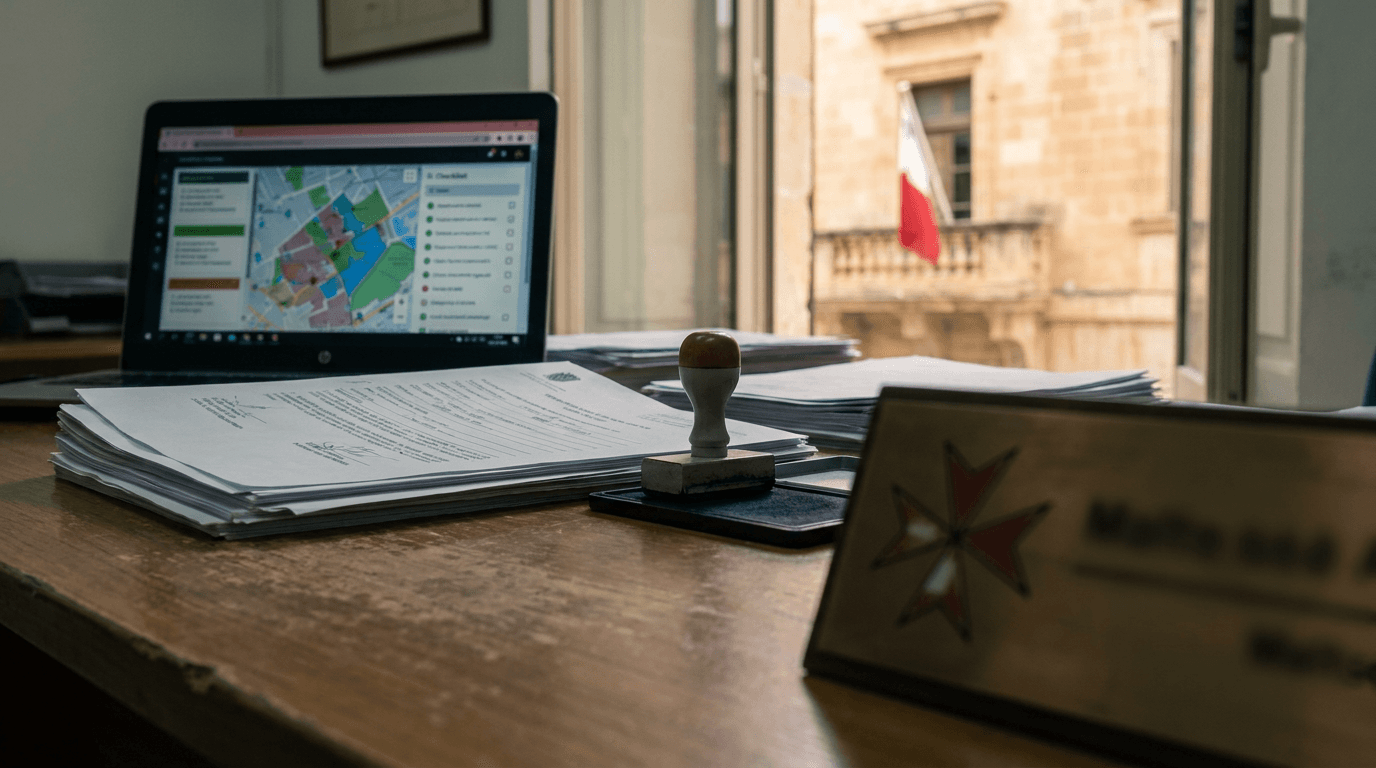
Malta Permanent Residence Programme (MPRP)

At a Glance
- €375,000 one-timeresidential property in Malta or Gozo, bought or held by emphyteusis; hold the qualifying property at least five years
- €60,000 one-timenon-refundable; EUR 15,000 within one month of applying, EUR 45,000 within two months of the Letter of Approval in Principle · main applicant
- €7,500 one-timenon-refundable, per dependant; spouse, minor children and differently abled adult children pay no fee since L.N. 146 of 2025 · each dependent other than spouse, minor children and differently abled adult children
- 5 yearscard validity; the residence status itself is permanent
- Through a Licensed Agent registered with Residency Malta Agency
- Yesup to four generations in one application; temporary residence available while the application is processed
- Grants permanent residence directly: the right to settle, stay and reside permanently in Malta
The Malta Permanent Residence Programme (MPRP), often marketed as Malta's golden visa, is a residency-by-investment route for third-country nationals. It grants permanent residence directly: the right to settle, stay and reside permanently in Malta (Residency Malta).
The price changed under Legal Notice 146 of 2025, which amended the program rules (S.L. 217.26). The current conditions:
- Administrative fee: €60,000, non-refundable
- Government contribution: €37,000, the same whether the applicant buys or rents
- Property: buy for at least €375,000 or rent for at least €14,000 a year, in Malta or Gozo
- Capital: assets of €500,000 (at least €150,000 of it financial) or €650,000 (at least €75,000 financial)
- Donation: €2,000 to a registered local NGO
Holders can travel visa-free in the Schengen area for up to 90 days in any 180-day period. The MPRP is a residence program, separate from Malta's citizenship rules.
The MPRP is open to third-country nationals: people without EU, EEA or Swiss citizenship. According to Residency Malta, applicants must:
- Have stable resources: stable and regular financial resources to support themselves and their dependents.
- Meet the capital test: €500,000 in capital assets with at least €150,000 in financial assets, or €650,000 with at least €75,000 in financial assets.
- Pass due diligence: a multi-tier check of every person in the application. Nationals of sanctioned countries and people with criminal records are excluded.
- Secure qualifying property: purchase or rental at the thresholds in the overview, held for at least 5 years.
Families can apply together, with up to four generations in one application (MPRP brochure). Temporary residence is available to the family while the application is processed.
The program has financial conditions and document conditions. The financial ones come from S.L. 217.26 as amended by L.N. 146 of 2025:
- Administrative fee: €60,000 for the main applicant and €7,500 for each dependent other than a spouse, minor children and differently abled adult children.
- Contribution: €37,000.
- Property: a purchase of at least €375,000 or a lease of at least €14,000 a year, kept for at least 5 years; after that a residential property in Malta is still required.
- Donation: €2,000 to a local registered philanthropic, cultural, sport, scientific, animal welfare or artistic NGO.
- Capital assets: €500,000 or €650,000, with the financial-asset minimums set out under eligibility.
Every applicant also needs a valid travel document and health insurance covering risks in Malta and other European countries, and must clear due diligence. The Licensed Agent handling the case confirms the document list, including police certificates and translations.
Government charges under S.L. 217.26 as amended by L.N. 146 of 2025 and the MPRP brochure:
- Administrative fee: €60,000 for the main applicant, non-refundable, paid in two parts.
- Dependent fee: €7,500 for each dependent other than a spouse, minor children and differently abled adult children.
- Contribution: €37,000, on both the purchase and the rental route.
- Donation: €2,000.
- Residence card: €500 per person, covering five years.
On top of that sit the property itself (at least €375,000 to buy or €14,000 a year to rent), health insurance and Licensed Agent, legal and translation fees, which the government does not set. Figures published before L.N. 146 of 2025, such as a €50,000 fee or a €30,000 or €60,000 contribution, are out of date.
Applications go only through a Licensed Agent registered with Residency Malta Agency; individuals cannot file directly.
- Appoint a Licensed Agent: the agent prepares and submits the full file.
- Pay the first part of the fee: €15,000 of the €60,000 administrative fee within one month of applying.
- Due diligence: Residency Malta checks every person in the application.
- Letter of Approval in Principle: the remaining €45,000 of the fee is due within two months of this letter, and the €37,000 contribution within eight months.
- Complete the conditions: buy or rent the qualifying property and make the €2,000 donation.
- Residence card: pay €500 per person for a card covering five years.
Residency Malta publishes no fixed processing time. It says decisions are communicated within a reasonable timeframe (Residency Malta).
MPRP status is permanent residence, so there is no renewal cycle for the status itself. The residence card is issued for 5 years at a time, with a card fee of €500 per person (MPRP brochure).
- Status: permanent residence in Malta.
- Card: 5 years per card.
- Property: keep the qualifying property for at least 5 years, then keep a residential property in Malta.
- Travel: visa-free stays in the Schengen area of up to 90 days in any 180-day period.
Permanent residence does not lead to citizenship on its own. Residency Malta describes the MPRP as distinct from the separate legal provisions on citizenship (legal framework).
The MPRP rules set no tax regime of their own. Holders are taxed under Malta's ordinary rules, set out by the Malta Tax and Customs Administration.
- Residence: presence in Malta for more than 183 days in a year makes a person tax resident; someone who moves to Malta to establish residence is resident from arrival.
- Domicile: Residents who are ordinarily resident and domiciled in Malta are taxed on worldwide income; residents who are not domiciled or not ordinarily resident are taxed on a remittance basis.
Holding MPRP status is a residence matter. Where tax falls each year depends on actual presence, domicile and any tax treaty with the home country, so a tax adviser should look at the full picture before the move.
Frequently Asked Questions
How much does the Malta golden visa (MPRP) cost?
The government charges are an administrative fee of €60,000, a contribution of €37,000, a €2,000 donation and €500 per person for the residence card. Dependents other than a spouse, minor children and differently abled adult children add €7,500 each.
What property does the MPRP require?
A purchase of at least €375,000 or a lease of at least €14,000 a year in Malta or Gozo, kept for at least 5 years. After that a residential property in Malta is still required.
How much capital does an MPRP applicant need?
Capital assets of €500,000 with at least €150,000 in financial assets, or €650,000 with at least €75,000 in financial assets.
Can families apply for Malta permanent residence together?
Yes. Up to four generations can be included in one application, and temporary residence is available while it is processed.
Does the MPRP lead to Maltese citizenship?
No. It grants permanent residence, which Residency Malta describes as distinct from the separate provisions on citizenship.
How It Compares
More Malta programs
| Program | Country | Income | Fee | Max stay | Renewable |
|---|---|---|---|---|---|
| Malta Digital Nomad Visa | Malta | €42,000/yr | €300↓ | 12 mo |
Similar visas elsewhere
| Program | Country | Income | Fee | Max stay | Renewable |
|---|---|---|---|---|---|
| Egypt Citizenship by Investment | Egypt | $250,000 saved | $10,000↓ | - | |
| Antigua and Barbuda Citizenship by Investment | Antigua and Barbuda | - | $10,000↓ | - | - |
| Dominica Citizenship by Investment | Dominica | $200,000 saved | $1,000↓ | - | |
| Saint Kitts and Nevis Citizenship by Investment | Saint Kitts and Nevis | $250,000 saved | $10,000↓ | - |
Malta Digital Nomad Guide
Cost of living, internet, healthcare, coworking, and every visa option for Malta.
Visa rules change. We'll tell you.
Get notified about policy updates and new requirements for the Malta Permanent Residence Programme (MPRP) and other Malta visas.