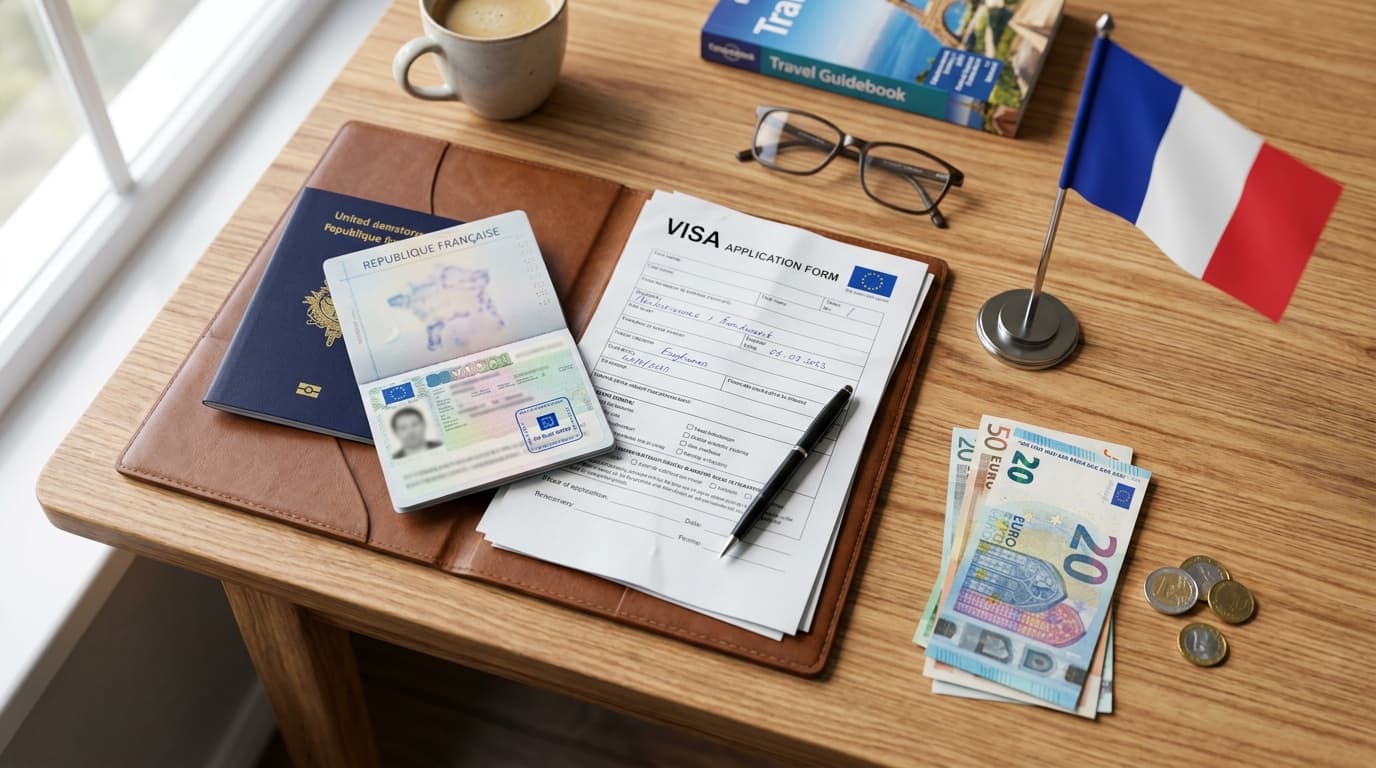
France EU Blue Card
Visa Data Sheet
- $64,200 / yr
- $350 – $449
- 13 weeks
- 120 months
France’s EU Blue Card is a multi-year residence permit for highly qualified non-EU workers hired by an employer in France. It’s not a tourist visa and it’s not a remote-work workaround. It gives you the right to live and work in France under a salaried contract and it also opens the door to family reunification, long-term residence and some EU mobility rights.
In France, the permit is issued as Talent, Carte Bleue Européenne. It’s meant for people in skilled roles who already have a concrete job offer or contract from a French employer. Algerian nationals are handled under a separate bilateral regime, so this card doesn’t apply to them in the standard way.
The basic bar is high and that’s the point. You generally need a permanent contract or a fixed-term contract of at least six months with an employer established in France, plus either a higher-education diploma equal to at least three years of study or five years of professional experience at a comparable level. The French salary threshold listed by the official business portal is €59,373 gross per year.
- Contract: A CDI or a CDD of at least six months with a French employer
- Qualifications: A diploma equal to three years of higher education or five years of comparable professional experience
- Salary: At least €59,373 gross per year
- Validity: Up to four years if the contract runs two years or longer or the contract length plus three months if it’s shorter, up to a maximum of two years
That makes it a very different track from a Schengen short-stay visa. A tourist visa only covers short visits and doesn’t let you take up employment in France. The Blue Card is a residence status tied to skilled work, so the paperwork is heavier and the stakes are higher, but the payoff is better if you’re serious about staying.
The official portals don’t give a fixed processing time here, so don’t assume it’s quick. Start with the France-Visas and French government guidance, then make sure your contract, diploma or experience evidence and salary all line up before you apply. If one of those pieces is off, the application can stall fast.
The France EU Blue Card is the Talent, European Union Blue Card residence permit. It’s built for non-EU professionals who’ve been hired into a skilled role in France and it doubles as both a work permit and a residence permit.
Not everyone can apply. You need to be a national of a third country, which means outside the EU, the EEA and Switzerland. Algerian nationals are handled under separate rules, so they don’t use this Blue Card track.
Who can qualify: You must have a high-level job offer or contract with an employer established in France and the job has to match your qualifications or experience. The French authorities also check that you don’t pose a threat to public policy or public security. That part is blunt, but it matters.
- Education: A higher-education diploma showing at least three years of post-secondary study, usually bachelor’s level or higher.
- Or experience: At least five years of comparable professional experience.
- Contract: A work contract with a French employer that runs for at least six months.
- Salary: A gross annual salary of at least €59,373.
- Insurance: Proof of sickness insurance or evidence that you’ve applied for it.
The salary rule is the big gatekeeper. France sets the threshold at 1.5 times the average annual gross reference salary and the current official figure is €59,373 gross per year. There’s no separate savings test for this permit, so you’re not trying to prove you’ve got a pile of cash sitting in the bank. The contract salary is what counts.
Regulated professions have their own extra hurdle. If you’re a doctor, architect or another licensed professional, you still have to meet the French rules for that occupation before the Blue Card can work.
The permit is generally issued for up to four years and can be renewed. If your initial stay is under one year, France usually starts you on a long-stay visa equivalent to a residence permit, then moves you into the multi-year Blue Card path if you still meet the conditions.
Fees aren't cheap either. The initial, renewal and replacement fee for this residence permit is €269 each.
France uses the Passeport Talent, Carte Bleue Européenne for EU Blue Card applicants. There isn’t one single public checklist that every consulate and prefecture repeats word for word, so the exact paperwork can shift a bit by location. Still, the core requirements are pretty stable.
You’ll need a real job offer or contract from a French employer, plus proof that you’re qualified for a highly skilled role. The salary floor is the part that gets people and it’s not low, your contract has to show a gross annual salary of at least €59,373. France doesn’t ask for a separate savings balance if you meet that employment threshold.
Core documents
- Valid work contract or binding job offer from a French employer for a highly qualified role.
- Proof of higher qualifications, usually a diploma showing at least three years of higher education or documents proving five years of comparable professional experience.
- Salary evidence in the employment contract, showing at least €59,373 gross per year.
- Passport and the standard visa or residence paperwork requested by the consulate, prefecture or ANEF portal.
- Regulated profession documents, if your job falls under a licensed field in France.
The fee side is clearer than the document side. The official residence permit fee is €269 for the initial card, renewal and replacement. Consular visa fees for the long-stay visa that comes first when you apply from abroad are separate and France-Visas or your local consulate sets those amounts.
Processing can take time and France doesn’t promise a quick turnaround. The legal maximum for issuing the Blue Card is 90 days, though some cases move faster and some drag because bureaucracy likes to be difficult.
Validity and renewals
- Validity: up to four years.
- If the contract is shorter: the card is usually issued for the contract length, with the French rules allowing shorter fixed-term cases to run up to two years.
- Renewal: possible if you still meet the salary and employment conditions.
Blue Card holders can later move toward EU long-term resident status. The path generally needs five years of continuous legal residence in the EU, with at least two years in France under Blue Card status. That later card has its own income and integration checks, so the Blue Card itself is only the first hurdle.
The EU Blue Card isn’t cheap in France. The main government charge for the first residence permit is €350, made up of a €300 tax and €50 stamp duty. France’s official EU Blue Card page still shows an older fee of €269, but the current French fee schedule is the one that matters for applicants.
That permit fee sits on top of the normal application costs you’ll rack up before you even get to the prefecture. The government doesn’t publish a fixed price for every extra expense, so your total can move around depending on your case.
What you’ll likely pay for
- Residence permit fee: €350 for the first issue.
- Translation costs: Not fixed by the government, but you may need them if your diplomas or civil-status records aren’t in French.
- Health insurance: Required, though the official portal doesn’t give a standard price.
- Legal help: Optional and privately priced, so it depends entirely on the provider.
You’ll also need to show sickness insurance or proof that you’ve applied for it, plus a valid work contract or binding job offer for at least 6 months. France doesn’t use a labour market test for this route, which saves time, but it doesn’t make the paperwork light.
The salary floor is high. To qualify, your gross annual pay must be at least €59,373 and your employer paperwork has to support that number cleanly.
Timing and validity
France can take up to 90 days to process a complete EU Blue Card application. Once issued, the card can be valid for up to 4 years or for the length of your employment contract if that’s shorter.
That makes the route more stable than a short visa, but the upfront cost is still annoying. If your documents aren’t already in French or close to it, budget extra time and money before you file.
France handles the EU Blue Card through the Passeport Talent, Carte Bleue Européenne route. You apply first for a long-stay Talent visa from outside France, then you turn it into a residence permit after you arrive.
Who qualifies
The job has to come from an employer established in France and it has to be a real highly qualified position. You also need a binding contract, a passport, health insurance and the right credentials for the role.
- Salary: at least 59,373 EUR gross a year, which is 1.5 times France’s reference average salary.
- Contract: a French CDI or a fixed-term contract of at least 6 months.
- Qualifications: either a diploma equal to 3 years of higher education or 5 years of comparable professional experience.
How to apply
Start outside France with the France-Visas process. The consulate or visa center handles the long-stay visa and the exact appointment setup depends on the country where you apply.
Once you’re in France, the permit is issued as a multi-year residence card. The official EU portal gives a maximum processing time of 90 days for the Blue Card decision, but France doesn’t publish a shorter guaranteed timeline, so don’t plan on speed.
- Step 1: get a qualifying job offer and signed contract.
- Step 2: apply for the long-stay Talent visa from abroad.
- Step 3: arrive in France and convert it into the Blue Card residence permit.
- Step 4: renew before expiry if you want to stay on.
Fees and validity
The long-stay visa fee is typically 99 EUR. The Blue Card residence permit fee is 269 EUR for the initial card, renewal and replacement.
The card can be issued for up to 4 years. If your contract is shorter, the permit is tied to the contract length, with French rules allowing some shorter contracts to run as contract length plus 3 months, up to a 2-year cap.
- Long-stay visa: 99 EUR.
- Residence permit: 269 EUR.
- Maximum validity: 4 years.
Renewal
Renewal is possible, but don’t wait until the last minute. Prefecture guidance commonly asks for applications 2 to 4 months before expiry and you’ll still need to meet the salary and qualification rules.
Duration and renewal
France’s Talent, European Union Blue Card is a multi-year residence permit tied to your job contract. The standard card can be issued for up to 4 years and if your contract is shorter, the permit matches it, with a 3-month cushion in some cases. If your stay starts with a long-stay visa instead, that visa can cover up to 12 months before you move onto the residence permit.
Initial validity: up to 4 years for a contract of at least 2 years. If the contract is shorter than 2 years, the permit is issued for the contract length plus 3 months, capped at 2 years.
The Blue Card is renewable and the official guidance doesn’t set a hard cap on how many times you can renew it. The catch is simple and a bit annoying, you still have to meet the Blue Card rules each time. That means keeping a qualifying job, salary and qualification profile in place.
- Renewal window: submit your application no earlier than 4 months and no later than 2 months before expiry.
- Renewal fee: official sources list either €269 or €250, so check the fee shown on your case file before you pay.
- Processing time: the official portal says France’s maximum processing time is 90 days.
If you stay in France long enough, the Blue Card can lead to longer-term status. After about 5 years of legal residence, with the right residence history, you can move toward a renewable 10-year long-term residence card. That card is often a better deal than stacking Blue Cards forever, because it gives you more stability and fewer renewal headaches.
That 5-year track can also count toward French citizenship, but don’t assume the clock is automatic. The way those 5 years are built matters and absences from France can affect eligibility. The practical takeaway is straightforward, renew the Blue Card if you need to, but start thinking about the 10-year card once you’re approaching year 5.
France doesn’t give EU Blue Card holders a special tax break. The permit, officially the “Talent, European Union Blue Card,” is an immigration status, not a tax regime, so you’re taxed under the same French personal-income rules as everyone else unless a separate rule applies to you.
The big question is tax residency. France uses its general residency test, not the Blue Card itself. You’re usually treated as French tax-resident if your home or main residence is in France, your main job is in France or your center of economic interests is there. If you’re resident, France can tax your worldwide income, subject to any tax treaty relief. If you’re not resident, French tax usually applies only to French-source income.
That means foreign income doesn’t disappear just because you’ve got a Blue Card. If you become French tax-resident, you’ll generally need to declare income from abroad too. Depending on the treaty between France and your home country, that income may be exempt in France with progression or France may tax it and give you a credit for foreign tax paid.
Can Blue Card holders use the impatriate regime?
Yes, potentially. France’s special expatriate or impatriate, tax regime can apply to some newcomers who move to France for work and it isn’t tied to a specific visa type. The permit itself doesn’t grant it automatically, but Blue Card holders can qualify if they meet the conditions.
- Tax residence: You must become French tax-resident.
- Recent history: You must not have been tax-resident in France during the five calendar years before starting work.
- Recruitment or transfer: You must be recruited from abroad by a French employer or assigned to France from a foreign company.
This regime can be generous, but it’s not automatic and it’s not forever. Business France says it can apply for up to eight years, though eligibility is checked year by year. If your setup is borderline, get proper tax advice before you assume the benefit applies.
Don’t ignore reporting
Once you’re in French tax territory, the paperwork gets real. You’ll need to declare income properly and if you have assets, accounts or income abroad, those may trigger additional reporting duties. French tax forms aren't forgiving and mistakes tend to become expensive later.
France Digital Nomad Guide
Cost of living, internet, healthcare, coworking, and every visa option for France.
Visa rules change. We'll tell you.
Get notified about policy updates and new requirements for the France EU Blue Card and other France visas.
