Dominican Republic Pensionado / Rentista

At a Glance
- $1,500 a monthPension or retirement income from a foreign government, official body or private company; salaries never count · main applicant, pensionado route
- $250 a monthPer dependent applying with the main applicant; applies to both pensionados and rentistas · each dependent
- $200 one-timeVisa de Residencia por Jubilacion (RS) or por Rentista (RS); dependency visa (DPM) US$150 · main applicant
- 1 yearGrey temporary residence card valid one year
- Renewable at the DGM before the card expires; the pensionado renewal card runs two years. Renewal needs six months of statements from a Dominican bank showing the pension or income arriving and proof it was spent in the country.
- First a single-entry residence visa (RS) from the Dominican consulate for the applicant's country of residence; within its 60 days the holder enters and files the residence application with the DGM foreign investment desk online (personal.migracion.gob.do), then deposits originals in person in Santo Domingo.
- 90 daysNinety working days, per the DGM service page
- Yes
Last checked Sept. 27, 2026
The Dominican Republic's pensionado and rentista routes are residence permits for people living on income from abroad, set up by Law 171-07 on special incentives for foreign-source pensioners and rentistas. The Direccion General de Migracion (DGM) runs both through its foreign investment desk.
- Pensionado: a pension of at least $1,500 a month from a foreign government, official body or private company.
- Rentista: permanent income of at least $2,000 a month from a foreign company or body.
Both start with a residence visa (RS) from a Dominican consulate, then a temporary residence card valid for 1 year that can be renewed. The country has no digital nomad visa, so these are the main long-stay routes for people with passive income.
- Pensionado income: at least $1,500 a month, paid by the body the applicant worked for. The DGM says salaries never count, and the payer must confirm it can keep paying for at least five years.
- Rentista income: at least $2,000 a month of stable income from abroad. The DGM rentista page accepts proof such as dividends from a foreign company the applicant holds shares in over the last five years, property bought abroad in the last five years or investments held in foreign banks for five years.
- Dependents: an extra $250 a month for each one. Law 171-07 covers the spouse, unmarried children under 18, adult children who are disabled or studying at university and depend on the applicant, and minors under the applicant's legal guardianship.
- Age: Law 171-07 sets no minimum age.
- Work: the law lets pensionados and rentistas take paid work in the country, with the salary taxed like any other employee's.
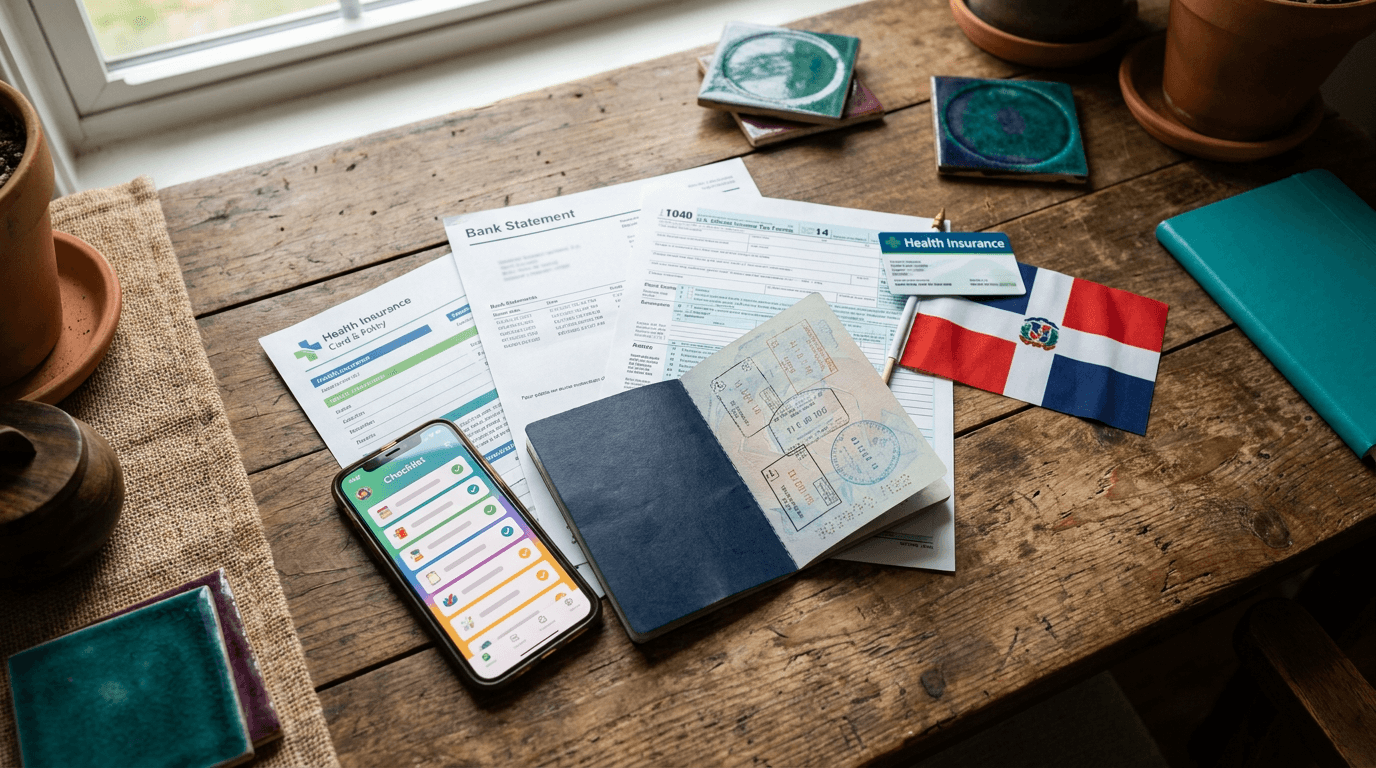
The DGM pensionado checklist asks for:
- the residence application, completed on the DGM online portal
- a copy of the full passport, valid for at least six months
- a valid RS residence visa from a Dominican consulate
- the receipt for the medical exam, taken only at DGM-authorized centers
- the original birth certificate, apostilled or legalized
- a criminal record certificate from every country lived in during the last five years, apostilled or legalized
- four recent 2x2 photos: two from the front and two of the right profile, on a white background, ears uncovered and no jewelry
- a certificate from the paying government, official body or company, translated into Spanish by a judicial interpreter and apostilled or legalized, showing years of service, position, pension amount and that it can pay for at least five years
- a guarantee policy with Seguros Reservas that also covers dependents
- a letter from a Dominican bank confirming an account
Rentistas file the same core documents, a certified statement of where the income comes from and a marriage certificate, single-status declaration or proof of cohabitation, as listed on the DGM rentista page.
Dependents
A spouse files with the main applicant, adding the marriage and birth certificates, passport, residence visa and a criminal record certificate. Children file birth certificates, passports and visas, with a criminal record certificate from age 16. Dependents also need a repatriation policy.
- RS residence visa at the consulate: $200, per the Foreign Ministry fee table
- DGM first residence card: DOP 38,600, covering the card and ID record, the file deposit and the medical exams, per the DGM fee table as captured on June 9, 2025
- DGM renewal: DOP 23,100 for a pensionado renewal, per the DGM fee table as captured on May 24, 2025, with a surcharge for each month overdue
The DGM issued a fee resolution in March 2026 whose text could not be checked, so the peso amounts should be confirmed with the DGM before paying. The Seguros Reservas policy, translations, apostilles and consular legalizations cost extra and vary.
First a single-entry residence visa (RS) from the Dominican consulate for the applicant's country of residence; within its 60 days the holder enters and files the residence application with the DGM foreign investment desk online (personal.migracion.gob.do), then deposits originals in person in Santo Domingo.
- Apply for the RS residence visa at the Dominican consulate for the country of residence and pay the consular fee of $200.
- Enter the Dominican Republic on the RS visa.
- Register on the DGM services portal and file the residence application with scanned documents.
- Deposit the originals at the DGM in Santo Domingo within 30 days of entry, or pay a penalty.
- Take the medical exam within three days of paying for it; results take about ten days.
- Collect the temporary residence card once the DGM approves the file.
The DGM lists a processing time of 90 days, counted in working days. Law 171-07 (article 7) sets a shorter maximum of 45 days for the approval letter, but the DGM's own service page reflects current practice.
- First card: 1 year
- Renewals: for the period the DGM sets. Law 171-07 (article 8) says two years or the period the DGM stipulates.
Renewable at the DGM before the card expires; the pensionado renewal card runs two years. Renewal needs six months of statements from a Dominican bank showing the pension or income arriving and proof it was spent in the country.
The law's renewal file also includes the renewal form, a copy of the Dominican ID card (cedula), a local criminal record certificate and the expiring card. DGM pages give different terms for rentista renewals, so rentistas should confirm theirs with the DGM.
The permit is renewable residence. No official page sets out how pensionado or rentista years count toward permanent residence, so holders planning to stay for good should ask the DGM.
Law 171-07 exempts the declared pension or income from income tax and grants: no transfer tax on the first property bought, 50% off mortgage taxes and property tax, exemption on dividends and interest, 50% off capital gains tax in some cases, duty-free import of household goods and a partial vehicle tax exemption.
These benefits come from Law 171-07 (articles 2 and 10 to 14). Later tax reforms may have changed parts of them, so the current treatment should be confirmed with the DGII, the tax authority.
Under the Tax Code, a person who stays in the country more than 182 days in a fiscal year, continuously or not, is tax resident. Articles 269 and 271 tax residents on Dominican-source income and on foreign investment and financial income, the latter from the third year of residence. Salary from local work is taxed like any employee's.
Frequently Asked Questions
How much income do Dominican pensionado and rentista residence require?
A pension of at least $1,500 a month for pensionados, or at least $2,000 a month of stable foreign income for rentistas, plus $250 a month for each dependent.
Does salary income count?
No. The DGM says salaries never count toward the pension minimum. Rentista income must come from a foreign company or body, such as dividends or investments.
How long does the process take?
The DGM lists 90 days, counted in working days, after the originals are deposited. The medical exam results alone take about ten days.
How long is the residence card valid?
The first card lasts 1 year. Renewals run for the period the DGM sets, typically two years for pensionados.
Can pensionados and rentistas work in the Dominican Republic?
Yes. Law 171-07 allows paid work, and the salary is taxed like any employee's.
How It Compares
Similar visas elsewhere
| Program | Country | Income | Fee | Max stay | Renewable |
|---|---|---|---|---|---|
| Liechtenstein Financially Independent Residence Permit | Liechtenstein | CHF 2,600/mo | CHF 1,060 | 12 mo | |
| Italy Elective Residence Visa | Italy | €31,000/yr | €116↓ | 12 mo | |
| Lebanon Income-Based Residency Permit | Lebanon | LBP 50,000,000/mo | LBP 18,000,000 | 12 mo | - |
| Monaco Residency (Financial Means) | Monaco | - | €80↓ | 12 mo |
Dominican Republic Digital Nomad Guide
Cost of living, internet, healthcare, coworking, and every visa option for Dominican Republic.
Visa rules change. We'll tell you.
Get notified about policy updates and new requirements for the Dominican Republic Pensionado / Rentista and other Dominican Republic visas.