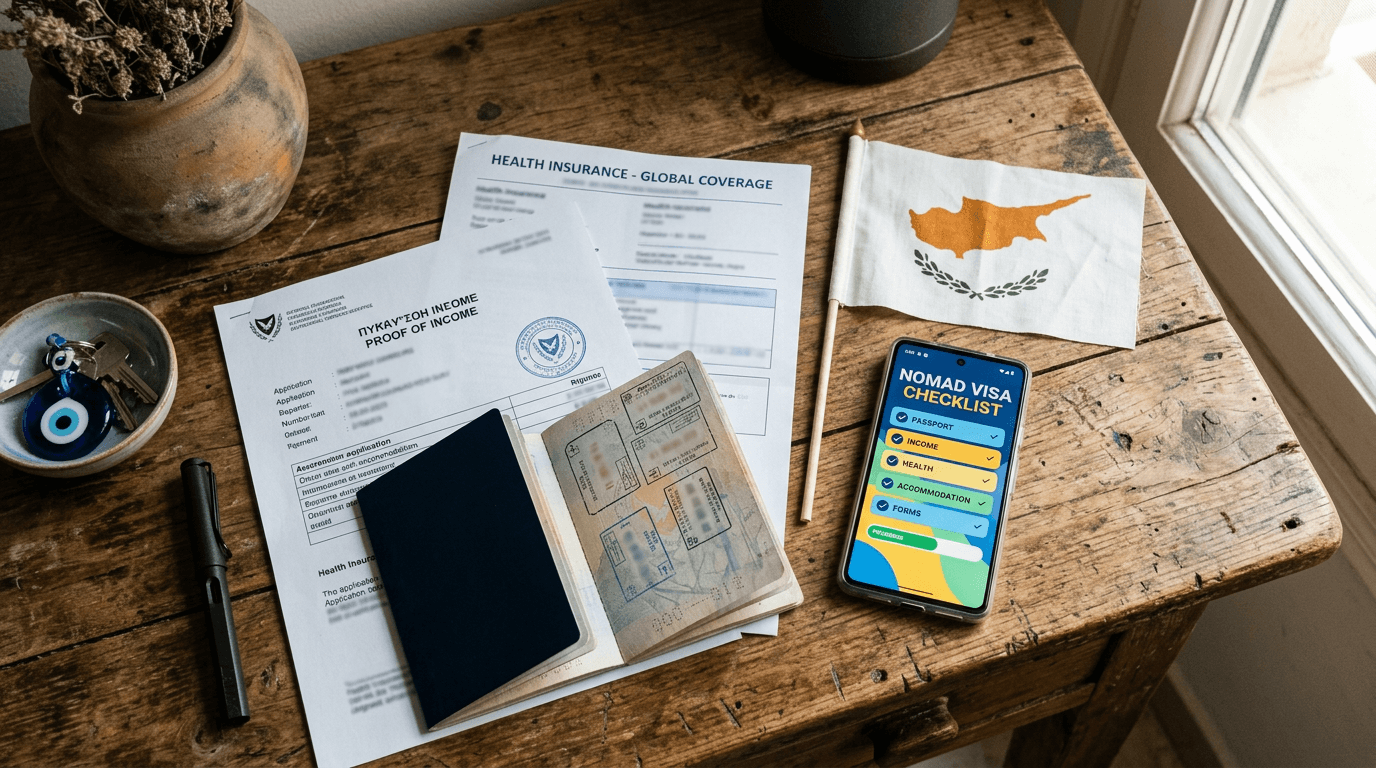
Cyprus Digital Nomad Visa

At a Glance
- €3,500 a monthat least, net of contributions and taxes; stable and sufficient · main applicant
- 20% more for a spouse or partner and 15% more for each childpercent of the EUR 3,500 base · applicants bringing family
- €70 one-timeeach applicant
- 1 year
- Renewable once for up to two years; apply to the Migration Department in Nicosia at least one month before the permit expires
- 3 yearsone-year first permit plus a renewal of up to two years
- In person or through an authorized representative at the Migration Department central offices in Nicosia, within three months of arrival
- 7 weeks5 to 7 weeks
- No
- Yes
- No path stated; the permit is temporary and the scheme page describes no route to long-term or permanent residence
The Cyprus Digital Nomad Visa is a temporary residence permit for non-EU remote workers employed by a company registered abroad or working for clients abroad. The Migration Department announced on Dec. 31, 2025 that it is again accepting applications (Migration Department).
- Status: active, with a cap of 500 permits
- Income: at least €3,500 a month net of tax and social contributions
- Length: 1 year at first, then one renewal for up to two years, 3 years in total
- Fees: €70 for the permit and €70 for first registration in the Aliens' Registry
- Decision: 5 to 7 weeks
- Where: in Cyprus, at the Migration Department in Nicosia, after arrival
Cyprus is in the EU but outside the Schengen area, and the permit is valid for Cyprus only. The Cyprus guide compares it with Category F and the investor permit.
The Migration Department sets four conditions (scheme page):
- Nationality of a country outside the EU and the EEA.
- Work that can be done from any location through telecommunications technology.
- Employment with a company registered abroad, or self-employment serving clients abroad. Work for an employer or clients established in Cyprus is excluded.
- Stable net income of at least €3,500 a month after tax and social contributions.
Family allowed: Yes. A spouse or civil partner and minor children can hold permits for the same period as the main applicant. With family, the income floor is 20% more for a spouse or partner and 15% more for each child (document list).
Local work allowed: No. Family members may not work or carry out any economic activity in Cyprus either.
The Migration Department's document list for a first permit (version of March 19, 2025):
- A passport valid for at least three months after the application date, plus a copy of the page showing the last entry into Cyprus.
- Employees: an employment contract of indefinite length or at least as long as the permit, the employer's confirmation that the work is remote and serves no Cyprus employer, the company's stamped registration certificate from abroad, its contact details and the applicant's position.
- Self-employed: service or project contracts at least as long as the permit and a signed confirmation that the work is remote and serves no client in Cyprus.
- Proof of net salary payments and detailed bank statements for the last six months. Where net pay cannot be shown, a sworn affirmation of net income is accepted.
- An original criminal record certificate from the country of origin, or from the country of residence if different.
- Original blood tests showing no HIV, syphilis or hepatitis B and C, and a chest X-ray for tuberculosis, certified by a specialist doctor.
- Health insurance covering inpatient and outpatient care and repatriation of remains (Plan A).
- A title deed or rental agreement for a home in Cyprus, stamped where required, with a utility bill for the address.
- A signed affirmation that neither the applicant nor family members will work for or serve employers or clients established in Cyprus.
- Residence permit, issue or renewal: €70 per applicant.
- Aliens' Registry, first registration only: €70 per applicant.
Family members receive their own permits, so the fees apply to each person (Migration Department). Health insurance, the medical tests, translations and certified copies add to the total and vary by applicant.
In person or through an authorized representative at the Migration Department central offices in Nicosia, within three months of arrival.
- Enter Cyprus under the normal entry rules for the nationality, with a visa where one is needed. People already living legally in Cyprus under another status can apply to switch.
- File the application at the Migration Department's central offices in Nicosia within three months of arrival and pay the fees.
- Give a photo, fingerprints and a signature when the application is filed.
- Wait 5 to 7 weeks for the decision. An approved applicant receives a permit valid for 1 year.
The scheme is capped at 500 permits, and the official page does not publish how many remain (Migration Department).
The first permit is valid for 1 year (Migration Department).
Renewal: Renewable once for up to two years; apply to the Migration Department in Nicosia at least one month before the permit expires.
That allows 3 years under the scheme. The official page describes one renewal only and does not say whether a second is possible.
A renewal needs a valid passport, current work contracts, fresh income proof and bank statements, health insurance, housing proof and the non-work affirmation. The employer's confirmation and company papers are needed again only when the employer or contract has changed (document list).
Residence path: No path stated; the permit is temporary and the scheme page describes no route to long-term or permanent residence.
The scheme carries no special tax regime. A digital nomad who spends more than 183 days in Cyprus in a tax year becomes a Cyprus tax resident (scheme page).
The Tax Department applies two tests. Under the 183-day rule, a person present in Cyprus for more than 183 days in a tax year is tax resident; arrival days count as days in Cyprus and departure days as days outside. Under the 60-day rule, a person present for at least 60 days can be tax resident if they spend no more than 183 days in any other country, carry on business or hold a job or office in Cyprus and keep a home they own or rent there (Tax Department).
Because the permit bars work for Cyprus employers and clients, the 183-day rule is the one that usually applies. A stay of most of a calendar year therefore usually makes the holder a Cyprus tax resident, subject to any tax treaty with the other country.
Frequently Asked Questions
How much income does the Cyprus Digital Nomad Visa require?
At least €3,500 a month net of tax and social contributions, backed by six months of bank statements. With family the floor is 20% more for a spouse or partner and 15% more for each child.
How long can a digital nomad stay in Cyprus?
The first permit lasts 1 year. One renewal adds up to two years, for 3 years in total.
Can the application be filed from abroad?
No. Applicants enter Cyprus first and file at the Migration Department in Nicosia within three months of arrival, in person or through an authorized representative.
Is there a limit on the number of permits?
Yes. The Council of Ministers capped the scheme at 500 permits.
Do days in Cyprus count toward the Schengen 90-day limit?
No. Cyprus is outside the Schengen area, and a Cyprus permit gives no right to stay in Schengen countries.
How It Compares
More Cyprus programs
| Program | Country | Income / month | Fee | Max stay | Renewable |
|---|---|---|---|---|---|
| Cyprus Category F Self-Sufficient Permit | Cyprus | €9,568/yr | €500 | - | |
| Cyprus Golden Visa | Cyprus | €50,000/yr | €500 | - |
Similar visas elsewhere
| Program | Country | Income / month | Fee | Max stay | Renewable |
|---|---|---|---|---|---|
| Georgia Digital Nomad Program (Remotely from Georgia) | Georgia | - | - | - | |
| Kyrgyzstan Digital Nomad Status | Kyrgyzstan | - | - | 12 mo | |
| Kenya Class N Permit | Kenya | - | $200 | 24 mo | |
| Nepal Digital Nomad Visa (Not Yet Open) | Nepal | - | - | - |
Cyprus Digital Nomad Guide
Cost of living, internet, healthcare, coworking, and every visa option for Cyprus.
Visa rules change. We'll tell you.
Get notified about policy updates and new requirements for the Cyprus Digital Nomad Visa and other Cyprus visas.