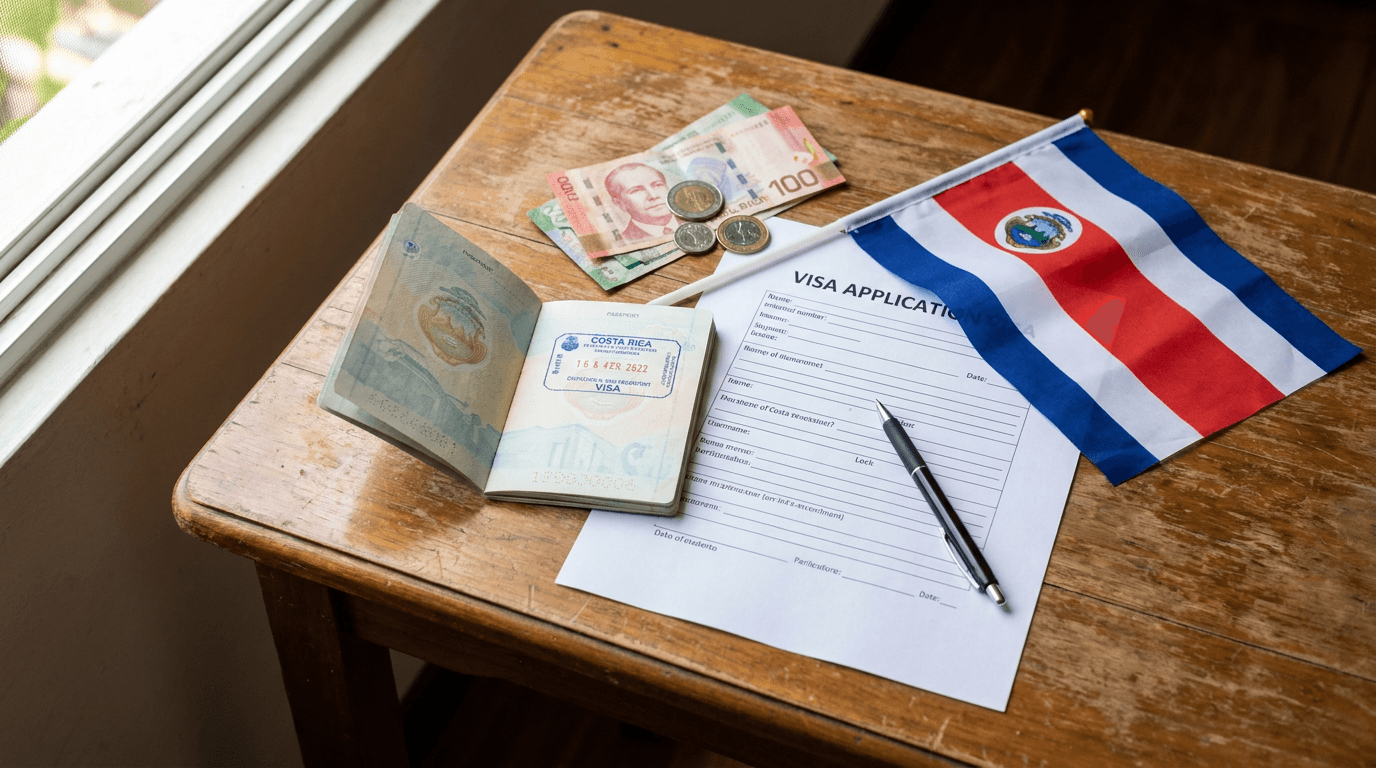
Costa Rica Annuitant Residency

At a Glance
- $2,500 a monthstable, permanent income guaranteed for at least two years, from abroad or from a Costa Rican state bank · main applicant; covers spouse and children under 25
- $50 one-timepayment to the Government for the temporary residence application (Ley 8764 art. 255) · each applicant
- 2 yearstemporary residence is granted for more than 90 days and up to two years
- Renewable for further periods of up to two years while the original conditions still hold and the holder is enrolled with the CCSS (Caja Costarricense de Seguro Social).Ley 8764 arts. 79, 80 and 86
- DGME Gestion de Extranjeria in Costa Rica: the Plataforma de Servicios at the central office in La Uruca or a regional DGME office.DGME regularizacion requirements
- Notemporary residents may only carry out the paid activities DGME authorizes
- Yesspouse, children under 25 and adult children with a disability, under the same income
- After three consecutive years of temporary residence the holder, spouse and first-degree relatives can apply for permanent residence.Ley 8764 art. 78(1)
Costa Rica's rentista category is temporary residence for people with stable income that doesn't come from a job in Costa Rica. It's set by Article 79 of Law 8764, the General Law on Migration, and handled by DGME inside Costa Rica.
- Status: active
- Income: at least $2,500 a month, guaranteed for at least two years
- Length: up to 2 years, renewable
- Fees: $50, plus $200 when changing status inside the country
- Next step: permanent residence after three years
Retirees with a lifetime pension can use the cheaper pensionado category; the Costa Rica guide compares all four routes.
- Income: stable, permanent income of at least $2,500 a month, from abroad or from a Costa Rican state bank, guaranteed for at least two years (Law 8764, Article 82).
- Family: Yes. The same amount covers a spouse and children under 25, with no extra income per dependent.
- Local work: No. Temporary residents can do only the paid work DGME authorizes.
Some sites describe a bank deposit option in place of the monthly income. DGME's requirements page doesn't list one, so it isn't stated here.
Specific to the rentista category: a document from a competent authority showing the income of at least $2,500 a month for no less than two years. Documents issued abroad need an apostille or legalization (DGME).
General documents for temporary residence, from the DGME regularization page:
- A signed application giving personal details, the request, current address and a way to receive notices, signed in front of a DGME official or authenticated by a lawyer.
- Two recent passport-size photos.
- A birth certificate from the country of origin, apostilled or legalized.
- A criminal record certificate from the country of origin, or from where the applicant legally lived for the last three years, apostilled or legalized. Nationals of countries with local and federal records, such as the United States, Canada, Mexico or Brazil, need a check by name, ID number and fingerprints where available.
- Certified copies of the passport's identity page, entry stamp and any entry visa.
- A fingerprint record from the Ministry of Public Security and proof of consular registration.
Foreign public documents need an apostille or consular legalization, and anything not in Spanish needs an official translation.
A spouse proves the marriage with an apostilled or legalized marriage certificate; parents file for minor children, and adult children with a disability need a medical report.
- Application: $50 per applicant.
- Change of status: $200 for applicants who file inside Costa Rica as non-residents.
Both are paid to the government at Banco de Costa Rica (DGME). The DIMEX card, a guarantee deposit, CCSS contributions, apostilles, translations and any lawyer are extra.
Where to apply: DGME Gestion de Extranjeria in Costa Rica: the Plataforma de Servicios at the central office in La Uruca or a regional DGME office.
- Gather the income document and general documents, with apostilles and Spanish translations.
- Pay $50 and, for applicants already in Costa Rica as non-residents, $200 into the government account at Banco de Costa Rica.
- File at DGME and follow the file until a decision.
- After approval, enroll with the national health fund (CCSS) and get the DIMEX residence card.
No official processing time is published, and the old 24-week figure seen on other sites isn't an official one.
- Length: up to 2 years.
- Renewal: Renewable for further periods of up to two years while the original conditions still hold and the holder is enrolled with the CCSS (Caja Costarricense de Seguro Social).
- Permanent residence: After three consecutive years of temporary residence the holder, spouse and first-degree relatives can apply for permanent residence.
Some sites still describe five-year permits; Article 79 of Law 8764 sets temporary residence at up to two years at a time.
Costa Rica taxes income from Costa Rican sources, so the foreign income that qualifies a rentista is generally outside Costa Rican income tax (Law 7092, Article 1). Tax residence follows days in the country: more than 183 days, continuous or not, in the fiscal period (Ministry of Finance). Residents with local income, such as rent from a Costa Rican property, file on that income.
Law 9996 incentives: Law 9996 gave rentistas, pensionados and investors duty-free import of household goods, up to two vehicles and a 20% exemption on property transfer tax. Applicants could opt in only during the five years from July 14, 2021, so the window closed on July 14, 2026 and no extension has been found. People who opted in keep the benefits for 10 years; new applicants don't get them.
Frequently Asked Questions
How much income does the rentista category require?
At least $2,500 a month, stable and guaranteed for at least two years, from abroad or a Costa Rican state bank.
Does the income have to be higher for a family?
No. $2,500 a month covers the applicant, a spouse and children under 25.
How long is the permit?
Up to 2 years, renewable while the conditions hold and the holder stays enrolled with the CCSS.
Can a rentista get permanent residence?
Yes. After three consecutive years of temporary residence the holder, spouse and first-degree relatives can apply for permanent residence.
Are the Law 9996 tax incentives still available?
Not to new applicants. The opt-in window closed on July 14, 2026; people who opted in keep the benefits for 10 years.
How It Compares
More Costa Rica programs
| Program | Country | Income | Fee | Max stay | Renewable |
|---|---|---|---|---|---|
| Costa Rica Digital Nomad Visa | Costa Rica | $3,000/mo | $100 | 12 mo | |
| Costa Rica Investor Residency | Costa Rica | $150,000-200,000 saved | $50 | 24 mo | |
| Costa Rica Pensionado (Retired) Visa | Costa Rica | $1,000/mo | $50 | 24 mo |
Similar visas elsewhere
| Program | Country | Income | Fee | Max stay | Renewable |
|---|---|---|---|---|---|
| Italy Elective Residence Visa | Italy | €31,000/yr | €116 | 12 mo | |
| Dominican Republic Pensionado / Rentista | Dominican Republic | $1,500/mo | $200 | 12 mo | |
| Lebanon Income-Based Residency Permit | Lebanon | LBP 50,000,000/mo | LBP 18,000,000 | 12 mo | - |
| Liechtenstein Financially Independent Residence Permit | Liechtenstein | CHF 2,600/mo | CHF 1,060 | 12 mo |
Costa Rica Digital Nomad Guide
Cost of living, internet, healthcare, coworking, and every visa option for Costa Rica.
Visa rules change. We'll tell you.
Get notified about policy updates and new requirements for the Costa Rica Annuitant Residency and other Costa Rica visas.