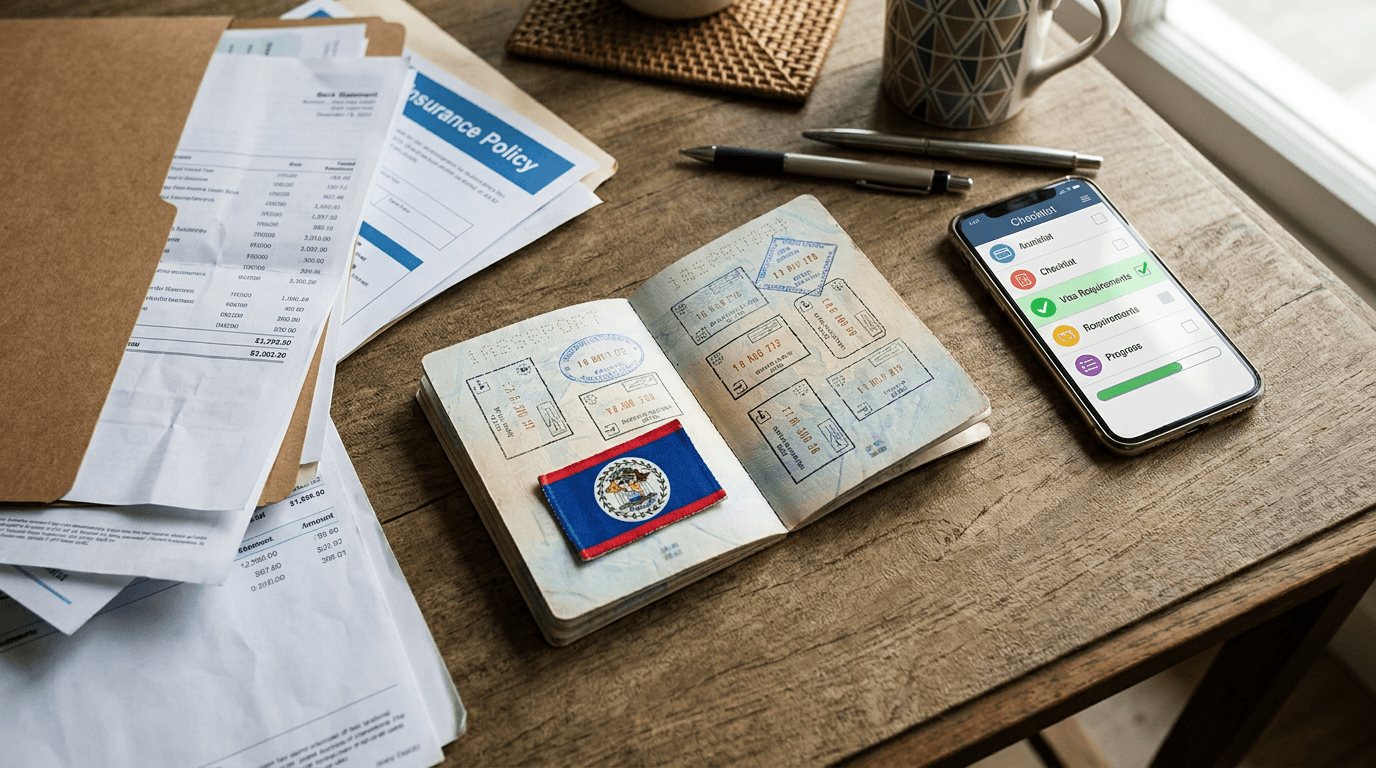
Belize Work Where You Vacation Program — Belize

Visa Program Briefing

Belize Work Where You Vacation Program

BelizeDigital Nomad Visa
Brandon Richards
Brandon Richards ·

Visa Data Sheet

Income Requirement
$75,000 / yr
Application Fee
$250 – $500
Maximum Stay
6 months
RenewableResidency PathRemote Work
The Full Briefing

Belize’s “Work Where You Vacation” program is the tourism-facing name for the country’s Long Stay Visitor Permit. It’s not a standard tourist entry and it’s not just a monthly extension. It’s a six-month visitor status for people who work outside Belize and want a longer stay without having to renew every 30 days.

The permit gives approved applicants and dependents permission to stay in Belize for up to six months or 180 days, in a calendar year. That’s the main appeal. It’s cleaner than stringing together short tourist stays, though the tradeoff is that the income and paperwork bars are much higher.

It’s aimed at remote workers and self-employed people with solid income outside Belize. The official thresholds are USD 75,000 a year for solo applicants and USD 100,000 a year when applying with dependents. Applicants must also be citizens or permanent residents of the EU, U.K., U.S. or Canada under the current published criteria.

  • Employment proof: a recent job letter if you’re employed by someone else or business registration and an annual tax return if you’re self-employed.
  • Financial proof: a notarized banking reference and bank statement or statement of account.
  • Identity: a certified copy of the passport bio-data page for each applicant and dependent.
  • Background check: a police record from your country of residence issued within six months of applying.
  • Insurance: travel insurance with at least USD 50,000 in health coverage.

The fee picture is a little messy because Belize’s official immigration page and tourism page don’t match. Immigration lists the permit at USD 500 per adult and USD 200 per child. The tourism board’s page shows the same amounts in Belize dollars, which doesn’t line up cleanly, so the safer reading is to treat Immigration’s figures as the controlling ones.

What you don’t get is just as important. This permit doesn’t appear to be a path to permanent residence and it’s still a time-limited visitor status. What you do get is a longer, more structured stay, plus some program perks through participating hotels and activity providers.

The Work Where You Vacation permit is for remote workers who are employed outside Belize. The official Immigration Department says applicants must be citizens or permanent residents of the European Union, the United Kingdom, the United States or Canada and they must not work in Belize while on the permit.

There’s also an income bar and it’s not low. Solo applicants need proof of at least USD 75,000 in annual income, while applicants with dependents need USD 100,000.

Self-employed applicants may be able to apply, but the official page doesn’t spell that out cleanly. It asks for proof of business registration and annual tax returns if you’re self-employed, so the paperwork is there, but the page isn’t crystal clear on how broadly that category is treated.

You’ll also need to show:

  • Banking proof: A notarized banking reference and statement of account.
  • Employment proof: A job letter issued within 30 days of the application, if you work for someone else.
  • Self-employment proof: Business registration and annual tax return, if self-employed.
  • Identity documents: A certified copy of the biographical page of your passport, plus certified copies for each dependent’s passport.
  • Background check: A police record from your country of residence, issued within 6 months of applying.
  • Insurance: Travel insurance with at least USD 50,000 in health coverage.

The dependent rules are fairly narrow. The program allows a spouse, an unmarried child or stepchild under 18, an adopted child under 18 or another person certified as a dependent by court order.

The permit is set up as a short stay, not a long-term move. The official pages say it’s valid for 6 months or 180 days and it isn’t extendable. If you’re hoping to turn this into residence later, Belize treats that as a separate process.

Fees are simple enough, though they’re paid only after approval at the airport. The official Travel Belize page lists BZD 500 per adult and BZD 200 per child under 18, which works out to about USD 250 and USD 100 using the standard peg.

Source 1 | Source 2

Belize’s Work Where You Vacation program asks for more paperwork than a casual trip and the government is pretty specific about what it wants. You’ll need proof that you work outside Belize, a notarized banking reference and statement of account, a valid passport, travel insurance with at least US$50,000 in health coverage and a clear criminal record that’s no more than 6 months old.

The Immigration Department breaks the document list down even further. If you’re employed, you need a job letter issued within 30 days of your application. If you’re self-employed, you need proof that your business is registered plus an annual tax return. Belize also asks for a certified copy of the biodata page of your passport and for dependents, certified copies of their passport biodata pages too.

  • Employment proof: Job letter issued within 30 days or proof of business registration and annual tax return if you’re self-employed.
  • Income proof: Annual income of at least US$75,000 if you apply alone or US$100,000 if you apply with dependents.
  • Bank documents: Notarized banking reference and statement of account.
  • Police record: A police record from your country of residence, issued within 6 months of the application.
  • Passport copy: Certified copy of the biodata page of your passport, plus dependents’ passport copies if applicable.
  • Insurance: Travel insurance with minimum health coverage of US$50,000.

The income rule is annual, not monthly and the government states it in U.S. dollars. That part is nice and clear. What’s less helpful is that the official pages don’t publish a fixed processing time, so don’t expect a promised turnaround.

Belize also hasn’t published a minimum passport validity period on the official pages I reviewed. You do need a valid passport and a certified copy of the biodata page, though, so don’t show up with a passport that’s close to expiring if you can avoid it.

One more wrinkle, documents in languages other than English must be translated by a proper authority and signed. The Immigration Department also says Chinese and Taiwanese nationals need translations authenticated at the Regional Language Centre at the University of Belize. I couldn’t confirm a general apostille rule for this program.

Fees: the official program fee is BZD 500 per adult and BZD 200 per child under 18. The Immigration Department lists the same charges as US$500 per adult and US$200 per child.

The permit is valid for 6 months and the official position is blunt, it shall not be extended. There’s also no confirmed official path from this permit into longer-term residency on the pages I checked.

Source 1 | Source 2

The Work Where You Vacation program has one clear government fee: 500 BZD per adult or $250 and 200 BZD per child under 18 or $100. Belize uses a fixed 2-to-1 exchange rate, so those numbers line up cleanly in both currencies.

That fee is paid after approval, at the airport on arrival in Belize. The official process is pretty simple, apply online with the Immigration Department, wait for approval, then pay the program fee when you enter the country.

There isn’t a separate government work permit charge for this route. The program is built for people who work outside Belize and official descriptions say work permits are waived for participants.

What you’ll still need to budget for

  • Travel insurance: You need proof of travel insurance with at least $50,000 in health coverage. The government sets the coverage minimum, but it doesn’t publish a standard premium.
  • Document prep: You may need things like police records, certified passport copies, bank statements, proof of residence and employer or business documents, depending on how you apply. Belize doesn’t list fixed prices for notarization, translations or apostilles.
  • Optional help: You don’t have to use a lawyer or agent. If you choose to hire one, the cost is private and Belize doesn’t publish a fee range.
  • Dependents: Children under 18 pay 200 BZD each or $100. The same insurance and supporting-document rules apply, so family applications can get more expensive fast.

One thing to keep straight, this isn't the same as Belize’s standard visitor visa fees. Those are listed separately and follow different pricing. If you’re applying for Work Where You Vacation, the only official cash outlay Belize spells out is the flat program fee plus whatever your insurance and outside document costs end up being.

Belize’s Work Where You Vacation application starts online with the Immigration Department. The official tourism guidance says you submit the application, wait for approval, then travel to Belize with your documents.

The paperwork is a little fussy and the program isn’t something you can sort out after you land. Approval comes first. After that, you pay the program fee at the airport.

How to apply

  • Submit the application online: Belize Immigration handles the filing.
  • Wait for approval: You’re expected to get the green light before you travel.
  • Travel with your documents: Bring the records tied to your application.
  • Pay on arrival: The program fee is paid at the airport.

The official pages don’t show a separate public application portal URL, so applicants need to rely on Immigration’s online process and direct contact points. If you’re already in Belize, the general immigration guidance points applicants to the Belmopan Headquarters Office, but the Work Where You Vacation materials I reviewed only confirm the online start route.

What you need to qualify

The verified income thresholds are $75,000 a year for one applicant and $100,000 a year for couples or families. The Immigration page uses annual income, not monthly income and it limits eligibility to citizens or permanent residents of the EU, U.K., U.S. or Canada.

Required documents include proof of income, a notarized banking reference and statement of account, a police record issued within 6 months, passport copies for each applicant and dependent and travel insurance with at least $50,000 in health coverage. If you’re employed, you also need a job letter issued within 30 days of the application. If you’re self-employed, the official list asks for proof of business registration and an annual tax return.

Fees and timing

The official pages list fees of $500 per adult and $200 per child, with the program valid for up to 180 days or 6 months. Belize’s immigration guidance also says the permit is valid for 6 months after issue and can’t be extended.

I couldn’t verify a fixed processing time from the official program pages. They say to apply, await approval and then travel, but they don’t give a decision window. If you need a deadline, you’ll have to get that straight from Belize Immigration.

The Belize Work Where You Vacation program sits on a hard 6-month limit. Legally, it’s the Long Stay Visitor Permit and Immigration says it’s valid for 6 months after the date issued and for no more than 6 months in any calendar year.

That means you can stay up to 180 days under one approval, but you can’t stretch that same permit past the end of the 6-month period. The tourism site’s marketing language matches that cap, but the immigration rules are the part that matter if you’re planning your dates.

No extension is allowed. Immigration says a permit issued under this section “shall not be extended.” There’s also no official renewal path published for turning it into a longer digital nomad stay, so don’t assume you can simply top it up from inside Belize.

For repeat stays, the official rules are less generous than the marketing. Belize doesn’t publish a clear year-after-year renewal system for this permit, so if you want another stay later, plan on making a fresh application and meeting the same income and document checks again.

The current fee schedule on Immigration’s page is:

  • Adult fee: $500
  • Child fee: $200

Immigration also sets the income bar at $75,000 a year for a single applicant and $100,000 for applicants with dependents. Those figures matter if you’re thinking about a return application, because the permit isn’t set up as a one-time approval that rolls forward automatically.

This permit doesn't lead straight to permanent residence or citizenship. It’s a visitor status, not a residence track and Belize’s longer-term options are separate. If you want to stay beyond the 6-month window, you’ll need to look at another immigration category, not this one.

  • Maximum stay: 6 months in a calendar year
  • Extension: Not allowed
  • Renewal: No official renewal path published
  • Long-term status: No direct path to permanent residence or citizenship

Belize’s official program page says QRP holders are exempt from Belize taxes and duties on income from outside Belize, plus capital gains and inheritance tax. That’s the cleanest part of the rule set and it’s also where people get overconfident. The exemption is tied to foreign-source income, not a blank check on every dollar you earn while in the country.

The bigger issue is tax residency. Belize Tax Service says an individual is deemed resident for tax purposes if they spend more than 182 days in Belize in the basis year or if they’re domiciled in Belize. So if you stay long enough, Belize can treat you as tax resident even if the program itself is marketed more like a residence benefit than a tax regime.

The official QRP page also says the program requires annual renewal and at least 30 consecutive days in Belize each year. That matters because the minimum stay for the program is one thing, but tax residency can kick in at a different threshold. Those two rules shouldn’t be confused.

What the official page does and doesn’t say

  • Foreign-source income: The program page says it’s exempt from Belize taxes and duties.
  • Capital gains and inheritance tax: The page says QRP holders are exempt.
  • Residency test: Belize Tax Service uses the 182-day rule or domicile.
  • Work income: I couldn’t verify an official Belize rule saying foreign remote-work income is always exempt no matter how long you stay.

Belize doesn’t appear to have a separate official digital nomad tax regime on the government pages I could verify. The QRP page is the one that matters here and it’s the source for the tax benefits tied to that status. Still, if you cross the 182-day line, the tax picture changes fast.

Belize’s Tax Service also lists only a limited set of double-tax arrangements, including Austria and the United Kingdom, plus CARICOM-related arrangements. That means treaty relief will depend heavily on your home country and Belize doesn’t have a broad treaty network that covers everyone.

Reporting can also come into play. Belize Tax Service has registration, return and CRS guidance, but I couldn’t confirm a single official personal filing rule that applies just because you hold this program. If you become Belize tax resident or earn Belize-source income, expect the compliance side to get more complicated.

Full Country Guide

Belize Digital Nomad Guide

Cost of living, internet, healthcare, coworking, and every visa option for Belize.

Stay Current

Visa rules change. We'll tell you.

Get notified about policy updates and new requirements for the Belize Work Where You Vacation Program and other Belize visas.