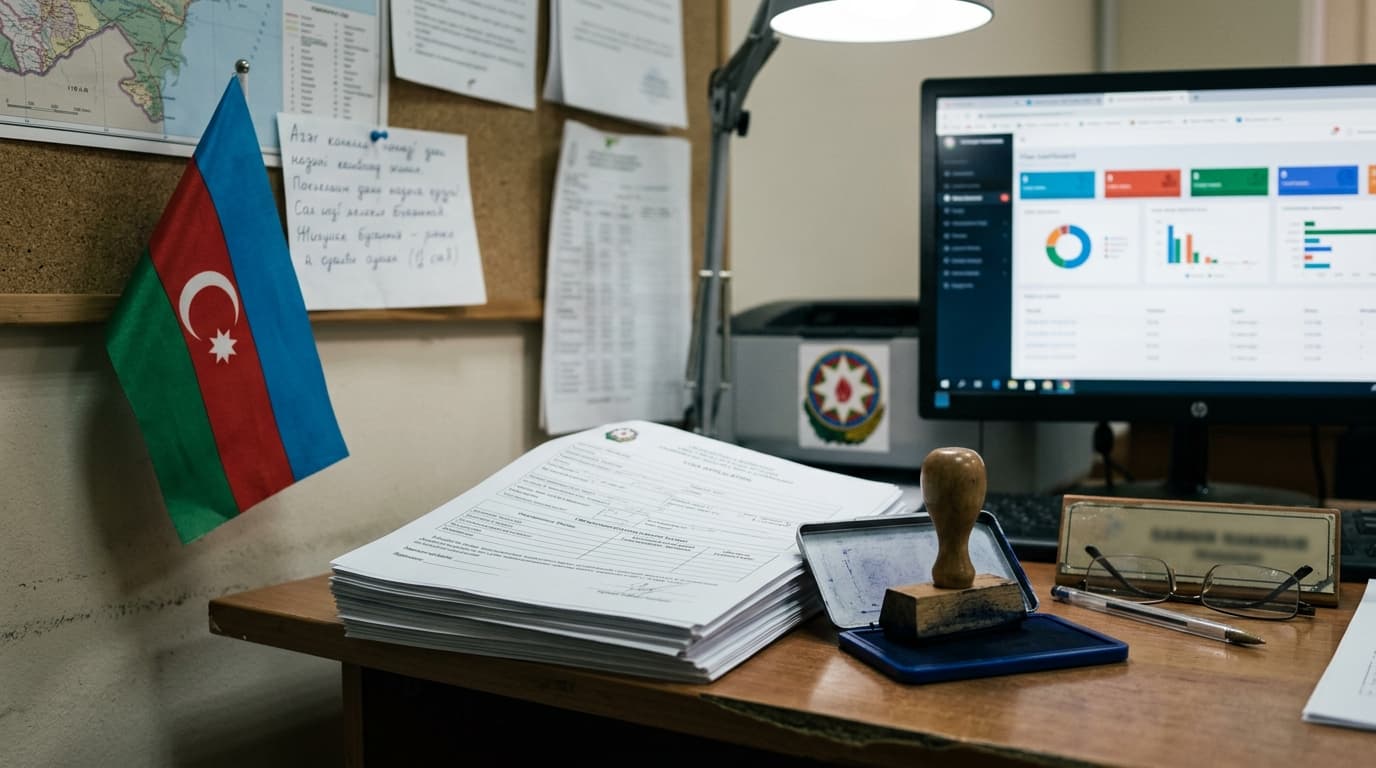
Azerbaijan Freelancer Digital Nomad Visa
Visa Data Sheet
Azerbaijan doesn’t have a live, standalone freelancer or digital nomad visa yet. Remote workers usually come in on a standard ASAN e-Visa for short stays or they sort out a work permit and temporary residence permit if they want a longer legal base in the country.
That matters because the ASAN e-Visa is still a tourist or short-stay route, not a remote-work permit. It allows single-entry stays of up to 30 days and official material also refers to multiple-entry e-visas with stays of up to 90 days, but it doesn’t give you the right to take paid work in Azerbaijan.
The government is planning to change that. Under a presidentially approved Action Plan for 2026 to 2028, Azerbaijan intends to introduce dedicated “Digital Nomad” and “Digital Talent” visas, along with simplified migration rules and special tax incentives for freelancers and innovation specialists. The idea is clearly aimed at people earning from foreign or international clients, but the program hasn’t been rolled out yet.
That means the key details are still missing. There’s no published online application portal, no fixed fee schedule, no income threshold and no official list of documents for a future freelancer visa, so anyone promising exact requirements is guessing.
What remote workers can do now
- Use the ASAN e-Visa: Best for short stays, but it’s not a work visa.
- Apply for a work permit: Required if you’re working in Azerbaijan under current law.
- Get a temporary residence permit: Needed for longer stays, usually tied to a qualifying work or residence basis.
For now, Azerbaijan is in a half-finished phase. The policy direction is promising, especially for freelancers and digital professionals, but the actual visa still exists more on paper than in practice. If you need certainty today, use the existing migration routes, not the future one.
Azerbaijan doesn’t have a launched standalone freelancer or digital nomad visa yet. For now, remote workers usually come in on a standard ASAN e-visa or use the country’s existing residence and work rules if they need a longer stay.
The government has said it plans to introduce dedicated “Digital Nomad” and “Digital Talent” visas under its 2026 to 2028 Action Plan. Those future visas are meant for freelancers and innovation specialists working for foreign or international clients and officials have also signaled tax incentives and simpler migration rules. The problem is simple, though annoying, no detailed regulations have been published yet, so there’s no fixed income threshold, document list or stay length to point to.
Under the current legal setup, if you want to do paid work physically in Azerbaijan, you generally need a work permit tied to a local employer or entrepreneur. That means there isn’t a clean legal category for a freelancer serving only overseas clients while working from Azerbaijan. In practice, the system still treats that person as a visitor unless they qualify under another residence route.
- Remote workers: The future visa framework is aimed at people earning from foreign clients, but it’s not live in detailed form yet.
- Foreign employees doing local paid work: You’ll need a work permit through an Azerbaijani employer or business.
- Current nomads and short-stay visitors: Most use the ASAN e-visa or visa-free entry if their passport qualifies.
The ASAN e-visa is about entry, not work rights. It gives eligible nationals a short stay, but it doesn't authorize paid labor in Azerbaijan. So if your plan is to freelance from Baku for a few weeks, that may fit a visitor setup. If you want to work longer term, you’ll need to wait for the new nomad rules or fit into the regular permit system.
There are also a few current work-permit rules that matter. Foreigners who perform paid labor in Azerbaijan are generally expected to be at least 18 and able-bodied, though some residence categories and exempt groups don’t need a separate permit. The official digital nomad category, once it arrives, may soften some of that process. Right now, it doesn’t exist in a usable legal form.
Azerbaijan doesn’t have a live, standalone freelancer or digital nomad visa yet. The government has approved plans for a future Digital Nomad and Digital Talent visa framework in the 2026 to 2028 Action Plan, with simplified migration rules and special tax incentives mentioned, but the actual regulations haven’t been published.
That matters because the document list is still undefined. For now, remote workers usually enter on a standard ASAN e-Visa or, if they need a longer stay, apply under existing work or residence rules. Tourist entry still doesn’t give you the right to do paid work in Azerbaijan.
What you can rely on right now
- ASAN e-Visa: You need a passport valid for at least 3 months beyond the e-Visa’s validity period, then you complete the online application and pay the state fee.
- Border presentation: The e-Visa is printed and shown with your passport when you enter the country.
- Work and residence permits: Existing rules call for a completed application, a passport copy, notarized proof of qualifications, references justifying the hire, a medical reference covering specified infectious diseases and employer registration documents.
If Azerbaijan does launch a dedicated nomad visa, it may borrow from this existing paperwork, but that’s speculation. There’s no official promise yet on income thresholds, exact supporting documents or how long a future freelancer visa would last.
What’s still unclear
- Income minimum: Not published.
- Health insurance requirement: Not listed for the future nomad visa.
- Police clearance certificate: Not listed.
- Translation or apostille rules: Not set out for the future program.
- Processing time and fees: Not published for the future program.
That uncertainty is the annoying part. If you’re planning a serious move, don’t wait for the new visa to magically materialize, use the current migration channels and keep an eye on the State Migration Service for the rules that actually exist.
Azerbaijan doesn’t have a launched, standalone freelancer or digital nomad visa yet, so there’s no official fee schedule for that category. The government has said a dedicated “Digital Nomad” and “Digital Talent” visa framework is planned under the 2026 to 2028 action plan, but the rules, eligibility and charges haven’t been published, so any exact number you see for that future visa is guesswork.
For now, remote workers usually rely on existing options. That means a standard ASAN e-Visa for short stays or, for longer arrangements, a work or residence permit under the current migration system. The short-term e-Visa is the only route with clear public pricing and it doesn’t give you the right to do paid work in Azerbaijan.
- Standard ASAN e-Visa: $20 state fee for a single-entry, 30-day stay.
- Urgent ASAN e-Visa: a higher fee applies, but the official research you’d be relying on doesn’t publish a dedicated freelancer price for it here.
- Work permit fees: a state fee is required before a permit is issued or extended, but the official summaries reviewed don’t list the exact amount on the referenced pages.
- Digital nomad visa fee: unknown, because the program hasn’t been launched yet.
That last point matters. No official source has published a freelancer-specific fee for things like processing, insurance, translation, legalization or dependent charges tied to a digital nomad visa. If you’re budgeting for a future application, treat those costs as unknown until the government releases the final regulations.
There’s one practical takeaway here and it’s pretty simple, don’t budget based on rumor. If you’re only coming for a short stay, the current e-Visa fee is easy enough to plan around. If you want a longer legal stay, you’ll need to factor in the separate costs of a work or residence permit, plus whatever documents your route requires.
Azerbaijan doesn’t have a published, standalone freelancer or digital nomad visa application yet. The government’s 2026 to 2028 Digital Development Action Plan says dedicated “Digital Nomad” and “Digital Talent” visas are planned, with simpler migration rules and possible tax incentives, but the actual forms, fees and eligibility rules haven’t been released.
For now, remote workers usually end up using one of two routes. Short stays go through the ASAN e-Visa system, while longer legal stays for paid work usually require a work permit and then a temporary residence permit. The first route is quick. The second is more bureaucratic, but it’s the only clear path if you’re actually working in Azerbaijan under current rules.
How the current application routes work
- ASAN e-Visa: Apply online through the official ASAN Visa portal, pay the state fee and wait for the visa to arrive by email. Standard processing is about 3 working days or around 3 hours for urgent service.
- Work permit route: An employer in Azerbaijan can apply for a foreign worker’s permit while you’re outside the country. After approval, you can enter Azerbaijan and then apply for a temporary residence permit.
- Future freelancer visa: The planned digital nomad framework hasn’t been launched, so there’s no official step-by-step process yet. There’s no published online portal, document list or processing time for it.
The ASAN e-Visa isn't a freelancer visa. It’s for short-term tourism or business visits and it doesn’t give you the right to take paid work in Azerbaijan. If the nomad visa opens later, expect the rules to be separate from the tourist visa system.
What we still don’t know
- Income threshold: Not published.
- Required documents: Not published for the future nomad visa.
- Processing time: Not published for the future nomad visa.
- Validity period: Not published for the future nomad visa.
- Application channel: No dedicated digital nomad portal has been announced yet.
If you’re planning ahead, keep an eye on the State Migration Service and any new digital talent platform the government rolls out. Until those rules are published, the honest answer is simple, there isn’t a true freelancer visa application to file yet.
Azerbaijan doesn’t have a live, standalone freelancer or digital nomad visa yet. The government has approved plans for a future "Digital Nomad" and "Digital Talent" visa framework in the 2026 to 2028 Action Plan, but the actual rules haven’t been published, so there’s no official duration, renewal process or fee schedule to rely on.
For now, remote workers are still using the regular system. That usually means an ASAN e-Visa for short stays or a work or residence permit under the country’s existing migration rules. The important part is simple, if blunt, the current tourist-style routes don’t give you the right to do paid work in Azerbaijan.
What the current short-stay rules look like
The standard ASAN e-Visa lets you stay for up to 30 days on a single entry. Some multiple-entry e-visas can allow stays up to 90 days, but that’s still part of the ordinary visa system, not a freelancer program. Temporary stays on these visas generally can’t run past the period written on the visa, though extensions of up to 60 days can be available in certain cases.
That means there’s no published "nomad clock" to reset and no official path from a future freelancer visa to residency or citizenship. Those links simply haven’t been set out in law yet.
If you’re aiming for a longer stay
Longer-term remote workers are usually pushed toward the country’s standard permit system instead. Under the existing employer-sponsored framework, work permits are normally issued for up to 1 year or for a shorter period if the labour contract is shorter and they can be renewed in similar increments.
- ASAN e-Visa: Single-entry stays of up to 30 days.
- Multiple-entry e-visas: Can allow stays up to 90 days.
- Temporary stay extensions: Possible in some cases for up to 60 days.
- Work permits: Usually issued for up to 1 year, with renewals tied to the labour contract.
The future digital nomad visa may eventually be cleaner and more useful than the current patchwork, especially if the promised tax incentives materialize. For now, though, anyone planning a serious stay in Azerbaijan should treat the nomad visa as a pending policy, not a real option yet.
Azerbaijan doesn’t have a live freelancer or digital nomad visa program yet. Remote workers usually come in on a standard ASAN e-visa or, if they qualify, through existing residence or work permit routes. The government has said a dedicated Digital Nomad and Digital Talent visa framework is planned for 2026 to 2028, with simpler migration rules and special tax incentives, but the actual rules haven’t been published.
That means the big details are still missing. There’s no official income threshold, no published document checklist, no stated fee and no confirmed maximum stay for a future freelancer visa. If you’re hoping for a clean, one-stop application, that part doesn’t exist yet.
Tax is where people get careless. Azerbaijan generally treats an individual as a tax resident if they spend more than 182 days in the country in a calendar year and tie-breaker tests can also look at permanent home and the center of vital interests. So even if you enter on a tourist visa or another short-stay permit, a long enough stay can still pull you into tax residency.
- More than 182 days in country: You may be treated as a tax resident.
- Resident taxation: Residents are generally taxed on worldwide income.
- Nonresident taxation: Nonresidents are generally taxed mainly on Azerbaijani-source income.
- Treaties: Azerbaijan has double-taxation treaties, so your home country may still matter.
The planned digital nomad framework is also expected to include special tax incentives for freelancers and digital professionals, but that’s still just policy direction. There’s no published reduced rate, no confirmed exemption for foreign-source income and no official social insurance concession tied to a nomad visa yet. Don’t assume the visa label will protect you from tax residency, because it won’t.
If you’ll be working from Azerbaijan for more than a short stay, get a local tax adviser involved early. The visa rules and tax rules aren’t neatly aligned and that’s where avoidable problems usually start.
Azerbaijan Digital Nomad Guide
Cost of living, internet, healthcare, coworking, and every visa option for Azerbaijan.
Visa rules change. We'll tell you.
Get notified about policy updates and new requirements for the Azerbaijan Freelancer Digital Nomad Visa and other Azerbaijan visas.
