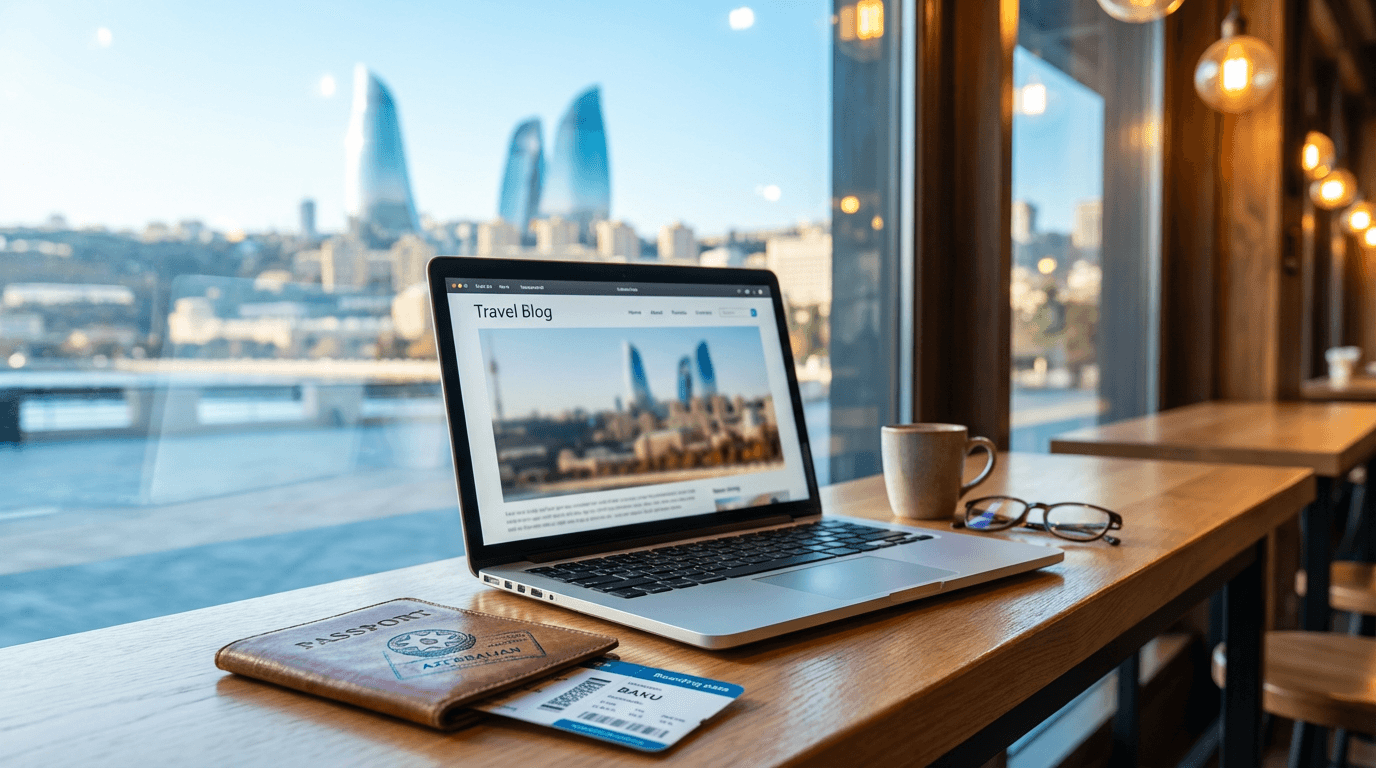
Azerbaijan

Policy Stability
Stamped Nomad ExclusiveHow likely visa and immigration policies are to remain unchanged
Quick Facts
12 months
Yes
$1,100/mo
86 Mbps
7/10
Medium
Medium
Medium
AZT (UTC+4)
Entry Methods Available
Best For
The Basics: ASAN E-Visas
Azerbaijan has streamlined its entry process significantly over the last few years, making it one of the easier Caucasian hubs to access. For most digital nomads, the ASAN E-visa is the go-to choice. This is a single-entry visa that allows you to stay for up to 30 days within a 90-day validity window. It is strictly for non-work purposes, meaning you can use it for tourism, business meetings, or medical stays, but you cannot seek local employment.
The application process is straightforward. You can submit your documents and pay the fees through Azerbaijan’s official e-visa application system. Standard processing costs $20 USD and typically takes 3 working days. If you are in a rush, the urgent option costs $50 USD and delivers your visa via email within 3 hours. Just make sure your passport is valid for at least 3 months beyond the date your visa expires.
Visa-Free Entry and 2025-2026 Updates
If you hold a passport from one of the neighboring CIS countries like Russia, Georgia, Ukraine, or Uzbekistan, you can enter visa-free for up to 90 days. Turkish citizens also enjoy this 90-day privilege and can even enter using their national ID cards rather than a passport.
The list of visa-free nationalities is set to expand further under Azerbaijan’s new 2026-2030 tourism program, which plans to extend visa-free entry to 34 target countries. The government has not yet published the list of countries or the formal launch date. A mutual visa exemption for Chinese citizens becomes effective on July 16, 2025, allowing for 30-day stays. Additionally, a pilot program for Hong Kong SAR passport holders begins on February 2, 2026, permitting three 30-day entries per year. Tajikistan citizens also recently gained 90-day visa-free access, signaling the country's push to become a more open regional travel hub.
Business Visas
If your stay requires more formal ties, the business visa falls under the "ordinary entry" category. Unlike the tourist e-visa, this generally requires an official invitation from an entity registered in Azerbaijan, which must be processed through the Ministry of Foreign Affairs. Azerbaijan’s new tourism program also calls for upgraded multiple-entry e-visas and a dedicated electronic visa subtype for foreign digital nomads and remote workers, though the formal launch date has not yet been published. These can be issued for multiple entries with a stay of up to 90 days. You will need to provide a clear itinerary, proof of accommodation, and evidence of sufficient funds to cover your stay.
Visa on Arrival (VoA)
Don't count on getting your visa at the airport unless you fall into a very specific category. Visa on Arrival is largely restricted to citizens of Gulf Cooperation Council (GCC) countries like the UAE, or those holding a valid GCC residence permit, who can get a 30-day tourist visa upon landing. Aside from these specific agreements or a direct letter of consent from the State Migration Service, most travelers must secure their e-visa before boarding their flight.
Extensions and Long-Term Stays
If you fall in love with the Baku flame towers and want to stay longer than your initial 30 days, you can apply for an extension through the State Migration Service. Extensions are usually granted for an additional 30 days, provided you can show a registered place of residence, a return ticket, and proof of financial means.
- Extension Fees: 150 to 400 AZN (approximately $90 to $240 USD).
- Maximum Total Stay: Usually capped at 90 days for visitors.
- Requirement: You must apply at least 3 days before your current visa expires.
Keep in mind that if you stay in Azerbaijan for more than 15 days, you are required to register your place of stay with the State Migration Service. Most hotels handle this for you, but if you are renting an Airbnb, you’ll need to ensure your host completes the registration online to avoid fines or issues when exiting the country.
The Lowdown on Remote Work in Azerbaijan
Azerbaijan is currently in a bit of a "gray area" sweet spot for remote workers. While the government has approved a dedicated digital nomad and digital traveler visa subtype under its 2026-2030 tourism program, the official launch date is still pending. This means the process feels a bit more like an old-school bureaucratic adventure, but the payoff is a year of living in the "Land of Fire" with a legal stamp to back it up.
The planned visa is specifically aimed at independent professionals and remote employees who want to base themselves in Baku or the Caucasus mountains while serving clients abroad. Because the formal rollout has not yet been announced, you should expect the process details to remain pending for now.
Visa Duration and Extensions
Once you get the green light, the initial visa is typically valid for 1 year. If you decide you aren't ready to leave the Caspian Sea behind, you can apply for an extension. Most nomads find they can stretch their stay for a total of up to 2 years, though this depends heavily on proving your work arrangement is still active and stable.
What You Will Need to Apply
Since there isn't a one-size-fits-all online portal yet, you'll need to be meticulous with your paperwork. The authorities want to see that you aren't planning to compete with locals for jobs, so your income must come from outside the country.
Proof of Employment: You need contracts or a letter from your employer showing you work remotely.
Financial Proof: You must demonstrate "sufficient financial resources." While there isn't a hard number published, aim to show bank statements that prove you can comfortably cover your living costs.
Valid Passport: Your travel document needs to be valid for at least 6 months from your date of entry.
Housing Documents: You will need to show proof of accommodation, such as a long-term rental agreement.
The "Must-Follow" Registration Rule
This is the part that trips people up. If you plan on staying in Azerbaijan for more than 15 days, you must register your presence with the State Migration Service. Usually, your hotel or landlord handles this, but don't take their word for it. Check that it’s done; failing to register can lead to heavy fines or being banned from the country when you try to leave.
Tax and Market Restrictions
The biggest rule of the Digital Nomad Visa is that you cannot enter the local Azerbaijani job market. Your business and your clients must remain international. As for taxes, the laws haven't quite caught up to the nomad lifestyle yet. To avoid any surprises, it is a good idea to chat with a local tax advisor or reach out to the State Migration Service for the latest guidance on your specific situation.
Alternative Paths for a Shorter Stay
If a full year feels like too big of a commitment, or you just want to test the waters first, you have a few other options:
E-Visa (ASAN Visa): This is the easiest route for a quick trip. You can apply through the official ASAN portal. It allows for a 30-day stay and is usually processed in about three days.
Business Visa: If you have a specific project or business meetings in the country, this allows for a longer stay than a standard tourist visa but requires more documentation.
Visa-Free Entry: If you hold a passport from Russia, Belarus, Ukraine, Kazakhstan, or Turkey, you can typically enter for up to 90 days without a visa.
One final note on regional politics: due to ongoing tensions, citizens of Armenia are currently prohibited from entering Azerbaijan. Additionally, if your passport shows evidence of travel to the Nagorno-Karabakh region without Azerbaijani permission, you will likely be denied entry.
The Lowdown on Entry Requirements
Azerbaijan is increasingly positioning itself as a hub for remote workers, and their visa system reflects that shift. A new national tourism program has also approved a dedicated digital nomad and digital traveler visa subtype, along with plans to expand visa-free entry to 34 countries, roll out multiple-entry e-visas, and widen on-arrival processing at border checkpoints.
Visa-Free Havens
If you hold a passport from a CIS nation, Turkey, or select Balkan and Gulf states, you've hit the jackpot. Citizens from around 20 to 30 countries can enter Azerbaijan without any prior paperwork. Under a new tourism plan, that visa-free list is set to expand to 34 target countries. Most of these travelers, including those from Russia and Turkey, are granted a 90-day stay. Others, like visitors from Qatar or Iran, usually get 30 days.
- Validity: Your passport needs to be valid for at least 3 months beyond your planned departure date.
- The 90/180 Rule: For most visa-free nationalities, you can stay for 90 days within a 180-day period.
- Registration: Don't forget that if you stay longer than 15 days, you must register your stay with the State Migration Service, regardless of your visa-free status.
The ASAN E-Visa: Your Best Friend
For everyone else, including citizens of the US, UK, EU, India, and Canada, the ASAN Visa system is the way to go. It is one of the most efficient e-visa portals in the region, and the new tourism program also points to upgraded multiple-entry e-visas and expanded on-arrival processing at border checkpoints. You'll just need a scan of your passport, a digital photo, and your travel details.
- Processing Time: Standard applications take 3 business days. If you're in a rush, the urgent option gets it done in about 3 hours.
- Cost: The government fee is $20, plus a small service fee, bringing the total to roughly $26.
- Stay Duration: The e-visa is valid for 90 days from issuance but only allows for a single entry and a maximum stay of 30 days.
Visa on Arrival
A small group of about 10 countries can skip the online application and grab a visa right at the airport in Baku. This list includes Japan, South Korea, Singapore, Israel, and several Gulf nations like Saudi Arabia and the UAE. It grants a 30-day single-entry stay for a fee of about $26. While convenient, it's always smarter to double-check the current list before flying, as these bilateral agreements can shift without much notice.
Staying Longer: Extensions and Border Runs
If 30 days isn't enough to soak in the Baku jazz scene or explore the Caucasus mountains, you can apply for an extension. You'll need to visit the State Migration Service (SMS) office at least 3 days before your current visa expires. They can grant up to 60 additional days if you provide a valid reason and proof of sufficient funds.
Some nomads consider "border runs" to Georgia or Turkey to reset their clock. While this works for visa-free travelers adhering to the 90/180 rule, it's not a foolproof plan for e-visa holders. Frequent back-to-back entries can look suspicious to border guards. If you plan on staying half a year, it's much better to go through the official extension channels or look into a temporary residence permit if you have a local contract or investment.
Don't Overstay
Azerbaijan takes its immigration laws seriously. If you overstay by even a few days, expect a fine between 300 and 400 AZN (roughly $180 to $235). The penalties get steeper the longer you linger. Overstaying by more than a month can lead to deportation and a ban from re-entering the country for 3 to 5 years. You can usually pay these fines at the airport upon exit, but it will definitely complicate any future visa applications.
The Reality of Staying Long-Term
Azerbaijan doesn't have a flashy "Digital Nomad Visa" or a specific program for remote workers yet. If you want to stay longer than a standard tourist trip, you'll need to look at the Temporary Residence Permit (TRP) system. It is a fairly straightforward process, but it requires a bit of paperwork and a clear reason for being there.
Most nomads who decide to make Baku their home base for a year or more do so by setting up a small business or showing a significant investment. The government is open to foreigners, provided you can prove you have the funds to support yourself and aren't taking jobs away from the local workforce.
Temporary Residence Permits (TRP)
A TRP is your ticket to staying in the Land of Fire for anywhere from one to three years. You can extend these permits as long as your original reason for staying remains valid. To get started, you'll head to an ASAN Service center or use the State Migration Service online portal.
The requirements are standard for this part of the world. You’ll need a valid passport, proof of your grounds for staying (like bank statements or business docs), health insurance, and a clean criminal record. The fees are quite reasonable, generally ranging from 120 to 480 manat ($70 to $282) depending on how long you stay and how fast you want the permit processed.
- 1-Year Permit: 120 to 160 manat
- 2-Year Permit: 240 to 320 manat
- 3-Year Permit: 360 to 480 manat
The Investment Route
If you have some capital to deploy, the investment path is the most secure way to a long-term stay. While there isn't a formal "Golden Visa," the 3-year TRP for investors functions much the same way. You can qualify by putting 500,000 manat (roughly $294,000) into the economy or real estate.
For those starting a business, the barrier is lower; you typically need 50,000 manat (about $29,000) in authorized capital. This is a popular choice for entrepreneurs who want to run their global operations from Baku while enjoying the low cost of living. Approvals for investors are often prioritized, making the 15 to 20 day processing window very achievable.
Freelancers and Retirees
Since there isn't a dedicated freelancer visa, remote workers usually take one of two paths. You can either stay on a 90-day e-visa and do short-term hops, or you can apply for a TRP by registering a business entity. If you go the business route, you'll need to show that your income comes from outside Azerbaijan and that you aren't competing with local companies.
Retirees face a similar situation. There is no "pensioner visa," so you'll apply under the general TRP category. You will need to provide solid proof of your pension or savings, show you have a place to live, and maintain comprehensive health insurance. It’s a bit more "DIY" than in some European countries, but the low taxes and high quality of life in Baku make the effort worth it.
The Path to Permanent Residency
If you fall in love with the Caspian coast and decide to stay forever, the path to Permanent Residency (PRP) is clear. Once you have lived in Azerbaijan for two years on an uninterrupted TRP, you can apply for a permanent permit. This gives you a 5-year residency that you can renew indefinitely.
The application for PRP should be submitted at least three months before your current TRP expires. You will need to pass a basic test on the Azerbaijani language and local laws. The state fees for this are between 300 and 450 manat ($176 to $265) for adults, and the processing time is usually between 35 and 60 days.
- Continuous Stay: Must have 2 years of legal TRP status
- Language Test: Required for most adults under age 65
- Validity: 5 years, renewable
Always keep an eye on the official ASAN Service website for any sudden changes in fees or document requirements. They are the gold standard for efficiency in the region and will be your main point of contact for all things residency.
Azerbaijan remains one of the best-kept secrets for nomads who want a high quality of life without the "digital nomad tax" found in Western Europe or popular Asian hubs. You can live quite well here for a fraction of what you would spend in Dubai or Istanbul, especially if you enjoy a mix of Soviet-era architecture and futuristic skyscrapers.
Baku is the clear winner for most remote workers. It is where you will find the reliable fiber optic internet, the English-speaking community, and the best coffee shops. If you venture out to cities like Ganja or Sumgait, your expenses will drop by another 20% to 30%, but you will trade away some of those modern comforts and coworking options.
Monthly Budget Breakdowns (Baku)
These estimates reflect life in nomad-friendly areas like Sabayil or Nasimi, where you are close to the action. Prices are shown in USD, though you will be paying in local Manat (AZN).
The Budget Nomad: $700 to $900 per month
- Rent (1BR): $250 to $350. You will likely be in a renovated older building slightly outside the immediate city center.
- Food: $150. This assumes you are shopping at local markets like Taza Bazar and cooking most of your meals.
- Transport: $30. The metro and bus system are incredibly cheap; a single ride is only a few cents.
- Workspace: $50. You will mostly be working from home or spending a few dollars a day at laptop-friendly cafes.
- Health Insurance: $40 to $60 for basic expat coverage.
The Comfortable Nomad: $1,200 to $1,500 per month
- Rent (1BR): $400 to $600. This gets you a modern apartment in a prime location with better amenities.
- Food: $200 to $250. You can afford to eat out at mid-range restaurants a few times a week.
- Transport: $40 to $50. This covers frequent Bolt or Uber rides, which are very affordable in Baku.
- Workspace: $150 to $200 for a hot desk at a professional coworking space.
- Health Insurance: $100 to $150 for more robust international plans.
The Premium Nomad: $1,800+ per month
- Rent (1BR): $700 to $900. Expect high-rise living with views of the Caspian Sea or the Flame Towers.
- Food: $300+. You will be dining at top-tier restaurants and ordering delivery frequently.
- Transport: $100+. Almost exclusively using private car services.
- Workspace: $300+ for a dedicated desk or a private office suite.
- Health Insurance: $200+ for comprehensive global coverage including private clinics.
Cost Comparison: Beyond Baku
If you want to stretch your budget even further, looking toward Ganja or Sumgait is a smart move. While Sumgait is close enough to Baku for a day trip, Ganja offers a more traditional Azerbaijani experience.
Ganja & Sumgait
- Rent: $200 to $450 for a comfortable one-bedroom apartment.
- Daily Expenses: Generally 20% lower than Baku for groceries and local services.
- Trade-offs: Coworking spaces are almost non-existent; you will rely on your home Wi-Fi or local tea houses.
Key Expenses to Plan For
Groceries are generally affordable if you stick to local produce. Staples like bread, eggs, and seasonal fruits are very cheap. Imported goods from Europe or the US will carry a significant markup at supermarkets like Bravo or Neptune.
Utility costs are manageable but fluctuate. Expect to pay between $50 and $80 for electricity, water, and heating in a standard apartment. High-speed home internet will usually run you around $15 to $25 per month depending on the speed tier you choose.
For those tracking specific data points, Numbeo's Baku profile provides a solid baseline for current consumer prices. Most single nomads find that their non-rent expenses hover around $525, which leaves plenty of room for weekend trips to the mountains in Quba or the beaches in Lankaran.
Baku: The High-Energy Hub
Baku is where the action is. If you want the infrastructure of a European capital mixed with a distinct Silk Road soul, this is your base. It is the only city in Azerbaijan with a fully developed coworking ecosystem. You can set up shop at SUP VC or Workify for a professional vibe, or head to Fabrika92 if you prefer something with a bit more character.
The internet here is the most reliable in the country. You will find fixed broadband speeds between 73 and 88 Mbps, and mobile data often hits 93 Mbps. This makes it the obvious choice for those who spend their days on Zoom or uploading large files. When you need a break from the screen, the city has a thriving nightlife and a cafe culture that rivals Istanbul. Check out The Coffee House or Passage 145 for strong Wi-Fi and even stronger espresso.
Pros: A genuine tech scene, the best internet in the region, and endless dining and nightlife options.
Cons: It is the most expensive city in Azerbaijan, and while the nomad community is growing, it is still relatively small compared to Tbilisi or Yerevan.
- Monthly Cost: $1,087 to $2,150
- Internet: 73-93 Mbps
- Vibe: Fast-paced, modern, and international.
Ganja: The Student-Friendly Alternative
Ganja is Azerbaijan’s second city, but it feels much more relaxed than the capital. Because it is a university town, there is a youthful energy here that keeps things interesting without the frantic pace of Baku. While you won't find dedicated coworking spaces yet, the cafe scene is surprisingly work-friendly. Coffeemania and Butler Café are the go-to spots for locals and the handful of nomads who pass through.
Living here is significantly easier on the wallet, typically running about 23% cheaper than Baku. The internet is decent, with upload speeds hovering around 68 Mbps, which is plenty for most remote tasks. It is a walkable city filled with parks and historic architecture, making it a great spot if you want to focus on a big project without the distractions of a major metropolis.
Pros: Affordable rent, very walkable, and a friendly, local atmosphere.
Cons: Limited networking opportunities and a much quieter social life after dark.
- Monthly Cost: Approximately $1,660
- Internet: ~68 Mbps
- Vibe: Academic, historic, and laid-back.
Sheki: The Deep Work Retreat
If your goal is to disappear into a mountain town and finish a novel or a complex coding project, Sheki is your spot. Tucked into the foothills of the Greater Caucasus, this UNESCO World Heritage city is stunningly beautiful. You won't find a "startup scene" here. Instead, you will find Sheki Park Café and various hotel lounges where the Wi-Fi is functional enough for emails and standard browsing.
The lifestyle in Sheki revolves around nature and tradition. You can spend your mornings working with a view of the mountains and your afternoons exploring the 18th-century Palace of Sheki Khans. It is safe, quiet, and incredibly affordable. Just keep in mind that the internet can be a bit temperamental compared to the urban centers, so it is best suited for those who don't rely on constant high-speed connectivity.
Pros: Incredible scenery, peaceful environment, and very low cost of living.
Cons: Lack of professional workspaces and very few other nomads to connect with.
- Monthly Cost: Approximately $1,595
- Internet: Functional but slower than Baku.
- Vibe: Serene, rustic, and culturally rich.
Quick Comparison
Choosing between these three depends entirely on what your workflow looks like. Baku is the only real option for those who need a community and top-tier speeds. Ganja offers a middle ground for the budget-conscious, while Sheki is strictly for the soul-seekers and those in need of a digital detox.
- Baku: The baseline for cost and speed. Best for networking.
- Ganja: 23% cheaper than Baku. Best for long-term stays on a budget.
- Sheki: Similar costs to Ganja. Best for short-term "workations" and nature lovers.
Azerbaijan has quietly transformed into a tech-forward hub, and for digital nomads, that means the "Land of Fire" is finally catching up to its European neighbors. While the infrastructure is heavily concentrated in Baku, the connectivity is surprisingly robust. You won't be hunting for signal in the capital; instead, you'll find symmetric fiber speeds that make video calls and heavy uploads a non-issue.
The Internet Landscape
The days of patchy dial-up are long gone. Thanks to the "Online Azerbaijan" initiative, fiber-to-the-home (FTTH) now reaches about 78% of fixed broadband users. In Baku, Sumgayit, and Ganja, you can expect median download speeds around 73.6 Mbps, though many modern apartments and offices easily clock in at 100 Mbps or higher.
If you are working on the move, the mobile network is equally impressive. Median mobile download speeds hover around 76.6 Mbps. Providers like Aztelekom and Bakcell have done the heavy lifting to ensure that even if the power flickers, your hotspot will keep you in the meeting.
Top Coworking Spaces in Baku
Baku’s coworking scene is professional, sleek, and increasingly community-focused. Most spaces offer high-speed WiFi exceeding 50 Mbps and ergonomic setups that beat working from a hotel desk.
- Lotfi Zadeh Technology Center: Located in Caspian Plaza, this is the gold standard for 24/7 access. It is packed with tech founders and offers excellent conference rooms.
- CitySpace: A great pick if you enjoy networking events. It’s airy, modern, and equipped with high-end projectors for presentations.
- Uwork: Situated near the charming Old City, this spot offers the most flexibility for short-term rentals and a quieter vibe.
- Regus: With locations in ASK Plaza and the Baku White City (BWC) area, this is the reliable corporate choice for those needing a consistent global standard.
- Unipoint Coffee & Coworking: Perfect for those who need total silence. They have soundproof cabins and an on-site cafe that serves a decent espresso.
Monthly Pass Costs
Budgeting for a desk in Baku is straightforward. Prices are competitive compared to Western Europe, though the high-end spots carry a premium for their location and amenities.
- Hot Desks & Flex Plans: AZN 110 to 339 (roughly $65 to $200 USD) per month.
- Premium Corporate (Regus): AZN 325 to 425 per month.
- Budget-Friendly (Fabrika): Starting from AZN 110 per month.
- Day Passes: Expect to pay between AZN 10 and 59 depending on the perks included.
Cafe Culture and Connectivity
If you prefer the hum of a coffee shop, Baku has a thriving cafe culture where "laptop lingering" is generally accepted. Most central spots offer stable WiFi over 50 Mbps, which is plenty for most remote tasks.
For a reliable connection and plenty of power outlets, check out The Coffee House or Passage 145. If you want a more bohemian atmosphere, Old School Café is a nomad favorite. Honours Coffee & Library is also excellent for deep work sessions where you need a bit more quiet than a standard bistro provides.
Mobile Data and eSIMs
Physical SIM cards are easy to find at the airport or in the city center from providers like Azercell, Bakcell, or Nar. However, many nomads now opt for the convenience of an eSIM to hit the ground running. Tethering is fully supported on these plans, making them a perfect backup for your fixed line.
- 1GB (7 days): Starting at $6 through providers like Nomad or Airalo.
- 3GB to 5GB (30 days): $13 to $22.
- 20GB (30 days): $49 for heavy users.
Stick to 4G/5G LTE networks in the city for the best results. While coverage is great in urban centers, it can drop off quickly once you head into the more remote mountainous regions, so plan your "work-from-anywhere" days accordingly.
Staying healthy while working remotely in Azerbaijan is a tale of two realities. If you are based in Baku, you have access to some surprisingly high-end facilities that rival European standards. Step outside the capital, however, and the quality of care drops off significantly. For a digital nomad, the strategy is simple: stick to the private sector and make sure your insurance policy is robust enough to cover a flight to Istanbul if things get serious.
Public vs. Private Care
Azerbaijan has a public healthcare system managed by TABIB. While it provides free services to locals, it is rarely the right choice for expats. Public clinics often suffer from outdated equipment and a lack of English-speaking staff, particularly in rural regions.
Private hospitals are where you will find the modern standards you are used to. These facilities offer shorter wait times, advanced diagnostic tech, and doctors who likely trained abroad. Keep in mind that for highly complex surgeries or specialized long-term care, many expats still choose to evacuate to Turkey or Western Europe.
Top Hospitals in Baku
If you need medical attention, head to one of these international-standard facilities in the capital:
- Liv Bona Dea Hospital: This is the gold standard in the city. It is JCI-accredited and features a dedicated international patient department to help you manage the paperwork and language barriers.
- Central Clinic Hospital: Known for having a strong focus on cardiology and modern diagnostics.
- Baku Medical Plaza: A reliable network with multiple locations offering a wide range of specialist services.
Insurance Requirements
The local compulsory insurance system does not cover foreigners, so you need a solid international private medical insurance (IPMI) plan. Your policy should specifically include medical evacuation; if you have an accident in the mountains of Quba, you want a private ambulance to get you back to Baku or across the border to Turkey.
Reliable providers for the region include Cigna Global, Now Health, and Foyer Global Health. For a family of four, expect to pay between €4,000 and €9,000 annually depending on your deductible and whether you include maternity or dental add-ons.
Out-of-Pocket Costs
One of the perks of the Azerbaijani healthcare system is that private care is quite affordable compared to the US or UK. If you are paying out of pocket for minor issues, the costs are manageable:
- Dental check-up and cleaning: $40 to $80
- White filling: $40 to $70
- Tooth extraction: $25 to $70
- Laser eye surgery: approximately $1,000
- Coronary catheterization: around $209
Pharmacies and Prescriptions
Pharmacies, known locally as aptek, are everywhere in Baku. Many stay open 24/7 and stock a wide variety of international brands. You will find that many medications that require a prescription in the West are available over the counter here. However, new rules are making the sale of potent drugs stricter. If you prefer delivery, you can use services like Pharmonline to get supplies sent directly to your apartment.
Emergency Services
In a medical emergency, dial 103 for an ambulance. There are about 140 brigades operating in Baku, and the government is currently digitizing the fleet with GPS to improve response times by 2025. While the 103 service is reliable in the city, the response in remote areas can be slow. If you have a choice and the situation isn't immediately life-threatening, taking a taxi to a private hospital like Bona Dea is often faster than waiting for a public ambulance.
The Local Banking Scene
Opening a bank account in Azerbaijan as a foreigner is possible, but it is rarely a "walk-in-and-done" affair. While some banks might entertain non-residents, you will find the process significantly smoother once you have a temporary residence permit. Major players like International Bank of Azerbaijan (IBA), Kapital Bank, Pasha Bank, and Bank Respublika are the most nomad-friendly options.
To get started, you will typically need your passport, a local Tax Identification Number (TIN), proof of address, and the bank’s specific application forms. While there is usually no mandatory minimum deposit for a standard account, non-residents often face stricter scrutiny and limited digital features. If you are staying long-term, getting that residence permit—often through a bank deposit—unlocks the full suite of local financial tools.
The Wise and Revolut Reality
If you rely on Wise or Revolut for your daily spending, you need a backup plan. Neither service currently allows residents of Azerbaijan to open accounts or order cards. Furthermore, Wise does not support the Azerbaijani manat (AZN) for sending or receiving transfers.
You can still use your existing foreign-issued Wise or Revolut cards for ATM withdrawals and point-of-sale payments. They will work just fine until they expire. However, if you change your official tax residency to Azerbaijan, these fintech giants may eventually restrict your account. It is best to treat them as travel tools rather than your primary local banking solution.
Currency and Cash
The Azerbaijani manat (AZN) is the only legal tender here. It is currently pegged to the US Dollar at a rate of 1 USD to 1.70 AZN. This peg makes the currency remarkably stable, which is a breath of fresh air for nomads used to volatile exchange rates.
When you need cash, stick to bank-affiliated ATMs. Most of these do not charge access fees for international cards. Avoid the independent, generic ATMs found in convenience stores; they often tack on high fees and use aggressive dynamic currency conversion. When an ATM asks if you want to be charged in your home currency, always select "No" to let your own bank handle the conversion rate.
Moving Money In and Out
Traditional bank wires are slow and expensive, so most nomads use specialized transfer services. For moving money into an AZN account or setting up a cash pickup, several platforms offer competitive rates and fast delivery:
- Remitly: Known for fast delivery, often arriving in minutes.
- TransferGo: Offers low fees, sometimes starting at 0% for certain transfer types.
- OFX: A solid choice for larger transfers with dedicated mobile support and multi-currency options.
- Western Union: Useful for emergency cash pickups, though the exchange rates are rarely the best.
Crypto Regulations
Azerbaijan treats cryptocurrency with a "wait and see" approach. It is not legal tender, but the government does not ban you from trading or mining it. Current activity falls under general e-commerce and currency laws, meaning you should expect KYC (Know Your Customer) requirements on any local exchanges to prevent money laundering.
The regulatory environment is tightening up. The government plans to have a comprehensive framework for tracking and taxing crypto by the end of 2025. By 2028, they intend to implement full transaction monitoring in line with international standards. For now, you can trade freely, but keep meticulous records for when the tax man eventually comes knocking.
Bringing the Crew Along
Azerbaijan might not be the first name that pops up in digital nomad circles, but it is surprisingly accommodating for families. The country has a deep-rooted culture of hospitality where children are welcomed almost everywhere, from late-night tea houses to high-end restaurants. If you are planning to settle in for a few months or longer, you will find that the logistical hurdles for dependents are straightforward compared to many European hubs.
Most nomads enter on a standard e-visa, but if you intend to stay long-term, you will be looking at a Temporary Residence Permit (TRP). Once the primary nomad secures their TRP through a work permit or by proving high-income business activity, family members are eligible for dependent visas. This process is handled by the State Migration Service, and children under 18 are generally granted residency based on their parents' legal status.
The Schooling Situation
If you are moving with school-aged children, Baku is your only realistic base. Outside the capital, educational options are limited to local Azerbaijani or Russian-language schools. In Baku, however, the international school scene is robust, following British, American, or International Baccalaureate (IB) curricula. These schools are the primary social hubs for the expat community, though they come with a significant price tag.
Tuition varies wildly depending on the prestige and facilities of the institution. You should budget for the following annual ranges:
- Tier 1 International Schools: $20,000–$26,000 per year. These include the Baku International School and The International School of Azerbaijan (TISA).
- Mid-Range Private Schools: $10,000–$15,000 per year. These often offer a blend of local and international standards.
- Bilingual Preschools and Kindergartens: $7,000–$9,000 per year.
Keep in mind that many of these schools have waitlists for mid-term entries. It is best to reach out to admissions offices via the Ministry of Science and Education portal or directly through school websites at least three months before your arrival.
Healthcare and Safety
Safety is one of Azerbaijan’s strongest selling points for parents. Baku is an incredibly safe city with low violent crime rates; it is common to see families walking in the Bulvar (the seaside promenade) well past 10:00 PM. Public spaces are well-lit and heavily monitored, which provides a sense of security that many nomads find refreshing.
For medical needs, you should avoid public hospitals and stick to private clinics. Facilities like Bona Dea International Hospital or Liv Bona Dea offer Western-standard pediatric care. Most doctors in these private facilities speak English, but having a translation app handy is never a bad idea for administrative staff.
Kid-Friendly Lifestyle in Baku
The cost of living for a family is manageable if you move away from the immediate city center. While international schooling is expensive, day-to-day costs like groceries, dining out, and entertainment are quite affordable. Most modern apartment complexes, particularly in the Nasimi or Narimanov districts, include gated courtyards and playgrounds where kids can play safely.
Weekend life usually revolves around the outdoors. You can take the family to the Gobustan National Park to see ancient petroglyphs or head to the Shahdag Mountain Resort during winter for skiing. The city itself is packed with parks, and the Baku Boulevard stretches for miles, offering carnival rides, a ferris wheel, and plenty of space for bikes and scooters.
If you need childcare, private nannies are widely available. Prices are usually negotiated directly, but you can expect to pay between $500 and $800 per month for full-time help. Many families find help through expat Facebook groups or word-of-mouth recommendations within the school communities.
Safety and Security
Azerbaijan is remarkably safe, often boasting crime rates lower than many Western European capitals. In 2024, crime figures dropped by over 21%, reinforcing its reputation as a secure base for remote work. While you should keep your wits about you in crowded areas like Fountain Square to avoid pickpockets, violent crime against foreigners is rare.
Most incidents involving expats occur late at night and usually involve lone men being targeted for petty theft. Stick to well-lit streets in Baku and use common sense. Outside the capital, the country feels even more traditional and quiet, though you should always stay clear of the border regions near Armenia due to ongoing political tensions.
Avoiding Local Scams
While the streets are safe, your wallet might face a few hurdles if you aren't careful. The most frequent headache for nomads is the "Bolt scam." Drivers on the app may claim the service isn't working or demand an extra "airport fee" in cash. Always insist on the price shown in the app or cancel the ride if the driver starts haggling before you get in.
- Apartment Bait-and-Switch: Some hosts post luxury photos but try to move you to a "sister property" that is subpar. Always book through reputable platforms and read recent reviews.
- The Photo Trap: Street photographers at Maiden Tower or the Flame Towers might snap your photo without asking. They often demand payment for a minimum of five photos at inflated prices.
- Currency Detours: If a taxi driver offers to take you to a "special" exchange booth with better rates, decline. These booths often have hidden fees or poor rates, and the driver gets a kickback.
Cultural Etiquette and Traditions
Azerbaijani culture is rooted in "qonaqpərvərlik" (hospitality). If you are invited into a local home, it is a significant gesture of friendship. Expect to be served tea, sweets, and fruit almost immediately. It is polite to accept at least a small portion, as refusing can be seen as a slight to the host's generosity.
When entering a home, always remove your shoes; most hosts will have a pair of guest slippers waiting for you. Use your right hand when eating or passing items to others. While Baku is quite cosmopolitan, modesty is still the name of the game in rural areas. Women should keep shoulders and knees covered outside the capital, and everyone must remove their shoes and cover their heads when entering a mosque.
LGBTQ+ Considerations
The social climate for LGBTQ+ nomads is complex. Same-sex activity has been legal since 2000, but there are no laws protecting against discrimination. Local society remains conservative, and public displays of affection between same-sex couples will likely draw unwanted attention or hostility.
Baku offers a level of anonymity for those who keep their private lives discreet. However, the country consistently ranks low on European equality scales. If you are living in the capital and moving in expat circles, you will find more progressive attitudes, but caution is advised in public spaces and smaller villages.
Communication and Community
Don't expect everyone to speak English. While the younger generation in Baku is increasingly fluent, older residents generally speak Azerbaijani and Russian. Azerbaijani is an agglutinative language, meaning it builds meaning by stacking suffixes onto words. It uses a Latin-based alphabet, but features unique characters like "ə" and "ü".
Social integration is easiest through the city's burgeoning coworking scene. These spaces serve as the primary hubs for the nomadic community:
- Workify Coworking: A popular spot with high-speed fiber and a strong community vibe.
- LOTFI Zadeh Technology Center: Great for those in the tech and startup space.
- Daily Passes: Expect to pay between 10 AZN and 15 AZN for a desk.
Integration is often a matter of showing up. Join local Facebook groups or check Meetup for weekly gatherings. With public transport costing less than $0.30 per ride and internet speeds often hitting 50 Mbps in hubs, the logistical barriers to staying social are very low.
The 182-Day Rule
Azerbaijan keeps its residency rules fairly straightforward, but they require a bit of calendar management. You are considered a tax resident if you spend more than 182 days in the country during a single calendar year (January 1 to December 31). Unlike some countries that use a 183-day threshold, Azerbaijan triggers residency at 182. Every day counts, and short weekend trips across the border won't reset your clock.
If you stay fewer than 182 days, you aren't necessarily off the hook. The tax authorities look at a hierarchy of ties to determine if you owe them a slice of your global income. They check for a permanent abode, followed by your center of vital interests (where your main business and investments live), and finally your habitual residence. If you're renting a long-term apartment and running a local business, you might be deemed a resident even if you travel frequently.
What You'll Actually Pay
The tax system is currently in a transitional phase for the private, non-oil sector. If you are working for a private company that isn't involved in oil and gas, you benefit from significantly lower progressive rates through 2025. These rates are designed to be approachable for remote professionals and expats.
- Monthly income up to AZN 2,500: Taxed at 3%.
- Monthly income between AZN 2,500 and AZN 8,000: You pay AZN 75 plus 10% of the amount over 2,500.
- Monthly income over AZN 8,000: You pay AZN 625 plus 14% of the amount over 8,000.
By 2028, these incentives are expected to sunset, shifting toward the standard progressive bracket which tops out at 25% for income above 2,500 AZN. If you are a non-resident, you only pay tax on Azerbaijan-sourced income, usually via withholding taxes ranging from 10% to 14%.
Double Taxation and Treaties
Azerbaijan has signed tax treaties with over 50 countries, including the US, UK, Germany, and Turkey. These agreements are your best friend if you're worried about paying twice on the same dollar. They allow you to claim credits for taxes paid abroad or exempt certain types of income entirely. Starting in 2025, the multilateral BEPS convention will also add another layer of international tax cooperation.
You can find the full list of treaty partners on the State Tax Service website. It is worth checking the specific treaty for your home country, as the "tie-breaker" rules for residency can vary.
Crypto and Digital Assets
If you're trading Bitcoin or Ethereum while working from a cafe in Baku, the tax man considers your profits "non-entrepreneurial income." You are taxed on the capital gains, which is the difference between your sale price and your original acquisition cost. The standard rate for these gains is 14%.
While Azerbaijan doesn't have a massive digital monitoring system for crypto yet, the law requires you to declare these gains. You'll need to get a Tax Identification Number (TIN), track your trades, and file your declaration by March 31 of the following year. If you're mining or providing crypto-related services, you might also run into VAT requirements.
Paperwork and Deadlines
The Azerbaijani tax year follows the calendar year. If you qualify as a resident or have local income that hasn't been taxed at the source, you must file an annual tax return. The deadline is March 31. This is also when any outstanding tax balance must be paid to the state treasury.
Keep a tight record of your travel documents, boarding passes, and rental agreements. If the authorities ever challenge your residency status, having a clear paper trail of your "center of vital interests" is the only way to resolve the dispute. Even though there isn't a specific "Digital Nomad Visa" with its own tax perks yet, staying organized will keep your stay in the Land of Fire stress-free.
Stay Connected: SIMs and eSIMs
Internet is your lifeline as a nomad, and while Baku has decent cafe WiFi, you shouldn't rely on it for anything mission-critical. Grab a local SIM as soon as you land. Azercell, Bakcell, and Nar Mobile all have kiosks at the airport and official stores throughout the city. You will need your passport for registration. Nar’s TouristSIM is a solid budget choice, offering 40GB of data for 34 AZN, which stays valid for 30 days. If you are a data-heavy user, Azercell has plans that scale up to 120GB.
If your phone supports it, an eSIM is even easier. You can set up data before you even touch down using providers like travSIM or Voye Global. These give you 4G/5G access without the hassle of swapping physical cards, though they can sometimes be pricier than local prepaid rates.
Getting Around the City
Do not take an unmetered street taxi. You will almost certainly be overcharged, and it's an unnecessary headache. Instead, download Bolt or Uber. They are the gold standard here; they show prices upfront, and the rides are incredibly cheap by Western standards. Yango and inDrive are also popular alternatives if you want to price-compare during peak hours.
For public transport, the marshrutkas (minibuses) are an experience. They don't follow a strict minute-by-minute schedule; they generally leave when they are full. While there are apps to track routes, it's best to stay flexible and confirm the destination with the driver before hopping in.
Where to Set Up Your Base
Baku is a city of distinct vibes. Most nomads gravitate toward Nasimi; it is the heart of the cafe culture and where you will find the highest concentration of English speakers. If you want something a bit quieter but still walkable to the Old City, look at Yasamal. For those who want the iconic skyline views near the Flame Towers, Sabail is the place to be. If you are on a tighter budget, Binagadi is an emerging area with improving amenities and much lower rent.
Finding Your Home
For short-term stays, Airbnb is the most reliable way to find furnished apartments with functional kitchens. If you are looking for a community right out of the gate, check platforms like Mapmelon or Nomad Stays for coliving spaces. These often include dedicated coworking areas and built-in social circles. Booking.com is fine for a few nights in a hotel, but always filter for long-term stays to see if you can snag a monthly discount.
Food and Groceries
When you are deep in a flow state and can't leave your desk, Wolt is the go-to app in Baku. It handles everything from restaurant meals to grocery hauls. Delivery usually takes 30 to 45 minutes, and if you sign up for their subscription, you can often get 0 AZN delivery fees. Bolt Food is the main competitor and frequently runs its own discounts on local spots.
Language and Communication
In the tourist hubs of Baku, you can get by with English, but it thins out quickly once you head into the residential suburbs or rural regions. Download LinGo Play to learn some basic Azerbaijani greetings. Even 10 minutes a day makes a massive difference in how locals treat you. Google Translate with the offline language pack downloaded is a lifesaver for reading menus and signs in smaller towns.
Emergency Contacts
Keep these numbers saved in your phone just in case. The local dispatchers may not always speak fluent English, so having a translation app ready is helpful.
- Police: 102
- Ambulance: 103
- Fire Department: 101
- Gas Emergencies: 104
- British Embassy: +994 12 4377878
Common Pitfalls to Avoid
- Roaming Charges: Don't wait to find a SIM. International roaming rates in Azerbaijan can be astronomical.
- Street Taxis: Stick to the apps. It avoids the "tourist tax" and ensures your ride is tracked via GPS.
- Rural Planning: Don't assume the booking platforms used in Baku work well in the mountains. Talk to locals and keep your plans loose when heading to the provinces.
- Public WiFi: It is often slow and unsecured. Use your local data hotspot for any banking or secure work tasks.
Latest Nomad News
Azerbaijan and Colombia signed a mutual visa waiver for standard passports Sept. 23
Azerbaijan and Colombia signed a visa waiver for ordinary passport holders Sept. 23. Travelers must wait for diplomatic formalities to finish before entry begins.
Azerbaijan adds a digital nomad visa and visa-free entry for 34 countries
Azerbaijan approved a national tourism program that will expand its visa-free list to 34 countries and roll out multiple-entry e-visas. The plan also establishes a dedicated electronic visa subtype designed specifically for foreign digital nomads and remote workers.
Stay Updated on Azerbaijan
Get notified about visa changes, policy updates, and new information for digital nomads in Azerbaijan.