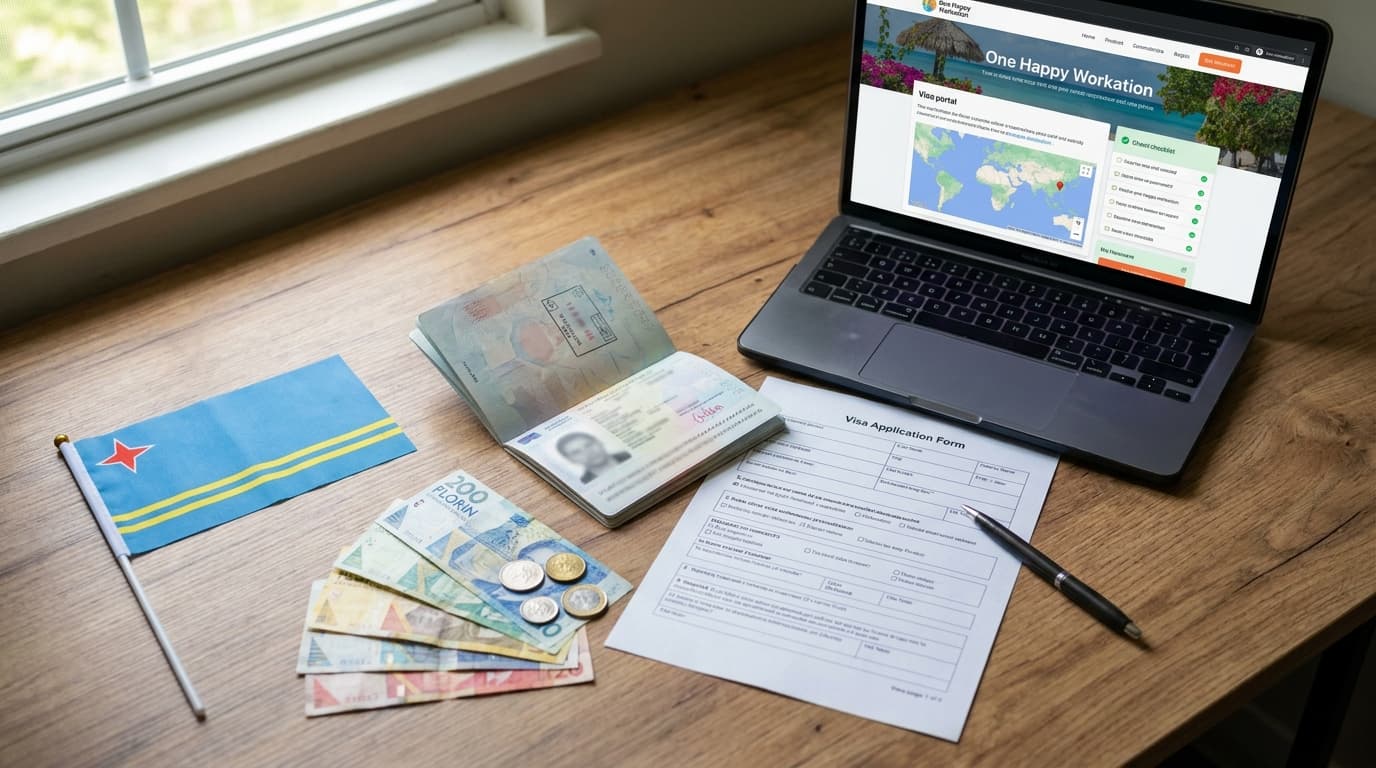
Aruba One Happy Workation

Visa Data Sheet
Aruba’s One Happy Workation is basically a branded remote-work package, not a new visa class. It lets U.S. nationals stay on the island for up to 90 days while they work remotely, but they still enter under Aruba’s normal visitor rules.
That distinction matters. The official Aruba materials say no special government documentation is required for the program itself, because the 90-day stay is already allowed for U.S. nationals. What Aruba is selling here is the accommodation package and local perks around it, not a separate immigration status.
There’s also a clear line you can’t cross: visitors can’t work for Aruban employers while they’re in the country as tourists. So the program is meant for people who keep working for a job based outside Aruba, not for anyone trying to join the local labor market.
The official pitch is simple enough and a little blunt, too. Aruba describes the offer as a “work, play and stay” setup for remote workers and extended-stay visitors with valid passports, with a maximum stay of 3 months. The same official materials say the program may be extended in the future, but there’s no confirmed government-wide fee or new permit category shown in the sources here.
- Who it’s for: U.S. nationals with valid passports.
- How long you can stay: Up to 90 days or 3 months.
- What it's: A tourism-branded workation package, not a separate visa.
- What it isn’t: Permission to work for Aruban employers.
If you’re looking for a clean, official remote-work visa, this isn’t that. If you already fit Aruba’s visitor rules and just want a temporary island base, the program is straightforward, but it’s still built on standard entry requirements rather than a new immigration track.
Aruba’s One Happy Workation is for U.S. nationals with a valid passport. That’s the cleanest answer and the official materials don’t expand the eligible nationality list beyond that.
There’s also a stay-length rule baked in from the start. The program allows a minimum stay of one week and a maximum stay of 90 days and any extension has to stay within that cap. So this isn’t a long-term remote-work setup and Aruba isn’t treating it like a separate visa class.
To qualify, you need to be working for a company in your home country or be self-employed there. The program also says you can’t render services to or receive income from, an Aruban company or individual. That’s the line that matters most if you’re freelancing, consulting or hoping to pick up local clients while you’re there.
Aruba’s own government guidance is stricter on this point. Foreign nationals visiting as tourists may not be in paid employment by an Aruban employer and anyone who wants to work in Aruba needs a work permit. In plain terms, the workation is built for remote work that stays outside the local labor market.
The official sources don’t publish a few things people usually ask about:
- Income threshold: not listed
- Savings requirement: not listed
- Age limit: not listed
- Dependent-family rule: not listed
- Nationality eligibility beyond U.S. nationals: not listed
Two disqualifiers are clear. If you plan to work for Aruban employers or clients without proper work authorization, you’re out. If you stay longer than 90 days, you’re also outside the program’s limits.
Aruba’s One Happy Workation isn’t a separate visa, so don’t expect a special immigration stamp or a pile of extra government paperwork. It’s a tourism program for U.S. nationals that lets you stay in Aruba for up to 90 days while working remotely, but you still enter under the normal visitor rules.
The official requirements are pretty lean. You need to have:
- A passport valid for the duration of your trip: The tourism page asks for a passport that stays valid for your whole stay.
- Proof of return: Aruba wants evidence that you’re leaving again.
- An approved Embarkation/Disembarkation card: This online ED card is required for entry and the tourism page says to select “One Happy Workation” as the purpose of visit.
The ED card itself asks for a valid passport, personal details, contact information, travel information and a valid credit card. It’s an entry form, not a visa and submission doesn’t guarantee you’ll be admitted.
That’s where the official guidance stops. The sources reviewed here don’t confirm a minimum bank balance, a required income level, a specific health-insurance rule, police clearance, background check or apostille and translation requirement for this program. So if you see those mentioned elsewhere, treat them as unofficial unless Aruba spells them out.
One more practical point, the program is still described by Aruba as a 3-month stay. Officials have said it may be extended in the future, but there’s no confirmed formal visa category or program-wide fee beyond the standard entry requirements.
Aruba’s One Happy Workation isn’t a separate visa with its own price tag. The official program page says there’s no governmental documentation required for the program itself, so you shouldn’t expect a special application fee, processing fee or renewal fee tied to the workation offer.
That said, the program doesn’t erase Aruba’s normal entry rules. You still have to meet the standard visitor requirements and the online ED card is required. The government pages reviewed here don’t list a fixed ED-card fee in the captured text, though the form does require a valid credit card.
Here’s the cost picture in plain English:
- Program fee: None listed by official Aruba sources.
- Government documentation fee: None required for the program itself, according to the official page.
- ED card fee: The captured official text doesn’t state a fixed amount.
- Renewal fee: Not listed, since the program materials here don’t confirm a formal visa or permit process.
- Dependent fee: Not listed in the official material reviewed here.
Insurance is the one soft cost Aruba does mention. The tourism page recommends travel insurance for medical costs, but it doesn’t publish a mandatory premium or a minimum coverage amount in the text reviewed here. So if you’re budgeting, treat insurance as a likely out-of-pocket expense even though the official page stops short of giving a number.
The bottom line is simple: the One Happy Workation itself doesn’t show a government fee in the official material reviewed here, but you still may have normal travel costs, ED card processing requirements and insurance expenses. The annoying part is that Aruba’s own pages don’t spell out every number, so you’ll need to check the ED card form and your insurer before you commit.
Aruba doesn’t run a separate visa application for One Happy Workation. The process is simpler than that and a little more informal than people expect: you book one of the participating package deals, then complete the online ED card and select “One Happy Workation” as your purpose of visit.
The ED card is the part you actually submit before travel. It’s an entry preregistration step, not a visa application, so there isn’t a separate government file to chase down or a special workation permit to wait on.
- Book an eligible package: The program is tied to participating offers, not a stand-alone government form.
- Fill out the online ED card: Submit it before departure and choose “One Happy Workation” as the visit purpose.
- Wait for ED card approval: The official materials don’t list a fixed processing time.
- Travel with standard entry compliance: After approval, you still enter under normal visitor rules and immigration makes the final call on arrival.
For eligible U.S. nationals staying within the 90-day limit, the tourism page says no extra government documentation is needed beyond the normal entry requirements. That’s the main appeal here, but it also means the program isn’t a new legal status. It’s a tourism-backed remote-work arrangement layered on top of ordinary visitor entry.
One practical downside is the lack of a formal application track. If you want a clean, government-issued work permit with a published case process, this isn’t it. If you just want a temporary remote-work stay and you fit the entry rules, the path is straightforward enough.
The official One Happy Workation window is simple, if a little narrow: you can stay for a minimum of one week and a maximum of 90 days. That makes it a short-term remote-work option, not a long-haul base.
Aruba’s own guidance says travelers may extend their stay while they’re on the island, but only so long as they stay under the 90-day total. There’s no separate renewal track described for the program and the official materials don’t spell out a fixed renewal fee, either.
That matters, because the program is still described as a temporary setup tied to the standard visitor entry rules. It’s not presented as a separate visa category, so don’t assume there’s a formal re-up process like you’d see with a residence permit.
- Minimum stay: 1 week
- Maximum stay: 90 days or 3 months
- Extension rule: Possible while on island, but not beyond 90 days total
- Renewal path: Not officially defined
- Permanent stay: No official pathway listed
That last part is the real limit. The official materials don’t give any route from One Happy Workation to permanent residency or citizenship and they don’t describe any cumulative stay beyond the 90-day cap. If you want to keep working from Aruba after that, you’ll need to look outside this program.
There’s also no official confirmation here that Aruba has created a new program-wide fee or a formal visa renewal system for this offer. So if you’re planning a longer stay, don’t bank on an easy extension. The program is still built around a 3-month ceiling and that ceiling is the rule that matters.
Aruba’s One Happy Workation doesn’t read like a separate tax visa, because it isn’t one. The official program says U.S. nationals stay as nonresidents, so they don’t pay Aruba income tax on income earned from their home country while they’re there. That’s the clean answer and it’s the main tax benefit people are looking for.
The catch is that this doesn’t turn into a shortcut for working locally. Aruba’s work-permit rules still apply to foreign nationals who work for Aruban employers and tourist visitors can’t be in paid employment by an Aruban employer. So if your setup involves local pay, you’re outside the workation lane.
There’s also a limit to what the official materials actually spell out. They don’t list a special tax-residency day count for the program, a reduced tax regime tied to One Happy Workation, treaty treatment or separate reporting rules just for participants. If you’re trying to map out broader tax exposure, that silence matters.
- Income tax: The official program says participants aren’t registered as Aruba residents, so they don’t pay Aruba income tax on home-country income during the stay.
- Local work: Working for an Aruban employer needs work authorization and tourist visitors can’t take paid work from an Aruban employer.
- Program-specific tax rules: The official sources reviewed here don’t set out day-count triggers, treaty rules or special reporting obligations for this program.
There’s one more practical point. The program is described as a temporary stay of up to 90 days, not a new immigration status with a tax package attached. So if your situation is messy, with local clients, Aruban payroll or a possible residency issue, don’t assume the marketing page covers it. It doesn’t.
How It Compares
Similar visas elsewhere
| Program | Country | Income / month | Fee | Max stay | Renewable |
|---|---|---|---|---|---|
| Slovenia Digital Nomad Visa | Slovenia | €3,391/mo | €50 | 12 mo | |
| Belize Work Where You Vacation Program | Belize | $75,000-100,000/yr | BZD 200-500 | 6 mo | |
| Kazakhstan Neo Nomad Visa | Kazakhstan | $3,000/mo | £170 | 12 mo | |
| Bahamas Digital Nomad Visa | Bahamas | - | $25 | 12 mo |
Aruba Digital Nomad Guide
Cost of living, internet, healthcare, coworking, and every visa option for Aruba.
Visa rules change. We'll tell you.
Get notified about policy updates and new requirements for the Aruba One Happy Workation and other Aruba visas.