Visa Program Briefing

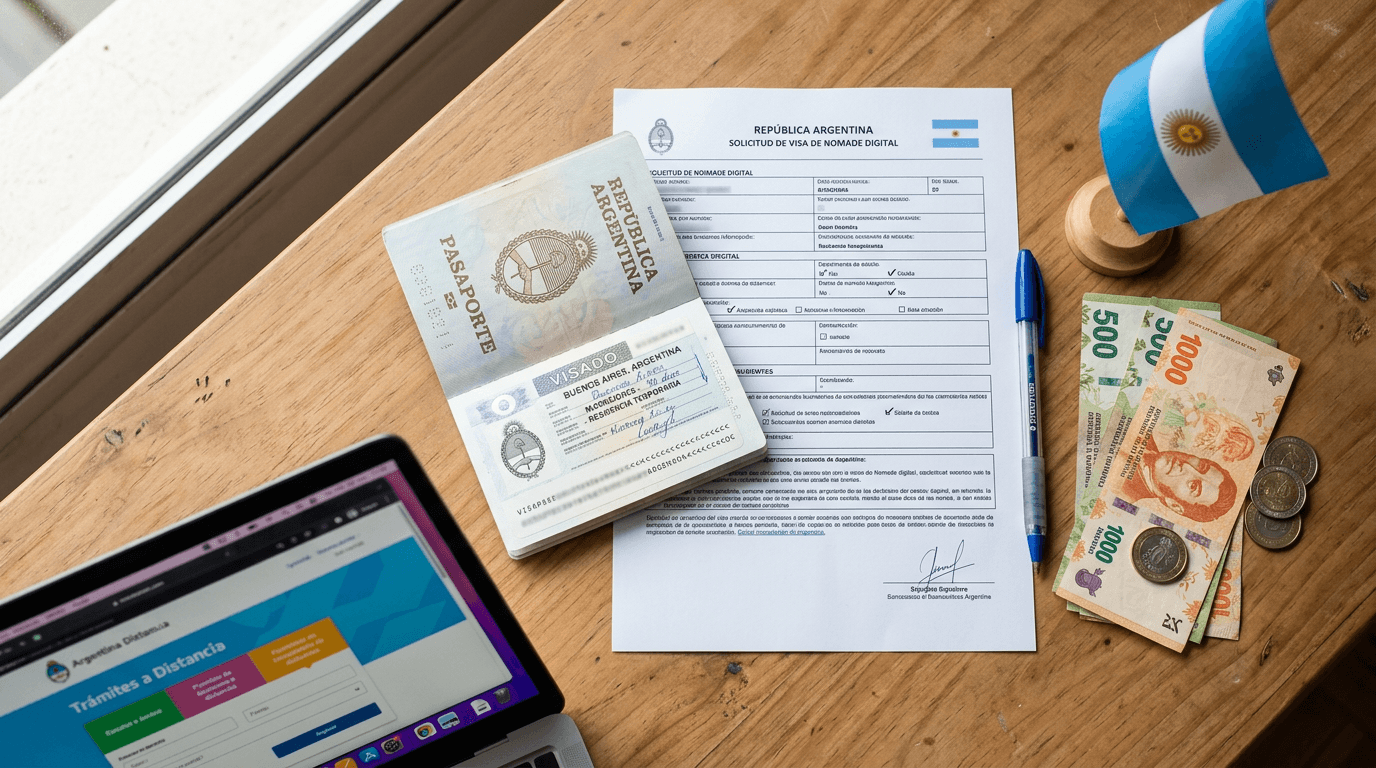
Argentina flag

Argentina Digital Nomad Visa

ArgentinaDigital Nomad Visa
Brandon Richards
Brandon Richards ·

Visa Data Sheet

Application Fee
$NaN
Maximum Stay
12 months
RenewableResidency PathRemote Work
The Full Briefing

Argentina’s digital nomad visa is a real immigration category, not just a tourist workaround. It was created in 2022 as a transitory residence for foreigners who work remotely for clients or employers outside Argentina and it gives eligible applicants up to 180 days in the country, with a possible extension for another 180 days.

The catch is simple. It’s only open to nationals of countries that can already enter Argentina without a tourist visa and it doesn’t authorize local employment. If you’re planning to work for an Argentine company or tap into the local labor market, this isn’t your route.

Who it’s for

The official wording is pretty specific: you need to be entering Argentina to provide services remotely using IT or telecom tools for people or companies domiciled outside the country. In practice, that means remote employees, freelancers and independent contractors with foreign clients.

Unlike some other nomad programs, Argentina’s official pages don’t publish a fixed minimum income. Instead, they ask for proof of activity and income and that seems to be reviewed case by case. That makes the file a little harder to package neatly, because there’s no clean salary floor to aim for.

How it works

  • Stay length: Up to 180 days.
  • Extension: Possible for another 180 days.
  • Work allowed: Remote work for foreign clients or employers only.
  • Local work: Not allowed.
  • Eligibility: Only nationals from visa-exempt countries.

The application setup isn’t perfectly straightforward. Official guidance says the permit is handled in person through the National Immigration Directorate, while consular guidance also describes a digital pre-entry process through TIE 24H. That split is awkward and the public instructions don’t cleanly explain which path fits which situation, so it’s smart to confirm with the immigration office or an Argentine consulate before you rely on one route.

What the file usually includes

  • Application letter: Signed, with your personal details and remote activity.
  • CV: A short resume showing your background.
  • Passport: Valid passport and a recent photo.
  • Proof of work: Contracts, company letters, invoices or similar evidence.
  • Income reference: At least one reference linked to your occupation.

The fee listed on the consular route is €200 ($217). If you want a short-term, legal way to base yourself in Argentina while keeping your income offshore, this is the cleanest option. It’s still a temporary stay, though, so don’t confuse it with a long-term residency path.

Argentina’s digital nomad residence is for remote workers, but the gatekeeping is tighter than a lot of people expect. The official category is called “residencia transitoria como Nómada Digital,” and it’s only open to people from countries that don’t need a tourist visa to enter Argentina. If your passport normally requires a tourist visa, this route isn’t for you.

You also have to be inside Argentina with a regular, lawful entry when you apply. The government says the process is handled in person through Migraciones, not through the online Radex system, so this isn’t something you sort out from abroad and finalize later.

The work itself has to be remote and tied to employers or clients outside Argentina. The official wording is pretty specific: you must provide services remotely using IT, telecommunications or similar tools for people or companies domiciled abroad. Local employment isn’t the point of this permit and the public guidance doesn’t frame it as a way to take Argentine freelance work.

There’s no official minimum income figure published for this category. That’s annoying, but it’s the reality. Migraciones asks for proof of activity and income, then seems to assess the file case by case, so you should have clean, convincing documentation rather than banking on a fixed salary threshold.

  • Passport or accepted travel document: valid passport for most applicants or an accepted Mercosur document if you qualify under that framework.
  • Proof of regular entry: evidence that you entered Argentina legally.
  • Proof of address: a local address in Argentina.
  • Signed application letter: include your personal details, the work you do and a short CV.
  • Proof of remote work: contract, company endorsement, service-demand letter, receipts or other income records.
  • Reference: at least one reference connected to your occupation.
  • Criminal record check: Argentine criminal record certificate for applicants over 16.
  • Legalization and translation: foreign documents must be apostilled or legalized, then translated into Spanish by a sworn translator and legalized by the Colegio de Traductores.

Family details are murky. The official public guidance doesn’t spell out a clear dependent path for spouses or children under this category, so don’t assume they can simply join under the same application. If you’re planning to move as a family, get that confirmed directly before you book anything.

Source

Argentina does have a digital nomad residence, but the paperwork is a little less tidy than people expect. The official route is a 180-day transitory residence for remote workers who are nationals of countries that can already enter Argentina visa-free as tourists. There’s no official minimum income figure published by Migraciones, so don’t treat the numbers floating around online as hard rules.

The core application is built around proving who you are, what you do and that your income comes from outside Argentina. The exact document set can shift a bit depending on whether you apply through TIE 24H, from inside the country or through a consulate, but the basics stay the same.

  • Passport or ID: A valid passport or in some Mercosur cases a national ID. Your passport should have at least 6 months of validity and one blank page and consular applications may ask for scans of every page with stamps or visas.
  • Application form and signed request: You’ll need the relevant Migraciones or consular form, plus a signed note that includes your personal details and describes the remote work you’ll do in Argentina.
  • CV: A short curriculum vitae showing your work experience and, where relevant, your education or training.
  • Proof of remote work and income: Contracts, employer letters, client references, invoices, receipts or other documents showing ongoing foreign-source work. Migraciones also wants at least one occupational reference.
  • Address proof: If you apply inside Argentina, you need proof of local address, such as a rental contract or similar documentation.

One thing that’s notably unclear and a bit annoying, is criminal record paperwork. Migraciones clearly handles an Argentine criminal record certificate for in-country applications, but the official digital nomad checklist doesn’t consistently spell out a foreign police certificate. That means you shouldn’t assume it’s always required, though an office or consulate can still ask for extra documents.

Health insurance is in the same gray area. It’s commonly required for other Argentine visas, but the official digital nomad checklists don’t list it as a universal mandatory document. Still, if you’re planning to stay for a while, showing coverage is a smart move.

Source 1 | Source 2

Argentina’s digital nomad status sits in a slightly awkward spot: it’s a 180-day transitory residence, not a classic long-term visa and the government doesn’t publish one fixed fee in pesos or dollars for everyone. The number you pay depends on the route you use and, in practice, on the office or consulate handling the file.

Inside Argentina, the official portal says the only payments are the ones generated by the platform itself. That points to the standard transitory residence fee and, if you choose it, an extra charge for a priority appointment. The fee table also lists a separate electronic processing charge for transitory residence cases, but the public documents don’t show a simple converted USD amount for the nomad category.

That means there’s no single, verified “digital nomad visa fee” you can rely on across the board. You’ll need to confirm the current amount with Migraciones or the consulate where you apply, because the fee may be set in internal units and can vary by office.

What you should budget for

  • Government processing fee: Required, but not published as one fixed global amount for the digital nomad category.
  • Priority appointment: Optional, if you want to speed up an in-country appointment.
  • Criminal background checks: Not priced by Argentina, since any foreign police certificate is charged by the issuing country.
  • Translations and legalization: Required for foreign documents, but the price depends on your translator and local authority fees.
  • Health insurance: Not clearly listed as a category-specific mandatory cost in the official nomad documents, though many applicants still buy it anyway.
  • Legal help: Optional. The government says you don’t need a gestor, so any consultant fee is on you.

If you apply through a consulate, the same problem shows up again. The consular office says you’ll be asked to pay the visa processing fee once your documents are complete, but it doesn’t publish a fixed amount in the public guidance. So if someone hands you a neat dollar figure online, treat it with caution unless it comes straight from the relevant consulate.

Bottom line, the visa itself isn’t the expensive part. The annoying costs are usually the document prep, translations and whatever your consulate decides to charge.

Source

Argentina’s digital nomad route is handled two ways, through Migraciones’ TIE 24H system or through an Argentine consulate. Either way, the rules are built for people from visa-exempt countries who work remotely for employers or clients outside Argentina. It’s a short-term permit, not a long-term residency track.

How the application works

For the online TIE 24H process, you start with an application note, then upload your passport, photo, CV and proof of your remote activity. Migraciones says you’ll need documents showing what you do, such as a contract, company endorsement, certifications or income receipts, plus at least one professional reference.

If you apply through a consulate, the package is similar. The Consulate General in Toronto asks for a completed visa form, passport scans, an application note, a brief CV and supporting documents for your work, with a Spanish translation for items 3 through 5. Consulates can ask for extra paperwork too, so don’t assume the checklist ends there.

What you need to prepare

  • Passport: valid for at least 6 months, with at least one blank page.
  • Photo: a recent headshot with a white background.
  • Work proof: contract, company letter, certifications or receipts showing remote work for non-Argentine clients or employers.
  • CV: a short summary of your experience and training.
  • Reference: at least one professional reference tied to your field.
  • Translations: required for some consular filings, depending on the mission.

Fees and timing

The official sites don’t publish one universal fee or a fixed processing time. The Embassy of Argentina in Ireland lists a procedure cost of €200 ($215), while other consulates may quote different amounts in their own fee schedules.

That lack of standardization is annoying, but it’s the reality. Check the consulate handling your case before you submit anything, because the fee, payment method and extra document requests can vary.

How long you can stay

The digital nomad category grants transitory residence for up to 180 days. Some consular guidance says that stay can be extended for another similar period, but the online instructions don’t spell out a neat extension workflow, so don’t bank on a simple renewal process.

There’s also no official income floor published on the government pages. You’ll need to show consistent remote income and enough documentation to prove you can support yourself, but the consulate decides whether that’s sufficient.

Argentina’s digital nomad status is a transitory residence, not a temporary residency card. The official permit starts at 180 days and can be extended once for the same length of time, so the practical ceiling is about 12 months total.

That distinction matters. This permit does not lead on its own to permanent residency or citizenship and time spent on it doesn’t count the way a temporary residence category does. If you want a longer stay, you’ll need to move into a different status, like rentista, work, study or family-based residence.

Here’s the clean version of the timeline:

  • Initial stay: up to 180 days.
  • Extension: one renewal for another 180 days.
  • Total time on the nomad permit: about 360 days or one year.

The extension isn’t automatic. Government guidance says you need to be physically present in Argentina for at least 50% of the first permit period to qualify, so this isn’t a status you can apply for and then mostly ignore from abroad.

The official portal doesn’t publish a fixed renewal fee in a neat, one-line schedule and it doesn’t give a clear public processing timeline either. Fees are handled through the immigration system and can change, so check directly with Dirección Nacional de Migraciones when you file. If you’re trying to stretch your stay beyond the one renewal, that’s where things get messy, because the digital nomad route stops there.

For anyone thinking long term, the better move is to switch into a proper temporary residence category before the nomad status runs out. Waiting until the last minute is asking for paperwork pain and Argentina’s bureaucracy isn't known for being forgiving.

The Digital Nomad Visa doesn’t give you a special tax break in Argentina. It’s an immigration status, specifically a transitory residence of up to 180 days that can be extended once and the official rules don’t create any separate tax exemption or reduced rate for remote workers.

That means your tax treatment falls back to Argentina’s general rules. AFIP, the tax authority, looks at whether you’re a tax resident and whether the income is Argentine-source or foreign-source. There’s no official rule saying digital nomads become tax residents after a set number of days and there’s no published AFIP circular that gives nomads a separate status.

What that means in practice:

  • Non-residents: taxed only on Argentine-source income.
  • Tax residents: taxed on worldwide income, including foreign-source income.
  • Residency trigger: AFIP’s general rules point to permanent residence or 12 months with temporary residence authorizations, not the nomad visa itself.

That leaves a gray area for people who work remotely from Argentina for foreign clients. The official position doesn’t say that income is automatically tax-free, even if the client is abroad and the money is paid outside Argentina. If you become an Argentine tax resident later, foreign income can become taxable there, though tax credits may apply if you’ve already paid tax somewhere else.

Argentina also has double-taxation treaties with several countries, including the U.K., Canada, Spain and Germany. Those treaties can help, but they’re tied to tax residency and treaty paperwork, not the visa category. If you want to claim treaty benefits, you’ll usually need a fiscal residency certificate from your home country and the right AFIP filings.

  • No special digital nomad tax regime: the official visa rules don’t mention one.
  • Foreign income treatment: depends on residency and source rules, not the visa label.
  • Paperwork can matter: keep clean records of where your clients are based, where you’re paid and where you’re tax resident.

The blunt version is this, don’t assume the visa makes you tax-free. It doesn’t. If you plan to stay long enough that residency might kick in, get advice before you cross that line.

Full Country Guide

🇦🇷 Argentina Digital Nomad Guide

Cost of living, internet, healthcare, coworking, and every visa option for Argentina.

Stay Current

Visa rules change. We'll tell you.

Get notified about policy updates and new requirements for the Argentina Digital Nomad Visa and other Argentina visas.