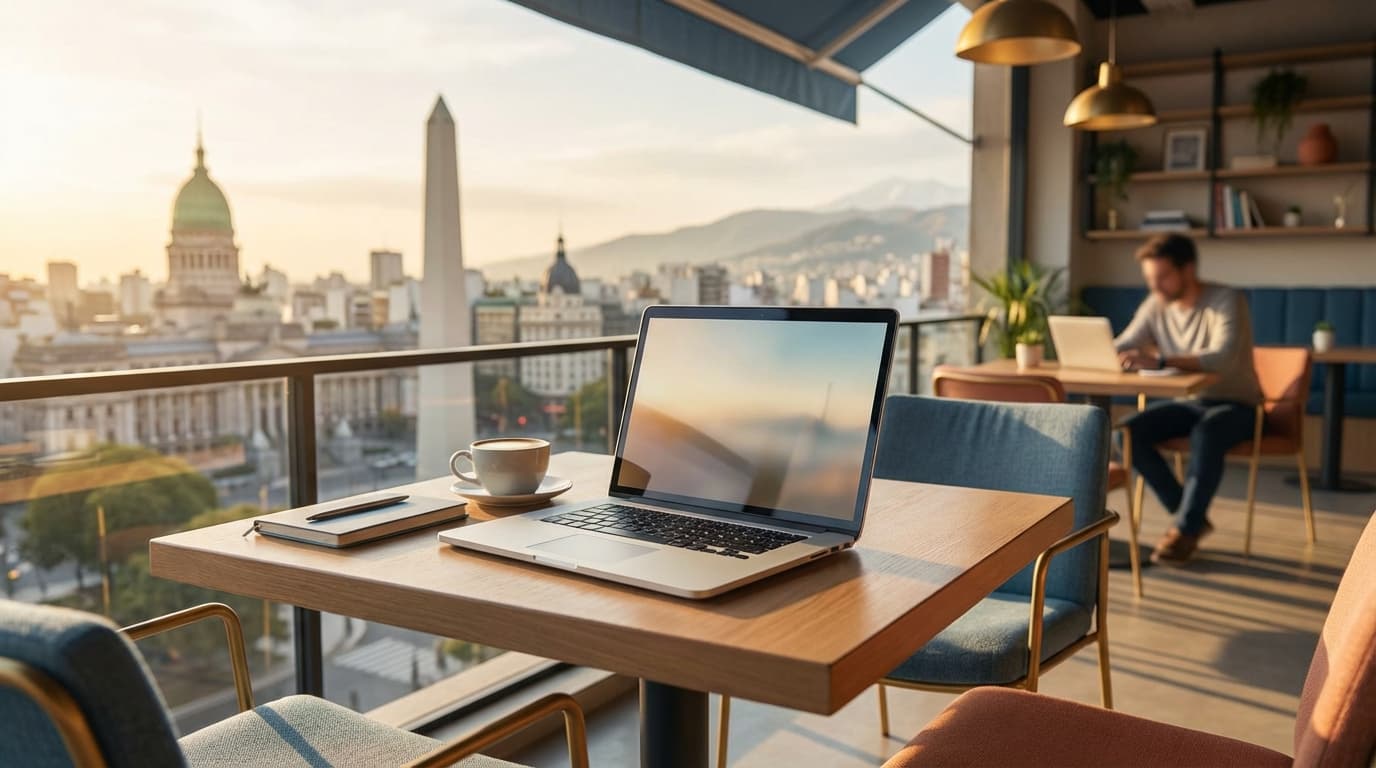
Argentina landscape
🎒Adventure ReadyDN Visa
🇦🇷

Argentina

Complete Digital Nomad Guide

Brandon Richards
Brandon Richards ·

Policy Stability

Stamped Nomad Exclusive
7/10Stable

How likely visa and immigration policies are to remain unchanged

Quick Facts

Nomad Visa Cost

$200

Income Requirement

$2,500/mo

Max Stay

12 months

Renewable

Yes

Cost of Living

$1,600/mo

Avg Internet

60 Mbps

Safety Score

4/10

Healthcare

High

Coworking

High

English Friendly

Medium

Time Zones

ART (UTC-3)

Entry Methods Available

Visa FreeVisa Required

Best For

citybudgetamericas-base

Argentina has long been a favorite for digital nomads, and for good reason. The country offers a remarkably flexible entry system that makes it easy to arrive, fall in love with Buenos Aires, and figure out your long-term plans once you are on the ground. Whether you are looking for a quick three-month stint or a permanent base in the Southern Cone, there is likely a pathway that fits your income structure.

The 90-Day Entry: Visa-Free Access

Most travelers from the U.S., UK, Canada, and the EU fall into the visa-free category. If you hold one of these passports, you can enter Argentina for up to 90 days without any prior paperwork. The reciprocity fees that used to plague Americans and Australians are largely a thing of the past. Ensure your passport is valid for at least 6 months from your arrival date, and you are generally good to go.

If you find yourself wanting more time, the "border run" to Uruguay is a classic nomad tradition. A quick ferry ride across the Rio de la Plata to Colonia can often reset your tourist clock, though many expats now prefer the more formal residency routes to avoid any scrutiny at the border.

Residency and Long-Term Options

For those who want to stay longer than a few months, the Rentista Visa is the gold standard. It is designed for people with a guaranteed passive income from outside the country, such as rental income, investments, or a pension. While the exact requirements can fluctuate with the local economy, you should aim to show a monthly income of at least USD $1,400 to $2,000. This visa is valid for one year, can be renewed, and puts you on a direct path to permanent residency after three years.

If you are being sent by a company for a specific project, the Short-Term Professional Visa is a solid middle ground. It grants 30 days initially but can be extended twice, giving you a total of 90 days of legal work status. This is perfect for consultants or technical experts who need more than a standard tourist stamp but aren't staying for the long haul.

Comparing Your Options

The right choice depends on how much paperwork you are willing to handle and how long you plan to stay. Here is a breakdown of the most common paths for remote workers and expats:

Visa Type Max Duration Primary Requirement
Tourist Entry 90 Days Valid passport from eligible country
Rentista (Financier) 1 Year (Renewable) $1,400+ USD monthly passive income
Business Visa 60 Days Sponsorship by an Argentine entity
Work Visa 1 Year (Renewable) Local labor contract and sponsorship
Technical Visa Up to 90 Days Professional or technical credentials

The AVE: A Shortcut for Specific Nationalities

If you are not from a visa-free country but hold a valid U.S. B2, J, B1, O, P, E, or H-1B visa, you might be eligible for the Electronic Travel Authorization (AVE). This is an online process that bypasses the need to visit a consulate. It is a streamlined way for frequent travelers to the U.S. to gain entry to Argentina for tourism without the heavy lifting of a traditional visa application.

The Paperwork Reality

While the entry rules are welcoming, the bureaucracy for residency is detailed. If you are moving beyond a tourist stamp, you will need to gather several documents from home. These usually include:

  • A clean criminal background certificate from your home country.
  • Proof of health insurance with local coverage.
  • Bank statements showing lawful income.
  • Apostilled and certified translations for all foreign documents.

Recent updates have also made it easier for business travelers who hold a U.S. Permanent Resident Card. Starting January 14, 2026, these individuals will see even fewer hurdles when entering for commercial purposes. Argentina is clearly signaling that it wants to remain a top-tier destination for global talent and investment.

Source 1 | Source 2

Argentina finally joined the remote work party with its official Digital Nomad Residence Permit. It is a solid middle-ground option for those who want to move beyond the "perpetual tourist" lifestyle without committing to permanent residency. The program is specifically designed for people who earn their living from companies or clients outside of Argentina, allowing you to enjoy the country's high quality of life and favorable exchange rates legally.

The Essentials: Who Qualifies?

The most important thing to understand is that this visa is currently restricted to nationalities that can already enter Argentina visa-free for tourism. If you hold a passport from the US, UK, Canada, or the EU, you are likely eligible. You must prove you are a remote worker or freelancer by providing contracts or invoices that show your income comes from abroad. You cannot work for an Argentine company while on this permit.

While official sources can be a bit vague on the exact income floor, you should aim to show at least US$2,500 per month or a yearly proof of solvency around US$30,000. Having six months of bank statements ready is the best way to prove you have the financial muscle to support yourself.

What You Need to Prepare

  • Valid Passport: Must have at least 6 months of validity remaining.
  • Work Proof: Contracts, pay stubs, or a letter from your employer confirming your remote status.
  • Criminal Record Check: You will need a clean record from your home country. This can often be handled via an online certificate depending on your nationality.
  • Professional CV: A simple resume outlining your work history.
  • Passport Photo: A standard 4x4 cm photo with a white background.
  • Local Address: You will need to provide a proof of address in Argentina, such as a long-term Airbnb receipt or a rental agreement.

Visa Comparison: Nomad Permit vs. Tourist Entry

Feature Digital Nomad Visa Standard Tourist Entry
Stay Duration 180 days (6 months) 90 days
Renewability One-time 180-day extension Possible 90-day extension
Legal Status Temporary Resident Transitory Visitor
Cost Approx. US$117 – $150 Free (for most)
Tax Liability Foreign income generally exempt None

The Application Process

The process is almost entirely digital, handled through the National Directorate of Migration (Migraciones) website. You will create an account, upload your scanned documents, and pay the fee using a credit card. Most applicants see a response within 10 to 45 business days, though 30 days is the standard average.

Once your application is approved, you have 90 days to finalize the process and receive your local ID, known as a DNI. Many nomads choose to enter the country on a 90-day tourist stamp first and then trigger the conversion to the nomad permit once they are on the ground and have found a place to live.

Taxes and Restrictions

One of the biggest perks of this permit is the tax treatment. Under the current rules, your foreign-sourced income is not taxed by Argentina during your stay. This makes it an incredibly attractive hub for those earning in Dollars or Euros while spending in Pesos. You also aren't required to make local social security contributions.

Keep in mind that this visa does not currently allow for dependents. If you are traveling with a partner or family, they will likely need to qualify for their own permits or rely on the standard tourist entry rules. Also, remember that the initial 180-day stay can only be renewed once, giving you a total of one year before you need to look at other residency options or move on to your next destination.

If the paperwork feels too heavy, plenty of nomads still rely on the 90-day tourist stay and perform "border runs" to Uruguay or Chile. However, the dedicated nomad visa provides much more peace of mind, a legal tax status, and the ability to open certain local accounts that tourists cannot access.

The Basics: Visa-Free Entry

For the majority of digital nomads coming from North America, the UK, or the European Union, entering Argentina is remarkably straightforward. You simply show up with a valid passport and receive a 90-day tourist stamp at the border. There is no fee for this entry, as the old reciprocity fees for US citizens were scrapped back in 2016.

To keep things smooth at immigration, make sure your passport has at least six months of validity remaining and one or two blank pages. While officers don't always ask, you should have digital or printed proof of an onward flight and a rough idea of where you are staying. Starting in July 2026, you will also need to show proof of travel health insurance with a minimum coverage of $20,000.

The ETA (AVE) and Consular Visas

If you aren't from a visa-exempt country, you might still avoid a trip to the embassy. Argentina offers an Electronic Travel Authorization (known as the AVE) for travelers who already hold a valid US visa (B2, H-1B, etc.) or have visited the US or Schengen Area in the last two years. It is an online application that saves a lot of legwork, though keep in mind that Schengen-based eligibility is scheduled for suspension in June 2025.

If you don't qualify for the ETA or visa-free entry, you will need to go the traditional route through an Argentine consulate. This involves an in-person interview, a $150 fee, and typical paperwork like proof of funds and a return ticket. It is best to start this process well in advance of your flight, as processing times can fluctuate.

Visa Type Max Duration Cost Best For
Tourist Stamp 90 days Free US, UK, and EU citizens
Consular Visa 90 days $150 Non-exempt nationalities
ETA (AVE) 90 days Varies Holders of US/Schengen visas
Transit Visa 10 days Varies Short layovers only

Staying Longer: Extensions and Border Runs

If three months in Buenos Aires isn't enough, you have two main ways to stay longer. The official way is to visit a National Directorate of Migration office before your initial 90 days expire. You can request a one-time extension for another 90 days, giving you a total of 180 days in the country. This is generally a reliable process, though it requires a bit of patience for the bureaucracy.

The unofficial "hack" is the border run. Many nomads take a quick ferry across the river to Colonia, Uruguay, for a day trip and then re-enter Argentina to reset their 90-day clock. While this is common, it is not a guaranteed right. If an immigration officer sees a long string of back-to-back tourist stamps, they might decide you are trying to live in the country illegally and deny entry. If you plan to stay long-term, it is always better to look into the specific Digital Nomad Visa or the official extension.

Important Requirements to Remember

  • Passport must be valid for at least 6 months from your date of entry.
  • Proof of onward travel or a return ticket is often requested at check-in or immigration.
  • Evidence of sufficient funds for the duration of your stay.
  • Mandatory health insurance ($20,000 minimum) starting July 2026.

Avoid overstaying your visa at all costs. While Argentina is generally welcoming, overstaying can lead to fines, deportation, or being barred from returning in the future. If your 90 days are winding down and you haven't secured an extension, make sure you cross a border before the clock hits zero.

Source 1 | Source 2

Making Argentina Your Home Base

Argentina has long been a favorite for travelers, but staying beyond the standard ninety-day tourist stamp requires a bit more paperwork. The good news is that the government is relatively welcoming to foreigners who can prove they have the means to support themselves. Whether you are living off a pension, rental income from back home, or a remote tech job, there is likely a residency tier that fits your situation.

Most of these options grant you temporary residency. This status usually lasts for one year and can be renewed. If you stick around and keep your nose clean, you can typically apply for permanent residency after three years of continuous legal stay. For those with family ties to Argentina or citizens of MERCOSUR countries, that timeline is often shortened to two years.

The Main Residency Pathways

While there are several niche categories, most digital nomads and expats fall into one of four buckets. The Rentista and Pensionado visas are the most popular for those with "passive" setups, while the newer Digital Nomad visa is tailored for the laptop-and-latte crowd.

Visa Type Best For Income Requirement Duration
Digital Nomad Remote workers and freelancers Sufficient for local living 6 months (renewable once)
Rentista Those with rental or investment income USD 2,000/month 1 year (renewable)
Pensionado Retirees with government/private pensions USD 2,000/month 1 year (renewable)
Investor Business owners and entrepreneurs Case-by-case basis 1 year (renewable)

What You Need to Get Started

The paperwork mountain can feel steep, but the requirements are fairly standard for international moves. You will need to gather your documents well in advance, as many require apostilles or official translations by an Argentine certified translator. Expect the processing time to take anywhere from two to six months depending on how busy the immigration office is.

  • A valid passport with at least 6 months of validity remaining.
  • Clean criminal record checks from your home country and any place you have lived in the last 5 years.
  • Proof of health insurance with local coverage.
  • A medical certificate issued by an approved professional.
  • Proof of income, such as bank statements, pension slips, or remote work contracts.

For the Rentista and Pensionado routes, the magic number is usually around USD 2,000 per month. While the Digital Nomad visa is more flexible on the exact dollar amount, you still need to demonstrate a steady cash flow that proves you won't be seeking local employment, which is generally prohibited under these temporary permits.

The Road to Permanent Residency

If you fall in love with the lifestyle and decide to stay for the long haul, the transition to permanent residency is straightforward. You must maintain your temporary status for the required period, usually three years, and apply through the Dirección Nacional de Migraciones. It is vital to start your renewal process early; filing 90 days before your current visa expires keeps your status legal while the new application is pending.

Once you secure your DNI Permanente, you no longer need to worry about renewals. This status allows you to live and work in Argentina indefinitely. You also gain a much easier path to citizenship if that is your ultimate goal. Just keep an eye on the calendar; if you let your residency lapse, you might face fines ranging from USD 50 to 100, and you could be forced to start the clock over from scratch.

Costs and Practicalities

Applying for residency is not free, but it is affordable compared to European "Golden Visa" programs. You should budget several hundred USD to cover administrative fees, document legalizations, and translation services. Most applicants choose to enter the country as a tourist first and then handle their application locally in Buenos Aires, which allows you to get a feel for the neighborhoods before committing to a long-term lease.

Source

Argentina has long been a darling of the remote work world, offering a sophisticated lifestyle that feels more like Madrid or Paris than South America. While the days of "dirt cheap" living have faded due to recent economic shifts, it remains a high-value destination where your dollars or euros go much further than they would back home.

The Monthly Breakdown

Your lifestyle in Argentina depends heavily on your neighborhood and how often you eat out. You can live comfortably in a trendy Buenos Aires apartment for about half of what you would pay in a second-tier US city. Here is what you should budget for a typical month.

Category Estimated Cost (USD)
Rent (1BR in Nomad Areas) $400–$800
Dining Out $90–$360
Groceries $120–$180
Coworking Space $70–$120
Private Health Insurance $80–$220
High-Speed Internet & Utilities $150–$250
Public Transport & Uber $10–$20

For a solo traveler, a budget of $1,200 to $1,500 covers the basics. If you want a comfortable lifestyle with frequent steak dinners and weekend trips, aim for $1,800 to $2,500. Those looking for luxury penthouses and private tours will find $3,500 more than sufficient.

Location Matters: Buenos Aires vs. The Provinces

Buenos Aires is the primary hub, and specifically the Palermo neighborhood. It is the gold standard for walkability and coffee shop culture. Rent here is roughly 65% cheaper than New York City and 45% cheaper than London. You get a world-class metropolis for a fraction of the price.

If you head to Mendoza or Córdoba, your money stretches even further. Rent in these cities often drops 40% to 60% below Buenos Aires prices. The trade-off is a smaller community of expats and fewer dedicated coworking hubs, but for many, the mountain views and wine country access are worth it.

The Reality of Recent Inflation

It is important to understand that Argentina is currently recalibrating its economy. Some costs have jumped significantly in a short window. For example, high-speed internet plans that were once negligible now range from $150 to $200. Private health insurance has also seen sharp increases; a plan that cost $80 a few years ago might now run closer to $220 for a family.

Currency volatility is the name of the game here. If you earn in a stable foreign currency like USD, you are shielded from the worst of the local price hikes. You maintain your purchasing power while locals face much tighter margins.

Visa Requirements vs. Actual Spending

To qualify for the Argentina Digital Nomad Visa, you need to prove a monthly income of $1,500. While this meets the legal threshold, many seasoned nomads suggest a target of $2,500 for those living in the capital. This ensures you can handle price fluctuations and still enjoy the premium dining and cultural events that make the country so attractive.

  • Dining: A high-end steak dinner with wine usually costs between $15 and $25.
  • Connectivity: A local SIM card with plenty of data is incredibly cheap, often under $8.
  • Quality of Life: The real value is in the "extras" like theater, tango shows, and world-class Malbec, all priced at a fraction of Western rates.

Ultimately, Argentina offers a rare trade-off. You might pay more for your fiber-optic internet than you expected, but you will save so much on rent, transport, and food that your overall quality of life remains exceptionally high.

The Big Three: Where to Plant Your Laptop

Argentina is a massive country, but for remote workers, the map boils down to three distinct hubs. While you might be tempted by the rugged beauty of Salta or the penguins in Ushuaia, those spots often struggle with the "digital" part of digital nomadism. If you need reliable pings and a community that understands what Slack is, stick to Buenos Aires, Córdoba, or Bariloche.

1. Buenos Aires: The Urban Powerhouse

Buenos Aires is the undisputed heavyweight champion for nomads in South America. It is a city of neighborhoods, each with its own personality. Most nomads gravitate toward Palermo for its tree-lined streets and endless supply of specialty coffee shops, or Recoleta for its Parisian architecture and quieter pace. If you want a more local, residential feel with great parks, Belgrano is a smart alternative.

The infrastructure here is the best in the country. You can expect internet speeds between 50 and 100 Mbps in most rentals, though premium coworking spaces often push 300 Mbps. The city is highly walkable, and the 24-hour culture means you can find a world-class steak or a craft beer at 2:00 AM on a Tuesday. The "Digital Nomad Visa" also allows you to stay for up to 180 days, making it a perfect base for a long-term stint.

  • Pros: World-class food scene, walkable neighborhoods, hundreds of laptop-friendly cafes, and a massive expat community.
  • Cons: The sheer size can be overwhelming, and internet outages can happen during summer heatwaves. Always keep an eSIM backup.

2. Córdoba: The Student Heart

If Buenos Aires feels too frantic, Córdoba is the perfect middle ground. It is a massive university town, which means the energy is younger and the prices are noticeably lower. You can live comfortably here for under US$700 a month. The city center is dense and walkable, filled with colonial history and a surprisingly robust cafe culture.

The real draw of Córdoba is the "Sierras." Within an hour's drive, you can be in the mountains or by a river in spots like Nono. While the nomad community is smaller than the capital's, it is more tight-knit. It is easier to make local friends here, as the "Cordobeses" are famous for being the most outgoing people in Argentina.

  • Pros: Very affordable rent, great access to nature for weekend trips, and a high density of coworking spaces.
  • Cons: Public transport is frustratingly limited and there is a less international "global city" vibe compared to Buenos Aires.

3. Bariloche: The Alpine Escape

Bariloche looks like a Swiss village dropped into the Andes. It is the go-to for nomads who prioritize hiking, skiing, or lake sports over big-city nightlife. The cost of living is roughly US$700 a month, which is incredible given the million-dollar views. The urban center has decent WiFi, and a growing number of "work-from-hotel" spots have popped up to serve the remote crowd.

The vibe here is seasonal. Between December and February, the city is buzzing with outdoor enthusiasts and the nightlife spills out onto the brewery patios. In the winter, it becomes a cozy ski hub. Just be aware that once you leave the town center, mobile data becomes patchy and the hills make walking a serious workout.

  • Pros: Unbeatable work-life balance, fresh mountain air, and some of the best chocolate and craft beer in the Southern Hemisphere.
  • Cons: It is cold for much of the year, and the internet can be sluggish during peak tourist seasons.

Comparison at a Glance

Choosing the right city depends on your budget and how much "hustle" you want in your daily life. Here is how the top three stack up for a typical remote worker.

City Est. Monthly Cost Internet Reliability Nomad Community Primary Vibe
Buenos Aires US$700-1000 High (up to 300 Mbps) Large / Diverse Cosmopolitan & Creative
Córdoba < US$700 Stable Moderate Youthful & Academic
Bariloche ~ US$700 Moderate Growing Outdoor Adventure

While the country averages about US$700 a month for a comfortable nomad lifestyle, remember that Argentina operates on a dual exchange rate system. Bringing physical US dollars to exchange at the "Blue Dollar" rate will significantly increase your purchasing power compared to using a standard bank ATM.

Stay Connected: High-Speed Hubs and Local Infrastructure

Argentina has rapidly modernized its digital infrastructure, making it one of the most viable hubs for remote work in South America. While you might find the occasional "spotty" connection in a remote Patagonian village, the major urban centers are a different story. Buenos Aires, Córdoba, and Rosario are powered by extensive fiber optic networks that deliver the stability needed for video calls and heavy data transfers.

In Buenos Aires, fiber availability is the gold standard. Most coworking spaces leverage these connections to provide speeds that consistently outperform local cafes. While nationwide fixed broadband averages sit between 50 and 100 Mbps, the premium dedicated lines in professional spaces often push those limits much higher. If your work involves high-stakes meetings, a coworking membership isn't just a luxury; it is your insurance policy against the occasional residential outage.

Top Coworking Spots for Nomads

The coworking scene is most vibrant in Buenos Aires, particularly in neighborhoods like Palermo Soho and San Telmo. These areas offer a mix of global corporate giants and boutique, startup-focused hubs. Outside the capital, cities like Mendoza and Córdoba are catching up, offering spaces that cater to the "work hard, play hard" lifestyle near vineyards and mountains.

  • WeWork: With locations on Corrientes and in Olivos, this is the go-to for those who want a familiar, global standard. Their "On Demand" passes are perfect if you only need a desk for a few days a week.
  • Usina Coworking: Located in the heart of Palermo Soho, this space is famous for its garden views and relaxed atmosphere. It feels less like a corporate office and more like a creative studio.
  • La Maquinita Co.: A homegrown favorite with multiple locations across Villa Crespo and Microcentro. It functions as a massive tech hub where you can easily network with local Argentine entrepreneurs.
  • AreaThree: Based in San Telmo, this Google Partner space is tailored for startups and developers. It offers a high-energy environment with flexible hybrid options.
  • Spaces & Regus: These offer a more traditional, European-style professional environment in the Retiro district, easily booked via an app.

Membership Costs and Comparison

Pricing in Argentina can be a bit of a moving target due to local currency fluctuations. Most nomads prefer to think in USD for stability, though paying in Argentine Pesos (ARS) can sometimes offer better value depending on the current exchange rate. Generally, an individual desk in a high-quality space will run you between US$90 and US$145 per month.

City Space Type Monthly Price Range
Buenos Aires Individual Flex Desk 30,000 – 65,000 ARS (Approx. US$145)
Córdoba Private Office 60,000 – 120,000 ARS
Rosario Shared Office Space 35,000 – 70,000 ARS
Mendoza Meeting Rooms (per booking) 25,000 – 50,000 ARS

Most memberships include more than just a desk. You are usually paying for high-speed Wi-Fi, mail handling services, and unlimited coffee. Day passes are widely available if you are just passing through, typically starting around US$50 for premium locations.

Mobile Data and Backups

Even with a great coworking space, you will want a local SIM card for backup. The primary providers are Personal, Claro, and Movistar. 4G coverage is excellent in cities, and 5G is beginning to roll out in dense areas of Buenos Aires. Using your phone as a hotspot is a reliable temporary fix, but for sustained professional work, the dedicated fiber lines in established coworking offices remain the superior choice. Many nomads keep a pre-paid Personal SIM card loaded with a data pack as a "just in case" measure for those days when they want to work from a park or a sidewalk cafe.

Argentina is famous for its universal healthcare, a rare perk where even tourists and digital nomads can walk into a public hospital and receive treatment for free. While that's a great safety net for a sudden emergency, your day-to-day health strategy should look a bit different if you want to avoid day-long waiting rooms and aging infrastructure.

Public vs. Private: Making the Choice

The public system is reliable for trauma and life-saving surgeries, but it struggles with overcrowding and limited resources once you leave major hubs like Buenos Aires or Córdoba. Most nomads opt for the private tier, known locally as Prepagas. This gives you access to world-class facilities like Hospital Alemán or Hospital Italiano, where many doctors have trained in the US or Europe and speak fluent English.

Feature Public System Private (Prepagas)
Cost Free for everyone Plans from $45 USD/month
Wait Times Long; weeks for specialists Short; often same-week appointments
Facilities Basic; can be dated Modern; high-tech equipment
Best For Emergencies and tight budgets Expat comfort and routine care

Insurance Options for Nomads

You have two main paths for coverage. Local providers like OSDE or Swiss Medical offer incredible value, often starting around $45 to $80 per month depending on your age. These cover everything from dental to prescriptions, but there is a catch: you usually need a DNI (national ID) to sign up, which can be a hurdle if you are just starting your residency process.

The more flexible route is an international nomad policy. Providers like Cigna or specialized nomad insurers are better for those moving between provinces or countries. These plans are more expensive than local options, but they include two things local plans often lack:

  • Medical evacuation to your home country if you have a serious accident in a remote area like Patagonia.
  • Repatriation services and coverage that follows you across borders.
  • English-speaking support lines available 24/7.

Pharmacies and Prescriptions

Pharmacies are on almost every corner in cities like Buenos Aires and Rosario. Many are open 24 hours. If you use a telemedicine service, digital prescriptions are widely accepted for common ailments like respiratory infections or stomach issues. For chronic medication, it is smart to bring a three-month supply from home, though most non-controlled substances are easy to find locally at a fraction of the price you would pay in the US.

Emergency Situations

In a pinch, dial 107 for public ambulance services. If you have private insurance, they will provide a specific number for their own fleet of ambulances, which is generally much faster. For non-life-threatening issues, many private plans offer "Doctor at Home" services where a physician visits your apartment for a small co-pay, saving you a trip to the clinic entirely.

If you are heading into the wilder parts of the country, like the Andes or the northern deserts, keep in mind that medical facilities become sparse. Always ensure your policy covers air ambulance costs if you plan on trekking or high-altitude sports. For most nomads living the city life, the combination of a private local plan and the occasional out-of-pocket payment for a specialist will provide some of the most affordable high-quality care in the world.

The Banking Reality

Managing money in Argentina is famously a bit of a sport. While the country has a modern banking infrastructure, the combination of high inflation and currency controls means you need a solid strategy to keep your funds accessible and your exchange rates favorable. Most digital nomads find that a hybrid approach; using a local account for day to day spending while keeping their main savings in USD or crypto; is the smartest way to operate.

Opening a Local Account

It is a common myth that you need full residency to open a bank account here. While it makes things smoother, you can open a savings account (Caja de Ahorro) using a CDI (Clave de Identificación). This is a tax ID for individuals who don't have a permanent job in the country but need to interact with the financial system. You can get this by visiting an AFIP office with your passport and a certificate of domicile.

Public banks like Banco Nación are often your best bet because they are legally required to offer a "cuenta para migrantes." These accounts are free, come with a debit card, and allow you to hold pesos. Private banks like Santander, Galicia, or BBVA offer more robust apps and English-speaking support but might be pickier about documentation.

To get started, head to a branch with these documents in hand:

  • Your Passport (and a copy of your entry stamp).
  • CDI or CUIL/CUIT tax identification number.
  • Proof of Address, which can be a utility bill or a "Certificado de Domicilio" from a local police station.
  • Proof of Income, such as a remote work contract or recent payslips, though this is sometimes waived for basic savings accounts.

Handling Currency and Exchange Rates

The Argentine Peso (ARS) is the currency of the land, but the US Dollar is the unofficial benchmark for everything. You will quickly hear about the "Blue Dollar," which is the parallel market rate. This rate is usually significantly better than the official government rate. If you use a foreign credit card, many merchants now apply a special "MEP" rate that is close to the blue rate, making card payments much more attractive than they used to be.

Avoid using ATMs with foreign cards if you can help it. Fees can hit 10% to 15% of your withdrawal, and the daily limits are frustratingly low. If you must use an ATM, try to withdraw the maximum amount allowed to justify the fee.

Transferring Money

Sending money to yourself is the lifeblood of the nomad experience in Argentina. While traditional bank wires are slow and subject to heavy-handed controls, digital services are much more efficient. Many nomads use Wise or Revolut to hold their main funds and then transfer smaller amounts to their local Argentine account or use their digital cards for daily purchases.

Method Best For Pros/Cons
Wise / Revolut Daily spending Great rates; high ATM fees.
Local Bank Account Paying rent/bills Avoids foreign fees; requires paperwork.
Crypto (P2P) Large transfers Maximum privacy; requires technical knowledge.

Crypto and Digital Assets

Argentina has one of the highest crypto adoption rates in the world for a reason. It is a hedge against inflation. While the government has introduced some reporting requirements through AFIP, holding and trading crypto is common. Many nomads use stablecoins like USDT to move money into the country, then trade that for pesos via peer-to-peer (P2P) platforms or local "cuevas" (informal exchange houses) to get the best possible cash rates. Just be sure to keep an eye on the latest Central Bank circulars, as rules regarding fintech and crypto ramps can change quickly.

Expect a bit of a learning curve during your first week. Once you have your CDI and a local debit card, the friction disappears and you can focus on enjoying the city rather than worrying about the exchange rate of the day.

Securing Residency for the Whole Crew

Moving your family to Argentina is a more straightforward process than many realize, largely thanks to the Family Reunification Visa. If you are a permanent resident or an Argentine citizen, your spouse, children under 18, and even your parents can join you with temporary residency. This permit usually lasts for 3 years and is renewable, eventually opening the door to permanent residency or even citizenship after 2 years of living in the country.

For your kids, the paperwork is the main hurdle. You will need to provide apostilled birth certificates and valid passports with at least 6 months of validity remaining. If only one parent is moving with the child, you must have a formalized parental authorization from the other. For any family members over 16, a clean police record from any country they have lived in for more than a year during the last 3 years is mandatory. Keep in mind that every document must be translated into Spanish by a certified translator and carry an apostille stamp to be accepted by the DNM (National Directorate of Migration).

Visa Type Eligibility Key Benefits
Family Reunification Spouses, kids under 18, parents Work rights, public healthcare, path to citizenship
MERCOSUR Residency Citizens of member states Simplified entry and work permits

Education and Childcare

Argentina is famous for its "right to education" philosophy. Once your children have their residency, they can enroll in the free public school system. While these schools are accessible and culturally immersive, many expat families gravitate toward private or international schools in Buenos Aires to maintain a specific curriculum, such as the IB or British standards.

International school fees vary wildly depending on the prestige and location. You can expect to pay anywhere from $5,000 to $20,000 USD per year. Outside of the classroom, childcare is quite affordable compared to North American or European standards. Hiring a part-time "niñera" (nanny) is common practice for local middle-class families, and you will find plenty of specialized daycares in major hubs like Palermo or Belgrano.

Healthcare for Families

One of the biggest perks of the residency process is gaining access to the free public healthcare system. This covers everything from routine check-ups for the kids to emergency room visits. However, most digital nomads opt for "Prepagas," which are private health insurance plans. These plans offer shorter wait times and high-end facilities. For a family of four, a premium private plan is often significantly cheaper than a basic plan in the United States.

  • Public Health: Free for all residents, including expats on family visas.
  • Private Health (Prepagas): High-quality care with monthly premiums paid in pesos.
  • Pharmacies: Widely available with many over-the-counter options for common childhood ailments.

Where to Settle Down

While you can find family-friendly pockets across the country, Buenos Aires remains the top choice for most. It has the highest concentration of international schools, bilingual pediatricians, and parks. Neighborhoods like Belgrano and Colegiales are particularly popular with parents because they are quieter and greener than the city center but still close to the action. Mendoza and Córdoba are excellent runners-up if you prefer a slower pace of life near the mountains, though you might find fewer international schooling options there.

Safety is generally a matter of common sense. Stick to well-lit areas in the big cities and keep an eye on your belongings in crowded spots. Most neighborhoods are very welcoming to children; it is perfectly normal to see families dining out together at 10:00 PM in local parrillas.

Safety Overview

Argentina currently ranks as the third safest country in Latin America. Its national homicide rate sits between 3.7 and 3.8 per 100,000 people, which is significantly lower than the United States average of 7.8. While the headlines often focus on the country's economic volatility, the day to day reality for a digital nomad is generally peaceful.

Most crime is opportunistic rather than violent. You aren't likely to face physical harm, but you might lose a phone if you're careless. The primary threat comes from motochorros (thieves on motorbikes) who snatch bags or phones and disappear into traffic. If you stay alert and keep your belongings close, you'll find it's a very manageable environment for remote work.

Safe Neighborhoods and Regions

Where you choose to base yourself matters. In Buenos Aires, the northern barrios are the gold standard for safety and infrastructure. Outside the capital, towns in Patagonia like El Chaltén are practically crime-free, though they lack the high speed fiber optic lines found in the cities.

Location Safety Level Best Neighborhoods
Buenos Aires High (in specific areas) Palermo, Recoleta, Belgrano, Villa Urquiza
Mendoza Moderate to High City Center, Aristides Villanueva area
Bariloche High Downtown, Llao Llao area
Córdoba Moderate Nueva Córdoba, Güemes

Common Scams and Street Smarts

Street smarts in Argentina are mostly about "no regalarse," a local phrase that roughly translates to "don't make yourself a gift." This means not walking with your phone out or leaving your laptop unattended in a cafe window. While you can safely work from most cafes in Palermo or Recoleta, always pick a seat away from the door.

  • The Mustard Scam: Someone spills a substance on your clothes and offers to help clean it while an accomplice grabs your bag. Politely decline and keep moving.
  • Drink Spiking: This occurs occasionally in crowded nightlife hubs. Never leave your glass unattended or accept drinks from strangers you've just met.
  • The "Tinder" Trap: Be cautious about inviting new acquaintances or dates back to your apartment. Stick to public places until you've built genuine trust.
  • La Boca Caution: While the Caminito area is iconic and safe during the day, the surrounding streets can be dangerous. Stay within the designated tourist police zones.

Culture and Social Integration

Argentines are warm, social, and highly opinionated. Personal space is smaller here; don't be surprised if people stand close or greet you with a single kiss on the cheek. Politeness goes a long way, so always start your interactions with a "buen día" or "buenas tardes" before asking for help.

The LGBTQ+ community will find Argentina to be one of the most progressive countries in the world. It was a pioneer in same-sex marriage and gender identity laws. Buenos Aires, in particular, has a massive, visible queer scene that is deeply integrated into the city’s social fabric.

Protests, or piquetes, are a common part of life due to the country's economic shifts. They are usually organized and peaceful, but they can paralyze traffic. If you see a crowd gathering with drums and banners, it's best to take a detour and avoid the area to stay out of the way of any potential police response.

Language and Communication

Spanish is the heartbeat of the country. While you can get by with English in high end hotels or expat circles in Palermo, you'll hit a wall quickly in local supermarkets or when dealing with utilities. Learning the basics is a sign of respect and will help you negotiate better prices.

Download a translation app for immediate needs, but try to join a local "language exchange" or mundo lingo event. These are popular in Buenos Aires and Mendoza and are the fastest way to bridge the gap between being a tourist and a resident. Connecting with the local expat community can also provide a safety net for navigating the bureaucracy of a 2-year residency stay or finding the right health insurance for entry.

Understanding Your Tax Status

Argentina offers a stunning backdrop for remote work, but the tax system requires a bit of homework. The most important thing to understand is that your tax liability isn't determined by your visa type, but by the duration of your stay. Argentina differentiates between residents and non-residents, and crossing that line changes everything from what you owe to what you have to report.

Most digital nomads enter on a temporary basis. If you stay for less than 12 months, you are generally treated as a non-resident. In this bracket, Argentina only cares about "Argentine-sourced" income. If you are getting paid by a company in London or New York into a foreign bank account, that money typically stays outside the reach of the AFIP (Argentina’s federal tax authority). However, if you take on a local freelance gig or work for an Argentine company, you'll be taxed at a flat rate of 35% on those specific earnings.

The Residency Threshold

The transition to tax residency is where things get sticky. While some local interpretations mention a 180 or 183-day rule, the primary statutory trigger for foreign nationals is residing in the country for 12 months or more. Once you hit this milestone, or if you obtain permanent residency, you are considered a tax resident. At this point, Argentina taxes your worldwide income, meaning every dollar you earn globally is subject to their progressive tax brackets.

Status Timeframe Tax Basis Rate
Non-Resident Under 12 months Argentine-sourced only 35% (Flat)
Tax Resident Over 12 months Worldwide income 5% to 35% (Progressive)

Specifics for Digital Nomad Visa Holders

The Argentine Digital Nomad Visa is designed for stays up to one year. Because it is a "transit" residency, it generally keeps you in the non-resident category for tax purposes. You won't receive a DNI (National Identity Document), which actually simplifies your life because it limits your integration into the formal tax system. There are no special tax breaks or exemptions baked into the nomad visa; it simply allows you to live there legally while your foreign income remains untaxed by the local government.

If you decide to renew or stay beyond that initial year, you need to prepare for a heavier administrative load. Residents must register with the AFIP and file annual returns. You may also become subject to the Wealth Tax, which is a levy on your global assets, including property and savings accounts held outside of Argentina.

Key Financial Obligations

  • VAT (IVA): You will pay a 21% Value Added Tax on almost all goods and services you purchase locally. This is baked into the price you see at the register.
  • Social Security: If you are employed by a foreign company, you generally don't have to worry about local social security contributions. There is no practical mechanism for foreign-paid nomads to pay into the system without a local payroll.
  • Double Taxation: Argentina has various treaties in place to prevent you from being taxed twice on the same dollar. If you become a resident, you'll want to check if your home country has an active treaty to claim foreign tax credits.
  • US Citizens: Remember that the US taxes based on citizenship. Even if you don't owe Argentina a cent, you still have to file with the IRS. You may qualify for the Foreign Earned Income Exclusion, which covers roughly the first $120,000 of your earnings.

While the 2025 reforms under Decree 353/2025 have improved fiscal privacy for individuals, they didn't create a "tax haven" for nomads. The safest play is to keep your stay under the 12-month mark if you want to avoid the complexities of the Argentine resident tax regime. If you plan on planting roots, hiring a local accountant who understands cross-border income is a necessity rather than a luxury.

Staying Connected: SIMs and Data

In Argentina, reliable internet isn't just a luxury; it's your lifeline for managing clients across time zones. You have three main players to choose from: Claro, Personal, and Movistar. All of them offer prepaid tourist packages that don't require long-term contracts, making them perfect for the nomad lifestyle.

If you're staying for more than a couple of weeks, grab a local physical SIM. Claro is generally the top pick for travelers because they have the most reliable coverage once you leave the big cities. If you're planning to trek through Patagonia or visit the wineries in Salta, you'll want them in your phone. Their "Chip Turista" is a steal, giving you 25GB of data for roughly $15 over 30 days.

Personal is the runner-up and actually clocks in with the fastest data speeds in urban centers like Buenos Aires and Córdoba. They were also the first local carrier to figure out online eSIM activation, which saves you a trip to a physical store. Movistar is the budget-friendly underdog. Their plans are smaller, usually around 3GB or 5GB for $5 to $7, but you can find their SIM cards in almost any "kiosco" on the street.

Provider Best For Data / Price (Approx) Key Advantage
Claro National Coverage 25GB / $15 Best signal in rural areas
Personal Speed Varies by pack Fastest 4G/5G in cities
Movistar Short stays 5GB / $7 Available at most street kiosks
Airalo/Nomad Convenience Varies No passport required; instant setup

eSIMs vs. Local SIMs

If you want to hit the ground running the moment you land at Ezeiza Airport, an eSIM is the way to go. Providers like Airalo, Nomad, and BNESIM let you set everything up in under 5 minutes. You won't have to hunt down a store or fumble with a paperclip to swap chips. The downside is the price. You'll pay a premium for that convenience, and the data limits are usually much lower than what local carriers offer.

For those opting for a physical local SIM, remember to bring your passport. Most official carrier stores require it for registration. Also, keep some plastic on you. While Argentina is a cash-heavy society in many ways, several flagship mobile stores have moved toward credit card only payments for SIM cards and initial top-ups.

  • Claro provides the most consistent signal for those traveling to remote regions.
  • Personal is your best bet for high-speed video calls in major hubs.
  • eSIMs are great for avoiding paperwork but cost significantly more per GB.
  • Always check that your phone is unlocked before trying to use a local carrier.

While 5G is starting to roll out in the posh neighborhoods of Buenos Aires, expect to spend most of your time on 4G LTE. It's plenty fast for Zoom calls and uploading large files, provided you aren't in a basement cafe with thick stone walls. If you're working from a remote cabin in the south, always ask the host for a speed test before you book; mobile hotspots are a great backup, but they can't always beat a solid fiber connection.

Latest Nomad News

Stay Updated on Argentina

Get notified about visa changes, policy updates, and new information for digital nomads in Argentina.