Poland residence permit applicants face 2 separate fees under new MOS rule

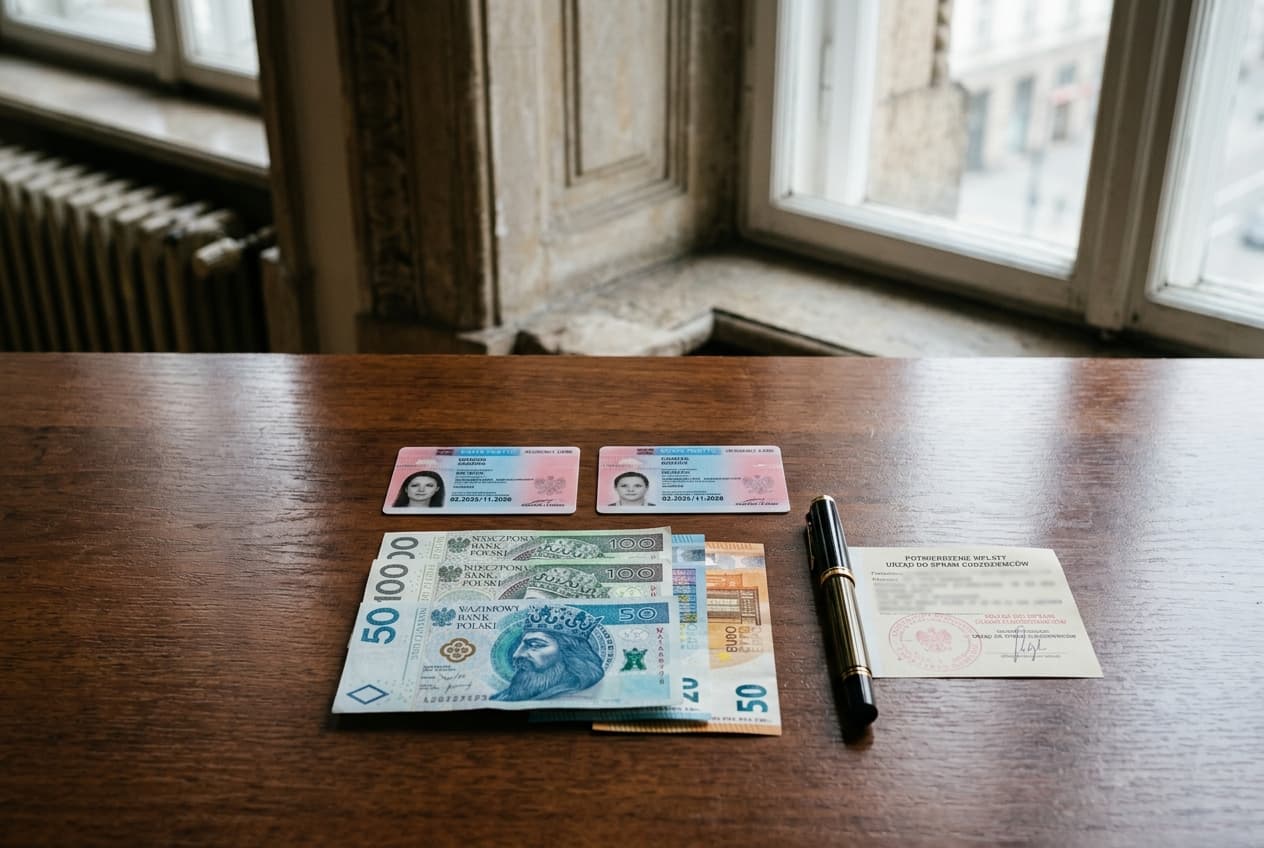
How the dual-payment rule works
Poland requires residence permit applicants to submit two separate fee payments through the MOS online system, with proof of each attached to the application. The Office for Foreigners confirmed the rule in guidance dated April 29, 2026, two days after MOS became the only filing channel for temporary residence, permanent residence and long-term EU resident permits.
The two charges go to different bank accounts. The residence card issuance fee is 100 PLN and the stamp duty for the permit ranges from 340 PLN to 640 PLN depending on permit type. Applicants can't pay either fee inside MOS itself.
Accepted proof includes an electronic transfer confirmation in PDF, a scan or a clear photo. The Office for Foreigners recommends the electronic confirmation because it removes the need to bring paper documents to the voivodeship office later.
Who has to follow the rule
The requirement covers foreigners filing from inside Poland for a temporary residence permit, a permanent residence permit or a long-term EU resident permit. That sweeps in remote workers, employees on sponsored permits, students, family members and many long-staying expats.
Tourists are unaffected unless they later apply for residence status. Some categories qualify for an exemption from the residence card fee, including first cards tied to certain protection statuses, specific repatriate-family cases and a handful of UK-related cases listed by the government.
The 100 PLN card fee itself isn't new. The Ministry of Interior and Administration set that rate on July 29, 2022, separating it from the permit stamp duty. What changed in April is the mandatory electronic filing and the requirement to upload both payment confirmations together.
What applicants need to do
Before filing in MOS, applicants should:
- Pay the permit stamp duty (340 to 640 PLN) to the correct municipal account for the relevant voivodeship.
- Pay the 100 PLN residence card fee to the separate designated account.
- Save both transfer confirmations as PDFs or take clear photos if PDFs aren't available.
Both confirmations must be attached when submitting the application. Filing without one or the other leaves the application incomplete. Applicants paying from foreign bank accounts should account for transfer times so the confirmations exist before submission.
Read our full Poland guide for the complete picture.
Frequently asked questions
What fees do Polish residence permit applicants need to pay?
Can I pay the Polish residence permit fees inside MOS?
What proof of payment is accepted for Polish residence permit applications?
Who has to follow Poland's dual-payment rule for residence permits?
What happens if I submit a Polish residence permit application without both payment confirmations?
Are any applicants exempt from the Polish residence card fee?
Stay updated on Poland
Visa changes, travel alerts, and destination news — delivered when they actually matter.