Germany EES rollout triggers 2 hour airport queues for non-EU travelers

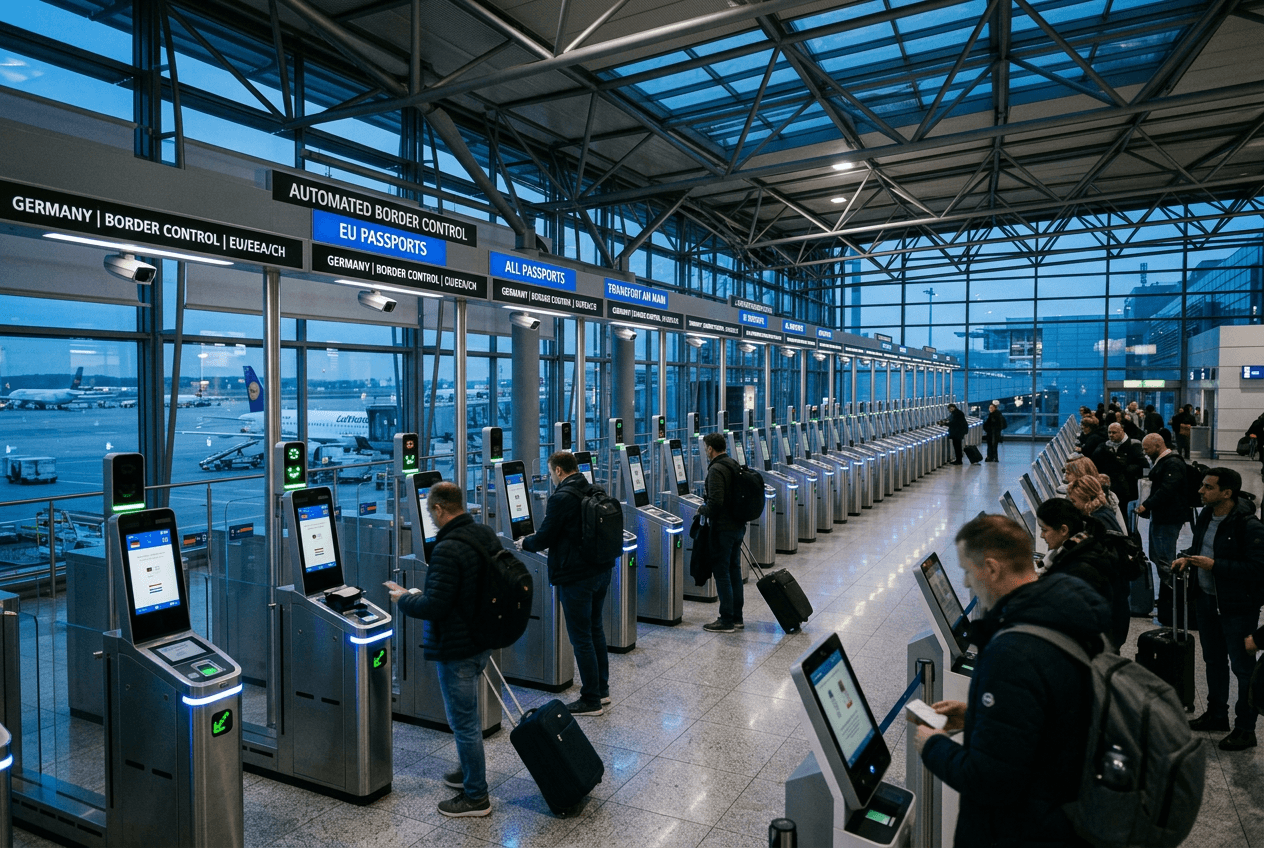
EES is slowing airport arrivals
Germany’s airports are still working through the EU’s Entry/Exit System (EES), which now records non-EU travelers with facial images, fingerprints and passport data instead of passport stamps. The system went fully mandatory on April 10, 2026 and airports including Berlin, Cologne, Hahn, Frankfurt and Munich have reported 1- to 2-hour queues, with some waits longer when kiosks glitch or traffic spikes.
The change applies to short-stay non-EU nationals, including tourists, business travelers and frequent Schengen visitors who are tracking the 90/180-day rule. EU citizens aren’t affected.
Who is getting stuck in line
First-time enrollment takes the longest because travelers must register their biometrics before they can move through quicker checks on later trips. Children under 12 are often exempt from fingerprints, but adults must provide all 10 prints.
German police say the system is meant to track entries, exits and refusals in a central database and more than 45 million crossings have already been recorded across the rollout. Still, airports have warned that staffing gaps and technical outages can stretch waits well past the usual airport buffer. Read our full visa updates for the latest.
What travelers should do now
Non-EU nomads and expats should plan extra time at German hubs, especially on a first Schengen entry or a tight connection through Frankfurt or Munich. Airport guidance points to arriving 3+ hours early for flights and some travel advisers now recommend 4 hours for complex transfers.
There’s no fee for EES, but refusal means denied entry. ETIAS, the separate travel authorization for visa-exempt visitors, is still due later in 2026. Read our full Germany guide for the complete picture.
Frequently asked questions
What is Germany's EES system?
How long are airport queues in Germany because of EES?
How early should I arrive for a connection at Frankfurt or Munich?
Who has to use EES in Germany?
Do children need fingerprints for EES in Germany?
Is there a fee for EES in Germany?
When did EES become mandatory in Germany?
Stay updated on Germany
Visa changes, travel alerts, and destination news — delivered when they actually matter.