Croatia has collected EES biometric data from non-EU travelers since April 10

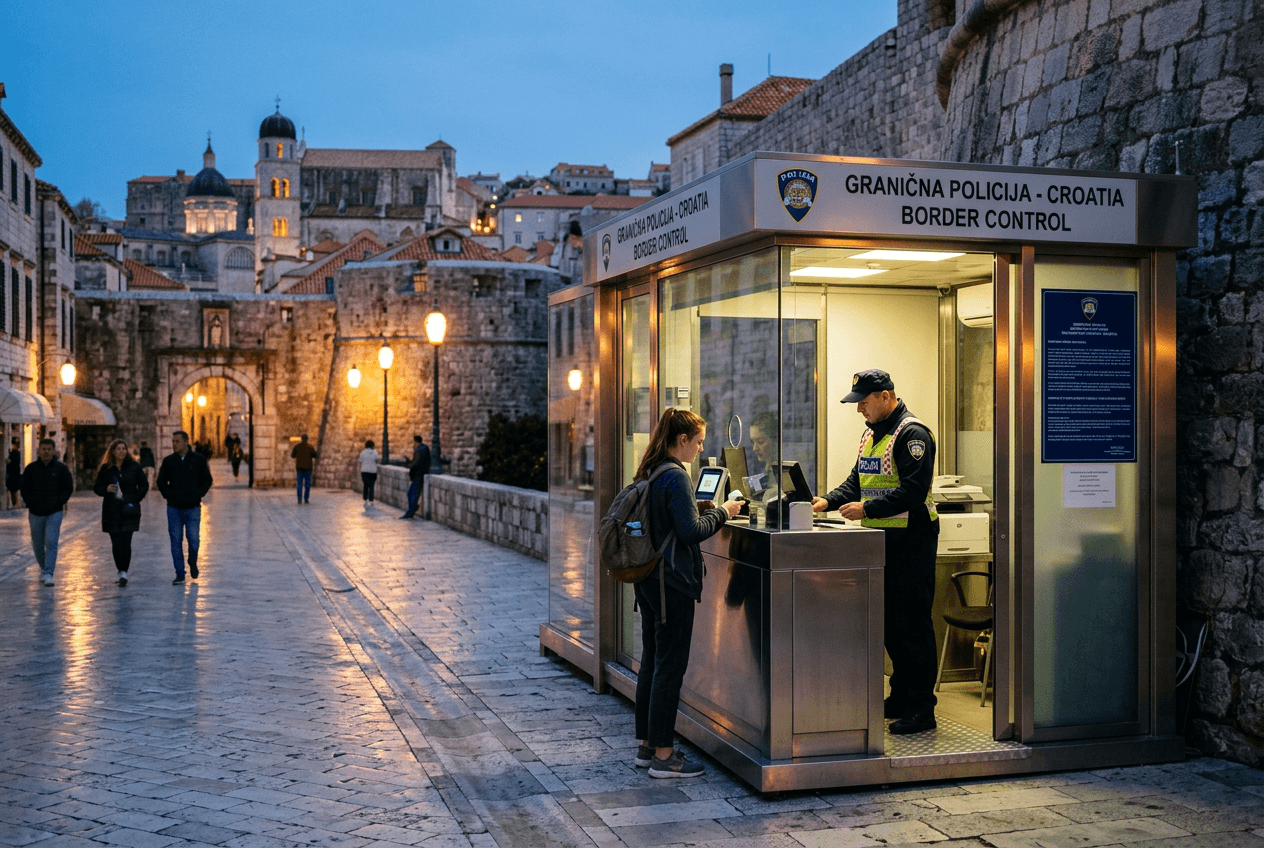
How the Entry/Exit System works at Croatian borders
Croatia's border crossings record biometric data from non-EU travelers under the European Union's Entry/Exit System (EES), which reached full operation April 10 after a progressive rollout that began Oct. 12, 2025.
The system replaces passport stamps with a digital record at every external Schengen border. On first entry, officers capture a traveler's facial image, fingerprints, travel document data and the date and place of entry. Subsequent crossings update the digital file and refusals of entry are logged.
The EES covers 29 European countries, including Croatia and is built in part to flag overstayers and forged documents.
Who gets registered
The system applies to non-EU nationals on short stays, meaning tourists, business travelers, family visitors and short-stay guests entering through Croatian airports, seaports or land crossings.
EU, EEA and Swiss citizens fall outside the EES target group. Digital nomads and expats face a split treatment: short stays trigger biometric registration, while longer residence or work stays still run through Croatia's national residence and work permit channels rather than the EES.
A separate pre-travel authorization, ETIAS, is scheduled to start in the last quarter of 2026 for visa-exempt visitors. The European Commission says no traveler action is required yet and the official fee amount isn't published on the EU pages cited by Croatia's interior ministry.
What travelers should expect at the border
Travelers crossing into Croatia should plan for:
- Biometric enrollment at the first post-April 10 entry, including fingerprints and a facial scan
- No EES fee, per the European Commission's official description of the system
- Digital entry and exit logs in place of passport stamps for short stays
- Standard residence or work permits for stays beyond the 90-day Schengen limit, separate from EES or ETIAS
Croatia's Ministry of the Interior confirmed the country was technically ready for the October 2025 launch and that all international border crossing points were brought into the system. The European Commission's latest update confirms the shift from progressive rollout to full operation as of April 10.
Watch our visa updates for ETIAS timing later this year.
Read our full Croatia guide for the complete picture.
Frequently asked questions
Who gets registered under Croatia's Entry/Exit System?
What biometric data does Croatia collect at the border?
Does the Entry/Exit System replace passport stamps in Croatia?
Do EU, EEA, and Swiss citizens have to register in EES in Croatia?
Is there an EES fee for travelers entering Croatia?
When will ETIAS start for Croatia?
What do digital nomads need for longer stays in Croatia?
Stay updated on Croatia
Visa changes, travel alerts, and destination news — delivered when they actually matter.