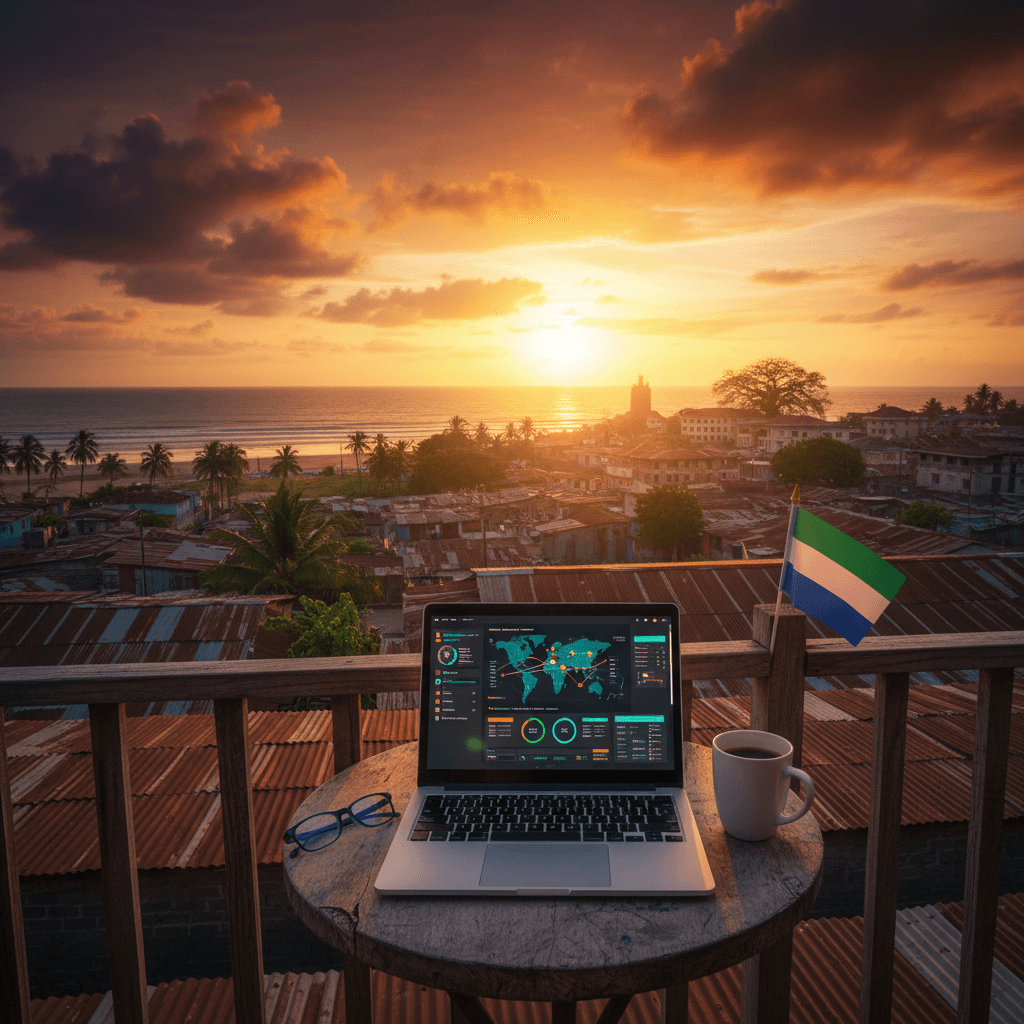
Sierra Leone

Policy Stability
Stamped Nomad ExclusiveHow likely visa and immigration policies are to remain unchanged
Quick Facts
N/A
1 months
Yes
$1,650/mo
7 Mbps
4/10
Low
Low
High
GMT
Entry Methods Available
Best For
The Basics for Digital Nomads
Sierra Leone has significantly modernized its entry process, making it one of the more accessible West African hubs for remote workers. For most travelers, the initial entry grants a 30-day stay. Whether you are coming for a scouting trip or a short-term project, you have three main paths: the eVisa, a Visa on Arrival, or a traditional embassy visa. If you hold a passport from an ECOWAS country like Nigeria or Ghana, you can skip the paperwork entirely and stay for up to 90 days visa-free.
The eVisa is the most streamlined option for digital nomads. The process is entirely digital, involving a simple five-step application where you receive a confirmation code to present upon arrival. This covers tourism, business meetings, and study. While the system is reliable, stick strictly to the official government portal to avoid third-party scams.
Visa on Arrival (VOA)
If you prefer to handle things when you land, the Visa on Arrival is available at Freetown International Airport and major land borders like Gbalamuya and Jendema. This is a single-entry permit valid for 30 days. The pricing is straightforward based on your nationality:
- African Union Nationals: $25
- Most Other Nationalities (US, UK, EU, China): $80
- Exempt Countries: Free for citizens of places like Kenya, Malaysia, and Singapore due to reciprocal agreements.
Keep in mind that while the VOA is convenient, it is strictly for 30 days. If you plan to stay longer, you will need to visit the immigration office in Freetown to handle your paperwork.
Business and Remote Work
There isn't a specific "Digital Nomad Visa" yet, so most remote workers operate under a standard tourist or business visa. The business visa allows you to scout for opportunities and conduct transactions, but it does not permit local employment. If you are applying through an embassy rather than using the VOA, you will typically need an invitation letter. For those who plan to hop in and out of the country frequently, look into the Re-Entry Visa, which can be issued for up to one year with multiple entries.
Extending Your Stay
Freetown has a way of growing on people, and 30 days rarely feels like enough time to explore the beaches and the city's tech scene. To extend your stay, you must visit the Sierra Leone Immigration Department (SLID) in Freetown. Extensions are granted at the discretion of the Chief Immigration Officer.
Common reasons for approval include continued tourism or exploring potential business investments. It is a manual process, so set aside a morning for the paperwork. Ensure your passport is valid for at least six months beyond your intended stay and keep digital copies of your entry confirmation at all times.
Entry Requirements Checklist
- Passport Validity: Minimum of 6 months.
- Proof of Vaccination: A Yellow Fever certificate is mandatory for entry.
- Documentation: For eVisas, print your application ID and payment confirmation.
- Onward Travel: While not always checked, having a return flight or proof of funds is recommended.
The policy environment for 2025 and 2026 remains stable. The government continues to prioritize the eVisa system to encourage tourism, so you shouldn't expect any sudden shifts in these requirements. Just remember that while the initial entry is easy, staying long-term requires a bit of proactive planning with the Freetown immigration office.
Source 1 | Source 2
The Current Situation
If you are looking for a dedicated digital nomad visa in Sierra Leone, you will find that one does not exist yet. The government has not rolled out a specific remote work permit like those seen in Mauritius or Namibia. However, this does not mean you cannot base yourself here. Most travelers who work online choose to enter the country on a Tourist or Business Visa.
Sierra Leonean immigration laws do not specifically address remote work for foreign companies. As long as you are not seeking local employment or competing in the domestic labor market, you generally fall under the standard visitor rules. It is a bit of a gray area, but it is the path every nomad currently takes to enjoy the beaches of the Freetown Peninsula.
Visa Logistics and Extensions
The standard entry visa is typically valid for 3 months from the date it is issued, but there is a catch. Your initial allowed stay is usually only 30 days. If you want to stay longer, you will need to pay a visit to the Sierra Leone Immigration Department (SLID) office in Freetown to request an extension.
For those planning a longer stint, look into the Multiple-Entry Visa. These can be valid for 6 to 12 months. Even with a long-term visa, you are often still restricted to 30-day increments per stay, meaning you might need to check in with immigration or do a quick border run. Here are the core details you need to keep in mind:
- Initial Stay: Up to 30 days, extendable monthly.
- Multiple Entry: Available for 6 or 12 months.
- Income Floor: There is no official minimum income requirement.
- Financial Proof: You may be asked for bank statements or proof of accommodation.
- Health Requirement: A Yellow Fever vaccination certificate is mandatory for entry.
Tax and Legal Considerations
Because there is no formal digital nomad program, there are no special tax exemptions for remote workers. Generally, income earned from a foreign employer and paid into a foreign bank account is not taxed locally if it is not remitted into the country. However, Sierra Leone does not have a specific "nomad tax regime," so if you stay for more than 183 days, you could technically be considered a tax resident. It is best to consult with a local tax professional if you plan on staying for half a year or more.
How to Apply
Sierra Leone has modernized its entry process significantly. You can handle almost everything through the official eVisa portal or simply get your visa when you land. The Visa on Arrival is a popular choice for many nationalities, though checking the latest eligibility list for your specific passport is a good idea.
- Step 1: Visit the eVisa portal and submit your email to receive a login code.
- Step 2: Fill out the digital form. You will need your passport details, a confirmed address in Sierra Leone, and your intended length of stay.
- Step 3: Pay the fee online. For most non-African Union citizens, the cost is $80. African Union nationals pay a reduced rate of $25.
- Step 4: Print your payment confirmation and ID. You will present these at the airport in Lungi or at land borders like Jendema or Gbalamuya.
If you find yourself falling in love with the pace of life in Freetown or the surf in River No. 2, head to the immigration office in the city center before your first 30 days are up. The staff are generally helpful, and extending your stay for another month is a standard procedure. Just be sure to bring a few passport photos and your original travel documents.
Source 1 | Source 2
The Basics of Entry
Entering Sierra Leone is more straightforward than it used to be, but you still need to have your ducks in a row before landing at Freetown International. If you hold a passport from an ECOWAS member state, you are in luck. Citizens from regional neighbors like Nigeria, Ghana, Senegal, and Liberia can enter visa-free. For everyone else, you will be looking at either an e-Visa or a Visa on Arrival.
The e-Visa and Visa on Arrival Process
The government has streamlined the process through an official portal. You can handle everything online before you fly. The system requires you to submit your email, receive a unique code, and complete the application form. Once you pay the fee and receive approval, you get an application ID.
When you land at Lungi or cross the land borders at Jendema or Gbalamuya, you present this ID to immigration. They will print and issue your visa right there. This covers you for one month and is strictly a single-entry permit. If you plan to pop over to Guinea for a weekend and come back, this visa won't cover your return trip.
What It Costs
Fees are determined by your nationality, and the government is quite specific about these categories:
- African Union Nationals: $25
- Non-AU Nationals: $80
- Reciprocal Countries: $0 (No fee)
The "no fee" list includes several Commonwealth nations and others with specific agreements. If you carry a passport from Singapore, Malaysia, Kenya, Mauritius, Jamaica, or Barbados, you won't pay the entry fee, though you still need to complete the registration process.
Staying Longer and Extensions
Most digital nomads find that 30 days isn't quite enough to soak up the Freetown vibe or explore the beaches of the Western Area Peninsula. If you want to stay longer, you have to visit the Sierra Leone Immigration Department on Gloucester Street in Freetown.
Extensions are usually granted if you are exploring business opportunities or simply want to continue your tour of the country. These are handled on a case-by-case basis by the Chief Immigration Officer. It is best to head to the office at least one week before your initial month expires to avoid any stress.
The "Border Run" Reality
In some nomad hubs, the "border run" is a standard way to reset a clock. In Sierra Leone, it is a headache you want to avoid. Because the standard visitor visa is single-entry, leaving the country effectively cancels your permit. You would have to apply and pay for a brand-new visa to come back in. It is much easier, and usually cheaper, to just apply for an extension in Freetown.
Overstays and Penalties
The local authorities take immigration status seriously. While the laws date back to the 1960s, they allow for fines and even imprisonment for those who ignore their visa expiry dates. In extreme cases, a court can recommend expulsion. Always keep a digital copy of your visa and your entry stamp on your phone, and make sure you know exactly when your 30-day window closes.
Official Contact Points
If you run into a unique situation or your application gets stuck in the digital ether, you can contact the Sierra Leone Immigration Department directly. Their main office is located at 14 Gloucester Street in the heart of Freetown. They are generally responsive to emails sent to their official address, and they maintain a dedicated portal for all e-Visa queries.
Source
The Reality of Staying Long-Term
Sierra Leone doesn't have a flashy "Digital Nomad Visa" or a specific remote work permit yet. If you want to stay beyond the standard 30-day tourist eVisa, you’ll need to transition to a Residence Permit. These are issued by the Sierra Leone Immigration Department (SLID) and are generally valid for one year at a time.
For most nomads, the "Business" or "Self-Employed" category is the most viable path. Since there is no specific freelancer category, you'll likely need to show you are contributing to the local economy or running a registered entity. If you are working for a foreign company, you might find the process more opaque, as the system is traditionally built around local employment or physical business investment.
The Residence Permit Process
To get your permit, you’ll need to head to the SLID office in Freetown or use their newer online portal. The paperwork is straightforward but requires specific documentation depending on your situation. You cannot simply "show up" and stay; you must actively convert your status before your initial entry visa expires.
The core requirements for a new application (Form A) usually include:
- A formal request letter explaining your stay.
- A valid passport with at least six months of validity remaining.
- Two recent passport-sized photos.
- Proof of your status, such as a business registration, bank statements, or a letter from a local partner.
- Payment of the permit fee, which varies by nationality and must be confirmed directly with SLID.
Investment and the "Go-For-Gold" Program
If you have significant capital and want a more permanent arrangement, Sierra Leone has a unique, albeit less publicized, investment route. The Go-For-Gold (GFG) program is an unconventional path to residency and even citizenship. It is designed for high-net-worth individuals who want to fast-track their legal status through the commodities market.
- Permanent Residency: Can be obtained via gold purchases starting around $65,000 plus the cost of 1kg of gold.
- Citizenship Pathway: There is a fast-track option that can grant citizenship in roughly 90 days for total fees hovering around $140,000, including due diligence costs.
- Traditional Naturalization: For those without six figures to spare, the standard wait for naturalization is 8 years of continuous residency.
Practical Considerations for Nomads
The lack of a "Retirement Visa" or "Golden Visa" in the traditional sense means you have to be proactive. Most long-termers in Freetown operate on yearly renewals of their business or employment permits. It is a manual process that involves a bit of back-and-forth with the immigration office, so it helps to have your documents organized well in advance.
Since official fees aren't always listed clearly on the public portal, always verify the current costs at the SLID headquarters or via their official email. Prices can change without much notice, and being physically present in Freetown often speeds up the approval process significantly compared to remote inquiries.
Key Permit Categories
- Business/Self-Employed: Requires proof of business setup or local investment. No minimum investment threshold is officially dictated, but bank statements showing self-sufficiency are a must.
- Employment: Requires an appointment letter from a registered Sierra Leonean company and a request on their official letterhead.
- Dependents: Available for spouses or children of permit holders, requiring proof of relationship like marriage or birth certificates.
Are you looking into a specific business investment amount or wondering about the logistics of the self-employed route? The "Business" permit is usually the most flexible "catch-all" for those of us working online, provided you can show a clear tie to your activities in the country.
The Financial Reality of Living in Sierra Leone
Sierra Leone remains one of the most affordable frontiers for digital nomads in 2025 and 2026. While it doesn't have the established nomad infrastructure of Bali or Lisbon, your dollar stretches incredibly far here. Most nomads find they can live a high-quality life for a fraction of Western costs, provided they are comfortable with a bit of West African grit and the occasional power outage.
Freetown is the natural home base for most. It is where the reliable Wi-Fi, the beach bars, and the coworking spaces live. If you venture into Bo or Makeni, your costs will drop by 20% to 40%, but you will be trading convenience for those savings. Expect to pay a "convenience tax" in the capital for things like air conditioning and imported coffee.
Monthly Budget Tiers in Freetown
The capital offers the widest range of lifestyle options, from gritty local living to high-end expat luxury in the hills or by the beach.
- Budget Nomad ($600–$800/month): This lifestyle involves renting a modest room, eating primarily at local "cookshops," and using shared taxis or poda-podas for transport. You'll likely rely on mobile data hotspots rather than dedicated fiber.
- Comfortable Nomad ($1,500–$1,800/month): This is the sweet spot. You can afford a modern 1BR apartment in areas like Aberdeen or Lumley, eat out at nice restaurants a few times a week, and pay for a dedicated coworking desk.
- Premium Nomad ($2,500+/month): This tier covers luxury serviced apartments with 24/7 generator backup, private car hires, and frequenting upscale spots like the Radisson or high-end beach resorts.
Cost Breakdown: Freetown
- 1BR Rent: $500–$800 for a modern spot in a nomad-friendly area. Budget options can go as low as $200.
- Food and Groceries: $400 covers a mix of local markets and expat grocery stores. A local meal is about $3, while a dinner at a nice restaurant is $15–$25.
- Transport: $150 for a mix of private taxis and local transport.
- Connectivity and Office: $100 for a coworking membership or high-speed mobile data bundles.
- Health Insurance: $60–$100 for a standard global nomad policy.
Cost Breakdown: Bo
Bo is the second-largest city and offers a much slower pace. It is significantly cheaper than Freetown but lacks the coastal breeze and the variety of international cuisine.
- 1BR Rent: $150–$400. Even high-end housing here is quite affordable.
- Food and Groceries: $180–$300. You will be eating local produce more often here as imported goods are harder to find.
- Transport: $90–$120. The city is smaller and easier to navigate via motorbike taxis.
- Connectivity: $40–$80. You will likely be working from cafes or using a personal Starlink or 4G setup.
Cost Breakdown: Makeni
Makeni is the choice for the true budget traveler or those looking for an authentic inland experience. It is the most affordable major hub in the country.
- 1BR Rent: $100–$300. Quality modern housing is limited but very cheap when you find it.
- Food: $150–$250. Stick to the local markets for the best prices on fresh fruit and fish.
- Transport: $70–$100. Local transport is the primary way to get around.
- Notes: Expect to spend more on your own power solutions, like power banks or solar chargers, as the grid can be inconsistent.
Hidden Costs to Watch For
While the base costs are low, "Western" comforts come at a premium. If you require 24/7 air conditioning, your electricity bill will spike significantly. Most apartments bundle utilities into the rent, but always double-check if the "light bill" (electricity) and water are included. High-speed internet is getting better, but a reliable backup mobile router is a mandatory expense, usually costing around $40–$75 a month for a decent data plan.
The Reality of Remote Work in Sierra Leone
Sierra Leone is a destination for the pioneer nomad. It is raw, beautiful, and full of potential, but it is not a place where you can simply show up and expect seamless connectivity. If you are planning a stint here, your options are concentrated. While the country is developing quickly, infrastructure remains heavily centralized in the capital.
Freetown is the only city currently equipped to support a digital nomad lifestyle. While you might be tempted by the local charm of secondary cities like Bo or Makeni, they lack the reliable power and high-speed internet required for most remote roles. For now, treat Freetown as your base and the rest of the country as your weekend playground.
Freetown: The Only True Nomad Hub
Freetown is a chaotic, vibrant, and surprisingly scenic coastal city. It is tucked between lush mountains and the Atlantic Ocean, offering a lifestyle that balances grit with beachside relaxation. It serves as the country’s economic and technological heartbeat, making it the only viable choice for anyone needing to attend Zoom calls or upload large files.
Connectivity and Workspace
Internet reliability is the biggest hurdle. While average speeds often hover between 2 and 12 Mbps, there are ways to optimize. Starlink has changed the game here, offering speeds up to 78.9 Mbps, while Fiber-One is a solid backup for better upload stability. To ensure you stay online during frequent power cuts, most nomads rely on coworking spaces with dedicated generators.
- We Space: Located in Murray Town, this is a top-tier choice for professional networking.
- Innovation Axis: A reliable spot in the Kingtom business district.
- Sensi Tech Hub: Situated in Aberdeen, this hub is a favorite for the local tech scene.
- Empower Africa Business Center: A more corporate environment for those needing high-end facilities.
Cost of Living
Living here is affordable by Western standards but can be pricey compared to its West African neighbors. Expect your monthly budget to sit between $1,600 and $1,949 depending on your lifestyle choices.
- One-bedroom apartment: Between $250 and $786 per month.
- Coworking membership: Approximately $100 per month.
- Daily expenses: A local meal is about $5, while a coffee is $2.50 and a beer is $1.50.
- Utilities and Web: Budget roughly $50 to $150 total for internet and electricity.
Best Neighborhoods
Where you stay determines your quality of life. Aberdeen is the most popular choice for its quiet atmosphere and upscale dining. Lumley is perfect if you want to be steps away from the beach bars, while Hill Station offers cooler temperatures and an affluent residential vibe. For those who want to be in the thick of the action, Wilkinson Road is the primary commercial artery.
Secondary Cities: Proceed with Caution
If you decide to venture outside the capital, understand that you are moving into "off-grid" territory. These cities are fantastic for cultural immersion, but they are not yet ready for the full-time remote worker.
Makeni
Located in the north, Makeni is the fastest-developing town outside Freetown. It is significantly cheaper and offers a friendly, smaller-town feel. Sensi Tech Hub has a presence here via a shipping container tech hub, but internet remains a major struggle. It is a decent spot for a few days of light work, but don't bet your job on the local Wi-Fi.
Bo
As the second-largest city, Bo has plenty of local character but almost zero nomad infrastructure. You won't find coworking spaces here, and the expat community is nearly non-existent. It is a great place to experience authentic Sierra Leonean life, provided you don't have any looming deadlines.
Safety and Social Life
Freetown is generally safe, though petty crime is a factor. Keep your phone tucked away in crowded spots like Congo Cross or the National Stadium. At night, stick to groups if you are walking around Lumley Beach. The social scene is surprisingly robust; the expat community is tight-knit and welcoming. You will likely meet most people at local sports clubs or beachside spots like Papaya Bar or Scarlett Lounge. For a morning caffeine fix or a quiet place to read, Crown Bakery and Oasis Juice Bar are the local staples.
The Connectivity Reality
Working from Sierra Leone requires a bit of tactical planning, but it is far more doable now than it was even two years ago. Freetown is the heart of the country's digital infrastructure, boasting a decent fiber optic network that covers about 80% of the metropolitan area. While the rest of the country still relies heavily on mobile data, the capital has become a viable hub for remote professionals who need steady bandwidth.
General broadband speeds usually hover between 8 Mbps and 40 Mbps. However, the game-changer has been the arrival of Starlink, which has pushed download speeds up to nearly 79 Mbps for those with the right hardware. If you are sticking to local fiber providers like Fiber-One or Africell FTTH, you can expect a reliable 26 Mbps on a good day. It is enough for seamless video calls and heavy document uploads, provided you stay within the city limits.
Coworking in Freetown
If you need a professional environment to escape the humidity and occasional power fluctuations, We Space in Murray Town is the undisputed champion for nomads. Located at 19 High Broad Street, it offers the kind of setup you would expect in a European or American hub: high-speed WiFi, private meeting rooms, and a steady supply of caffeine at their on-site coffee bar.
The vibe at We Space is collaborative and energetic, making it the best spot to network with local entrepreneurs and other expats. They offer everything from daily hot desks to dedicated private offices. While they do not list their exact monthly rates online, expect to reach out directly for a quote. Based on regional trends in West Africa, you should budget anywhere from $200 to $500 for a full monthly membership, though day passes are available for shorter stints.
Mobile Data and eSIMs
For those who prefer to work from a balcony or need a backup for when the power dips, mobile data is surprisingly affordable. Africell and Orange are the primary players here. You can grab a local SIM card and load it with prepaid bundles that are easy on the wallet.
- 1GB Monthly: NLe 20 (approx. $1 USD)
- 6GB Monthly: NLe 120 (approx. $6 USD)
- 15GB Monthly: NLe 300 (approx. $15 USD)
If you want to skip the hassle of finding a local SIM shop upon arrival, eSIM providers like Nomad or Saily offer data packages starting at around $7 USD. These are great for getting through your first few days, but switching to a local physical SIM or a MiFi router is the smarter move for long-term stays. Coverage is solid 4G/LTE throughout Freetown, but speeds drop significantly to 3G or lower once you head into the provinces.
Cafe Culture and Reliability
Freetown has a growing number of cafes and hotel lounges where you can flip open a laptop. Spots around the National Stadium and the Radisson Blu are popular for their atmosphere, but do not rely on their WiFi for high-stakes meetings. Cafe internet is often spotty and can struggle with high traffic.
Most seasoned nomads here treat cafe WiFi as a "bonus" rather than a primary connection. Always have your phone hotspot ready to go. Central Freetown has the most consistent signals from providers like Qcell and Africell, but once you move toward the outskirts, the reliability of public hotspots becomes a gamble. Stick to the dedicated coworking spaces or high-end hotels if your paycheck depends on a stable 9-to-5 connection.
Sierra Leone is a place where you really need to have your ducks in a row before you land, especially when it comes to your physical well-being. The local healthcare system is still finding its feet, and while the government is working to improve public services, the reality for a digital nomad is that you will almost exclusively be relying on private facilities in Freetown. Public clinics are often stretched thin, dealing with resource shortages and long wait times that just aren't practical for someone working remotely.
Public vs. Private Care
The public sector, managed by the Ministry of Health, focuses heavily on the Social Health Insurance Scheme for locals, pregnant women, and children. While it is low-cost, the quality is inconsistent and drops off significantly once you leave the capital. For anyone living the nomad life, private healthcare is the only way to go. These facilities offer English-speaking staff, modern diagnostic equipment, and much shorter wait times.
Top Medical Facilities in Freetown
If you find yourself needing a doctor, head to one of these established international-standard hospitals. They are the most reliable options for expats and can coordinate medical evacuations if something serious happens.
- Choithram Memorial Hospital: Known for having some of the most modern facilities in the country, specializing in cardiology and orthopedics. They also have a 24/7 on-call pharmacy.
- Aspen Medical Sierra Leone: Located at 11 King Harman Road in Freetown. You can reach them at +232-995-00-800.
- Salone Medical Center: A great choice for lab work and e-medicine links to specialists in Europe and Asia.
- Freetown International Hospital: A reliable private option with higher standards of care than the local public wards.
Insurance is Non-Negotiable
Don't even think about winging it here without a solid international health insurance policy. While a basic consultation might only set you back $7 to $14, major issues get expensive fast. Major surgery can average around $118 out-of-pocket in public facilities, but in private hospitals, these costs skyrocket. Without insurance, a serious accident can lead to genuine financial hardship.
Look for plans from providers like Pacific Prime, Insurancy, or Expatriate Healthcare. Your policy needs to cover inpatient and outpatient care, but most importantly, it must include medical evacuation and repatriation. If you have a complex medical emergency, you will likely be flown to a nearby country with more advanced trauma centers.
Pharmacy Access
Freetown has a surprisingly good network of pharmacies. You can find most standard prescriptions and over-the-counter meds at places like Life Care Hospital Pharmacy or the QuickTrip Pharmacy at 50 Circular Road (Phone: +232-74-381729). Larger chains like A.B. Brothers and AGK are accredited by the National Pharmacy Board, so you can trust the quality of the medication. Many of these shops even offer delivery services if you are stuck at your laptop and can't head out.
Emergency Situations
In a pinch, the number to dial is 117 for the National Emergency Medical Services (NEMS). They operate a fleet of over 80 ambulances nationwide with trained paramedics. They handle about 30,000 missions a year, so they are experienced, though traffic in Freetown can make response times unpredictable. In some specific areas, 999 also works for emergencies. If you have the choice and the situation allows, getting a private car to a top-tier hospital is often faster than waiting for an ambulance.
Estimated Healthcare Costs
- General Consultation: $7 to $14
- Major Surgery (Out-of-Pocket): $118+
- Specialist Visit: Varies by facility, usually higher in private clinics
- Ambulance Service: Often covered by insurance or subsidized via NEMS
Money Matters: The Leone
The official currency you will be using daily is the Sierra Leonean Leone (SLL). While you might see prices quoted in USD for high-end hotels or long-term apartment rentals, the law requires domestic transactions and accounting to be handled in Leones. Expect to carry a fair amount of cash, as the economy still leans heavily on physical bills for everything from market hauls to taxi rides.
Banking for Nomads
Opening a local bank account is possible for foreigners, though it is not exactly a "walk-in-and-out" affair. If you are staying for several months, having a local account can make paying bills much easier. You will typically need to provide:
- A valid passport and a residency permit if you have one.
- Two recent passport-sized photos.
- Proof of address, such as a utility bill.
- A reference letter from your current bank or an employer.
- A minimum initial deposit between SLL 500,000 and 2,000,000.
Residents usually see their accounts active within 3 to 5 business days. If you are a non-resident, expect the verification process to take significantly longer as the bank performs extra due diligence on your documents.
ATMs and Hidden Costs
ATM availability is mostly concentrated in urban centers like Freetown. While most machines accept Visa and Mastercard, the fees can be aggressive. Local banks charge their own convenience fees on top of whatever your home bank levies. Some travelers report losing up to 30% of their value through poor exchange rates at the point of sale or withdrawal.
To keep more of your money, always choose to be charged in the local currency (SLL) rather than letting the machine do the conversion for you. It is also smarter to withdraw the maximum amount allowed in a single session to minimize the impact of fixed per-transaction fees.
Digital Wallets and Neobanks
If you already have a Wise or Revolut account from your home country, keep those cards active. You cannot sign up for these services as a new resident of Sierra Leone, but your existing cards will work for spending and withdrawals until they expire. Wise is particularly helpful for sending money to local bank accounts with low fees and mid-market exchange rates.
For daily life, look into mobile money. Orange Money and Afrimoney are the heavy hitters here. These services allow you to store funds on your SIM card and pay for items or send money to others instantly. It is often faster and more reliable than trying to find a working swipe machine at a local shop.
Transferring Funds
When you need to move larger sums of money into the country, you have several reliable digital options. These platforms often beat traditional bank wires on both speed and cost:
- WorldRemit and Remitly: Excellent for quick cash pickups or deposits directly into mobile wallets.
- Xoom: A reliable choice for sending money from a PayPal balance or linked bank account.
- Ria: Good for retail pickup if you need physical cash in a hurry.
- Wise: Best for direct bank-to-bank transfers if you want the most transparent exchange rates.
Crypto and Digital Assets
The cryptocurrency scene in Sierra Leone is currently legal but operates without a formal regulatory framework. The Bank of Sierra Leone has not issued specific bans, meaning you can trade, mine, or use exchanges freely. Global platforms like UEEx and Bybit remain accessible. Just remember that while the activity is legal, any profits you make are still subject to general local tax and anti-money laundering laws.
Visa Logistics for Your Dependents
Moving your family to Sierra Leone requires some upfront paperwork, but the process is straightforward if you have your documents in order. For children under 18, you will need to provide their original birth certificate and a notarized application signed by both parents. If only one parent is traveling with the child, a notarized letter of consent from the other parent is mandatory, along with copies of both parents' government IDs.
The government recently updated its citizenship and residency rules to be more inclusive of extended families. Under the Special Dependants category, investors can now include siblings under 30, adult children, and even "last remaining relatives" who rely on the main applicant. These additions come with a price tag, starting at $20,000 per dependent, but it offers a path for those moving with more than just a nuclear family.
Schooling and Education Costs
Freetown is the primary hub for international education, offering a few distinct tiers depending on your budget. The American International School of Freetown is the premier choice for many expats, covering Pre-K through Grade 8, though it is the most expensive option with annual fees ranging from $6,950 to $13,950. Some families report total costs reaching up to $22,000 when all fees are tallied.
For more affordable alternatives, consider these options:
- Hill Valley Academy: A solid mid-range choice for primary and secondary levels, costing between NLe 26,000 and 31,000 per year.
- Freetown Montessori: Great for younger children (Nursery and Primary), charging approximately £500 to £600 per term.
- Providence International School: The most budget-friendly international option, with nursery fees around NLe 3,000 ($170) and primary fees reaching NLe 6,000 annually.
Childcare and Nannies
Help at home is very common and affordable for nomads. A full-time nanny typically earns between $88 and $150 per month. This provides personalized attention and flexibility that you won't find in a traditional daycare. If you prefer a structured environment, Western-style nurseries like Kidzone or YAS Learning Center are available, though they usually require parents to provide packed lunches and may have different safety protocols than what you're used to back home.
Healthcare Reality Check
Sierra Leone has made strides in pediatric care through the Free Health Care Initiative, which covers children under five. This has significantly increased the number of children receiving basic medical attention. That said, the infrastructure is still quite limited. For anything beyond routine check-ups or minor illnesses, the local facilities may not be sufficient. Many expat families maintain high-end international health insurance that includes medical evacuation, as serious conditions often require treatment in a neighboring country or back in Europe.
Choosing the Right City for Your Family
Where you settle will define your experience. While Freetown has the most amenities, other cities offer a different pace of life.
- Freetown: The heartbeat of the country. You get the best schools, the most diverse food scene, and plenty of beaches. The trade-off is higher crime rates and a more chaotic atmosphere.
- Bo: This is the second-largest city and is much quieter than the capital. It is cleaner, more affordable, and offers a tranquil environment that many parents find more suitable for raising kids.
- Kenema: Located in the east, residents praise this city for its peacefulness and hospitality. It has minimal traffic and a very affordable cost of living, making it a "sweet" spot for families who don't need the constant buzz of Freetown.
Safety and Security Precautions
Security is the most significant hurdle for families. Freetown is currently flagged for high crime rates, including robberies and home invasions. Criminals sometimes use sophisticated methods to enter homes, so choosing a residence with robust security is non-negotiable. Most expats live in gated compounds or hire private security firms to guard their homes 24/7.
Simple lifestyle adjustments go a long way. Avoid being out after dark, stay away from isolated areas, and always keep your doors and windows locked. While the local police can be slow to respond, having a trusted private security contact and a tight-knit expat community network will help you stay informed and safe.
Street Smarts and Security
Living in Freetown as a nomad requires a specific kind of situational awareness. While violent crime against visitors isn't as common here as in some other West African hubs, petty theft is a daily reality. Lumley Beach, the Aberdeen district, and the ferry terminal at Lungi Airport are the primary hotspots for pickpockets. Most incidents are opportunistic, so keep your phone out of sight and your bag in front of you.
Home security is a major consideration if you are staying long term. Expats are often targeted for home invasions because of perceived wealth. Most nomads opt for apartments with 24-hour security or gated compounds. If you are driving, keep your windows up and doors locked, especially in slow moving traffic where "snatch and grab" thefts are common. If you run into trouble, don't expect a rapid response from the police; the force is often hamstrung by a lack of resources and slow bureaucracy.
Avoiding the Hustle
Scams in Sierra Leone often take two forms: the digital long con and the "friendly" local encounter. Be wary of business proposals or emails promising large payouts in exchange for upfront fees. These are almost always fraudulent. On the ground, you will likely meet "guides" who offer unasked for help and then demand payment. A polite but firm "No, thank you" usually does the job.
- The Romance Scam: Be cautious of quick emotional bonds. It is common for scammers to build a relationship over several weeks before requesting "emergency" funds for medical bills or family crises.
- The Taxi Upsell: Always agree on a price before getting into a vehicle. Unofficial taxis will often try to overcharge foreigners.
- Fake Art: If you are buying "antiques" or high end local art, assume it is a modern reproduction unless you are at a reputable gallery.
The Social Fabric
Sierra Leoneans are incredibly welcoming, and social etiquette is built on personal recognition. Never start a conversation or a transaction without a proper greeting. Use the Krio word "kusheh" (hello) and always ask how the other person is doing. It is considered rude to rush straight into business.
Respect for elders is paramount here. When you meet someone older, a slight nod or a respectful tone goes a long way. Use your right hand for everything from shaking hands to eating and giving or receiving items. The left hand is traditionally reserved for personal hygiene and is considered unclean. If you are invited to a local home, it is a big gesture of hospitality. Try to accept whatever food or drink is offered, and bringing a small gift like fruit or tea will make a great impression.
LGBTQ+ Realities
The legal and social environment for LGBTQ+ individuals is very challenging. Same-sex acts between men are technically illegal and carry a maximum sentence of life imprisonment. While these laws are rarely enforced against foreigners, the social atmosphere is conservative. Discrimination and harassment are common, and there have been reports of mob violence against the local community. For your own safety, it is best to remain extremely discreet about your orientation in public and on social media while in the country.
Language and Communication
While English is the official language used in schools and government offices, you won't hear it much on the street. Krio is the true language of the country, understood by roughly 95% of the population. It is an English based Creole, so you will recognize many words, but the grammar and speed make it a distinct language.
- Official English: Used by the urban elite and in formal business settings.
- Krio: The lingua franca. Learning a few phrases will instantly change how locals treat you.
- Regional Languages: Mende is dominant in the south, while Temne is common in the north.
Finding Your Tribe
The expat community in Freetown is small but very tight-knit. Most social life revolves around a few key hubs in the capital. You can find your footing through InterNations events or the "Freetown Expats" Facebook group, which is the gold standard for finding housing leads and reliable drivers. There are a few growing coliving spaces and cafes with decent Wi-Fi where you will find other nomads working away.
To integrate well, don't just stay in the expat bubble. Join a local gym, attend community events, or volunteer. Be patient with "Salone time," which means things rarely start when they are scheduled. If you can embrace the slower pace and build genuine relationships with your neighbors, you will find Sierra Leone to be one of the most rewarding stops on your nomad journey.
Understanding Tax Residency
Living the nomad life in Sierra Leone means keeping a close eye on your calendar. The government determines your tax status based on two main factors: your physical presence and your "place of abode." You are considered a tax resident for the entire year if you have a permanent home in the country and spend any amount of time there during the year. If you don't have a permanent home, the 182-day rule kicks in.
If you spend more than 182 days in Sierra Leone within any rolling 12-month period, you officially become a tax resident. When counting your days, even a partial day spent in the country counts as a full day. There are a few exceptions for transit, medical visits, or study, but generally, if you are there, the clock is ticking. Residents are taxed on their worldwide income, meaning the money you make from clients in New York or London is technically fair game for the local tax authorities.
The Temporary Resident Loophole
There is a specific category for nomads who don't intend to stay forever. If you aren't a citizen and don't plan to settle permanently, you might be classified as a temporary resident. This status applies if you intend to stay for less than four years and your total stay actually stays under that limit.
The perk here is significant. Temporary residents are only taxed on income earned within Sierra Leone and any foreign income that is actually remitted, or brought into, the country. If you keep your foreign earnings in an offshore account and only transfer what you need to live on, you could significantly lower your local tax liability.
Income Tax Rates and Payments
Sierra Leone uses a progressive tax system for residents. While the top marginal rates have historically reached 35%, recent effective rates for most earners sit between 15% and 30%. If you are a non-resident, the rules change. Instead of progressive brackets, you'll likely face flat withholding taxes on any income sourced directly from within the country, such as local consulting gigs or dividends.
Tax season isn't something you can ignore. You are required to file an annual tax return within four months of the end of the tax year. You will also need to get a taxpayer identification number and, in some cases, a tax clearance certificate if you plan on doing business or dealing with certain government agencies.
Double Taxation and Credits
Sierra Leone doesn't have a massive network of tax treaties. They have long-standing agreements with the United Kingdom, South Africa, and Norway, along with some older arrangements involving places like Gambia, Ghana, and Nigeria. These treaties are designed to make sure you don't pay tax on the same dollar twice.
If your home country doesn't have a treaty with Sierra Leone, don't panic. The local Income Tax Act allows for unilateral credits. This means you can often offset the taxes you've paid to a foreign government against your Sierra Leonean tax bill, preventing a double-dip into your savings.
Digital Assets and Crypto
The local tax code hasn't quite caught up to the world of Web3. There are no specific laws dedicated to cryptocurrency, so the National Revenue Authority treats it under general tax principles. Here is how that usually breaks down:
- Capital Gains: Selling crypto for a profit is generally treated as property income and can be taxed for residents.
- Mining and Staking: These activities are typically categorized as business income.
- GST: There is a 15% Goods and Services Tax that may apply to digital services, though enforcement on individual crypto transactions remains rare.
No Special Nomad Perks
Some countries are rolling out the red carpet for remote workers with "Digital Nomad Visas" and zero-tax incentives. Sierra Leone is not one of them. There is no special tax regime or reduced rate for nomads. You are governed by the same rules as any other expat or local worker. If you stay long enough to trigger residency, you are in the system just like everyone else.
Connectivity and SIM Cards
Staying online in Freetown is easier than it used to be, but you need a strategy. As soon as you land, head to an Orange, Africell, or QCell store. You will need your physical passport for mandatory registration. A physical prepaid SIM usually costs around Le 20,000 (roughly $1 USD), and you can top up data via scratch cards or provider apps. Orange generally offers the most reliable coverage across the country, while Africell is often the budget-friendly choice for heavy data users.
If your phone supports it, Nomad or Orange Travel provide eSIM options starting at $7 USD. These are great for hitting the ground running, though local physical SIMs are usually cheaper for long-term stays. Expect average speeds of around 2Mbps; it is enough for emails and basic calls, but you will want a backup plan for heavy Zoom meetings.
Getting Around Freetown
The days of haggling on every street corner are fading thanks to ride-hailing apps. Download Salone Ride or Sierra Leone Passenger. These apps work for taxis and "kekehs" (three-wheeled motorized rickshaws), providing upfront pricing and GPS tracking. If you prefer a private driver, you can charter a taxi for approximately $3 to $5 per hour.
Avoid "poda-podas," which are the crowded local minibuses. They are cheap but often lack basic safety features and are prone to theft in crowded conditions. For food and grocery deliveries, Send Me is the local go-to app, though Salone Ride also handles smaller courier tasks.
Where to Set Up Your Base
Location is everything in Freetown. Most nomads gravitate toward the West End to ensure better infrastructure and safety. Central Freetown is great for a day trip, but the noise and traffic make it a difficult place to work.
- Lumley and Aberdeen: These are the heartbeat of the expat scene. You are close to the beach, the best restaurants, and several coworking spots.
- Hill Station: Located higher up with cooler temperatures and great views. It is quieter and home to many NGOs and embassies.
- Wilkinson Road: The main business artery. It is loud, but you are never more than a two-minute walk from a supermarket or a bank.
Finding a Place to Stay
Short-term rentals are best managed through Airbnb or Booking.com. Expect to pay between $200 and $800 per month for a decent one-bedroom studio. For stays longer than a month, join the Freetown Expats Facebook group to find sublets or local landlords. Always confirm two things before booking: a dedicated generator and a water storage tank. Power cuts are frequent, and you do not want to be caught mid-deadline without a backup power source.
Health and Language
English is the official language for business, but Krio is what people actually speak. It is an English-based creole that is relatively easy to pick up. Learning basic greetings will change your experience entirely; people appreciate the effort. Use apps like Learn Krio or Live Lingua to get the basics down before you arrive.
On the health front, bottled water is a non-negotiable. Do not use tap water for drinking or brushing your teeth. Make sure your Yellow Fever certificate is in your carry-on, as you will need it at immigration. Malaria is prevalent, so bring a supply of prophylaxis and high-quality repellent. For emergencies, dial 999 or 112, but keep the number for Choithram Hospital saved in your phone as it is the most reliable facility for expats.
Common Pitfalls to Avoid
- The "Expat Tax": If you don't use a ride-hailing app, always agree on the fare before the wheels move.
- Internet Overconfidence: Never assume a cafe has working WiFi. Always have a loaded local SIM and a power bank in your bag.
- Walking at Night: Freetown is generally friendly, but walking through unlit areas or central markets after dark is asking for trouble. Stick to registered taxis.
- The Poda-Poda Trap: While they look like a fun local experience, they are frequently involved in accidents. Stick to kekehs for short trips.
More Guides from Africa
Stay Updated on Sierra Leone
Get notified about visa changes, policy updates, and new information for digital nomads in Sierra Leone.