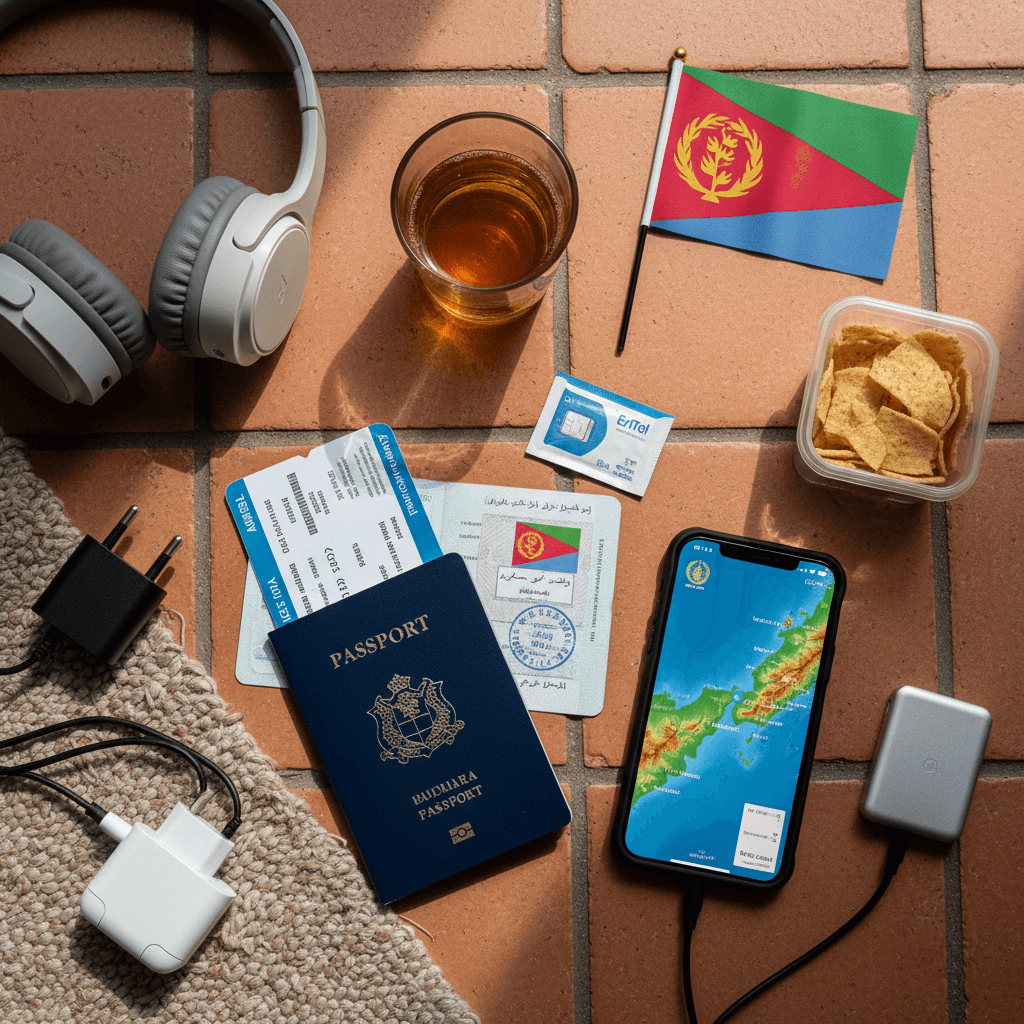
Eritrea

Policy Stability
Stamped Nomad ExclusiveHow likely visa and immigration policies are to remain unchanged
Quick Facts
N/A
1 months
Yes
$650/mo
4 Mbps
4/10
Low
Low
Low
UTC+3
Entry Methods Available
Best For
The Reality of Entering Eritrea
Eritrea is one of the most closed-off countries in the world, which makes the visa process a bit of a hurdle for the average nomad. Unlike many neighboring African nations that have embraced digital portals and e-visas, Eritrea still relies on a traditional, manual system. You will need to plan your arrival months in advance, as there is no shortcut to getting through the bureaucracy.
Almost every foreign national needs a visa to enter. While a few neighboring nationalities like Ethiopians and Sudanese have easier access, everyone else must undergo a formal application through an Eritrean embassy or consulate. There is no official government e-visa portal, so you will be filling out forms online and then mailing your physical passport away for processing.
The Tourist Visa
For most digital nomads, the standard tourist visa is the path of least resistance. This visa is typically valid for 3 months from the date it is issued, but it only allows for a stay of 30 days once you actually land in Asmara. If you fall in love with the Art Deco architecture and want to stay longer, you can apply for an extension at the Immigration Office in the capital city.
The costs for a tourist visa are relatively straightforward, though they add up quickly with administrative fees:
- Base Visa Fee: $50 USD
- Photo Fee: $13 USD
- Service Fee: $10 USD
- Total Minimum Cost: $73 USD (non-refundable)
Business Visa Options
If you are heading to Eritrea for more than just sightseeing, or if you have a local partner for a project, a business visa might be a better fit. These offer more flexibility but come with a higher price tag and stricter documentation requirements, including a formal letter explaining your purpose and proof of sufficient funds.
- Single Entry Business Visa: $100 USD
- 1-Year Multiple Entry Business Visa: $300 USD
The Application Process
The process starts with Form B62.3, which you can usually find on your local Eritrean embassy website. You will need to upload a digital passport photo and ensure your passport is valid for at least 6 months beyond your planned stay. Once the digital side is done, you mail your passport and wait.
Expect a wait time of at least 15 business days. This is not a process you want to rush. Given the lack of a centralized tracking system, it is smart to use a mailing service with reliable tracking so you know exactly where your documents are during the month they are out of your hands.
Visa on Arrival and Exceptions
Do not count on getting a visa at the airport. Visa on arrival is strictly limited to Ethiopian citizens for 30 days and Sudanese citizens for an indefinite period. The only other way to get a visa at the border is if you have a pre-arranged confirmation from an Eritrean sponsor, which must be requested at least 48 hours before you land. For the vast majority of travelers, if you show up without a stamp in your passport, you will be turned around.
Important Restrictions
Once you have your visa and arrive in Asmara, your freedom of movement is still somewhat restricted. The visa allows you into the country, but traveling outside of the capital often requires additional travel permits issued by the Ministry of Tourism. Keep this in mind when planning your workflow and scouting locations beyond the city limits. The policy environment is stable, and no major changes are expected for the 2025 or 2026 seasons, so the current embassy-led process remains the standard for the foreseeable future.
Source 1 | Source 2
The Current Status of Remote Work in Eritrea
If you are looking for a dedicated digital nomad visa in Eritrea, you will not find one. The country has not yet joined the growing list of nations offering specific pathways for remote workers. Instead, the Eritrean government maintains a traditional visa system that categorizes visitors under very specific labels: tourist, business, student, or employment. For most nomads, the Tourist Visa is the only practical entry point.
Operating as a remote worker here means flying under the radar in a legal sense. You are technically a visitor, and your activities should reflect that. Since you cannot legally seek local employment or sign contracts with Eritrean companies on a tourist visa, you must ensure your income remains entirely outside the country. It is a destination for those who want to experience a unique, preserved corner of East Africa while maintaining their existing professional life elsewhere.
The Tourist Visa: Your Primary Entry Route
Since there is no specialized permit, you will need to apply for a standard tourist visa through an Eritrean embassy or consulate. This is not a process you can rush. The bureaucratic wheels turn slowly, and you should plan for a minimum of 15 business days for processing, though it often takes longer. Once issued, the visa is typically valid for entry within 3 months and allows for an initial stay of 1 month.
The good news is that you can often extend your stay once you are on the ground. You will need to visit the Department of Immigration in Asmara to request an extension. While the process is generally straightforward, it depends entirely on the discretion of the immigration officers, so it is best to approach the request with patience and a polite attitude.
Requirements and Costs
The application process is somewhat old-school. While you can fill out forms online, you will still need to mail your physical passport to the nearest embassy. Here is what you need to gather for your application:
- A valid passport with at least 6 months of validity remaining.
- Proof of sufficient funds to cover your stay, usually provided via recent bank statements.
- A confirmed travel itinerary including flight details.
- A digital passport photo (35x45mm) and a completed B62.3 application form.
- Proof of residency if you are applying from a country where you are not a citizen.
The financial side of the application is relatively affordable compared to other nomad destinations. Expect to pay a $50 USD visa fee, along with a $13 photo fee and a $10 service fee. Keep in mind that these costs can vary slightly depending on which embassy you are dealing with and your specific nationality.
Navigating Taxes and Local Rules
Eritrea operates on a residency-based tax system. If you stay in the country for 183 days or more, you could technically be considered a tax resident and liable for taxes on your worldwide income. However, given the difficulty of securing long-term extensions that would take you past the six-month mark, most nomads will likely remain in the clear. It is always smart to talk to a tax professional before making any long-term plans.
There are a few other logistical hurdles to keep in mind. Some nationalities are required to show proof of a Yellow Fever vaccination upon entry. Additionally, work of any kind for an Eritrean entity is strictly forbidden on a tourist visa. If you are caught engaging in local business without an employment visa, you risk deportation or fines. Stick to your laptop, use your own international clients, and enjoy the Art Deco architecture of Asmara during your downtime.
Application Checklist
- Step 1: Complete the online B62.3 form and upload your photo.
- Step 2: Pay the $73 total fee through the official portal.
- Step 3: Mail your passport and supporting documents to the embassy.
- Step 4: Wait for the 15+ day processing window to close.
- Step 5: Receive your passport and enter Eritrea within 90 days.
Source 1 | Source 2
The Reality of Entering Eritrea
Eritrea is one of the most closed-off countries in the world, and its visa process reflects that. You won't find a streamlined digital portal or a landing page with fancy graphics. Instead, getting in requires patience, physical paperwork, and a bit of old-school planning. Unless you hold an Eritrean National ID card, you need a visa before you even think about booking your flight.
The system is centralized in Asmara. Even if you apply through a local embassy in Washington D.C., London, or Berlin, your documents are sent back to the capital for approval. This creates a bottleneck that you need to account for in your travel timeline. Don't expect a quick turnaround; this is a process measured in weeks, not days.
The Standard Tourist Visa
Most digital nomads will enter on a standard tourist visa. While the application starts with an online form (often the B62.3 form), the process is far from digital. You will need to mail your physical passport to the nearest embassy along with a suite of supporting documents. The requirements are strict and non-negotiable.
- A passport valid for at least 6 months beyond your intended stay.
- One recent passport-sized photograph.
- Proof of sufficient funds to cover your stay.
- A detailed flight itinerary and hotel booking.
- Payment of all fees, which are generally non-refundable.
The total cost for US-based applicants sits around $73 USD. This includes a $50 consular fee, a $13 photo printing fee, and a $10 service fee. Business visas are significantly more expensive, often starting at $100 for a single entry. Once issued, you have 3 months to enter the country, and you are typically granted a 1-month stay upon arrival.
Visa on Arrival Constraints
For the vast majority of travelers, visa on arrival is a myth. It is currently reserved for citizens of Ethiopia, who get 30 days, and Sudan, who can stay indefinitely. There is a "pre-arranged" option where a local sponsor can request approval from the Immigration Authority 48 hours before your arrival, but this is rarely granted for solo tourists or nomads without deep local connections.
Extending Your Stay
If you fall in love with the Art Deco architecture of Asmara and want to stay longer than your initial month, you'll need to visit the Immigration Office in the capital. Extensions aren't guaranteed and are handled on a case-by-case basis. There are no fixed rules or public tables for extension fees; it often depends on the current political climate and the discretion of the officer on duty.
Because of the strict nature of the regime, overstaying is a terrible idea. Eritrea enforces its borders and immigration laws with extreme scrutiny. Overstaying can lead to immediate detention, heavy fines, or being barred from the country for years. Always give yourself a 3-to-5-day buffer before your visa expires to handle any paperwork in Asmara.
Health and Border Logistics
Beyond the visa itself, pay attention to health requirements. If you are traveling from or through countries like Argentina or Brazil, a Yellow Fever vaccination certificate is mandatory. Without it, you will be denied entry regardless of your visa status.
Forget about border runs. The regional tensions with neighboring countries and the tight internal controls mean that exiting and re-entering is a logistical nightmare. Every entry requires a fresh approval from Asmara, so the "hop across the border" strategy used in Southeast Asia or Latin America simply does not work here. Plan for a single, continuous stay and make the most of it.
Application Timeline
- Preparation: 1 week to gather documents and proof of funds.
- Processing: Minimum 15 business days for embassy and Asmara approval.
- Shipping: 3 to 5 days for secure passport return.
- Total Lead Time: At least 4 to 6 weeks before your departure date.
Source
The Reality of Staying Long-Term
If you are looking for a breezy digital nomad visa or a streamlined "golden" residency, Eritrea will be a reality check. This is not a country that caters to the remote work crowd with specialized permits. Instead, staying here long-term requires fitting into traditional boxes: you are either an employee of a local entity or a serious business investor.
Most nomads entering the country start with a standard entry visa. You will need to apply through an Eritrean embassy or consulate well in advance. Expect to pay anywhere from $30 to $300 USD depending on your nationality and visa type, plus a $23 service fee. Processing is slow, often taking 15 business days or more, so do not leave this until the last minute.
The Employment Route
For those who want to hunker down in Asmara for a year or more, the Work and Employment Visa is the most common path. This is not for freelancers working for overseas clients; you need a sponsorship letter from a local employer. This letter must outline your role and how long you intend to stay.
- Initial Cost: $100 USD plus service fees.
- Initial Duration: 3 months, which functions as a probationary entry period.
- The Residence Permit: Once you arrive, you must register with the Department of Immigration and Nationality. If you stay longer than 6 months, a formal Residence Permit is mandatory.
- Renewal: These permits are typically renewed annually, provided the Ministry of Labour and Human Welfare clears your work authorization.
Business and Investment Options
If you have capital and a plan, the Business/Investment Visa offers a bit more stability. While there is no officially published "minimum investment" amount, you will need a solid business plan and proof of funds to satisfy the authorities. This route can grant you a stay of 1 to 2 years and is one of the few ways to build a case for permanent residency through economic contribution.
- Cost: Between $100 and $500 USD.
- Requirements: Proof of investment and a formal business letter.
- Registration: You still need to file Form No. 10 at the Immigration Foreigners Section in Asmara to get your physical residence card.
The Long Road to Permanent Residency
Permanent Residency (PR) in Eritrea is a marathon, not a sprint. There is no shortcut through buying property or holding a high-paying remote job. For most foreigners, you are looking at a 20-year residency requirement before naturalization becomes a conversation. If you marry an Eritrean citizen, that timeline drops significantly, usually requiring 3 years of marriage and residency.
The government looks for deep integration. You will need to prove you are self-sufficient, have a clean criminal record, and understand the local culture. Because there is no centralized government portal for these applications, everything happens through face-to-face meetings at the Immigration Offices in Asmara.
Logistics and Paperwork
Because policies can shift without much public notice, keep your paperwork organized and physical. You will need passports valid for at least 6 months, multiple passport-sized photos, and printed proof of your financial means. Since the digital infrastructure is still developing, do not expect to handle renewals or permit registrations via an app or website; you will be spending some time in government offices.
Remember that remote work exists in a legal gray area here. If you are working for a company in London or New York while sitting in a cafe in Asmara, the government technically expects you to have a standard work permit. Always check with the nearest embassy before arrival to ensure your specific situation is covered.
The Price of Isolation
Eritrea is one of the most affordable destinations on the planet for those carrying a foreign currency, but it comes with a massive asterisk. While you can technically live here for as little as $500 to $550 a month, the country lacks the traditional infrastructure nomads rely on. You won't find sleek glass coworking spaces or high-speed fiber optics. Instead, you are paying for a step back in time, where costs are low because the modern digital world hasn't fully arrived yet.
Most of your budget will go toward housing and logistics. Because there is no formal "nomad scene," you will likely find yourself staying in local apartments or older hotels. The value is undeniable, but the trade-off is a restrictive environment where internet access is a luxury rather than a given.
Cost Breakdown by Major City
Asmara is the primary hub for anyone attempting to work remotely. It is the most expensive city in the country, but it offers the only reliable concentration of cafes and hotels with connectivity. Massawa and Keren offer a deeper dive into Eritrean culture at a lower price point, though they are better suited for short visits than long-term stays.
Asmara (The Capital Hub)
- Budget Rent: $148
- Comfortable Rent: $220
- Premium Rent (Upscale/Airbnb): $350
- Atmosphere: Italian-modernist architecture, the most reliable (though still slow) internet, and the best selection of cafes.
Massawa (The Red Sea Port)
- Budget Rent: $142
- Comfortable Rent: $207
- Premium Rent: $300
- Atmosphere: Coastal heat and Ottoman-style ruins. It is cheaper than the capital, but the humidity and slower pace make it a challenging place for productivity.
Keren (Northern Highlands)
- Budget Rent: $142
- Comfortable Rent: $210
- Premium Rent: $300
- Atmosphere: A quiet, traditional town. Costs mirror the national average, providing a very low-cost lifestyle for those who want to disappear from the grid.
Monthly Living Expenses
Daily life in Eritrea is remarkably inexpensive if you eat like a local. Traditional meals like injera and spicy stews are affordable, but imported goods will spike your grocery bill quickly. Transport is almost negligible if you use the public bus system, though most foreigners opt for taxis for convenience and speed.
- Food and Groceries: Expect to spend $150 for a basic local diet or up to $300 if you frequent higher-end hotel restaurants in Asmara.
- Transportation: Local buses cost pennies. A $45 monthly budget covers frequent taxi rides, while $100 allows for private hires or more extensive travel.
- Workspace: Since there are no coworking spaces, you will spend roughly $20 to $30 per day on coffee and snacks at hotels to use their Wi-Fi. This can add $200 to $400 to your monthly "office" costs.
- Health Insurance: Basic nomad coverage starts around $45, but more robust plans that include medical evacuation are recommended here, costing up to $200.
Monthly Budget Tiers
Your total spend depends entirely on how much "western" comfort you require. Eritrea does not have a middle ground; you are either living very simply or paying a premium for the few modern amenities available.
The Budget Tier (~$400): This is for the true minimalist. You will stay in a small apartment on the outskirts of town for $145, eat local street food for $150, and use public buses for $20. This tier assumes you are not paying for premium internet or workspace.
The Comfortable Tier (~$650): This is the sweet spot for most. It includes a city-center apartment for $215, a mix of home cooking and dining out for $210, and $45 for taxis. You will likely spend your afternoons working from a local cafe, which is factored into the food budget.
The Premium Tier (~$1,200): This gets you the best Eritrea has to offer. You will stay in a $350 upscale apartment or hotel suite, spend $300 on high-end dining, and $100 on private transport. This budget also includes $400 for "alternative" workspaces in top-tier hotels to ensure the best possible connectivity.
Asmara: The Art Deco Capital
Asmara is the only city in Eritrea that offers anything resembling a functional base for remote work. Known for its UNESCO-listed Italian Futurist architecture and a surprisingly vibrant cafe culture, it feels more like a frozen-in-time Mediterranean town than a typical African capital. While it is one of the safest cities on the continent, the digital infrastructure is a major hurdle.
You won't find sleek coworking spaces with ergonomic chairs here. Instead, your office will be a marble-topped table in a historic cafe or a quiet corner in a high-end hotel lobby. Internet speeds generally crawl between 2 Mbps and 10 Mbps, and frequent outages are part of the daily routine. It is a destination for those who can work offline or have extremely flexible deadlines.
- Estimated Monthly Cost: $1,450 to $1,630
- Internet Speed: 2-10 Mbps (unreliable)
- Safety: Excellent; walking alone at night is common and generally safe.
- After Hours: The city has a surprisingly lively social scene. Check out Aquila, Zilli, or Crispi for late-night drinks, or stick to the cafes for world-class macchiatos.
The Trade-off: You get a stunning, safe, and affordable environment, but you must be prepared for a near-total lack of a nomad community and frustratingly slow connectivity.
Massawa: Coastal Solitude
If you can handle intense heat and even slower internet, Massawa offers a change of pace. This port city is a blend of Ottoman, Egyptian, and Italian influences, though much of it still bears the scars of the independence war. It is far more laid back than Asmara and serves as the gateway to the Dahlak Archipelago.
Remote work here is a challenge. WiFi is restricted to a handful of hotels and small cafes, and speeds rarely exceed 5 Mbps. Most nomads who visit Massawa do so for a working "unplugged" weekend rather than a long-term stay. The cost of living is lower than the capital, but the infrastructure is significantly more weathered.
- Estimated Monthly Cost: $500 to $1,000
- Internet Speed: 2-5 Mbps
- Vibe: Coastal, historic, and very hot.
- Pros: Incredible seafood, unique architecture, and proximity to pristine beaches.
Keren: The Highland Retreat
Keren is Eritrea's third-largest city, nestled in a valley surrounded by granite mountains. It is famous for its silver markets and the weekly camel market, offering a much more traditional Eritrean experience than the capital. The climate is slightly warmer than Asmara but far more comfortable than the coast.
For a digital nomad, Keren is a "deep cut." The internet is nearly non-existent for professional purposes, and you will likely be the only remote worker in town. It is an ideal spot if your work requires zero connectivity and you want to immerse yourself in local culture for a fraction of the cost of other African hubs.
- Estimated Monthly Cost: Under $500
- Internet Speed: Minimal to 2 Mbps
- Safety: Very High; a tight-knit community where locals are generally welcoming.
- Cons: Extremely limited amenities, no nomad support, and very sparse nightlife.
The Bottom Line for Eritrea
Eritrea is not a "plug and play" destination. The national average cost of living is incredibly low, often cited around $527 for basic expenses, but as a foreigner, your costs in Asmara will be higher due to hotel stays and dining out. Connectivity is the primary dealbreaker. Unless you carry a satellite device or can survive on 0.3 Mbps to 10 Mbps, this is a location for a digital detox rather than a high-productivity sprint.
If you decide to make the leap, bring an unlocked phone for local SIMs, though don't expect them to solve your data woes. Always have a backup plan for your deadlines, and treat the lack of internet as an opportunity to explore one of the most gatekept countries in the world.
The Reality of Connectivity
If you are planning to sustain a digital career from Eritrea, you need a reality check. The country currently has some of the most restrictive and underdeveloped internet infrastructure on the planet. With no submarine fiber cables landing on its shores, the nation relies on a combination of satellite and microwave links managed by the state monopoly, EriTel. For a nomad, this means average speeds usually hover between 0.3 and 4 Mbps. Even premium plans rarely break the 5 Mbps barrier, making video calls or large file uploads nearly impossible.
Fixed-line internet is not a standard amenity. Most residential homes are actually banned from having private connections. Instead, digital access is funneled through monitored internet cafes or specific government-approved offices. It is a environment where the "always-on" lifestyle of a remote worker simply does not exist yet.
Coworking and Professional Spaces
Traditional coworking spaces with ergonomic chairs and specialty coffee are non-existent here. You won't find the usual global brands or trendy local hubs. The only viable professional option in the capital is the EriMT Business Incubator in Asmara. They offer 24/7 serviced offices and hot desks that include internet access and meeting rooms. However, they do not publish their rates online. If you are determined to work from there, you will need to visit in person or contact them directly to negotiate a rental.
Outside of this single incubator, your options are limited to a handful of internet cafes like Roni or Heron Internet Cafe. These spots are primarily used for basic email and messaging. The connection quality is reminiscent of the dial-up era, and many social media platforms are blocked, though WhatsApp occasionally functions. Expect frequent service outages and a high degree of monitoring on all public terminals.
The High Cost of Low Speed
Because bandwidth is such a scarce resource, the pricing is astronomical compared to the service quality. There are no standard monthly "nomad passes" because the infrastructure cannot support them. Instead, you are looking at specialized EriTel contracts that are priced well beyond the reach of the average local.
- Unlimited Dedicated Line (256/128 kbps): Approximately 6,460 Nkf ($410 USD) per month.
- Night-only Access (256 kbps): Approximately 500 Nkf ($32 USD) per month.
- Standard Cafe Access: Roughly 100 Nkf ($6.35 USD) per hour.
- Satellite (VSAT) Entry Level: Starts around $717 USD per month for 512 kbps.
Mobile Data and SIM Cards
The mobile situation is perhaps the biggest hurdle for the modern nomad. While you can get a local SIM card for voice calls and SMS, there are no public mobile data plans available. The GSM 900 network used by EriTel does not support data services for the general public or roaming visitors. Even if you have a high-end roaming plan or an eSIM from a provider like Yoho, it likely will not work due to local blocks and lack of compatible infrastructure. You cannot simply tether your laptop to your phone to get through an afternoon of work.
Ultimately, Eritrea is a destination for disconnecting, not for digital nomadism. If your job requires any form of consistent uptime, reliable speeds, or even basic mobile data, Asmara will prove to be an extremely challenging environment. Most travelers find that they can only manage the most basic digital tasks, and even those require a massive amount of patience and a significant budget.
The Reality of Care in Eritrea
Eritrea presents a unique challenge for the digital nomad. While the country offers a fascinating cultural backdrop, the healthcare infrastructure is basic at best. Most public facilities are under-resourced, facing chronic shortages of specialized staff and modern medical equipment. If you are staying in the capital, Asmara, you will have access to the country's best options, but even these do not meet Western clinical standards.
For anything beyond a routine checkup or minor infection, your strategy should always be stabilization followed by evacuation. The local system is designed for primary care and managing basic ailments. If you run into a serious surgical need or a complex cardiac issue, you will likely find yourself on a flight to Dubai, Istanbul, or Nairobi.
Public vs. Private Facilities
Public hospitals like Orotta National Referral Hospital and Halibet are the backbone of the system. They are incredibly affordable, often costing just a few dollars for a consultation, but they are crowded and lack privacy. You will encounter long wait times and a shortage of basic supplies like sterile gloves or specific medications.
Most expats and nomads head straight to Sembel Hospital in Asmara. As the city's primary private facility, it offers a much higher standard of comfort. You will find English-speaking doctors, shorter queues, and better diagnostic tools like X-rays and basic lab work. It is the only place in the country that feels somewhat familiar to a modern traveler, though it still has its limitations.
- Sembel Hospital (Private): +291 1 150175
- Orotta National Referral Hospital (Public): +291 1 02 914
- Halibet Hospital (Public): +291 1 185 400
Insurance Requirements and Costs
Local insurance is almost non-existent for foreigners, and even if you found a local policy for $10 to $20 a month, it wouldn't cover the one thing you actually need: medical evacuation. You must secure a global policy before you land in Asmara. Many nomads opt for SafetyWing, which starts around $56 per month and includes emergency evacuation. For more robust coverage including dental or maternity, expect to pay between $100 and $200 per month through providers like Pacific Prime.
Out-of-pocket costs are manageable if you have hard currency. Here is a breakdown of what you might pay in the private sector versus public clinics:
- Doctor Visit: $5 to $10 (Public) / $20 to $60 (Private)
- X-rays and Lab Tests: $10 to $20 (Public) / $40 to $150 (Private)
- Minor Surgery: $150 to $500 (Public) / $700 to $2,000 (Private)
- Emergency Room Visit: $20 to $50 (Public)
- Hospital Stay per Night: $10 to $20 (Public) / Higher in Private
Pharmacies and Prescriptions
Asmara has a decent density of pharmacies, such as Adulis and Cathedral Pharmacy. You can often buy common medications like antibiotics or painkillers over the counter for about $5 to $10. However, the supply chain is hit-or-miss. If you rely on specific maintenance medication for a chronic condition, bring a six-month supply with you. Counterfeit or expired meds can occasionally enter the market, so always check the packaging and stick to the larger, well-known pharmacies in the capital.
- Adulis Pharmacy: +291 1 120 047
- Cathedral Pharmacy: +291 1 120 719
Emergency Response
The emergency numbers are 113 for police and 116 for medical emergencies. In reality, ambulances are slow and poorly equipped. If you have an emergency in Asmara, it is almost always faster to take a taxi or have a friend drive you directly to Sembel or Orotta. Outside the capital, emergency services are virtually non-existent, making it risky to spend extended periods in remote rural areas without a satellite communication device and a clear exit plan.
Navigating the Cash Economy
Eritrea is one of the last true cash-only frontiers for digital nomads. If you are used to tapping your phone or swiping a card for a latte, you are in for a significant culture shock. The local financial system is almost entirely disconnected from the global grid, meaning your success here depends on how much physical currency you bring across the border.
The local currency is the Eritrean Nakfa (ERN). Officially, it is pegged 1:1 to the US Dollar, though you will find that the actual cost of living and unofficial exchange rates tell a different story. Every transaction, from street food to hotel stays, must be settled in Nakfa. You should plan to carry crisp, clean USD or EUR bills to exchange at official Himbol exchange bureaus or state banks.
The Reality of ATMs and Cards
Forget about your Wise or Revolut cards. While these are staples for nomads elsewhere, they are effectively plastic rectangles in Eritrea. There are no international ATMs in the country. You cannot pull money from your home bank account once you land, so arriving without enough hard cash is a mistake you can only make once.
Credit card acceptance is virtually non-existent outside of a few high-end hotels in Asmara. Even then, expect a 5% surcharge and frequent connectivity issues. If you do find a local ATM that claims to accept foreign cards, be prepared for predatory fees ranging from 5% to 10%, on top of whatever your home bank charges for international withdrawals.
Opening a Local Bank Account
If you are planning a long-term stay, you can open an account at the Commercial Bank of Eritrea or the Housing and Commerce Bank. It is a slow, bureaucratic process that requires at least one in-person visit. You will need the following:
- A valid passport and a current visa.
- A residency permit or a formal supporting letter from the Eritrean Ministry.
- Proof of a local address.
- A minimum deposit, which varies by branch.
Be aware that these accounts are primarily for holding Nakfa. Moving money back out of the country or converting Nakfa into foreign currency is heavily restricted and often impossible for foreigners.
Moving Money Inbound
Since you cannot rely on ATMs, you will need a reliable way to top up your funds if your cash stash runs low. While Wise does not work for card payments, you can use their platform to send transfers to an Eritrean bank account. However, most expats and nomads prefer dedicated remittance services for speed and ease of pickup.
- Dahabshiil: The most popular local choice with a wide network of agents for cash pickup.
- MoneyGram and Remitly: Reliable for near-instant cash transfers.
- Western Union: Widely available, though exchange rates may be less favorable than Dahabshiil.
For the lowest fees, funding these transfers via a direct bank transfer from your home country is usually cheaper than using a debit or credit card.
Rules and Regulations
Eritrea has strict controls on the movement of money. When you enter the country, you are required to declare any foreign currency exceeding $10,000. Keep your exchange receipts from Himbol, as you may be asked to prove where your Nakfa came from when you exit the country or try to exchange leftovers back into USD.
Cryptocurrency is a non-starter here. There is no legal framework for trading or mining, and the government maintains tight control over all financial transactions. Given the limited internet infrastructure and strict KYC rules, attempting to use crypto as a workaround for the lack of ATMs is not a viable strategy.
Financial Checklist
- Primary Cash: Bring enough USD to cover your entire stay.
- Currency Declaration: Ensure you declare amounts over $10,000 at the border.
- Exchange: Use only official Himbol branches to avoid legal trouble.
- Emergency Backup: Set up a Dahabshiil or Remitly account before you arrive so a friend or family member can send you emergency funds if needed.
Moving with the Family
Relocating to Eritrea with children is a unique undertaking that requires a bit of extra planning. While it isn't a traditional digital nomad hub for families, those who make the move often find a surprisingly safe, community-oriented environment, particularly in the capital. Most expat life revolves around Asmara, where the infrastructure for international schooling and healthcare is most reliable.
Dependent Visa Options
If you are heading to Eritrea on a work permit, your spouse and minor children can join you through a dependent visa. You will need to provide official proof of your relationship, such as marriage and birth certificates, and demonstrate that you have the financial means to support your family. Most of the time, your employer will need to back this application through the Ministry of Labor and Immigration.
- The processing time for these visas usually ranges from a few weeks to several months.
- Short-term family visit visas are available for stays up to one month and cost $70.
- Visit visas require a local reference and proof of sufficient funds for the duration of the stay.
International Schooling
Education options for expat children are almost entirely concentrated in Asmara. The primary choice for the international community is the Asmara International Community School (AICS). It serves students from ages 4 to 15, covering everything from Pre-K to Grade 10 with an international curriculum.
The costs for private education are a significant line item in a family budget. Annual tuition fees are roughly $3,900 for Pre-K, $6,100 for Kindergarten, and up to $14,000 for Grades 1 through 12. There is also a one-time family registration fee of $3,000. While public schools are free, they are generally under-resourced and not recommended for expat families. Other private secondary options using Cambridge or IB programs can range between $500 and $5,000 per year.
Healthcare for Children
Eritrea has made massive strides in public health, particularly with childhood vaccinations. Coverage for polio and measles sits at nearly 98%. In the cities, community health workers are active in managing common childhood illnesses like pneumonia and malnutrition. However, the facilities are still basic by Western standards.
It is strongly recommended that families maintain international health insurance that includes medical evacuation coverage. While routine checkups and minor issues can be handled in Asmara, serious emergencies often require transport to a neighboring country with more advanced medical infrastructure.
Family-Friendly Cities
While you might travel to other regions, Asmara is the only city truly equipped for a long-term family stay. Its high altitude means the climate is mild rather than stifling, and the streets are famously clean and walkable.
- Asmara: The top choice for families. It offers the only international school, the best healthcare access, and a safe, highland climate.
- Keren: A culturally diverse city with vibrant markets. It is good for day trips or short stays, but lacks international-standard services for children.
- Massawa: A coastal city with historical charm. It is great for a weekend at the beach, though the extreme heat can be difficult for younger kids.
Childcare and Daily Life
One of the biggest perks for families in Eritrea is the cost of childcare. Private preschool for a single child costs approximately $25 monthly (roughly 375 ERN). This is incredibly low compared to regional neighbors. Culturally, childcare is often seen as a shared community responsibility, and it is common for expat families to hire local help for a very affordable rate.
Safety and Security
Day-to-day life in urban centers like Asmara is very safe; violent crime is rare, and children are generally welcomed in all social spaces. However, the broader security situation requires caution. Families should avoid traveling near border zones and stick to the main paved roads connecting Asmara, Keren, and Massawa. Landmines remain a risk in rural, off-road areas. In case of an emergency, you can dial 113 for the police or 114 for medical assistance.
The Ground Reality: Safety and Street Life
Eritrea occupies a unique space for travelers. On one hand, it is statistically one of the safest countries in Africa regarding violent crime. You can generally walk through the Art Deco streets of Asmara without the constant vigilance required in other regional capitals. While petty theft like bag snatching or vehicle break-ins has seen a slight uptick in urban centers, violent muggings remain rare. If you keep your wits about you and avoid poorly lit areas at night, your physical safety is rarely under threat.
The real "risk" here is more bureaucratic than criminal. The government maintains strict controls over movement, and as a nomad, you will feel the weight of state oversight. This isn't a place for "off-the-beaten-path" spontaneity; you need permits for almost everything outside the capital. As long as you respect the rules and don't go snapping photos of military buildings or government checkpoints, you’ll likely find the locals to be incredibly polite and the streets remarkably calm.
Navigating the Social Landscape
Scams in Eritrea are relatively low-stakes and lack the aggressive edge found in more tourist-heavy nations. Most issues involve "tourist pricing" or unauthorized guides offering services at inflated rates. Since the economy is cash-only, credit card fraud is a non-issue, but the black market for currency is a different story. Stick to authorized exchange bureaus. Trading money on the street is illegal, and the penalties are stiff enough to ruin your trip.
When it comes to social norms, Eritrea is deeply conservative. For LGBTQ+ nomads, the environment is highly unsafe. Same-sex acts are illegal and can carry prison sentences of up to 7 years. There is no public discourse on these topics, and societal discrimination is the norm. Absolute discretion is a requirement for anyone in this community; avoid any public displays of affection or discussions regarding orientation to prevent harassment or state intervention.
Cultural Etiquette and Integration
Eritreans are famous for their hospitality, often centered around the elaborate coffee ceremony. If you are invited to join one, accept it as a gesture of friendship. To blend in and show respect, keep these habits in mind:
- Dress Modestly: Keep your shoulders and knees covered. This applies to everyone, especially when visiting religious sites.
- The Right Hand Rule: Always use your right hand for eating, shaking hands, or passing items to others.
- Greetings Matter: A simple "Selam" (hello) goes a long way. Respect for elders is paramount, so always acknowledge the oldest person in a group first.
- Photography: Always ask before taking a photo of a person. Never take photos of military installations, government buildings, or bridges.
The Language Gap and Expat Life
Don’t expect a thriving digital nomad scene here. The expat community is tiny and mostly consists of NGO workers or diplomats based in Asmara. Because internet speeds hover between 5-10 Mbps, the "work from a cafe" lifestyle is a struggle. Most nomads you meet will be passing through rather than settling in for months.
Language is another hurdle. While Tigrinya and Arabic are the dominant tongues, English is limited to younger people in Asmara or those working directly in tourism. Learning a few phrases will change the way people react to you. Using "Mahber" for thank you instead of English shows you aren't just a transient observer. In rural areas like those inhabited by the Tigre or Afar people, English is virtually non-existent, so hiring a local guide is often the only way to communicate effectively.
Integration Cheat Sheet
- Patience is Key: "African time" is the standard here. Meetings and transport rarely start on the dot, so don't let it stress you out.
- Avoid Politics: Conversations about the government or military service are sensitive. It is best to stick to neutral topics like history, food, or coffee.
- Secure Housing: If you have a vehicle, always park in well-lit, secure areas to avoid the rising trend of break-ins.
- Digital Preparation: Since you won't find many nomad meetups, download offline maps and translation apps before you arrive, as the poor internet makes on-the-go downloads impossible.
Eritrea is one of the more unique destinations for a digital nomad, and its approach to taxation is just as distinct. Unlike many neighboring countries that are rolling out red carpets with "nomad visas" and tax breaks, Eritrea sticks to a traditional, rigorous system. If you plan on staying long-term, you need to keep a close eye on your calendar.
The 183-Day Threshold
Your tax status in Eritrea is almost entirely determined by the clock. If you spend 183 days or more in the country during a single calendar year, the government considers you a tax resident. These days don't have to be consecutive; they just have to add up. Even partial days, like your arrival and departure dates, count toward that total.
Once you hit that 183-day mark, you are taxed on your worldwide income. This means the Eritrean government expects a cut of what you earn from clients in New York, London, or Sydney, not just income earned locally. It is a system very similar to how the United States treats its citizens, making it vital to track your stay with passport stamps and flight logs.
Income Tax Brackets
Eritrea uses a progressive tax scale. The more you earn, the higher the percentage, with rates maxing out at 30%. While the local currency is the Nakfa (ERN), you should calculate your obligations based on the current exchange rate, which usually sits around 1 ERN to 0.067 USD. Here is how the monthly brackets generally break down:
- Up to 800 ERN: 0%
- 801 to 1,000 ERN: 5%
- 1,001 to 1,500 ERN: 10%
- 1,501 to 2,000 ERN: 15%
- 2,001 to 3,000 ERN: 20%
- Above 3,000 ERN: 30%
For most remote workers earning a Western salary, you will hit that top 30% bracket almost immediately. If you stay under the 183-day limit, you are typically only taxed on income sourced directly from within Eritrea.
Crypto and Digital Assets
If your portfolio is heavy on Bitcoin or Ethereum, don't expect specific "crypto laws" here. Eritrea does not have a dedicated framework for digital assets yet. Instead, the tax authorities likely treat crypto gains as general income or capital gains. If you are a tax resident, you are expected to report these gains annually. Keep meticulous records of your transaction history and the fair market value of your assets at the time of trade, as the 30% progressive rate will likely apply to these profits as well.
Double Taxation and Treaties
One of the biggest risks for nomads in Eritrea is paying tax twice on the same dollar. The country has a very limited network of Double Taxation Agreements (DTAs). While some treaties exist to cap withholding taxes on things like dividends (5%) or royalties (10%), they are few and far between. Before you settle in for a six-month stint, check if your home country has an active treaty with Eritrea. Without one, you might find yourself owing both your home government and the Ministry of Finance in Asmara.
Reporting and Compliance
Tax residents are required to file an annual return. This isn't just about your salary; the government may require declarations of foreign bank accounts, high-value assets, and investments. Most local employees have their taxes withheld by their employers, but as a freelancer or remote worker, the burden of filing falls on you. You will need to head to the Ministry of Finance to get the correct forms. Fines for non-compliance can be steep, so it is best to stay ahead of the paperwork if you intend to make Eritrea your base for half the year.
The Reality for Nomads
There are no "Digital Nomad" shortcuts here. You won't find a flat-tax regime or a specialized remote work visa that exempts you from the local system. Eritrea treats remote workers like any other resident. If you want to avoid the 30% worldwide tax, the simplest strategy is to keep your stay under the 183-day limit. Because local tax information can be difficult to find and regulations can shift without much public notice, talking to a local tax professional in Asmara is a smart move for anyone staying longer than a few months.
Connectivity and SIM Cards
Internet in Eritrea is a test of patience. To avoid a bureaucratic headache, set up an eSIM through Yoho Mobile or JetSim before you land. This gives you instant, albeit slow, data the moment you touch down and keeps you away from airport kiosks where scams are common.
If you prefer a local physical SIM, head to the EriTel office in Asmara. You will need your passport, a letter from the Ministry of Tourism, and likely some help from your local host to navigate the paperwork. A temporary SIM costs between 50 and 100 Nakfa, which is roughly $3 to $7 USD. These cards are valid for 60 days and can be renewed, but keep in mind that data is expensive and speeds rarely hit modern standards.
Getting Around
Forget about opening Uber or Bolt here. While there are whispers of a local app called Hilak, it is inconsistent at best. Your primary mode of transport will be white-and-yellow taxis. Expect to pay between $5 and $10 USD for most trips within the city. Always negotiate the fare before you get in because meters are rarely used or functional.
- Public Buses: These are the cheapest way to move, costing between $0.50 and $1 USD, though they are often crowded.
- Tuk-tuks: Common for short hops; again, agree on the price first.
- Driving: Traffic moves on the right. The roads in Asmara are surprisingly good, but rural routes can be rugged.
Where to Base Yourself
Asmara is the only realistic choice for nomads, but even then, you need to pick your neighborhood carefully to ensure you aren't totally isolated from services.
- City Centre: This is the sweet spot. You can walk to most Italian-era cafes, government offices, and the few places that might have a semi-decent signal.
- Arat Kilo: A quieter, residential area that feels more authentic and less bustling than the core.
- Sembel: Located near the airport, this area is popular with business travelers and offers better value for larger apartment rentals.
Finding a Place to Stay
Inventory is tight, so book well in advance. Airbnb is your best bet for furnished apartments that actually include a router, though "WiFi included" often means a limited data cap. For traditional hotels, Booking.com lists the mainstays.
- Crystal Hotel: Reliable but pricier at around $84 per night.
- Local Guesthouses: Budget options range from $15 to $25 per night.
- Hotel Asmara Palace: The high-end choice for those who need more robust business facilities.
Food and Dining
Food delivery apps do not exist in Eritrea. If you want to eat, you head out to a cafe or restaurant. Asmara has a deep-rooted cafe culture thanks to its Italian history, so you will find plenty of spots serving pasta and macchiatos alongside traditional injera.
Most nomads self-cater for breakfast and dinner by shopping at local markets and small grocery stores. Don't expect a wide variety of imported goods; stick to local produce and staples to keep your budget low.
Language and Communication
While English is spoken in tourist circles and government offices, knowing some Tigrinya will change your experience entirely. Download the Learn Tigrinya Offline app before you arrive. It works without data and covers the Ge'ez script, basic greetings, and essential verbs. Arabic is also widely understood in many quarters.
Emergency Contacts
Print these out and keep them in your wallet. Do not rely on your phone's cloud storage.
- Police: 113
- Fire Department: 116
- Ambulance: 122244
Consular assistance is limited outside the capital. If you run into serious trouble, your embassy in Asmara is your only point of contact.
Common Pitfalls
The biggest mistake nomads make is assuming they can "wing it" with the internet. Always have a VPN installed before arrival and carry a backup power bank, as outages can happen. Bureaucracy is a slow-motion process here; whether it is a SIM card or a travel permit to leave the capital, everything takes twice as long as you think. Finally, overpacking is a burden. Stick to light, versatile clothing, but bring any specific electronics or medications you need, as specialized shops are almost non-existent.
More Guides from Africa
Stay Updated on Eritrea
Get notified about visa changes, policy updates, and new information for digital nomads in Eritrea.