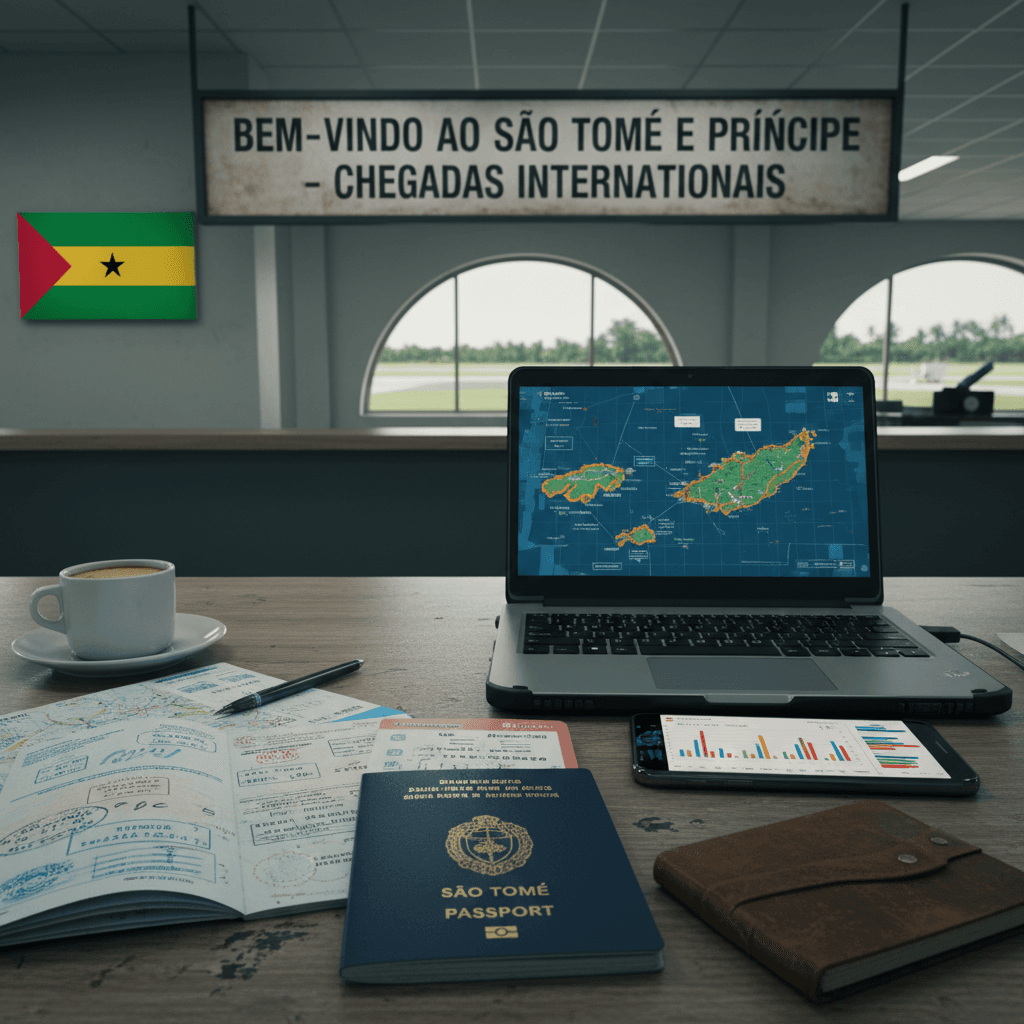
Sao Tome and Principe

Policy Stability
Stamped Nomad ExclusiveHow likely visa and immigration policies are to remain unchanged
Quick Facts
N/A
3 months
Yes
$900/mo
17 Mbps
9/10
High
Low
Low
GMT
Entry Methods Available
Best For
The 15-Day Sweet Spot
For many digital nomads, the first taste of São Tomé and Príncipe comes without any paperwork at all. If you hold a passport from the United States, Canada, or any EU member state, you can walk right through immigration and stay for up to 15 days visa-free. This also applies if you have a valid Schengen visa or residency permit from a Schengen country.
Think of this as your "scouting mission" window. It is long enough to check out the coworking vibe in the capital or find a reliable beach bungalow with decent Wi-Fi, but it is strictly non-extendable. If you plan on staying longer, you need to be more strategic about how you enter the country.
The E-Visa: Your Most Likely Path
If two weeks feels too short, the eVisaST system is your best friend. This electronic portal has been around since 2012 and is relatively straightforward. Most nomads opt for the Tourist e-visa, which gives you a 30-day stay with a single entry. You will pay a €20 stamping fee when you land at the airport.
The processing time usually takes about 7 working days, so do not leave it until you are at the boarding gate. Keep in mind that your passport needs to be valid for at least one year at the time of application. The biggest catch with the e-visa is that it cannot be extended; you have to leave the country and reapply if you want to come back for another month.
Longer Stays and Conventional Visas
For those planning a deep dive into the islands, the e-visa might not cut it. This is where you have to go old school and visit a consulate or embassy. Conventional visas offer much more flexibility for the long-term traveler. The Temporary Visa is the gold standard here, offering a validity of 180 days with multiple entries allowed. Once you are on the ground, you can even extend this stay by an additional 60 days.
If you are looking for something more permanent, the Residence Visa starts with a 60-day window and two entries, which can also be extended for another 60 days while you work on your long-term residency paperwork. Just like the e-visa, these traditional options require a passport with 12 months of remaining life.
Visa Types at a Glance
- Tourist E-Visa: 30 days, single entry, €20 fee, non-extendable.
- Business E-Visa: 30 days, single entry, €30 fee, non-extendable.
- Transit Visa: 4 days, up to 2 entries, extendable by 5 days.
- Temporary Visa: 180 days, multiple entries, extendable by 60 days.
- Residence Visa: 60 days, 2 entries, extendable by 60 days.
Important Logistics
While most travelers arrive via the international airport, these rules also apply if you are coming in by sea through the Ana Chaves Harbour. Always have your documentation printed and ready. While there are whispers of "visa on arrival" for certain nationalities, the government is very clear that you should have your authorization in hand before you fly to avoid being sent back on the next plane.
For high-net-worth nomads, the country recently launched a Citizenship by Investment program. It is a much faster track than most, with average processing times of about 2.5 months, though it is a significant financial commitment compared to a simple tourist stamp.
Source 1 | Source 2
The Current Status for Remote Workers
If you are looking for a formal digital nomad visa in São Tome and Principe, you won't find one. Unlike some of its mainland African neighbors, this island nation hasn't yet rolled out a specific residency program tailored for the remote work crowd. It remains a destination for those willing to work within the existing, somewhat traditional immigration framework.
Most nomads treat the islands as a short-term base rather than a long-term home. Because there is no official "nomad" status, you are legally classified as a visitor. This means you skip the red tape of a specialized visa, but you also lack the long-term stability that comes with a residency permit.
Entry Options for Short Stays
The path of least resistance is the tourist e-Visa or visa on arrival. Depending on your passport, you can typically secure a stay of 15 to 30 days. The e-Visa portal is the standard way to handle this; it allows you to apply online for an entry permit that functions just like a traditional sticker visa.
For those who want to stay longer than a few weeks, the options get a bit more complicated. You generally have three paths:
- Tourist Extensions: You can visit the Serviço de Migração e Fronteiras (SMF) office in the capital to request an extension. These are granted at the discretion of immigration officers and are not guaranteed.
- Business Visas: If you can justify your stay through local partnerships or investment interests, a business visa might offer a slightly more formal footing.
- Temporary Residence: This is the "heavy lifting" option. It requires significant paperwork and is usually tied to local employment or a registered local business.
The Residency Reality
If you decide to pursue a Temporary Residence Permit, prepare for a wait. Processing times usually hover between 4 and 6 weeks. You will need to deal directly with the SMF office located on Avenida 12 de Julho in São Tomé. Since there is no dedicated remote work category, you would likely be applying under self-employment or investment grounds, which requires proving you have the means to support yourself without taking local jobs.
The requirements for these permits are not set in stone for remote workers. You should expect to provide proof of income, a clean criminal record, and a local address. However, without a local employer to sponsor a Temporary Work Visa, the path to staying beyond a few months is often a series of bureaucratic hurdles.
Logistics and Tax Considerations
Since there is no nomad-specific law, the tax situation for remote workers is a gray area. Generally, you are only taxed on income earned within São Tomé and Príncipe. If your salary comes from a foreign company and lands in a foreign bank account, you likely won't be bothered by the local tax authorities during a short stay.
Keep these logistical points in mind before you book your flight:
- Overstaying: Do not let your visa expire. The SMF is known to issue strict fines for even minor overstays.
- Visa Runs: Some nomads attempt to fly to Gabon or Ghana and return to reset their tourist clock, but this is risky and expensive.
- Documentation: Always keep physical copies of your e-Visa approval and your passport. Digital copies aren't always accepted at local checkpoints.
Contacting Immigration
If your situation is unique or you want to attempt a residency application, your best bet is to contact the Serviço de Migração e Fronteiras (SMF) directly. They are the final authority on all entry permits and residency stays. While they have a telephone line and an office in the city center, responses to emails can be slow; in-person visits are almost always more effective for getting clear answers.
Source 1 | Source 2
Navigating Entry Requirements
Getting into São Tomé and Príncipe is surprisingly straightforward for most travelers, though the rules vary depending on how long you plan to stay. The country has leaned into tourism lately, making it easier for digital nomads to touch down and get a feel for the island vibe without a mountain of paperwork. You have three main paths: going visa-free, grabbing a visa on arrival, or applying for an e-visa before you fly.
For most nomads, the initial 15-day window is the standard starting point. If you find yourself falling in love with the "leve-leve" lifestyle, you can usually pivot to an extension once you are on the ground. Just keep an eye on your passport validity. You need at least three to six months remaining, depending on your entry method, plus a confirmed return ticket and proof that you have about €100 per day to support yourself.
The 15-Day Visa-Free Pass
Citizens from a wide range of countries can breeze through immigration without paying a cent for a visa. This includes travelers from Portugal, Brazil, Angola, and Cape Verde. Interestingly, São Tomé also extends this courtesy to anyone holding a valid Schengen or US visa, regardless of their nationality. This is a massive win for nomads who already have long-term stickers in their passports from other travels.
- Duration: 15 days
- Cost: Free
- Extension: Possible up to 60 days at the immigration office
- Requirements: Passport valid for 3 months, return flight, and proof of funds
Visa on Arrival and E-Visas
If you don't fall into the visa-free category, you aren't out of luck. Select nationalities can pick up a 15-day visa right at São Tomé International Airport. However, the lists for this change frequently, so it is always smarter to secure an e-visa ahead of time if you want to avoid a stressful conversation at the border.
The e-visa is the go-to for anyone planning a longer initial stint. You apply through the official government portal, upload your scans, and wait about 2 to 7 days for approval. This gives you a 30-day stay right out of the gate. You must print the approval document and bring it with you; a digital copy on your phone might not satisfy the border agents.
- E-Visa Cost: Between €20 and €60
- Validity: Must be used within 90 days of issue
- Stay Length: 30 days single-entry
- Passport Requirement: 6 months validity for e-visas
Extensions and Long-Term Stays
If 15 or 30 days isn't enough to finish your project or explore Príncipe, you will need to visit the Serviço de Migração e Fronteiras (SMF) office in the capital. While the e-visa is technically non-extendable, those on visa-free entries can often push their stay to 60 days. For those needing even more time, some tourist visas allow for a 3-month maximum stay within a 180-day period.
The extension process involves some light bureaucracy and a fee. Expect to spend a morning at the SMF office in São Tomé city. It is best to start this process at least five days before your current stamp expires to avoid any accidental overstays.
The Reality of Overstays and Border Runs
Don't mess around with your exit date here. The authorities take overstaying seriously. If you are caught past your date, you face sliding fines that can reach €200 or more. In extreme cases, you risk arrest and administrative expulsion, which is a fast way to ruin your chances of ever coming back.
Some nomads attempt "border runs" by flying to Gabon or Ghana for a weekend to reset their 15-day clock. While this isn't strictly illegal, the Migration Service is wise to the tactic. If they decide you are living there on a series of tourist entries rather than just visiting, they can deny you re-entry. If you plan to stay for several months, it is always better to go the official extension route through the SMF office.
Source
The Reality of Long-Term Stays
If you are looking for a flashy digital nomad visa or a streamlined "Golden Visa" program, Sao Tome and Principe might feel a bit old school. The country does not currently offer a specific permit for remote workers or freelancers. Instead, anyone looking to stay beyond a standard tourist window has to navigate the traditional residency pathways managed by the Serviço de Migração e Fronteiras (SMF).
Most nomads start with a Residence Visa. This is a 60-day entry permit that allows for two entries into the country. It is essentially your "bridge" to more permanent paperwork. You will need to apply for this at an embassy or through the eVisa portal before you arrive. Expect to provide a police clearance, a health certificate, and proof that you have the funds to support yourself without becoming a burden on the state.
Temporary Residence Certificates
Once you are on the ground with your residence visa, your next stop is the SMF office to apply for a Temporary Residence Certificate. This document is valid for one year and can be renewed annually. It is the standard "long-stay" solution for most foreigners living on the islands.
The application process usually takes between 15 and 30 days. You will need to show that your criminal record is still clean and that you have local accommodation sorted. The cost for these certificates typically ranges between STN 5,000 and 10,000, which works out to roughly $220 to $450 depending on the current exchange rate and specific processing fees.
The Five-Year Horizon
For those who truly fall in love with the pace of life here, permanent residency is the endgame. You can apply for a Permanent Residence Certificate after living in the country legally for 5 years. This permit is indefinite, though you do have to refresh the physical document every five years.
The government looks for signs of "integration" during this process. This usually means showing you have stayed out of legal trouble and perhaps have some basic proficiency in Portuguese. It is a slow burn, but it offers the most stability for anyone looking to make the archipelago a permanent base.
Work and Freelancing
Since there is no dedicated freelancer visa, remote workers usually fall into a gray area. Most choose to apply for residency based on "independent means" by showing a consistent foreign income. If you are actually moving here to work for a local company, you will need a Temporary Work Visa. This costs about STN 1,000 (roughly $45) and requires a formal job offer or contract from a local employer.
- Standard Residence Visa: Valid for 60 days; the first step for long-termers.
- Temporary Certificate: Renewed annually; costs up to $450.
- Permanent Residency: Available after 5 years of continuous legal stay.
- Health Requirements: A yellow fever vaccination certificate is mandatory for entry.
The Fast Track: Citizenship by Investment
There is a relatively new "express" lane that bypasses the residency years entirely. Through the National Transformation Fund, individuals can essentially apply for citizenship by making a significant donation. This is more of a passport play than a traditional residency permit, but it is the only way to get "permanent" status in a matter of weeks.
- Minimum Investment: $90,000 for a single applicant.
- Processing Time: Approximately 6 weeks.
- Benefit: Full citizenship and a passport without the 5-year wait.
For the average nomad, the one-year renewable temporary residency remains the most practical path. Just be prepared for some bureaucracy and make sure your paperwork is translated into Portuguese to keep things moving at the SMF office.
The Price of Paradise
Living in São Tomé and Príncipe offers a rare opportunity to experience an Atlantic island lifestyle without the exorbitant price tag of the Caribbean or the Mediterranean. For most digital nomads, the monthly burn rate sits comfortably between $800 and $1,000 excluding rent. While it is one of the more affordable island nations, you have to account for the "import tax" on your lifestyle. Local goods are cheap, but anything shipped from Europe or the mainland comes with a premium.
The capital, São Tomé city, is where your money goes furthest. It serves as the primary hub for logistics, better internet, and housing variety. Príncipe island is a different beast entirely. It is stunning and remote, but because almost everything must be flown or shipped in, your daily expenses can easily climb 20% higher than on the main island. It remains a destination for short-term "off-grid" stints rather than a long-term base.
Location Breakdown
São Tomé City (The Hub)
- 1BR Rent: Expect to pay around $280 for a central apartment, or as low as $180 if you head toward the outskirts.
- Monthly Food: A mix of market shopping and local eateries will cost between $330 and $440.
- Transport: Local shared taxis and buses are incredibly cheap, with one-way trips costing about $1.10. A monthly budget of $50 covers most local movement.
- Workspace: There are no dedicated coworking spaces yet. You will likely work from home or spend $3 to $5 a day on coffee and snacks at nomad-friendly spots like Club Saoti.
Príncipe Island (The Eco-Escape)
- 1BR Rent: Traditional rentals are scarce. You will likely rely on guesthouses or eco-resorts starting at $300 to $500 per month, though long-term deals require boots-on-the-ground negotiation.
- Monthly Food: Budget at least $450 to $550. Supply chains are thinner here, so you pay for the convenience of availability.
- Transport: You will likely need a scooter or car rental, as public options are limited. Car rentals hover around $50 per day, making this a significant expense.
- Workspace: Strictly "work-from-home" or hotel lobbies. Reliability is the main challenge here.
Monthly Budget Tiers
The Budget Nomad
If you are watching every dollar, you can get by on $900 to $1,200 per month. This involves living slightly outside the city center, shopping almost exclusively at local markets, and using public transport. You will be skipping the imported cheeses and wines, but you will be living a very authentic local life. This budget covers a basic 1BR, groceries, and a global nomad insurance plan starting around $60.
The Comfortable Professional
For $1,400 to $1,800, the experience shifts significantly. You can afford a modern apartment in the city center, eat out at decent restaurants a few times a week, and rely on private taxis or a rented scooter. This tier allows for a better insurance policy and the occasional weekend trip to a beach resort. You will have enough left over to cover the higher electricity costs that come with using air conditioning.
The Premium Lifestyle
At $2,200 and up, you are living at the top of the local market. This budget secures high-spec expat housing, often with ocean views, which can run $850 or more. You can afford frequent flights between the islands, a dedicated rental car, and premium imported groceries. This is the "no-compromise" tier where you enjoy the best the islands have to offer without worrying about the bill.
Hidden Costs and Realities
Digital nomads should keep an eye on inflation and fluctuating exchange rates. While the local currency is pegged to the Euro, prices for services can shift. Health insurance is a non-negotiable expense here, as local facilities are basic. A solid international plan costing $100 to $150 is a smart investment. Also, factor in the cost of a local SIM card and data backups; since there are no coworking hubs, your "office" costs are essentially your home internet and power bill.
The Hub: São Tomé (Capital)
If you are planning to work from this archipelago, the capital city of São Tomé is likely where you will spend 90% of your time. It is the only place in the country with the infrastructure to support a remote workflow, though you should keep your expectations grounded. The nomad scene here is tiny and mostly consists of adventurous solo travelers and NGO workers rather than tech-heavy digital entrepreneurs.
Internet speeds average around 14-15 Mbps via CST. While this is fine for Slack, emails, and the occasional Zoom call, you might struggle with heavy video editing or massive file uploads. For a more stable connection, grab a local 4G SIM card from Unitel or CST as a backup. There are no dedicated coworking spaces yet, so your best bet is setting up in hotel lobbies or local cafes.
When you are off the clock, the vibe is incredibly relaxed. You can grab a coffee at Cafe Camoes or Noventa Graus, and spend your evenings at Bar Cantinho dos Silva. The locals are exceptionally friendly, and the city feels safe, though you should stay vigilant against petty theft on the beaches.
- Monthly Cost of Living: Approximately $2,600
- Internet: 14-15 Mbps (CST/Unitel 4G)
- Pros: Most reliable utilities in the country, decent cafe culture, and easy access to local markets.
- Cons: No official coworking hubs, limited networking opportunities, and occasional petty scams.
The Jungle Retreat: Santo António (Príncipe Island)
Príncipe is the smaller, greener sister island, and its main town, Santo António, is the definition of "off the grid." This is not the place to meet other nomads; it is the place to escape them. The population is small, and the infrastructure reflects that reality. You are trading high-speed fiber for pristine UNESCO Biosphere landscapes.
Connectivity here is patchier than in the capital. While you can find mobile signal, the speeds are rarely consistent enough for high-stakes meetings. There are no dedicated nomad amenities or cafes with reliable Wi-Fi, so you will be relying entirely on your accommodation. It is significantly more isolated than the main island, so come prepared with everything you need.
- Rent and Food: Generally cheaper than the capital, though imported goods are rare.
- Vibe: Total seclusion and untouched nature.
- Pros: Incredible peace and quiet, very low crime, and stunning natural surroundings.
- Cons: Unreliable internet, very few social outlets, and difficult to reach from the mainland.
Rural Alternatives: Santana and Porto Alegre
For those who find the capital too busy, smaller towns like Santana or Porto Alegre on the main island offer a middle ground. These spots are better suited for "workations" where the focus is more on the "vacation" side of the equation. You will find basic guesthouses and a very authentic slice of Santomean life.
Infrastructure in these areas is minimal. You will be almost entirely dependent on 4G mobile hotspots, as fixed-line internet is rare in private rentals. There is no nightlife or nomad community to speak of, but the cost of living is very low and the surroundings are beautiful. These towns are best for short stints of deep work where you do not need to be online 24/7.
- Best For: Short-term adventurous stays and nature lovers.
- Infrastructure: Basic mobile data only; no coworking or nomad-specific cafes.
- Pros: Authentic local culture, very affordable, and quiet.
- Cons: Minimal amenities, poor connectivity, and high isolation.
São Tomé and Príncipe is still in the embryonic stages of digital nomad development. It is an incredible destination for a few weeks of remote work combined with exploration, but the lack of a formal community and high-speed infrastructure makes it a challenge for long-term stays. If you decide to go, pack a high-quality power bank and a lot of patience.
The Connectivity Reality Check
Working from São Tomé and Príncipe requires a shift in expectations. You aren’t coming here for lightning-fast infrastructure; you’re coming for the scenery and the pace of life. Standard fixed broadband averages around 15 Mb/s download and 4.5 Mb/s upload. While that is plenty for emails and Slack, high-definition video calls can be hit or miss depending on your location.
The local telecommunications landscape is a duopoly between CST and Unitel. While fiber-to-the-home is expanding in the northern parts of São Tomé, it currently reaches less than 3% of the population. Most residents and travelers rely on 4G/LTE networks, which cover about 90% of inhabited areas. If you need serious bandwidth for heavy uploads or seamless streaming, Starlink is now an option in the archipelago. It offers speeds up to 171 Mb/s, though the barrier to entry is high with hardware costs starting around $206 and monthly service at $62.
Coworking and Work-Friendly Spaces
You won't find a traditional "we-work" style setup here. Dedicated coworking spaces with ergonomic chairs and silent phone booths don't really exist on the islands yet. Instead, the nomad community gravitates toward hotel lobbies and breezy cafes. Most remote workers treat the Hotel Pestana or Hotel São Tomé as their de facto offices, utilizing their reliable business centers and reliable power backups.
For a more local vibe, several spots in the capital offer workable WiFi and great coffee:
- XICO’s Café: A popular central hub with a reliable connection for basic tasks and a steady flow of caffeine.
- Cafe Bombaim: Offers a relaxed atmosphere that is perfect for clearing your inbox while enjoying the local architecture.
- Hotel Resource Rooftop: Provides one of the best views in the city alongside a functional WiFi signal, though it can get breezy.
Mobile Data and SIM Cards
Since hotel WiFi can be temperamental during tropical storms or power fluctuations, a local SIM card is your best insurance policy. You can pick up a SIM from CST or Unitel for approximately $4 at the airport or in town. You will need your passport for registration. Data packages are affordable and generally more reliable than local landlines.
- Unitel Plans: Range from 1 GB to 30 GB, costing between $4 and $45 depending on the duration.
- CST Plans: Offer smaller bundles from 1 GB to 6 GB for roughly $5 to $15.
- eSIM Options: Providers like MobilityPass and Roamless offer pay-as-you-go data, which is convenient if you want to be online the moment you touch down without hunting for a physical kiosk.
Technical Tips for Success
Power outages occur occasionally, so keep your devices charged and carry a high-capacity power bank. If your work involves frequent Zoom calls, consider a noise-canceling headset; the "leve leve" lifestyle includes a lot of ambient noise from roosters, motorbikes, and ocean waves. Most nomads find that a combination of a CST 4G connection and a quiet corner in a reputable hotel provides enough stability to maintain a full-time remote job while enjoying the islands.
The Reality of Healthcare in São Tomé
Living the nomad life in São Tomé and Príncipe offers unparalleled peace, but the healthcare situation requires a serious reality check. The local system is severely under-resourced and struggles with chronic shortages of basic supplies and medicine. While public clinics exist at the district level, they are primarily geared toward basic primary care for citizens. Foreigners are expected to pay out-of-pocket for almost everything, including diagnostic tests and prescriptions.
The main public facility is Hospital Ayres de Menezes in the capital. It can handle basic emergencies, maternity services, and simple fractures, but it is not equipped for complex medical issues. If you are heading to Príncipe, the Hospital de Santo António is your only real option, though its capabilities are even more limited. Most expats stick to the few private clinics in São Tomé city for day-to-day concerns.
Private Facilities and Specialized Care
For minor ailments or trauma care, Gnóstica Medical Center (Clínica de Diagnóstico) on Avenida Marginal 12 Julho is the go-to private facility. You can reach them at +239 998 8115. On Príncipe, there is the Príncipe Hospital in Santo António, reachable at +239 225 1005.
The most important thing to understand is that advanced specialist services do not exist here. There is no oncology, neurology, or complex cardiac surgery available on the islands. If you face a life-threatening or complicated medical situation, you will not be treated locally. You will be stabilized and flown out to Libreville, Accra, Lisbon, or Johannesburg.
Health Insurance and Evacuation
Because local facilities are so limited, international health insurance is a non-negotiable part of your toolkit. You need a policy that specifically includes high-limit medical evacuation coverage. Without it, a private medevac flight can easily cost tens of thousands of dollars out of pocket.
Several reputable providers offer plans that work well for nomads in West Africa:
- Allianz: Plans like Care and Care Pro offer limits between $2.5M and $5M.
- Cigna Global: Offers flexible tiers from Silver to Platinum, with coverage reaching up to Unlimited.
- AXA: Their Prestige Plus plans provide high-end coverage up to $8M.
- NOW Health: WorldCare plans offer limits between $1M and $4.5M.
When picking a plan, verify that they offer direct billing so you aren't stuck paying large sums upfront. It is also helpful to confirm they provide 24-hour emergency assistance in both English and Portuguese.
Pharmacy Access and Costs
Pharmacies are few and far between. There are only about nine private pharmacies in the entire country, and they rely entirely on imports. This means that if a specific medication is out of stock, it might stay out of stock for weeks. If you take maintenance medication for a chronic condition, bring a multi-month supply with you. Do not count on finding specific brands or even generic equivalents locally.
On the bright side, day-to-day medical costs are relatively low. The healthcare price index here is about 38.33, compared to a world average of 100. You might find a basic consultation or simple test surprisingly affordable, but remember that you get what you pay for in terms of equipment and expertise.
Emergency Protocols
In a medical emergency, you can call 222 22 22 to request an ambulance. However, ambulance services are unreliable and lack modern trauma equipment. In most cases, taking a taxi or private car to the hospital is faster. If the situation is serious, your first call should actually be to your insurance provider's emergency hotline to begin the evacuation process. They will coordinate with local doctors to determine if you need to be moved to a neighboring country for treatment.
The Cash-Heavy Reality
In São Tomé and Príncipe, cash is the undisputed king. While the country is breathtakingly beautiful, its financial infrastructure remains traditional and somewhat isolated. The local currency is the São Tomé and Príncipe Dobra (STN), which is pegged to the Euro. This peg provides some stability, and you will often find that larger hotels or tour operators are happy to accept Euros directly, though you should expect your change in Dobras.
Most daily transactions, from buying fruit at the market to paying for a taxi, require physical bills. Outside of high-end hotels and a few select restaurants in the capital, card readers are a rare sight. You should plan your budget around having enough paper currency to cover your entire stay, especially if you plan on exploring Príncipe island, where financial services are even more limited.
Using ATMs and Cards
If you are relying on plastic, Visa is your only reliable bet. The local ATM network, known as Dobra 24, generally accepts international Visa cards, but Mastercard is notoriously unreliable and often fails at the machine. Even with a Visa card, do not expect a seamless experience. ATMs are concentrated in São Tomé city and frequently run out of cash or experience technical downtime.
- Withdrawal Fees: Every international withdrawal incurs a fee of approximately STN 110.
- Transaction Limits: ATMs typically limit you to STN 1,500 to 3,000 per transaction.
- Availability: Machines are scarce outside the capital city. If you find a working ATM, withdraw the maximum amount allowed to save on fees and ensure you aren't left stranded.
Digital Banks and Transfers
For the modern nomad, tools like Wise and Revolut are great for spending at the few places that take cards because they offer excellent exchange rates for the Dobra. However, you cannot open an account with these providers if you are a local resident. They are strictly for using your existing foreign balance while visiting.
If you need to move larger sums of money or receive funds from abroad, MoneyGram and Western Union are the most reliable methods. They have agents throughout the islands and are often faster than waiting for a standard SWIFT bank transfer. Local banks do support SWIFT, but the process is slow and often subject to a 25% foreign currency conversion mandate, which can eat into your funds.
Local Banking for Foreigners
Opening a local bank account as a short-term digital nomad is a headache you probably want to avoid. Banks like BISTP, Ecobank, and BGFIBank require a formal residency permit and proof of a local address. The banking sector here is risk-averse, largely due to a high rate of non-performing loans, making them hesitant to take on non-resident clients.
If you absolutely must have a local presence for long-term projects, some nomads look into offshore accounts in Portugal. BISTP has strong ties to Caixa Geral de Depósitos, which can sometimes bridge the gap between European banking standards and the local STP system.
The Crypto Scene
São Tomé and Príncipe currently has no specific laws regarding cryptocurrency. It exists in a legal gray area; the Central Bank (BCSTP) doesn't regulate it, but they don't ban it either. While the government has shown some openness by allowing crypto as a source of funds for Citizenship by Investment programs, you won't find any "Bitcoin Accepted Here" signs at the local cafe.
Local banks are fragile and generally avoid any crypto-related transactions. If you need to liquidate crypto for local spending, your best bet is using a P2P platform to transfer funds to a European account and then withdrawing cash via a Visa card at a local ATM. There is currently zero capital gains tax on crypto, which is a silver lining for those holding digital assets.
Financial Checklist
- Primary Card: Bring a Visa debit or credit card; leave the Mastercard at home.
- Backup Cash: Carry a significant amount of Euros as an emergency backup.
- Withdrawal Strategy: Treat ATM runs as a weekly chore. Get what you need in São Tomé city before heading to the provinces or Príncipe.
- Apps: Keep your MoneyGram or Western Union apps updated in case you need an emergency cash injection.
Making the Move with Dependents
If you are planning to settle in Sao Tome and Principe long-term, you can bring your family along through the family reunification process. Once you have secured your own residence permit, you can apply for visas for your spouse and children. You will need to prove to the National Directorate of Migration and Borders that you have the financial means to support everyone in your household.
For shorter scouting trips, remember that every family member needs their own individual e-Visa, even infants. These are generally valid for 30 days. If you decide to stay, converting to a formal residency status is a paperwork-heavy process, so keep all your original marriage and birth certificates handy and legalized.
Education and Schooling
The international schooling scene here is quite small. While there are a few private options in the capital that offer smaller class sizes and a more global curriculum, they do not compare to the massive international schools found in larger African hubs. Most nomad families here choose one of two paths: local private schools for immersion or homeschooling.
If you choose the local route, be prepared for high tuition relative to the local economy. Many digital nomads find that a hybrid approach works best, using online curriculum providers while enrolling children in local activities to help them pick up Portuguese and make friends.
Healthcare and Pediatric Services
Public healthcare focuses heavily on maternal and child welfare. You will find clinics in most districts that handle routine immunizations, growth checks, and basic emergency referrals. In more remote areas, you might even see mobile or "floating" clinics that bring basic care to coastal villages.
- District Hospitals: Facilities in Trindade and Neves handle maternity and basic pediatric surgery.
- Specialist Care: Very limited. For anything complex, families usually fly to Gabon or Portugal.
- Safety Precautions: Always carry a well-stocked first-aid kit. While the islands are generally healthy, there is a risk of rabies from wildlife and the presence of cobras in the rural south and east.
Comprehensive travel or expat insurance is a non-negotiable requirement. Most local facilities are basic, and you want the peace of mind that comes with medical evacuation coverage.
Best Cities for Families
Where you choose to live will dictate your quality of life and access to amenities. The infrastructure varies significantly between the capital and the "roças" (plantations) or coastal towns.
Sao Tome City
- Infrastructure: Paved streets, reliable grocery stores, and the best internet speeds.
- Safety: Very high; it is common to see families out after dark.
- Lifestyle: This is the only place where you will find a concentrated expat community and diverse food options.
Smaller Towns (Neves, Trindade, Santo Antonio)
- Infrastructure: Roads are often unpaved and services like trash collection or stable power are less consistent.
- Safety: Extremely quiet, though you need to watch for potholes and wandering livestock.
- Lifestyle: Ideal for families seeking a slow, nature-focused life near the beach.
Childcare and Daily Costs
You won't find many formal daycare centers or franchised preschools here. Childcare is a very informal industry, often handled within the home. Many nomad families hire local help for childcare and housekeeping, which is the most common arrangement.
Estimates for preschool or private daycare costs range anywhere from $0 to $204 per month, depending entirely on the arrangement. Because formal options are so rare, you should budget for a full-time nanny if you need consistent help while working. This is usually very affordable, but you will need to rely on word-of-mouth recommendations from other expats to find reliable help.
Safety and Environment
Sao Tome and Principe is one of the safest destinations in Africa for children. With a crime index of 23.10 and a safety index of 76.90, violent crime is nearly non-existent. You can walk the streets at night without the typical anxieties of a major city.
The primary safety concerns are environmental rather than social. Keep a close eye on children near the roads and in the rural bush. In the southern and eastern parts of Sao Tome island, be mindful of the local cobra population. On the beaches, petty theft can happen if bags are left unattended while you are in the water, but generally, the islands offer a remarkably secure environment for kids to grow up in.
Safety on the Islands
São Tomé and Príncipe stands out as one of the most secure destinations in Africa. It consistently ranks among the safest countries globally, holding the top spot on the continent for the lowest crime rates. While violent incidents involving foreigners are incredibly rare, the "island vibe" shouldn't lull you into total complacency. Petty theft has seen a slight uptick recently.
Most issues involve opportunistic crimes like bag snatching or pickpocketing in crowded markets and on popular beaches. To stay off the radar, keep your expensive jewelry at home and don't leave your laptop or smartphone unattended while you take a dip in the ocean. If you are traveling during major holiday periods, be a bit more vigilant about home security, as burglaries occasionally spike during festive seasons.
Avoiding Scams
You won't find the sophisticated tourist traps here that plague larger metropolitan hubs. Most "scams" are simply informal overcharging. You might encounter inflated prices for taxis leaving the airport or at local markets where prices aren't clearly marked. Always agree on a fare before getting into a vehicle. There have been isolated reports of unofficial roadblocks near Santana where locals might ask for "tolls," so it is best to stick to official tour operators when exploring remote areas.
LGBTQ+ Considerations
The legal landscape here is relatively progressive for the region. Same-sex relations were decriminalized in 2012, which sets the country apart from many of its neighbors. That said, the atmosphere is best described as "discreet." There is a general "live and let live" philosophy, but you won't find a public "scene" or organized advocacy groups.
Public displays of affection, regardless of orientation, are generally frowned upon in rural villages. While you are unlikely to face state harassment, most local LGBTQ+ individuals remain private about their lives. For nomadic couples, a low-profile approach is the standard way to move through the islands comfortably.
Cultural Etiquette and "Leve Leve"
The local lifestyle is dictated by the phrase "leve leve," which roughly translates to "slowly, slowly." This isn't just a slogan; it is the national heartbeat. Impatience is considered quite rude. If a meeting starts late or your coffee takes twenty minutes to arrive, take a breath and lean into the pace.
- Greetings: Respect for elders is paramount. Address older men as Tio and women as Tia. A handshake combined with a slight bow or placing your hand over your heart shows you understand the local social fabric.
- Photography: Always ask before snapping a portrait. This is especially important with children or in smaller fishing villages.
- Dress Code: While the islands are tropical, modesty is the norm outside of beach resorts. Throw on a t-shirt and light trousers or a skirt when heading into town. Save the swimwear for the sand.
- Alcohol: While local beer and palm wine are popular, drinking openly in public streets is generally avoided. Keep the drinks to bars, restaurants, or private homes.
Language and Communication
Portuguese is the primary tool for survival and social integration. It is spoken by over 98% of the population. While you will hear Santome (the local Creole) or Forro in the streets, Portuguese is the language of business and government. English proficiency is quite low outside of high-end hotels, so learning a few basic phrases will go a long way in building rapport.
Social Integration for Nomads
The expat community is small but tight-knit, consisting mostly of NGO workers, entrepreneurs, and a handful of intrepid remote workers. Because digital nomads are still a rarity, locals are often genuinely curious about your work. Integration happens best through food and music.
- Attend a Tchiloli performance: This unique theatrical tradition blends European stories with African rhythms and is a cornerstone of national identity.
- Join the Festivals: If you are around in February, the Carnival is a must. The Feast of São João on July 24th is another major cultural touchstone.
- Market Days: Spend time in the central markets. Engaging respectfully with vendors is the fastest way to feel like a local rather than a tourist.
The internet infrastructure has improved since the 2012 fiber-optic rollout. You can find 4G coverage through providers like Unitel and CST, particularly in the capital. While not the fastest in the world, it is stable enough for most remote roles, allowing you to enjoy a high level of safety and a fascinating culture without being entirely off the grid.
Understanding Tax Residency
Living the nomad life in São Tomé and Príncipe is relatively straightforward from a tax perspective, provided you keep an eye on the calendar. The country operates on a residence-based system. You are generally considered a tax resident if you spend more than 183 days in the country during a single calendar year. Maintaining a "habitual residence," which implies an intent to stay long-term, can also trigger residency status even if you haven't hit the day count yet.
For most short-term nomads, this is good news. If you stay under the 183-day threshold, you are treated as a non-resident. In this scenario, you are only liable for taxes on income sourced directly within São Tomé and Príncipe. Since most nomads work for foreign companies or clients, your remote income typically remains untouched by the local tax authorities during shorter stays.
The Personal Income Tax Scale
If you decide to make these islands your long-term base and become a tax resident, you'll be taxed on your worldwide income. The Personal Income Tax (PIT) follows a progressive structure based on your annual taxable income, measured in São Toméan Dobra (STN). Here is how the brackets break down after social security deductions:
- Up to 25,000 STN: 0%
- 25,001 to 50,000 STN: 10%
- 50,001 to 150,000 STN: 15%
- 150,001 to 250,000 STN: 20%
- Above 250,000 STN: 25%
If you run a registered local company, the corporate tax rate is a flat 25%. Social security contributions are also a factor for residents, totaling 12%. This is split between the employer, who pays 7%, and the employee, who contributes 5%.
Double Taxation and Treaties
One of the trickier aspects of basing yourself here is the lack of extensive tax treaties. Currently, São Tomé and Príncipe has a primary Double Taxation Agreement (DTA) with Portugal. This agreement helps prevent being taxed twice on the same income and offers reduced withholding rates on things like dividends and royalties.
If you are from the US, UK, or Canada, there is no specific DTA in place. You will need to check the foreign tax credit rules in your home country to ensure you aren't paying double if you trigger residency in São Tomé. Most nomads find it easier to keep their stays under the six-month mark to avoid this complexity entirely.
Digital Nomad Visas and Incentives
You won't find a specific "Digital Nomad Visa" here just yet. There are no bespoke tax breaks designed specifically for remote workers. Most people enter on standard tourist or business visas and manage their affairs as non-residents.
There are broader investment incentives available, particularly if you are looking to start a physical business in tourism or agriculture. These can include corporate tax cuts of up to 50% for the first 5 years. However, these require formal registration with the government and aren't applicable to individual freelancers just looking for a desk and a view of the ocean.
Crypto and Capital Gains
The local tax code is still catching up to the digital age. There are currently no specific regulations or taxes targeting cryptocurrency. For individuals, there is no capital gains tax on movable property or crypto assets. While professional trading could technically be classified as business income and taxed at the 25% rate, the local authorities currently have limited capacity to track or enforce this. Your tax residency status remains the primary factor in whether your global crypto gains are technically reportable.
Filing and Reporting Requirements
If you cross the line into tax residency, you are required to file an annual tax return. This must be submitted by the end of March each year, covering all worldwide income from the previous year. For those working locally, employers handle the monthly withholding for PIT and social security. It is smart to keep meticulous records of your entry and exit dates, as well as any local contracts, to prove your non-resident status if ever questioned by the authorities.
Connectivity and SIM Cards
Staying online in São Tomé and Príncipe requires a bit of local legwork. While international eSIM providers like Nomad operate here, they often struggle with coverage gaps. Your best bet is to grab a local SIM card from CST, which offers the most reliable network across both islands. Unitel is the alternative, but CST is the gold standard for nomads heading into more remote areas.
Head to the CST stores near Mercado Municipal in the capital. You will need your passport for registration. A SIM card costs around 80 STD ($4 USD), and a 30-day data package with 6GB runs about 330 STD ($15 USD). It is a small price to pay for avoiding the spotty hotel Wi-Fi that plagues some parts of the island.
Getting Around
Forget about opening Uber or Bolt; those apps do not exist here. Instead, look for the ubiquitous yellow taxis. They do not use meters, so negotiate your fare before you get in. A ride from the airport to the city center should cost roughly 100 STD ($5 USD). For a more authentic (and cheaper) experience, hop in an aluguer. These are shared minibuses or cars that follow set routes, costing about 50 STD ($2 USD) for city trips.
If you plan to explore the rugged southern coast or the interior rainforests, rent a 4x4 vehicle through local operators like Navetur Equatour. Road signs are practically non-existent outside the main hubs, so download offline maps before you lose signal in the jungle.
Best Neighborhoods for Nomads
Most digital nomads base themselves in São Tomé city to stay close to the few reliable amenities available. Each area has a distinct personality:
- Downtown: The heartbeat of the island. It is the best spot for proximity to banks, markets, and the CST flagship store.
- Ana Chaves Bay: The waterfront district. This is where you will find the best concentration of restaurants, bars, and sunset views.
- Guadalupe: A quieter, residential alternative for those who want to escape the city noise while staying within a short drive of the center.
- Neves: Located to the north, this area is perfect for those who want a mix of port life and easy beach access.
If you are looking for total isolation, Santo António on Príncipe is beautiful but offers very few services for long-term remote work. Everywhere on the islands is remarkably safe with very low crime rates, so you can focus on the scenery rather than your pockets.
Finding a Home
The rental market is small, so booking ahead is a requirement. Airbnb is the most nomad-friendly platform, featuring colonial-style houses and furnished apartments. You can expect to pay around €233 per month for a one-bedroom apartment in the city center. Booking.com is better suited for shorter stays at eco-lodges or hotels. Many rentals include kitchens, which is helpful since the food scene is more about fresh markets than dining out every night.
Food and Language
Do not look for food delivery apps like Glovo here. If you want to eat, you either visit the local markets for fresh fish and produce or head to a restaurant. Some spots offer informal takeaway, but self-catering is often the most practical choice for long-term stays.
Portuguese is the official language, and English is rarely spoken outside of high-end hotels. Brush up on your basics using Duolingo or Busuu before you arrive. Learning a few phrases in Forro, the local creole, will also go a long way in building rapport with locals.
Staying Safe and Prepared
The emergency number for police, fire, and ambulance is 112, similar to the EU. You can also use 222222 for general services. Response times can be slow, so always have comprehensive travel insurance that covers medical evacuation.
The biggest mistake nomads make is trying to rush. The local philosophy is "leve-leve" (easy-easy). Be patient with slow service and frequent power or water interruptions. Pack malaria prophylaxis, only drink bottled or boiled water, and always carry enough cash, as card machines are unreliable. If you visit during the rainy season from October to May, keep your schedule flexible, as mud can make southern roads impassable.
More Guides from Africa

Stay Updated on Sao Tome and Principe
Get notified about visa changes, policy updates, and new information for digital nomads in Sao Tome and Principe.