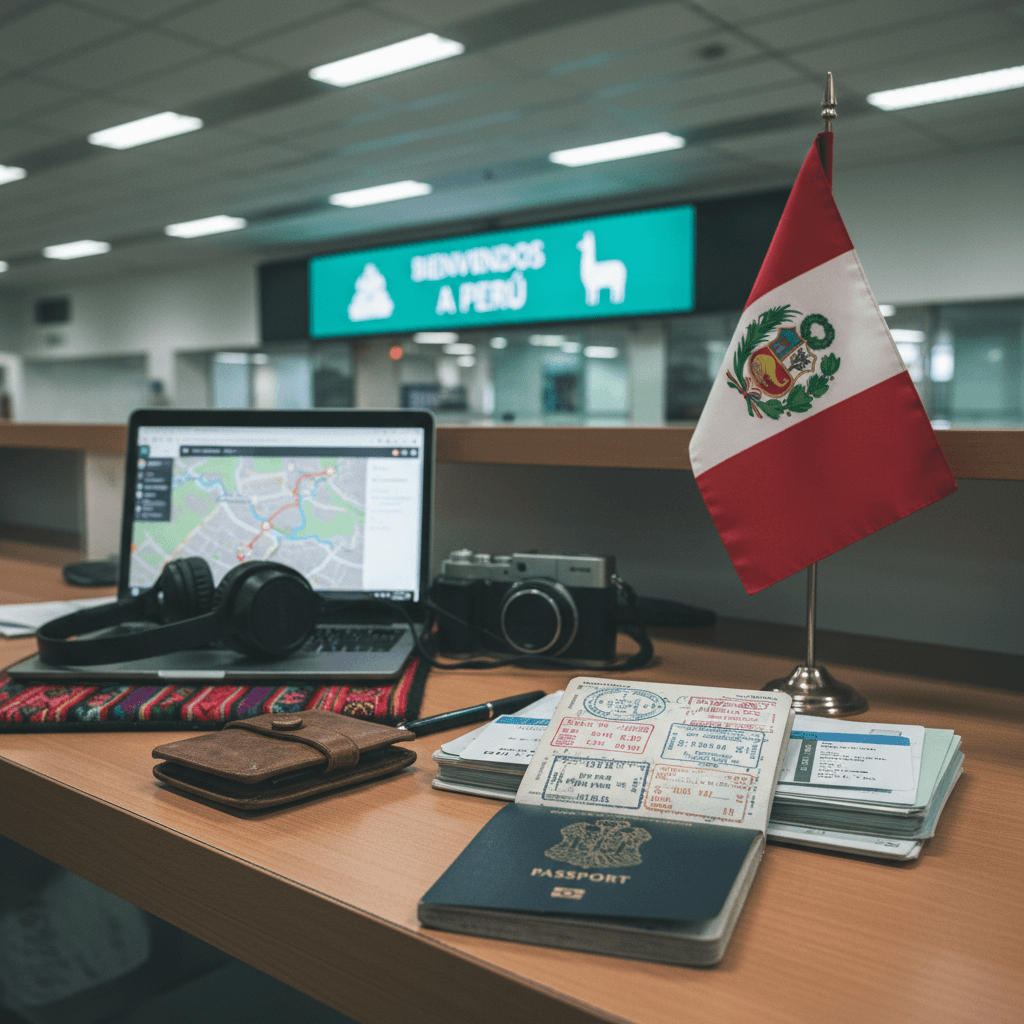
Peru landscape
🎒Adventure Ready
🇵🇪

Peru

Complete Digital Nomad Guide

Brandon Richards
Brandon Richards ·

Policy Stability

Stamped Nomad Exclusive
7/10Stable

How likely visa and immigration policies are to remain unchanged

Quick Facts

Nomad Visa Cost

$43

Income Requirement

$1,150/mo

Max Stay

12 months

Renewable

Yes

Cost of Living

$1,400/mo

Avg Internet

80 Mbps

Safety Score

3/10

Healthcare

Medium

Coworking

High

English Friendly

Medium

Time Zones

PET (UTC-5)

Entry Methods Available

Visa FreeVisa on Arrival

Best For

budgetcityamericas-basesolo

Getting Your Foot in the Door

Peru remains one of the most accessible hubs in South America for digital nomads, thanks to a relatively hands-off approach to short-term visitors. Most travelers from the US, Canada, the EU, Australia, and Japan can enter the country without a pre-arranged visa. Instead, you simply show up at the border with a passport valid for at least six months and receive a stamp.

While the law allows for stays up to 183 days, the actual time granted is at the discretion of the immigration officer. You might get the full six months, or you might get 30 or 90 days. It is always smart to have a digital copy of an onward flight ticket ready, as airlines or border agents sometimes ask for proof that you plan to leave.

The Tourist Setup

For most nomads, the tourist category is the default path. Peru uses a system called the TAM Virtual (Virtual Andean Migration Card) to track your entry and exit electronically, so you do not need to worry about losing a paper slip in your luggage. If you find yourself falling in love with the Cusco cafes or Lima’s surf scene and need more time, you can often handle extensions or status changes through the Peruvian Migraciones online platform before your current stay expires.

  • Maximum Stay: Usually 183 days within a 365-day period.

  • Extension Costs: Approximately S/163 for certain status changes or administrative updates.

  • Entry Requirements: A passport with 6+ months validity and occasionally proof of funds.

If you are a citizen of China or India, you can also benefit from visa-exempt entry if you hold a valid visa with at least six months of life left from the US, Canada, UK, Australia, or a Schengen member state.

Business and Transit Considerations

If your work in Peru involves local contracts or getting paid by a Peruvian entity, a standard tourist entry will not cut it. You would need to apply for a formal Business Visa at a Peruvian consulate before arriving. This requires an application form, an invitation letter, and specific fees. For most remote workers employed by companies back home, the tourist entry remains the standard route.

A new rule introduced in February 2025 changed the game for those just passing through. Unless you belong to a visa-exempt nationality, you now need a Transit Visa for layovers. This visa is valid for two days, though it can be stretched to 15 days in specific scenarios. If you are from a country that already requires a visa to enter Peru for tourism, you must secure this transit permit at a consulate before your trip.

Longer Stays and Residency

For those looking to trade the nomad life for a more permanent base in the Sacred Valley or Miraflores, residency visas are the next step. These are generally categorized by your purpose: work, study, investment, or family ties. Most nomads who decide to stay long-term begin the process by entering as a tourist and then applying for a change of status online. This involves a fee of roughly S/163 and a fair amount of paperwork, including criminal record checks and proof of financial stability.

Policies can shift, especially regarding how strictly the 183-day limit is enforced upon re-entry. Some travelers successfully "reset" their days by crossing into neighboring Colombia or Chile and returning, but border officials are increasingly mindful of people using this tactic to live in Peru indefinitely without proper residency.

Source

The Reality of Remote Work in Peru

If you have been scouring the internet for a formal Peruvian digital nomad visa, you can stop the search. Peru hasn't launched a specific "nomad" category yet. However, that hasn't stopped Lima and Cusco from becoming major hubs for remote workers. The country relies on its generous tourist visa policy to accommodate those of us who bring our laptops along for the ride.

Most travelers from North America, the European Union, and the UK are granted entry without a pre-applied visa. You simply show up at the border, and the immigration officer stamps your passport. The key rule here is that you must be working for a foreign employer and receiving your salary in a non-Peruvian bank account. As long as you aren't competing for local jobs or billing Peruvian clients, you are generally in the clear.

Stay Duration and the 183-Day Rule

When you cross the border, the immigration officer decides how many days to grant you. While the law allows for up to 183 days, it is not uncommon for officers to stamp passports for only 30 or 90 days. Always check your stamp before walking away from the desk.

If you want to stay longer than your initial stamp allows, you can handle the extension process through the official Migraciones portal. It is a digital process, so you won't have to spend your afternoon standing in a dusty line in Lima. Keep in mind that 183 days is the hard limit per 365-day period. Once you hit that ceiling, you generally need to leave the country.

The Application Process for Extensions

If you find yourself falling in love with the Sacred Valley and need more time, start your extension at least 30 days before your current permit expires. Here is what the process looks like:

  • Digital Filing: Log into the Migraciones website and upload a scan of your passport bio page and your entry stamp.
  • Proof of Funds: While there isn't a strict salary floor, having bank statements showing at least $1,000 USD per month is a smart move to prove you won't become a burden on the state.
  • The Fee: You will need to pay a processing fee, usually between $50 and $100 USD, which can be paid online or at a Banco de la Nación branch.
  • Approval: Once approved, you receive a virtual permit. Print a copy and keep it with your passport for when you eventually exit the country.

Taxes and Residency Risks

Peru is quite friendly to nomads regarding taxes, provided you don't overstay your welcome. You are typically exempt from paying local taxes on your foreign income if you stay for fewer than 183 days in a calendar year.

If you cross that 183-day threshold, you might be classified as a tax resident. This is where things get complicated, as tax residents are technically liable for tax on their global income at rates that can climb up to 30%. Most nomads avoid this headache by moving on to Colombia or Ecuador once their six months are up.

Important Restrictions to Remember

Living the nomad life in Peru is straightforward as long as you respect the boundaries of a tourist stay. If you overstay your visa, you will be hit with daily fines ranging from $1 to $10 USD per day. These must be paid at the airport before you are allowed to board your flight home. Repeated overstays can lead to entry bans, so it is better to play by the rules. Finally, remember that a tourist visa is a dead end for residency; if you want to stay permanently, you will need to leave and apply for a proper work or investment visa.

The Freedom of Visa-Free Entry

Peru remains one of the most accessible hubs for nomads in South America. If you hold a passport from the United States, Canada, the European Union, Australia, or New Zealand, you probably won't need to visit a consulate before your flight. Over 90 countries enjoy visa-free entry for tourism, making it easy to touch down in Lima and start working from a cafe in Miraflores the same day.

For South American neighbors like Brazil, Argentina, and Chile, the process is even simpler; travelers can often enter using only their national ID cards. There are also specific exemptions for citizens of China and India who hold valid visas with at least six months of validity from the US, UK, Canada, Australia, or the Schengen Area.

Understanding the 183-Day Rule

While the entry process is smooth, the math can get a little tricky. Immigration officers typically grant stays ranging from 30 to 183 days. You will receive a stamp in your passport or a Virtual Andean Migration Card (TAM) that tracks your stay electronically.

It is common for travelers to be granted 90 days upon arrival. The most important number to remember is 183 days within any 365-day period. This is your hard limit for staying in the country as a tourist. Even if you leave and come back, you cannot exceed roughly six months of total time in Peru per year without switching to a different residency status.

Extensions and Digital Management

If you were granted a shorter stay than you need, you can usually apply for an extension online. You don't necessarily have to trek down to a physical office in downtown Lima. Digital extensions are handled through the Migraciones Digital platform, which allows you to submit your request from your laptop.

  • Extension Fee: Approximately S/163 (about $43 USD)
  • Requirements: Your passport details, the TAM number, and proof of payment from the Banco de la Nación
  • Processing Time: Usually handled within a few business days

No Visa on Arrival

Peru does not offer a "Visa on Arrival" or a standard e-visa for those who aren't on the visa-free list. If your nationality requires a tourist visa (including many countries across Africa, the Middle East, and parts of Asia), you must secure a sticker visa from a Peruvian consulate in advance. This process requires submitting your itinerary, proof of funds, and a valid passport. Prices for these consulate-issued visas generally range from $30 to $100 USD depending on your home country.

The Reality of Border Runs

The "border run" is a classic nomad move, and in Peru, it is perfectly legal to exit to a neighbor like Ecuador or Chile and re-enter shortly after. This can reset your clock if you were originally given a short stay. However, the 183-day annual cap is still the ultimate ceiling. If you have already spent six months in the country during the last year, a border run will likely result in a denied entry or a very limited stay. Always keep proof of onward travel handy, as immigration officers may ask to see a flight or bus ticket out of the country before letting you back in.

Overstay Penalties

Slipping up on your dates is an expensive mistake. Peru charges a daily fine for overstaying your permit, which starts at approximately $4 USD per day. While that might sound small, it adds up quickly over a month, and the fine must be paid in cash at the airport or an immigration office before you are allowed to leave. Chronic overstaying can lead to more serious consequences, including temporary bans on re-entry or detention, so it is best to keep your paperwork clean.

Source 1 | Source 2

Peru has long been a favorite for travelers who want to stretch their budget without sacrificing culture or scenery. However, if you are planning to stay longer than a standard tourist entry allows, you need to understand the shift from being a visitor to becoming a resident. The country has modernized its systems recently, making it more feasible for remote workers and retirees to call the Andes or the Pacific coast home.

The Digital Nomad Visa (Residencia Nómada Digital)

Peru finally joined the global trend by introducing a specific pathway for remote workers. This is the path of least resistance for most of our readers. It allows you to live in the country while working for companies or clients located outside of Peru. You cannot work for a Peruvian company or earn a local salary on this permit.

  • Duration: Valid for 365 days and can be renewed.
  • Income Requirement: You typically need to demonstrate a consistent monthly income of at least $1,150.
  • Proof of Work: You must provide a remote work contract or proof of ownership in a foreign company.
  • Clean Record: An official criminal record check from your home country is required.

The Rentista Visa (Retirement and Passive Income)

If you have a pension or a steady stream of passive income from investments, the Rentista visa is a permanent solution. Unlike the nomad visa, this leads directly to a Carné de Extranjería (foreigner ID card). One of the best perks here is the permanent status; you do not have to renew your residency every year, though you do have to check in with immigration authorities periodically.

  • Income Requirement: A permanent, guaranteed monthly income of $1,000 for a single applicant, plus $500 for each dependent.
  • Tax Benefits: Income from your foreign pension is generally not taxed by the Peruvian government.
  • No Work Allowed: You are technically not permitted to work for Peruvian entities under this specific status.

Investor and Worker Visas

For those looking to integrate more deeply into the local economy, the Investor Visa requires a significant capital injection. You must invest at least 500,000 Soles (roughly $135,000) into a Peruvian business or start your own. This is a more complex route that usually requires a local lawyer to handle the business registration and bank transfers.

If you find a local job, the Worker Visa (Trabajador) is the standard route. Your employer must prove that your role cannot be easily filled by a local citizen, and your contract must be approved by the Ministry of Labor. This is less common for nomads but a solid path for those wanting to pivot into the local tech or tourism sectors.

The Application Process

Most people enter Peru on a tourist permit and then apply for a "Change of Quality of Immigration" (Cambio de Calidad Migratoria) while in the country. This process is handled through the MIGRACIONES online platform. You will need to have your documents apostilled in your home country before you arrive. If your documents are not in Spanish, they must be translated by a certified translator in Peru.

Path to Permanent Residency and Citizenship

After living in Peru for two years as a legal resident, you become eligible to apply for permanent residency. This status removes almost all restrictions on your ability to work or do business. If you want to go all the way, you can apply for naturalization after two years of legal residency. You will need to pass a Spanish language and Peruvian history/culture exam to get your passport.

Key Costs and Considerations

  • Interpol Check: All residency applicants must undergo a background check through Interpol in Lima, which costs about 80 Soles.
  • Application Fees: Most residency changes cost between 150 and 200 Soles in government fees.
  • The Carné de Extranjería: Once approved, your physical ID card costs about 50 Soles.

Keep in mind that if you stay in the country on a tourist visa and overstay, the fine is roughly $1.30 per day. While some people used to treat this as a "cheap extension," it can complicate your ability to apply for formal residency later. It is always better to follow the formal channels if you plan on staying for more than six months.

Source

The Price of Paradise: Monthly Budgets in Peru

Peru continues to be one of the most enticing value-for-money destinations for digital nomads entering the 2025-2026 season. Whether you are chasing the coastal fog of the Pacific or the thin, mystical air of the Andes, your dollar stretches significantly further here than in North America or Western Europe. Most nomads find they can live a high-quality life for between $1,200 and $2,000 per month, though those on a strict budget can comfortably survive on less than $1,000.

The cost structure is largely dictated by your choice of neighborhood. Staying in "nomad bubbles" like Miraflores in Lima or San Blas in Cusco provides safety and high-speed fiber internet, but you will pay a premium compared to local residential districts. Expect to add about $20 to $50 to your monthly totals for high-speed mobile data and occasional visa-related fees.

Lima: The Urban Powerhouse

Lima is the heartbeat of Peru's infrastructure. It offers the fastest internet and the most sophisticated coworking spaces, though it is generally the most expensive city in the country. If you want a luxury lifestyle with ocean views, this is where you will find it.

  • 1BR Rent (Miraflores/Barranco): $350 (Budget) / $550 (Comfortable) / $900 (Premium)
  • Food & Dining: $200 / $300 / $450
  • Transport (Uber/Metropolitano): $30 / $60 / $100
  • Coworking: $100 / $200 / $350
  • Total Monthly: $720 / $1,170 / $1,900

Cusco: Cultural Immersion

Cusco is the most affordable of the major hubs, but it requires a trade-off in terms of infrastructure. While the $675 to $1,760 price range is attractive, you should factor in the cost of quality heating or better-insulated apartments, as Andean nights get incredibly cold. For the most accurate local price breakdowns, check out the latest data on Cusco's nomad community trends.

  • 1BR Rent (San Blas/Centro): $300 / $450 / $750
  • Food & Dining: $220 / $320 / $500
  • Transport (Taxi/Walking): $25 / $50 / $90
  • Coworking: $90 / $180 / $320
  • Total Monthly: $675 / $1,060 / $1,760

Arequipa: The Eternal Spring

The "White City" offers a middle ground with a milder climate and a lower cost of living than Lima. It is increasingly popular for nomads who want a slower pace without the extreme altitude of Cusco. Rents in Selva Alegre remain very competitive for the quality of life provided.

  • 1BR Rent (Selva Alegre/Yanahuara): $320 / $480 / $800
  • Food & Dining: $210 / $310 / $470
  • Transport: $25 / $55 / $95
  • Coworking: $95 / $190 / $330
  • Total Monthly: $690 / $1,095 / $1,795

Understanding the Spending Tiers

Your lifestyle choices will fluctuate your costs more than the city itself. Peru allows for an incredible range of spending habits depending on how much you want to "live like a local."

The Budget Nomad: This tier is for those comfortable in shared Airbnbs or hostel dorms. You will eat primarily at local markets (mercados) where a "menu del dia" costs about $3 to $5. You will use the public bus systems and stick to basic nomad insurance plans. Expect to spend roughly $700 a month.

The Comfortable Nomad: This is the sweet spot for most professionals. You will have your own furnished apartment, eat at trendy cafes a few times a week, and use Ubers for safety and convenience. You will likely have a dedicated desk at a coworking space like Selina or WeWork and carry comprehensive health coverage. This lifestyle costs between $1,100 and $1,200.

The Premium Nomad: If you want the best Lima or Arequipa has to offer, $1,800 to $2,500 per month buys a high-end lifestyle. This includes luxury apartments in gated buildings, frequent fine dining at world-renowned restaurants, private drivers, and top-tier global health insurance coverage.

The Big Three: Where to Plant Your Laptop

Peru is a heavy hitter in the South American nomad scene. While the country is vast, most remote workers gravitate toward three specific hubs that offer the best mix of reliable fiber-optics, caffeine-fueled workspaces, and social communities. Whether you want coastal skyscrapers or ancient stone streets, there is a corner of Peru that fits your workflow.

Lima: The Metropolitan Powerhouse

If you need high-speed infrastructure and a community that numbers in the thousands, Lima is your first stop. Most nomads settle in Miraflores or Barranco. These districts are safe, walkable, and packed with specialty coffee shops and global coworking brands like WeWork and Selina. Internet speeds here are the most reliable in the country, often hitting 50-100 Mbps.

Living here feels like being in a world-class capital. You get the best food on the planet and a nightlife scene that doesn't quit. On the flip side, you will deal with heavy gray fog for half the year and some of the most aggressive traffic in Latin America. It is also the most expensive spot in the country, with monthly costs for a solo nomad ranging between $1,200 and $1,800.

  • Pros: Massive nomad community, world-class dining, and top-tier internet.
  • Cons: High traffic congestion, air pollution, and higher rent prices.

Cusco: Culture at 11,000 Feet

Cusco is the soul of Peru. It is smaller and more intimate than Lima, with a community of about 500+ active nomads. You will find yourself working from converted colonial mansions with courtyard views. While the internet used to be patchy, the arrival of Starlink has stabilized connections in the city center, typically averaging 30-70 Mbps.

Life here is significantly cheaper than the capital. You can live comfortably on $800 to $1,400 per month. The main challenge is the altitude; it takes a few days to adjust, and the thin air makes a flight of stairs feel like a marathon. It is a tourist town, so expect crowds in the San Blas district, but the cultural immersion is unmatched.

  • Pros: Incredible history, affordable living, and easy access to the Sacred Valley.
  • Cons: Risk of altitude sickness, cold nights, and heavy tourist traffic.

Arequipa: The Sunny Alternative

Known as the "White City" because of its volcanic stone architecture, Arequipa is the hidden gem for those who find Lima too chaotic and Cusco too touristy. It boasts nearly year-round sunshine and a very manageable cost of living between $700 and $1,200. It is arguably the safest of the big cities for walking home after a late dinner.

The nomad scene is smaller here, around 300 members, but it is tight-knit. Spaces like Arequipa Hub provide solid 40-80 Mbps speeds. It is a perfect middle ground if you want colonial charm without the extreme altitude of the Andes.

  • Pros: Exceptional weather, very low costs, and high safety ratings.
  • Cons: Smaller social circle and fewer direct international flights.

Cost of Living Breakdown

To help you budget, here is how the primary hubs compare for a solo traveler staying in a central area. You can find more granular data on current Peru pricing and nomad rankings to plan your specific stay.

Lima

  • Monthly Cost: $1,200-$1,800
  • Rent (1-bed center): $500-$800
  • Meal: $5-$10
  • Coworking Day Pass: $10-$15

Cusco

  • Monthly Cost: $800-$1,400
  • Rent (1-bed center): $300-$500
  • Meal: $4-$8
  • Coworking Day Pass: $8-$12

Arequipa

  • Monthly Cost: $700-$1,200
  • Rent (1-bed center): $250-$450
  • Meal: $3-$7
  • Coworking Day Pass: $7-$10

If you are on a strict budget and want to get off the beaten path, Trujillo is a solid fourth option. It is much cheaper than Lima and has a growing infrastructure, though you will find far fewer English speakers and organized nomad meetups there.

The Connectivity Landscape

Peru has made massive strides in infrastructure recently, making it a viable hub for remote workers who don't want to sacrifice bandwidth for adventure. You can expect fixed broadband speeds to average around 77 Mbps nationwide, though this number jumps significantly in developed urban pockets. In Lima's modern districts, fiber optic connections frequently hit 100 Mbps or higher.

Fiber (FTTH) is now the standard in over 50% of Lima, primarily serviced by providers like Movistar and Claro. This tech is quickly trickling down to Arequipa and Trujillo. If you head into the Sacred Valley or deeper into the Amazon, however, you will revert to older cable or DSL lines. These are fine for emails, but you might want to keep your camera off during Zoom calls.

Coworking Spaces and Costs

For guaranteed uptime, the coworking scene in Peru is your best bet. Lima is the heavyweight champion here, offering professional environments that rival anything in Europe or North America. A monthly pass in the capital typically runs between $100 and $200 USD. Wayco is a local favorite for its sleek, professional setup at around $150 a month, while Selina offers a more social, nomad-centric vibe for roughly $120.

Cusco offers a more boutique experience. You can grab a desk at Casa Cowork for spectacular Andean views and reliable heat, which is a luxury in the mountains. Prices in Cusco are softer on the wallet, ranging from $80 to $120 for a full month, while day passes across the country usually hover between $10 and $20.

  • Wayco (Lima): Best for networking and serious deep work.
  • Selina (Lima & Cusco): Ideal for those who want a built-in community and post-work drinks.
  • Impact Hub (Lima): Great for social entrepreneurs and long-term residents.
  • Casa Cowork (Cusco): The go-to spot for high-altitude productivity.

Mobile Data and Backup Plans

Never rely solely on your Airbnb host's word about their "high-speed" internet. Having a local SIM is a mandatory backup. Claro and Entel are the two dominant players with the best coverage. You can snag a Claro prepaid plan with 100GB of data for about $20 USD. Entel is also highly regarded for its consistency, offering unlimited social media and data packages for $15 to $25 per month.

If your phone supports it, an eSIM is a painless way to get connected the moment you land. Airalo offers 20GB packages for $20. While these are slightly more expensive than local SIMs, they serve as a perfect bridge until you can get to a physical shop. You can check the latest user-reported speeds and stability for different neighborhoods on Nomad List's Peru community boards.

Cafe Culture and WiFi Reliability

Working from a cafe in Miraflores or Barranco is a rite of passage, but it comes with caveats. While most trendy spots offer speeds between 20 and 50 Mbps, these networks often buckle under the pressure of a dozen laptops. Connection dropouts are common during peak lunch hours when the routers get overwhelmed.

If you choose the cafe route, look for places that explicitly cater to nomads or use apps like WiFi Map to verify recent speed tests. For anything involving a deadline or a client presentation, stick to a dedicated coworking space. The peace of mind is worth the daily fee, especially when the afternoon "Garúa" mist rolls into Lima and everyone heads indoors to jump on the same WiFi network.

The Dual System: Public vs. Private

Peru operates on a two-tier healthcare system. While the public sector provides low-cost care for residents, it is notorious for long wait times, crowded halls, and a lack of resources. For digital nomads, the private sector is the only way to go. Private clinics in major cities offer high-quality care, modern equipment, and staff who often speak English.

If you stay in urban hubs like Lima or Arequipa, you will find that private facilities rival international standards. However, once you head into the Andean highlands or the Amazon basin, quality drops significantly. Most expats treat Lima as their medical home base for anything more serious than a common cold.

Top-Tier International Hospitals

If you need medical attention in Lima, two names stand out for their Western-standard care and JCI accreditation. Clínica Anglo Americana is a favorite among the expat community for its specialized services and international training. Another excellent option is Clínica Internacional, which handles everything from routine checkups to complex surgeries with high efficiency.

These hospitals are equipped with emergency departments and on-site specialists. They are accustomed to working with foreign insurance providers, making the billing process much smoother for nomads.

Insurance for the Long Haul

While you can pay out of pocket for minor issues, having a solid policy is vital for emergencies or long-term stays. Digital nomads typically lean toward international providers that offer global portability. Cigna Global and Allianz Care are popular choices for comprehensive coverage, while others prefer local plans from Pacífico Seguros to keep costs down.

  • International Plans: Expect to pay $100 to $300 per month depending on your age and deductible.
  • Short-term Travel Insurance: Great for quick trips, but ensure it covers medical evacuation.
  • EsSalud: This is the public social security system. It is available if you are on a local payroll, but the bureaucracy makes it a headache for most nomads.

What You Will Pay

Healthcare in Peru is remarkably affordable compared to North America or Europe. You can often see a specialist for less than the cost of a nice dinner. Here is a breakdown of what to expect for private versus public costs:

  • Dental Checkup: Private costs $40 to $80, while public is $10 to $20.
  • Appendectomy: Private ranges from $2,500 to $5,000, compared to $300 to $800 in public hospitals.
  • MRI Scan: Private runs $250 to $500, while public is $50 to $150.
  • Routine Checkup: Private is $50 to $100, while public is often free to $20.

Other common costs include dental cleanings for $30 to $50 and C-sections ranging from $2,500 to $5,000 in private clinics. Always ask for a quote beforehand, as prices vary between facilities.

Pharmacies and Prescriptions

Pharmacies, or farmacias, are everywhere. In cities, you will find 24/7 chains like Inkafarma and Mifarma on almost every corner. One of the biggest perks for nomads is the ease of access to medication. Many drugs that require a prescription elsewhere, like certain antibiotics or birth control, are available over-the-counter here.

Generics are incredibly cheap, with basic antibiotics costing between $5 and $15. If you require specific imported brands, you might need a local script, and the price will be higher. It is always a good idea to bring a supply of your specific maintenance medications just in case.

Emergency Protocol

In a crisis, dial 105 for the police or 116 for medical emergencies. However, public ambulances can be slow and are often hindered by Lima’s legendary traffic. Most private hospitals operate their own ambulance fleets which are much faster and better equipped.

A private ambulance ride will set you back $100 to $300. If you plan on trekking in remote areas like Huaraz or the Sacred Valley, ensure your insurance includes air evacuation through a provider like International SOS. Getting a helicopter into the Andes is a massive expense that you do not want to fund out of pocket.

Managing Your Soles

Money in Peru is a mix of old-school cash culture and surprisingly modern digital banking. While you can tap your card for a craft beer in Miraflores, you will definitely need physical coins for a mototaxi in Iquitos. The official currency is the Peruvian Sol (PEN), usually hovering around 3.75 to 3.80 PEN per USD. For the best rates, skip the airport kiosks and look for authorized casas de cambio or the "cambistas" (official money changers) wearing branded vests on the street in safer neighborhoods.

Opening a Local Bank Account

If you plan on staying for more than a few months, having a local account makes paying rent and utility bills much easier. Major players like BCP, Interbank, and Scotiabank are your best bets. While some branches insist on a residency card (carné de extranjería), many will let you open a basic savings account with just a passport and a valid tourist entry stamp.

To get started, you will generally need:

  • A valid passport and your digital entry record.
  • Proof of address, such as a rental contract or a utility bill in your name.
  • An initial deposit, typically between PEN 500 and PEN 1,000.
  • A Peruvian phone number for SMS verification and mobile banking apps.

Using Wise and Revolut

You do not necessarily need a Peruvian bank to survive here. Fintech giants like Wise and Revolut are widely accepted. Their Visa and Mastercard networks work at almost every point-of-sale terminal in cities like Lima, Cusco, and Arequipa. Just make sure to set your travel notifications in the app before you land so your card does not get frozen during your first dinner at a cevichería.

ATM Fees and Strategies

Getting cash out can be a bit of a racket. Local banks usually charge a fee of PEN 10 to 20 per transaction. On top of that, your home bank might hit you with a $3 to $7 USD international fee plus a 2% to 3% currency conversion spread. To minimize the hit, always withdraw the maximum amount allowed, usually around PEN 400 to 700 depending on the machine. Stick to ATMs located inside bank branches like BCP or Interbank; they are safer and less likely to have skimmers than independent machines on the street.

Moving Money Internationally

When you need to move larger sums or pay a local landlord who does not take cards, you have several reliable options. Wise is the gold standard for low fees and transparency when sending money directly to Peruvian bank accounts. If you need physical cash in a pinch, Western Union has offices everywhere, though their exchange rates are rarely the best. PayPal is also common, and you can actually link it to an Interbank account to withdraw funds directly into Soles.

The Crypto Scene

Cryptocurrency is legal but currently sits in a bit of a regulatory gray area. The Superintendencia de Banca (SBS) keeps an eye on things for money laundering purposes, but you can freely use exchanges like Binance. If you decide to cash out large amounts into a local bank account, be prepared for some questions. Most nomads stick to P2P (peer-to-peer) transfers for smaller amounts. Just be aware that if you are considered a tax resident, capital gains can be taxed at 30%.

Financial Checklist for Peru

  • Daily Budget: Aim for $40 to $80 USD depending on your lifestyle.
  • Cash is King: Always keep at least PEN 100 in small bills for markets and taxis.
  • Emergency Backup: Keep a secondary card from a different provider hidden in your luggage.
  • Mobile Payments: Download the Yape or Plin apps if you manage to get a local bank account; they are used for everything from street food to tips.

Navigating Residency for Your Family

Moving your family to Peru is straightforward if you hold a professional or investor visa. The Family Reunification (Familiar) visa allows your spouse and children under 18 to join you as dependents. You'll need to provide legalized birth certificates, proof of a clean criminal record for adults, and evidence of financial stability, usually showing at least $1,000 in monthly income.

The application is handled through the Migraciones online portal. Fees are modest, typically between $50 and $100, but the paperwork can take 30 to 60 days to process. It is best to have all documents apostilled in your home country before you fly to avoid bureaucratic headaches later.

Education and International Schools

If you plan on staying long-term, Lima is your best bet for education. The city hosts world-class institutions like Markham College and the Roosevelt School, which offer International Baccalaureate (IB) and AP curricula in English. Arequipa also has a few solid options, though the selection is narrower.

High-quality education comes with a premium price tag. You can expect annual tuition to range from $8,000 to $25,000 per child. Many of these schools also charge a one-time entrance fee, which can be upwards of $5,000. You can compare specific fees and curricula through the International Schools Database.

Childcare and Daily Support

One of the biggest perks for nomad parents in Peru is the accessibility of domestic help. Nannies, or "nanas," are common even in middle-class households. A full-time, live-out nanny generally costs between $300 and $600 per month, a fraction of the cost in the US or Europe.

For younger children, private daycares and nurseries in districts like Miraflores or San Isidro cost between $200 and $500 monthly. These centers often provide a great social outlet for expat kids to mingle with locals. You can check current averages for various cities on Numbeo to help budget your monthly spend.

Healthcare for the Little Ones

While Peru has a public healthcare system (SUSALUD), it is often slow and crowded. Most nomads opt for private insurance, which costs between $1,000 and $3,000 annually for a family plan. This grants you access to top-tier facilities like Clínica Anglo Americana or Clínica San Borja in Lima.

Pediatric visits at these clinics are efficient, with out-of-pocket costs for a check-up ranging from $50 to $150. Specialized services and vaccinations are readily available. For more details on what to expect from the private system, Expat Arrivals offers a deep dive into the local medical landscape.

Where to Set Up Base

Choosing the right city changes the family experience entirely. Lima is the most convenient, but Cusco offers a unique cultural immersion if you can handle the thin air.

  • Lima (Miraflores/San Isidro): Best for safety, walkable parks, and proximity to international schools.
  • Cusco: Incredible for nature-loving families, though the high altitude requires a slow adjustment period for children.
  • Arequipa: A middle ground with a "forever spring" climate and a more relaxed pace than the capital.
  • Trujillo: The top choice for families who want easy access to the beach and a lower cost of living.

Safety and Practicalities

Peru is generally safe for families, provided you stick to established neighborhoods. Petty theft is the most common issue; keep an eye on bags in crowded markets or plazas. Violent crime targeting children is rare, but traffic in Lima is aggressive, so using high-quality car seats is a must.

Before you travel, check the U.S. Department of State travel advisories for any updates on local protests or health notices. Beyond crime, the biggest "dangers" for kids are often sunburn at high altitudes and stomach bugs from tap water; always stick to bottled or filtered water for the whole family.

Street Smarts and Safety

Peru is a magnetic destination, but it requires a certain level of situational awareness. While violent crime against foreigners is relatively rare, petty theft is a persistent issue. Phone snatching and pickpocketing are the most common headaches, particularly in bustling Lima districts like Cercado de Lima and San Juan de Lurigancho. Even in safer nomad bubbles like Miraflores, where crime rates dropped by 5% recently due to increased patrols, you should never leave your laptop or phone unattended on a cafe table.

The 2025 data shows that while phone thefts have dipped slightly, general petty crimes rose 12% over the last year. Express kidnappings, where victims are forced to withdraw cash from ATMs, have actually declined by 10.5%, but they still happen in heavy traffic areas. Your best bet is to use ride-sharing apps like Uber or Cabify instead of hailing street taxis, especially at night or when coming from the airport.

Common Scams to Avoid

Peru is unfortunately a global leader in counterfeit currency. Always check your U.S. dollars and larger Soles notes for authenticity. ATM skimming is another risk; try to use machines located inside banks rather than on the street, and consider getting bank insurance for your accounts before you arrive.

  • Fake Officials: Be wary of anyone claiming to be "tourist police" in plain clothes asking to see your passport or wallet.
  • Nightlife Safety: Spiking drinks is a known issue in late-night districts. Never leave your drink with a stranger.
  • Airport Arrivals: Pre-book your transport. Unregulated drivers at the terminal can sometimes lead to "long-route" overcharging or, in worst-case scenarios, organized robberies.

LGBTQ+ Life and Social Climate

The social landscape for LGBTQ+ nomads is a mix of urban progress and rural conservatism. In Lima, you will find a growing level of tolerance, with around 49% of the population expressing favorable views toward the community. There are active Pride events and legal protections against hate crimes that have been in place since 2017. However, Peru does not currently recognize same-sex marriage or gender identity changes.

A 2025 law regarding restroom use based on biological sex has created challenges for the trans community. While there have been no major spikes in violence against travelers, it is generally wise to practice discretion outside of major cities. In the Andean highlands and rural villages, traditional Catholic values remain the norm, and public displays of affection might draw unwanted attention.

Cultural Etiquette and Language

Peruvians are generally warm and polite, but they value formal greetings. A handshake is standard, while women often greet friends with a single kiss on the cheek. If you are invited to a home, don't be surprised if things start late. The concept of "hora peruana" means that a 7:00 PM invite really means 8:00 PM.

Spanish is the heartbeat of the country. While you can get by with English in Miraflores or the tourist center of Cusco, you will hit a wall quickly in local markets or government offices. Quechua is also widely spoken in the highlands. Using a few phrases in Spanish will change the way locals treat you; it shows respect for the culture rather than just being another passerby.

The Nomad Community

You won't be alone here. There are thriving expat hubs in Lima, Cusco, and Arequipa. Most nomads congregate in co-working spaces or community-centric hostels like Selina. You can find thousands of active members in Facebook groups like Digital Nomads Peru to find apartments or weekend hiking partners.

Integration Tips

  • Learn the Slang: Using words like "chela" for beer or "bacan" for cool builds instant rapport.
  • Table Manners: Tipping 10% at restaurants is standard and appreciated, though not always mandatory.
  • Photography: In places like Cusco, always ask permission and offer a small tip before taking photos of locals in traditional dress.
  • Food is Sacred: Joining a "ceviche share" or visiting a local market is the fastest way to make friends. Peruvians are incredibly proud of their cuisine, and talking about food is the ultimate icebreaker.

Understanding the 183-Day Rule

Peru is a fantastic base for remote work, but the tax man keeps a close eye on the calendar. You officially become a tax resident if you spend more than 183 days in the country during any 12-month period. This rule is a bit of a trap for nomads on tourist visas who decide to linger too long. Once you cross that threshold, Peru claims the right to tax your worldwide income, not just what you earn locally.

The Digital Nomad Visa introduced in 2023 makes staying for a full year legally easy, but it doesn't grant you a "get out of jail free" card regarding taxes. It uses the same residency tests as any other visa. If your family moves with you or you set up a permanent home, SUNAT (the Peruvian tax authority) may consider you a resident even sooner under their "center of vital interests" rule.

Income Tax Brackets

If you stay under the 183-day limit, you are a non-resident. In this case, you only pay a flat 30% tax on Peruvian-sourced income. For most nomads working for foreign clients, this means you likely owe nothing to Peru. However, once you become a resident, you'll fall into the progressive tax brackets for your global earnings:

  • 8% on the first PEN 37,450 (roughly USD 10,000)
  • Scaling up to 30% on income exceeding PEN 810,000 (roughly USD 215,000)

The Double Taxation Gap

Peru has active double taxation treaties with 18 countries, including Canada, Brazil, Mexico, South Korea, Portugal, and Switzerland. These agreements are lifesavers because they prevent you from paying full tax to two different governments on the same dollar. You can check the current list of partners on the SUNAT treaty page.

The big catch is for nomads from the United States, United Kingdom, or most of the EU. Peru does not have treaties with these nations. If you become a tax resident in Peru while still being taxed back home, you could face a heavy financial burden. Always verify if your home country offers unilateral foreign tax credits to offset what you pay to SUNAT.

Crypto and Passive Income

Peru hasn't rolled out the red carpet for crypto enthusiasts yet. If you are a resident, your capital gains from Bitcoin or other assets are taxed at progressive rates up to 30%. If you trade professionally, it is treated as ordinary income. SUNAT requires reporting on transactions above specific thresholds, and you are allowed to deduct losses against your gains.

Some nomads opt for the Rentista Visa if they have at least USD 1,000 in monthly passive income. While this is a great path to permanent residency, it triggers the same worldwide tax obligations as the nomad visa once you hit the six-month mark. There are currently no special tax holidays or flat-rate regimes for remote workers.

Paperwork and Filing

If you trigger residency, you need to register for a tax ID known as a RUC. Your annual tax return, Formulario 709, is typically due in April for the previous year's income. Be diligent about this; penalties for failing to declare foreign income can reach 50% of the tax due plus accumulated interest. You can find filing guides and digital forms through the SUNAT virtual portal.

Keep in mind that bringing large sums of foreign currency into Peruvian bank accounts can sometimes trigger automatic reporting or withholding. It is often simpler to keep your main business banking offshore and only transfer what you need for daily living expenses.

Staying Connected

Reliable internet is the lifeblood of any nomad stint, and Peru makes it easy to get online quickly. You can pick up a physical SIM card from major providers like Claro, Movistar, or Entel at Jorge Chávez Airport in Lima or at kiosks throughout any major city. Expect to pay between 20-50 PEN for data packages ranging from 10GB to 30GB. You will need to present your physical passport to register the line; it is a legal requirement, so don't leave it at the hotel.

If your phone supports it, an eSIM is even more convenient. Services like Airalo or Nomad allow you to activate a plan before you even touch down, saving you the hassle of hunting for a shop while carrying your luggage. Just keep in mind that local physical SIMs usually offer better speeds and lower prices for high-volume data users.

Getting Around

While local buses (micros) are an experience, they aren't the most efficient way to get to a meeting. Stick to ride-hailing apps for safety and transparent pricing. Uber and InDriver are the most popular options in Lima and Cusco. InDriver is unique because it allows you to bid on your fare, which usually lands between 5-15 PEN for short urban trips. Beat is another solid alternative if the other apps are surging during rush hour.

  • Download offline maps on Google Maps so you can navigate even if your signal drops in the Andean valleys.
  • Always verify the license plate in the app matches the car before getting in.
  • Keep small change and 10 PEN or 20 PEN notes handy, as many drivers prefer cash payments via the app.

Where to Set Up Shop

Choosing the right neighborhood determines your quality of life. In Lima, Miraflores and Barranco are the gold standards. These areas are walkable, packed with specialty coffee shops, and offer the most reliable high-speed fiber optic connections. If you prefer the mountains, San Blas in Cusco offers a colonial atmosphere and a high density of coworking spaces, though the hills will definitely test your lungs.

For those looking for a slower pace and a lower cost of living, Selva Alegre in Arequipa is a hidden gem. It provides a more local feel and milder weather than the high altitude of Cusco, while still maintaining the infrastructure needed for remote work.

Finding a Home

Airbnb and Booking.com are the most reliable platforms for finding apartments with verified WiFi. When booking, message the host specifically to ask for a speed test; you should aim for at least 50Mbps if you do frequent video calls. For stays longer than a month, check out La Pobla Campestre or local Facebook groups to find furnished rentals that might offer better rates than the big platforms.

Food and Daily Essentials

You don't always have to head out to a local picantería to eat well. Rappi and PedidosYa are the dominant delivery apps, covering everything from pharmacy runs to grocery shopping and hot meals. Most deliveries arrive within 30-60 minutes and the interfaces are intuitive. It is a great way to try local staples like causa or lomo saltado when you are deep in a flow state and can't leave your desk.

Communication and Local Nuance

English is prevalent in tourist hubs, but knowing basic Spanish is a game changer for negotiating at markets or talking to taxi drivers. Use Duolingo or Babbel to brush up on the basics before you arrive. You will quickly hear the word "chamba" used to describe work or a job; it is a staple of Peruvian slang you should get used to hearing.

Safety and Health

In case of an emergency, dial 105 for the police or 116 for medical assistance. The tourist police also have a dedicated line at 0800-10828. Beyond the numbers, keep these practical health tips in mind:

  • Never drink the tap water. Even locals boil it or buy bottled water to avoid parasites and stomach issues.
  • Respect the altitude. If you are heading to Cusco, spend your first 24-48 hours resting and drinking coca tea to avoid soroche (altitude sickness).
  • Keep your electronics discrete. While neighborhoods like Miraflores are safe, petty theft can happen in crowded areas.
  • If your travels take you toward the Amazon basin, ensure you have your Yellow Fever vaccination at least ten days before entry.

Latest Nomad News

Stay Updated on Peru

Get notified about visa changes, policy updates, and new information for digital nomads in Peru.