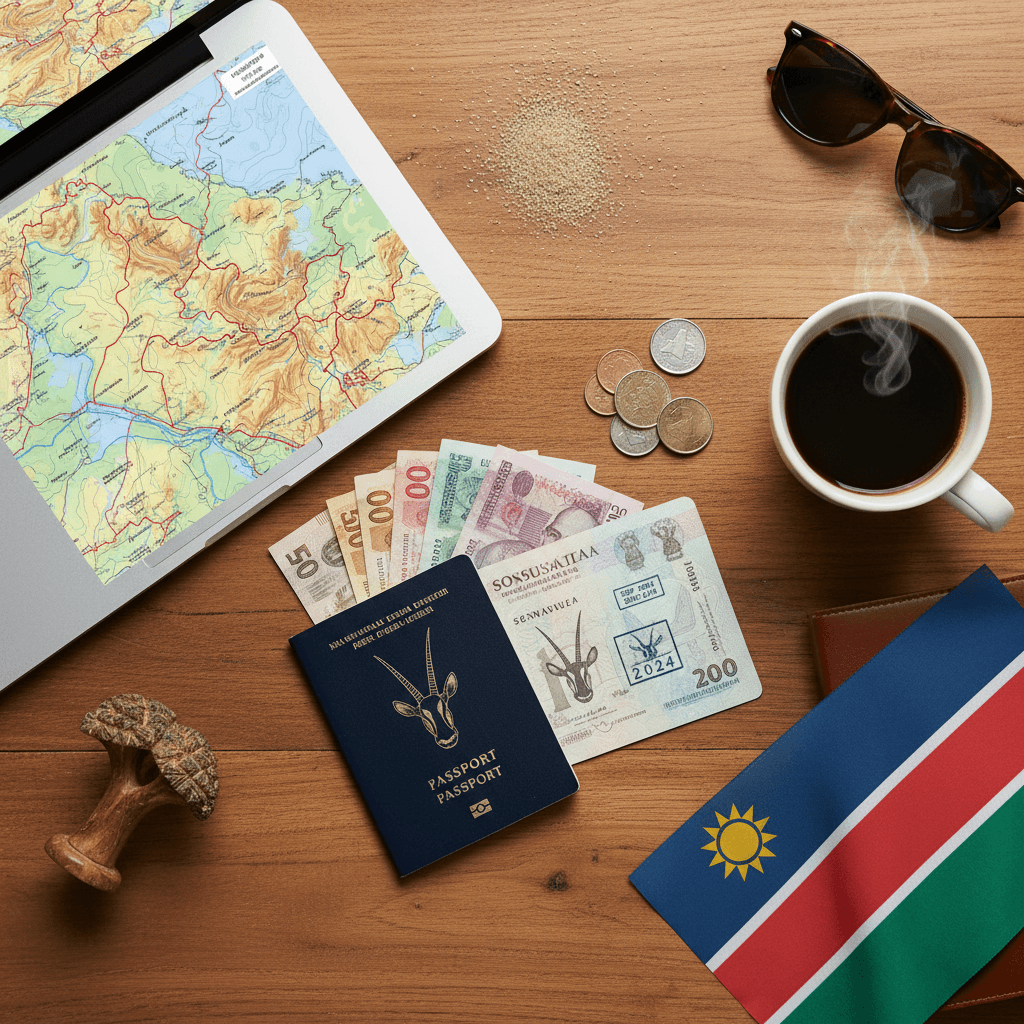
Namibia

Policy Stability
Stamped Nomad ExclusiveHow likely visa and immigration policies are to remain unchanged
Quick Facts
$124
$2,000/mo
6 months
No
$1,100/mo
47 Mbps
4/10
High
Medium
High
CAT (UTC+2)
Entry Methods Available
Best For
The New Landscape of Namibian Entry
Namibia has recently overhauled its immigration system, moving toward a digital-first approach that makes life easier for travelers while tightening up reciprocity rules. The most significant shift is the launch of the official e-Visa portal, which centralizes everything from standard tourist permits to business entries. While many Western nations previously enjoyed seamless visa-free entry, a new policy requires citizens from 33 countries, including the US, UK, Germany, Canada, and Australia, to obtain a visa on arrival or an e-Visa.
The cost for this entry is NAD 1,600 (roughly $85 USD or €80). If you are from one of the affected countries, you should apply for pre-approval through the online portal before you fly. The process is relatively quick, usually taking between 3 and 7 days, but it is best to get it sorted at least two weeks before your departure date.
Visa-Free Entry
A select group of nations still maintains visa-free status for stays up to 90 days. This list is primarily composed of neighboring SADC countries and a few strategic international partners. If you hold a passport from one of these locations, you can generally walk through immigration with just a stamp:
- Southern Africa: Angola, Botswana, Lesotho, Malawi, Mauritius, Mozambique, Seychelles, South Africa, Eswatini, Tanzania, Zambia, and Zimbabwe.
- International: Brazil, Cuba, Hong Kong SAR, Kenya, Russia, and Singapore.
The Tourist Visa (Visitor's Entry Permit)
For those not on the exempt list, the Visitor’s Entry Permit (VEP) is the standard ticket into the country. It allows for a stay of up to 90 days within a calendar year. If you find yourself falling in love with the desert landscapes and want to stay longer, you can apply for an extension while in-country.
Extending your stay costs NAD 600. You need to submit your application at least 48 hours before your current permit expires. Be prepared for a bit of paperwork; the Ministry requires a medical exam, your physical passport, a written justification for why you are staying, and proof of payment. The turnaround for these extensions is usually 2 to 3 days.
Business and Professional Travel
If you are heading to Windhoek for more than just a holiday, the Business Visa is the correct choice. This covers meetings, conferences, trade fairs, or short-term training sessions under 90 days. It specifically prohibits taking up local employment.
To secure a business visa, you will need to upload a few specific documents to the e-portal:
- An invitation letter from a registered Namibian company.
- A motivation letter from your current employer.
- Proof of sufficient funds and travel insurance.
- Confirmed accommodation and return transport details.
Specialized Visas and Digital Nomads
Namibia recognizes that not every traveler fits into a neat box. There are specific pathways for those coming for research, media production, or volunteer work. Research Visas require a specific permit from the National Commission on Research, Science and Technology, while Media and Film Visas require a permit from the Namibia Film Commission.
For the remote work crowd, the Digital Nomad Visa is a dedicated option for those employed by companies outside of Namibia. This requires proof of a consistent income (usually around $2,000 USD per month) and health insurance. It is a fantastic way to settle into the coastal vibes of Swakopmund or the coffee culture of Windhoek without the 90-day ticking clock of a tourist permit.
Key Dates and Requirements
The system is currently in a transition phase, so keep these milestones in mind for your planning:
- March 2025: The full launch of the e-Visa and e-VoA portal.
- April 1, 2025: Mandatory visa requirements began for 33 non-reciprocal countries.
- October 2025: Expansion of the e-VoA eligibility to an additional 36 nationalities.
Always ensure your passport is valid for at least 6 months beyond your intended date of departure and has at least 3 blank pages for stamps. Immigration officials at Hosea Kutako International Airport are strict about these basics.
Namibia's Remote Work Gateway
Namibia officially joined the digital nomad movement by launching a dedicated visa that caters specifically to the remote workforce. It is a joint effort between the Namibia Investment Promotion and Development Board (NIPDB) and the Ministry of Home Affairs. Unlike some countries that make you jump through endless bureaucratic hoops, Namibia has kept the process surprisingly lean and digital-friendly.
The visa is designed for people who want to swap their home office for the towering dunes of Sossusvlei or the rugged coastline of Swakopmund. It is an ideal setup if you are looking for a mid-term base in Southern Africa without the commitment of a long-term residency permit.
Income Requirements and Financials
The financial barrier to entry is relatively straightforward. Namibia wants to ensure you can support yourself without leaning on the local economy. The income thresholds are fixed in US Dollars, so keep an eye on exchange rates if your salary is in another currency.
- Single Applicant: You must prove a minimum monthly income of USD $2,000.
- Spouse/Partner: If you are bringing a partner, the requirement bumps up to USD $3,000 per month.
- Dependents: Add USD $500 for every child or additional dependent joining you.
Duration and Staying Legal
This visa is a short-term solution rather than a permanent move. It is valid for exactly 6 months. One thing to keep in mind is that this specific visa is non-renewable. If you fall in love with the country and want to stay longer, you have to leave when the six months are up. You can apply again, but only after waiting 12 months from the date your previous visa expired.
The Application Process
You do not need to visit an embassy to get the ball rolling. The entire application is handled via email. You will need to fill out Form 3-1/0033 and gather a standard stack of paperwork. This includes your passport, a medical certificate, police clearance from your home country, and six months of bank statements to prove that income we mentioned earlier.
Every document must be in English. If your original papers are in another language, you will need to get sworn translations. Once everything is ready, you email the package to the NIPDB. They usually review it within 7 to 10 working days before passing it to Home Affairs for the final stamp. Total processing time is typically 2 to 3 weeks, though it is smart to give yourself a full month of lead time. You only pay the visa fee of roughly NAD 2,200 (about USD $120) once you are approved.
Taxes and Fine Print
One of the biggest perks here is the tax situation. Because the visa caps your stay at six months, you do not hit the 183-day mark that usually triggers tax residency. This means you are not subject to Namibian income tax or social security contributions while you are there. You continue paying taxes in your home country or wherever your tax home is located.
There are a few hard rules to follow. You cannot take a local job with a Namibian company; your income must come from sources outside the country. Also, the conditions of your visa are locked in once it is issued. You cannot change your status or modify the terms while you are on the ground. It is strictly a "work from here, get paid from there" arrangement.
Key Contacts
If you run into a snag or have a specific question about your paperwork, you can reach out to the authorities directly. The NIPDB handles the intake, while Home Affairs handles the legalities.
- NIPDB Application Email: nomadvisa@nipdb.com
- Ministry of Home Affairs Inquiries: +264 81 951 0128
- Physical Address: Corner of Hosea Kutako Drive and Harvey Street, Windhoek
Source
The New Era of Namibian Entry
Namibia has recently overhauled its immigration policies to prioritize reciprocity. While the country remains incredibly welcoming to digital nomads, the days of universal visa-free entry for Western nations are shifting. The Ministry of Home Affairs, Immigration, Safety and Security (MHAISS) now manages a tiered system where your nationality dictates whether you walk through the gates for free, pay at the border, or apply online before you pack your bags.
Visa-Free Entry
Citizens from approximately 55 countries can still enter Namibia without a visa for up to 90 days per calendar year. This group primarily includes SADC neighbors like South Africa, Botswana, and Angola. While several European and North American countries historically enjoyed this privilege, the 2025 updates mean you must verify your current status on the official MHAISS portal before assuming your passport grants free entry. If you are exempt, you simply need a passport valid for 6 months with at least 3 blank pages.
Visa on Arrival (VOA) and E-Visas
For those not on the exempt list, the Visa on Arrival (VOA) is the most common path for nomads. This is available to nationals from over 100 countries, including many African nations and several South American and Middle Eastern territories. You can pick this up at 13 different ports of entry, including Hosea Kutako International Airport in Windhoek and the Walvis Bay Airport.
The smartest move is to use the E-visa system to pre-apply. This is essentially a digital version of the VOA that allows you to skip the manual paperwork queues at the border. The process is straightforward: register on the government portal, upload your passport scan, pay the fee, and wait about 48 hours for approval. You must print this approval and bring it with you.
- Standard VOA Cost: NAD 1,600 (approx. USD 90) for non-African nationals.
- African National VOA Cost: NAD 1,200.
- Manual Application Surcharge: An extra NAD 400 if you don't use the online portal.
- Required Documents: Proof of funds, a return flight, accommodation bookings, and a yellow fever certificate if you are coming from a high-risk zone.
Staying Longer: Extensions and Rules
Most tourist visas are issued for 30 to 90 days. If you fall in love with the desert and want to stay longer, you can apply for an extension at the MHAISS office in Windhoek. You should do this at least 48 hours before your current stamp expires. The process takes a few days, so don't leave it until the last minute.
- Extension Fee: Between NAD 400 and NAD 1,200 depending on the length of the stay.
- Requirements: A medical exam report, proof of continued funds, and your original passport.
- Maximum Stay: You generally cannot exceed 90 days in a single calendar year on a tourist visa without significant justification.
The Reality of Border Runs
While some nomads try to reset their 90-day clock by popping over the border to Botswana or South Africa, the Namibian authorities are savvy to this. Border runs are not a formal right. If an immigration officer decides you are "living" in the country on a tourist visa by cycling in and out, they can deny you re-entry. It is always better to follow the formal extension process than to risk a persona non grata status.
Penalties for Overstaying
Namibia takes its exit dates seriously. Overstaying your visa can result in immediate fines reaching NAD 12,000 (around USD 650). In extreme cases, you could face up to 2 years of imprisonment or a ban from the country for up to a year. If your visa is nearing its end and you can't get an extension, it is cheaper and safer to fly to Cape Town for a week and come back when your calendar year resets.
The Long Game in the Land of the Brave
Namibia doesn't have a traditional "Golden Visa" or a specific "Freelancer Permit" on the books, but that doesn't mean you can't set up shop here for the long haul. The country offers a few distinct pathways depending on whether you are bringing a remote job, a pile of capital, or your retirement savings. Most applications go through the Ministry of Home Affairs, Immigration, Safety and Security (MHAISS) e-services portal, with timelines ranging from one to six months.
The Digital Nomad Visa
If you aren't ready to commit to years of residency but want more than a standard tourist stamp, the Digital Nomad Visa is your best bet. It is designed for remote workers and freelancers who earn their income from outside the country. It is valid for up to six months, though you cannot renew it from within Namibia once it expires. You will need to show you can support yourself without dipping into the local job market.
- Income Requirement: At least USD 2,000 per month for the main applicant.
- Added Costs: USD 1,000 for a spouse and USD 500 per child.
- Documents: Proof of remote employment or client contracts, a portfolio of work, six months of bank statements, and proof of health insurance.
- Fees: Roughly NAD 1,600 to 3,200.
Investment-Based Residency
For those looking to plant deeper roots, the Business Investment Permit acts as a de facto residency program. This is a five-year renewable permit that requires a significant financial commitment to the local economy. Applications for the Employment Permit to Conduct Business are submitted through the NIPDB before the immigration office gives the green light.
- Minimum Investment: NAD 2 million (approximately USD 110,000) into a local business.
- Permit Fee: NAD 2,600 per year.
- Permanent Residency Pathway: You can apply for permanent status if your total investment reaches NAD 4 million or after you have successfully operated your business for five years.
- Processing Time: Usually three to five months.
Retiring in Namibia
Namibia is a popular choice for retirees, particularly those over the age of 60. Unlike other categories, retirees can often apply directly for permanent residence rather than cycling through temporary permits. The bar for entry is high to ensure you won't rely on the state, requiring both a lump sum investment and a steady monthly draw.
- Financial Threshold: NAD 2 million invested in property or a business, plus another NAD 2 million in liquid assets.
- Monthly Income: Proof of a pension or income over NAD 50,000 (about USD 2,750).
- Requirements: You will need original police clearances from your home country, a radiological report to screen for TB, and a full medical certificate.
The Path to Permanent Residency
If you aren't an investor or a retiree, the road to permanent residency is a test of patience. Most expats qualify after ten years of continuous legal residence on work permits. Namibia's standard commercial route now uses a five-year Employment Permit to Conduct Business for foreign investors and business owners, while a Short Term Employment Permit covers temporary corporate assignments, technical installations or media projects for up to six months.
When you finally hit the ten-year mark, or meet the investor thresholds, the application requires a mountain of paperwork. You will need to provide a NAD surety deed, a detailed CV, and proof of your integration into the community. Processing for permanent residency typically takes about six months, and once granted, it allows you to live and work in the country indefinitely without constantly refreshing your paperwork.
Source
The Nomad Bottom Line
Namibia is one of the more affordable gems for remote workers in Southern Africa. Your money goes surprisingly far here, especially if you enjoy high-quality local produce and don't mind skipping the imported European luxury goods. Most nomads find they can live a high-quality life for anywhere between $800 and $2,500 per month, depending on how much they prioritize coastal views or private transport.
Where You'll Stay
Windhoek is the urban heartbeat where most people start. It offers the best variety of apartments, ranging from functional studios to high-end pads in expat-heavy neighborhoods. If you prefer the Atlantic breeze, Swakopmund and Walvis Bay offer a slower pace with slightly higher price tags due to their popularity with tourists.
- Windhoek: Budget options in the city center start around $350 to $500. For a comfortable 1BR in a modern building, expect to pay $500 to $700. Premium apartments in secure complexes go for $800 and up.
- Swakopmund: Beachside living is the draw here. Budget spots run $327 to $450, while comfortable central apartments average $450 to $600. Premium coastal villas can easily clear $800.
- Walvis Bay: This port city is often the most affordable coastal choice. You can find budget units for $300 to $450, with comfortable mid-range options landing between $450 and $550.
Fueling Your Workday
Groceries will likely be your second-largest expense. Shopping at local markets and sticking to regional staples like game meat and seasonal produce keeps costs between $250 and $350. If you crave imported cheeses or specific international brands, that budget jumps toward $500. Eating out is a bargain compared to Europe or North America; a quick lunch is usually $5 to $10, while a nice three-course dinner at a mid-range spot costs about $15 to $30.
Getting Around and Staying Connected
Windhoek is the only city with a semi-reliable public transport network, though most nomads rely on rideshare apps for safety and convenience. Budget roughly $50 to $100 for monthly rideshare use. If you plan to explore the desert on weekends, a car rental is a major expense, with gas prices sitting around $1.20 per liter. For work, a dedicated desk at a coworking space in Windhoek or Swakopmund costs between $150 and $200 per month. If you only need occasional access, day passes are available for $20 to $50.
Health and Security
Namibia requires proof of health insurance for its nomad visa. While public facilities exist, private care in Windhoek is the standard for expats. Basic emergency and evacuation plans cost about $50 to $150 monthly. For a premium plan that includes outpatient visits and global coverage, expect to pay $150 to $250.
Lifestyle Tiers
To help you plan, here is how the monthly math breaks down across three different lifestyle levels. Note that coastal living generally adds a 5% to 10% premium to these totals.
The Budget Nomad
- Total Monthly (excluding rent): $400 to $600
- Windhoek 1BR Rent: $350
- Total: $800 to $1,000
- Lifestyle: You eat local food, use public transport or walk, and stick to a basic insurance plan.
The Comfortable Nomad
- Total Monthly (excluding rent): $700 to $1,000
- Windhoek 1BR Rent: $500 to $600
- Total: $1,300 to $1,700
- Lifestyle: You mix home cooking with dining out, use a coworking space, and take rideshares.
The Premium Nomad
- Total Monthly (excluding rent): $1,200+
- Windhoek 1BR Rent: $800+
- Total: $2,000 to $2,500+
- Lifestyle: You live in a top-tier neighborhood, rent a private vehicle, and opt for comprehensive global health coverage.
Choosing Your Base in Namibia
Namibia is a vast country, but the infrastructure for remote work is concentrated in a few key hubs. While you can find 4G signal in some surprising corners of the desert, most nomads stick to the "Golden Triangle" of Windhoek, Swakopmund, and Walvis Bay. These cities offer the best balance of stable fiber connections, dedicated desk space, and a community of like-minded travelers.
The cost of living across the board is a major draw. You can live comfortably on less than $1,000 a month, which is a fraction of what you would spend in Cape Town or European capitals. Here is how the top three spots stack up for your next work-from-anywhere stint.
Windhoek: The Urban Hub
As the capital city, Windhoek is the heartbeat of Namibia's professional world. It is where you will find the most robust infrastructure and the largest variety of places to set up your laptop. The city feels like a blend of German colonial history and modern African ambition, with a growing startup scene centered around places like The Village and CcHUB.
- Monthly Cost: Approximately $985
- Internet Speeds: 10-45 Mbps on average
- Best Coworking: Regus, The Village, and CcHUB
- Vibe: Fast-paced, administrative, and social
The perks of Windhoek include a genuine cafe culture and the best nightlife in the country. You can spend your mornings at Slowtown Coffee Roasters and your Friday nights at clubs like Mynt. The downside is the safety factor; while it is generally fine during the day, you need to be vigilant about petty crime and avoid walking alone after dark.
Swakopmund: The Coastal Retreat
If you prefer the sound of the Atlantic Ocean over city traffic, Swakopmund is the place to be. It is arguably the most popular spot for nomads because of its relaxed atmosphere and cooler climate. The city is incredibly walkable, and the crime rate is significantly lower than in the capital.
- Monthly Cost: Approximately $834
- Internet Speeds: Reliable fiber and 4G coverage
- Best Coworking: Desert & Ocean, Atrium, and Startup Namibia
- Vibe: Adventure-focused, breezy, and safe
Swakopmund offers a unique work-life balance. You can finish a Zoom call and be sandboarding down a dune or eating fresh oysters by the pier twenty minutes later. The nomad community here is small but very tight-knit. The only real "con" is that the nightlife is more about cozy pubs and quiet dinners rather than big parties.
Walvis Bay: The Industrial Alternative
Just a short 30-minute drive south of Swakopmund lies Walvis Bay. It is a major port town and feels more industrial and functional than its neighbor. While it has fewer "aesthetic" cafes, it offers the lowest cost of living of the three major hubs, making it a great choice for budget-conscious travelers who still need professional amenities.
- Monthly Cost: Approximately $857
- Internet Speeds: Solid 4G and urban fiber lines
- Best Coworking: Regus
- Vibe: Practical, quiet, and maritime
Walvis Bay is perfect if you want a quiet base to focus on a big project. The waterfront area has seen a lot of development recently, with lounges like Wizzy Man and various spots along the lagoon where you can watch flamingos while you work. It lacks the "cool" factor of Swakopmund, but it is a reliable and affordable logistics hub.
Quick Snapshot Comparison
Windhoek
- Pros: Best networking opportunities, diverse food scene, and most coworking spaces.
- Cons: Higher crime risk and no ocean breeze.
Swakopmund
- Pros: Very safe, beautiful architecture, and endless outdoor activities.
- Cons: Can feel a bit "touristy" during peak seasons.
Walvis Bay
- Pros: Affordable rentals and easy access to the harbor and lagoon.
- Cons: Limited social scene for younger nomads.
Internet Quality and Speed
Namibia is a vast country where the digital infrastructure is concentrated in major hubs. If you are sticking to Windhoek or the coastal strip of Swakopmund and Walvis Bay, you will find a surprisingly robust fiber network. Providers like Paratus and Telecom Namibia have been aggressively expanding, pushing fixed broadband averages to around 16 Mbps. While that might sound modest by European standards, it is stable enough for video calls and heavy cloud work.
The real secret for nomads here is the mobile network. With download speeds averaging 46 Mbps, many travelers find that a local SIM card or a mobile hotspot outperforms the Wi-Fi in their rental. 4G coverage is excellent in urban areas, and 5G is beginning to roll out in the capital, providing a reliable safety net if your Airbnb fiber decides to take a nap.
Top Coworking Hubs
Windhoek is the undisputed heart of the country's remote work scene. The city offers professional environments that wouldn't look out of place in London or Cape Town. If you head to the coast, Swakopmund provides a more relaxed, community-focused vibe that suits the "slow nomad" lifestyle.
- Regus (Maerua Mall), Windhoek: This is the go-to for corporate reliability. It features ergonomic setups, private lounges, and multiple locations across the capital. It is ideal if you need a polished backdrop for client meetings.
- DoBox, Windhoek: A favorite for the entrepreneurial crowd. They offer direct fiber internet, free-flowing coffee, and a collaborative atmosphere with dedicated boardrooms for team sessions.
- Desert & Ocean, Swakopmund: This space caters specifically to the nomad community. With fiber speeds of 25+ Mbps, on-site showers, and easy parking, it is the perfect base for those spending their mornings on the dunes and their afternoons on Zoom.
Membership and Pass Costs
Budgeting for a desk in Namibia is straightforward, though long-term contracts offer the best value. Most spaces have flexible daily rates for those just passing through on a road trip.
- Regus Coworking: Daily access starts around N$62 (~$3.50 USD) on a monthly plan, while a dedicated desk for the day is roughly N$110.
- Desert & Ocean: A full month of unlimited access will cost you N$4,000 (~$225 USD).
- DoBox / iHub Styles: Expect to pay around N$4,000 per month for 24/7 access to a dedicated desk and high-speed infrastructure.
Cafe Culture and Connectivity
If you prefer the hum of a coffee shop, Windhoek’s cafe scene is impressively connected. Places like Vintage Coffee Shop and Craft Café are nomad staples. You can often find fiber connections reaching up to 150 Mbps in these urban spots. Most restaurants in the city centers offer free Wi-Fi as standard, and power outages are rare compared to neighboring countries, making "cafe hopping" a viable work strategy.
Mobile Data and SIM Cards
Pick up a SIM card as soon as you land at Hosea Kutako International Airport. MTC is the dominant provider with the widest coverage, especially if you plan to venture into the desert. Telecom Namibia and Paratus are excellent alternatives for data-heavy users staying in cities.
- MTC Tourist Bundle: 18GB of data plus calls and SMS for N$290 (~$16 USD), valid for 30 days.
- Telecom Namibia: Offers an uncapped one-week data pass for N$300 (~$16 USD), which is perfect for heavy upload weeks.
- Paratus LTE: Pre-paid options include 20GB bundles, or you can opt for 7-day uncapped plans limited to 10 Mbps.
- eSIMs: For immediate connectivity, providers like Nomad or aloSIM offer 1GB starters for $9.50 to $25 USD, though local SIMs are significantly cheaper for long-term stays.
The Reality of Healthcare in Namibia
Namibia offers a stark contrast between its public and private medical sectors. While the public system supports the vast majority of the population, it often grapples with long wait times and resource shortages. For digital nomads, the private sector is the standard. About 80% of the country's medical specialists are based in Windhoek, making the capital your primary hub for any serious health needs.
Private facilities in Windhoek are modern and meet international standards. However, Namibia is a massive, sparsely populated country. If you are working from a remote desert lodge or a coastal town like Lüderitz, specialized care could be hours away. This makes medical evacuation coverage a non-negotiable part of your kit.
Private Hospitals in Windhoek
If you need more than a routine check-up, you will likely head to one of these three major private institutions in the capital:
- Mediclinic Windhoek: Located in the Eros suburb, this is a top choice for international patients seeking specialized care and emergency services.
- Roman Catholic Hospital: A centrally located facility known for high-quality surgical care and professional consultations.
- Rhino Park Private Hospital: A well-equipped hospital offering a broad range of medical services and modern operating theatres.
Insurance Requirements and Providers
Having health insurance isn't just a good idea; it is a mandatory requirement for the Namibia Digital Nomad Visa. Your policy must specifically cover hospitalization, emergencies, and repatriation. Most private clinics expect upfront cash payment or a credit card deposit before treatment, regardless of your insurance status. Always keep your receipts and detailed prescriptions to file for reimbursement later.
Recommended providers for nomads include:
- SafetyWing or World Nomads: Popular choices for those who need flexible, nomad-specific travel medical insurance.
- Cigna Global or Allianz: Better suited for long-term expats who want comprehensive international coverage.
- Nammed: A local Namibian medical aid scheme that provides deep integration with the country's private healthcare network.
Cost of Care
Medical costs in Namibia are generally lower than in the U.S. or Western Europe, but private clinics set their own rates. While many follow the Namibia Health Plan benchmark tariffs, they can charge more for specialized procedures. For example, oncology benefits can reach up to N$739,329 per family annually under local plans. Routine consultations are affordable, but specialized surgeries or long-term hospital stays can add up quickly without international coverage.
Pharmacies and Prescriptions
Windhoek has an excellent network of pharmacies stocked with a wide range of medications. Pharmacists follow strict standards similar to the FDA, and the Drug Control Board monitors all imports. You will find that generic medications are often prioritized to keep costs down.
If you rely on specific brand-name medication, bring a several-month supply from home. While the local pharmacy might have the equivalent, the brand names often differ, and rural areas may have limited stock. Always carry a copy of your physical prescription to avoid issues at customs or when seeking refills.
Emergency Response
In a serious crisis, response times in Windhoek have improved significantly, with some ambulances arriving in under 10 minutes. Outside the capital, the situation is different. For remote emergencies, air evacuation to Windhoek or even South Africa is common.
Save these emergency contacts in your phone:
- International SOS (ISOS): +264 61 230505. They operate ambulance aircraft for rapid evacuation from remote regions.
- E-Med Rescue 24: A reliable, locally-owned emergency medical evacuation service.
- General Emergency: 112 (from mobile phones).
Pro Tips for Staying Healthy
- Hydration: Namibia is incredibly arid. Dehydration is a more common threat than tropical diseases.
- Medical Records: Keep digital copies of your blood type, allergies, and vaccination records on your phone.
- Evacuation: Ensure your insurance includes "Search and Rescue" or "Medical Evacuation," as the cost of a private flight from the dunes to Windhoek can be staggering.
The Currency Connection
Namibia operates on a unique monetary arrangement. The Namibian Dollar (NAD) is pegged 1:1 to the South African Rand (ZAR). This means you can use both currencies interchangeably throughout the country. If you have leftover Rand from a trip to Cape Town, it is perfectly legal tender here. However, remember that the NAD is not legal tender outside of Namibia, so try to spend your local notes or swap them for Rand before crossing the border.
Credit and debit cards are widely accepted at supermarkets, hotels, and fuel stations in major hubs like Windhoek and Swakopmund. Still, carrying a bit of cash is smart for smaller roadside stalls or rural campsites where signal can be spotty.
Opening a Local Account
If you plan on staying for several months, opening a local bank account can save you a headache with local payments. Major players include Standard Bank Namibia, FNB Namibia, Nedbank Namibia, and Bank Windhoek. Both residents and non-residents can open accounts, though the paperwork for non-residents is slightly more rigorous.
You will need to visit a branch in person. The process usually takes between three days to a week. To get started, bring these documents:
- A valid passport.
- Proof of address, such as a rental agreement in Namibia or a utility bill from your home country.
- A letter of employment or proof of income.
- Your visa or work permit.
- An initial minimum deposit, which depends on the specific account type you choose.
ATMs and Hidden Fees
ATMs are everywhere in urban areas, but they come with a price tag for international travelers. FNB usually charges around N$10 to N$15 per withdrawal plus an additional N$10 for every N$500 taken out. Standard Bank can be even pricier, often charging N$65.50 plus a 3.3% fee for international cards.
Always choose to be charged in NAD rather than your home currency. This avoids Dynamic Currency Conversion (DCC), which is essentially a legalized way for banks to give you a terrible exchange rate. If you have a premium travel card, check if they offer fee-free international withdrawals to offset these local costs.
Digital Wallets and Transfers
For the modern nomad, Wise is your best friend in Namibia. While you cannot open a full Wise account as a Namibian resident, you can use their services to send money to local bank accounts with minimal fees. Transfers are often instant or take just a few days. Revolut cards also work for daily spending and ATM withdrawals, but be aware of their £200 monthly limit on fee-free withdrawals before the 2% fee kicks in.
When you need to move larger sums or pay a local landlord, skip the traditional bank wires. Use these methods instead:
- Wise: Best for low fees and multi-currency management.
- Western Union or TransferGo: Great for quick cash pickups or direct bank deposits; your first transfer is often free.
- PayPal: Functional, but watch out for high conversion spreads.
The Crypto Scene
Namibia has taken a proactive stance on digital assets. The 2023 Virtual Assets Act ensures that the industry is regulated rather than banned. While Bitcoin is not legal tender for paying taxes or debts, it is legal to trade and hold if you use a licensed Virtual Asset Service Provider (VASP). The government keeps a close eye on this; companies operating without a license face massive fines of up to N$10 million or prison time. For the average nomad, this means you can trade freely on major global exchanges, but do not expect to pay for your morning coffee with Ethereum just yet.
Bringing Your Family to Namibia
Namibia is one of the few places where you can balance a high-speed digital career with a lifestyle that feels like a perpetual safari. For nomadic families, the transition is surprisingly smooth, provided you understand the administrative quirks. Unlike some neighboring countries, Namibia is welcoming to dependents, but they do require a strict paper trail to get settled.
Visas and Dependent Permits
If you are heading to Namibia on a work permit, your legal spouse and children under 21 can join you on dependent permits. Be aware that Namibia only recognizes legal marriages; common-law partnerships or long-term partners won't qualify for this specific permit. Your children must be either biological or legally adopted to be included.
- Financial Proof: You must prove you can support everyone without them needing to work locally.
- Work Restrictions: Dependents are strictly prohibited from taking local jobs unless they apply for their own separate work authorization.
- Insurance: You will need conditional health insurance that covers everyone for the duration of your stay.
- Validity: Their permits will be tied to yours, so they expire the moment your main permit does.
Education and International Schools
Windhoek is the undisputed hub for international education. If your kids are used to the IB or Cambridge systems, you will likely end up at Windhoek International School or St Paul’s College. The quality of private education here is high, often mirroring the standards found in South Africa or Europe.
Annual tuition varies significantly based on the school's prestige and facilities. Here is a breakdown of what to expect for yearly fees:
- St Paul’s College: Between N$75,000 and N$110,000.
- Windhoek Gymnasium: Between N$70,000 and N$90,000.
- Windhoek International School: Average fees for Grade 1 start around N$61,800, rising to N$79,500 for Grade 12.
- Waldorf School: A more budget-friendly option at N$35,000 to N$40,000.
- Walvis Bay Gymnasium: For those living on the coast, expect to pay between N$70,000 and N$75,000.
Childcare and Early Childhood Costs
For younger children, childcare is remarkably affordable compared to North American or European rates. Daycare centers for toddlers aged 1 to 3 typically charge between N$900 for half-day sessions and N$1,600 for full-day care. These monthly fees usually include meals and snacks, though you will pay a small enrollment fee of about N$250. Most centers offer discounts if you are enrolling more than one child.
Healthcare for the Little Ones
The public healthcare system handles basic needs like routine immunizations and common childhood illnesses. However, most expats stick to private facilities in Windhoek. These private hospitals offer shorter wait times and access to specialists that you won't find in the more remote regions. It is a good idea to maintain international insurance that covers medical evacuation to South Africa for major emergencies, just in case.
Where to Set Up Base
Windhoek is the easiest choice for families because it has the best infrastructure, sports clubs, and extracurricular activities like gymnastics and football. If you prefer the ocean, Walvis Bay is a great alternative. It offers a slower pace of life with waterfront picnics and birdwatching, while still providing high-quality private schooling.
Safety and Practicality
Namibia is frequently cited as one of the safest countries in Africa. You can generally walk around with your kids during the day without worry. The biggest risks are actually on the road. If you are traveling between cities, avoid driving at night to miss the wildlife, and always carry a robust first-aid kit when heading into the desert. In the cities, use the same common sense you would use anywhere else: keep your car doors locked and don't leave your laptop bag visible on the backseat.
Street Smarts and Personal Safety
Namibia is widely regarded as one of the most stable and secure destinations on the continent. While the political climate is calm, urban centers like Windhoek require the same level of awareness you would bring to any major global city. You can enjoy the sunshine during the day for a hike or a run, but once the sun sets, it is best to stick with a group or use a reputable taxi service rather than walking alone.
Most issues travelers face are crimes of opportunity. Pickpocketing and "smash and grabs" from vehicles are the most frequent reports. To keep your gear safe, follow a few simple rules:
- Keep your laptop and phone out of sight when sitting in roadside cafes or bars.
- Never leave valuables in your car, even if they are tucked under a seat.
- Be wary of "distraction" scams at ATMs where someone offers to help you with the machine; always use ATMs inside banks or guarded shopping centers.
- Double-check your credit card statements, as card skimming can occur at hotels or smaller lodges.
The Cultural Landscape
Namibian society is built on a foundation of politeness and deep respect for elders. If you are rushing into a shop or starting a business meeting, always take a moment for a formal greeting before diving into your request. A handshake is the standard greeting, but you will notice locals often hold their right elbow with their left hand as a sign of deference. In some regions, like those home to the Ovambo people, rhythmic hand-clapping often accompanies a hello.
If you find yourself invited to a local home, keep these etiquette tips in mind:
- Bring a small token of appreciation like high-quality tea, coffee, or sweets.
- Remove your hat before entering the house.
- Wait for the eldest person at the table to take the first bite before you start eating.
- Try to finish what is on your plate, as leaving food is often seen as wasteful.
Public displays of affection are quite rare. While holding hands is generally fine, heavy kissing or aggressive physical contact in public is frowned upon and may draw unwanted attention.
LGBTQ+ Considerations
The legal environment for LGBTQ+ travelers is currently in a state of flux. In June 2024, the High Court made a landmark ruling to decriminalize same-sex activity by striking down old sodomy laws. Despite this progress, the government passed a law in December 2024 that bans same-sex marriage and penalizes those who perform such ceremonies.
While Namibia is statistically one of the more tolerant countries in the region, the social climate remains conservative. Pride events have been held since 2013, but most queer travelers choose to keep a low profile regarding their private lives to avoid potential discrimination in smaller towns or when accessing services.
Communication and Language
English is the official language, which makes life incredibly easy for remote workers. However, you will rarely hear "pure" English on the streets. Instead, you will encounter "Namish," a colorful blend of English, Afrikaans, German, and indigenous languages like Oshiwambo or Otjiherero. While only about 0.8% of the population speaks English as a first language, almost everyone in urban areas uses it fluently as a second or third tongue.
Learning a few words of Afrikaans or a local greeting like "Moro" can break the ice instantly. Most locals appreciate the effort, even if your pronunciation is a bit off.
Building a Social Circle
The digital nomad scene is blossoming, particularly in Windhoek. Coliving spaces have become the heartbeat of the expat community, offering more than just a desk and a Wi-Fi connection. These hubs frequently host communal BBQs, traditional cooking classes, and networking nights that make it easy to meet people quickly.
If you want to move beyond the "nomad bubble," consider these avenues for integration:
- Join a local yoga studio or a weekend hiking club.
- Check Facebook groups for expat meetups at popular breweries.
- Sign up for a volunteer project or a skills-sharing session at a coworking space.
Namibians are generally reserved but very welcoming once the ice is broken. A respectful, patient attitude is your best tool for making lasting connections here.
Understanding the Source-Based System
Namibia is a hidden gem for digital nomads, largely because it operates on a source-based tax system. Unlike many countries that want a piece of everything you earn globally, Namibia generally only taxes income that originates from a source within its borders. If you are working for a company in London or freelancing for clients in New York while sitting in a cafe in Windhoek, that money is usually considered foreign-sourced and remains outside the Namibian tax net.
There are no special tax breaks or "nomad-specific" exemptions here because the standard system is already quite favorable to remote workers. However, things change if you stay long enough to be classified as a tax resident. While the source principle still protects much of your foreign income, becoming a resident can complicate your tax profile and potentially expose you to worldwide income taxation under specific circumstances.
The 183-Day Rule and Residency Triggers
To stay on the right side of the law, you need to keep a close eye on your calendar. Namibia uses two primary tests to determine if you have become a tax resident. The most common trigger is spending more than 183 days in the country during any 12-month period. These days do not have to be consecutive; the tax office counts the aggregate total of your stay.
There is also a "physical presence" test for long-term visitors. You might be deemed a resident if you spend more than 91 days per year in Namibia for five consecutive years, totaling 915 days over that period. The tax year in Namibia runs from March 1 to February 28. If you are planning a long stint, keep your passport stamps and rental agreements handy to prove exactly how long you have been on the ground.
Income Tax Brackets for 2025/26
If you do end up earning money from a local Namibian source, or if your residency status changes your tax obligations, you will fall into a progressive tax system. The rates for the 2025/26 cycle are tiered based on your annual income in Namibian Dollars (N$):
- N$0 – N$100,000: 0% (Tax-free)
- N$100,001 – N$150,000: 18% on the amount over 100,000
- N$150,001 – N$350,000: N$9,000 plus 25% on the amount over 150,000
- N$350,001 – N$550,000: N$59,000 plus 28% on the amount over 350,000
- N$550,001 – N$850,000: N$115,000 plus 30% on the amount over 550,000
- N$850,001 – N$1,500,000: N$205,000 plus 32% on the amount over 850,000
- Over N$1,500,000: N$429,000 plus 37% on the amount over 1,500,000
The top marginal rate hits 37% for high earners. Since the Namibian Dollar is pegged 1:1 with the South African Rand, it is relatively easy to track your earnings against these brackets if you are used to regional currency values.
Crypto and Capital Gains
If you trade cryptocurrency, you should know that Namibia has moved to bring these digital assets into the tax fold. Profits from crypto are generally treated as capital gains, which carry a rate of around 20% depending on your specific bracket. If you use crypto to pay for goods or services within the country, VAT may also apply to those transactions. The government is currently advancing specific regulatory bills, but for now, the rule of thumb is that if the gain is deemed to be Namibia-sourced, it is taxable.
Treaties and Reporting
Namibia has Double Taxation Agreements (DTAs) with several countries to ensure you aren't taxed twice on the same dollar. These include the UK, Germany, South Africa, Malaysia, and Mauritius. Notably, there is no treaty with the United States, so American nomads should be extra diligent about their filing requirements back home.
If you are required to file, the deadline is June 30 following the end of the tax year. Even if you don't owe anything, maintaining a paper trail is smart. Most nomads on the 6-month Digital Nomad Visa (which requires proof of $2,000 monthly income) will leave before residency triggers kick in, keeping their tax life simple and focused entirely on their home country.
Staying Connected
Internet is the lifeblood of the nomad lifestyle, and in Namibia, your best bet is to handle this the moment you land. Head straight to the MTC or Telecom Namibia stands at Windhoek Hosea Kutako International Airport. MTC is generally the crowd favorite because their network reaches further into the desert than anyone else.
A physical SIM card will set you back about 30 to 50 NAD. For heavy users, look for the weekly unlimited data bundles which cost around 300 NAD (roughly $16 USD). While eSIM providers like aloSIM or Nomad are available, they are significantly more expensive at $9.50 USD for a measly 1GB. Stick to local prepaid options to keep your speeds up and costs down.
Where to Set Up Base
Windhoek is the primary hub for remote work, but the vibe varies wildly between neighborhoods. If you want a serene atmosphere with plenty of cafes where you can actually get work done, Klein Windhoek is your best bet. It is walkable and feels more like a leafy suburb than a capital city.
For those who prefer a community feel and dedicated coworking spaces, Hochland Park is the go-to. If you prioritize wellness and quiet residential streets, look into Eros. It is calm, safe, and close enough to the city center that you won't feel isolated.
Finding a Home
Airbnb and Booking.com stay dominant here for monthly rentals. You can often snag "nomad discounts" for longer stays, but always message the host first to ask for a screenshot of a speed test. Fiber is growing, but many places still rely on spotty satellite or 4G routers.
If you want a more social environment, check platforms like Nomad Stays or Mapmelon. These sites specialize in verified coliving spaces where the WiFi is guaranteed to work. Namibia has a limited supply of high-quality short-term housing, so try to book your spot at least two to three months in advance.
Getting Around and Eating In
Standard taxis can be hit or miss, so download Namride for reliable e-hailing. If you are planning to head between cities, Pickup Namibia is a great shout for shared rides; it includes user tracking and a chat feature for safety. For a more familiar interface, Yango also operates in the city and is generally cheaper than flagging a car on the street.
When you are too deep into a project to cook, Dial-A-Meal is the primary delivery service. It works in Windhoek, Walvis Bay, and Swakopmund. They cover everything from local game steaks to Thai food, though keep in mind that delivery times can be a bit relaxed during peak hours.
Language and Communication
English is the official language, so you will get by easily in professional settings. However, learning a few phrases in Afrikaans or local languages goes a long way when you are off the beaten path. Use the Learn Alingo app for Oshiwambo or Otjiherero basics, or NKENNE if you want to pick up some Zulu or Swahili phrases that often pop up in regional conversation.
Avoiding Common Pitfalls
- The Distance Factor: Namibia is massive. A "short drive" on a map can take six hours on gravel roads. Always add 20% more time to your GPS estimates and rent a 4x4 if you plan to leave the paved highways.
- Cash is King: While cards work in Windhoek malls, the signal often drops in rural areas. Always keep a stash of NAD or South African Rand (which is accepted 1:1) for fuel and small shops.
- Safety First: Petty crime, specifically car break-ins, happens in Windhoek. Never leave your laptop bag or camera visible in a parked car, even for a quick coffee run.
Emergency Contacts
Save these numbers before you lose signal in the dunes. For general emergencies or police, dial 10111, 999, or 112. If you need an ambulance anywhere in the country, call 10177. For private medical emergencies, eMed Rescue is highly reliable; you can reach them at 061 411 600 or 081 924.
Latest Nomad News
More Guides from Africa
Stay Updated on Namibia
Get notified about visa changes, policy updates, and new information for digital nomads in Namibia.