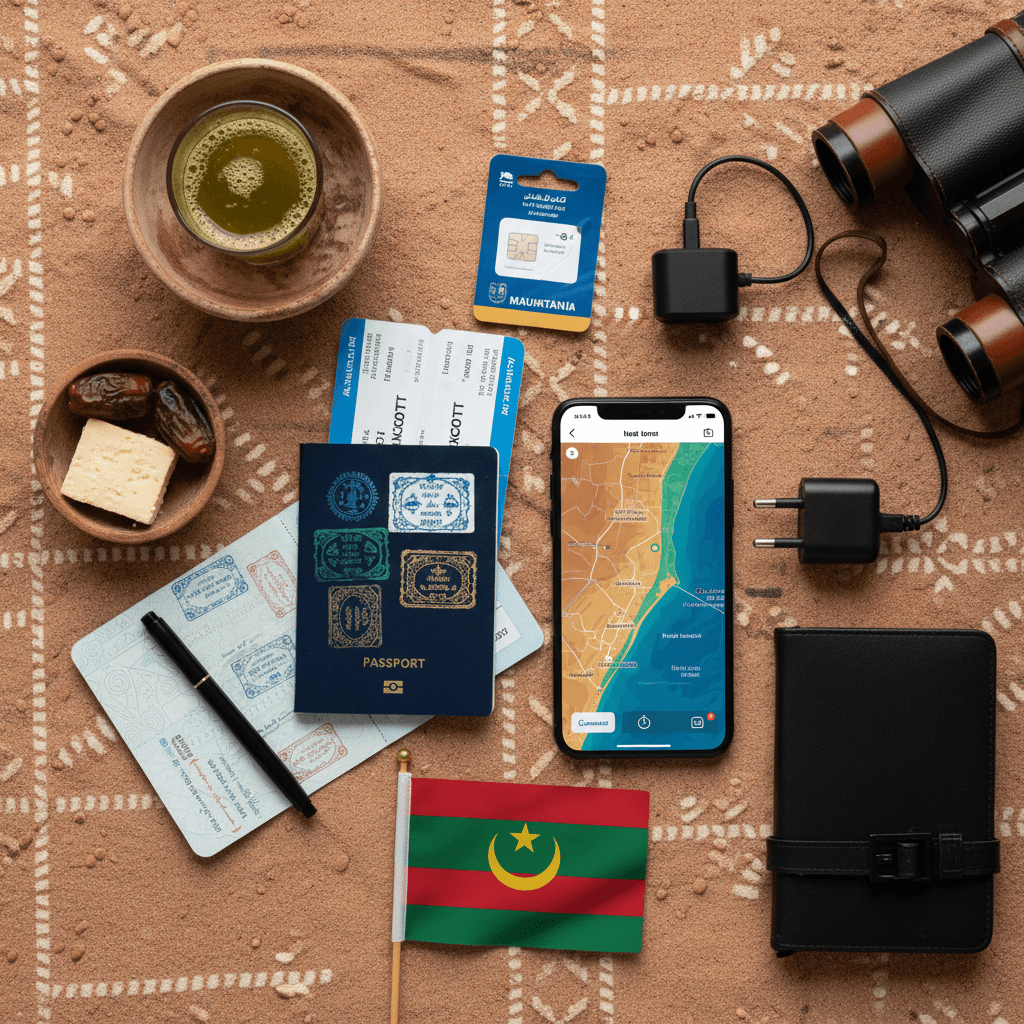
Mauritania

Policy Stability
Stamped Nomad ExclusiveHow likely visa and immigration policies are to remain unchanged
Quick Facts
N/A
12 months
Yes
$900/mo
56 Mbps
7/10
Medium
Low
Low
GMT
Entry Methods Available
Best For
The New Digital Doorway
Mauritania recently overhauled its entry requirements, moving toward a fully digitized system. If you used to fly into Nouakchott expecting to just hand over some cash for a sticker in your passport, those days are over. The country officially ended its traditional visa on arrival program on January 5, 2025. Now, almost every traveler needs to secure an e-visa approval before they even board their flight.
The process is managed by the National Agency for Population Register and Secure Titles (ANRPTS). While the application happens online, the final steps, including biometric data collection and fee payment, still happen when you touch down at the airport or cross a land border. It is a hybrid system designed to speed up the transition while keeping security tight.
Choosing Your Duration
Digital nomads usually look for flexibility, and the e-visa system offers a few different tiers depending on how long you plan to stay in the dunes. You can apply for three main durations through the portal:
- 30-day visa: Best for a quick scouting trip or a short stint in the capital.
- 90-day visa: The sweet spot for most nomads wanting to experience the Adrar region and the coast.
- 360-day visa: A long-term option for those truly committed to the Saharan lifestyle.
While the 30-day version was the old standard, the 90-day and one-year options are increasingly popular for remote workers. If you find yourself wanting to stay longer once you are on the ground, you will need to visit a local immigration office, though these extensions are handled on a case-by-case basis and are not guaranteed.
The Application Process
Applying is relatively straightforward, but the portal can be picky about technical details. You will need a digital scan of your passport, a recent photo, and supporting documents like an invitation letter or hotel confirmation. Keep your file sizes small; the system generally rejects anything over 400KB.
Once you submit, approval usually lands in your inbox within 24 to 72 hours. You must print this approval document and carry it with you. When you arrive in Mauritania, officers will take your fingerprints and photo before finalizing the visa. If you are coming from a region where yellow fever is endemic, have your vaccination certificate ready, as they may ask for it during this stage.
Business vs. Tourist Visas
If you are strictly there to work from a laptop, the tourist e-visa is the standard path. However, if your stay involves formal meetings or local partnerships, the business e-visa is the better fit. The requirements are nearly identical, but you will need a formal business letter stating your purpose and local contacts. Both types allow for multiple entries if you opt for the longer-duration versions, which is handy if you plan on hopping over to Morocco or Senegal.
Exemptions and Regional Access
A handful of neighboring and regional partners do not need a visa at all. Citizens from these countries can stay for up to 90 days visa-free:
- Algeria, Chad, and Côte d'Ivoire
- Gambia, Libya, and Mali
- Niger, Senegal, and Tunisia
Additionally, holders of diplomatic or service passports from countries like Brazil, China, Turkey, and Morocco generally bypass the e-visa requirement. For everyone else, the online portal is the only legal way in, as Mauritanian embassies have largely stopped processing paper applications in favor of the digital system.
Key Logistics for 2025 and 2026
The transition that started in early 2025 is now the permanent standard. There are no indications of further major shifts for 2026, so the current e-visa portal remains your primary tool. Always double-check your passport validity; it must be valid for at least six months beyond your planned departure date. While the approval happens online, remember to have Euros or US Dollars cash on hand for the final fees at the border, as credit card machines in Mauritania can be temperamental.
Source 1 | Source 2
The Current Reality
Mauritania is a land of vast deserts and ancient libraries, but it hasn't quite caught up to the digital nomad trend yet. There is no dedicated digital nomad visa program here. If you are looking for a formal "Remote Work" stamp in your passport, you won't find one. Instead, the nomad community relies on standard entry permits to explore this corner of the Sahara.
Most travelers utilize the electronic visa system. While it isn't tailored for remote workers, it provides a legal path for entry. You will find that the government focuses more on security and registration than on your specific employment status, provided you aren't seeking local Mauritanian clients.
Visa Options and Durations
The e-visa system is surprisingly flexible regarding how long you can stay. While many African nations cap tourists at 30 days, Mauritania offers several tiers for those who want to settle in for a while. You can choose from the following options:
- Short Stay: A 30-day single-entry permit.
- Medium Stay: A 90-day permit, available in single or multiple entry formats.
- Long Stay: A 360-day multiple-entry visa for those committed to the long haul.
The cost is relatively standardized. You can expect to pay approximately €55 or $60 for a standard 30-day stay. One quirk of the Mauritanian system is that while you apply and get approval online, you often pay the actual fee in cash upon arrival at the airport in Nouakchott or at specific border crossings. Always keep crisp Euro or Dollar bills on hand for this transaction.
The Application Process
The National Agency for Population and Secure Titles Registry handles the digital side of things. The process is straightforward and usually sees an approval turn-around in 2 to 3 days. Here is how you handle the paperwork:
- Online Registration: Fill out the digital form with your personal details and passport information. You will select "Tourism" as your primary purpose.
- Document Uploads: You need a scan of your passport with at least 6 months of validity remaining. You also need a digital passport photo sized at 480x640 pixels and under 400KB.
- Approval: Once approved, you will receive a document with a QR code. Print this out; digital copies on your phone aren't always accepted by boarding agents or immigration officers.
- Biometrics: Upon landing, you will be directed to a kiosk where they take your fingerprints and a photo before issuing the physical visa sticker.
Important Considerations for Nomads
Living in Mauritania as a remote worker requires a bit of a "don't ask, don't tell" approach regarding your laptop. Since there is no specific remote work law, you are technically a tourist. Working for a foreign employer while on a tourist visa is a gray area, but it is the standard practice for the few nomads who venture here. Just ensure you aren't taking jobs away from the local workforce.
There are no strict income requirements or bank statement hurdles for the e-visa, but you should be prepared to show proof of funds if an immigration officer asks. Usually, a valid credit card and a return flight are enough to satisfy them. Also, keep your health in mind. A Yellow Fever certificate is frequently checked at the border, and you might be denied entry without it.
If you are a citizen of certain African countries like Algeria or Mali, you are in luck; you are visa-exempt and can enter freely. For everyone else, the e-visa is your only real ticket in. If you plan to stay beyond the 90-day mark, it is best to apply for the full-year multiple-entry visa from the start rather than trying to navigate the murky waters of local renewals or visa runs to Senegal or Morocco.
Tax and Residency
Because you are likely entering on a tourist or short-term business permit, you generally won't trigger tax residency. Mauritania doesn't have a sophisticated system for tracking the global income of temporary visitors. However, if you opt for the 360-day visa and spend more than half the year in the country, you should consult with a local professional to ensure you aren't accidentally becoming a tax resident in the eyes of the Mauritanian authorities.
Source
The New E-Visa Landscape
Mauritania has recently modernized its entry process, moving away from the old-school scramble for stickers at the airport. If you are planning a trip for the 2025-2026 season, the most important thing to remember is that visa on arrival is no longer an option for most travelers. You need to have your paperwork sorted before you even head to the airport.
The process is now handled through the National Agency for the Population Register and Secure Titles (ANRPTS) portal. It is a digital-first system where you upload your scans and receive a printable QR code. While it is more structured than the old days, do not expect a fully automated experience; you will still provide biometrics and pay your fees in person once you land.
Who Can Skip the Paperwork?
A small group of nationalities can still enter Mauritania visa-free. This list primarily includes regional neighbors and specific African nations. If you hold a standard passport from one of these countries, you are in the clear:
- Algeria
- Ivory Coast
- Gambia
- Libya
- Mali
- Niger
- Senegal
- Syria
- Tunisia
If you carry a diplomatic or service passport from places like Brazil, Bulgaria, China, or Turkey, you might also be exempt. For everyone else, the e-visa is your only path forward.
Applying for Your E-Visa
The application happens online through the official government portal. You will need to have a digital copy of your passport, a recent photo, and a supporting document, which is usually an invitation letter. Once you submit, the approval typically takes 2 to 3 business days. When that email hits your inbox, print out the document with the QR code. You will need to show this to the airline and again at the border.
One quirk of the Mauritanian system is the payment. Even though you apply online, you generally pay your fees upon arrival. Make sure you have the exact amount in cash to avoid any headaches at the immigration desk.
Duration and Costs
Nomads have a few different options depending on how long they plan to stay in the Sahara. The system allows for stays ranging from a quick month to a full two-year stint. Here is how the pricing and timing break down:
- 30-Day Single Entry: This is the standard choice for most visitors, costing approximately $55 to $60.
- 90-Day Stay: A better fit for those wanting to soak in the culture, priced around $95.
- Long-Term Options: You can apply for 360-day or 720-day visas, though these often require more scrutiny and higher fees.
Extensions and Staying Legal
If you fall in love with the desert and want to stay longer, you will need to visit the ANRPTS office in Nouakchott. While the e-visa system is clear, the extension process is a bit more opaque. It is best to start this conversation at least a week before your current visa expires. Do not rely on "border runs" to renew your stay. While the rules do not explicitly forbid exiting and re-entering, immigration officers often look suspiciously at travelers trying to chain multiple short-term visas together.
Overstaying is never a good idea in West Africa. While Mauritania does not publish a fixed daily fine schedule, you can expect a significant penalty at the airport, potential deportation, or a ban on future entry. Always keep a digital copy of your visa and your entry stamp on your phone, as police checkpoints are common when traveling between cities like Nouakchott and Atar.
Source
Understanding the Landscape
Mauritania isn't your typical digital nomad hub with streamlined "laptop visas" or golden pathways for investors. It operates on a more traditional, bureaucratic system. If you are planning to stay beyond a standard tourist stint, you will be looking at long-term visas, work permits, or residency cards. There aren't specific categories for freelancers or retirees, so you'll need to fit your stay into one of the existing legal boxes.
Most long-term stays begin at a Mauritanian embassy in your home country. While the e-visa system is great for short trips, it doesn't handle the heavy lifting of multi-year residency. You should expect a process that involves a fair amount of paperwork and physical visits to government offices once you land in Nouakchott.
Long-Stay Visas and Extensions
For those who want more than a few months but aren't ready to commit to full residency, the long-stay visa is the standard choice. These are typically issued for periods of 1 to 3 years and are renewable. They allow for multiple entries, which is handy if you plan on exploring neighboring Senegal or Morocco.
- 360-Day Visa: Usually costs between $136 and $190 depending on your nationality.
- 2-Year Visa: Fees generally range from $190 to $271.
- 3-Year+ Visa: These can cost anywhere from $271 to $811.
Payments at embassies are often required via money order. Keep in mind that these prices fluctuate based on diplomatic reciprocity between Mauritania and your home country.
Work Permits and Independent Activity
If you are moving to Mauritania to work for a local company or start a business, you will need a work permit. The government categorizes these based on how long you intend to stay and your professional level. Since there is no specific freelancer visa, many independent nomads choose to set up a local business entity to secure an independent activity permit.
- Permit A: Valid for 1 year and is renewable. This is the starting point for most foreign professionals.
- Permit B: Designed for longer stays, usually valid for up to 4 years.
- Permit C: Reserved for long-term residents, often granted for 10 years or more.
To get these, you will need to submit your CV, passport photos, and a valid contract or business plan to the Employment Director. It is a manual process that requires patience and, ideally, a local contact to help track the progress of your application.
The Residency Permit (Carte de Séjour)
The residency permit is the "holy grail" for long-termers. It is available for people there for work, study, or family reasons. You will generally need to provide a medical certificate and a police clearance from your home country. These documents prove you aren't a burden on the state and have a clean record.
Temporary residency permits usually last 1 to 2 years. Once you have lived in the country legally for a significant period, you can level up. Permanent residency is usually considered after 5 to 10 years of continuous stay. This isn't a guaranteed right; it is discretionary and based on how well you have integrated into Mauritanian society.
Pathways to Permanent Status
Mauritania doesn't sell residency through real estate investment. Instead, they value time on the ground and economic contribution. If you marry a Mauritanian citizen or make a significant impact through a local business, your path to permanent status becomes much smoother. After 10 years of legal residence, you can even apply for citizenship, though the requirements for this are quite rigorous.
Always ensure your passport has at least 6 months of validity remaining before you start any application. The National Agency for the Population Register and Secure Titles (ANRPTS) handles the biometric registration, so expect to have your fingerprints and photo taken at their facilities in Nouakchott during the final stages of your permit approval.
Source
The Bottom Line
Mauritania remains one of the most affordable frontiers for the remote work crowd in 2025. While it lacks the polished digital nomad infrastructure of places like Lisbon or Bali, your dollar goes incredibly far here. A budget-conscious traveler can scrape by on $600 to $800 a month, while $1,600 to $2,000 buys a high-end lifestyle that includes premium housing and frequent dining out.
Monthly Rent and Housing
Finding a place to stay usually means navigating a mix of local guesthouses and modern apartments in the capital. Prices fluctuate based on how "Western" you need your amenities to be.
- Nouakchott: Expect to pay between $180 and $285 for a one-bedroom in the city center. If you head to the outskirts, prices drop to around $140 to $220. For short-term, nomad-ready rentals with furniture, budget closer to $400 to $800.
- Nouadhibou: This coastal hub is a steal. You can find central apartments for $65 to $100, though high-end options for expats can reach $150.
- Atar: This desert town is roughly 22% cheaper than the coast, with decent spots averaging $150 a month.
Food and Dining
If you stick to local markets and seasonal produce, your grocery bill will be negligible. Imported goods like specific cheeses or cereals will spike your spending quickly.
- Monthly Groceries: Most nomads spend between $100 and $300 on self-catering.
- Local Eats: A meal at an inexpensive local spot costs about $5.
- Dining Out: A three-course dinner for two at a mid-range restaurant in the capital averages $25.
- Staples: Bread is a bargain at $0.27, while a kilo of chicken breast runs about $4 to $5.40.
Connectivity and Utilities
Reliable internet is the biggest hurdle in Mauritania. You will likely want to pay for a premium connection to ensure you can actually get work done.
- High-Speed Internet: Expect to pay $40 to $60 for 60 Mbps or higher.
- Mobile Data: A standard monthly plan costs around $15.
- Coworking: Nouakchott is the only city with a real coworking scene; a desk for the month goes for about $150.
- Basic Utilities: Electricity and water for a standard apartment usually range from $88 to $137.
Transportation
Getting around is cheap but often chaotic. Taxis are the primary way to move through the capital. A taxi ride starts at $1 with a rate of about $0.50 per kilometer. If you prefer a monthly pass for public transit, it will cost you roughly $21. Gasoline sits at about $1.30 per liter if you choose to rent a vehicle for desert excursions.
Health and Safety
Healthcare is one area where you cannot afford to be cheap. The local system isn't up to international standards, so private insurance is a non-negotiable expense. A solid international plan usually costs between $50 and $200 a month. Make sure your policy covers medical evacuation; a flight to Senegal or Europe for treatment can easily top $300,000 without coverage.
Lifestyle Tiers
Your total monthly spend depends entirely on your tolerance for "roughing it" versus your need for comfort.
- Budget ($530 - $700): You are cooking at home, using local transport, and staying in a basic apartment in Nouakchott.
- Comfortable ($1,000 - $1,500): This covers a mix of dining out, a dedicated coworking space, and a nicer apartment with reliable air conditioning.
- Premium ($1,800 - $2,300+): This lifestyle includes the best housing available, frequent upscale meals, and regular weekend trips to the desert or coast.
Nouakchott: The Capital Hub
If you are heading to Mauritania, Nouakchott is where you will likely land and where you will find the most consistent infrastructure. It is a dusty, sprawling capital that feels more like a collection of villages than a metropolis, but it offers the strongest internet speeds in the country. You can find fiber connections reaching 100-200 Mbps in central business districts, though you should expect a more realistic daily average of 20 Mbps.
There are no formal coworking spaces here yet, so you will need to get creative. Most nomads work from high-end hotel lobbies or a handful of cafes with reliable WiFi. While the expat community is visible, the digital nomad scene is virtually non-existent, meaning you won't find weekly meetups or networking events. It is a place for deep focus rather than social climbing.
- Average Monthly Cost: $2,025
- 1-Bedroom Apartment: $250
- Internet: 20 Mbps average (Fiber available)
- Vibe: Busy, hot, and utilitarian.
Nouadhibou: The Northern Alternative
Located on a narrow peninsula in the north, Nouadhibou is the country's second-largest city and its commercial port. It feels slightly more relaxed than the capital and offers noticeably better air quality thanks to the Atlantic breezes. It is also considered safer than Nouakchott, making it a better choice if you are nervous about the local security climate.
Living costs here are slightly lower, and while the infrastructure is basic, the internet remains functional enough for standard remote work. You won't find dedicated "laptop-friendly" cafes here, so a high-quality local SIM card and a mobile hotspot are mandatory tools for your kit. It is a quiet base for someone who wants to experience Mauritanian culture without the intense chaos of the capital.
- Average Monthly Cost: $1,960
- 1-Bedroom Apartment: $180
- Safety Score: 50/100 (Higher than the capital)
- Vibe: Industrial, breezy, and quiet.
Atar: The Desert Outpost
Atar is the gateway to the Adrar plateau and the Sahara. This is not a city for the average remote worker; it is for the adventurer who wants to spend their weekends exploring ancient libraries in Chinguetti or trekking through dunes. It is the most affordable of the three main hubs, with total monthly costs sitting around $1,600.
The trade-off is the connectivity. Internet speeds usually top out at 10 Mbps, and power outages are a regular part of life. You will be working from guesthouses rather than cafes. If your work involves heavy video uploading or constant Zoom calls, Atar will be a challenge. If you are a writer or coder who can work offline, the desert silence is unbeatable.
- Average Monthly Cost: $1,600
- Internet: 10 Mbps (Inconsistent)
- Pros: Incredible access to desert landscapes and historical sites.
- Cons: Very remote with minimal amenities.
The Reality of Nomading in Mauritania
Mauritania is a frontier destination. It is 1.73 times cheaper than the global average, with a nationwide monthly cost of living around $661 for those living like locals. However, the lack of a nomad community and the scarcity of dedicated workspaces mean you have to be self-sufficient. English is not widely spoken; you will have a much easier time if you speak some French or Arabic.
Safety is a significant consideration. While the cities mentioned are the most viable options, there are ongoing travel advisories regarding crime and terrorism in the region. Stick to well-traveled areas, avoid the beaches at night, and always have a backup power source for your devices. It is a challenging environment, but for the right person, the low costs and unique Saharan culture are worth the effort.
The Connectivity Reality
Working from Mauritania requires a bit of a pioneer spirit and a solid backup plan. While the country is making strides in digital infrastructure, the experience is worlds away from the high-speed hubs of Europe or Southeast Asia. You will find the best stability in Nouakchott, where fiber is slowly becoming the standard for business districts, but once you head toward the dunes or the coast, your reliance on mobile data will skyrocket.
The national average for fixed broadband sits around 15 Mbps download and 9 Mbps upload. In reality, these speeds can fluctuate wildly during peak hours. If you are handling heavy video calls or large file transfers, you will want to lean on mobile networks, which surprisingly outpace fixed lines with speeds reaching 30 Mbps in urban centers.
Coworking in Nouakchott
Do not expect a massive selection of trendy, plant-filled workspaces here. The coworking scene is small and functional, catering mostly to local entrepreneurs and consultants. Most options are clustered in the capital, and they provide the most reliable internet you will find in the country.
- Mauritania Coworking Space: A reliable spot for those needing a professional environment and a break from hotel room walls.
- Nouakchott Business Center: Offers basic amenities, meeting rooms, and stable WiFi. Monthly passes typically run between $50 and $80.
- Desert Innovation Hub: A nomad-friendly setup that focuses on tech and startups, providing a good community vibe for remote workers.
Data Plans and SIM Cards
Since cafe WiFi is often a gamble, getting a local SIM card is your first priority. The three main players are Chinguitel, Mattel, and Moov Mauritel. Coverage is decent in cities and along major transit routes, but it drops off quickly in remote desert regions. Most nomads find that tethering from a phone or a mobile hotspot is more reliable than relying on public networks.
Local Prepaid Options:
- Weekly Starter: 2.5GB for 7 days costs approximately $2.50.
- Monthly Heavy User: 20GB for 30 days costs around $12.50 (500 MRU).
- Tourist SIM: Basic kits start at $10 and usually include 1GB to 5GB of data to get you started.
If you prefer the convenience of an eSIM and your phone supports it, providers like Nomad or Ubigi operate here. Expect to pay a premium for the convenience, with 1GB plans starting around $9 and 10GB plans reaching up to $49. These are great for landing, but switching to a local physical SIM will save you significant money if you stay longer than a week.
Fiber and Fixed Internet
The government has laid over 5,500 km of fiber optic backbone, but the "last mile" to individual homes and apartments is still catching up. Fiber-to-the-home is available in select parts of Nouakchott with speeds up to 100-200 Mbps, but it remains expensive and rare. If you are booking an Airbnb or a long-term rental, always ask for a speed test screenshot; don't take a "high-speed" promise at face value.
Cafe Culture and Remote Work
Mauritania does not have a "laptop in a cafe" culture like Lisbon or Chiang Mai. While you can find decent spots like Cafe de la Paix in the capital, the WiFi is often sluggish and meant for browsing, not Zoom calls. Public WiFi is virtually non-existent, and hotel connections are notoriously spotty. Treat cafes as a place to catch up on emails or writing, but keep your mobile hotspot charged for anything that requires a steady heartbeat.
Reliability is the biggest hurdle. Infrastructure projects are underway to lower costs by 50% and expand access to all regions, but for now, the savvy nomad stays flexible. Always have at least two different network SIM cards in your bag to swap between if one carrier experiences an outage.
Understanding the Medical Landscape
Mauritania is a rugged and beautiful frontier for digital nomads, but its healthcare system is best described as "work in progress." While the government provides basic public services, the quality is often below what most expats expect. Facilities are frequently under-resourced, dealing with outdated equipment and long wait times. If you are staying in Nouakchott, you will have access to private clinics that offer a much higher standard of care, but even these have their limits.
For anything beyond routine checkups or minor infections, the local consensus is to look elsewhere. High-level surgeries or complex chronic care usually require medical evacuation to Senegal, Morocco, or Europe. Because of this, your medical strategy in Mauritania should focus on two things: finding a reliable private clinic in the capital and having a rock-solid insurance policy that covers emergency flights.
Public vs. Private Care
Public hospitals like the National Hospital Center (CHN) or Cheikh Zayed Hospital are the main hubs for the local population. They handle everything from cardiology to emergency surgery. However, these facilities are often overcrowded and may lack specialized supplies. Most nomads find the language barrier and resource shortages difficult to navigate.
Private facilities such as Clinique du Nord or Friendship Hospital are the preferred choice for the international community. You will find shorter wait times, cleaner facilities, and staff who are more likely to speak French or basic English. While these clinics are great for stabilizing a patient or treating a bout of malaria, they are not full-scale international hospitals. They serve as a vital bridge until more advanced care can be reached.
Healthcare Costs
One silver lining is that medical care is relatively inexpensive compared to Western prices. Even in the private sector, most consultations and basic procedures are affordable out-of-pocket. Here is a breakdown of what you can expect to pay in USD:
- GP/Doctor Visit: $5-10 (Public) | $20-50 (Private)
- Specialist Consultation: $10-20 (Public) | $50-100 (Private)
- Emergency Room Visit: $20-50 (Public) | $20-50 (Private)
- Hospital Stay (per night): $20-50 (Public) | $20-50 (Private)
- MRI Scan: $100-200 (Private)
- Normal Childbirth: $100-300 (Public or Private)
Insurance and Evacuation
Local insurance plans exist, often costing between $10 and $20 a month, but these are generally only useful for public facilities and are not recommended for nomads. Instead, you should look into international providers like IMG Global or Pacific Prime. These plans typically cost between $100 and $200 per month and are designed specifically for expats.
The most important feature of your policy is medical evacuation. In a serious emergency, you do not want to be stuck in a local ward. Companies like Global Air Ambulance provide the necessary transport to higher-tier medical hubs. Ensure your policy explicitly covers air lift services and has a global network that doesn't exclude Mauritania.
Pharmacies and Prescriptions
Pharmacies in Nouakchott are reasonably well-stocked with European-standard basics, including antibiotics and common painkillers. However, specialized medications for chronic conditions can be very hard to find. Always bring a 90-day supply of any required prescriptions in their original packaging.
Counterfeit medicine can occasionally be an issue in West Africa. To stay safe, only purchase your supplies from large, reputable pharmacies in the city center and always check the expiration dates on the box. If you have a specific allergy or medical condition, carry a translated medical note in French to help local doctors understand your needs quickly.
Emergency Services
In a crisis, the national emergency number is 117. However, ambulance response times are notoriously slow and the vehicles may lack life-saving equipment. If you are in Nouakchott, it is often faster to take a private car or taxi directly to a private clinic. Outside the capital, emergency services are almost non-existent, so traveling with a basic first-aid kit and a satellite communication device is a smart move for those heading into the desert.
The Cash Culture
Mauritania is a society that runs on physical bills. While the digital landscape is shifting, banking penetration sits at roughly 21%, meaning cash is king once you step outside major grocery stores or high-end hotels in Nouakchott. You will be dealing with the Mauritanian ouguiya (MRU). Keep in mind that the currency is restricted for export; you should plan to spend or convert your remaining balance before heading to the airport.
Opening a Local Account
Unlike many neighboring countries, Mauritania doesn't have strict legal barriers preventing foreigners from opening a bank account. You can walk into a major institution like Attijari Bank in the capital and get started. You generally need to provide:
- A valid passport and a high-quality photocopy.
- Two recent passport-sized photos.
- Proof of a physical address in Mauritania.
- Proof of income or a source of funds, which banks often request even if not strictly required by law.
If you are setting up a local business, you will also need your company registration. Online banking platforms exist, but they are often rudimentary. They work well for checking balances, but do not expect the seamless app experience you might find in Europe or North America.
Using Wise and Revolut
Your Wise and Revolut cards will be your best friends here. They work reliably for withdrawals at ATMs and for the occasional card payment in Nouakchott. While these companies do not issue cards to Mauritanian residents, they handle the conversion to MRU at much better rates than local exchange bureaus.
When you use an ATM, always decline the dynamic currency conversion (DCC). The machine will ask if you want to be charged in your home currency; always choose the local currency instead. This ensures your fintech provider handles the exchange rate rather than the local bank, which usually adds a hefty markup.
ATM Access and Fees
Stick to ATMs from established banks like Banque El Amana or BMCI. Most machines charge a local transaction fee on top of whatever your home bank charges. Withdrawal limits are notoriously low, so you might find yourself performing three or four transactions in a row to get enough cash for a week of travel. ATMs are reliable in Nouakchott and Nouadhibou, but they vanish quickly once you head into the interior. Always carry a secondary stash of cash when traveling to remote areas.
Moving Money Internationally
If you need to move larger sums or pay for a long-term rental via bank transfer, you have a few solid options. Revolut is often the most cost-effective for MRU transfers, typically charging around $21 plus a small 0.2% markup. For quick cash pickups, services like MoneyGram, Ria, and Afriex have deep networks across the country. Attijari Bank is a common partner for these services, making it easy to collect funds in person.
Mobile Money and Crypto
The local fintech scene is dominated by mobile money rather than blockchain. Apps like Bankily are popular for local payments and can sometimes be opened remotely if you have a local SIM card. This is often the easiest way to pay local vendors or drivers without carrying a thick stack of bills.
Regarding cryptocurrency, there is no formal regulatory framework in place. The government and the Central Bank are currently more focused on mobile payment interoperability and exploring a central bank digital currency (CBDC). Because the local financial sector is heavily focused on anti-money laundering compliance, crypto is not a practical tool for daily expenses or official transactions in Mauritania.
The Reality of Nomading with Kids
Mauritania isn't your typical digital nomad destination for families. It is a rugged, deeply traditional country where the infrastructure for expatriates is almost entirely concentrated in the capital, Nouakchott. If you are planning to bring your partner and children, you should prepare for a lifestyle that relies heavily on a small, tight-knit expat community and private services.
While the country offers a unique cultural experience, the logistical hurdles are real. You will find that life revolves around a few specific neighborhoods, and your freedom of movement will be more restricted than in hubs like Lisbon or Bali. It is a choice for families who are adventurous, perhaps working in development or diplomacy, and who don't mind a "back to basics" approach to entertainment.
Visas for the Whole Family
If you have secured a residence or work permit, your family can join you via dependent visas. This generally applies to your spouse and children under the age of 18, though some exceptions exist for older students. You will need to provide original marriage and birth certificates to prove your relationship to the authorities.
The duration of these visas is usually tied directly to the primary holder's permit. Expect to undergo health checks and provide proof of financial means to support your dependents. Because local regulations can be opaque, it is best to coordinate with the nearest Mauritanian embassy well before your arrival date.
Schooling and Education
Education options for English-speaking children are limited but high quality within their specific niche. Almost all international families choose one of two main institutions in Nouakchott.
- American International School of Nouakchott (AISN): This is the heavy hitter, offering a U.S. curriculum for students aged 3 to 20. Fees fall between $5,925 and $15,955 per year depending on the grade level.
- TLC International School: Another solid English-medium choice that follows an American style but incorporates French and Arabic lessons. You will need to contact them directly for current tuition rates.
- French Maternelles: For younger children, many expats opt for French preschools. They are often more affordable and provide an excellent immersion environment for toddlers.
Childcare and Daily Support
One of the perks of living in Nouakchott is the availability of affordable domestic help. Most nomad families hire a nanny or a housekeeper who can assist with childcare. This is often the most flexible and cost-effective way to manage your work-life balance while abroad.
- Nannies: You can expect to pay between $200 and $300 monthly for an English-speaking nanny.
- Private Preschools: Local private options for children aged 2 and up average around $73 per month.
- French Creches: These are popular for early socialization and are significantly cheaper than the full international schools.
Healthcare Challenges
Healthcare is the biggest hurdle for parents. Public hospitals often struggle with equipment shortages and hygiene issues, making them unsuitable for most expat needs. For routine checkups or minor illnesses, there are a few private clinics in the capital that the international community trusts.
Malaria and waterborne illnesses are genuine risks here. It is a non-negotiable requirement to have international health insurance that includes emergency medical evacuation. If a serious injury or complex medical issue arises, you will likely need to be flown to Europe or a nearby hub with more advanced facilities.
Where to Live
Location is everything when it comes to family safety and comfort. Outside of Nouakchott, the infrastructure for families virtually disappears. Within the capital, you should focus your housing search on specific areas.
Tevragh-Zeïna
- Environment: The primary expat district, home to most embassies and NGOs.
- Amenities: Higher concentration of paved roads, international grocery stores, and the Sahara Kids Park.
- Safety: Generally considered the most secure neighborhood for foreigners.
Safety and Security
You need to stay informed about the local security situation. While Nouakchott is relatively stable, there are risks of kidnapping and terrorism in the broader region. Western governments frequently advise against travel to border areas and remote desert zones.
Within the city, petty crime like muggings can happen. Stick to well-known residential areas, avoid walking alone after dark with children, and stay plugged into expat social media groups for real-time updates on safety. Most families find that by staying vigilant and sticking to the "expat bubble" in the capital, they can maintain a safe and functional daily routine.
Navigating Daily Safety
Mauritania isn't your typical nomad destination, and it demands a higher level of situational awareness than most hubs. Crime rates are moderate but have been climbing, particularly in Nouakchott. Foreigners are often targets for opportunistic theft, including daylight robberies and knifepoint muggings. You should be especially wary in unlit areas or on beaches in districts like Le Cinquième and Dar Naim.
Violent crime, including armed robbery and assault, has affected expats even on busy streets during the day. It is best to avoid walking alone outside of well-populated, designated areas. Most government travel advisories suggest reconsidering travel to the interior and border regions due to the persistent risk of terrorism and kidnapping outside urban zones.
Avoiding Scams
Digital security is just as important as physical safety here. Internet romance and financial scams are widespread, often targeting foreigners through dating apps or social platforms. Beyond the screen, most "scams" are actually just opportunistic thefts by force rather than clever manipulation.
- Avoid unregulated taxis and public transport to prevent overcharging or being led to unsafe areas.
- Never connect to unknown Wi-Fi networks, as device compromise is a real risk.
- Be wary of individuals posing as unofficial guides or attendants at transit hubs.
LGBTQ+ Safety
The legal and social environment for LGBTQ+ individuals is extremely hostile. Same-sex activity between men is technically punishable by death, and while this is rarely enforced in recent years, it remains on the books. For women, the penalty is up to two years in prison. There are zero anti-discrimination protections, and police have been known to target people based on their perceived orientation.
Discretion is more than a suggestion; it is a requirement for safety. Society is deeply conservative, and any open display of identity can lead to harassment, violence, or arrest. If you choose to visit, keeping your private life entirely private is the only way to mitigate these risks.
Cultural Etiquette and Local Customs
Mauritanian culture is rooted in intense hospitality. If you are invited for tea or a meal, you can expect generous treatment. Always use your right hand for eating and greeting, and start interactions with the phrase "Salaam alaykum."
Islam is the state religion and governs most social norms. You must dress modestly at all times; women should cover their shoulders and knees, and men should avoid sleeveless shirts. During Ramadan, avoid eating, drinking, or smoking in public during daylight hours. Note that importing alcohol or pork is strictly banned and can result in heavy fines or arrest. Additionally, photographing military installations or security personnel is a quick way to get detained.
Language and Communication
English is rare outside of very specific expat circles. Arabic and French are the official languages, but the local dialect, Hassaniya Arabic, is what you will hear most on the streets. Other common languages include Fulani, Wolof, and Soninke.
Because services are increasingly Arabizing, you will find it difficult to get by without basic French or Arabic phrases. Even if you speak a version of these languages from elsewhere, local dialects can be quite different. Expect significant communication gaps if you rely solely on English.
The Expat and Nomad Scene
The nomad community is virtually non-existent, and the broader expat scene is small, consisting mostly of NGO workers and professionals in the mining or energy sectors. There are a few coliving spaces in Nouakchott, but the infrastructure is a major hurdle. Internet speeds are often slow and unreliable, making high-bandwidth work a challenge.
- Coworking: Extremely limited; most work from home or private offices.
- Networking: Minimal; check Facebook groups or InterNations for the few social meetups available.
- Amenities: Low; you won't find the typical nomad-friendly cafes or hubs found in neighboring regions.
Tips for Integration
To make the most of your stay, try to build ties through cultural events or community gatherings. Mauritanians are often willing to bridge the gap if you show a humble and respectful attitude toward their customs. Joining a local sports club or volunteering with a charity can help you break into social circles that are otherwise closed to outsiders.
When traveling outside of Nouakchott, always go in a convoy with a trusted guide. Use cash for most transactions and keep a low profile. While the barrier to entry is high, those who approach the country with patience and deep respect for its traditions find a side of West Africa that few others ever see.
The 183-Day Rule
Mauritania determines your tax status primarily through physical presence. If you stick around for at least 183 days within a single calendar year, the government considers you a tax resident. This isn't just a casual observation; you'll need to back it up with a residence permit and registration with the local tax authorities.
Keep your passport handy and maintain a clear log of your entry and exit dates. Those stamps are your primary evidence if the tax office ever questions your status. Establishing residency also requires showing some level of economic connection to the country, though for nomads, this usually just means proving you have a place to live and the means to support yourself.
Filing as a Remote Worker
The tax bracket system in Mauritania is progressive, ranging from 15% to 40%. While those top-end numbers might look intimidating, there is a major silver lining for the nomad community. Mauritania currently offers a tax exemption on foreign income. This means if your clients or employers are based outside the country, that income generally stays out of the local tax net.
Even with that exemption, you are still allowed to deduct certain work-related costs if you are filing locally. You can often write off expenses related to your housing, transportation, and even some educational costs. To claim these perks, you have to submit a formal application to the tax authorities along with your return and proof of where your money is actually coming from.
Treaties and Double Taxation
Mauritania has a handful of double taxation treaties in place, mainly with France, Senegal, and the Arab Maghreb Union nations like Morocco and Algeria. These agreements are designed to make sure you don't get hit twice on the same dollar. Usually, if you are providing services from within Mauritania, the income is taxed where you reside, but these treaties offer specific nuances for royalties and short-term assignments.
- Service Remuneration: Generally taxable in your country of residence.
- Permanent Establishments: Profits are taxed where the physical business activity actually happens.
- Foreign Tax Credits: You can typically deduct taxes paid to foreign governments from your taxable income in Mauritania.
The Crypto Factor
If you are living off a Bitcoin wallet, keep in mind that Mauritania is still figure out its digital asset policies. Currently, the government views cryptocurrency as an intangible asset. This means any "realized gains" (the profit you make when you sell or trade) are subject to capital gains tax. They calculate this based on the difference between what you paid for the coin and what you sold it for.
Mining is treated a bit differently. If you are running a rig and generating new coins, that revenue is taxed at the standard individual income tax rates. The tax office expects you to report these transactions on your annual return. Accurate record-keeping is your best friend here; keep a spreadsheet of every trade, buy, and sell to avoid headaches later.
Required Paperwork
Staying compliant requires more than just showing up at the tax office once a year. You need a paper trail that proves you are a legitimate remote worker and not just someone trying to dodge obligations. Make sure you have the following ready if you plan to claim nomad-specific incentives:
- Proof of Residency: Your official work or residence permit.
- Income Documentation: Bank statements or contracts showing your money originates from outside Mauritania.
- Expense Receipts: Detailed records of housing and work-related costs for potential deductions.
- Transaction Logs: A full history of any cryptocurrency activity or asset exchanges.
Connectivity and SIM Cards
Don't expect to hop off the plane and grab a SIM card at the arrivals terminal. Connectivity starts in the city center of Nouakchott. Your best bet for consistent 4G is Moov Mauritel. They have the most reliable footprint across the country, which is vital if you plan on heading out to see the dunes of Chinguetti or the coast at Nouadhibou.
- Moov Mauritel: Best nationwide coverage. A 30-day 6 GB plan costs roughly 200 MRU (about $5 USD).
- Chinguitel: Good secondary option in the capital, but signal drops quickly in rural areas.
- Mattel: Generally the weakest of the three for data-heavy nomadic work.
You can top up your balance through their dedicated apps or at small "téléboutiques" found on almost every street corner. Outside of Nouakchott, speeds often throttle down to 3G, so handle your heavy uploads while you're in the capital.
Getting Around Nouakchott
While traditional taxis are everywhere, the Mauritania Taxi: RideApp is a game changer for nomads. It removes the stress of haggling and ensures you're getting a verified driver. The app supports English, French, and Arabic, and it’s the most reliable way to book an airport transfer without overpaying.
If you do hail a cab on the street, always negotiate the fare before you sit down. Most rides within the city are very affordable, but prices can spike after dark. Keep in mind that ride-hailing apps are currently limited to the capital, so you'll be back to old-school negotiation once you leave the city limits.
Where to Set Up Base
In Nouakchott, location is everything. You want to stay where the power is stable and the infrastructure is modern. Tevragh-Zeïna is the primary hub for expats and digital nomads. It’s the safest part of town and puts you within walking distance of the best cafes and grocery stores.
- Tevragh-Zeïna: The upscale heart of the city. Monthly rents for furnished apartments range from 15,000 to 22,000 MRU ($390–$570 USD).
- Ksar: A more traditional but still central neighborhood with decent amenities.
- Nouakchott-Ouest: Close to embassies and many international NGOs, offering a quiet, secure environment.
Avoid the outskirts if you need to work. Frequent power cuts and spotty internet in the suburbs can derail a remote work schedule quickly.
Finding a Home
Airbnb is the most reliable tool for finding "nomad-ready" spots. Look for listings that specifically mention WiFi and kitchens; many hosts here are accustomed to long-term international guests. Booking.com is also surprisingly effective for finding serviced apartments, often offering significant discounts if you book for 28 days or more.
If you're looking for a community feel, keep an eye on Mapmelon. While the coliving scene in Mauritania is still in its infancy, new spots are beginning to pop up as the country opens up to more remote workers.
Food and Daily Life
When you don't feel like venturing out to the local markets, Livrily (formerly known as Wejabat) is the go-to app for food delivery. You can order from a decent selection of Nouakchott restaurants and even get groceries delivered to your door. You'll need a local phone number to register, so get that SIM card sorted first.
English isn't widely spoken outside of professional circles. While French will get you far, learning some Hassaniya Arabic (the local dialect) goes a long way. Use the Hassaniya Phrasebook app to master basic greetings. It changes the dynamic of your daily interactions from "tourist" to "guest" instantly.
Safety and Emergencies
Mauritania is generally safe for travelers who stay aware of their surroundings, but it's wise to keep emergency numbers programmed into your phone. Local services can be basic and response times vary, especially outside the capital.
- Police: Dial 19 or 112 from a mobile.
- Ambulance/Fire: Dial 15 or 150.
Avoiding Common Pitfalls
One of the biggest mistakes nomads make is assuming they can find everything they need at the airport. From SIM cards to reliable transport, most logistics are handled in the city center. Also, don't underestimate the climate and culture. Dress modestly to respect local norms and always verify WiFi speeds with a host before you commit to a long-stay rental. High-speed fiber is rare, so having a Moov SIM as a backup hotspot is a non-negotiable part of your toolkit.
More Guides from Africa
Stay Updated on Mauritania
Get notified about visa changes, policy updates, and new information for digital nomads in Mauritania.