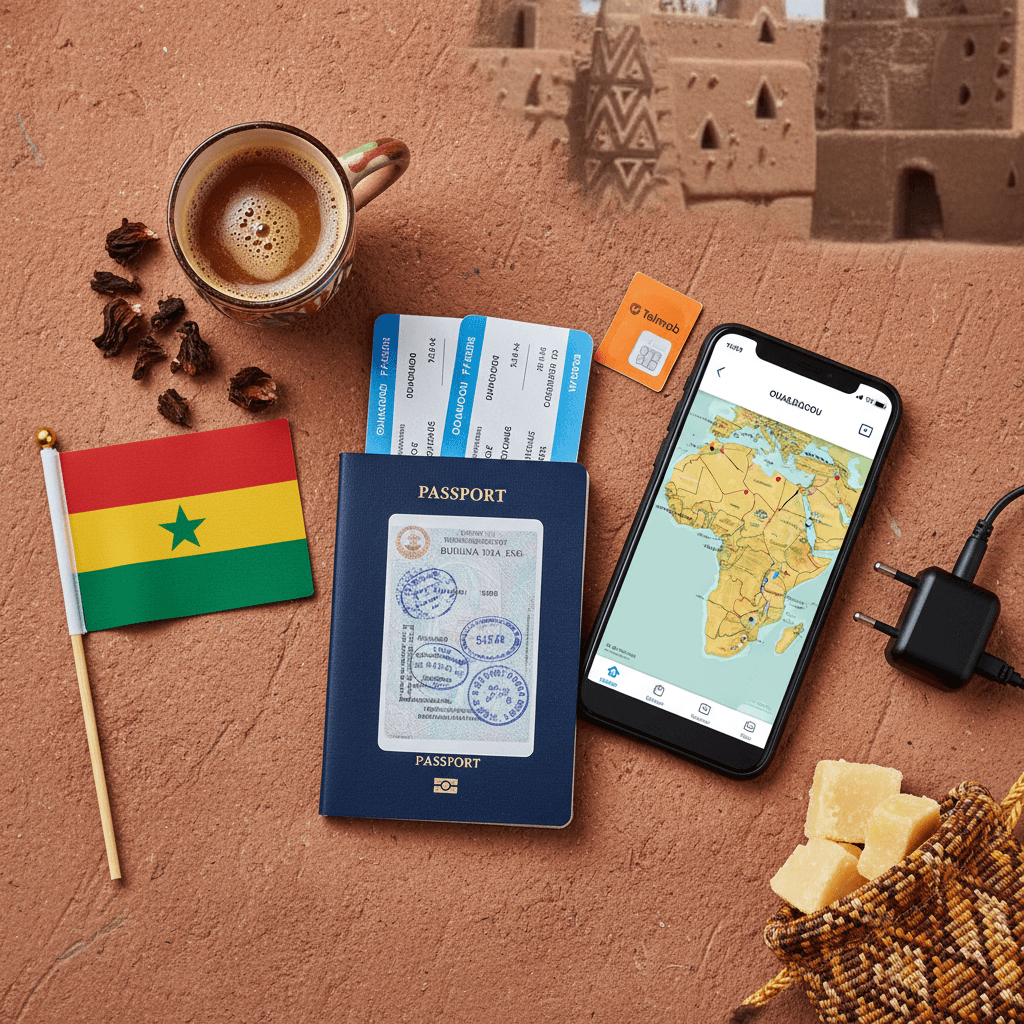
Burkina Faso

Policy Stability
Stamped Nomad ExclusiveHow likely visa and immigration policies are to remain unchanged
Quick Facts
N/A
3 months
Yes
$1,000/mo
34 Mbps
2/10
Low
Low
Low
GMT
Entry Methods Available
Best For
Getting Your Foot in the Door
Burkina Faso is a destination for the bold nomad. While it doesn't have a dedicated "digital nomad visa" just yet, the entry process is relatively straightforward for most travelers. You generally have three paths: going visa-free, grabbing an eVisa online, or picking one up when you land. Just keep in mind that the diplomatic weather can change quickly, so checking the latest requirements before you book your flight is a smart move.
Who Can Skip the Paperwork?
If you hold a passport from one of about 19 countries, you can walk right through immigration. Most of these are neighbors within the ECOWAS region, but there are a few outliers. Here is the breakdown of who gets a free pass:
- Regional Neighbors: Citizens of Benin, Cape Verde, Côte d’Ivoire, Gambia, Ghana, Guinea, Guinea-Bissau, Liberia, Mali, Niger, Nigeria, Senegal, Sierra Leone, and Togo.
- Extended Access: Citizens of the Central African Republic, Mauritania, and Morocco can stay for up to 90 days.
- Asian Partners: Singaporean citizens get 30 days, while Hong Kong passport holders are granted 14 days.
The Modern Way: The eVisa
The government launched an electronic visa system in 2023 to streamline things. This is usually the best bet for nomads who like to have their ducks in a row before leaving home. It covers both tourism and business for stays up to 90 days. You will need to upload a digital scan of your passport, a recent photo, proof of where you are staying, and your yellow fever vaccination card. Once you pay the fee online, the authorization is sent to your email.
Tourist and Business Specifics
If you aren't from a visa-free country, you will likely be looking at a short-stay visa. These come in a few different flavors depending on how long you want to stay and how often you plan to cross the border. Fees vary significantly based on where you apply.
- Standard Tourist Visa: Valid for up to 90 days. If you apply through the official portal, a single-entry costs 33,000 CFA, while multiple-entry jumps to 55,000 CFA.
- Business Visa: If you are there for meetings or networking, a short-stay business visa costs 77,000 CFA for single entry or 93,500 CFA for multiple entries.
- Long-Stay Business: For those planning a deep dive into the local market, a long-stay business visa costs 187,000 CFA.
Visa on Arrival
For roughly 55 nationalities, there is the option to get your visa at the airport or border crossing. It is convenient but definitely more expensive than the eVisa. Expect to pay around 94,000 CFA for a single-entry or 122,000 CFA for a multiple-entry permit. You will still need to show your yellow fever certificate and proof of accommodation, so don't show up empty-handed.
Recent Policy Shifts
Politics definitely play a role in travel here. Starting in January 2026, there is a total visa restriction on United States nationals. This is a reciprocal move following the suspension of entry for Burkinabè nationals into the US. If you are traveling on a US passport, you will need to monitor diplomatic updates closely, as standard tourist and business visas may no longer be an option for you during this period.
Staying Longer
If you fall in love with the vibe in Ouagadougou and want to stay past your initial 90 days, you aren't necessarily out of luck. Extensions are possible, but you will need to head to the national police headquarters in the capital. It involves a bit of bureaucracy, so give yourself at least a week of lead time before your current visa expires to handle the paperwork. Keep your original entry documents and proof of funds handy for the interview.
Source 1 | Source 2
The Current Status of Remote Work Permits
If you are looking for a dedicated digital nomad visa in Burkina Faso, you will come up empty. The government has not yet joined the growing list of African nations offering specific remote work programs. Instead, nomads typically rely on the standard business visa framework to facilitate their stays in Ouagadougou or Bobo-Dioulasso.
For most remote workers, the Short-Term Business Visa is the path of least resistance. It allows for stays of up to 90 days, which is usually plenty of time to soak in the local jazz scene and explore the Sahel before moving on. While this visa technically falls under the business category, it serves as the de facto option for digital nomads since there is no specific "remote work" classification yet.
Visa Options and Costs
Since there is no one-size-fits-all nomad permit, you have to choose based on how long you plan to stay. Here is how the two primary options break down:
Short-Term Business Visa
- Duration: Up to 90 days. You can choose a single entry or a multiple-entry option, but the total time spent in the country cannot exceed 90 days.
- Cost: Expect to pay 77,000 F CFA for single entry or 93,500 F CFA for multiple entries.
- Income Requirements: There is no hard minimum monthly income listed, but you must show proof of your reason for staying and sufficient funds to support yourself.
Long-Term Business Visa
- Duration: Exceeding 90 days. This is a multiple-entry visa that generally allows for stays of up to 90 days per semester.
- Cost: This one is steeper at 187,000 F CFA.
- Renewal: If you decide to stay longer, you need to visit the migration services in person at least 7 days before your current visa expires. This can eventually lead to a more permanent residence permit if you play your cards right.
The Application Process
The good news is that Burkina Faso has modernized its system. You can handle most of the initial legwork through their official eVisa portal, though some travelers still prefer going through a local embassy or consulate. You will need your passport, a completed application form, and two recent photos.
Beyond the basics, the government asks for a medical certificate proving you do not have contagious diseases and proof of health insurance. You also need to provide evidence of your stay, such as a letter of invitation or business documentation from your employer. Once you pay the fee and receive your eVisa or sticker, you are ready to head to the border.
Tax and Work Reality
The legal fine print is clear about one thing: you cannot take up local employment with a Burkinabè company unless you have specific approval from the labor ministry. Working for your own company or a foreign employer back home is generally a gray area that most nomads inhabit without issue.
Regarding taxes, if you stay for less than 183 days, you likely won't be considered a tax resident. This means your foreign-sourced remote income usually remains untaxed locally. However, tax laws can be fickle, so chatting with a professional who understands West African tax treaties is a smart move if you plan on staying long-term.
Important Restrictions
- Yellow Fever: This is non-negotiable. You must show proof of vaccination to enter the country.
- Multiple Entry Limits: Even with a multiple-entry visa, pay close attention to the "per semester" limits to avoid overstaying your welcome.
- Local Labor: Stay away from local contracts unless you want to dive into a massive pile of bureaucratic paperwork for a formal work permit.
Source 1 | Source 2
The Entry Landscape
Burkina Faso has modernized its entry process significantly over the last few years, making it surprisingly straightforward for digital nomads to get their paperwork in order. While the country is landlocked, its digital doors are open through a streamlined electronic system. If you are a citizen of most West African nations, including Ghana, Nigeria, and Senegal, you can enter visa-free. Singaporean passport holders also get a 30-day visa-free window. For everyone else, you will be looking at either an e-visa or a visa on arrival.
As of late 2025, there is a major perk for travelers from across the continent: Burkina Faso has waived entry visa fees for all African nationals. If you are holding a passport from outside Africa, you should expect to pay around $180 USD for your e-visa through official channels. Standard tourist visas generally grant you a stay of up to three months.
The E-Visa and Arrival Process
The e-visa is the gold standard for nomads who like to have their ducks in a row before landing in Ouagadougou. This digital permit replaces the old-school paper stickers. You apply online, wait for ministerial approval, and receive a document via email. You must print this out and carry it with you to present at the border. To get this approved, make sure you have these items ready:
- A passport valid for at least 6 months beyond your stay.
- A recent passport-sized digital photo.
- Proof of accommodation, like a hotel booking or rental agreement.
- An international vaccination certificate, specifically for Yellow Fever.
- Proof of sufficient funds to cover your stay.
If you prefer to wing it, visas on arrival are available at major border crossings and the airport. For eligible nationalities, a single-entry visa valid for three months costs 94,000 CFA francs (roughly $190 USD). If you plan on hopping over to a neighboring country and coming back, grab the multiple-entry version for 122,000 CFA francs (about $245 USD). Many European travelers can also get a shorter one-month visa on arrival if they are just passing through.
Staying Longer: Extensions and Renewals
If the Burkinabé hospitality wins you over and you want to extend your stay, do not wait until the last minute. The law requires you to file for an extension at least seven clear days before your current visa expires. You will need to visit the local immigration office in person to handle the paperwork. This is a much better path than attempting a "border run." While not explicitly banned, the authorities here much prefer you use the official renewal system. Leaving and immediately re-entering can sometimes lead to uncomfortable questions or complications with your status.
A Warning on Overstays
Burkina Faso takes its visa deadlines seriously. If you overstay, you risk being labeled an undesirable person. This is not just a bureaucratic headache; it usually comes with a ban on re-entering the country for a set period. You will also be hit with daily fines for every 24 hours you stayed past your welcome, and in extreme cases, legal action can follow. Keep an eye on your calendar and start the renewal process early to keep your nomad journey stress-free.
Source
Making Burkina Faso Your Base
Burkina Faso doesn't have a specific "digital nomad" visa yet, but that shouldn't stop you if you're looking for an off-the-beaten-path West African experience. For stays longer than the standard 90-day tourist entry, you'll need to look into long-term visa categories. Most nomads find the Visit Visa or the Business Visa to be the most viable paths for establishing a semi-permanent presence in the country.
The process requires some paperwork, but it is relatively straightforward if you have your documents in order. You will need a valid passport, two recent color photos with a white background, and proof of your reason for staying. Beyond the basics, the government requires a medical certificate confirming you are free of contagious diseases and proof of health insurance that covers your entire stay.
Long-Stay Visa Costs
The fees for these visas vary significantly depending on the category you choose. These are paid in West African CFA francs (F CFA), and you should be prepared for the following costs:
- Business Visa: 187,000 F CFA
- Visit, Studies, or Training Visa: 110,000 F CFA
- Cooperation Visa: 77,000 F CFA
Financial stability is a major factor in the approval process. You must provide a certificate of support or clear evidence that you have sufficient income to sustain yourself without seeking local employment. While there isn't a hard "minimum income" figure published, having bank statements that show a consistent remote salary is usually the best way to satisfy this requirement.
Securing a Residence Permit
If you plan to stay for a year or more, you'll eventually transition from a visa to a Temporary Residence Permit. These are generally valid for one year at a time. To get one, you'll need to show proof of accommodation, such as a long-term lease agreement, and a clean criminal record from your home country. If you are working for a local entity, a work contract is required, but for remote workers, documentation of your professional status and financial independence is the priority.
The jump from temporary to permanent residency is a long game. To qualify for a Permanent Residence Permit, you must live in Burkina Faso on a temporary permit for at least five years. During this time, you need to maintain a clean legal record and demonstrate that you are financially self-sufficient. Character references from local residents or business associates also play a role in the application process.
Investment and Business Pathways
While Burkina Faso lacks a formal "Golden Visa" or citizenship-by-investment program, they are welcoming to foreign investors. If you have the capital to start a local business, you can apply for a business or investor visa. These typically cost between $200 and $500 USD and are valid for one to two years. This is often a faster track toward establishing deep roots in the country and can eventually lead to permanent residency if the business remains active and compliant with local regulations.
Most of these applications can be initiated through the official government portal or the eVisa system. It is wise to handle the initial paperwork before you arrive, as converting a standard tourist entry into a long-term stay while on the ground can sometimes involve more bureaucratic hurdles than starting fresh at a consulate.
Living Large on a Lean Budget
Burkina Faso remains one of the most affordable frontiers for the adventurous digital nomad. While it lacks the glitzy infrastructure of Cape Town or Nairobi, your dollar stretches remarkably far here. Most nomads find they can maintain a high quality of life for a fraction of what they would spend in Western Europe or North America. Monthly expenses typically range from $350 for those living like locals to $1,700 for a premium experience with all the Western comforts.
Ouagadougou is the undisputed hub for remote work. It is the most expensive city in the country, but it offers the most reliable power and internet. Expect to pay about 10% to 20% more in the capital than you would in the cultural heart of Bobo-Dioulasso. While Bobo is easier on the wallet, you might spend the savings on mobile data backups and extra coffee to compensate for fewer formal coworking spaces.
Breaking Down the Monthly Tiers
Your lifestyle choices will dictate your burn rate more than anything else. Here is how the monthly budgets generally shake out in Ouagadougou for 2025:
The Budget Nomad ($350 – $600)
- Housing: $150 to $250 for a basic furnished 1BR or studio outside the luxury zones.
- Food: $90 to $150 by sticking to local markets and street food stalls.
- Transport: $25 to $50 using local green taxis and buses.
- Work: $50 to $80 for basic mobile data plans and occasional cafe visits.
The Comfortable Professional ($800 – $1,200)
- Housing: $350 to $500 for a modern apartment in a safe, central neighborhood.
- Food: $200 to $300 for a mix of grocery shopping and dining at expat-friendly bistros.
- Transport: $50 to $80 for frequent private taxi rides.
- Work: $100 to $150 for a dedicated coworking desk and high-speed home internet.
- Health: $100 to $200 for a solid international insurance plan.
The Premium Resident ($1,600+)
- Housing: $600+ for a luxury villa or high-end apartment in Ouaga 2000 with air conditioning.
- Food: $400+ for frequenting international restaurants and buying imported goods.
- Transport: $100+ for private drivers or car rentals.
- Work: $200+ for the best available fiber connections and premium office setups.
A Closer Look at Rent
Housing is your biggest variable. In Ouagadougou, nomads gravitate toward neighborhoods like Ouaga 2000 or the city center. A furnished one-bedroom apartment in these areas usually starts around $150 for something modest, but can climb to $650 for short-term rentals with Western-style amenities. If you are looking for a studio, expect to pay between 100,000 and 350,000 XOF.
Bobo-Dioulasso offers a significant discount on these prices. You can often find comfortable setups there for $120 to $400 per month. Regardless of the city, many nomads find success negotiating monthly discounts on Airbnb, which can bypass the need for local lease agreements and utility setups.
Hidden Costs and Practicalities
Utilities are often bundled into the rent for short-term nomad stays, but if they aren't, set aside about $40 for electricity and water. Air conditioning is a luxury that will spike your bill quickly during the hotter months. Internet and mobile data are surprisingly affordable, with $15 to $50 a month securing enough bandwidth for video calls and heavy uploads.
Health insurance is one area where you should not skimp. Local medical facilities are limited, so an international plan that covers evacuation is a non-negotiable expense. Prices for these plans vary wildly based on age and coverage, but budgeting at least $100 a month is a smart move for peace of mind. While the economy shows stability moving into 2026, always keep a small buffer for minor inflation and currency fluctuations.
Choosing Your Base in Burkina Faso
Burkina Faso is a destination for the truly adventurous nomad. It is not your typical digital hub like Medellín or Bali. While the country offers a rich cultural experience and incredibly low living costs, it comes with heavy caveats regarding safety. Most Western governments currently have "do not travel" advisories in place due to regional instability. If you decide to make the trip, you need to be highly mobile, security-conscious, and prepared for infrastructure that sometimes takes a nap.
The nomad scene here is small but tight-knit, mostly revolving around the capital and the cultural heart of the west. You will likely find yourself sharing space with NGO workers and researchers rather than typical tech entrepreneurs. Here is the breakdown of the three cities where you can actually get some work done.
Ouagadougou: The Hub of the Land of Honest Men
As the capital, "Ouaga" is your best bet for reliable work sessions. It hosts the most developed infrastructure in the country, featuring actual coworking spaces that understand the needs of a remote worker. The Office is a popular choice because it offers air conditioning and, more importantly, backup power to combat frequent grid outages. CO WORK is another solid alternative with flexible desks and meeting rooms for those important client calls.
You can expect internet speeds to hover around 13 to 15 Mbps. It is enough for emails, Slack, and the occasional video call, though you should always have a local SIM card with a data plan as a stabilizer. The lifestyle here is vibrant. When you shut the laptop, the city comes alive with live jazz, open-air bars, and a food scene that is surprisingly diverse for the region.
- Monthly Cost: Approximately $961
- Pros: Best coworking options, active expat community, and the most amenities.
- Cons: Highest risk for petty crime and urban security issues; internet can be spotty during peak hours.
Bobo-Dioulasso: The Cultural Alternative
If Ouaga feels too hectic, Bobo-Dioulasso offers a more relaxed, artistic vibe. It is the country's second-largest city and arguably its most beautiful. For work, CréaHub provides a space for incubation and coworking. Interestingly, some speed tests here have clocked in at 40 Mbps, which actually beats the capital, though consistency remains a gamble.
The city is famous for its music scene and colonial architecture. You will find plenty of street cafes like Le Café Restaurant Le Bonjour where you can sit with a laptop for an hour or two. The nightlife is legendary, with spots like Wassa Club and Les Bambous offering a great way to decompress. It is cheaper than the capital, making your budget stretch significantly further.
- Monthly Cost: Approximately $831
- Pros: More affordable than Ouaga, potentially faster internet, and a great cafe culture.
- Cons: Smaller nomad community and fewer dedicated professional spaces.
Koudougou: The Budget Choice
Koudougou is the third-largest city, but it feels much smaller and more provincial. This is the spot for nomads who want to disappear into the local culture and keep their expenses to an absolute minimum. There are no formal coworking spaces here, so you will be relying entirely on your own hotspot and hotel Wi-Fi.
Life in Koudougou is quiet. The nightlife is minimal, and the amenities are basic. It is a place for deep work or cultural immersion rather than networking. Because the infrastructure lags behind the top two cities, it is only recommended for those who do not require high-bandwidth connections for their daily tasks.
- Monthly Cost: Approximately $820
- Pros: The lowest cost of living among the major hubs.
- Cons: Poor internet reliability and a lack of professional workspace.
Cost and Logistics Breakdown
Living in Burkina Faso is roughly 64% cheaper than in the United States. Your biggest expense will likely be secure housing and high-quality internet. Here is how the monthly costs compare across the top spots:
- Ouagadougou: $961 (Baseline)
- Bobo-Dioulasso: $831 (13% cheaper than the capital)
- Koudougou: $820 (15% cheaper than the capital)
Most travelers enter on a 90-day short-stay visa. While 3G and 4G networks are available, they are prone to outages. Always have a backup power bank and multiple local SIM cards (Moov and Orange are the main players) to ensure you stay online when the local fiber line decides to take a break.
Internet Speed and Connectivity
Burkina Faso has made massive strides in connectivity recently, though it still requires a bit of planning to stay productive. In major hubs like Ouagadougou, broadband speeds are surprisingly competitive. Orange currently leads the pack with average download speeds hitting around 48.3 Mb/s. If you are relying on mobile data, ONATEL is generally the strongest performer, averaging about 42.9 Mb/s.
For the average nomad, this means video calls and cloud uploads are perfectly doable. However, general mobile speeds across all providers hover closer to 34.5 Mb/s for downloads and 18.1 Mb/s for uploads. It is reliable enough for daily tasks, but having a backup provider is a smart move to account for occasional localized outages.
Fiber Availability
Fiber is no longer a luxury restricted to government buildings. Infrastructure is expanding rapidly through Ouagadougou and Bobo-Dioulasso. GVA has been the primary driver here with their Canalbox service, which provides high-speed unlimited data. The subscriber base for fiber grew by 279% in a single year, which tells you everything you need to know about the local demand for stable, high-bandwidth connections.
Best Coworking Spaces
Ouagadougou is the clear winner for dedicated workspaces. You will find a mix of social incubators and high-end business centers catering to different vibes.
- The Office: Located in the Wemtenga neighborhood near the diplomatic quarter. This is a top-tier choice for those who need air conditioning, backup electricity, and on-site IT support. It feels professional and the internet is among the most stable in the city.
- The LOBBY: Situated in the Ouaga 2000 consular district. This is a modern business center that offers private meeting rooms and training spaces alongside traditional coworking desks.
- Contact Buro: A long-standing institution with over 20 years of experience. They have recently pivoted to focus on high-speed coworking, offering some of the fastest local connections available.
- Sira Labs: Located right in the business center. It is a creative, secured space that is fully equipped for those who need a more "plug-and-play" office environment.
- La Fabrique: This is a social business incubator. It is less corporate and more community-focused, making it a great spot to meet local entrepreneurs and startup founders.
Monthly Pass Costs
Pricing is quite reasonable compared to Western hubs, though the "premium" spaces do charge for their reliability. Here is what you can expect to budget:
- Hot Desk at The Office: Starts around $63 per month.
- Private Offices: Generally start at $378 per month.
- Regional Average: Most other spaces fall between $50 and $300 monthly depending on how many amenities you need.
Cafe WiFi Reliability
Working from cafes is a bit of a gamble. While you will find 3G and 4G in Ouagadougou and Bobo-Dioulasso, the actual speed at a coffee shop usually fluctuates between 5 and 15 Mbps. It works for checking emails or Slack, but do not count on it for an important client presentation. Peak hours often see significant lag, so always have a local SIM card ready to tether as a hotspot.
Mobile Data Plans for Nomads
Grabbing an eSIM is the easiest way to hit the ground running. Several providers offer competitive rates that allow for easy tethering.
- Nomad eSIM: Plans start at $7 for 1 GB valid for 7 days.
- Saily: Offers a wider range of tiers, from 1 GB to 20 GB, starting at $6.29.
- AloOui: Best for heavy users. They offer "unlimited lite" plans that give you 1 GB per day at full speed, then throttle to 2 Mbps for the rest of the day.
If you prefer a local physical SIM, Orange, Telecel, and Moov Africa are the main players. They offer flexible prepaid plans that are easy to top up at almost any street corner kiosk.
The Reality of Local Healthcare
Burkina Faso presents a unique set of challenges for digital nomads when it comes to staying healthy. While the public system exists through a network of district and university hospitals, it often struggles with severe resource shortages and outdated equipment. For anyone visiting from abroad, the public sector is best avoided unless it is an absolute emergency and you are far from a major city.
The private sector is where you will find a standard of care closer to what you are used to. These facilities, primarily located in Ouagadougou and Bobo-Dioulasso, offer modern diagnostic tools like MRI and CT scanners, shorter wait times, and a higher likelihood of finding English-speaking doctors. If you are setting up your base, staying near these two hubs is a must for your peace of mind.
Top Facilities for Nomads
If you need medical attention in the capital, your first call should be to the Centre Médical International (CMI). Located on Rue Nazi Boni, they specialize in expat care and function as a one-stop shop with an onsite pharmacy and vaccination center. They are also the primary point of contact for coordinating medical evacuations. You can reach their 24/7 emergency line at 70 20 00 00.
Other reliable private options in Ouagadougou include:
- Clinique les Genêts: Known for modern equipment and specialized services.
- Clinique Notre Dame de la Paix: A reputable choice for general consultations.
- Clinique El Fateh-Suka: Often used for more complex pediatric or specialized care.
Insurance is Non-Negotiable
Do not rely on out-of-pocket payments or local public schemes. You need international coverage that specifically includes medical evacuation. If a serious complication arises, you will likely be flown to South Africa or Europe, a bill that can easily reach six figures without insurance.
Several providers cater specifically to the nomad lifestyle:
- SafetyWing: A popular choice for its flexibility, costing roughly $56 per month for standard nomad coverage.
- Genki: Offers plans ranging from €48 to €180 per month depending on the level of coverage and your age.
- Indigo Expat or Pacific Prime: These are better suited for long-term residents who need "top-up" or comprehensive private plans that meet specific visa requirements.
What You Will Pay
Healthcare costs in Burkina Faso are relatively low by Western standards, but they vary wildly between the public and private sectors. Public outpatient visits might only cost $3 to $6, but you get what you pay for in terms of facility quality. Private consultations typically start around $30.
Recent government initiatives have actually lowered the cost of some high-tech procedures. For example, a CT scan that used to cost 50,000 CFA (about $83) has been reduced to 25,000 CFA (about $42). Even with these lower prices, having a solid insurance policy ensures you won't be hit with unexpected costs for surgeries or extended hospital stays.
Pharmacies and Prescriptions
Pharmacies are quite easy to find in urban areas, and you will notice they often use generic medications to keep costs down. However, supply chain issues can lead to temporary shortages of specific brands. To save yourself a trip, download the Alliance Pharma app. It uses geolocation to show you nearby pharmacies and provides real-time updates on what is currently in stock.
For high-quality international brands, the pharmacy at the CMI in Ouagadougou is your best bet. They stock medications specifically with the expat community in mind, reducing the risk of encountering counterfeit or substandard drugs sometimes found in smaller, unregulated stalls.
Emergency Situations
In a crisis, private clinics are much faster than public ones. While there are government ambulance services in Bobo-Dioulasso and other regions that handle hundreds of calls daily, the response times can be unpredictable. If you are in the capital, calling a private clinic like CMI or Clinique les Genêts directly is usually the fastest way to get an ambulance and professional stabilization.
Currency and the CFA Franc
Burkina Faso uses the West African CFA franc (XOF), a currency shared by eight countries in the region. The most important thing to remember is that the XOF is pegged to the Euro at a fixed rate of 1 EUR to 655.957 XOF. This stability makes it easy to calculate your budget if you are used to dealing in Euros; just keep in mind that this currency is only available and valid within West Africa.
Cash is still the undisputed king in Ouagadougou and beyond. While high-end hotels and some supermarkets in the capital accept cards, you will need physical bills for almost everything else, from street food to taxi rides. It is best to carry a mix of smaller denominations, as vendors often struggle to make change for large 10,000 XOF notes.
Opening a Local Bank Account
If you plan on staying for several months, opening a local account can simplify paying rent or local utilities. Coris Bank International and Ecobank are the most accessible options for foreigners. You can often start the process online, particularly with Coris Bank’s diaspora-specific savings products, but expect to visit a branch in person to finalize everything.
Typical requirements for a personal account include:
- A valid passport and a copy of your visa.
- Proof of address, such as a utility bill or a residence certificate from local authorities.
- Passport-sized photos.
- An initial deposit, which varies depending on the specific account tier.
- Occasionally, a letter of employment or proof of income.
ATMs and Card Usage
Visa is the most widely accepted card type across the country. Mastercard works at some machines, but it is less reliable, so having a Visa backup is a smart move. Most ATMs charge a local transaction fee on top of whatever your home bank charges. Withdrawal limits are often quite low per transaction, so you might find yourself making multiple withdrawals back-to-back to get the amount you need.
Using a Wise card for withdrawals can help you get closer to the mid-market exchange rate, though you will still be subject to the ATM's local fees. Be sure to notify your bank before you arrive, or they might freeze your card the moment you try to use it in a West African terminal.
Moving Money Digitally
Modern fintech has made life much easier for nomads in Burkina Faso. Wise is a reliable choice for sending money directly to local bank accounts with transparent fees. However, Revolut does not currently support outbound transfers to the country, so do not rely on it for local payments.
For quick cash pickups, services like Xoom, Ria, and MoneyGram are everywhere. You can send money from your phone and pick up the cash at SONAPOST (the post office) or bank branches like Ecobank, often on the same day. For a truly local experience, look into Orange Money or Mobicash. These mobile money services allow you to pay for things at small shops or send money to locals using just a phone number, which is often cheaper and faster than traditional bank wires.
The Crypto Scene
Cryptocurrency exists in a bit of a legal gray zone. It is not banned, but it is also not recognized as legal tender. You won't find many places to spend Bitcoin directly, and there is no specific licensing for exchanges yet. If you are mining or trading, you just need to follow standard business and tax rules. Be aware that regional regulators are looking into stricter licensing for virtual asset providers, which might change the landscape by 2026 or 2027.
Navigating Family Life in Burkina Faso
Moving to Burkina Faso with children is a decision that requires a heavy dose of realism and meticulous planning. While the country is known for its warm hospitality and deep cultural roots, the current landscape is undeniably complex for families. You will find a small but tight-knit expat community in the capital, but the security situation remains the primary factor in every decision you make, from where you live to where your kids play.
Safety and Security Realities
It is impossible to discuss family life here without addressing the regional instability. Major governments currently maintain Level 4 "Do Not Travel" advisories due to the high risk of terrorism, kidnappings, and armed conflict. Most nomadic families choose to stay strictly within the more secure pockets of Ouagadougou, avoiding crowds and sticking to daylight travel only.
The risks are not just theoretical; conflict in rural areas has led to significant casualties and displaced populations. If you are bringing children, your lifestyle will likely be confined to specific "green zones" or secure residential compounds. This means less spontaneous exploration and a much higher reliance on private security and vetted transportation.
Visas and Legal Residency
Burkina Faso does not offer a streamlined "nomad family" visa. Most families enter on short-stay visas, which are generally valid for up to 90 days. These can be obtained at an embassy before travel or, in some cases, upon arrival for fees ranging between $190 and $245 USD for a three-month stay.
- Requirements: You will need valid passports, a medical certificate, and proof of health insurance.
- Yellow Fever: Vaccination is mandatory for everyone in the family to enter the country.
- Long-term stays: Details on formal family reunification are sparse. You will likely need to visit the Visa Office in Ouagadougou to negotiate extensions or residency permits, which require marriage and birth certificates.
Education and International Schools
If you are based in Ouagadougou, you have access to a few high-quality educational institutions. The International School of Ouagadougou (ISO) is the primary hub for English-speaking families, offering an International Baccalaureate curriculum from preschool through 12th grade. For those who prefer the French system, Lycée Français is a reputable and slightly more affordable alternative.
- ISO Tuition: Annual fees vary widely based on grade level, typically ranging from $4,500 to $15,500 USD.
- French School Tuition: Expect to pay between $1,800 and $2,550 USD per year.
- Preschools: Private local preschools average around $134 USD per month, with registration fees between $85 and $170 USD.
Healthcare for Children
The government has made strides in pediatric care, offering free healthcare for children under five in public facilities. However, these centers often face severe shortages of supplies and staff. For digital nomad families, private international insurance is a non-negotiable requirement.
Private clinics in the capital are the standard for expats, as they offer better equipment and shorter wait times. Even so, for any major specialized surgery or chronic condition, many families opt for medical evacuation to Europe or South Africa. Always keep a well-stocked first aid kit and a supply of any necessary pediatric medications, as local availability can be inconsistent.
Family-Friendly Hubs
While much of the country is off-limits, a few areas provide a semblance of "normal" family life. Ouagadougou is the most practical choice, specifically the Zone du Bois neighborhood. Here, you will find the international school and family-friendly spots like Wazala Garden, which offers pools and green space for kids to burn off energy.
Bobo-Dioulasso is the second-largest city and offers a much more relaxed, artistic vibe. It is famous for its Grand Mosque and old town, providing a slower pace of life that some families prefer. However, it lacks the robust international infrastructure and school options found in the capital.
The Cost of Care
Domestic help and childcare are very affordable compared to Western standards. Many expats hire a "nounou" (nanny) to help with daily routines. While specific school-based childcare can cost around $245 USD per month, hiring a private nanny is often a matter of private negotiation within the local community. It is common to rely on word-of-mouth recommendations from other expats to find trusted help for the home.
Safety Reality Check
Burkina Faso is a destination that demands high-level situational awareness. While the country is known for its incredible hospitality, the current security climate is volatile. Major western governments currently maintain "Do Not Travel" advisories due to persistent threats of terrorism and kidnapping. For the digital nomad, this means your experience will be largely confined to specific neighborhoods in Ouagadougou and Bobo-Dioulasso, as rural areas and border zones are particularly high-risk.
Street crime is a factor in urban centers. Petty theft, muggings, and purse snatching occur frequently in crowded markets and poorly lit areas after dark. Roadside robberies are also a concern if you venture outside city limits. If you are moving around town, stick to the yellow taxis rather than the green ones, as they are generally considered more reliable for foreigners.
Scams and Digital Risks
Financial scams are common and often quite sophisticated. You might encounter advance-fee frauds disguised as lucrative business deals, gold sales, or even romance scams on dating apps. These usually start with a request for an upfront "administrative" payment. If a deal feels too good to be true, it almost certainly is.
Mobile phone scams are also on the rise. Be wary of unsolicited texts regarding fake job openings or government competitions that require a "registration fee." Always verify business contacts through official embassy channels before committing any funds.
LGBTQ+ Safety
The legal and social environment for LGBTQ+ individuals is extremely hostile. As of September 2024, same-sex relations are criminalized with potential prison sentences of 2 to 5 years plus heavy fines. Public sentiment remains very conservative, with local acceptance rates hovering around 8%. Because of the risk of mob violence and extortion, it is highly recommended that LGBTQ+ nomads exercise extreme discretion or consider alternative destinations where their safety is better protected.
Cultural Etiquette and Integration
Burkinabé culture is rooted in deep respect and social harmony. Success here depends on your "soft skills" and patience. When meeting someone, never rush straight into business. Always start with a handshake, beginning with the eldest person in the room, and ask about their family and health. These pleasantries are the foundation of trust.
- Hospitality: If you are invited for a meal, it is polite to accept. Bringing a small gift like fresh fruit is a great way to show appreciation.
- Public Demeanor: Avoid showing anger or intense frustration in public, as this causes "loss of face." Similarly, public displays of affection are frowned upon.
- Concept of Time: While you should be punctual for professional meetings, understand that local events often follow a more flexible schedule.
Language and Communication
French is the official language for government and business, but it is not everyone's first language. Most locals speak Mooré, Dioula, or Fulfulde. Outside of the main cities, language barriers can be significant. Learning a few Mooré greetings will get you a lot of respect and smiles from locals. If your French is rusty, you will find it difficult to handle daily tasks like grocery shopping or negotiating taxi fares, so brush up before you land.
The Expat and Nomad Scene
You won't find a massive nomad hub here, but Ouagadougou has a small, resilient expat community. There are a few co-working spaces and networking apps like Wooh that help remote workers connect. Most expats work in education, IT, or international development. Because internet reliability drops off significantly outside the capital, most nomads treat "Ouaga" as their primary base. To integrate, try joining local expat social groups or attending events at the French Cultural Center, but always prioritize group travel when heading out at night.
The 183-Day Threshold
Burkina Faso follows the standard international playbook for tax residency. If you spend 183 days or more in the country during a calendar year, the tax office considers you a resident. They count every partial day, including the day you land and the day you fly out. Once you cross that line, you are typically liable for tax on your worldwide income, not just what you earn locally.
Residency isn't just about counting days on a calendar. The authorities also look at your center of vital interests. If you maintain a permanent home available for your use or have significant economic and family ties in the country, you could be flagged as a resident even if you travel frequently. For most nomads, the safest bet is keeping your stay under the six-month mark to maintain non-resident status.
Income Tax Brackets
If you do trigger residency or earn income from a local Burkinabè source, you'll fall into a progressive tax system. The rates scale up based on your annual earnings:
- 0% for income up to CFA 1,000,000
- 10% for income between CFA 1,000,001 and 3,000,000
- 15% for income between CFA 3,000,001 and 6,000,000
- 20% for income between CFA 6,000,001 and 9,000,000
- 28% for any income exceeding CFA 9,000,000
Non-residents generally only pay tax on income sourced within Burkina Faso. This might include local consulting gigs or rental income from property. Certain types of income, like dividends or interest, may be subject to a flat withholding tax of 12.5%.
Treaties and Double Taxation
Burkina Faso has a relatively thin network of double taxation treaties. There is a significant multilateral agreement within the WAEMU zone, which covers seven neighboring West African nations. However, many long-standing bilateral agreements have shifted recently. For example, the treaty with France was abrogated in 2023, changing the landscape for French expats significantly.
If your home country doesn't have an active treaty with Burkina Faso, you might face the headache of being taxed twice on the same dollar. Always check the current status of your specific country's agreement before settling in for a long stay, as these diplomatic shifts happen quickly.
Digital Nomad Status and Crypto
There is currently no dedicated digital nomad visa or special tax regime for remote workers in Burkina Faso. Most nomads enter on short-stay visas, which usually cap out at 90 days. This naturally keeps you under the residency threshold, provided you don't renew and stay for the better part of a year.
The rules around cryptocurrency are equally undefined. There is no specific crypto tax law, so digital assets are treated as movable property. Profits from trading or mining are technically subject to the standard personal income tax rates of up to 28%. Enforcement is currently low, but the regional WAEMU guidelines suggest a move toward stricter reporting in the future. Keeping detailed records of your transactions is a smart move.
Filing and Compliance
If you find yourself owing tax, you must register for a Tax Identification Number, known locally as an NIF. The tax year runs from January to December, and annual returns are due by April 30 of the following year. Burkina Faso has modernized its system with the eSINTAX portal, which allows for electronic filing and payments. Missing these deadlines can result in stiff penalties, so it pays to be proactive if you are earning local currency.
Connectivity and SIM Cards
You’ll find that Ouagadougou is the only real choice for a stable remote work setup. To stay connected, grab a prepaid physical SIM as soon as you land. Orange Burkina Faso generally offers the most reliable nationwide coverage, though Telecel Faso and Airtel are solid alternatives. You can find kiosks at the airport or retail shops throughout the city. Make sure to have your passport ready for the mandatory registration process.
- Local SIM Cost: Expect to pay between XOF 500 and 1,500 (roughly $0.80 to $2.50) for the card itself.
- Data Bundles: Flexible plans start as low as XOF 500.
- eSIM Options: If you want to hit the ground running with data already active, services like Nomad or eSIM.net offer 4G plans starting around $7 for 1GB valid for 7 days.
Getting Around Safely
Skip the green public taxis. They are often overcrowded and don’t meet the safety standards most nomads expect. Instead, download LetsGo. It is a local ride-hailing app featuring electric vehicles that are clean, eco-friendly, and affordable. You can track your driver in real-time and pay via Orange Money, Wave, or your credit card. Rides typically cost about 31 cents per kilometer. If the app isn't an option, have your hotel arrange a private driver for the day.
Top Neighborhoods for Nomads
Where you stay determines your quality of life here. Stick to these three areas to ensure you have access to decent infrastructure and expat-friendly amenities.
- Ouaga 2000: This is the upscale side of town. It’s full of luxury villas, embassy buildings, and high-end restaurants. It is the most expensive area but offers the best sense of security and comfort.
- Dapoya: A great pick for younger professionals. It has a more modern, urban feel with plenty of shops and apartments close to the city center.
- Gounghin: A vibrant, middle-class neighborhood. It’s perfect if you want to be near local markets and cafes while keeping your housing costs a bit lower.
Finding Your Base
For long-term stays, Airbnb is your best bet for finding furnished apartments that actually include WiFi and a dedicated workspace. Always message the host specifically to ask for a speed test before booking. Booking.com also lists several apartment-hotels in Ouaga 2000 that cater to international travelers. Look for places that mention backup generators, as power cuts can happen.
Food and Delivery
When you’re deep in a deep-work session and don't want to head out, use Bonbiz Food. It’s the most established app for browsing menus and reading reviews. Another great option is Conekto Food, which partners with over 20 restaurants and accepts mobile money or cash. Both services cover daytime and evening deliveries across the main districts.
Language and Communication
French is the official language, but you’ll win a lot of respect by learning a few phrases in Mooré, the local Mossi language. Use Google Translate for French, but for Mooré, look for the Moore et Francais English Bible app or specific Moore Burkina dictionaries on the Play Store. These tools are helpful for navigating local markets where English is rarely spoken.
Emergency Information
Keep these numbers saved in your phone. Local authorities frequently conduct ID checks, so always carry a physical copy of your passport when moving around the city.
- Police: 17
- Fire Department: 18
- Medical Emergencies (SAMU): 112
- Poison Control: 80 00 11 11
Common Pitfalls to Avoid
Many nomads make the mistake of relying solely on hotel WiFi. Without a local SIM or eSIM, you'll be stranded the moment you step outside. Also, avoid the temptation to overpack. You can buy most basics locally, and it's better to keep your luggage light for regional travel. Finally, always maintain an emergency fund in cash (Euros or USD) and use a VPN for all your work tasks to keep your data secure on public networks.
More Guides from Africa
Stay Updated on Burkina Faso
Get notified about visa changes, policy updates, and new information for digital nomads in Burkina Faso.