Thailand proposes 1,000 baht departure tax for all international air travelers

| Current | 0 baht |
|---|---|
| Proposed | 1,000 baht |
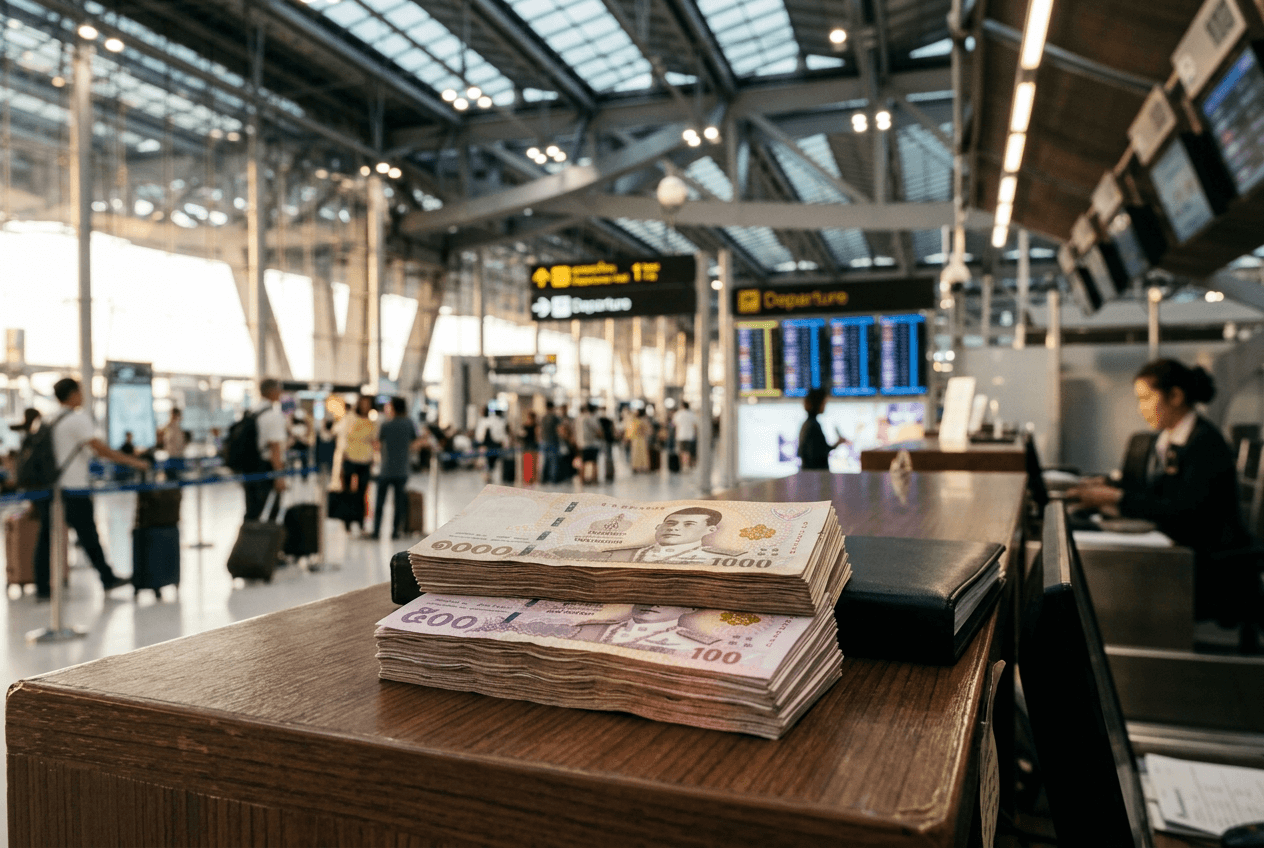
A proposed 1,000 baht ($28) departure levy on international air travel moved to public consultation, placing a potential new recurring cost on remote workers and tourists leaving the country.
Proposed Departure Tax Act outlines 1,000-baht air fee
Thailand opened public hearings Sept. 30, 2026, on a draft law that would reinstate outbound travel charges across all traveler categories, the Revenue Department confirmed in consultation filings. The public feedback window runs through Oct. 29, 2026.
The proposal introduces an initial flat charge of 1,000 baht ($28) on every international air departure. Unlike previous statutory frameworks, the draft bill applies to all nationalities without carveouts for short-term visitors, long-term visa holders or foreign residents. The draft legislation also sets a statutory ceiling of 5,000 baht ($140) per departure, giving the Ministry of Finance room to adjust rates through ministerial regulations in later phases.
The charge remains a pending proposal and isn't currently payable at airports or booking desks, the department stated. To take effect, the draft requires approval from the Cabinet and Parliament, followed by formal publication in the Government Gazette.
Replacing the suspended 1983 departure levy
The draft law would replace Thailand’s 1983 Emergency Decree on Departure Tax, which technically remains on the statute books but has seen collections suspended for decades.
Under the 1983 framework, departure taxes targeted only Thai citizens and permanent foreign residents, with original rates set at 1,000 baht ($28) for air travel and 500 baht ($14) for overland or sea departures. Authorities suspended land and sea collections on May 1, 1986 and halted air collection on July 1, 1991.
The new draft Departure Tax Act broadens that scope by eliminating nationality distinctions. If lawmakers pass the measure, any traveler flying out of an airport in Thailand will owe the levy regardless of their status under Thailand's residency rules.
Exemptions, ticketing rules and implementation timelines
Airlines and ticketing agents would collect the 1,000 baht ($28) fee during flight booking, rolling the charge directly into ticket prices rather than collecting funds at immigration desks.
The draft law outlines specific exemptions for transit passengers and operational personnel:
Land and sea border departures during the initial rollout phase.
Operating air crew traveling on duty without a commercial ticket.
International transit passengers who stay inside designated transit zones.
Children aged two or under.
Foreign heads of state, official government guests and diplomatic inspection delegations.
The draft doesn't include exemptions for digital nomad visa holders, retirees, students or tourist visa entrants.
The law would take effect 180 days after publication in the Government Gazette. A transitional safeguard ensures travelers who buy airline tickets before the official effective date won't pay the levy, even if their flight departs on or after that date.
Real budget costs for regional hub travel
For long-term remote workers who use Bangkok or Chiang Mai as regional travel bases, recurring departure taxes add a direct layer to annual flight budgets.
A nomad making six regional flight departures a year across Southeast Asia would see an extra 6,000 baht ($168) in baseline transportation costs under the proposed initial rate. Travelers who rely on multiple short-haul flights for visa resets or neighboring client trips would feel the immediate price shift on each round-trip booking. Overland border runs across land checkpoints would escape the charge under the initial phase, making land crossings a cheaper alternative for regional departures until ministerial regulations expand collection.
Frequently asked questions
How much is Thailand's proposed departure tax for international flights?
Who would have to pay the proposed Thailand departure tax?
Are land and sea departures included in Thailand's proposed departure tax?
Who is exempt from the proposed Thailand departure tax?
When would Thailand's proposed departure tax start?
Would airlines collect Thailand's proposed departure tax at the airport?
Stay updated on Thailand
Visa changes, travel alerts, and destination news — delivered when they actually matter.