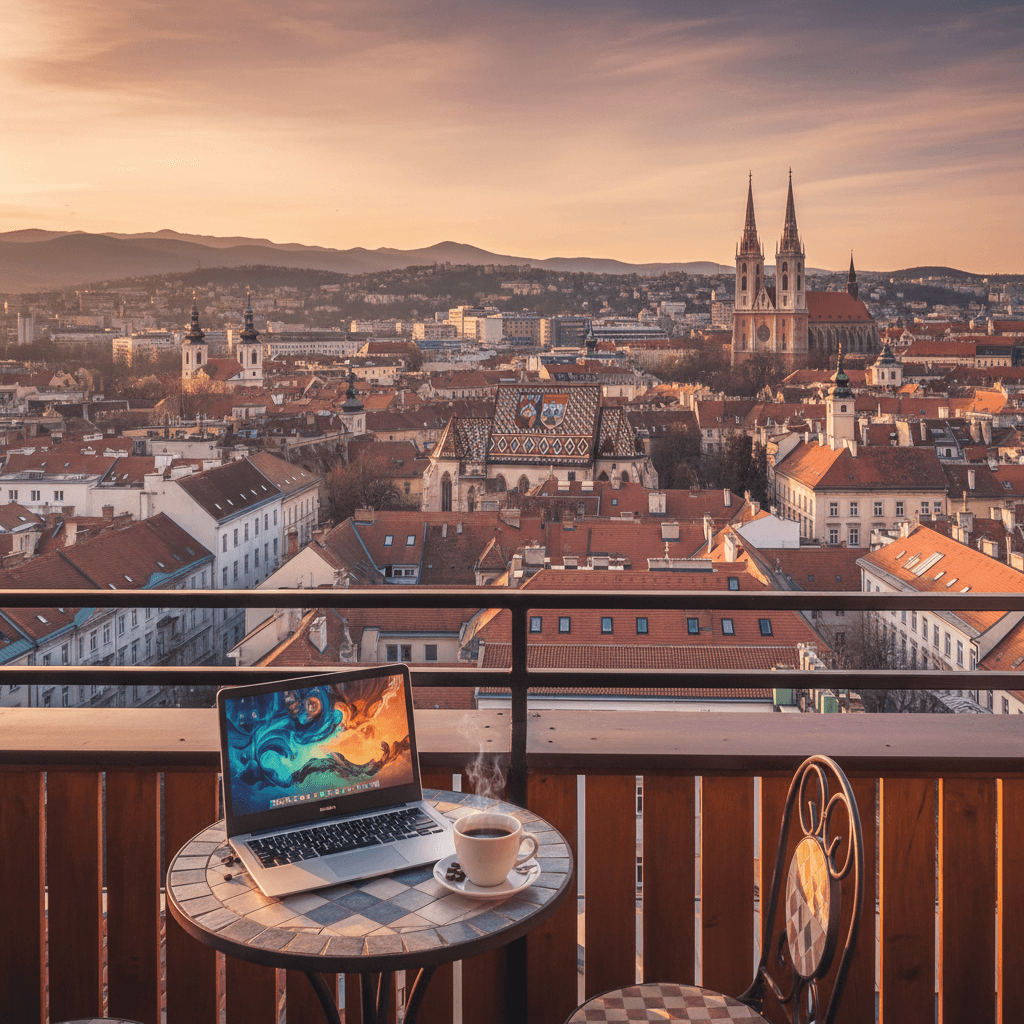
Zagreb
🇭🇷 Croatia
The Authentic Croatian Pulse
While the world flocks to the Dalmatian coast for sun soaked selfies and overpriced seafood, Zagreb remains the soulful, beating heart of the country. It’s a city that hasn’t sold its identity to the cruise ship crowds. Here, you’ll find a sophisticated, slightly gritty Central European charm that feels more like Vienna or Budapest, but with a Mediterranean social pace that keeps things from ever feeling too stiff.
The magic of Zagreb lies in its duality. You have the Gornji Grad (Upper Town), a hilltop maze of gas lit lanterns and cobblestones that feels like a medieval film set, and Donji Grad (Lower Town), where wide Austro Hungarian boulevards host a relentless stream of trams and high end boutiques. It’s a place where people still buy their produce at Dolac Market and spend three hours over a single espresso on Tkalčićeva Street. It’s not just a stopover; for the growing nomad community, it’s a home base that actually feels like home.
The Daily Flow
Life here revolves around the "špica," the local tradition of dressing up and heading to the center on Saturday mornings for coffee and gossip. For remote workers, this translates into one of the best cafe cultures in Europe. You aren’t just tolerated with a laptop; you’re part of the furniture. Whether you’re post up at Cogito for a world class brew or working from the sun drenched benches of Zrinjevac Park, the city encourages a slow, deliberate pace.
Nomads often mention that Zagreb feels incredibly safe at any hour. There’s a distinct lack of "tourist traps," which means your interactions with locals are genuine. You’ll hear more Croatian than English on the streets, though almost everyone under 50 speaks English fluently. It’s a city that rewards the curious, the kind of place where a random turn down a courtyard leads to a secret wine bar or an experimental art gallery.
What It Costs to Live Well
Zagreb remains remarkably affordable compared to Western European capitals, though prices in the city center have seen a steady climb. Most expats find they can live a very high quality life for €2,000 to €2,500 per month, which covers a stylish central apartment and frequent dining out.
- The Budget Tier (€1,500/month): This usually involves a shared flat or a studio slightly outside the immediate center, relying on the excellent tram system and eating primarily from local bakeries and markets.
- The Mid Range (€2,000 to €2,500/month): This is the sweet spot. You can afford a private one bedroom in Donji Grad, a dedicated desk at Impact Hub or BIZkoshnica, and daily visits to the city’s best bistros.
- The Comfortable Tier (€3,000+/month): This gets you a premium apartment, perhaps in the quieter residential hills, upscale dining at spots like Noel, and plenty of weekend trips to the coast or nearby Slovenia.
The Nomad Community and Work Life
The digital nomad scene here is tight knit and incredibly welcoming. Unlike the transient crowds in Split, the community in Zagreb tends to stay longer, often taking advantage of the Croatian Digital Nomad Visa, which allows for stays of up to 18 months with tax exempt status. This creates a more stable social environment where you can actually build long term friendships.
Networking happens naturally at Hub 385 or during major tech events like the Infobip Shift conference. When you need a break from the screen, the city is surrounded by nature. You can take a tram to the base of Mount Medvednica for a hike or spend an afternoon at Jarun Lake. It’s this balance of urban grit, historical beauty, and easy access to the outdoors that makes Zagreb a top tier choice for 2025 and 2026.
Expect a few minor frustrations, like the notorious screen glare when trying to work in the scenic Upper Town or the occasional bureaucratic hurdle when hunting for a long term lease. However, the trade off is a city that feels "real" in a way few European capitals do anymore. You aren't just a visitor here; you're part of the neighborhood.
The Cost of Living in Zagreb
Zagreb is one of the few European capitals where you can still enjoy a high quality of life without draining your savings. While coastal spots like Dubrovnik or Split see prices skyrocket during the summer, Zagreb remains remarkably consistent. It feels like a city built for residents rather than just tourists, which keeps the daily cost of living grounded.
Monthly Budget Tiers
How much you spend depends largely on your housing choices and how often you eat out in the Lower Town. Most nomads find they fall into one of these three brackets:
- The Budget Traveler (€1,500/month): This covers a room in a shared flat, relying on the efficient tram system, and cooking most meals with fresh finds from Dolac Market.
- The Mid-Range Nomad (€2,000 to €2,500/month): This is the sweet spot. You can afford a private one bedroom apartment in a central area like Donji Grad, work from a coworking space a few days a week, and enjoy daily cafe visits.
- The High-End Resident (€3,000+/month): This budget buys a premium private apartment, frequent upscale dining, a dedicated desk at a top tier coworking hub, and plenty of weekend trips around Croatia.
Housing and Neighborhoods
Rent is your biggest variable. Donji Grad (Lower Town) is the heart of the action and where you'll find the highest concentration of coworking spaces. Gornji Grad (Upper Town) offers a more historic, quiet vibe, though the hills make for a daily workout. Many expats recommend using platforms like Flatio to secure mid term stays without the hassle of local long term contracts.
- Donji Grad: Rent is moderate for a capital city, though prime spots near Zrinjevac Park command a premium. It is the best area for walking to work and social meetups.
- Gornji Grad: Prices are similar to the center, but the inventory is lower. You are paying for the atmosphere and the views.
- Outer Districts: If you move just a few tram stops away from the center, rent prices drop significantly, often by 20% to 30%.
Food and Drink
Zagreb has a legendary cafe culture. You can sit for hours with a single espresso and nobody will rush you. A coffee usually costs between €2 and €3. When it comes to meals, the city caters to every budget. Street food and local bakeries (pekara) are everywhere, offering quick bites for under €5.
For a proper sit down lunch, look for "gablec" specials. These are fixed price midday meals served at local taverns, usually costing between €8 and €12. A mid range dinner with a glass of wine in a trendy spot on Tkalčićeva Street will typically run you €15 to €25. If you prefer cooking, Dolac Market is the place to go for affordable, high quality produce directly from local farmers.
Coworking and Connectivity
WiFi is fast and reliable across the city, and you won't struggle to find a signal in any cafe. If you need a professional environment, Zagreb has several established hubs. Most nomads budget between €150 and €300 per month for a desk.
- Impact Hub: Known for its community focus and networking events, it is a favorite for those looking to meet local entrepreneurs.
- BIZkoshnica: A popular choice in the center with flexible plans.
- Hub 385: A massive space that often hosts tech conferences and workshops.
Transportation
Zagreb is a very walkable city, especially if you stay in the Lower or Upper Town. When you need to go further, the blue trams are iconic and cheap. A single paper ticket valid for 30 minutes costs less than €1. For those who prefer apps, ride hailing services are active and generally more affordable than traditional taxis. If you are staying for a while, a monthly transit pass is the most cost effective way to get around.
For Nomads and Remote Workers
If you are in Zagreb to grind during the day and network at night, Donji Grad (Lower Town) is your base of operations. It is the heart of the city's urban energy, characterized by wide Austro-Hungarian streets and the famous Green Horseshoe, a series of interconnected parks like Zrinjevac where you can take your laptop on a sunny day. Most nomads find the convenience here unbeatable; you are rarely more than a five minute walk from a specialty coffee shop or a dedicated workspace.
The coworking scene is concentrated in this area. You will find Impact Hub and BIZkoshnica nearby, which are the primary social anchors for the remote community. Monthly memberships generally run between €150 and €300. When you need a break from the screen, Tkalčićeva Street is just a short walk away, offering a dense stretch of bars and cafes that stay lively well into the evening. While rents in the center are higher than the outskirts, an average 1BR apartment here usually fits into a €2,000 to €2,500 monthly mid-range budget.
For Expats and History Lovers
Gornji Grad (Upper Town) feels like a different world, even though it sits right above the city center. Expats who prefer a quieter, more atmospheric lifestyle gravitate toward these cobblestone streets. It is the most historic part of Zagreb, home to St. Mark’s Square and the Strossmayer Promenade. Living here means trading modern apartment blocks for older buildings with character and incredible views of the red-roofed city below.
The pace is slower here, but the community is tight-knit. You will see the same faces at the Dolac Market every morning picking up fresh produce. One trade-off to consider is the terrain; it is hilly, and you will likely rely on the funicular or stone staircases to get around. Travelers often mention that working outdoors in Gornji Grad can be tricky due to the screen glare on bright days, but for many, the authentic "Old World" feel is worth the occasional squinting.
For Families and Long-Term Residents
The broader City Center area, extending slightly east and west of the immediate tourist core, is the top pick for families. These residential pockets offer a high level of safety and immediate access to essential amenities like pharmacies, grocery stores, and quiet playgrounds. It is remarkably walkable, meaning you can often ditch the car and rely on the efficient tram system or your own two feet.
While prime spots near Ban Jelačić Square command a premium, moving just a few blocks out provides a better balance of space and price. Families benefit from the abundance of green space; Zagreb is one of the leafier European capitals, and the proximity to large parks makes it easy to keep kids entertained. Expect to pay €3,000 or more for a comfortable, multi-bedroom private apartment in these sought-after zones.
For Solo Travelers
Solo travelers usually find their rhythm in the transition zone between Donji Grad and the neighborhood surrounding the Museum of Contemporary Art. Staying central is the best way to avoid isolation, as the social life revolves around public squares and shared spaces. The Whole Wide World Hostel & Bar is a well-known hub for meeting people, even if you aren't staying there overnight.
- Donji Grad: Best for networking and proximity to Hub 385 or Cogito Coffee.
- Gornji Grad: Best for those seeking a quiet, historic atmosphere and scenic walks.
- Tkalčićeva District: Best for solo travelers wanting to be in the middle of the nightlife and social scene.
Regardless of where you land, the city's layout is forgiving. You can cross the main hubs in 20 to 30 minutes on foot, and the high English proficiency among locals makes it easy to ask for directions or strike up a conversation in a cafe like Quahwa or In The Yard.
Connectivity and Speed
You won't have to hunt for a signal in Zagreb. The city is a digital powerhouse with some of the most reliable WiFi in Central Europe. Most apartments and cafes offer speeds that handle video calls and heavy uploads without breaking a sweat. If you're working from the sun-drenched parks like Zrinjevac, you can often find public hotspots, though nomads often warn about the afternoon glare on laptop screens.
For mobile data, skip the search for physical stores and grab an eSIM from a provider like Holafly before you land. If you prefer a local physical SIM, you'll find providers at the airport and kiosks throughout the city center. It's a cheap way to stay connected while wandering the cobblestone streets of Gornji Grad.
Top Coworking Spaces
Zagreb has a mature coworking scene that caters to different vibes, whether you want a corporate setup or a community-focused hub. Expect to pay between €150 and €300 per month for a dedicated spot.
- Impact Hub: This is the go-to for social entrepreneurs and networking junkies. It has a cozy, community-driven atmosphere that makes it easy to meet people. It's particularly popular with expats looking to integrate into the local startup scene.
- Hub 385: If you need a more professional, tech-heavy environment, this is it. It's known for hosting major conferences and has excellent hot-desking options and private meeting rooms.
- BIZkoshnica: Located conveniently in the city center, this space offers a balanced mix of focus and flexibility. It's a favorite for those who want a central base without the high overhead of a private office.
The Cafe Office Culture
The "kava" culture in Croatia is legendary, and while many locals spend hours over a single cup just chatting, the city is very welcoming to remote workers. You'll see laptops in plenty of windows, especially in Donji Grad.
- Cogito Coffee: Widely considered the best roast in the city. It’s stylish and social, though it can get busy during peak hours. It's the spot for when you have light admin work and want to soak up the local energy.
- Quahwa: This roastery is a bit of a sanctuary. It has a quieter vibe and great WiFi, making it a solid choice for deep work sessions. They also have an outdoor area for those crisp Zagreb mornings.
- In The Yard: As the name suggests, this spot feels homey and secluded. It’s perfect for when you need to put your headphones on and grind through a project without the noise of the main streets.
If you need total silence and a more academic environment, the Bogdan Ogrizović library or the lounge at the Museum of Contemporary Art are excellent alternatives. They offer a change of pace from the standard cafe circuit and are very budget-friendly.
Networking and Community
The nomad community here is active but not overwhelming. You'll find most of the action happening around Impact Hub or during tech events like the Infobip Shift conference. For a more casual way to meet fellow travelers, the Whole Wide World Hostel & Bar is a common evening hangout where the line between work and play often blurs. Most nomads find that the high English proficiency among locals makes it incredibly easy to collaborate or just ask for the WiFi password without any awkwardness.
A Culture of Security
Zagreb is one of those rare European capitals where you can wander through the winding alleys of Gornji Grad at 2:00 AM without looking over your shoulder. The city maintains a remarkably low crime rate, and locals generally feel comfortable letting their kids play in parks like Zrinjevac well after sunset. Most nomads find the city exceptionally safe for solo travelers, including women and those working late in cafes on Tkalčićeva Street.
Property crime and pickpocketing exist, as they do in any major city, but they aren't common. You should use the same common sense you'd use anywhere else, keep an eye on your laptop when working in Cogito or Quahwa, but you won't find the aggressive tourist scams common in Western European hubs. There aren't any "no go" zones or neighborhoods to avoid; even the more affordable areas outside the city center maintain a peaceful, residential atmosphere.
The Healthcare System
If you're moving to Zagreb on the digital nomad visa, you'll find the healthcare infrastructure is modern and reliable. The city is the medical hub of the country, meaning you have access to the best specialists and facilities in Croatia. While the public system is high quality, it can be slow for non-emergencies. Most expats prefer using private clinics for routine checkups or minor issues to avoid wait times.
Private clinics like Poliklinika Aviva or Croatia Poliklinika offer English speaking staff and sleek, modern facilities. Out of pocket costs for a private GP visit usually range between €40 and €70. If you need specialized care, the prices remain very reasonable compared to North American or UK standards.
Pharmacies and Emergency Care
Pharmacies, known locally as Ljekarna, are everywhere. You'll recognize them by the glowing green crosses. Most pharmacists speak excellent English and can provide advice for minor ailments without a doctor's visit. For late night needs, Zagreb operates a rotation of 24 hour pharmacies, usually with at least one open in the city center at all times.
- Emergency Number: Dial 112 for any emergency services.
- Public Hospitals: KBC Zagreb (Rebro) is the largest and most equipped for serious emergencies.
- Health Insurance: For the nomad visa, you'll need private health insurance that covers at least €30,000 in medical expenses. Many nomads use providers like SafetyWing or PassportCard.
Practical Wellness Tips
The tap water in Zagreb is perfectly safe and actually quite tasty. You don't need to waste money on bottled water; just fill up a reusable bottle at your apartment or one of the many public fountains. The air quality is generally good, though it can get a bit hazy in the winter months due to the city's position at the base of Medvednica Mountain.
Walking is the primary way people stay fit here. Between the hilly streets of the Upper Town and the long promenades in the Lower Town, you'll likely hit your step goal without trying. If you prefer a gym, monthly memberships at spots like Gyms4you (which has multiple 24/7 locations) typically cost around €35 to €50 per month.
Getting Around the Capital
Zagreb is one of those rare European capitals where you can actually rely on your own two feet for most of your daily life. The city is laid out in a way that feels manageable, especially if you are based in Donji Grad or the historic Gornji Grad. Most nomads find that once they settle in, the only reason they leave their immediate neighborhood is for a specific meetup or a weekend trip to the coast.
The Blue Trams and Buses
When you do need to cover more ground, the iconic blue trams are the heartbeat of the city. They run frequently and cover almost every corner of the center and the wider residential zones. You can grab tickets at Tisak kiosks, which are those small newsstands found on nearly every street corner. A standard 30 minute ticket is incredibly affordable and usually all you need for a quick hop across town.
- Single 30-minute ticket: Approximately €0.53.
- Daily pass: Around €4.00.
- Night trams: These run less frequently after midnight but follow the main lines, making it easy to get home after a late night on Tkalčićeva Street.
The system is efficient, though it can get crowded during the afternoon rush. If you are heading further out to the suburbs or the airport, the bus network takes over where the tram tracks end. For the airport specifically, the Pleso Prijevoz shuttle bus runs regularly from the main bus station (Autobusni Kolodvor) and is a favorite for expats because it is cheaper than a private car.
Walking and Biking
Walking is the best way to experience the transition from the Austro-Hungarian architecture of the Lower Town to the medieval vibes of the Upper Town. Ban Jelačić Square serves as the central hub where almost all walking tours and social meetups begin. If you are heading up to St. Mark’s Square, be prepared for some incline; it is a short but steep walk that locals treat as their daily cardio.
For those who prefer wheels, Zagreb has become much more bike friendly over the last few years. There are public bike sharing stations scattered around the city, and the flat terrain of the Lower Town makes it easy to zip between Impact Hub and your favorite cafe. Just be mindful of the tram tracks, they are notorious for catching bike tires if you don't cross them at a sharp angle.
Taxis and Ride-Hailing
While the city is walkable, sometimes you just want a direct ride home. Zagreb has a solid presence of ride-hailing apps, which most travelers prefer over flagging down a random taxi to ensure transparent pricing. Uber and Bolt are the primary players here. A typical ride within the city center will usually set you back between €5 and €10, depending on the time of day.
Key Transit Hubs
- Main Railway Station (Glavni Kolodvor): Located at the bottom of the Green Horseshoe park system, this is your gateway to international trains and domestic trips to places like Split or Rijeka.
- Main Bus Station (Autobusni Kolodvor): A short tram ride from the center, this is where you will catch the airport shuttle and long distance coaches.
- The Funicular: It is the shortest cable car ride in the world, connecting Ilica Street to the Upper Town. It is more of a tourist novelty than a daily commute, but it is a lifesaver if you are carrying heavy groceries up the hill.
Most digital nomads find that a combination of walking and the occasional tram ride keeps their transport budget well under €50 a month. It is a refreshing change from cities where you are stuck underground in a metro for half the day.
The English Advantage
If you're worried about hitting a language barrier in Zagreb, you can breathe easy. Most nomads find that the city is incredibly easy to navigate without knowing a word of the local tongue. English proficiency is remarkably high, especially among the younger generation and the professional crowds you'll encounter at Impact Hub or Hub 385. In the central hubs of Donji Grad and Gornji Grad, you'll rarely find a waiter, barista, or shopkeeper who doesn't speak fluent English.
Because the city has become such a magnet for remote workers and tech expats, the social scene is naturally bilingual. Even at local favorites like Cogito Coffee or the roastery at Quahwa, the menus are often translated, and the staff is used to switching between languages mid-sentence. You won't feel like an outsider when you're ordering your morning espresso or asking for the WiFi password.
Mastering the Basics
While you can survive on English alone, locals genuinely appreciate it when you make a small effort. Croatians are warm and welcoming, and throwing out a few local words at the Dolac Market while buying fresh produce can change the whole dynamic of your interaction. It shows you're not just passing through, but actually engaging with the "real Croatia."
- Bok: This is the Swiss Army knife of Croatian greetings. It means both "hello" and "bye." You'll hear it everywhere from cafes on Tkalčićeva Street to coworking lobbies.
- Hvala: Thank you. It's a simple way to show respect after a meal or when someone holds a door.
- Molim: Please. Also used as "you're welcome" or "pardon?" depending on the context.
- Dobar dan: Good day. Use this for a more formal greeting when entering a shop or a quiet library like Bogdan Ogrizović.
- Pivo: Beer. Essential for those late nights in the Upper Town.
Communication in Daily Life
Digital nomads usually rely on a mix of high-tech tools and old-school observation. For official documents or complex interactions, translation apps work perfectly well, but you'll likely only need them for reading utility bills or government forms if you’re staying long-term on the Digital Nomad Visa. For everything else, the vibe is very cosmopolitan.
Expats recommend joining local Slack channels or WhatsApp groups through spaces like BIZkoshnica to stay in the loop. These communities often bridge the gap between the international crowd and the local scene. You'll find that while the official language is Croatian, the language of business and networking in Zagreb is firmly English. Even at major tech events like Infobip Shift, English is the standard, making it easy to build a professional network from scratch.
Practical Connectivity
Staying connected is the other half of the communication puzzle. While WiFi is reliable and fast citywide, you'll want a local connection for maps and translations on the go. Most travelers suggest grabbing an eSIM from Holafly before landing, but you can also pick up a local SIM card at any newsstand (Tisak) for a few Euros. Having a local number makes it easier to coordinate meetups at Zrinjevac Park or book a table at a popular spot on Tkalčićeva.
Overall, Zagreb offers a soft landing. You get the authenticity of a Central European capital without the frustration of a massive language gap. It’s the kind of place where you can feel at home on day one, even if your Croatian vocabulary starts and ends with "Bok."
The Seasonal Shift
Zagreb is a city of distinct seasons, and your experience here will change drastically depending on when you land at Franjo Tuđman Airport. Unlike the coastal cities that hibernate in winter, Zagreb stays alive year round, though the pace definitely syncs with the thermometer. Most nomads agree that May through June and September through October are the sweet spots. During these shoulder months, you get mild temperatures perfect for working from the terrace at Quahwa or taking your laptop to Zrinjevac Park without the summer humidity or the winter bite.
Summer in the city, particularly July and August, brings plenty of sunshine but also a bit of a localized exodus. Many locals head to the coast, leaving the streets of Donji Grad quieter than usual. While the long days are great for post work social sessions on Tkalčićeva Street, be prepared for occasional afternoon heatwaves. If you are working outdoors in Gornji Grad, the screen glare can become a real nuisance during these months, so you might find yourself retreating to the air conditioned comfort of Hub 385 or Impact Hub during the peak afternoon sun.
Winter and the Advent Magic
Winter transforms the city into something out of a storybook, especially during December. Zagreb has gained a massive reputation for its Christmas markets, which take over the central squares and parks. It is a fantastic time for socializing, but it is cold. Expect temperatures to hover around 0°C to 5°C. If you are planning to stay through January and February, bring a heavy coat. This is the time when the cafe culture moves indoors; spots like Cogito and In The Yard become cozy, steam filled sanctuaries for deep work while the gray skies settle over the city.
What to Pack and When to Book
If you are aiming for a spring or autumn arrival, you will need layers. The mornings in the Upper Town can be crisp even if the afternoons are warm. These seasons are also the best time to hunt for mid range housing on platforms like Flatio, as you aren't competing with the peak summer tourist crowds or the December holiday rush.
- Spring (April to June): Expect highs of 15°C to 23°C. Ideal for walking the city and outdoor networking events.
- Summer (July to August): Highs often hit 27°C to 30°C. It can be humid; ensure your apartment rental has AC, as older buildings in the center sometimes don't.
- Autumn (September to October): Highs of 14°C to 19°C. The city feels energized as students return and the tech event calendar, including Infobip Shift, kicks into gear.
- Winter (November to March): Highs of 3°C to 8°C. Frequent overcast days, but the festive atmosphere in December makes up for the lack of vitamin D.
Expats often recommend timing your move to coincide with the Weekend Media Festival or similar autumn conferences. Not only is the weather comfortable for exploring Dolac Market, but the networking scene is at its peak. If you hate the cold, avoid a January start date; the city is at its quietest then, and the biting winds can make the walk to your coworking space feel a lot longer than it actually is.
Survival Basics
Zagreb is one of those rare European capitals where you can actually breathe. It feels more like a collection of neighborhoods than a frantic metropolis. Most of your daily life will center around the Donji Grad (Lower Town) for its accessibility or the Gornji Grad (Upper Town) for its historic charm. English proficiency is incredibly high here, especially among people under 50, so you won't struggle to order a coffee or negotiate a lease.
The city operates on "coffee time." It is not just a drink; it is a social contract. You'll see locals sitting for two hours over a single espresso at Cogito or Quahwa. If you try to rush through your day, you'll miss the point of living here. Embrace the slower pace, especially when dealing with local bureaucracy or meeting new people.
Budgeting for the Nomad Life
While the coast gets expensive, Zagreb remains relatively grounded. You can live a very comfortable life here for significantly less than in Western Europe or the US. Most nomads find that €2,000 to €2,500 per month covers a high quality of life including a central apartment and frequent dining out.
- The Budget Tier (€1,500/month): This covers a room in a shared flat, plenty of meals from Dolac Market, and a monthly pass for the tram system.
- The Mid-Range Tier (€2,000-€2,500/month): You'll get a private one bedroom apartment in Donji Grad, daily cafe visits, and a hot desk at a coworking space.
- The Comfortable Tier (€3,000+/month): This allows for a premium apartment, dinners at upscale spots on Tkalčićeva Street, and a dedicated desk at a top tier hub.
Connectivity and Workspace
The internet in Zagreb is fast and reliable. You won't find many "dead zones" in the city center. While many nomads work from cafes like In The Yard, the glare from the sun can be a nightmare if you're sitting outside in the Upper Town. If you need a professional setup, the city has a solid coworking scene.
- Impact Hub: Great for networking and community events; expect to pay between €150 and €300 a month.
- Hub 385: A massive space that's perfect if you need conference rooms or a more corporate, tech focused environment.
- BIZkoshnica: A cozy, creative alternative that feels less like an office and more like a collective.
- Public Libraries: Bogdan Ogrizović is a local favorite for quiet, free work sessions.
The Digital Nomad Visa
Croatia has one of the most accessible nomad visas in Europe. For the 2025-2026 cycle, you can apply for a permit that lasts up to 18 months. One of the biggest perks is that you are generally exempt from local income tax on your remote earnings. You'll need to prove a consistent monthly income and have valid health insurance. Many expats use Holafly for immediate data upon arrival and then switch to a local SIM or an eSIM for better long term rates.
Getting Around
The blue trams are the heartbeat of the city. They are cheap, frequent, and cover almost everywhere you'll need to go. However, the city center is remarkably walkable. You can walk from the main Ban Jelačić Square to most major parks or coworking hubs in under 20 minutes. If you're staying for a while, look into bike rentals; the flat terrain of the Lower Town makes it ideal for cycling, though the Upper Town will give your legs a serious workout.
Safety and Health
Zagreb is exceptionally safe. It is the kind of city where you'll see people walking alone late at night without a second thought. There aren't really any "no go" zones to worry about. For healthcare, pharmacies are everywhere and usually have at least one English speaking staff member. If you're looking for a place to stay with a kitchen and a bit more support than a standard Airbnb, Doma Zagreb Aparthotel is a popular choice for shorter stays while you hunt for a long term flat on platforms like Flatio.
Need visa and immigration info for Croatia?
🇭🇷 View Croatia Country GuideNomad Haven
Your home away from home
Monthly Budget Estimates
More cities in Croatia
Osijek
🇭🇷 Croatia
Zadar
🇭🇷 Croatia
Split
🇭🇷 Croatia